
Dinosaur Color Plans: 4 Brilliant Sunny-Scene Games
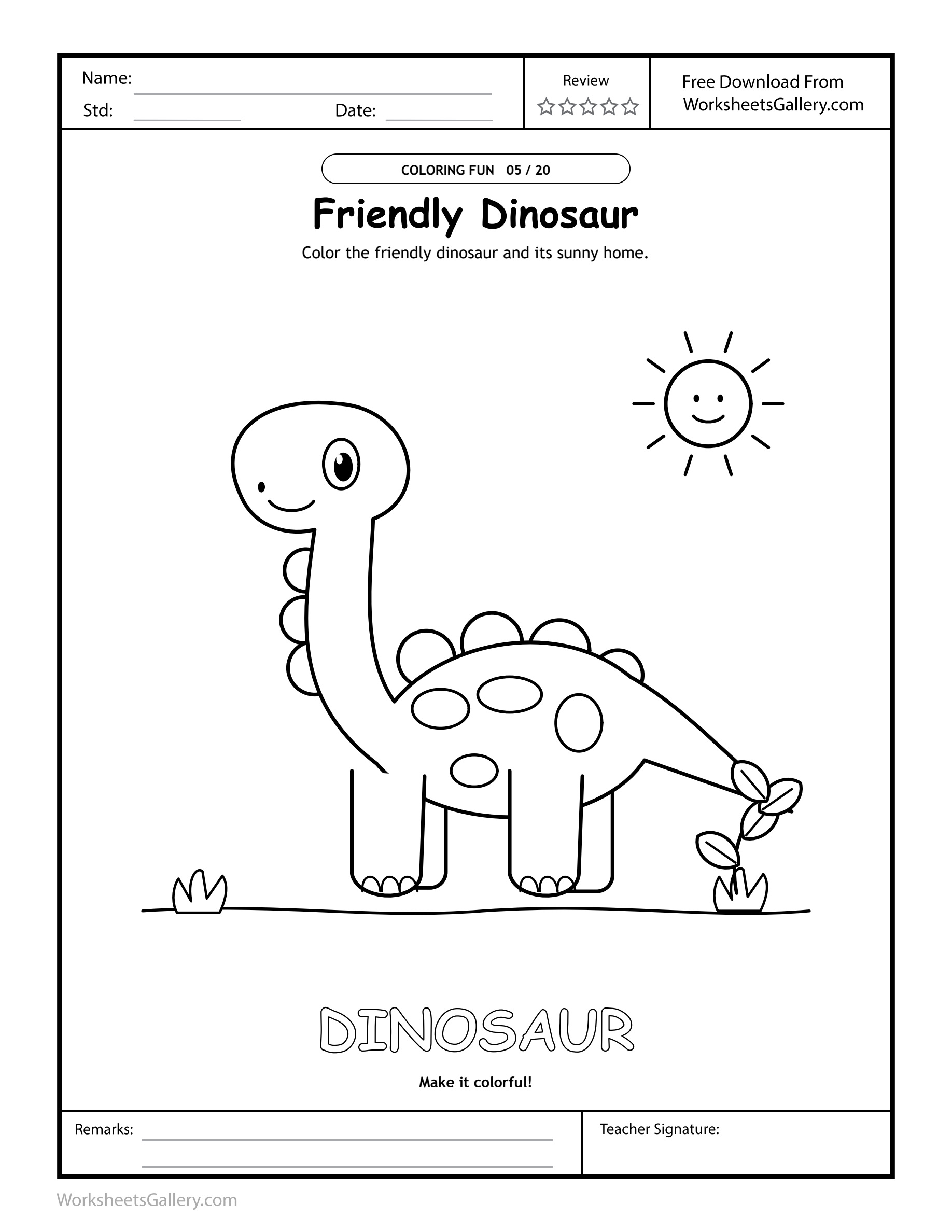
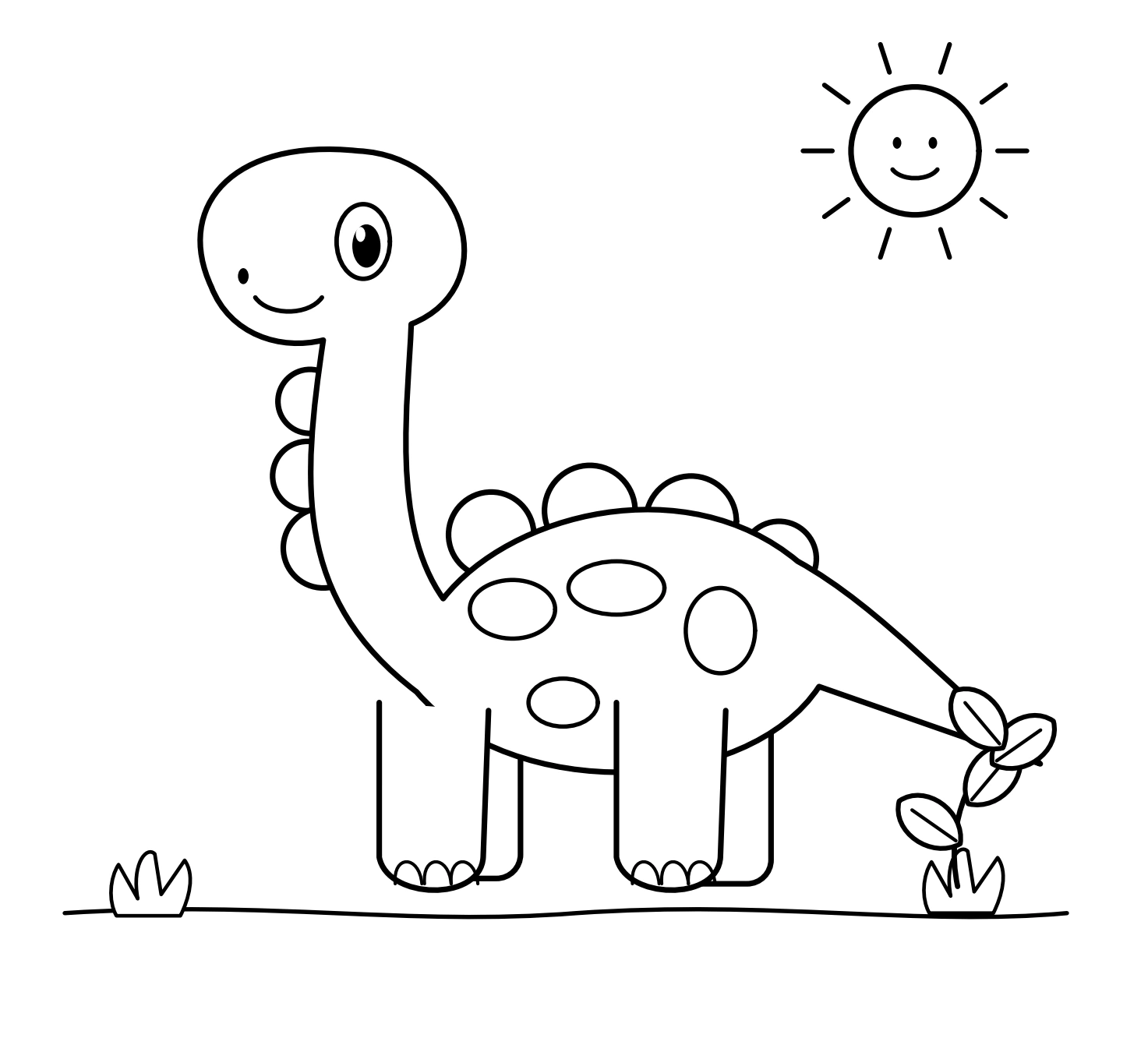
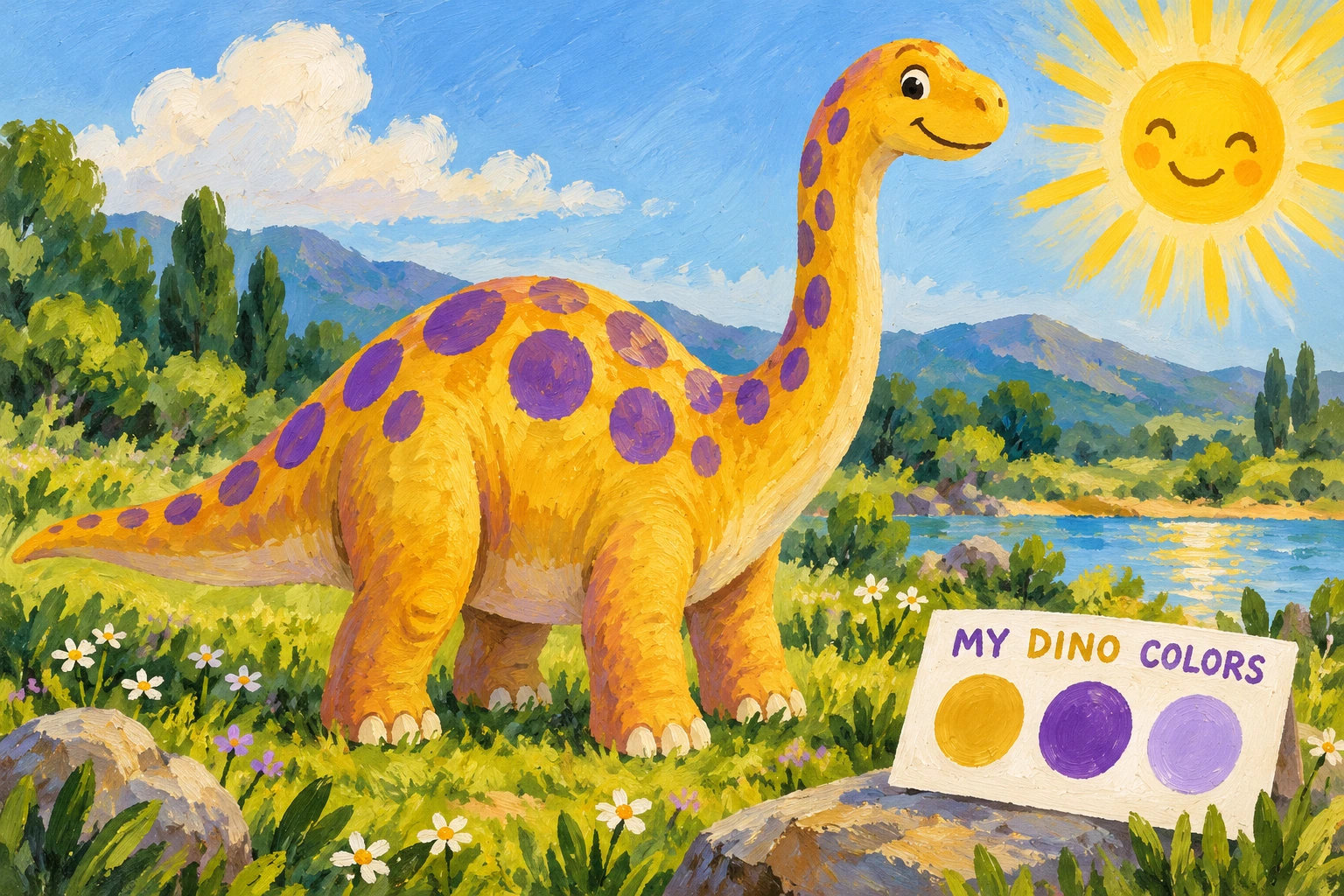
Purple spots on a gold dinosaur can be a design idea rather than a mistake. Dinosaur Color Plans invites a child to invent the appearance of a friendly long-necked character in a sunny setting. The Friendly Dinosaur worksheet includes body spots, small plants, a smiling sun and an outlined topic word, with no color reference to copy. Look over the picture before choosing a tool. Which feature should stand out first? The learner can begin with that intention, test a possible hue and keep room for the plan to change as the picture develops.
Dinosaur Color Plans starts with permission to invent
The source presents a cartoon creature, not a labelled scientific reconstruction. Its smiling face, body spots and sunny surroundings provide an imaginative art setting. Do not use the picture to assert a particular species or a historically correct color scheme.
Dinosaur Color Plans gives the learner a useful distinction: they are deciding how this invented character will look. A familiar green dinosaur is one possibility. A gold body with purple spots is another. An adult can listen to the reason for either without replacing the child's palette with a preferred model.
Reva gives Dinosaur Color Plans a welcome-sign purpose
Reva and her older brother are making a pretend sign for a dinosaur garden. She wants the character to look friendly from across the room. Her brother asks whether the body or its spots should be easiest to notice. She tests a pale gold and a deeper purple on a scrap.
Their Dinosaur Color Plans visit becomes a contrast decision. Reva puts purple in several spot regions and keeps the larger body lighter. Her brother records her dictated welcome message on a separate label, leaving the worksheet as a picture rather than adding required handwriting.
Dinosaur Color Plans at home need not follow Reva's story. A child might imagine a sleepy dinosaur, a birthday visitor or simply a character wearing a favorite color. The explanation can be a gesture or one word; a lengthy invented tale is not needed before the artist may begin.
Dinosaur Color Plans looks closely at the spots
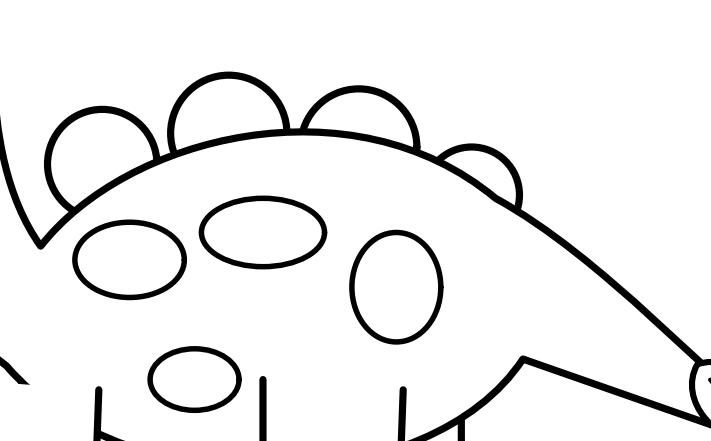
The spot outlines lie inside a much broader body. Their separate boundaries make it possible to contrast them with the surrounding area, coordinate their colors or choose an irregular arrangement. The uploaded drawing supplies no rule requiring every spot to match.
For Dinosaur Color Plans, inspect a selected spot before coloring broadly across it. Ask whether the child wants that inner boundary to remain noticeable. A deliberate single-color treatment and an accidental overlooked spot may look similar, but their intentions differ and deserve different feedback.
A Dinosaur Color Plans studio map
| Picture part | Possible decision |
|---|---|
| Body and spots | Blend the regions or create contrast. |
| Long neck | Adjust marks as the outline narrows. |
| Sun and plants | Echo a main hue or choose an accent. |
Dinosaur Color Plans uses these as options rather than assigned answers. The learner can focus on one relationship while leaving another undecided. An adult's useful role is to make a choice visible, then allow the artist time to try it.
Seven Dinosaur Color Plans opportunities to discuss
- Imagined identity: choose an appearance for a cartoon character without a compulsory natural palette.
- Inner boundaries: locate a spot within the larger body region.
- Visual emphasis: compare a strong accent with a quieter surrounding hue.
- Changing width: adjust a mark between the broad torso and narrower neck.
- Material testing: inspect a crayon or pencil effect before committing to a large area.
- Picture language: describe a spot, neck, tail, ray or leaf in context.
- Shared meaning: give a viewer a title or message that explains the design.
Dinosaur Color Plans combines thinking and language with coordinated movement. These are possibilities for a supported art visit, not results guaranteed by one finished page. A learner can communicate a contrast idea while still finding small shapes physically demanding to fill.
Dinosaur Color Plans can change marks along the neck
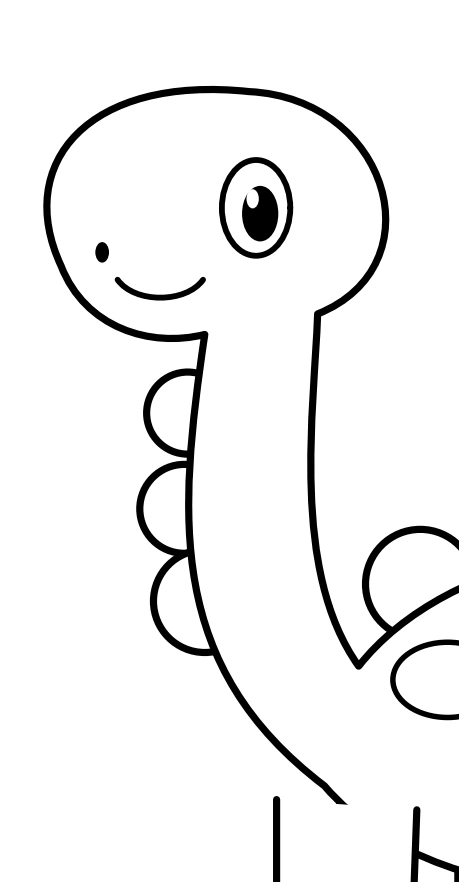
The tall neck and head offer a different space from the broad middle of the creature. A long sweeping mark may need to become shorter as the outline narrows. Invite a trial on separate paper if the learner wants to preserve those edges more deliberately.
Dinosaur Color Plans does not require immaculate edge control before imagination matters. Ask which part the child meant to color, then help make the practical task manageable. A familiar broader tool or a smaller amount of work may support the intention better than repeated correction.
Four Dinosaur Color Plans design-office games
Use spare cards or drawing paper for an optional game. Each gives a color choice a reason someone else can understand. Select a relevant idea rather than assigning every extension after the worksheet, and keep the uploaded picture's outlines unchanged.
1. Dinosaur Color Plans makes a spot contrast proposal
Create a large color patch and a smaller mark within or beside it on a scrap. Ask whether the two should blend or stand apart in the picture. Dinosaur Color Plans proposals let the child inspect a relationship before filling the creature's broad body.
The Dinosaur Color Plans maker can test a second proposal without discarding the first. An adult writes BODY and SPOT beside chosen marks when useful. Those words name an intention; they do not turn the palette card into a reading examination.
2. Give Dinosaur Color Plans a sunny-corner commission
Pretend the garden sign needs one small bright corner. The learner chooses a hue for a separate sun drawing and explains whether it repeats a body color. Dinosaur Color Plans commissions make the surrounding scene part of the design, instead of treating every background detail as leftover filling.
For Dinosaur Color Plans, the sun may use an invented palette. A viewer can ask which corner catches their eye without demanding yellow or orange. The artist decides how the decorative sunny character belongs with the creature below.
3. Dinosaur Color Plans sends a creature welcome card
The child draws an invented small creature on fresh paper and dictates a welcome message. Ask which palette feature a visitor should notice. Dinosaur Color Plans cards connect art with communication while allowing a drawing different from the source character.
A Dinosaur Color Plans receiver looks for the described feature and asks one interested question. The child can point or explain. Sharing need not end with a request to produce a second complete worksheet or copy the adult's version more closely.
4. Open a Dinosaur Color Plans mark-size workshop
Offer a wide drawn region beside a narrow curved one. The learner tests which marks feel comfortable in each. Dinosaur Color Plans workshops address tool use through visible space rather than an abstract demand to keep everything inside every line.
The Dinosaur Color Plans test may reveal that one tool suits both regions or that a change feels better. Let the child use that information in their picture if wanted. An experiment remains useful even when the artist decides to keep the original approach.
Dinosaur Color Plans gives the sun a separate role

The small smiling sun sits away from the main body. A learner may use it as an accent, repeat a hue from the spots or leave it lightly marked. Its rays create narrow details around a broader central face.
Dinosaur Color Plans can focus on the sun during another visit rather than requiring it after a tiring body-coloring session. Ask what the artist wants its role to be now. Regular practice can involve fresh picture decisions instead of repeatedly completing the same whole scene.
Set up Dinosaur Color Plans at home in a useful order
Begin with room for the page, a familiar drawing tool and a small palette scrap. Read the short instruction, inspect the creature and invite a chosen first feature. Test a hue or mark if the learner has a question, then try a comfortable amount of coloring.
During Dinosaur Color Plans, the adult can help stabilise the sheet or read the large outlined DINOSAUR word. The page is not a letter-tracing exercise. Coloring that word, naming its letters or writing a title independently can remain optional interests.
Finish Dinosaur Color Plans with a specific observation about the learner's intention. “Those spots stand out against the lighter body” gives understandable feedback. It is more informative than a verdict about whether the imaginary animal looks correct.
Dinosaur Color Plans in a classroom welcome gallery
A teacher prepares individual coloring pages and small label cards. Each child chooses one creature feature to make noticeable, tries a palette and explains the decision. The adult writes a short dictated gallery note before partners view the pictures.
Dinosaur Color Plans partners search for the feature the artist described. One may choose bright spots, another a quiet neck and another a sunny accent. Accept pointing, read labels aloud and offer larger trial regions. The gallery can preserve different intentions without comparing realism, completion speed or identical coverage.
Small Dinosaur Color Plans plants can wait their turn
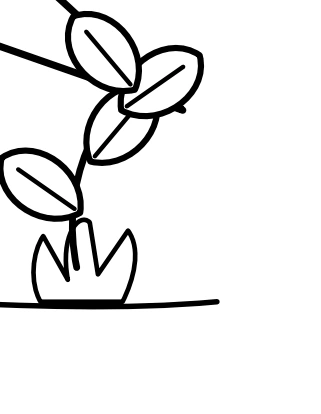
Leaves and grass near the tail create finer spaces than the torso. If the learner wants to explore them, compare the length of a planned stroke with the visible region. Short trials can make that relationship easier to notice.
Dinosaur Color Plans does not require every decorative detail to be finished before a picture is shared. The artist may choose one leaf as a color echo and leave nearby areas open. Ask about the intended emphasis instead of assuming white paper always means an incomplete decision.
Keep Dinosaur Color Plans open without losing its purpose
Common adult pitfalls include prescribing a green body, treating varied spots as a failed pattern or supplying species facts the cartoon does not establish. Keep the task grounded in the visible art choices. An invented character can have an invented palette.
Dinosaur Color Plans can suit adult-supported preschool or kindergarten drawing for many learners around ages three through six. Experience varies. Choosing a color, pointing to a region and making broad marks can precede detailed filling. Pause for fatigue or frustration, and offer a smaller target when the child still wants to continue.
Dinosaur Color Plans printable files and next interests
Use the premium attachment to obtain the clean Dinosaur Color Plans PDF after signing in with a currently eligible membership. Store this Dinosaur Color Plans member edition apart from your sample. Its PDF omits watermark text and website-domain promotion, with no advertising embedded in the page. Preview the full US Letter sheet before printing so the long neck, sunny corner and bottom topic word remain within the selected scaling. Site advertisements stay outside the saved PDF.
For different art structures, consider a giraffe with supplied colors or the guided chick reference. When pointed drawing routes become interesting, mountain turning points offers a separate mark-making task. Adults can explore NAEYC's family art discussion and PBS Parents' creative activities for wider opportunities, including independent drawings beyond a printed character.
Popular Worksheets
Printable resources families and teachers are downloading now.
 Free
 Free
 Free
 Free