
Elephant Splash Art: 5 Powerful Water-and-Grass Ideas
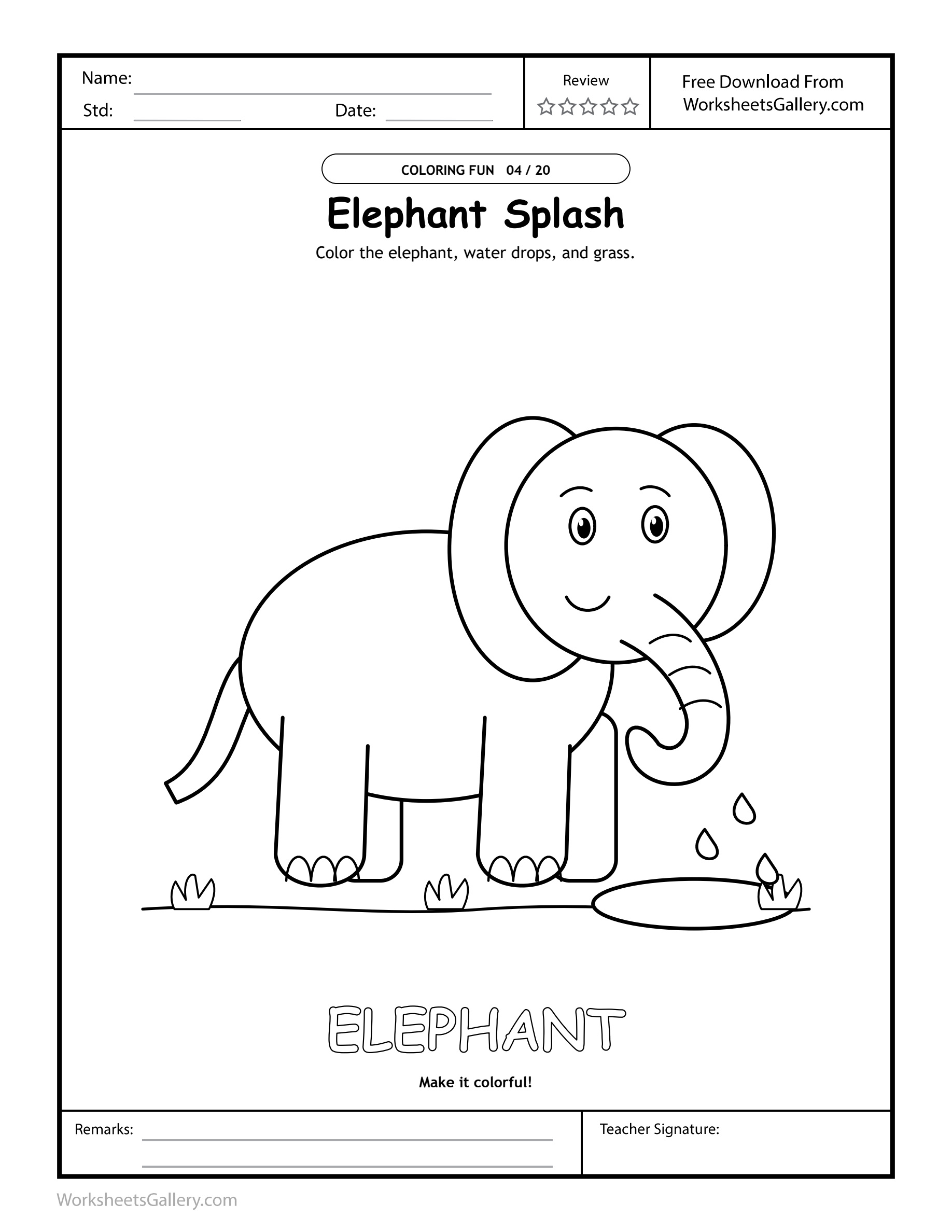
One roomy elephant and a few small drops offer very different places for a crayon to travel. Elephant Splash Art explores that difference through a friendly outlined animal, a puddle and tufts of grass. The Elephant Splash worksheet leaves its palette open: blue water and a grey elephant are possibilities, not printed answers. Begin by locating a large region and a little one. The learner can decide which to explore first, test a comfortable mark and choose how strongly the two areas should stand apart. A small picture detail can matter without receiving a large amount of coloring.
Elephant Splash Art gives scale a practical meaning
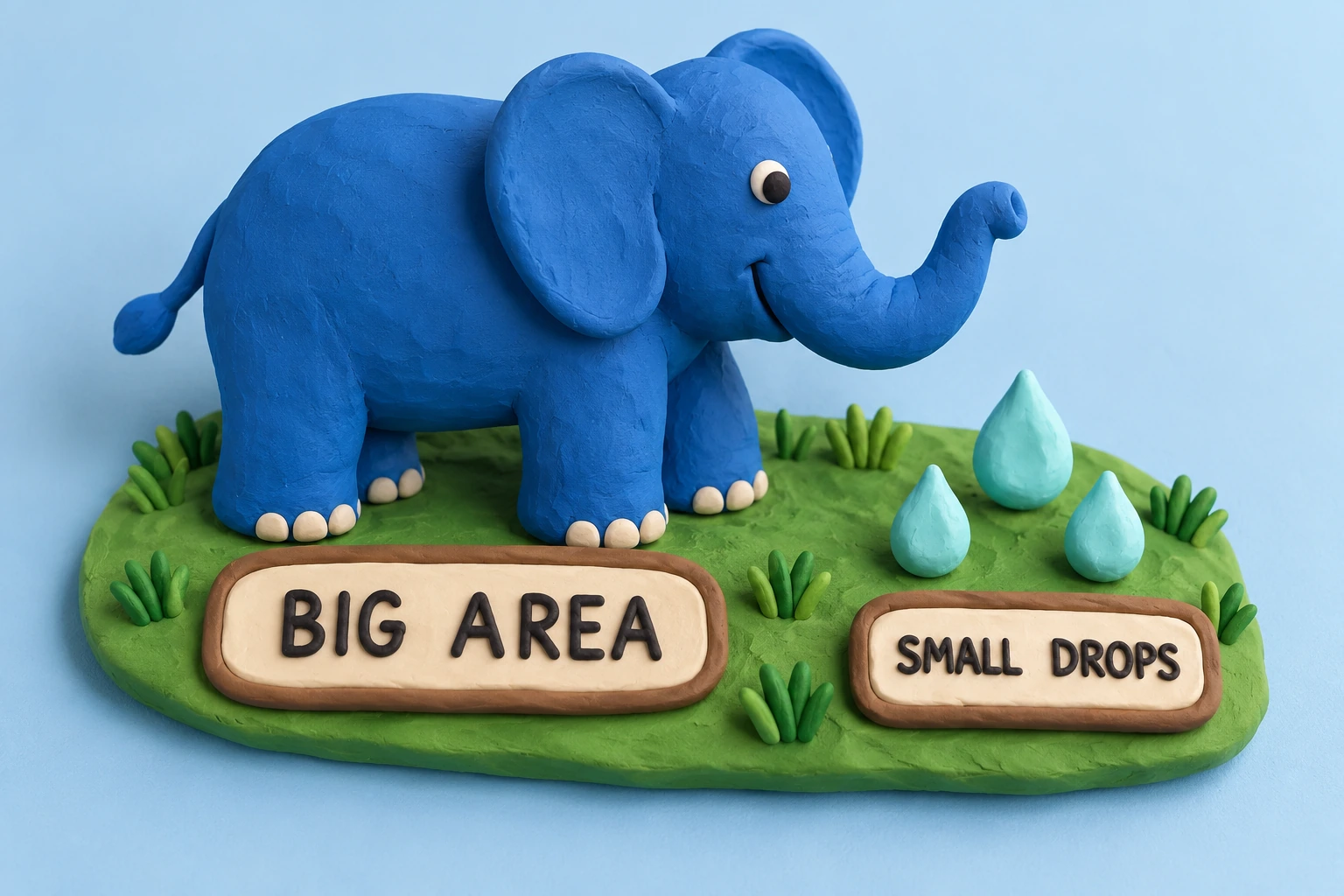
The separate Elephant Splash Art clay scene names BIG AREA and SMALL DROPS. Its broad blue elephant sits beside pale aqua shapes, illustrating one possible contrast. An Elephant Splash Art learner can notice the size relationship while choosing completely different colors for their own printable.
Elephant Splash Art uses scale to guide a tool decision. A sweeping crayon mark may feel comfortable across the belly, while a short mark may suit a drop. Changing the movement is a response to the current region, not a requirement to make the entire sheet uniformly smooth.
An Elephant Splash Art looking tour before the tools
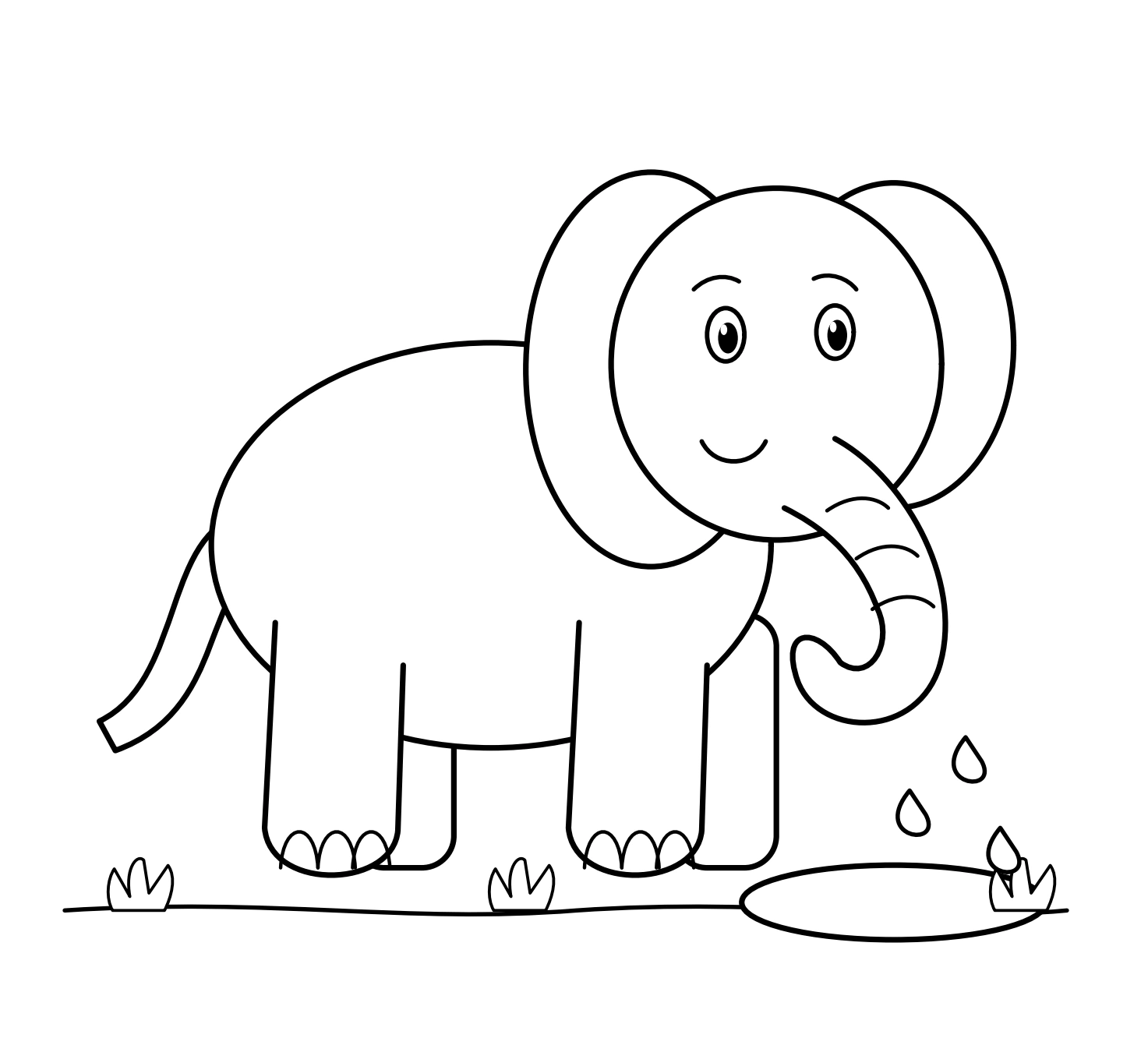
The Elephant Splash Art source picture includes an elephant with a curved trunk, small falling drops, an oval puddle and grass. Large ears and body regions share the scene with narrow legs, toes and water details. The instruction invites coloring rather than a counting task or a prescribed tracing route.
Elephant Splash Art also presents the outlined word ELEPHANT below the picture. An adult can say the topic word aloud while indicating the elephant picture. Letter recognition, spelling and filling every letter interior are optional interests here, not conditions for completing the coloring activity.
Nila asks Elephant Splash Art where to put the brightest mark
Nila and her grandfather are making a pretend rainy-day picture display. She chooses a quiet pale color for the elephant, then wants one drop to look especially bright. Her grandfather asks her to point to that drop before selecting a crayon.
Their Elephant Splash Art conversation makes a small region important through intention. Nila tests a short bold mark on spare paper and uses it in her chosen drop. Her grandfather notices the contrast, rather than asking her to make every drop identical or fill the animal more densely.
Elephant Splash Art at home can support another story too. The picture's friendly character might visit an imaginary color puddle. Keep that story imaginative; the worksheet is not evidence about how real elephants splash, what their water looks like or which colors their bodies should have.
Six Elephant Splash Art observations for adults
- Size comparison: notice the broad belly beside compact drops.
- Mark selection: choose a movement that fits the region currently being colored.
- Contrast: give one small detail more emphasis through a stronger or different hue.
- Boundary awareness: inspect where the animal ends and the water begins.
- Descriptive talk: explain large, little, pale, bold, trunk or puddle through the picture.
- Artistic pacing: decide which region to explore now and which can wait.
Elephant Splash Art involves visual attention, planning, language and motor coordination. Those possibilities should not become a score sheet. A learner can point to a small target accurately while needing a larger off-sheet version to make the intended mark comfortably.
Set up Elephant Splash Art as a size-choice session
Place the sheet where the child can reach its upper and lower regions without crowding their arms. Offer familiar crayons or pencils and a test scrap. Read the brief instruction, then let the learner choose a broad area or a small detail for the first attempt.
- Find the selected region and inspect its edge.
- Make a possible mark on spare paper.
- Decide whether that mark fits the intended picture space.
- Try a manageable amount of coloring.
- Show one choice before deciding whether to continue.
Elephant Splash Art support can include steadying the page, helping locate a line or offering a tool that feels easier. Adults need not guide the child's hand through a drop to secure a tidy result. Let the artist retain the plan while adjusting the practical demand.
Elephant Splash Art can begin across the belly
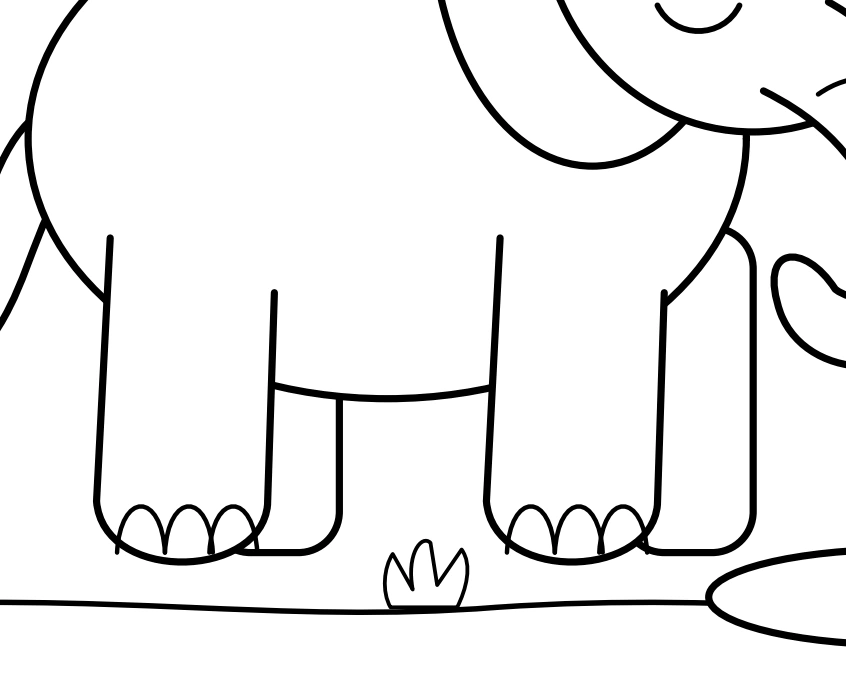
The close view concentrates on the broad body and feet. Ask whether the child wants light open marks, a denser patch or another treatment. A large Elephant Splash Art region is not automatically an instruction to cover the paper heavily. The learner may prefer a few deliberate marks and a story about their color.
Elephant Splash Art can preserve small printed details by changing the amount of pigment or mark size nearby. Test first if the child wants to keep toe lines or nearby grass visible. The aim is a choice the learner understands, rather than an adult secretly repairing every edge.
An Elephant Splash Art size map for a short visit
| Selected space | A mark to investigate |
|---|---|
| Roomy belly | A broad, comfortable patch. |
| Little drop | A brief accent that fits. |
| Grass tip | A short directional stroke. |
Elephant Splash Art can stay with any one of these spaces. Ask which trial the learner wants to investigate, keeping the next mark small enough to discuss.
Five Elephant Splash Art experiments with separate materials
Each optional Elephant Splash Art experiment investigates a size or contrast decision. Use spare paper and select one relevant idea. The original picture remains a coloring invitation, and the extra activity need not produce another finished elephant or a long series of practice marks.
1. Elephant Splash Art opens a big-and-little mark tray
Draw one broad rounded space and one small drop shape on a scrap. The learner tests marks in each, explaining whether the same motion fits both. Elephant Splash Art trays make scale visible through a material decision rather than a verbal definition of big and small.
An adult can add BIG and LITTLE beside the filled studies. Keep the labels meaningful without requiring independent reading. If the child invents another motion, let it join the comparison instead of insisting on the adult's first demonstration.
2. Give Elephant Splash Art a single-drop spotlight
On a fresh card, draw several little drops. The child chooses one to receive a stronger accent and explains which they selected. Elephant Splash Art spotlights show how a compact region can attract attention even when it contains fewer marks than a broad surrounding space.
The unaccented drops may remain pale or open. Ask the learner where their eye goes first. There is no need to convert the exercise into matching every shape after one intentional contrast has been made.
3. Elephant Splash Art makes a puddle-palette proposal
Invite two possible water marks on separate cards and compare them beside the source puddle. The artist decides whether either belongs in their picture. Elephant Splash Art proposals allow an invented hue without pretending that the worksheet has a hidden blue-water rule.
A partner can suggest a different combination, but the maker keeps the final decision. Save an unused swatch for another scene if wanted. Experimenting need not end with one right card and several discarded wrong ones.
4. Send Elephant Splash Art a weather-story message
The learner dictates a short imaginary message about the pictured elephant's day. An adult records the Elephant Splash Art message on a separate display label and asks which color connects with that story. Elephant Splash Art messages give a recipient a specific reason to inspect the picture.
The connection can be personal: a bright drop might represent a celebration rather than realistic weather. Welcome the explanation through gestures or a few words, keeping factual animal instruction separate from the pretend art story.
5. Make Elephant Splash Art a small-detail gallery
Each partner draws one grass tuft or drop on spare paper and names a mark choice they used. View the cards together and discuss how the small regions remain visible. Elephant Splash Art galleries recognise deliberate choices without needing two complete animal pictures for comparison.
Ask the artist what a viewer should notice first. A rough edge or an open space can remain while the intended accent is discussed. Sharing a detail should not become a ranking of whose hand controlled the tool more precisely.
Elephant Splash Art gives the drops a separate visit
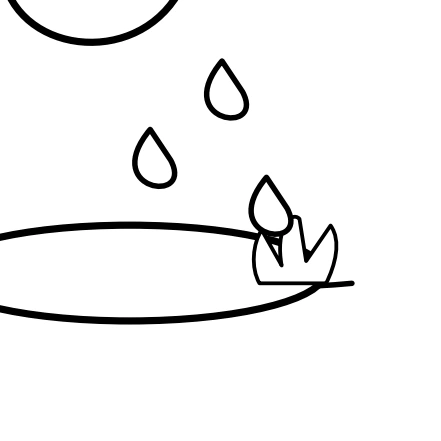
The small Elephant Splash Art water shapes sit near the curved trunk and puddle. Their limited space can make a strong crayon mark fill the outline quickly. If the learner wants a lighter effect, explore that effect on a larger drawn drop before returning to the small source region.
Elephant Splash Art corrections should fit the stated aim. A child who wanted a bold filled drop has made a different choice from one who wanted a pale highlight but found the tool too strong. Ask about the intention before treating both pictures as the same problem.
An Elephant Splash Art classroom contrast lab
A teacher provides individual pages and optional swatch scraps. First, each child locates one large and one little region. Next, they decide whether those areas should share a hue or contrast. Finally, the adult records a short explanation about one selected mark on a separate label.
Elephant Splash Art partners look for the described choice in each other's pictures. One artist may emphasise the elephant; another may make the water the brightest part. Offer larger test shapes, read labels aloud and accept pointing. The group can investigate contrast without producing identical palettes or completing every region together.
Elephant Splash Art can remain comfortable as skills vary
This adult-supported coloring invitation can fit many preschool and early kindergarten children aged about three through six. Drawing experience matters. Broad crayon work, choosing a color and pointing to a region can be useful participation before narrow detail filling feels manageable.
Elephant Splash Art gives attention a visible job while the drawing and supporting hands coordinate around a page. Some children can explain pale versus bold before controlling light pressure consistently. A separate test, another familiar material or a shorter visit may support that intention better than repeating the same instruction.
Keep Elephant Splash Art encouraging on another day
Common pitfalls include requiring grey skin, assigning blue to every water region, demanding full coverage or correcting all boundary crossings. Those adult rules are not printed in this open-choice activity. Ask what the artist meant before asking for a change.
Elephant Splash Art encouragement can be concrete: “That tiny drop uses your strongest color.” A later visit could begin with grass, a different puddle proposal or a new story label. Pause when hands tire or interest fades. Returning to one meaningful choice can be more inviting than being told to finish an entire partly colored elephant.
Elephant Splash Art downloads and wider color conversations
For the clean Elephant Splash Art PDF, sign in with membership access currently covering this worksheet and select the premium attachment. Keep that file apart from the original sample. The member printable contains no watermark, promotional domain or embedded ads; advertising on the site is outside the saved page. Inspect the full US Letter frame before printing, keeping the trunk, puddle and topic word within your printer's chosen scaling.
Other coloring invitations include the giraffe's reference-guided palette and a chick with supplied colors. For an unrelated mark choice, explore smooth wave paths when the learner wants a drawing route. Adults can browse the PBS Parents art collection or NAEYC's resource on creativity for broader activities alongside a printed outline.
Popular Worksheets
Printable resources families and teachers are downloading now.
 Free
 Free
 Free
 Free