
Sailboat Color Map: 5 Brilliant Sail-and-Wave Ideas
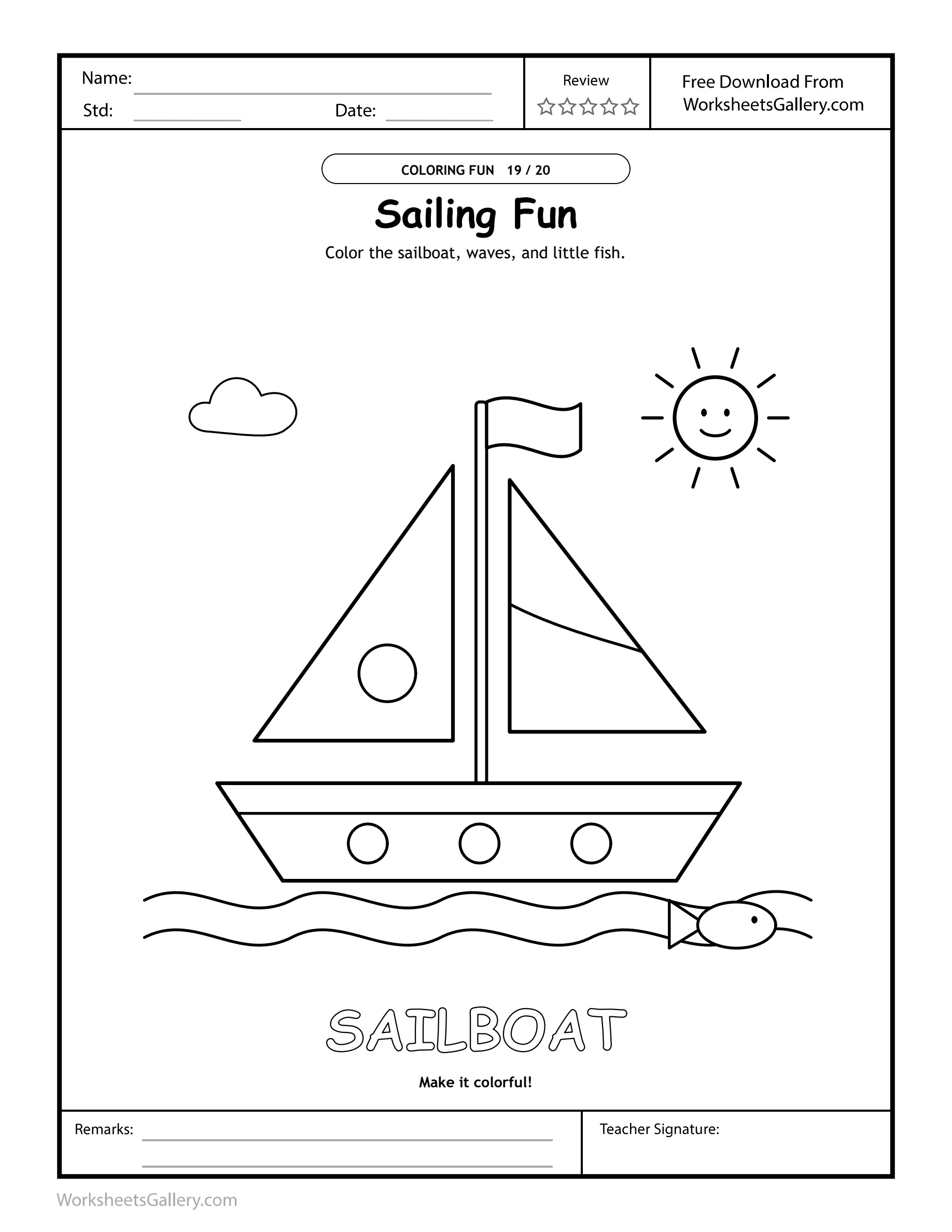
Where does a boat end and its water begin? Sailboat Color Map gives that question a visible place in the Sailing Fun picture, with angular sails above flowing wave lines and a little fish below. Children can choose separate palettes for sail, hull and water without following a printed color key. A circle inside one sail, divisions in another and small hull details offer additional decisions when wanted. Start with a region the learner can comfortably reach and describe. The aim is a personally chosen picture relationship, rather than a realistic boat or an entirely filled page.
Sailboat Color Map divides the picture into useful groups
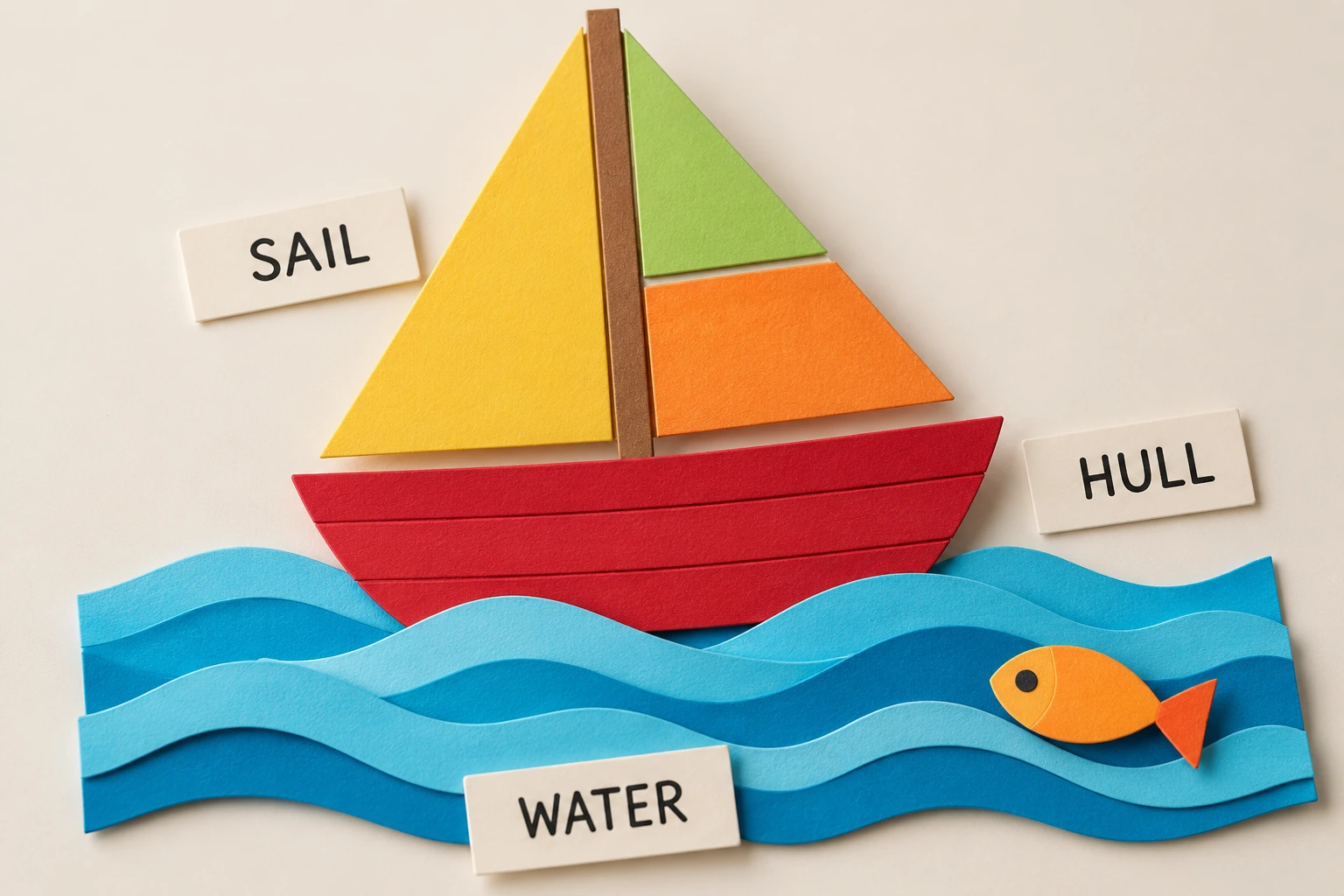
The separate layered-paper model labels SAIL, HULL and WATER beside its craft. Red and cyan make two groups easy to distinguish, while the sails introduce another arrangement. The example offers one possible relationship in a different material, not a solution to copy.
Sailboat Color Map can begin with three broad trial patches on scrap paper. Ask which part each patch might represent. A child can repeat a hue across groups, use a surprising water color or choose one region as the strongest focus.
Sailboat Color Map is a coloring invitation, not instruction about handling a real boat. The picture's friendly shapes support discussion of visible parts. Questions about actual sailing or water safety belong in a separate factual activity with appropriate guidance.
Pari gives Sailboat Color Map a postcard destination
Pari tells her brother that the imagined boat is taking a message to a purple island. He asks which feature a postcard receiver should find first. She chooses the sails, tests two warm hues beside a cooler water sample and dictates her greeting on another card.
During Sailboat Color Map, Pari notices the small fish and changes its color so it remains easy to spot. Her brother follows her pointing and asks whether the water around it should stay quiet. He supports the relationship she wants rather than assigning blue to every wave.
Sailboat Color Map may have no island story for another artist. A child who enjoys quiet marking can focus on a sail corner or wave texture alone. The postcard example illustrates a purpose for the palette without adding a required narrative task.
Sailboat Color Map studies the original scene
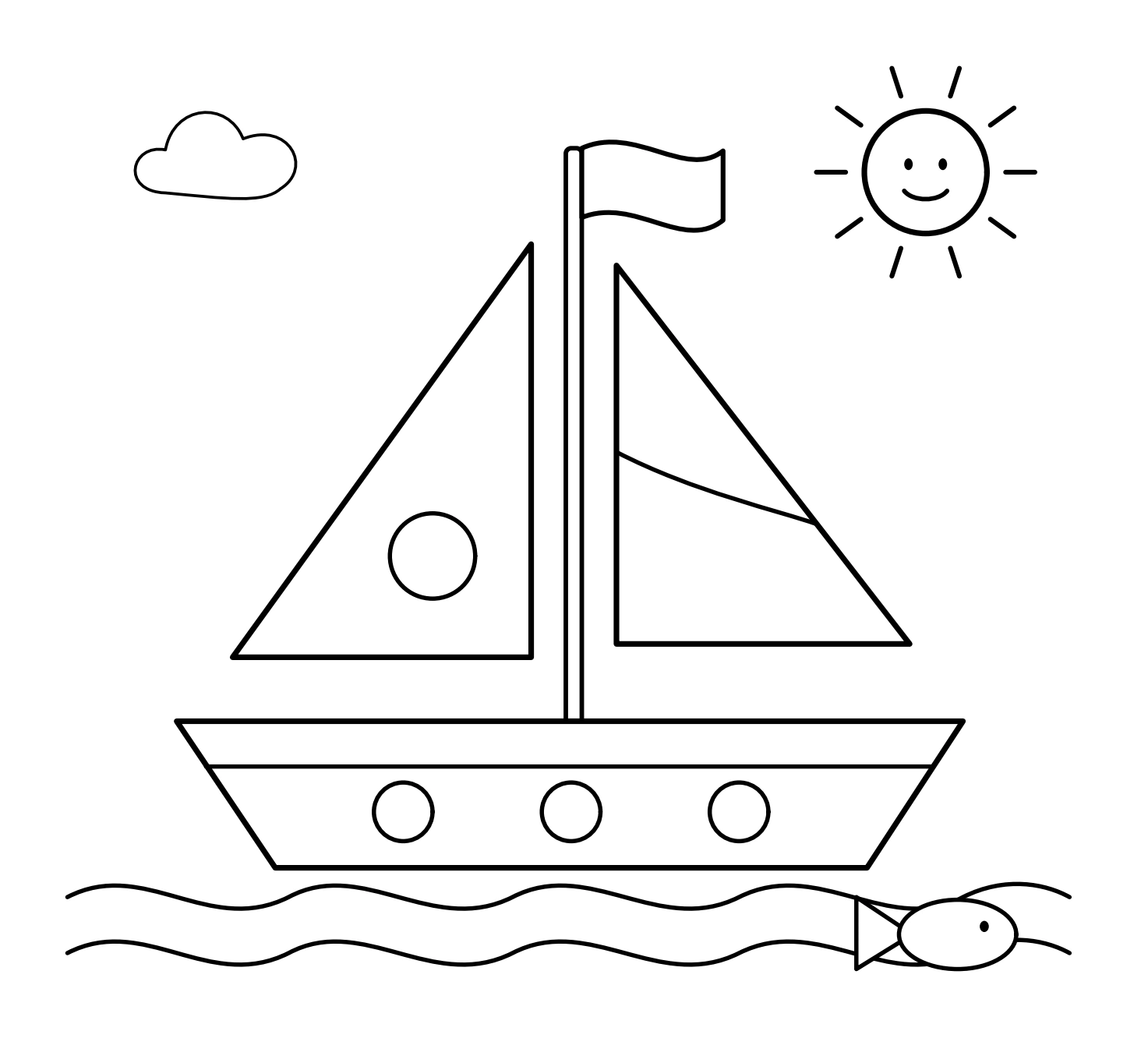
The source direction asks for color on the sailboat, waves and little fish. Two sail areas rise beside a mast and flag, while the hull contains three circular details. The water uses long curves rather than the sails' straighter boundaries.
Sailboat Color Map also contains the outlined label SAILBOAT underneath. An adult can name the word during conversation, but the learner need not fill its letters, trace it or write a new caption independently. Coloring the picture remains the supplied task.
Five Sailboat Color Map games for a pretend postcard studio
Choose one experiment and give it space on spare paper. These games separate a question about color or movement from the smaller physical demands of the source. A useful trial can remain a finished study in its own right.
1. Sailboat Color Map makes a sail-hull-water sampler
Offer three simple large regions representing the main groups. Invite a chosen mark into each, then compare which attracts attention. Sailboat Color Map samplers can use several hues or one repeated hue with different textures, depending on the learner's intention.
The Sailboat Color Map maker can move a choice after viewing the trial. Ask what the new arrangement communicates. A plan is a tool for exploring relationships, not a contract requiring every later region to match the first sample.
2. Sailboat Color Map explores a corner and a curve
Draw a large triangular sail-like area beside a broad wavy region. Test the same comfortable tool in both. Sailboat Color Map movement studies reveal that a short mark may fit a corner while a sweeping mark may feel comfortable along open water.
The Sailboat Color Map child decides whether either movement belongs on the actual picture. Exact edge control is optional. If a fine point becomes frustrating, keep the investigation large and preserve the color decision without increasing the physical demand.
3. Sailboat Color Map sends a sail clue
The maker selects one sail region and dictates a clue about its color, shape or nearby detail. An adult reads the clue to a partner who locates it. Sailboat Color Map exchanges use language for a real purpose while leaving transcription with the adult.
For a Sailboat Color Map reply, a listener may simply indicate the feature. When several areas fit the description, help the maker add a distinguishing detail. The child need not know specialist nautical terms to describe a circle, dividing line, mast or pointed top.
4. Sailboat Color Map keeps a fish visible
Draw a large fish-like outline beside a water patch on a scrap. Compare a strong accent with a quieter one and ask which suits the story. Sailboat Color Map fish studies give a small supporting character an intentional role before compact coloring begins.
For Sailboat Color Map, visibility is a choice rather than a universal goal. A learner may want the fish to blend for an imaginary hiding game. Ask what the maker intended before assuming the small character needs a brighter color.
5. Sailboat Color Map writes a color postcard through dictation
Invite a short greeting from the imagined boat and add a filled palette mark beside the adult-written message. Sailboat Color Map postcards might mention a golden sail, quiet waves or a fish waiting below, according to the artist's picture.
Read the Sailboat Color Map card back and let the maker revise it. A listener then finds the named feature. Keep the task about this drawing rather than judging whether the fictional journey is realistic or requiring the child to write the message alone.
Sailboat Color Map looks inside the triangular sails
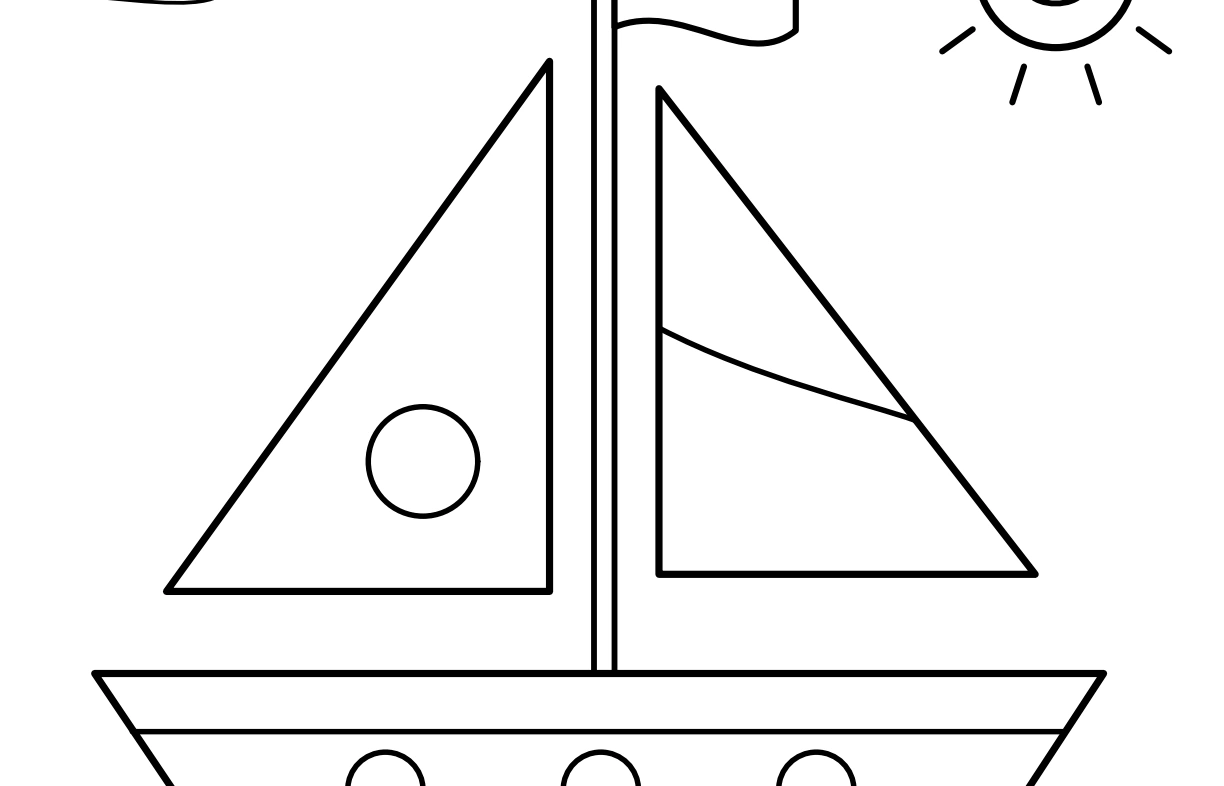
One sail includes a round detail and the other contains a dividing line. The mast and flag add more compact shapes nearby. Follow the actual printed boundaries when locating a region; there is no need to add new divisions or enforce identical palettes on both sides.
Sailboat Color Map can try a broad mark away from the pointed tip before exploring a corner. Ask whether the child wants each section distinct. Similar hues, repeated marks or deliberately open spaces may all be part of the chosen plan.
Six Sailboat Color Map opportunities worth describing
- Picture grouping: distinguish sails, hull and water through visible boundaries and chosen palette roles.
- Movement comparison: explore a straight corner and a flowing curve with the same familiar tool.
- Detail awareness: locate a circle, flag or fish before deciding how much attention it should receive.
- Specific vocabulary: use beside, below, sail, hull and wave to guide another person's looking.
- Creative communication: connect a color choice to a dictated postcard message.
- Flexible revision: change a sample, clue or palette when the first attempt does not express the intended relationship.
Sailboat Color Map connects thinking, hand use and language without requiring identical progress in each. A learner may understand the visual groups while needing help with a moving sheet. Another may communicate a clear intention through pointing before speaking about it.
Sailboat Color Map at home follows the maker's destination
Set the sheet beside a test scrap and a small selection of familiar materials, keeping other choices available. Read the direction and invite a starting region. If the child has a story, ask one question that helps identify its visual focus; otherwise allow a quiet beginning.
During Sailboat Color Map, offer practical support with page movement or finding a small shape. Avoid narrating every mark. At a natural pause, “Your warm sail is easy to notice above the quieter water” describes a relationship the child can confirm or explain differently.
A classroom Sailboat Color Map postcard harbor
A teacher gives individual sheets with separate message cards. Children choose a picture group, explore a trial and dictate one postcard line. Partners receive the message through adult reading and locate the described area, responding with a specific observation or interested question.
Sailboat Color Map sharing can be quiet and individual. A child may point to a sample while the teacher reads, or present one selected sail study. The display can include many palettes without ranking them by realism, neatness or how much of the page is filled.
The Sailboat Color Map harbor is imaginary. There is no need to organise pretend travel facts or assess knowledge of real boats. Keeping the exchange about visible decisions makes the social activity accessible to learners with different background experiences.
Sailboat Color Map changes rhythm below the hull

Long wave lines surround the small fish beneath the boat. The curved region differs from the angular sail spaces, and the little character interrupts its movement. A learner can inspect that interruption before making a broad water mark.
Sailboat Color Map may use a light surrounding treatment to preserve a fish accent, or blend the character intentionally. Check the desired effect before calling a quiet detail unfinished. Color intensity alone does not reveal whether the child was paying attention.
Sailboat Color Map solves one difficulty at a time
| A concern appears | A possible invitation |
|---|---|
| The sail tip feels too small. | Try a larger triangle nearby. |
| The fish is hard to find. | Ask whether it should blend or stand out. |
| Water coloring feels endless. | Choose a short section or pause. |
Common Sailboat Color Map support errors include requiring blue water, demanding matching sails or treating every hull circle as a compulsory fine-motor test. The source leaves the colors open. An adult can help with a desired effect while allowing the amount attempted to remain the child's decision.
Sailboat Color Map welcomes a short return visit
Preschool and beginning kindergarten artists, often between three and six years old, can access this page in different ways. A broad patch, a color selection or pointing to a region can precede work on narrow flags and tiny circles. Tool experience matters more than an exact age target.
Return to Sailboat Color Map with one new postcard clue, a changed fish accent or another neighboring sail pair. A concrete question can encourage regular art opportunities without demanding a fresh whole picture. Pause for tired hands or fading interest and preserve a willing next visit.
Sailboat Color Map can also lead to a completely new boat drawing. Letting the child invent the outline provides another kind of control, complementing the choices they made inside the supplied picture rather than requiring a copy of it.
Print Sailboat Color Map and follow another interest ashore
Choose the clean Sailboat Color Map premium attachment after signing into a membership whose active plan permits that download. Keep the member edition apart from the original sample PDF. Watermarks and website/domain branding are removed, and the clean file has no embedded ads. In your printer settings, view the complete US Letter scene so the mast, fish and lower label stay within the print area. Web-page advertising remains outside the document you print.
For a prescribed color reference, compare the guided giraffe picture and the chick's limited-palette exercise. Ocean Waves routes is a separate mark-making activity. Adults can explore PBS Parents' art inspiration and NAEYC's creativity discussion for families, while also offering open drawing time without a supplied outline.
Popular Worksheets
Printable resources families and teachers are downloading now.
 Free
 Free
 Free
 Free