
Kitten Yarn Colors: 5 Brilliant Texture-Making Games
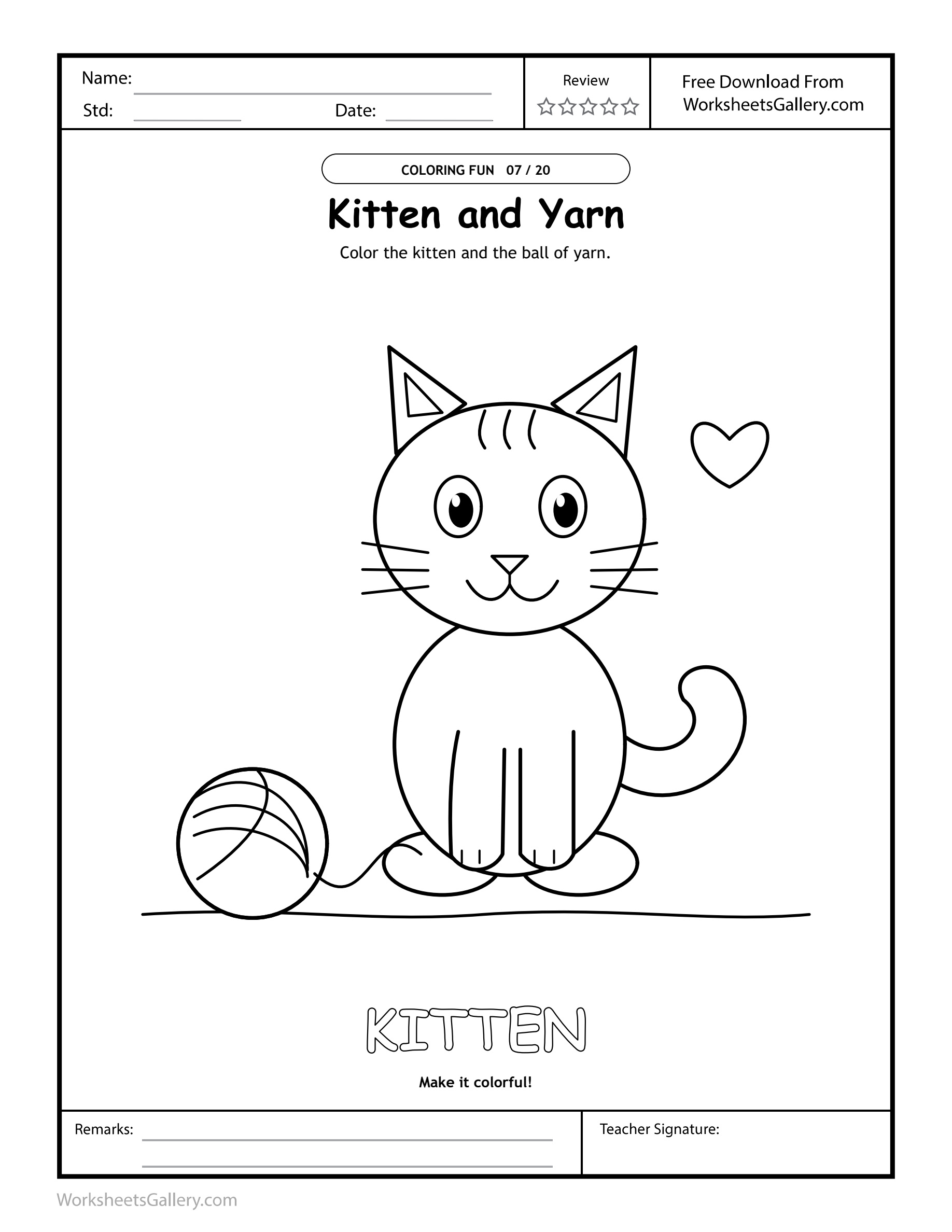
Short strokes can suggest softness; crossing curves can suggest a wound ball. Kitten Yarn Colors explores how different marks feel to the eye within a friendly outlined picture. The Kitten and Yarn worksheet shows a seated character with whiskers, pointed ears, a curved tail and a nearby yarn ball, plus a small heart and outlined topic word. There is no color model to imitate. Begin on spare paper by comparing two kinds of marks. The learner can decide whether either belongs in their kitten picture, or choose a simpler flat color treatment instead.
Kitten Yarn Colors asks what a mark suggests
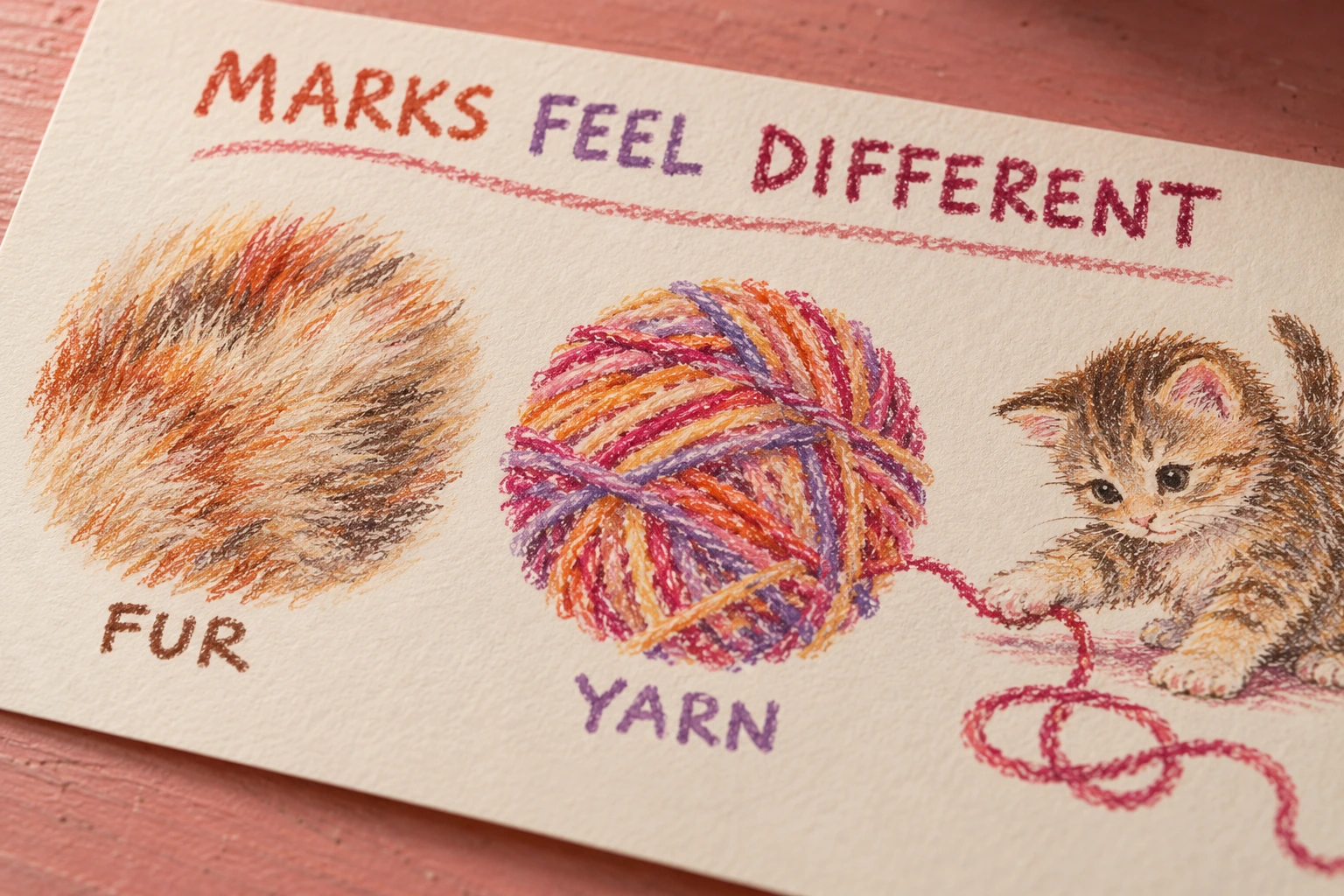
The supporting crayon study contrasts short strokes labelled FUR with crossing curved marks labelled YARN. Its heading, MARKS FEEL DIFFERENT, names an observation about appearance. The two studies provide possible ideas rather than instructions to reproduce every stroke on the printable.
Kitten Yarn Colors can investigate texture without demanding realistic shading. A child may choose a few short marks, a broad pale patch or a single strong hue. Ask what they intended the surface to look like before deciding whether another technique would be helpful.
Tanu gives Kitten Yarn Colors a soft-picture question
Tanu and her grandmother are drawing a pretend kitten portrait for a family notice board. Tanu makes long, strong stripes and says she wanted the body to look soft. Her grandmother offers a test scrap and asks whether shorter marks might suggest another surface.
Their Kitten Yarn Colors visit begins away from the main picture. Tanu compares two trials, chooses one and adds a small area of short marks to the portrait. Her grandmother notices the intended change without requiring the entire kitten to be filled with identical strokes.
Kitten Yarn Colors at home can support Tanu's question, but softness is not the only possible goal. Another artist may want bright decorative stripes or a very quiet outline. The useful conversation concerns the maker's chosen effect, not a rule that every cartoon animal must look natural.
Kitten Yarn Colors reads the curved yarn lines
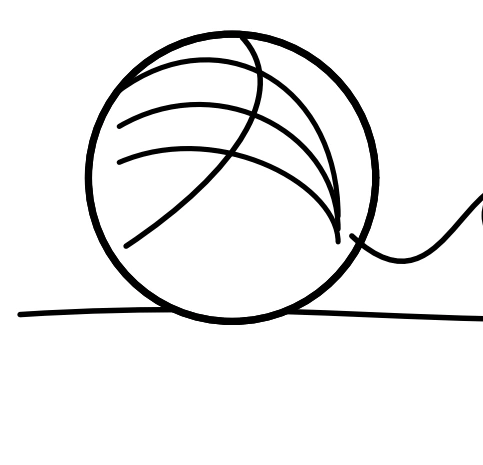
Several printed curves cross the round yarn outline. These lines already suggest a wound surface, so a child can decide how much added color the region needs. Dense filling may hide some of the curves; lighter marks or selected spaces can keep them noticeable.
Kitten Yarn Colors does not prescribe a multicolor yarn ball. One hue can reveal the existing line texture, while contrasting marks can create another effect. Point to a visible curve and ask whether the learner wants it to remain prominent after coloring.
Five Kitten Yarn Colors experiments for a mark library
Make the experiments on separate cards, with meaningful words added by an adult when useful. Choose an investigation that answers a current picture question. The cards are resources for decisions, not a second set of exercises that must all be finished before the worksheet counts.
1. Kitten Yarn Colors opens a short-stroke sampler
Invite a small cluster of short marks in one color. Beside it, try a longer mark and compare their appearance. Kitten Yarn Colors samplers let the learner see how length and spacing change a surface without requiring a formal definition of texture.
The Kitten Yarn Colors artist chooses which trial, if any, belongs in the portrait. Keep another option available when neither fits the intended effect. An adult demonstration should not quietly become a model that all later marks must match.
2. Give Kitten Yarn Colors a curve-crossing card
Draw a broad circle on spare paper and add several curved lines across it. The learner chooses a color treatment that keeps those lines visible. Kitten Yarn Colors crossing cards connect directly with the yarn detail while offering more room than the compact source shape.
For Kitten Yarn Colors, a few light marks may answer the question. The child need not fill every gap between the curves. Ask which line remains easy to see, then let that observation guide any further attempt.
3. Kitten Yarn Colors creates a whisker-space study
On a large scrap, draw a rounded face area with a few long lines extending from its sides. The learner tests how a background mark affects their visibility. Kitten Yarn Colors studies make a fine-line detail easier to inspect before working near the source whiskers.
A Kitten Yarn Colors child may keep the area lightly marked or choose a contrasting surrounding hue. Neither decision requires copying a real kitten. Describe the visible relationship between thin lines and broader color instead of judging biological accuracy.
4. Send Kitten Yarn Colors a portrait-description note
The maker chooses two words for the pictured surface, such as striped and quiet, then dictates a short note for a viewer. Kitten Yarn Colors notes give another person a reason to inspect the artist's mark choices rather than offering a general verdict about the picture.
Ask the Kitten Yarn Colors recipient where the named effect appears. A child can clarify with a finger if the words are ambiguous. The exchange may end with that explanation, without requiring a new drawing to prove the description.
5. Make Kitten Yarn Colors a material-choice shelf
Try the same small mark with two familiar materials on separate scraps. The learner compares whether the marks look pale, strong, broad or narrow. Kitten Yarn Colors shelves make the tool's effect visible before a large picture region is committed to one approach.
The Kitten Yarn Colors maker may choose different materials for face and yarn, or keep one comfortable tool throughout. Selecting the easier option can be a sensible art decision. It need not be presented as a lesser achievement than using a finer point.
A Kitten Yarn Colors guide to three visible contrasts
| Compare | Look for |
|---|---|
| Short and long marks | How the suggested surface changes. |
| Pale and dense color | Whether printed curves stay visible. |
| Broad areas and whiskers | Which mark size fits the intention. |
Kitten Yarn Colors questions should relate to the work the child is actually making. A constant request to explain every line can interrupt useful concentration. Offer one observation when a decision appears, then leave room for quiet working and a change of mind.
Six Kitten Yarn Colors learning possibilities
- Surface observation: notice how marks suggest a texture or decorative effect.
- Visual comparison: inspect two material trials before selecting one.
- Boundary attention: locate a face edge, ear interior or yarn curve.
- Motor variation: try shorter movements beside a broader color patch.
- Descriptive vocabulary: use soft-looking, striped, curved, pale or dense in context.
- Art communication: describe one chosen effect for a viewer.
Kitten Yarn Colors connects looking and planning with language and coordinated tool use. The opportunities vary with experience. A child may understand a texture comparison while preferring broad crayon strokes because small repeated movements are currently tiring.
Kitten Yarn Colors gives the face breathing room
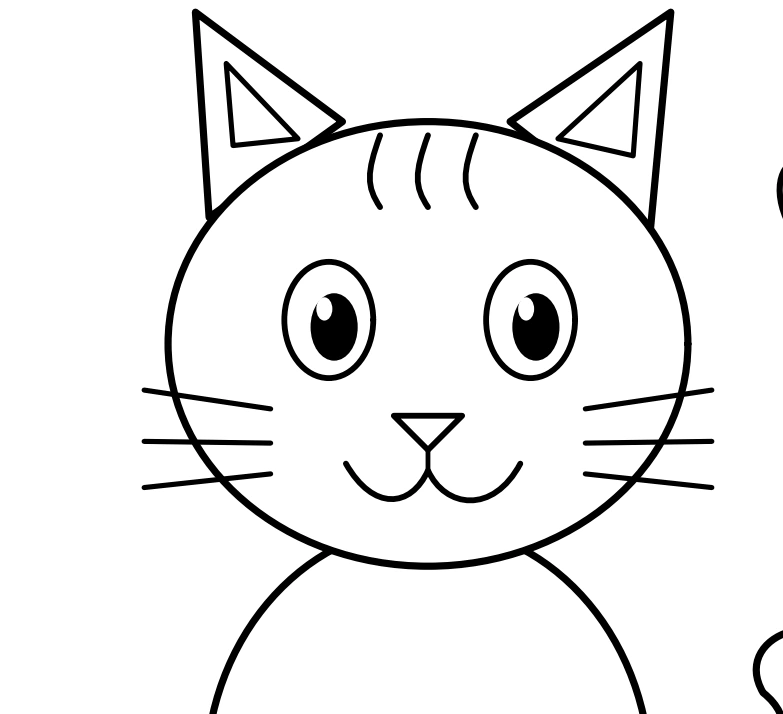
The source face combines a broad rounded area, small eyes and nose, triangular ears and fine whisker lines. Those elements can receive different amounts of attention. Before coloring near the eyes, ask whether the learner wants their printed details to remain particularly noticeable.
Kitten Yarn Colors can preserve a lightly marked face while the body becomes stronger. A darker portrait is also a possible choice when intentional. Discuss the desired effect and offer a test scrap rather than repeatedly correcting a small area after it has become crowded with pigment.
A home Kitten Yarn Colors visit can start off the page
Prepare the worksheet beside spare paper and a familiar drawing tool. Read the short instruction, inspect the kitten and yarn, then ask whether the learner has a surface effect in mind. If they do, make one material trial before choosing a starting picture region.
During Kitten Yarn Colors, support the page position or help locate a boundary when requested. The adult can read the outlined KITTEN word, while letter naming or coloring its narrow interiors remains optional. The page's main invitation is coloring, not a handwriting assignment.
End Kitten Yarn Colors with a feature the artist chose: perhaps a striped patch, a quiet face or visible yarn curves. “Those short marks change the way that area looks” identifies evidence without requiring every part of the picture to use the same technique.
Kitten Yarn Colors in a classroom mark museum
A teacher gives each child an individual page and one optional sampler card. Learners choose a mark effect, test it and use a small amount where they want it. The adult records a brief dictated description beside the sampler for a shared viewing area.
Kitten Yarn Colors partners look for the connection between sampler and picture. One child may use short strokes, another a pale patch and another broad decorative stripes. Accept gestures, read descriptions aloud and offer larger test regions. The museum values understandable choices rather than identical kittens or the number of techniques used.
Kitten Yarn Colors can avoid unnecessary correction
Common difficulties include dense pigment hiding fine lines, a tiny tool feeling awkward or an adult insisting on soft-looking fur after the child chose stripes. Identify whether the problem is practical or simply a difference in taste. The intended surface belongs to the artist.
Kitten Yarn Colors may suit preschool or early kindergarten art with an adult, broadly for ages three through six. A child can participate by selecting colors and pointing before explaining a detailed technique. Fatigue, comfort and interest matter more than completing all the small regions in one sitting.
Regular Kitten Yarn Colors visits can return through a different sampler, a portrait title or another yarn treatment. Preserve one remembered observation and offer a fresh purpose. Stop when hands tire or frustration takes over; a meaningful comparison can remain the useful part of the visit.
Kitten Yarn Colors print access and related interests
For the unbranded Kitten Yarn Colors edition, sign in with a membership whose current access includes the premium download, then save that attachment apart from the original sample. Its printable PDF omits watermarking, website-name promotion and embedded ads. Inspect the US Letter portrait frame before printing, retaining the ears, yarn ball and bottom word within the selected scaling. Advertising on the webpage is not part of this saved file.
For other kinds of picture support, compare the chick's finished palette reference or a guided giraffe scene. A separate interest in repeated curves can lead to above-line loop routes. Adults can browse NAEYC's resource about creative choices and PBS Parents' art explorations, leaving room for the child's own independent drawings alongside the supplied outline.
Popular Worksheets
Printable resources families and teachers are downloading now.
 Free
 Free
 Free
 Free