
Rocket Color Mission: 6 Wonderful Panel-and-Star Games
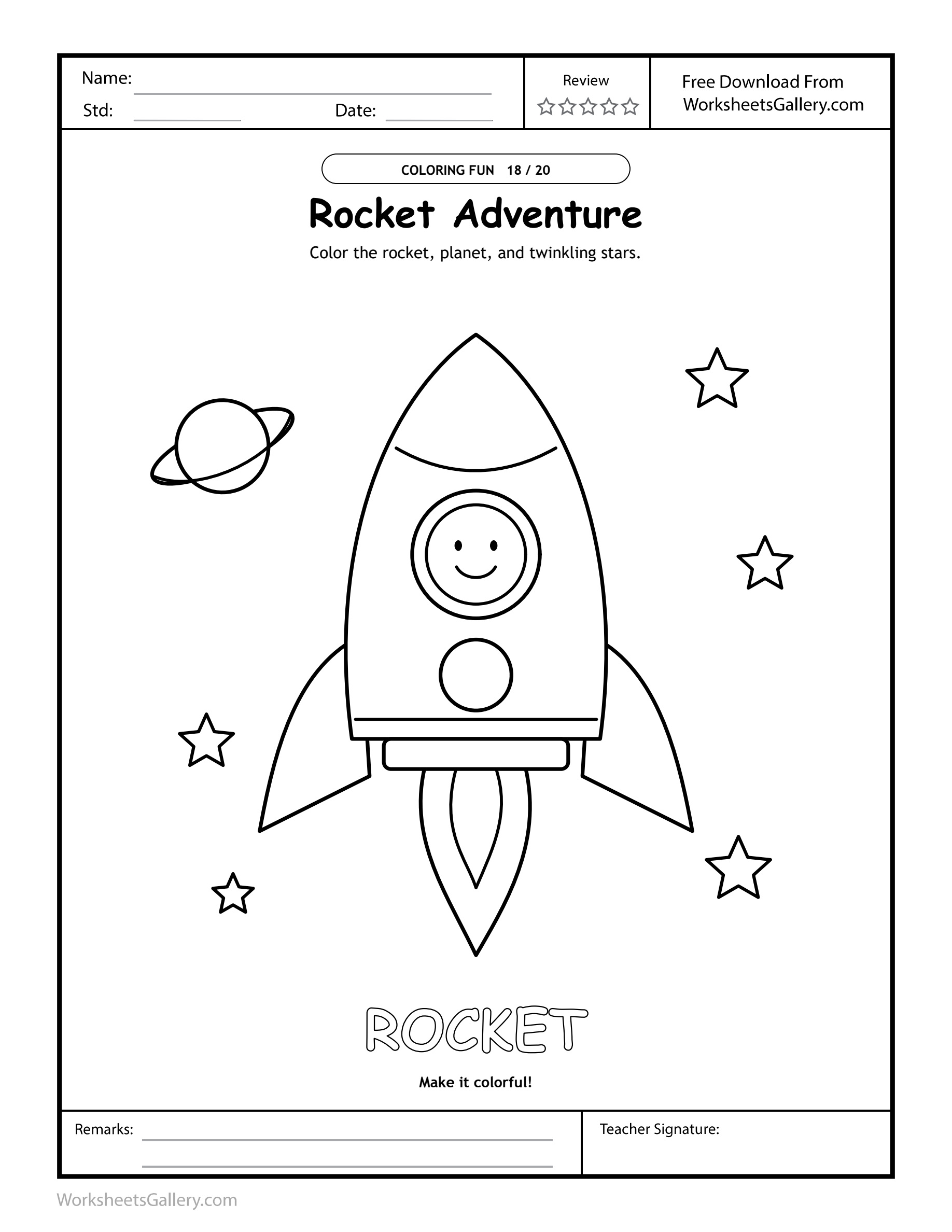
Choose a mission color before the imaginary countdown begins. Rocket Color Mission invites young artists to separate body panels, a round window and a pointed flame through their own palette decisions. The Rocket Adventure sheet also places a ringed planet and stars around the craft, offering smaller accents beside its larger silhouette. It is an imaginative coloring scene, not a diagram of spaceflight. Ask which feature should announce the adventure first. A child can test that idea with one patch, point to a panel or begin directly with a comfortable tool and a favorite hue.
Rocket Color Mission names three visual jobs
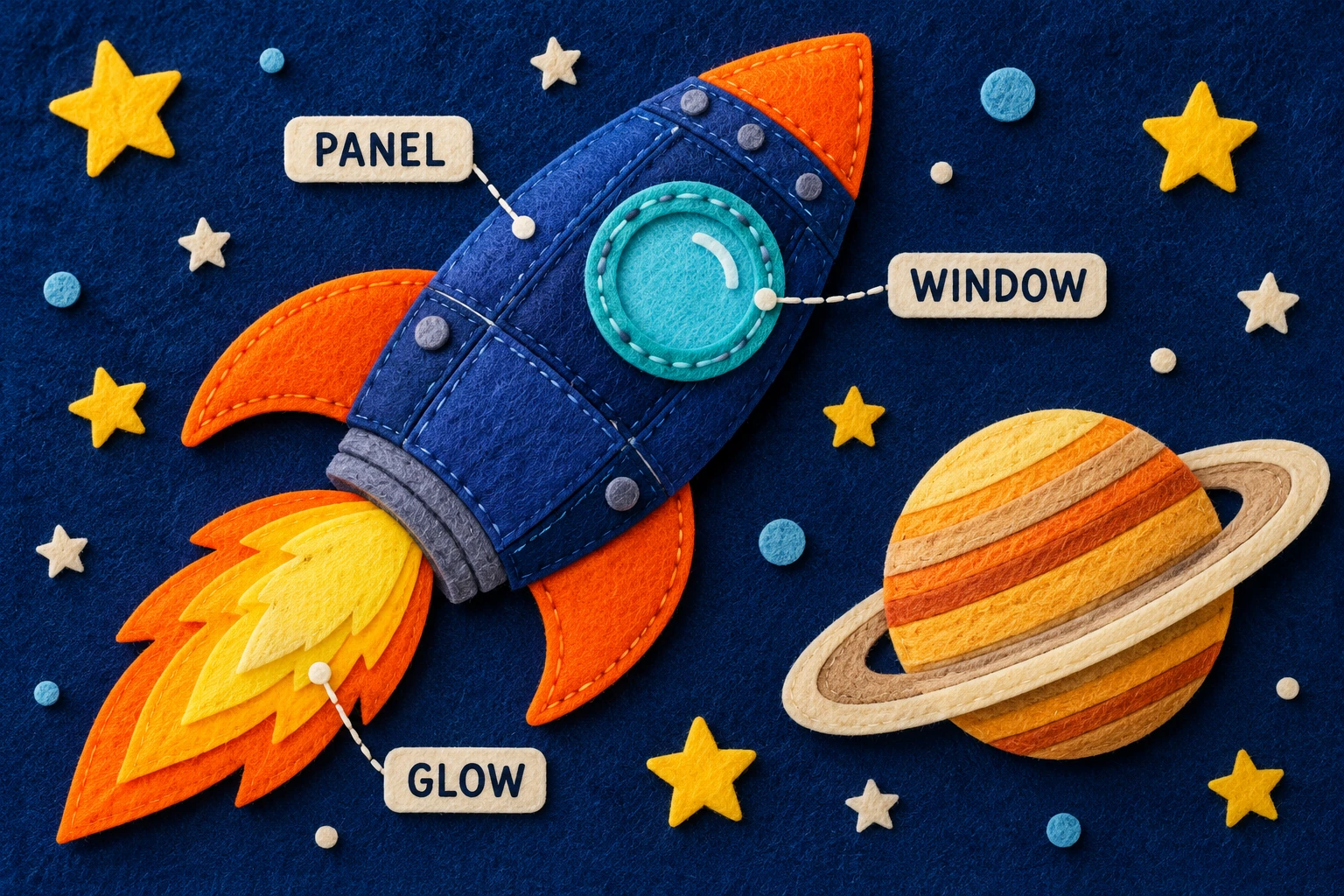
The felt-board example labels PANEL, WINDOW and GLOW beside its crafted rocket. Indigo panels, an aqua circle and warm flame show one way to distinguish those roles. The materials make an optional comparison; their hues do not supply an answer key for the printable.
Rocket Color Mission can start with three large sample marks on a scrap. Ask which is meant for a panel, which for the window and which for the imagined glow. An adult may add written labels after the child has supplied the choices.
Ishaan gives Rocket Color Mission a message to carry
Ishaan wants his pretend craft to deliver a greeting to a painted planet. His aunt asks which part a visitor should notice first. He chooses the window because the smiling face inside will carry his message, then tests a pale mark that leaves the expression visible.
Their Rocket Color Mission session changes when he wants the flame to look stronger. She offers a separate pointed study for the new comparison rather than recoloring his work. Ishaan dictates “HELLO FROM MY WINDOW” for a little message card beside the picture.
Rocket Color Mission can follow another intention entirely. A learner might prefer dramatic panels, subtle flames or no narrative. The story illustrates a reason to select an emphasis, not a required mission plan or a claim about real rockets.
Six Rocket Color Mission games for a pretend launch studio
Keep the extensions on spare paper with enough room for comfortable movements. Choose one investigation rather than requiring a sequence of six tasks. Each can supply useful information even if the learner never transfers the trial to the source page.
1. Rocket Color Mission makes a panel-window-glow sampler
Offer three large areas representing the body, window and flame. The child places a chosen mark in each and explains the roles through words or pointing. Rocket Color Mission samplers turn a broad intention into visible comparisons without adding written directions inside the picture.
The Rocket Color Mission maker may keep two roles similar or make all three distinct. Ask what the viewer should notice. The sample records a flexible idea rather than a promise to use a fixed palette throughout the worksheet.
2. Rocket Color Mission tries a quiet window
Draw a large circle containing a simple face. Compare a light mark beside a stronger test elsewhere on the scrap. Rocket Color Mission window trials let the learner inspect whether the small expression stays easy to see with the material they are using.
For Rocket Color Mission, a pale window is a possibility rather than a requirement. If the artist wants a strong color there, ask whether another mark type or a larger study would preserve the desired details. Follow the maker's goal instead of imposing delicate shading.
3. Rocket Color Mission invents a flame palette
Create a broad pointed flame outline on fresh paper and invite an imagined glow. The learner can use one hue, neighboring patches or open paper between marks. Rocket Color Mission flame studies explore a visual effect without claiming to demonstrate combustion or propulsion.
The Rocket Color Mission artist chooses whether the flame should dominate or support the body. An adult can describe the difference between two trials. Scientific explanations, if requested, belong in a separate factual conversation rather than being inferred from a decorative color choice.
4. Rocket Color Mission gives a planet a reply
The child dictates a short greeting from the craft, then invents the planet's answer on another card. Add a filled color sample to each message. Rocket Color Mission replies give the surrounding shape a story role instead of treating it as leftover background.
Read the Rocket Color Mission exchange to a willing listener. They find the intended window, body or planet while the maker points. Adult transcription supports the language play; independent spelling or reading is not necessary to contribute the idea.
5. Rocket Color Mission chooses a star accent
Draw a large star beside a quiet background patch and test how much attention it attracts. Rocket Color Mission accents can compare a stronger star with a subtler one, or invite the learner to choose a completely different relationship that suits their scene.
Keep the Rocket Color Mission comparison small enough to finish comfortably. One deliberate accent may communicate the plan. There is no requirement to fill every star in the same way or cover the surrounding page with a dark space background.
6. Rocket Color Mission directs a visitor's eye
The maker selects a feature and dictates a clue for someone viewing the picture. A partner follows the clue, then describes what they noticed first. Rocket Color Mission viewing games connect a visual plan with another person's response without ranking the finished artworks.
If the Rocket Color Mission viewer finds a different feature, the artist can change the clue, strengthen an accent or explain the intended location. Several solutions are reasonable. A mismatch starts a conversation rather than proving the picture was unsuccessful.
Rocket Color Mission studies the complete adventure

The source direction names the rocket, planet and twinkling stars. Five stars appear in the whole scene. The craft contains broad panels, fins, a round window and a long flame, providing varied regions for marks without any supplied palette.
Rocket Color Mission also includes the outlined word ROCKET below the drawing. An adult may read it as part of picture talk. The sheet does not require the child to trace lettering, complete a flight route or solve a counting exercise before coloring.
Rocket Color Mission brings six kinds of noticing together
- Visual roles: distinguish a body region, an interior window and a flame instead of treating all areas alike.
- Emphasis planning: choose which feature should attract attention and compare a small trial with that intention.
- Mark control: alter movement size between broad panels, circular details and pointed regions.
- Specific vocabulary: use panel, ring, window, fin and glow while indicating visible picture parts.
- Narrative exchange: dictate a greeting and respond to an imagined character in the scene.
- Flexible revision: change a palette relationship or clue after seeing how another person interprets it.
Rocket Color Mission brings thinking, movement and talk into the same visit with flexible demands. Elaborate mission ideas can accompany broad, loosely controlled marks. Another may quietly demonstrate a clear color relationship through a sample and a gesture.
Rocket Color Mission pauses at the circular window

Nested circular outlines frame a smiling face. This compact region contrasts with the larger body panels around it. If the learner wants the expression visible, make a light trial on a larger circle before repeatedly working over the small source face.
Rocket Color Mission can give the window a different role from Ishaan's example. A strong accent or an intentionally open region may fit another plan. The adult can ask about the desired effect before suggesting a change in pressure, material or scale.
Rocket Color Mission at home follows one selected role
Prepare a stable sheet, familiar coloring materials and room for a sampler. Read the printed direction, find the child's chosen feature and offer a test if useful. Support a page that slides or a tool that feels awkward without taking ownership of the palette.
During Rocket Color Mission, let the maker work quietly between conversations. When a pause arrives, ask whether the chosen feature conveys the intended idea. “Your window remains easy to find beside those deeper panels” describes a visible relationship rather than judging realism.
Rocket Color Mission shifts to the pointed glow
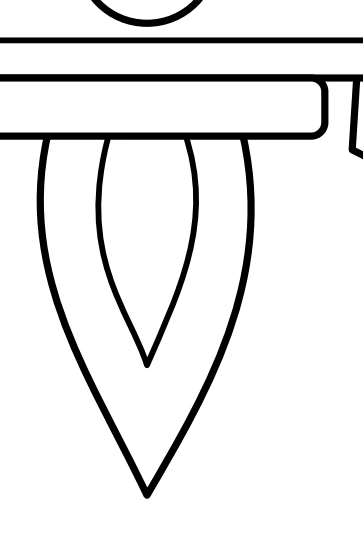
The flame's nested pointed shapes differ from the round window and broad body. A shorter mark may fit a narrowing tip, while a larger region can accept broader movement. Offer a larger flame study if the fine space becomes a barrier to the child's intention.
Rocket Color Mission can use unexpected flame colors. A pretend glow is an art decision, not a propulsion lesson. The learner does not need to reproduce a realistic fire palette or understand spaceflight to enjoy this drawing.
A classroom Rocket Color Mission postcard station
Children receive individual sheets and message cards. Each chooses a visual role, tests a palette relationship and dictates a greeting from the imagined craft. The teacher reads the cards while partners locate the feature named by the maker.
Rocket Color Mission sharing can happen through pointing, quiet adult reading or a brief spoken explanation. Display different intentions together. A single-region study belongs alongside broader scenes without a ranking based on fullness, speed or resemblance to a model.
Rocket Color Mission notices a ring crossing a planet
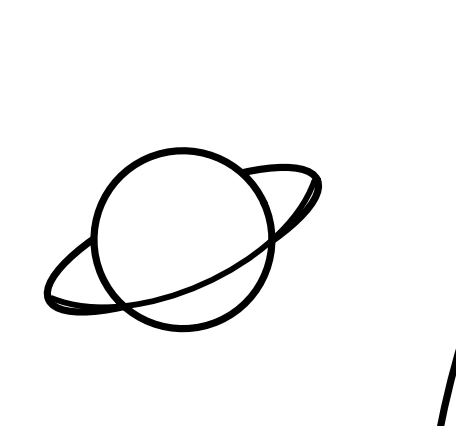
The ring and central planet form overlapping curves near the rocket nose. They can receive separate color decisions if the maker wants their difference clear. Follow the visible boundaries rather than drawing hidden lines through a nearer region.
Rocket Color Mission may leave this small neighbor for another day. Returning to one overlap is a specific invitation that does not require repeating the whole launch scene. It also offers a different question from the earlier panel and window comparison.
Rocket Color Mission support for a difficult detail
| A difficulty to discuss | A possible adjustment |
|---|---|
| A point feels too fine. | Explore its outline at a larger scale. |
| A face detail disappears. | Test a lighter mark on another circle. |
| The background feels endless. | Choose one accent and leave the rest open. |
Common Rocket Color Mission pitfalls include demanding a dark background, prescribing every panel hue or presenting the picture as accurate engineering. The source supports imaginative coloring. Ask what the child wanted before correcting an unexpected palette or treating an open region as unfinished.
Rocket Color Mission lets small stars stay small tasks

The crop shows the three pointed stars on the craft's right side, within the larger five-star scene. A few selected accents can communicate an intention. They need not all receive identical colors, dense coverage or the same amount of time.
Rocket Color Mission often suits preschool and early kindergarten children around three to six, with help matched to their experience. Begin with a broad panel or a simple color selection if fine points are tiring. Return through one new greeting, star trial or planet detail, and stop when interest or comfort fades.
Obtain Rocket Color Mission for printing and another exploration
Download the clean Rocket Color Mission premium PDF through a signed-in account whose current membership grants access. Retain the original sample as its own edition. The clean file excludes watermarks, website/domain branding and embedded advertisements. Inspect its complete US Letter print layout, including the flame tip and lower word, before applying your printer's scaling. Advertising around the web page does not belong inside the member document.
For assigned palettes, compare the giraffe's guided-color task and the two-color chick sheet. Rocket Ramps movements offers a separate tracing activity. Adults can explore PBS Parents' art-making resources and NAEYC's ideas about creative art, with room for children to invent spacecraft drawings whose outlines are entirely their own.
Popular Worksheets
Printable resources families and teachers are downloading now.
 Free
 Free
 Free
 Free