Learning to Learn: Building Working Memory and Flexible Thinking in Early Childhood
Use a pretend parcel depot to see which part of a changing rule is hard, then adjust one memory demand or sorting decision at a time.
At a pretend parcel depot, two children sort round packages into one basket and square packages into another. When the depot starts sorting by colour, a child reaches for the old basket, pauses and checks the picture card. That tiny pause shows two parts of learning to learn. Working memory keeps useful information available for the next act, and flexible thinking helps a child change course when the old rule stops fitting. With household objects and three existing printables, adults can make both parts visible and adjust the challenge one decision at a time.
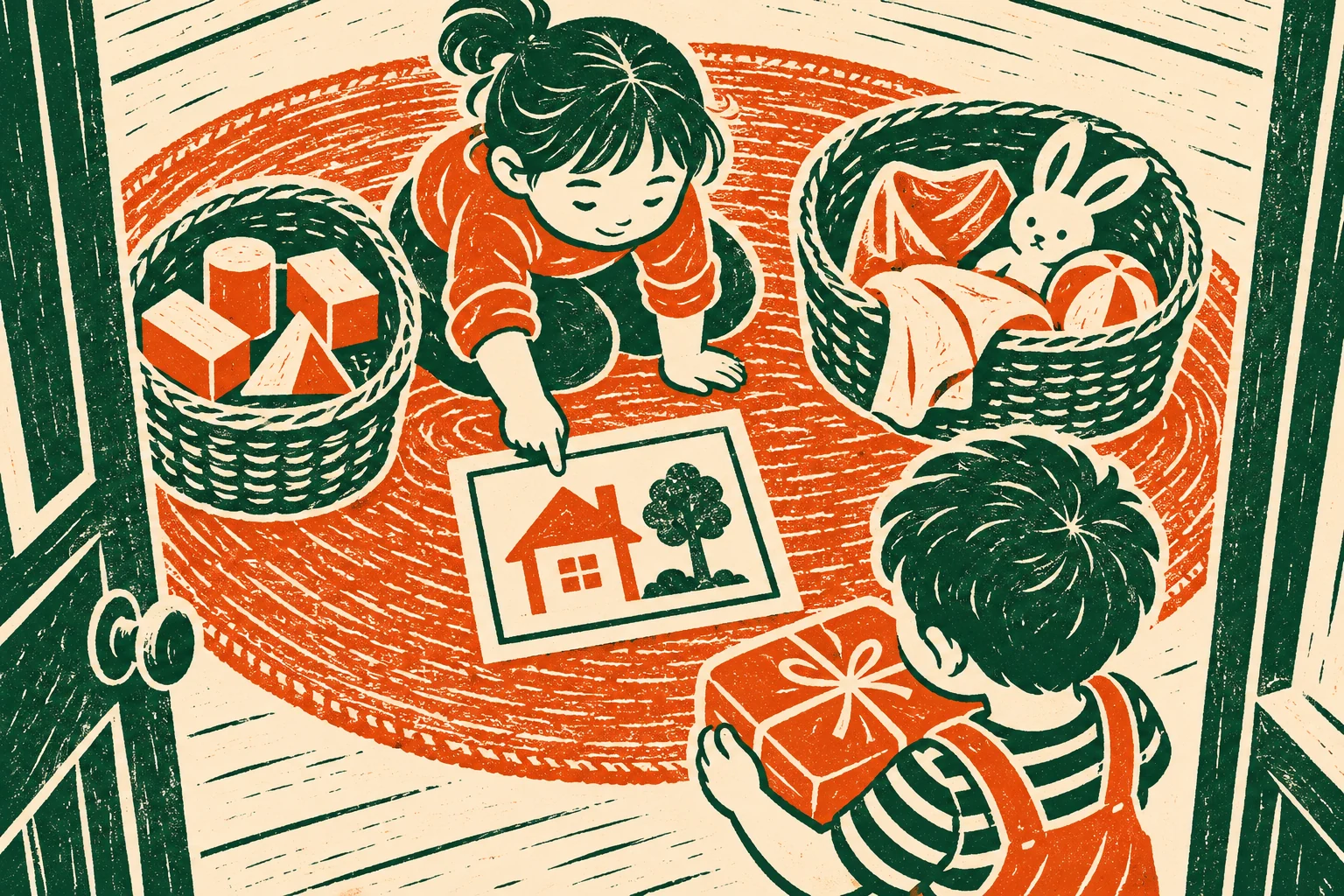
A visible clue and two containers let children explain where a parcel belongs.
A changing game makes two hidden jobs visible
Working memory is what you use when the cashier says “red parcel, top shelf” and you still need those words after taking the parcel. Flexible thinking helps you use a colour rule after a round where shape was the important feature. Both abilities can come into play in one moment. It is possible to remember the new instruction and still start the old action. A child may even say the new rule while pointing at the basket used in the first round.
In a pretend parcel game, when you put the clue into a picture or gesture, you remove some of the demand of remembering spoken words. Then you can see more about how a child finds and uses the new feature. If an adult makes the old rule and the new one both hard to remember, a missed turn tells you little about which part caused trouble.
Plan one round for working memory and one for flexible thinking
Use a rule the child can explain
Make two baskets and four chunky, distinguishable shapes available. Give the child a chance to sort them by shape with the baskets close together. Leave a circle and a square cue in sight. They can show the rule by placing the first parcel or tell you in their own words. Keep the first round steady so they can distinguish a familiar rule from what changes later. You can play as the delivery person and let the child have the job of directing you.
Put a short instruction to work
For a memory round, keep the shape rule. Say, “Take a round one, then tap the basket.” Let the child try both parts. Move the instruction into pictures or gestures if they are searching for someone to tell them the second action. Keep the cue available for self-checking. On another turn, have the child give an instruction and see whether it says enough for you to carry it out. The child can consult both pictures while being the person in charge.
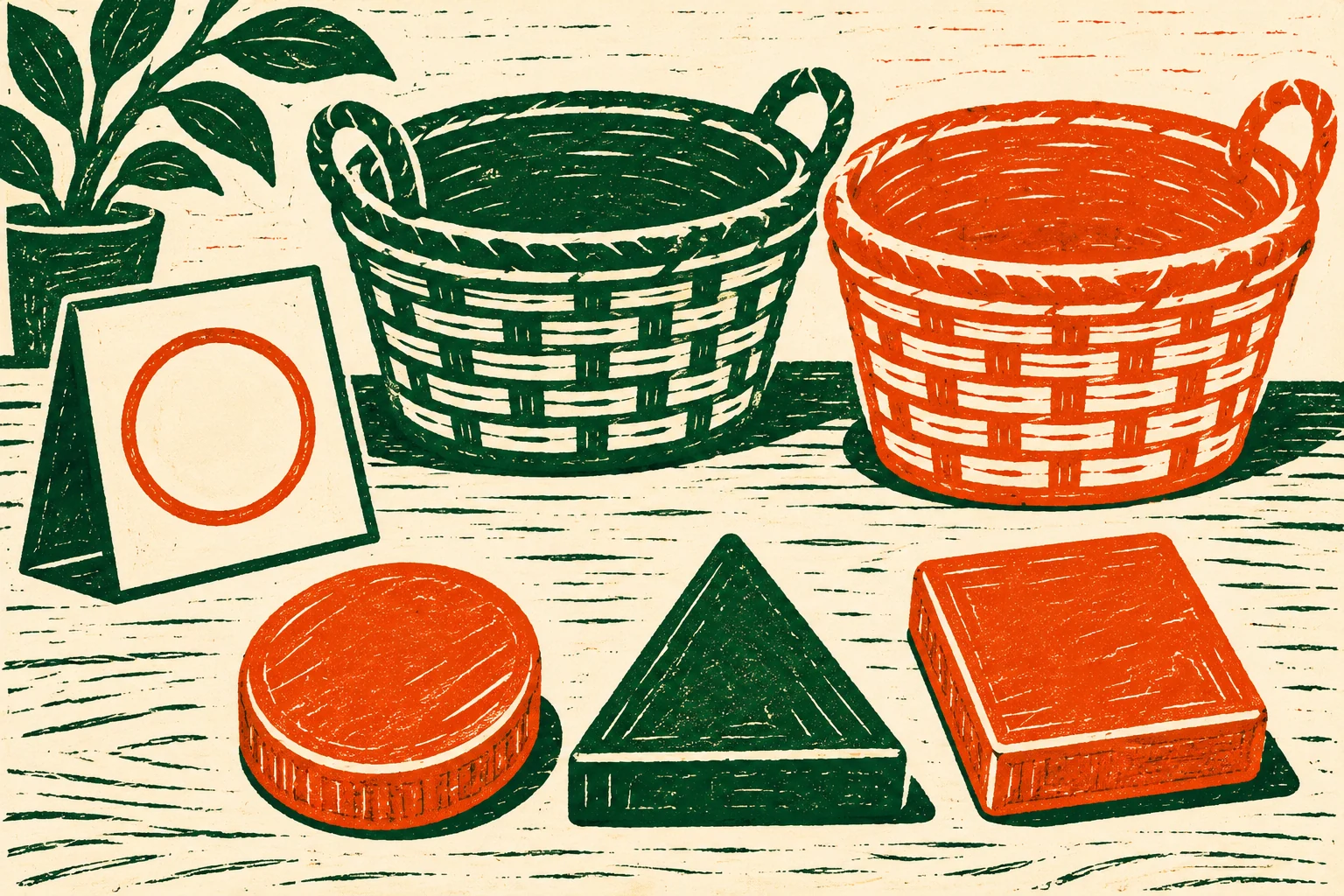
The circle cue stays visible while children choose a shape from the foreground.
Announce a single change
Using the same set of parcels, replace the shape labels with two colour cues. Do one example together and invite the child to finish the round. Say “We are using colour now” and point to the new cue before the child chooses. Give time for a second look when someone puts a parcel beside the old marker out of habit. Change one rule or one memory demand at a time. If you want to make the memory part harder on a different day, leave the rules stable.
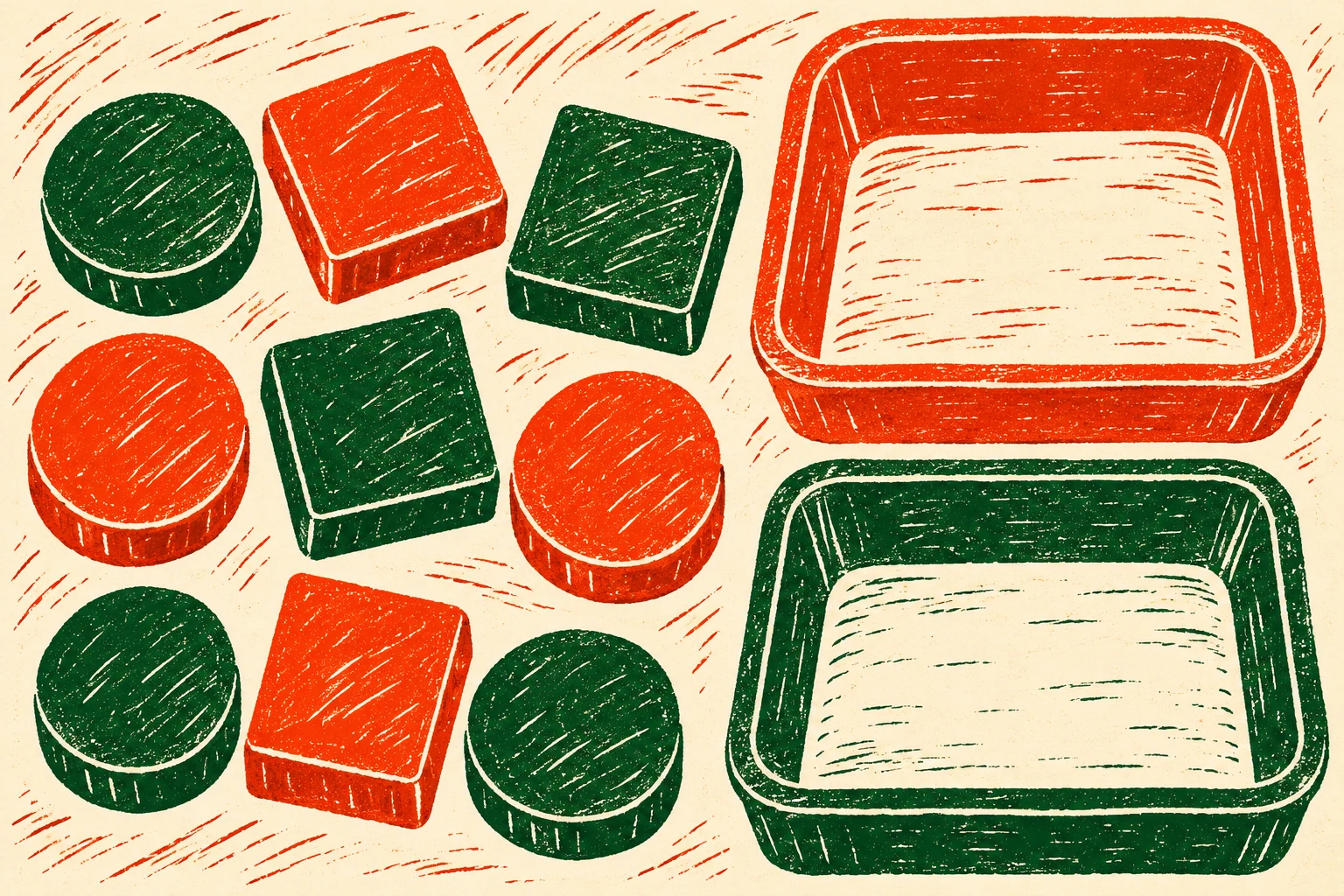
The presence of both shapes in each colour makes it possible to practise either rule.
If you see the same mistake twice, turn the game back one step
A child may benefit from getting to sort one parcel while holding the new picture in their other hand. Another may want to demonstrate the new rule to a puppet. Watch what happens as soon as you offer a visible reference. When the reference helps, leave it there. Moving from adult reminders to checking a self-chosen picture is already a meaningful change in who controls the task.
Use the errors to choose the next version
| What happened on a turn | Try checking this | Make the next round look like this |
|---|---|---|
| The child does the first part, then waits | Are both actions still available to recall? | Keep a two-picture cue at the parcel station. |
| The child says the new rule and uses the old basket | Can they see what changed? | Put new labels directly above each basket. |
| The whole round is confusing | Are the categories familiar by themselves? | Try a single attribute or switch to more recognisable objects. |
| A child slows down when instructions get longer | Does speech compete with remembering where to move? | Point to the next action and keep words brief. |
| A child checks the label after an old action | Can they check and recover on their own? | Leave the label visible and invite a second try. |
There is no need to call every prompt a test. In a busy room, the same child can use a cue comfortably on Monday and need more help before lunch on Tuesday. The Harvard Center on the Developing Child activity guide suggests age-appropriate play as a way for children to practise executive function skills. The examples here use one familiar game to make it easy for an adult to scale the challenge.
Three pages, three different reasons to check a clue
On Number Letter Switching: 12 Brilliant Trail Stops, kindergarten learners who recognise the required numerals and letters can alternate from 1 to A to 2 to B. Play a brief finger route before drawing. Have the child say or point to the kind of symbol they need next. You can cover everything after the first four stops in a handwritten reference strip to keep the actual puzzle visible. A younger learner may be more comfortable alternating two familiar pictures off the page.
For Jungle Route Following: 4 Brilliant Arrow Adventures, begin with one arrow and keep a fingertip or other place marker at the current stop. Look at the arrow, show the movement, then check the new place. If maintaining one move becomes comfortable, ask the child whether they want to try looking at two arrows before starting. Keep the full instruction strip available so they can decide when to check it.
When using Toy Number Match: 5 Brilliant Big-and-Small Checks, start with one set of toys and ask what the page actually wants checked. A big toy and a small toy can each represent one toy. After the printed activity, use chunky objects and have children sort by size, then return to counting how many there are. Invite a learner to explain which question they are answering and why they need to look at a different feature.
Small signs that a learner is becoming more strategic
- They name a cue they want. “Show me the round card” lets them ask for information their own way.
- They use a memory aid before getting stuck. A finger at the last arrow can save a place during the next look.
- They notice a changed rule. A pause at the old basket may be the first sign that they have recognised the difference.
- They recover with evidence. A check of the cue card can get a second attempt going without an adult pointing out the error.
- They talk about the job a clue does. The learner can tell a partner why a coloured label is useful during the colour round.
- They help a partner use a support. Showing where a symbol goes turns a successful strategy into something the pair can share.
Switch the setting, keep the decision manageable
Home example. A place setting for two toys.
A child helps set a pretend picnic with two plates. Ask them to put the cup beside the first plate and a cloth beside the second. A little picture strip can stay between the places. On the next round, when the child is comfortable finding both items, tell them that the larger toy needs the smaller plate for its game. Let the child point to what will move. Keep the wording and picture available while they switch. An adult can describe the change the child caught even if a cup gets left behind.
School example. Who will collect the library pictures?
In a kindergarten group, one child collects cards with familiar pictures of books and another puts them into a box. First, send the collector to fetch one picture and return to the rug. Later the class decides that the boxes will be labelled by topic instead of by table. Give children a new cue strip with familiar topic images. Keep the return routine identical, and invite them to show which box now belongs to one picture. If a volunteer goes to the familiar box, wait while they check the cue. Another student can hold the strip rather than whisper the answer.
Four more games you can adjust in the moment
- The repeated errand. Send a puppet to get a scarf and touch its chair before coming back. Let a child point to a two-picture cue for the puppet. Later, keep the same props but let the child choose which step comes first and demonstrate it.
- Which sign is up? Use two large signs for a simple turn-taking game. One means place a block, and one means draw a mark. Hold the sign still for several turns before changing it. Have the child give a reason for their next move after the change.
- A different shopkeeper. A pretend grocer sorts empty paper packages by shape. A new shopkeeper wants them sorted by colour. Give the child the new signs. Let them reuse each container and change the labels to reflect their new job.
- The slow drum. Clap a short sequence and repeat it with the child. After several turns, decide together that each clap will be replaced by a tap on a soft surface. Keep the order and stopping point stable. Give both people a visual rhythm cue if words get in the way.
Give young learners a way to reset
When a rule changes, try saying, “I nearly put mine in the old basket. I'll look again.” A correction adults make out loud has a place in the play. It lets children see how another person recovers without erasing the first attempt from the story. Keep using the cue even if it slows your own turn. And make room for a learner to ask for the old rule once more. A game can offer a successful reset and end there.
Adults can choose whether the next round needs a longer sequence, a rule change or a return to something familiar. Ask which version your learner wants to try. The most useful thing they may bring to a new activity is a strategy they chose and can explain. “I keep my finger where I stopped” or “I look at the colour card first” is evidence of a way to learn that the child can bring back to the next game.