Overstimulated Child: 6 Essential Supports for Calm Learning
A busy room, several instructions and a tiring transition can change a learning moment. Explore six supports and optional existing worksheet starting points.
Nothing about the counting task has changed, yet the child who managed it yesterday now pushes the page away. Chairs scrape, another group sings, and an adult adds another instruction. An overstimulated child may need something different from more encouragement to finish. This guide helps parents and teachers of children roughly three to seven notice what a learning situation is asking of them, reduce avoidable demands and plan a supported return. Three existing printables offer optional starting points after the child is ready. The first question is practical: what could make this moment more manageable for this learner?
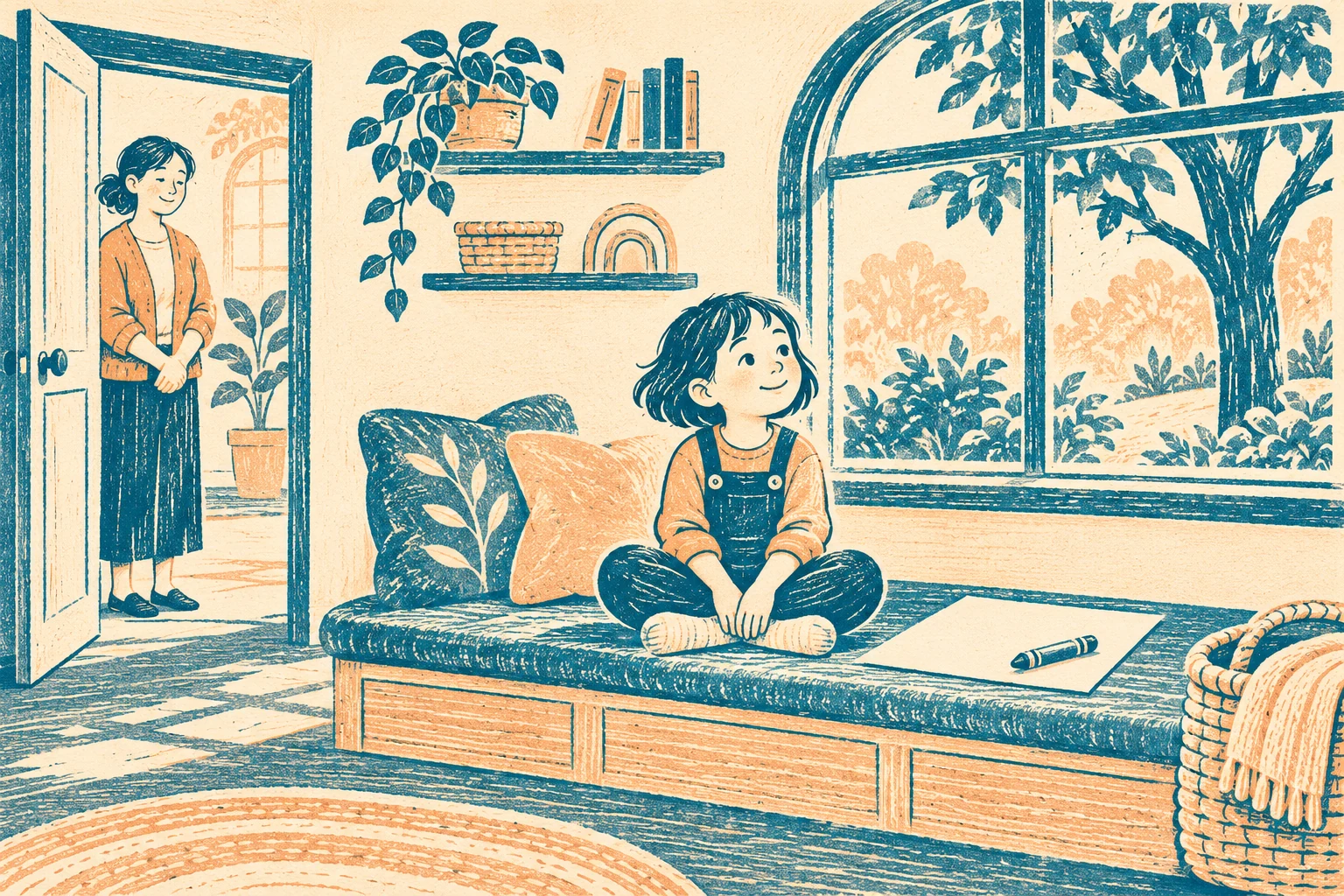
The adult and child have comfortable space between them, with a single paper and crayon nearby.
🧭 Read the situation before choosing a response
“Mental overload” is an everyday description, not a diagnosis. People may use it for too much sensory input, too many instructions, a difficult emotional moment, or several demands arriving together. These experiences can overlap, but they do not have identical causes or solutions.
Raising Children Network’s guidance on overstimulation describes children becoming overwhelmed by more experiences and sensations than they can manage. It also emphasises individual differences and the balance between exploration and rest. An activity that feels comfortable today may feel different after a tiring transition tomorrow.
A quiet response still deserves notice
An adult may notice a child asking to stop, becoming irritable, covering their ears or no longer responding as usual. None of these observations alone identifies the cause. A child who withdraws quietly can need support just as much as one who protests loudly.
Check immediate safety and consider ordinary needs such as discomfort, hunger or rest. A sudden unusual change, significant pain or difficulty staying safe needs appropriate help rather than a new learning activity. Persistent concerns belong in a conversation with the child’s educator and health professional.
| The moment | A useful adult priority | A question for later |
|---|---|---|
| The learner cannot engage comfortably | Reduce demands and support safety | What happened before participation changed? |
| A calmer exchange becomes possible | Listen and offer a manageable choice | Which part felt hardest to use? |
| The child wants to resume | Clarify one immediate purpose | What support should remain available? |
| Similar difficulty returns repeatedly | Compare specific observations | Who can help investigate the pattern? |
This is a planning map, not a fixed sequence or a test of how quickly a child settles.
Support 1: describe what changed, without assigning an identity
Write a short observation such as, “During the noisy tidy-up, Sam stopped answering and moved behind the chair.” Include what happened next and which support was offered. “Sam cannot cope with learning” goes far beyond what that moment shows.
Look for contrasts across ordinary situations. Is it easier to hear instructions before the room becomes busy? Does the same page make more sense when one area is selected? Compare occasions without deliberately recreating distress to test a theory.
Ask for the learner’s view when they can share it
A child might point to the doorway, describe a sound or say that several people were talking. Accept a gesture or familiar-language explanation. Some children will not know what made the situation difficult; useful support does not depend on producing an account.
Keep observations private and proportionate. Their purpose is to improve access to learning, not to create a public tally of difficult moments or a permanent label about the learner.
Support 2: make the adult response easier to process
When a child seems overwhelmed, a stream of questions can add another task. Use brief, familiar language and a steady manner. Stay appropriately available and follow the setting’s safety procedures if someone could be hurt.
Alberta Health Services’ sensory-overload explanation notes that children may struggle to withdraw from overwhelming input and may have difficulty responding during overload. That is a reason to reconsider the demands of the moment, rather than assuming a missed answer is a deliberate challenge.
Offer help without turning it into another performance
An adult can indicate a familiar nearby space, put an unused material aside or wait quietly. Explain a move simply when necessary. Offer comforting contact only when welcome and appropriate; do not require eye contact or a hug as evidence of cooperation.
If you need a colleague’s support, arrange it clearly. At home, another trusted caregiver may help with a safe handover. Adult frustration should not become an additional burden the child must manage before receiving assistance.
Support 3: adjust the environment around an overstimulated child

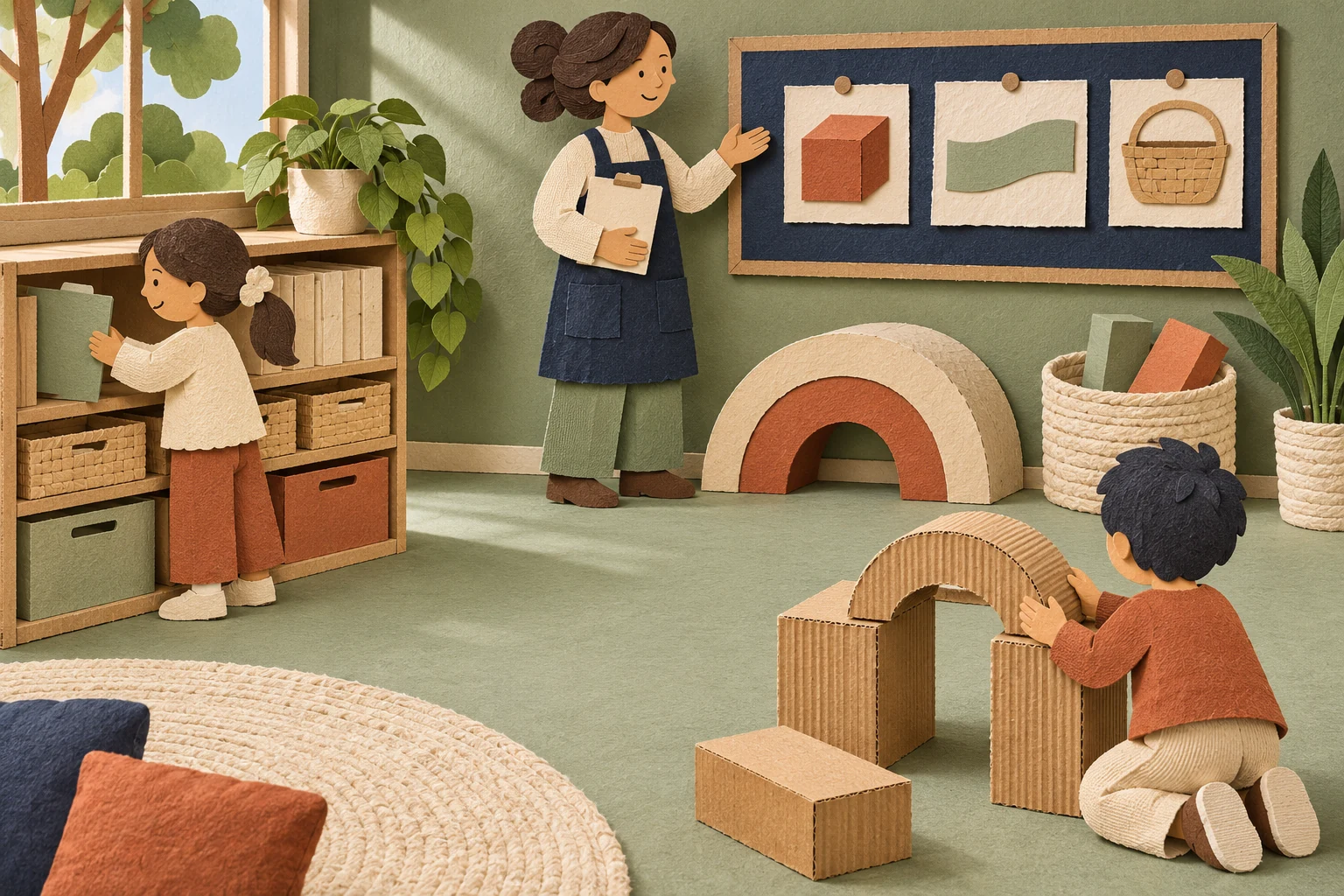
The simple room study illustrates a possible arrangement, rather than a prescribed environment for every learner.
Consider the immediate surroundings: a busy doorway, overlapping voices, glare on paper or a large pile of materials. Choose one feasible adjustment and observe whether it helps. Moving a workspace away from passing traffic may be more useful than adding a new attention prompt.
Keep the environment usable. Children still need light to see, opportunities to interact and appropriate stimulation for play. An entirely bare room, silence or one prescribed position will not suit everyone. Retain agreed individual supports and coordinate changes with the relevant adults.
Plan access before a busy event
Before an assembly, visiting activity or unfamiliar classroom routine, show the child what will happen and where support is available. A familiar adult can explain a way to ask for a pause. Do not wait until the child is struggling to introduce the plan for the first time.
Participation can take several forms. A learner might join a shorter part of an event or use an agreed quieter position. Review the arrangement with the child and educator rather than treating support as a reward that must be earned.
Support 4: reduce competing tasks on the page

The generic route study shows a presentation idea; the actual worksheet preview determines which path is suitable.
When the learner is ready for an activity, separate its demands. A page may ask for visual searching, understanding a direction and controlling a pencil at the same time. Selecting one area makes the current job easier to identify without claiming the underlying skill has become secure.
For an interested child, Trace 5 Essential Lines and Curves: Fun Paths for Little Hands (Ages 3-5) supplies straight, sloping and curved routes with starting dots. Choose one suitable route and cover unrelated rows with plain paper. Try pointing or finger movement first if that serves the current purpose.
Keep the teaching goal clear
Following a route with a finger and tracing it with a crayon reveal different things. If the purpose is specifically pencil movement, provide a usable tool and suitable scale. Do not claim that a spoken explanation demonstrates the same motor skill.
The picture here shows generic routes and a paper cover, not the exact download. The real preview should guide selection. A smaller amount of visible work can support a clearer invitation, but no tracing page is a treatment for overload.
Support 5: leave breathing room between learning demands
Look at the day around the activity. A quick change from noisy group play to a multi-step paper task may be demanding even when each part seems reasonable by itself. Build in an ordinary transition that lets children understand what is ending and what comes next.
A predictable place to put materials, a brief explanation of the next event and time for an appropriate pause can make routines easier to use. Avoid filling every gap with another question, worksheet or performance of a newly learned skill.
Share a practical transition plan
Families and teachers can agree on one useful signal and describe what support follows it. “When Jo points to the picture cue, an adult checks whether a quieter position or a pause would help” is more actionable than “Watch for overload.”
Review how the arrangement works in the real setting. The signal should remain available even if a child cannot use it independently every time. Needing help to communicate does not remove the need for support.
Support 6: make a return possible without demanding completion
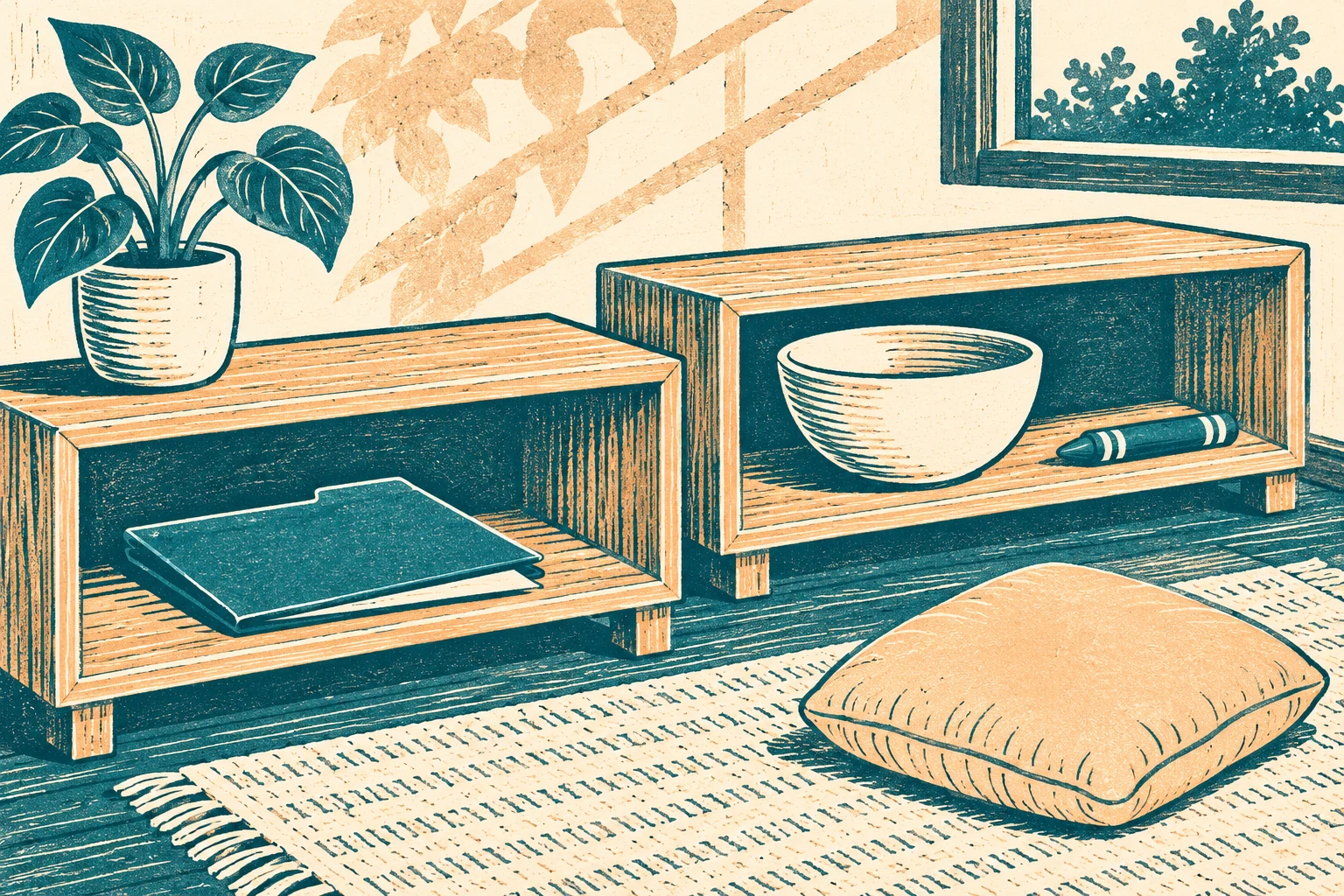
The folder and nearby materials suggest familiar options without a timer, score or requirement to resume immediately.
Save an unfinished activity with the learner’s agreement. On returning, explain the selected purpose and invite a manageable action. The child may need another kind of activity or more time; a finished sheet is not proof that the earlier difficulty has been resolved.
For a calm creative invitation, Vibrant Carrot Coloring: 5 Fun Steps for Fine Motor Skills has a large carrot outline and a smaller coloured reference. Offer one or two usable crayons and let the learner choose whether to add a detail. Keep colouring choices separate from judgements about emotional wellbeing.
A familiar small success can have a useful purpose
If the learner wants a straightforward quantity activity, Number 1 Worksheet: 5 Brilliant Kite Discovery Games offers a top picture of one whole kite. Match it with one large object or point to the complete kite together. Its coloured panels are parts of the same object; other page sections remain separate activities.
Choose this invitation because it fits current teaching, not because every child must practise counting after a difficult moment. Rest, conversation, familiar play or quiet company may be the more appropriate next step. Worksheets are one available resource among those possibilities.
Five useful outcomes to watch for
- A clearer start: the learner can locate the selected place or understand the first action with appropriate help.
- A usable request: a gesture, word or familiar cue gives adults information about a needed pause or change.
- Better task matching: adults distinguish an instruction, tool or environment barrier from a skill that needs teaching.
- A workable return: saved materials remain available without becoming a demand for immediate completion.
- Shared adult understanding: a specific observation helps home and school plan a consistent response.
These are practical aims, not guaranteed changes in behaviour or evidence that a sensory, developmental or medical condition has been identified.
Two hypothetical learning situations
At home: the afternoon carries several demands
Imagine a child arriving home after a busy event and declining a familiar colouring page while several family members talk nearby. The parent puts the page aside and offers quiet company. Later, the child chooses a short drawing invitation in another space. This hypothetical example illustrates changing the context. It does not establish that colouring caused the difficulty or cured it.
In class: fewer instructions reveal a clearer question
Picture a learner becoming upset when asked to find a tracing row, choose a crayon and copy a model during a noisy changeover. The teacher offers support first, then later selects one visible route and demonstrates the start. The child asks for a larger paper. In this hypothetical classroom, that request helps the teacher plan; it is not a diagnosis based on a worksheet response.
Prepare a manageable invitation in five steps
- Check readiness: consider comfort, safety and whether an activity is welcome now.
- Name one purpose: choose a route, picture detail or suitable collection rather than every task on a page.
- Arrange access: provide familiar language, usable materials and a workable position.
- Watch without rushing: allow time, then change one feature if a clarification would help.
- Leave a return: agree on a reasonable ending and retain a private observation when useful.
The tracing and carrot pages currently list ages three to five; the kite page lists three to six. All offer watermarked single-page PDF samples. Clean membership files are shown for tracing and the kite; the carrot page’s current access panel shows the watermarked sample. Check each preview and panel again before printing.
Four low-pressure extensions for a calmer learning period
Create a one-material invitation: put a single familiar drawing tool beside plain paper and let the child decide what to make. Add supplies only when wanted and appropriate.
Try a show-the-place tour during a comfortable part of the day. Visit the familiar spots where a child can ask an adult for help or pause with supervision.
Make a save-it sleeve for an unfinished drawing. A child can choose a simple mark on the outside to recognise their own work later.
Offer a quiet noticing walk in a safe familiar space. Follow the learner’s interest in one object or detail, without turning the walk into a checklist of correct answers.
Keep the child larger than the difficult moment
An overstimulated child still has interests, relationships and capabilities that a stressful episode cannot summarise. Use “We can make this easier to use” when an adjustment is needed. Keep support available before completion, and seek further professional advice when difficulty persists or daily participation is affected. The purpose of a learning invitation is to open a useful opportunity, with an adult ready to notice when the invitation itself needs to change.