Executive Function: 6 Powerful Ways to Plan, Pause and Choose
A card that will not fit its envelope creates a useful planning question. Six teaching approaches connect everyday goals with pauses, choices and practical checks.
Halfway through making a pretend delivery, a child discovers that the card will not fit its envelope. Should they squeeze harder, fold the card or find a wider envelope? Executive function contributes to managing that little decision: keeping a purpose available, pausing an immediate action and considering another approach. For preschool and early primary learners, these abilities need patient support. Here are six ways to build useful practice into familiar activities, with existing worksheet suggestions for planning routes, checking a collection and preparing a picture message. Start with a meaningful job rather than a demand for perfect organisation.
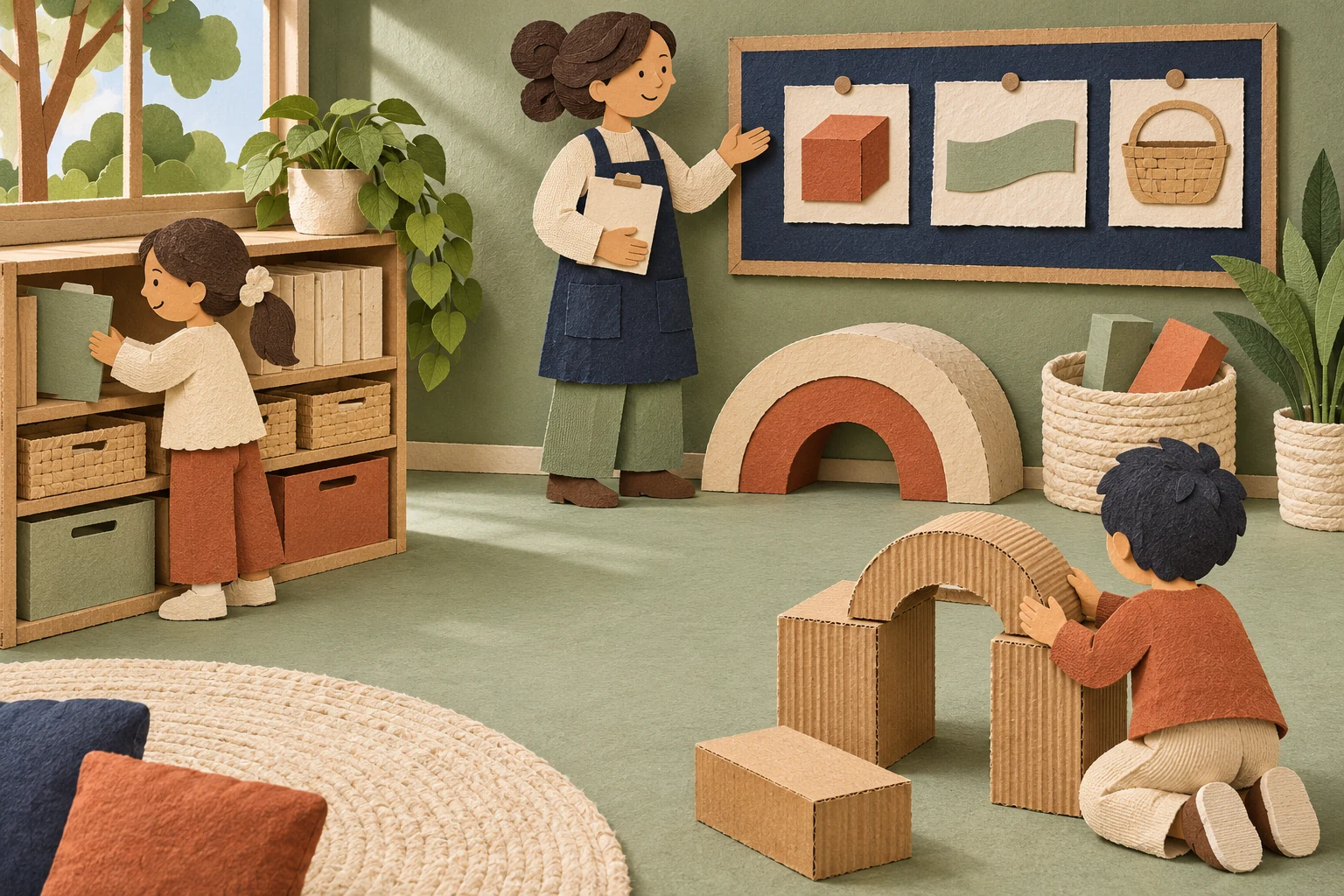
Folded-paper characters occupy different parts of a planning corner; simple object pictures provide a generic reminder without a written checklist.
Three processes working together in an ordinary task
Executive function is an umbrella term for processes that help us manage thinking and action toward a goal. Working memory, inhibitory control and cognitive flexibility are commonly discussed components. They overlap in everyday activity; a child's performance rarely isolates just one.
| Process | An everyday example | A helpful adult contribution |
|---|---|---|
| Working memory | Keeping the intended delivery in mind while gathering supplies | Leave the purpose and materials easy to refer to. |
| Inhibitory control | Pausing before pushing a card into a tight space | Model a brief check before acting. |
| Cognitive flexibility | Considering a different envelope when the first does not fit | Offer two relevant possibilities to compare. |
The Harvard Center on the Developing Child's activities guide offers age-related practice ideas and emphasises adapting support to the learner. Its preschool and early primary sections provide background for playful practice; they do not validate any particular worksheet as a treatment or assessment.
Some children need substantial ongoing assistance. A visible reminder or an adult's demonstration can remain part of successful participation. Do not make removing support the main objective.
Six ways to make executive function practice usable
These approaches are intended mainly for children around four to seven, adjusted for language, movement, experience and individual needs. Age is a starting guide, not a timetable for independent planning. A learner may express a plan by pointing, arranging objects, speaking in a home language or using their usual communication aid.
1. Give the plan an endpoint the child can recognise
“Be organised” has no obvious finish. “Prepare a card that fits this envelope” does. Invite the child to inspect the endpoint before collecting supplies: where is the message going, and what needs to happen for it to arrive?
Keep the project modest. A pretend post office can begin with one card and one recipient instead of an entire classroom mail system. Ask what the child thinks will be needed, then help bridge missing knowledge. Planning cannot replace instruction about an unfamiliar task.
An adult might sketch an envelope beside the materials as a reminder. The child does not have to produce a detailed written plan or predict every problem. The first plan is a workable starting idea that can change when new information appears.
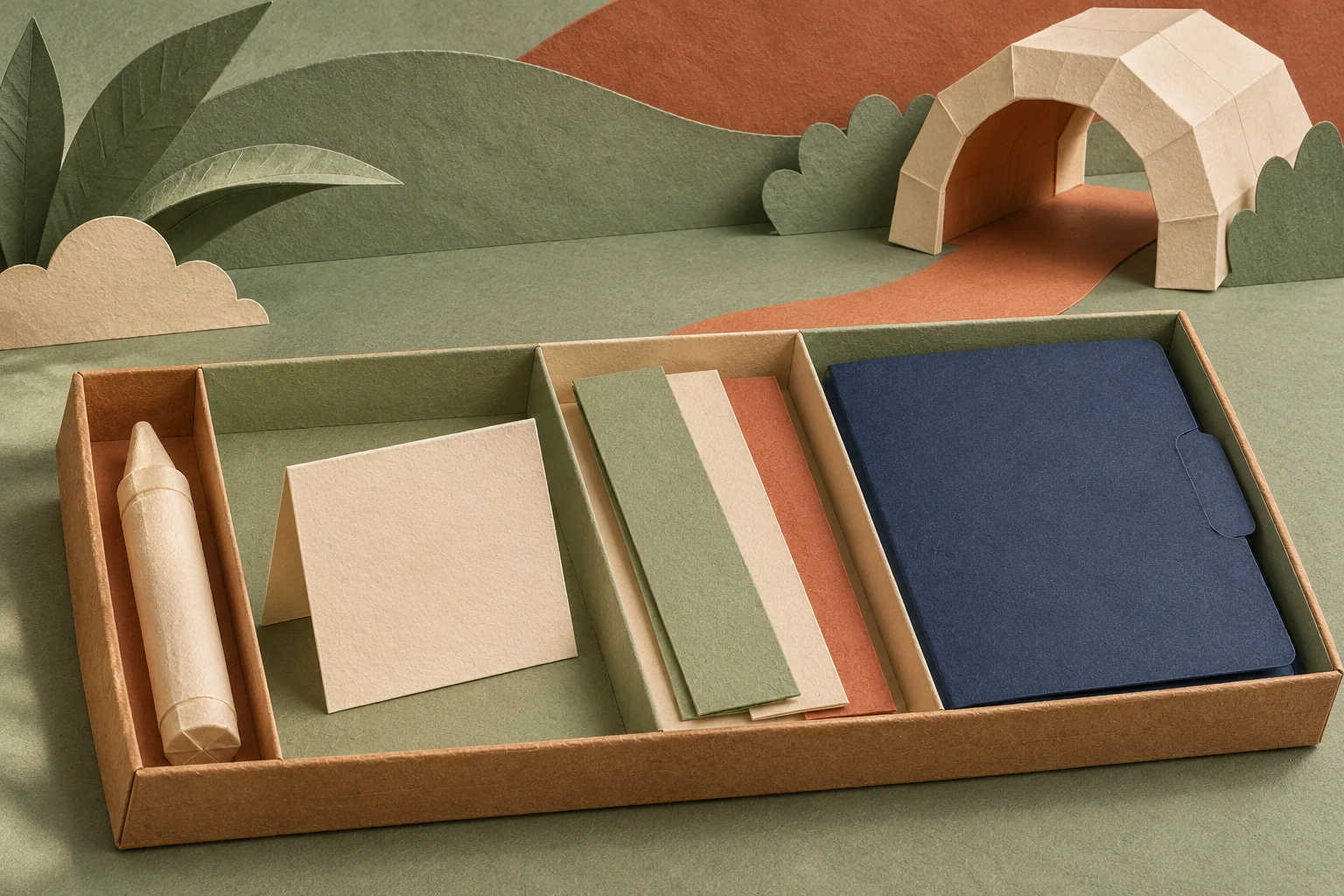
The handmade material study illustrates an optional project setup; the tray and props are not supplied with the worksheet downloads.
2. Put the next instruction where it can be used
Choose one panel of Jungle Route Following: 4 Brilliant Arrow Adventures when direction words and a dot route are appropriate. The supplied page has four panels, each beginning at a green dot and using six one-step arrow commands. The learner draws the travelled route and circles the final picture.
Read the current arrow together while keeping the present dot marked with a finger. After that movement, identify the next command. Do not hide the arrows to make the activity harder before the learner understands the route system. Keeping an instruction available is a practical way to support the task.
If six commands are too much, an adult can demonstrate part of one route and invite a supported next move. Avoid judging planning ability from unfamiliar direction vocabulary, uncertain dot spacing or difficulty controlling a pencil. Those demands may need their own teaching.
3. Rehearse a pause that has a purpose
A useful pause gives the child something to check. Before moving from a dot, ask, “Which arrow are we using now?” Before putting materials in a folder, check which project they belong to. Model the pause yourself without turning it into a long lecture.
For a playful version, take turns moving a large toy delivery vehicle. At each pretend delivery point, look for the pictured destination before placing the card. Keep the route indoors in a clear, safe space. The child can direct while the adult moves the vehicle if that makes participation easier.
Self-control is not the same as sitting motionless or never expressing frustration. A child may need to stand, use a support tool or ask for a break while still working toward an agreed goal. Pauses should create useful information, not a contest in waiting.
4. Make a decision depend on an observable difference
Try Number 10 Worksheet: 5 Powerful Balloon Party Wins if the learner is ready to work with ten objects. Its upper collection contains ten balloons arranged in two rows of five. Before counting, invite a choice of route: across one row then the next, or down each pair. Ask how the chosen route will include every whole balloon once.
Now carry out the plan. If a balloon gets counted twice, identify where the route became unclear and consider another tracking method. Moving a broad pointer deliberately may help. Keep the lower collection and numeral search separate; they answer other instructions on the page.
Ten is not compulsory for every preschooler. When the quantity itself requires considerable help, choose a smaller familiar collection of safe large objects for the planning conversation. The paper balloon display below is an optional prop arrangement, with two separated groups of five; it is not the layout supplied in the PDF.
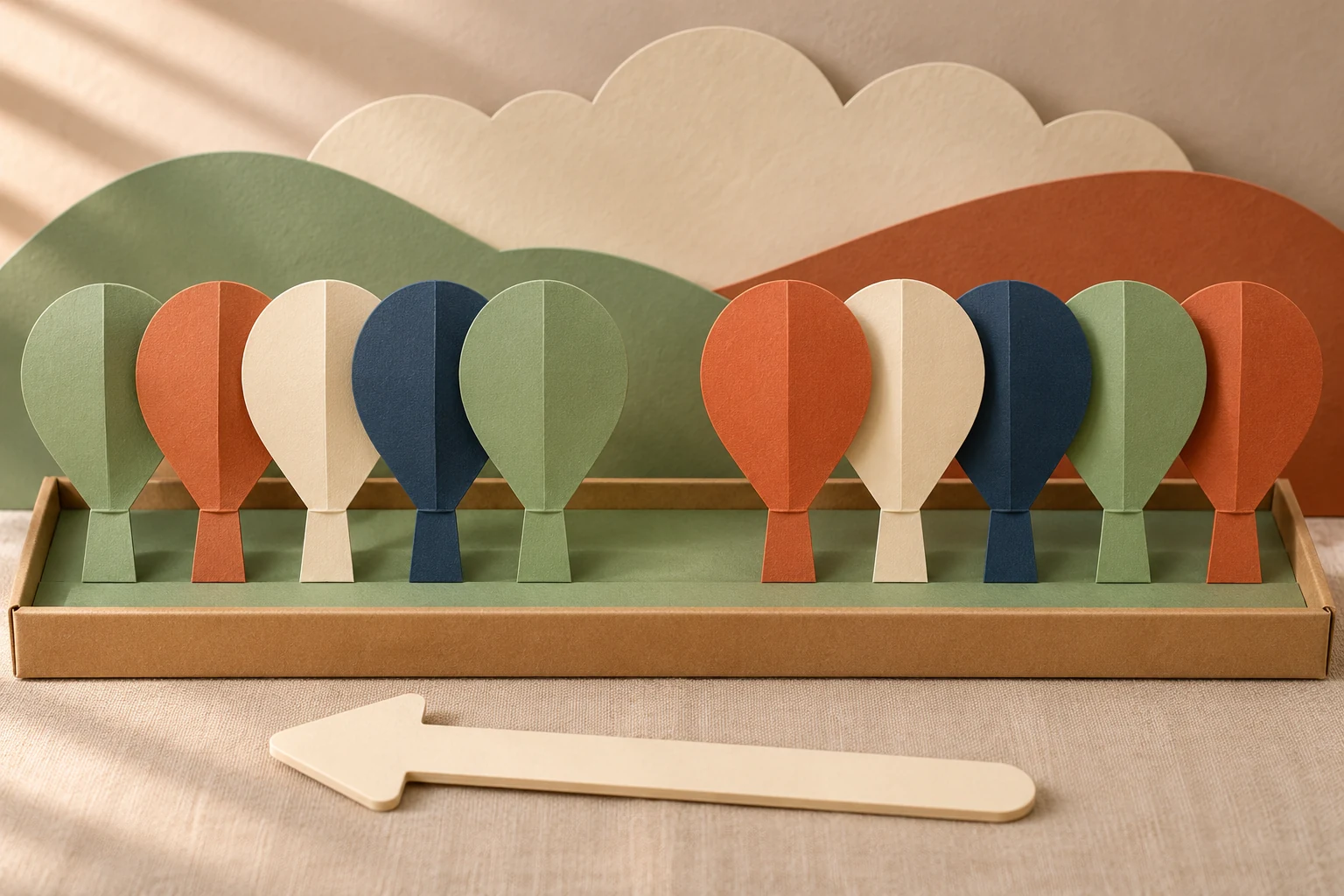
The paper props illustrate a five-and-five arrangement for an optional hands-on count; the linked PDF places its upper balloons in two rows of five.
5. Change the method without losing the purpose
Return to the oversized card and narrow envelope. The child could choose a wider envelope or, if folding the card is acceptable, try a fold. Discuss the important constraint: perhaps this particular picture should remain flat. That information changes which option is suitable.
Offer a genuine choice between workable possibilities. “Do it my way now or lose your turn” does not provide much practice in decision-making. Equally, an adult still sets necessary safety limits and explains which materials may be used.

The paired packing choices make a width constraint visible without labelling either attempt as a child's failure.
When the first choice fails, help name the mismatch: “This opening is narrower than the card.” That description points toward a change. Avoid praising flexibility only when the child agrees with your preferred answer; consider whether their alternative also meets the stated purpose.
6. Close the job with a check and a clear destination
Use the moon picture from Mm Worksheet: 5 Brilliant Moon Peak Journal Missions to launch an optional pretend message for a family member. Plan the order: choose a message idea, make a mark or drawing, find an envelope that fits, then place it in the agreed delivery spot. An adult may write the dictated message.
The actual sheet provides M/m models, tracing and a missing initial in moon. Letter instruction can be a separate selected task when appropriate. The envelope, message card and delivery game are homemade extensions; the printable does not supply a planning checklist or a postal activity pack.
Afterward, ask what remains: has the intended person received the card, or is it still waiting in the tray? Put unused supplies where they can be found again. Closure connects a plan with its result and with the next person who needs the space. An adult can complete the tidying alongside the child.
A five-step teaching sequence for tomorrow's activity
- Agree on the job. Point to the actual endpoint and make sure the child understands it. Offer a limited choice of projects when possible.
- Prepare together. Gather only the materials relevant to that job and check access, comfort and the response tools.
- Show one decision. Think aloud briefly: “I want this card flat, so I am checking the opening.” Let the child watch without demanding an immediate copy.
- Invite the child's contribution. They might select an envelope, follow a command or describe a counting route. Provide the help the contribution needs.
- Review the result. Compare what happened with the agreed purpose. Save a specific observation and decide whether to continue, adjust or finish.
Choose an ordinary moment when basic needs are met. A hungry child after a demanding transition may need a snack and rest before any optional project. Practice should fit into a manageable day rather than becoming an additional test of endurance.
Five useful gains to look for in the activity itself
- A more concrete intention. The learner can indicate what the project is meant to accomplish, with whatever communication support they use.
- A retrievable next move. They can consult an arrow, material arrangement or adult model when the current action becomes uncertain.
- A reason to pause. Checking an opening or destination gives a short delay a practical purpose.
- A considered adjustment. The learner compares a new option with the goal instead of merely repeating an unsuccessful action.
- A recognisable finish. The result is checked and materials reach an agreed destination, with help recorded honestly.
These are observations of this particular activity. They do not establish a permanent increase in memory, a diagnostic result or automatic improvement across other subjects.
Two hypothetical lessons with different planning obstacles
A home delivery that needs a wider envelope
Imagine six-year-old Jonah making a flat cardboard birthday picture. He chooses a narrow envelope and starts pushing. His parent holds up the card beside the opening, describes the width difference and asks which available envelope might work. Jonah compares the larger one and chooses it.
In this hypothetical example, the adult could record that a side-by-side comparison supported the choice. They would not conclude that Jonah had mastered decision-making generally. On another day, a different material or emotional demand may require more help. The finished card belongs to the recipient; it does not have to become a reward chart entry.
A classroom route that needs a place marker
In this hypothetical small-group lesson, four-year-old Leela understands the direction words but repeatedly restarts from the green dot when looking back at the arrows. Her teacher models leaving a finger at the current location and uses a second pointer for the command. They continue one step at a time.
The observation concerns coordinating two locations, not a lack of effort. The teacher can repeat the supported routine with a familiar panel before deciding whether less assistance would be useful. Another child's fluent route does not determine how quickly Leela's support must be reduced.
Extend the thinking with five ordinary projects
A picture exhibition with one delivery job
Invite a child to select one drawing for a temporary display and decide where it can safely go. They compare the paper's size with an available display space and help choose an adult-approved attachment. The adult handles any sharp or unsuitable equipment.
A pretend parcel with a material limit
Offer a large soft toy and two safe containers. Ask which container will hold it without squashing it. Try the prediction and revise the packing arrangement. Use large props and avoid strings, plastic bags or packaging pieces that could create hazards.
A classroom supply reset
Choose one familiar shelf area with the learner. Decide which communal items belong there and agree on a visible arrangement. Compare the result with the original purpose: can the next person find the paper? A tidy appearance alone is not the only success criterion.
A two-part illustration plan
Before drawing a scene on scrap paper, decide which large feature needs space first. After adding it, check whether the second feature will fit. Children can change the composition; the plan is a design aid rather than a contract they must obey.
A pretend appointment card
Make a card showing a fictional toy's turn at a repair shop. Decide where the card will wait until the toy arrives. Change one part of the story, such as which toy needs the repair, and help update the card. Keep the change understandable rather than surprising the child with shifting rules.
Adjust the teaching when the demand becomes too heavy
Difficulty beginning can mean the goal is unclear, the task is unfamiliar or too many decisions arrive together. Demonstrate the first action or reduce the choices. Losing a step may invite an accessible reminder. Difficulty changing an idea may call for time, explanation and a smaller change.
The NAEYC article on executive function through playful games highlights intentional teaching, individual variation and support over time. Use that perspective when choosing the challenge: slightly more manageable practice can be more informative than repeated failure at a complex activity.
If difficulties persist and substantially affect everyday participation, discuss specific examples with the child's educator and primary-care professional. Keep established accommodations available. These activities cannot diagnose ADHD, explain every behaviour or replace individual advice.
Print selectively, and leave the project worth returning to
The jungle page currently lists ages four to six; the balloon and Mm pages list three to six. Each offers a one-page free watermarked PDF and a clean version through the displayed membership option. Inspect the current access panel and choose the part that serves today's lesson. Older children can participate in a richer project without being assigned an easier page as a compulsory extra.
A plan can be small and still belong to the child. Give them a real purpose, usable information and permission to revise. “What would make your next move easier?” can open a better teaching conversation than another reminder to be organised. An adult's calm assistance is part of how children experience planning, self-control and decision-making in practice.