Fear of Mistakes: 6 Powerful Ways to Make Trying Feel Safe
A hovering crayon or repeated request to start again can invite a closer look. Six approaches connect first attempts with clear teaching and usable feedback.
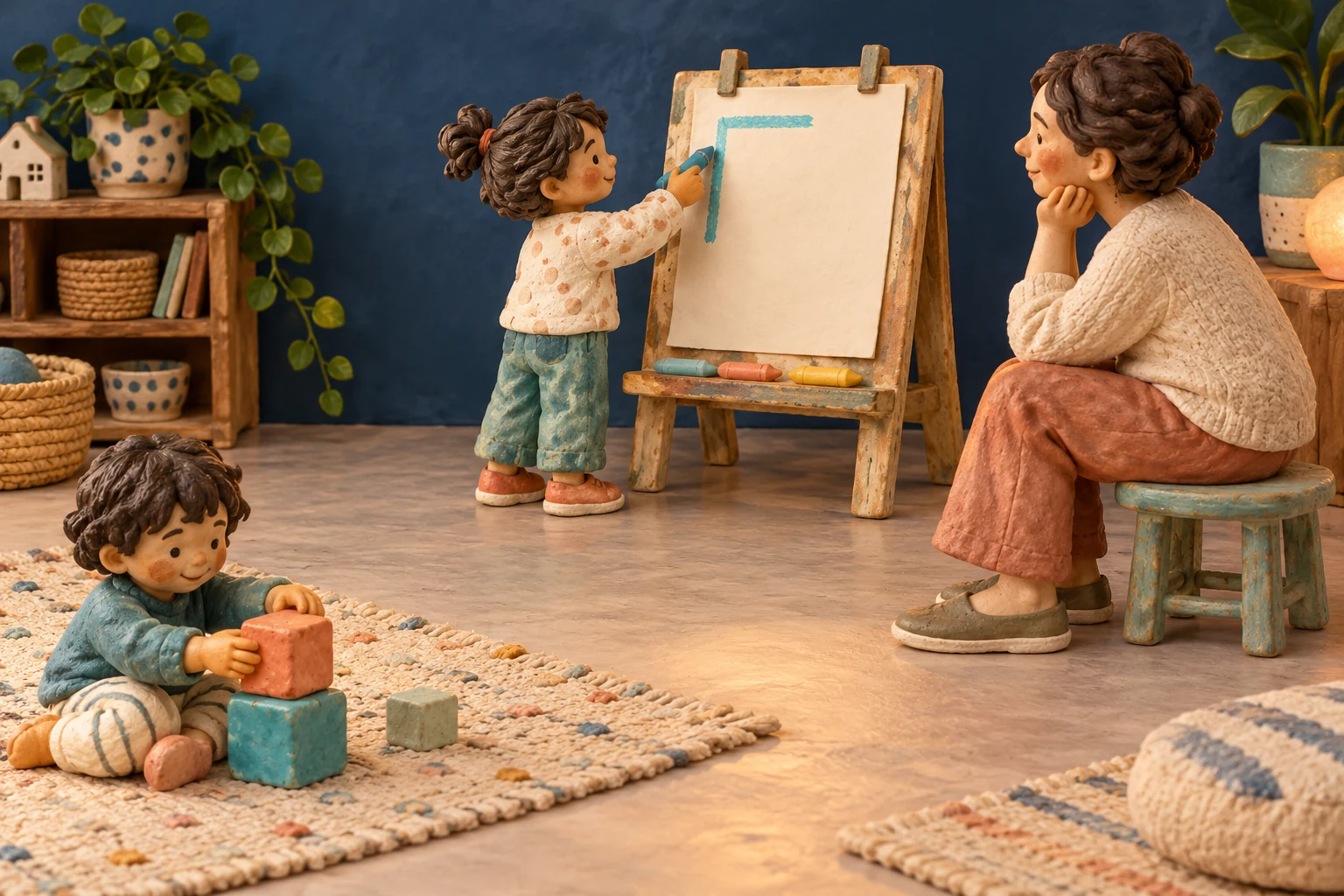
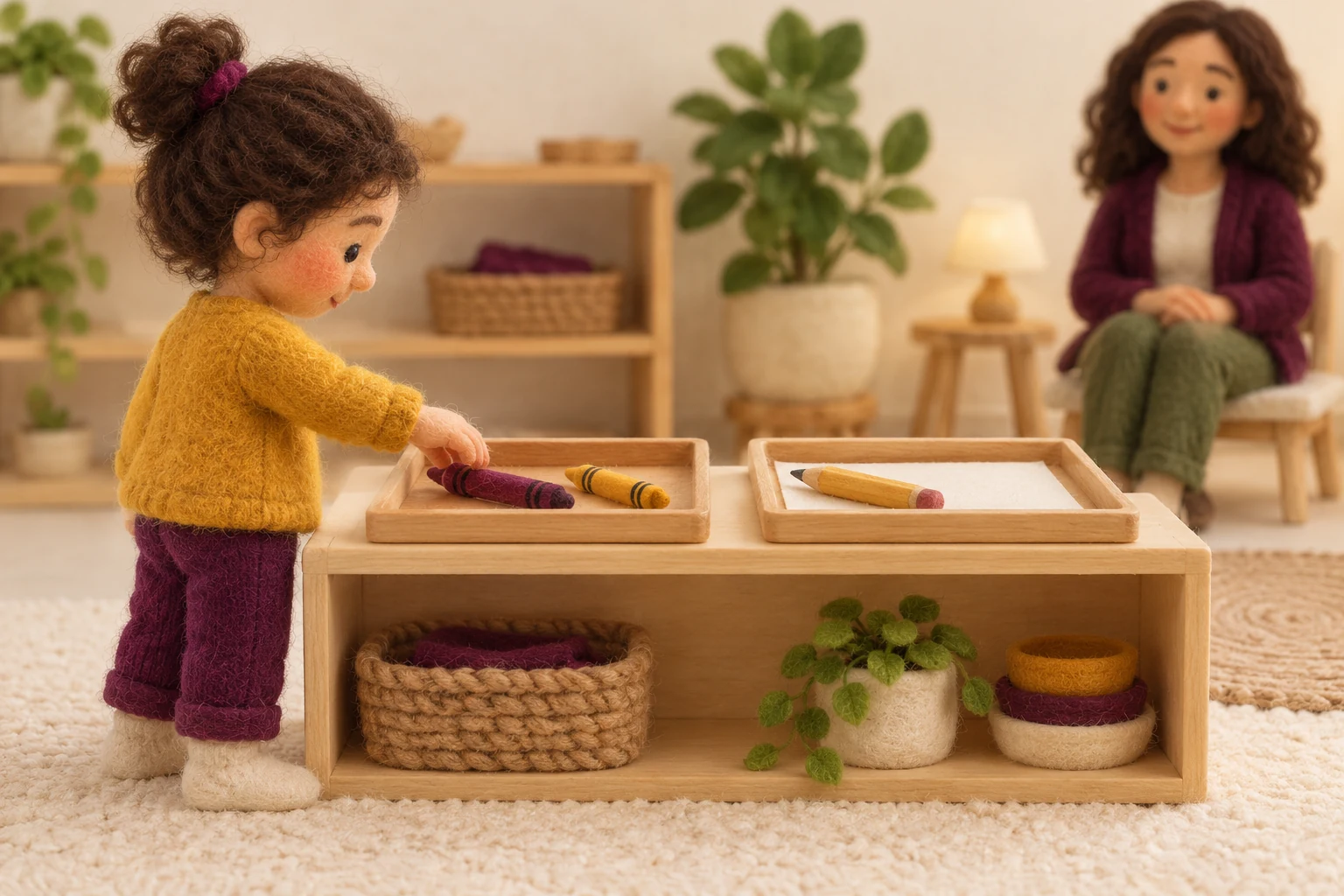
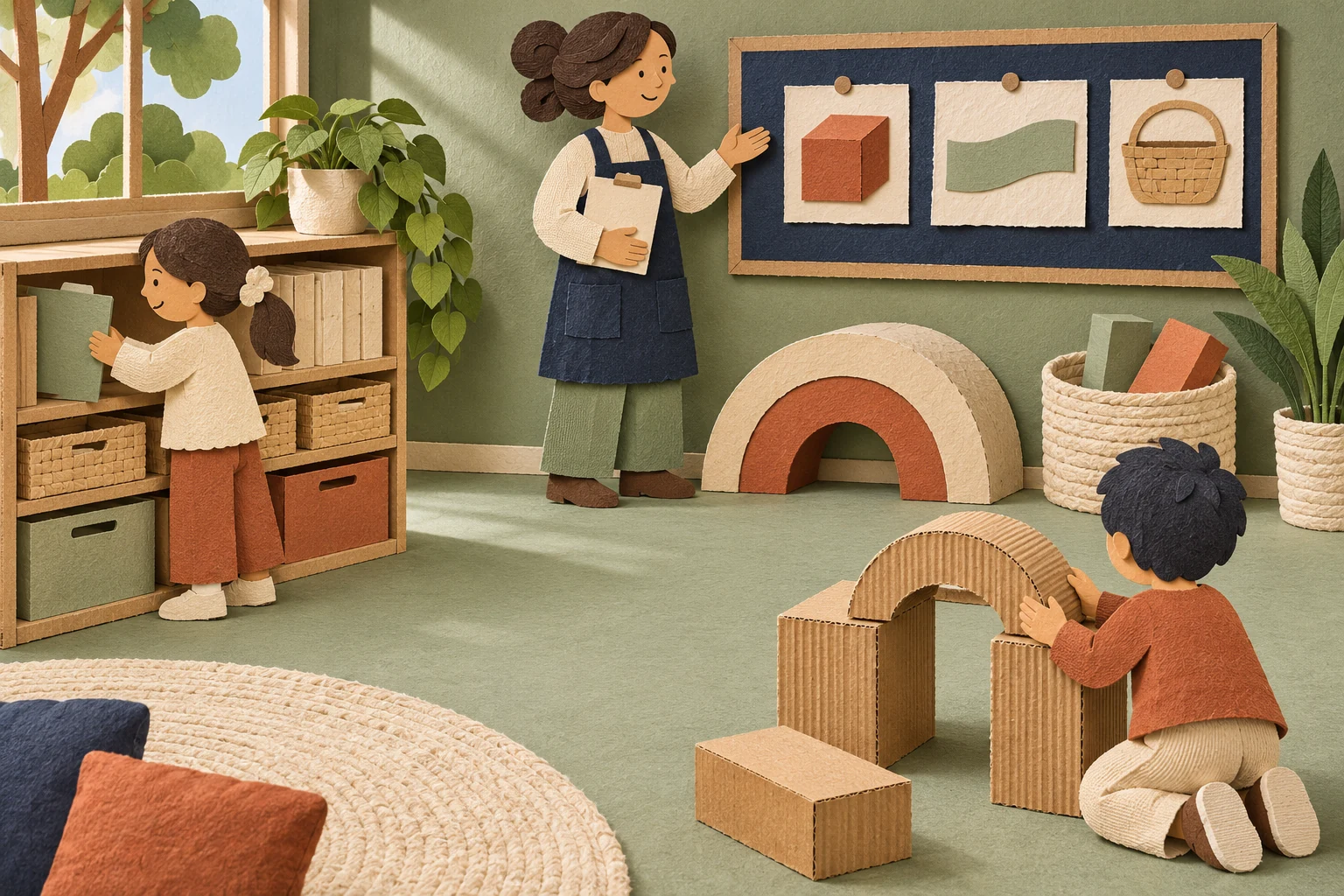
The crayon hovers over the page. A child asks whether the first mark will be right before making it, then wants a fresh sheet when the line changes direction. Fear of mistakes can make an ordinary learning invitation feel like a judgement waiting to happen. Parents and teachers do not need a louder promise that everything will be wonderful. They need ways to understand the hesitation, teach the next useful action and keep a first attempt safe enough to make. These six approaches use familiar early-years activities, including three existing worksheet starting points, alongside realistic feedback and appropriate help.
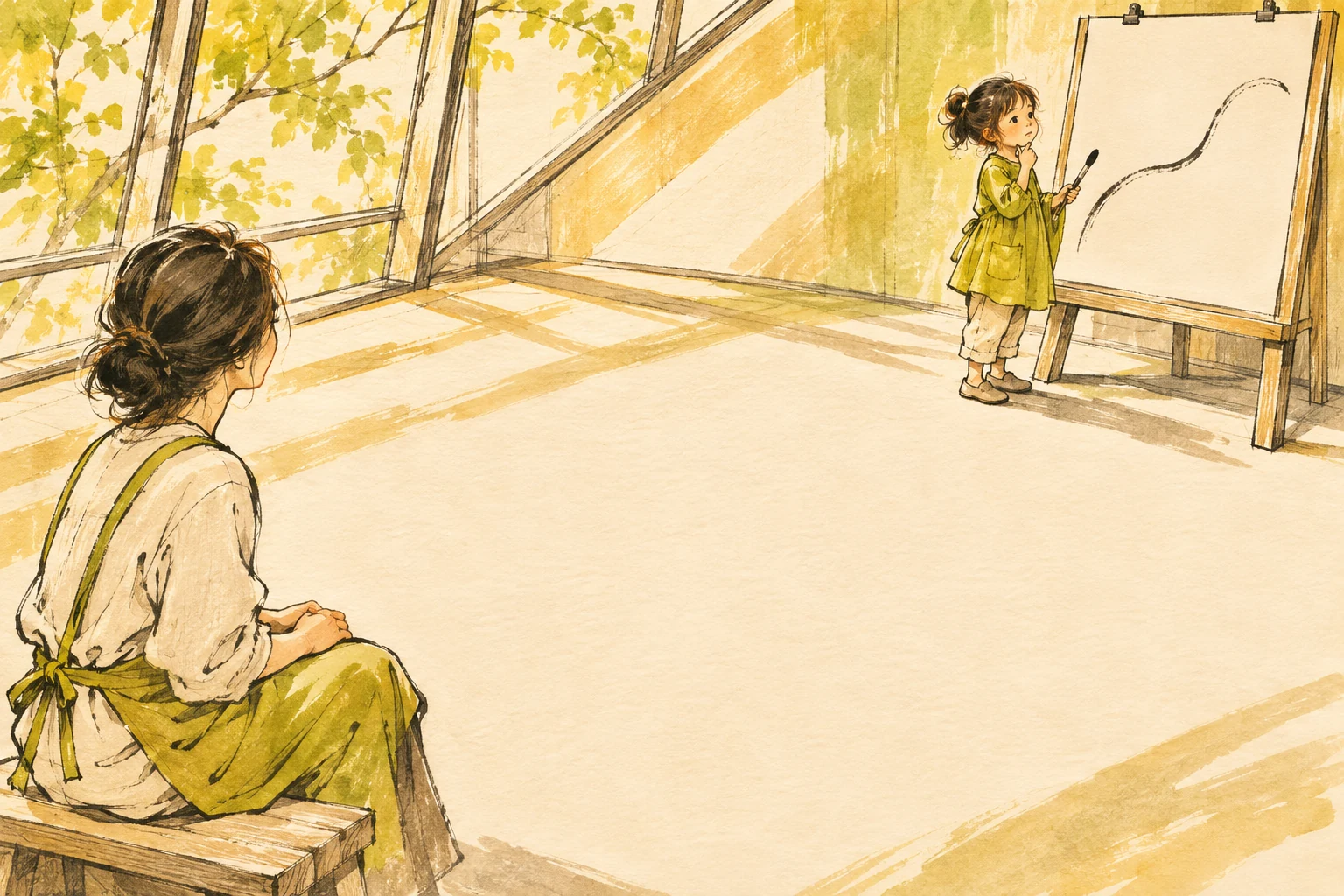
The thoughtful child and unfinished curve illustrate an ordinary practice moment without an audience or grading display.
What is the child trying to avoid?
Hesitation can have several explanations. The learner may be uncertain about the instruction, struggling with a tool, remembering an uncomfortable correction or worrying that someone will laugh. Sometimes they simply do not want the activity. Refusal or repeated erasing cannot establish the cause on its own.
Ask a manageable question when the child is comfortable: “Which part are you unsure about?” Offer pointing or a demonstration if words are difficult. Avoid announcing that the learner is a perfectionist because of one response.
Fear of mistakes is different from needing more teaching
Suppose a child cannot form a new letter. Saying “Be brave” does not supply the movement they need to learn. A demonstration, a different tool or more suitable practice may be the immediate help.
Equally, a child who already understands a task may still be worried about an audience or a correction. Adults can investigate both the skill and the social situation without treating every difficulty as a mindset problem.
1. Make the purpose of a first attempt explicit
Explain what you will notice before the learner begins. “We are finding a starting point for this letter” creates a different expectation from silently checking every feature of an entire page.
Show which parts are practice and which conventions are being taught. A child does not have to discover an established letter form independently. They can use a clear model while learning how the movement works.
A suitable letter invitation

The generic practice routes are not formal letter models or examples labelled correct and incorrect.
For a learner currently studying L/l, Ll Worksheet: 4 Powerful Lion Corner Learning Wins offers models and tracing rows, with a lion picture-word activity below. Select a taught model and demonstrate it on separate paper. Keep unrelated rows out of the immediate task if that makes the purpose clearer.
The generic corner marks in the illustration are exploratory routes, not formal letter models or examples ranked from wrong to right. Follow the actual worksheet and the formation approach the child is being taught. A first attempt gives the adult information about useful next instruction.
2. Give feedback the learner can act on
Describe an observable feature and one relevant next action. “Your line reached the corner; now look at where this part begins” offers information. A broad judgement such as “You are a natural” may tell the child little about how to proceed when the next attempt is harder.
Keep the feedback proportionate. Choosing one teaching point is often more usable than correcting every visible difference immediately. Ask whether a demonstration would help and allow time for the learner to use it.
Growth involves strategies and support
Harvard’s Making Caring Common guidance on helping children persevere discusses adults acknowledging mistakes and recognising the role of effort and strategies in learning. That broad principle is more useful than treating “try harder” as a complete plan.
A growth mindset does not mean every challenge can be solved immediately through determination. Teaching, materials, time, rest and appropriate support matter. Children should not be blamed for lacking a positive attitude when the task or conditions need to change.
3. Make a correction something to investigate
For a child ready to count five, Number 5 Worksheet: 6 Brilliant Turtle Trail Wins provides a top collection of five turtles arranged as three and two. Invite a count, then ask how the collection could be checked. Large counters or an orderly pointing route can make the method visible.
If one turtle is counted twice, identify the point where tracking became difficult. Help the learner try a different route rather than repeatedly requesting the same answer more loudly. The lower counting group is a separate task; keep it outside the selected collection.
A changed method gives a retry a reason
A smaller suitable homemade collection may be more appropriate for another learner. The aim is not to use a higher number to test courage. It is to offer a check the child can understand and use.
When the amount changes after checking, describe why: one picture was skipped or counted twice. This treats a factual correction as information about the method. It does not make the answer a judgement about the child’s intelligence or worth.
4. Choose a learning risk with manageable consequences
Here, a healthy risk means an age-appropriate learning action: offering a guess, showing an unfinished drawing, asking a question or trying a suitable new method. It does not mean ignoring physical safety, personal boundaries or a child’s need for support.
Agree on a small first action. A child might show one practice mark privately to the teacher before deciding whether to discuss it with a partner. Explain what help is available and what will happen afterwards.
Privacy can make participation more workable
Avoid making a hesitant learner demonstrate failure in front of a group. Classroom routines can allow several response methods without publicly identifying who is receiving extra help.
Do not manufacture upsetting mistakes to teach resilience. An adult can model a minor ordinary correction honestly, or discuss a fictional example. If distress is strong or persistent, involve appropriate support rather than turning the activity into an improvised exposure programme.
5. Check whether the supposed mistake is actually a mistake
In Color the house: 5 Amazing Steps for Creative Learning!, the large house outline has a smaller coloured guide. If the agreed task is copying those colours, the guide supplies a reference. If the task is inventing a house design, another roof colour can be a valid creative decision.
Tell the learner which invitation is in use. A hidden expectation makes it harder to know whether to follow a model, explore an idea or express a preference. Adults should not call a creative choice an error merely because it differs from their own.
Correct facts while respecting ideas
A count can be checked against the selected collection. A taught letter form can be compared with the current model. A story or design can have room for several possibilities while still following any stated purpose or safety conditions.
This distinction protects both accuracy and agency. Children can learn conventions without being told every mark is perfect, and they can make creative decisions without being judged against an unstated answer key.
6. Make room for revision, help or a different stopping point
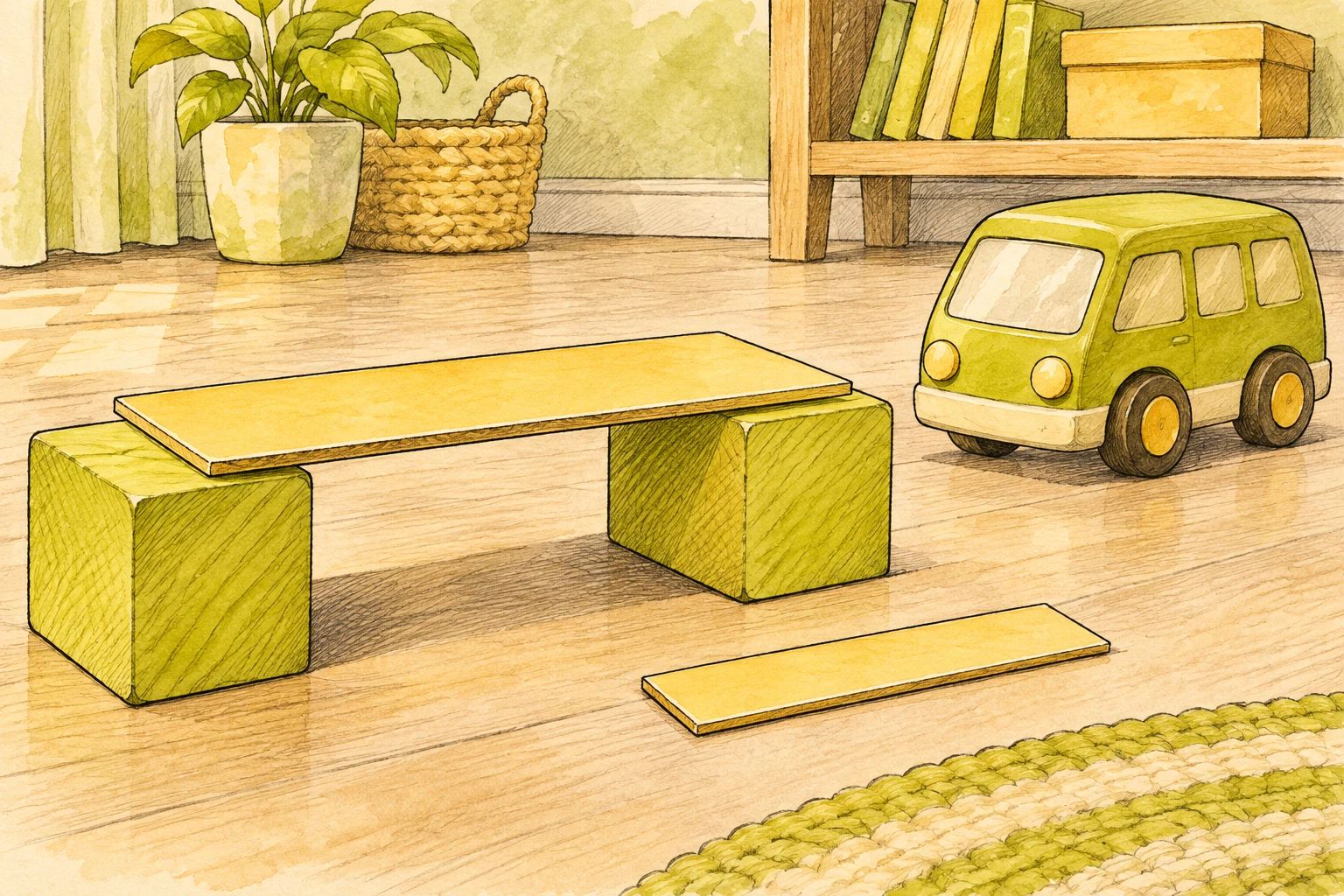
The toy-scale construction illustrates a revised method with adult supervision; it is not built for a child to stand on.
A low cardboard bridge offers a simple example. If a strip does not reach between two supports, an adult can help compare lengths and choose another. Keep the construction at toy scale, supervise materials and never invite a child to stand on it.
The useful change is specific: a different span, a smaller gap or more suitable support. A retry does not have to mean repeating the original arrangement until the learner becomes exhausted.
Continuing is one possible decision
Sometimes the child needs an explanation, another approach, a pause or an appropriate ending. Ask what would make the next action manageable. Saving a plan for later can be a sensible choice.
When the child returns, describe what changed in the support as well as the work. A completed product with substantial adult help should not be described as independent mastery. Honest recognition makes the learning process easier to understand.
A response guide for ordinary practice
| What the learner says or does | Something to investigate | A useful adult action |
|---|---|---|
| “I do not know where to start” | Instruction or model clarity | Show one beginning and invite a response |
| Asks repeatedly whether a creative choice is right | Whether the purpose was explained | Clarify which choices belong to the learner |
| Repeats an unsuccessful method | Whether another strategy is known | Demonstrate an alternative and compare |
| Avoids showing a familiar skill to others | The audience and previous feedback | Offer a suitable private response |
| Becomes distressed across many activities | Needs beyond this task | Share observations and seek appropriate support |
The table suggests questions, not diagnoses. Several explanations can fit the same behaviour, and a learner’s own account may add something adults had not considered.
Five signs of a more useful learning invitation
- The purpose is understandable: the learner knows whether they are practising a convention, checking a fact or making a creative choice.
- A next action is available: feedback points to something the child can use with appropriate support.
- A method can change: another attempt includes a reason, instead of an unexplained demand for repetition.
- Help is legitimate: the child can ask for a model, clarification or suitable tool without losing adult approval.
- The result is described honestly: adults notice both the learner’s contribution and the support provided.
These are practical aims for teaching. They are not guarantees that six activities will remove anxiety, change a personality trait or produce lasting academic gains.
Two hypothetical stories with different next steps
At home: a roof colour is a decision
Imagine a child asking for fresh paper because their house roof differs from the small reference picture. The parent explains that today’s invitation was to create a new design, then asks about the chosen colour. The child continues. This hypothetical example illustrates clarifying the task; it does not imply that every upset about a drawing has the same cause.
At school: a count gets a new method
Picture a learner who says they are “bad at numbers” after losing track of the turtles. The teacher listens, identifies the selected group and demonstrates moving a counter for each picture. The learner checks again with help. In this hypothetical classroom, support addresses a specific difficulty rather than making a promise about how easy all future maths will feel.
Arrange a first attempt in four decisions
- Choose a suitable purpose. Match the activity to current teaching and the learner’s experience.
- Explain the conditions. Identify the model, choices, available help and any genuine constraints.
- Offer usable feedback. Notice one relevant feature and demonstrate another strategy when needed.
- Agree on what comes next. Try, revise, save or stop in a way the learner can understand.
The letter and turtle pages currently list ages three to six; the house page lists four to six. Each offers a watermarked single-page PDF sample. The letter and turtle panels also show clean files requiring membership. Review previews and access before printing, and use only the sections that fit the intended purpose.
Four extensions that make revision ordinary
Keep a draft-and-next-step sleeve containing a chosen attempt and an adult-scribed idea for a useful change. The child decides whether to revisit it.
Play helpful-materials adviser. A puppet has paper too small for a pretend sign, and the learner suggests a suitable alternative.
Make a method demonstration corner where an adult shows two ways of checking the same suitable collection, without asking children to rank one another.
Try a changed-plan story. A fictional character notices their first plan does not fit the situation and chooses what to change, ask or save for later.
When fear of mistakes deserves additional support
Child Mind Institute’s guidance on children who are too hard on themselves recommends listening to self-critical comments and considering whether they are persistent or affecting daily life. Reassurance should leave room for the child’s actual concern.
If worry, harsh self-talk or avoidance persists across play, relationships or learning, discuss concrete examples with the educator and a qualified child-health professional. Do not diagnose anxiety from a worksheet response or expect a motivational phrase to replace needed support.
Leave a first attempt with somewhere to go
Try “We have found the part we need to work on together.” Keep the next useful support visible alongside the next mark. A child does not have to enjoy every mistake. They need adults who can meet an uncertain attempt with clear teaching, respect and a manageable way forward.