
Number 5 Worksheet: 6 Brilliant Turtle Trail Wins
Attached Premium Package
Save the turtle finger-map activity alongside the remaining numbers from one to ten. The complete clean set is offered for $3 as a single PDF containing all ten supplied worksheets.
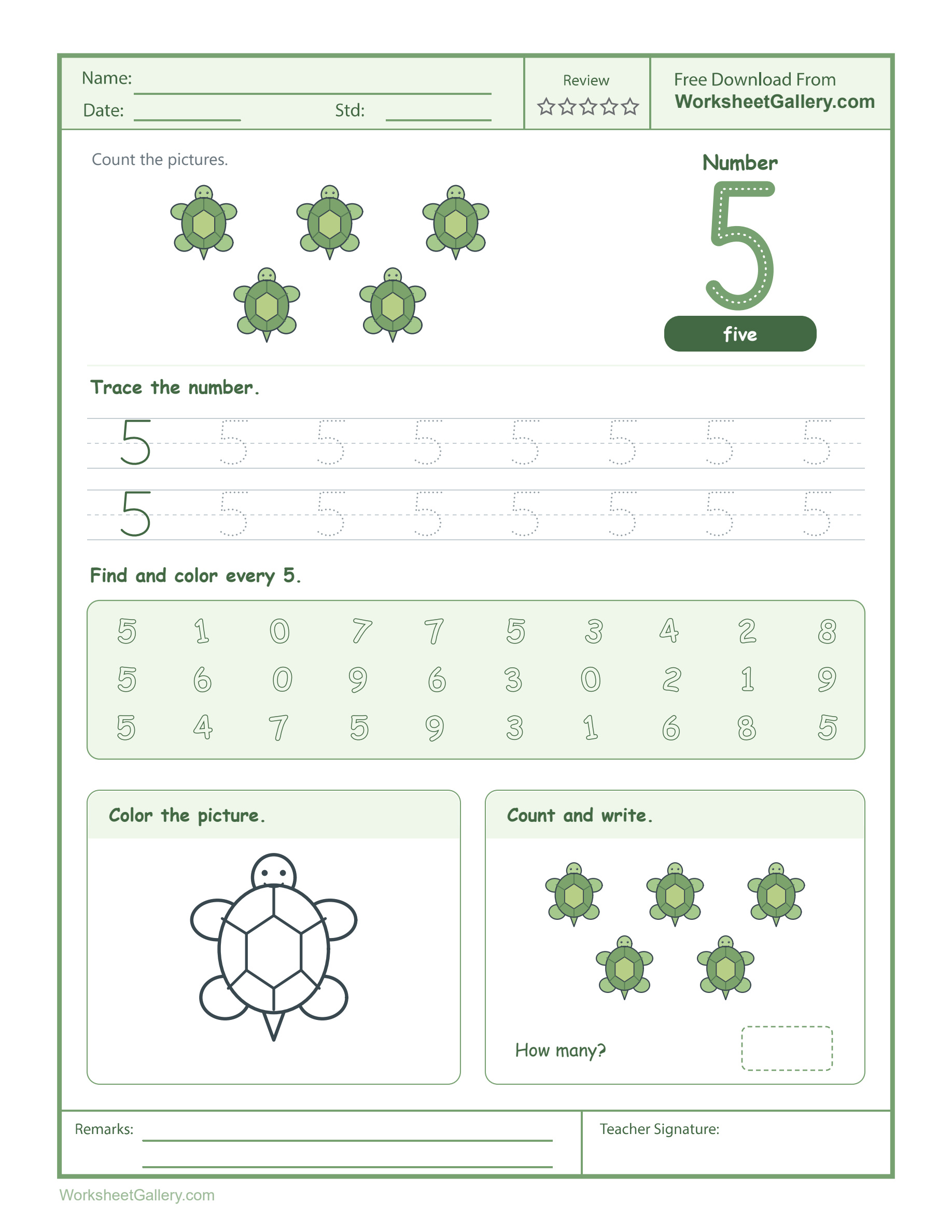
Five fingers can offer a familiar reference for a group that cannot be moved off the paper. Number 5 Worksheet exploration connects that reference with five whole turtle pictures, arranged three above two. A learner can count the turtles first, then check a one-to-one match with a real or paper hand if that support is useful. The Number 5 Worksheet also supplies guided 5 writing, a matching-numeral search, an outline turtle and a lower count response, giving the same quantity several different jobs without requiring every job at once.
Map the Number 5 Worksheet turtles before using a hand
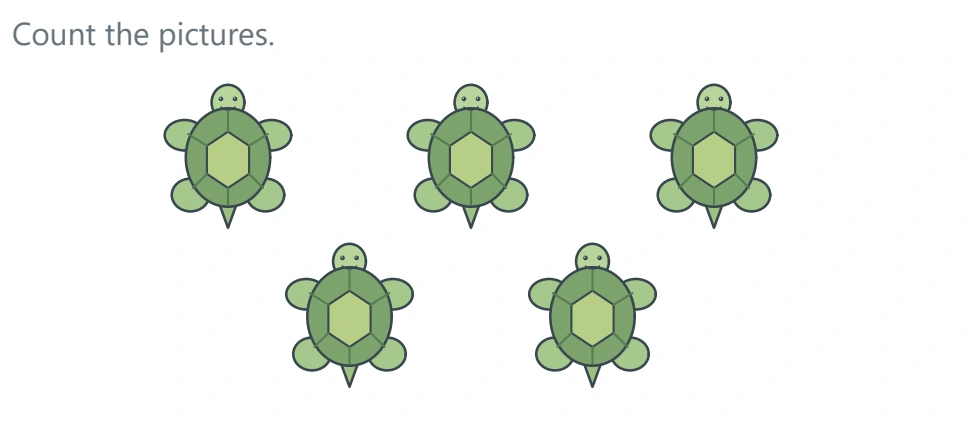
Establish the pictured amount independently. Point through the three upper turtles and continue to the two below. The fifth number belongs to the final complete turtle in that chosen route, and five describes the whole selected group.
Name the objects clearly. Number 5 Worksheet counting concerns turtles, not the panels inside their shells, the flippers or the pointed tails. A finger can trace the outline of a complete animal when a learner needs help deciding what receives one number.
Only after checking the picture count should the optional hand reference appear. Its purpose is to connect an established quantity with a familiar representation, rather than to supply an answer before the learner has inspected the source.
Keep the Number 5 Worksheet top collection separate from its lower count-writing activity. They show the same intended amount for different tasks. No instruction asks the learner to combine every turtle picture across the whole sheet.
Iris gives each Number 5 Worksheet turtle a different finger
Iris and her mother place a blank five-finger paper hand beside the page. Iris has already counted the upper turtle group. Her mother points to one turtle while Iris indicates one finger of the paper hand, continuing until each turtle has a distinct match.
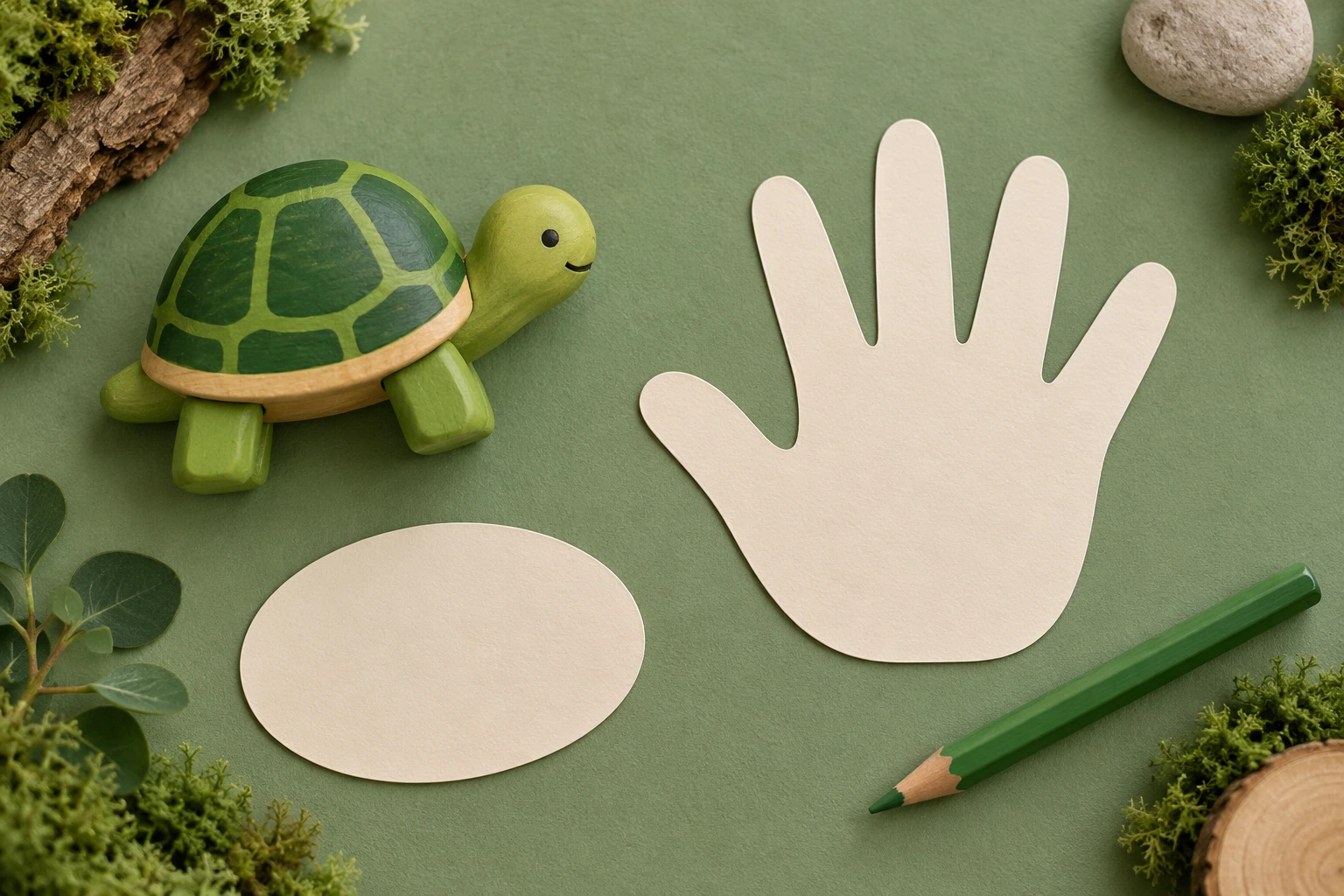
They check whether a finger was used twice or whether a turtle is still waiting. A complete correspondence gives them another way to discuss five. The printed turtles remain the original counted set, while the hand is a reference beside it.
The Number 5 Worksheet home exchange can be shared in several ways. An adult can handle the pointing while a child names the fingers being used, or the child can direct both gestures if coordinating them is comfortable.
The toy turtle and paper hand in the supporting scene are optional. A Number 5 Worksheet conversation can use spoken counting alone when the extra material is distracting. The useful question is whether each turtle receives one distinct match, not whether the family recreates the illustration.
Five Number 5 Worksheet connections to observe
The last count names all five turtles, including the two below the upper row.
Assigning different fingers to different pictures makes a double match or an unassigned turtle noticeable.
A pictured group, an optional hand and a written numeral can refer to the same amount through different forms.
The numeral changes between straight and curved sections, inviting deliberate attention to a specific movement.
Describing which turtle matched which finger gives a listener a checkable account of the method.
These tasks can bring together counting attention, spatial language and controlled pointing. Watch which part is secure before deciding what support to add. A child may understand the amount while finding simultaneous pointing and finger matching unnecessarily demanding.
Six Number 5 Worksheet trail invitations
1. Name a Number 5 Worksheet turtle's counting boundary
Let the child select one turtle and indicate its whole outline. Talk about a shell section as something inside the animal, then return to naming the complete turtle as the counting unit.
Count the group using that agreed unit. Number 5 Worksheet language is clearer when the learner knows whether an adult means complete animals or an interesting feature within an illustration.
2. Pair Number 5 Worksheet pictures with an optional paper hand
Use a hand-shaped paper reference with five clear fingers, including the thumb. Match each already-counted turtle with a different finger. Leave the entire picture group visible while checking the correspondence.
If a match is repeated, show both assignments and choose a distinct place for one turtle. Number 5 Worksheet checking should make the adjustment visible rather than merely insist on a different final word.
3. Explain the Number 5 Worksheet lower pair
Ask which turtles would be missed if someone counted only the top row. Invite a location description or pointing gesture toward the two lower animals, then include them in a complete count.
The Number 5 Worksheet picture arrangement gives the explanation concrete evidence. A child can show an overlooked region without needing to write an equation about its parts.
4. Rehearse a Number 5 Worksheet change of direction
Select one solid 5 and inspect where its straight portion meets a curve. Follow that shape slowly with a finger, then compare the same region in a dotted example.
Keep the Number 5 Worksheet model nearby during the attempt. A learner can practice one difficult transition separately instead of repeating an entire row with the same uncertain movement.
5. Make a Number 5 Worksheet turtle description
Color the large outline and dictate a short description of the finished turtle. Discuss its shell, flippers and tail without treating those words as extra turtle counts.
Return to the collection panel afterward and establish its amount again if needed. Number 5 Worksheet coloring changes the appearance of one separate outline picture, not the number of animals in the quantity group.
6. Dictate a Number 5 Worksheet trail report
Use the lower-right turtle group for a fresh report. Count its own five pictures and ask the child to supply the amount for the response box. An adult can write a dictated answer when pencil control needs support.
Compare the record with the large model and the pictured group. Number 5 Worksheet reporting links an established quantity with its written representation, while keeping the learner's spoken explanation available for checking.
A Number 5 Worksheet pencil can pause at a transition
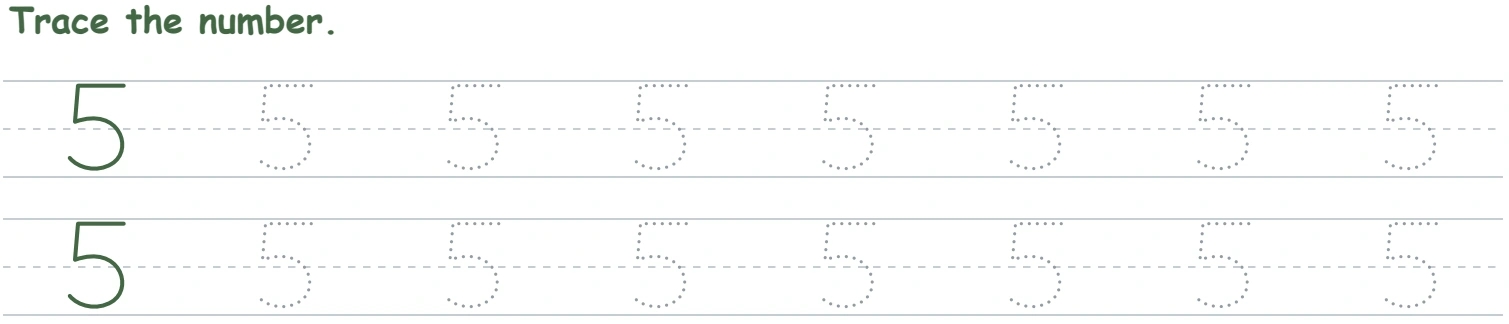
The tracing rows provide solid 5 examples followed by faint dotted forms. Look for the flat upper section, the straighter descending portion and the rounded lower part. These sections work together as a single numeral.
Choose one Number 5 Worksheet dotted form and rehearse its route before marking it. An adult can demonstrate how the movement passes between straight and curved parts, using the printed shape rather than a decorative alternative.
If the lower curve is missing, compare the partial mark with the complete example. If the top line wanders, inspect that section alone. A focused adjustment is easier to understand than being told to make the whole numeral better.
The Number 5 Worksheet guides are an invitation to practice, not a requirement to fill every available space immediately. Some learners will want a coloring pause or a counted report before returning to the writing movement.
Six Number 5 Worksheet symbols are hiding in thirty entries
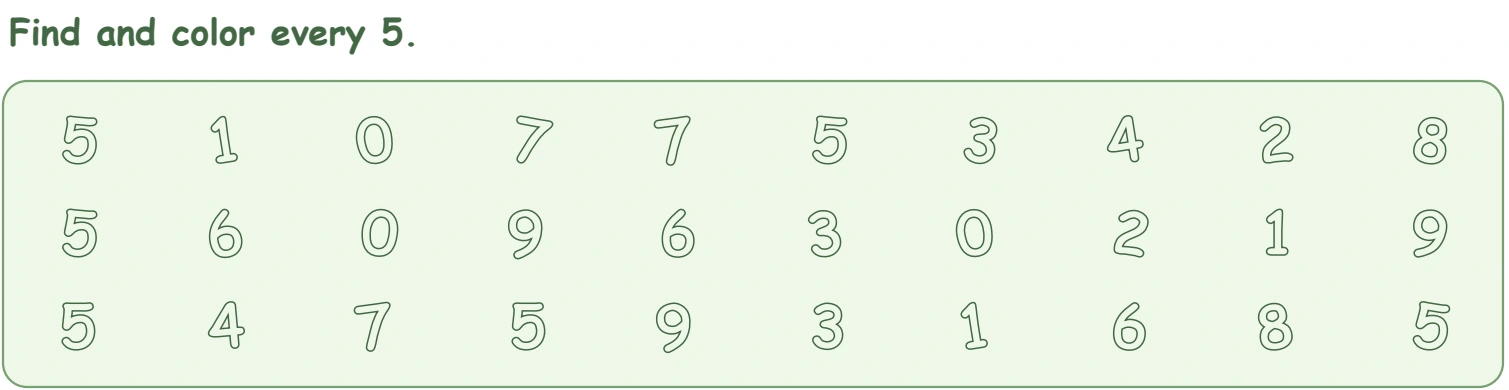
The search panel has six matching 5 entries. Two occur in its first row, at columns one and six. The middle row has one at column one. The bottom row has three, at columns one, four and ten.
Use those left-to-right positions for an adult check after the learner has searched. Number 5 Worksheet quantity counting ends with five turtles, whereas its symbol-finding instruction continues until every matching 5 has been identified.
A learner who stops at five search matches may be applying the pictured quantity to the wrong task. Reread the target instruction and inspect the remaining entries. The sixth matching symbol is part of the search result, not another turtle.
When a distractor is selected, compare its whole outline with the Number 5 Worksheet model. The presence of a curve alone does not make a numeral a 5; look at how its particular straight and curved sections fit together.
Bring a Number 5 Worksheet finger map to a classroom table
A teacher establishes the five-turtle amount with a shared picture count before introducing any hand reference. She then invites one learner to point to turtles while another assigns distinct fingers on a large paper prop. The group watches for repeated or missing assignments.
Explain the roles briefly and exchange them. Number 5 Worksheet partners can discuss what a complete correspondence looks like without needing to manage two gestures at the same moment. An adult can provide either gesture when helpful.
For children aged three to six, select the task according to current preschool or kindergarten experience. A supported object count may be a useful starting point, while a more experienced learner can explain why the hand reference and the turtle collection both represent five.
Keep the Number 5 Worksheet search as a separate classroom question. After the symbol activity, discuss why its six colored entries do not contradict the five-turtle count. The differing results follow differing instructions.
A Number 5 Worksheet reference for the adult listener
| Part of the visit | Evidence to look for |
|---|---|
| Picture count | Three upper turtles and two lower turtles all included |
| Optional hand match | A different finger assigned to every pictured turtle |
| Numeral tracing | Straight and rounded sections compared with the source model |
| Symbol finding | Six matching 5 entries identified within thirty positions |
| Coloring | One outline turtle decorated by choice |
| Lower recording | Five small turtles counted for an answer of 5 |
Use the reference to choose a next demonstration, not to supply every answer in advance. The child's own count, pointing or comparison gives the adult information about which connection needs attention.
Keep Number 5 Worksheet returns comfortable and specific
Counting shell panels calls for a whole-turtle demonstration. Using one finger twice calls for inspecting the assignments. A search that ends after five targets calls for revisiting the instruction. These situations should not all produce the same response of more tracing.
Recognize a concrete discovery: “You noticed that two turtles were still below the first row.” Another Number 5 Worksheet visit can begin there, with the learner showing the complete route before choosing a new task.
The existing five-number tracing and coloring resource offers another representation to inspect. Try the basic line-movement practice for separate motor rehearsal. When combining quantities is appropriate, the fruit pictures used for addition introduces a different counting purpose.
Get the Number 5 Worksheet ready for the next trail visit
Choose the original branded sample for free access. With a current qualifying membership, the clean Number 5 Worksheet PDF is available as the premium download. It removes website-name and domain watermarks and carries no inserted advertisements inside the printable.
Use Letter paper and a portrait print setting, checking the faint dotted guides and the final search-column target before printing. Keep both lower panels and their boundaries in view. A full-page fitting option can help when the printer's margins would otherwise clip the sheet.
The Attached Premium Package link opens all ten number worksheets combined in a $3 PDF bundle. A hand reference is useful only when it makes the turtle amount clearer. The child's explanation can decide whether that extra support belongs in today's lesson.
Popular Worksheets
Printable resources families and teachers are downloading now.
 Free
 Free
 Free
 Free