
Number 6 Worksheet: 4 Powerful Duck Pond Successes
Attached Premium Package
The six-duck investigation belongs to a complete ten-page number set. Choose the $3 package for one protected PDF containing the whole sequence, including all of these duck activities.
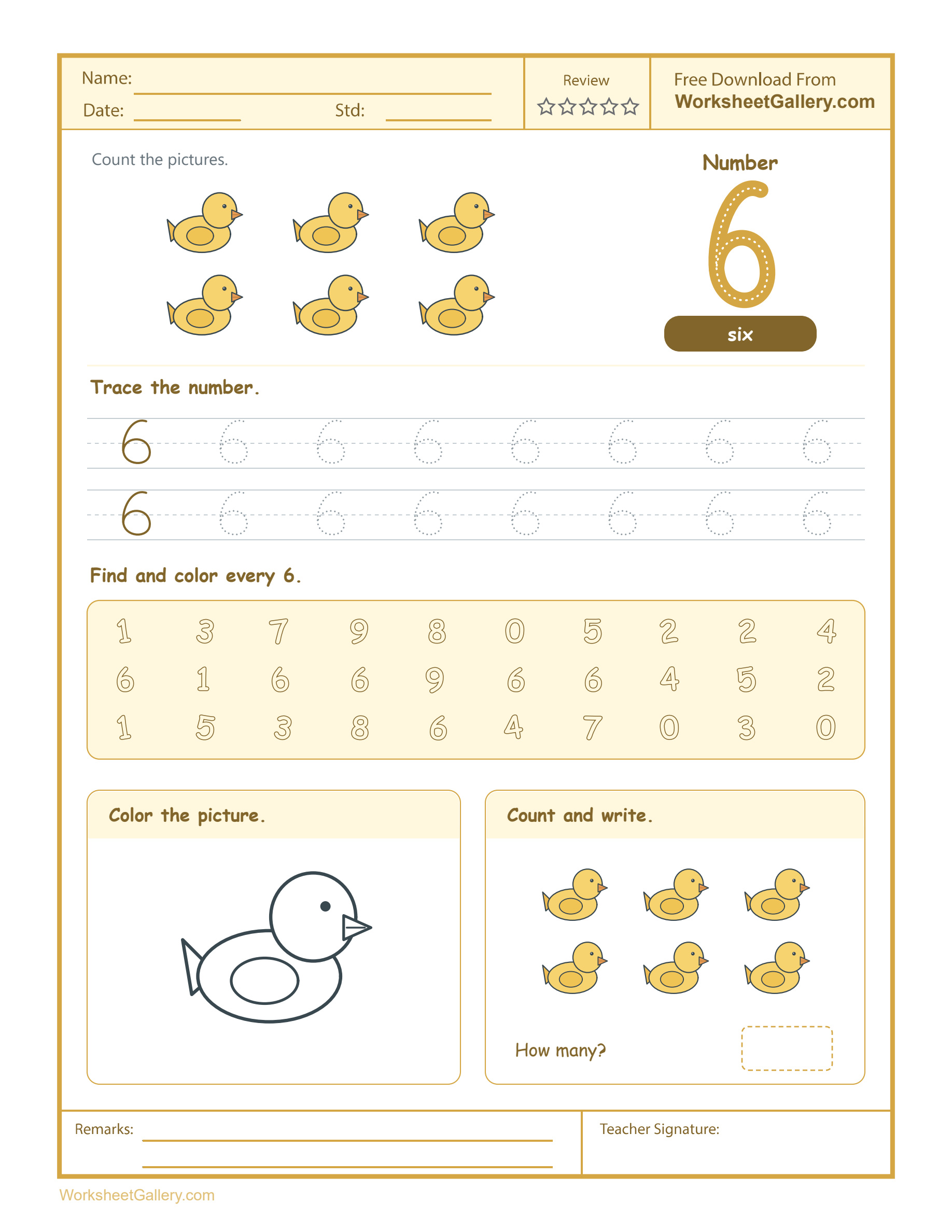
Small duck pictures do not necessarily mean a small duck amount. Number 6 Worksheet investigation begins with two displays of six rubber ducks: larger drawings near the top and smaller ones beside the lower writing space. Counting can check what picture size alone cannot tell us. Alongside these groups, the page offers 6 tracing, a matching-symbol hunt and an outline duck to color. Use the Number 6 Worksheet as a little observation board, where a learner reports what changed in the display and checks whether the amount changed with it.
Compare the Number 6 Worksheet displays before deciding
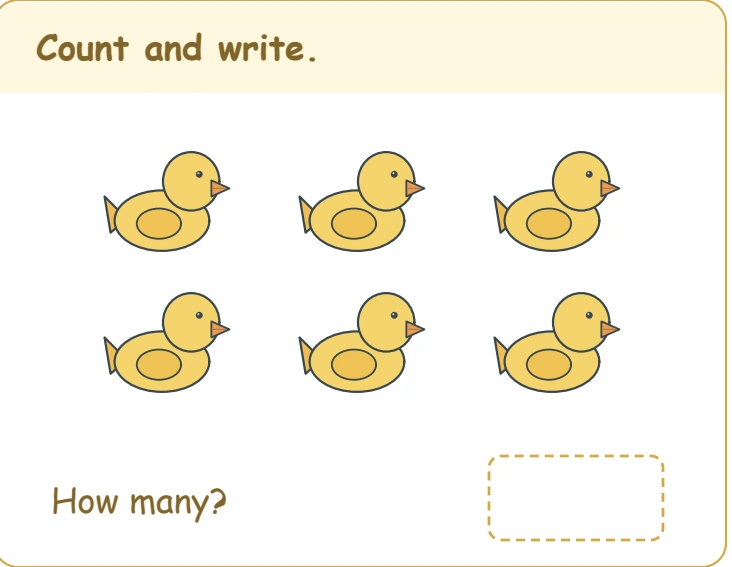
The lower-right panel contains six small ducks in two rows of three. Count those whole drawings and record 6 in its blank answer box. Their compact size leaves more white space, but it does not reduce the number of ducks present.
Now inspect the upper group separately. It also has two rows of three, with larger drawings. Number 6 Worksheet comparison asks for evidence from each group, rather than a decision based only on which display covers more paper.
An adult can ask what is different and what is the same. The learner may notice drawing size, spacing or the position on the page. Return to a complete object count when discussing the amount.
These Number 6 Worksheet panels are independent activity groups. Their sixes are not automatically combined into twelve, because the lower task asks about its own pictured collection. The selected panel determines which objects belong in the answer.
Theo moves a Number 6 Worksheet idea onto a felt pond
Theo and his father count six toy ducks on a dry tabletop mat. Theo spreads the ducks apart, making the group occupy a wider area. His father asks whether any duck was added or taken away before inviting another count.
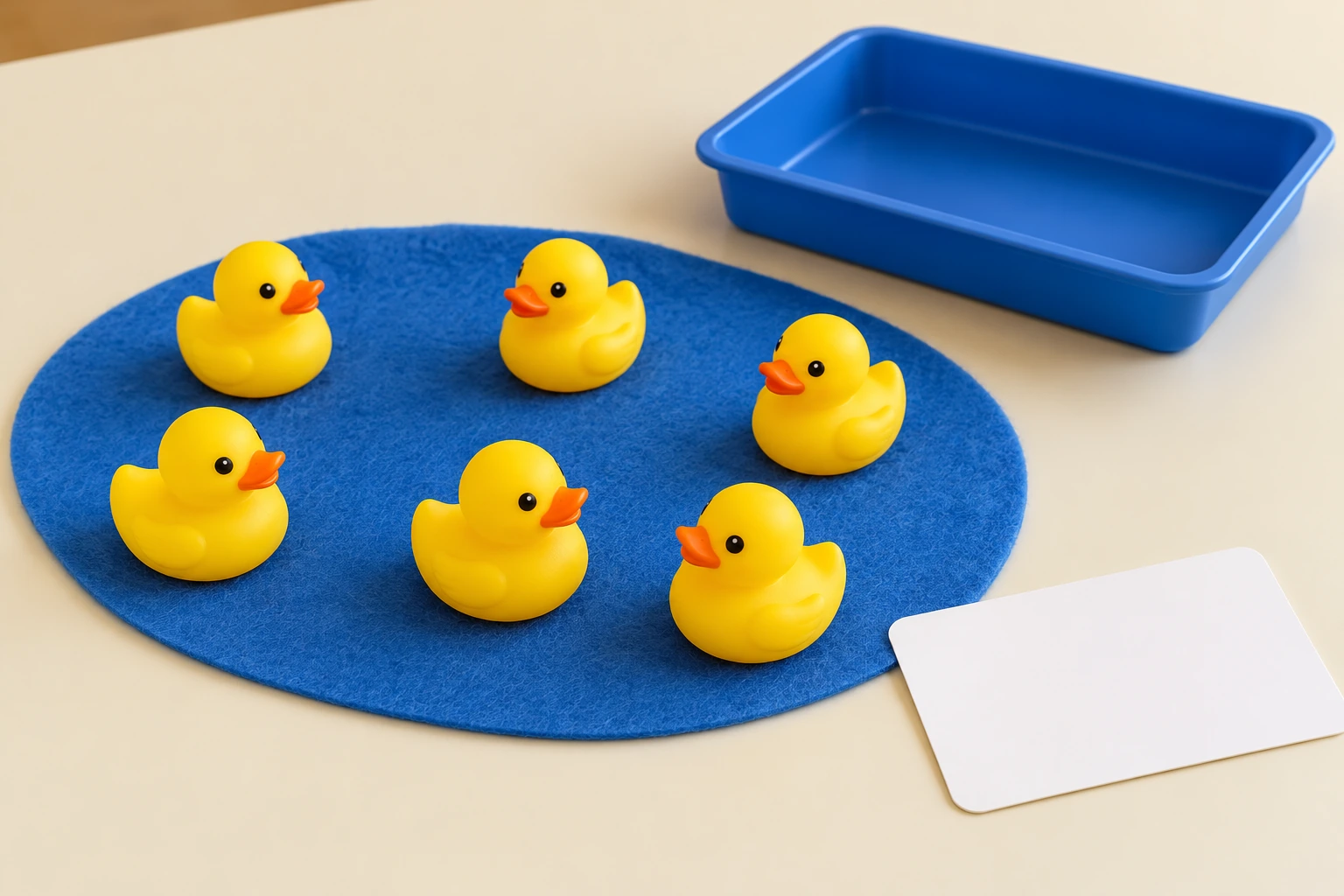
The count still reaches six. They gather the same ducks more closely on the mat and check again. The amount stays supported by the objects, while the space between them has changed.
The Number 6 Worksheet home experiment offers something to inspect, not a rule for a child to repeat without checking. A learner who initially thinks the wider group has more can recount and explain which visible evidence changed the report.
The extra materials photograph shows optional dry-land play props. Paper duck shapes can serve the same purpose. Return to the Number 6 Worksheet when discussing its larger and smaller printed sets; the picture panels remain fixed even when the toy experiment changes.
Record a Number 6 Worksheet observation clearly
| Comparison | What changes | How to check the amount |
|---|---|---|
| Upper and lower source sets | Drawing size and page location | Count six whole ducks in each task |
| Spread toy ducks | Space between the same objects | Track every duck once |
| Gather toy ducks | Area occupied by the collection | Check that none was removed |
| Move toys toward a tray | Object location | Include both moved and waiting ducks |
An adult can dictate or write a brief observation while the learner demonstrates the check. Number 6 Worksheet discussion becomes more useful when a claim such as still six is accompanied by a method that another person can follow.
Keep the comparison manageable. Begin with a single visible change, then allow enough time to recount. If the learner is tracking the pointing route with effort, postpone extra changes until the current group is understood.
Four Number 6 Worksheet pond investigations
A wider Number 6 Worksheet arrangement
Establish six toy or paper ducks and spread them farther apart without changing the objects. Ask the learner what happened to the space between ducks. Then count the complete collection again, using a route that reaches every object.
The Number 6 Worksheet question concerns amount, not which arrangement looks bigger. A child can revise a first impression after checking, and that revision is a useful part of the experiment.
A closer Number 6 Worksheet arrangement
Bring the same ducks closer together, leaving each object visible. Invite a prediction about whether the amount has changed, then ask how the learner could check the prediction.
Do not hide a duck under another. Number 6 Worksheet comparison is clearer when every counted object remains available to inspect. The compact arrangement should still allow one distinct count for each complete duck.
A Number 6 Worksheet journey toward the tray
Move some of the six objects from the mat toward a dry tray while keeping all of them in sight. Ask which ducks belong in a report about the original whole collection: those moved, those waiting, or both groups together.
Use the full set for this optional experiment. Number 6 Worksheet printed questions still refer to their designated panels, so explain when a new play question intentionally includes objects in more than one place.
A Number 6 Worksheet size comparison report
Ask the learner to count the large upper duck drawings and then the smaller lower group. Invite a spoken comparison using the word six for each, while naming the visible size difference.
An adult can record the two reports on scrap paper. Number 6 Worksheet evidence comes from the counted drawings; a tidy row, a larger picture or more empty space does not by itself establish a different amount.
Six Number 6 Worksheet observations from the experiment
Following every complete duck gives a learner evidence that the collection has been fully included.
Describing size and spacing separately from amount distinguishes different properties of a display.
A second count can support or revise a prediction without making the first impression a final verdict.
Words such as closer, farther, moved and remaining describe visible changes that a partner can inspect.
The written 6 records an established amount even when another six-object display looks different.
Pointing, tracing and coloring give directed movement different practical purposes within one lesson.
Watch the action behind the report. A child saying still six may have carefully tracked the ducks, remembered the previous answer or followed an adult's cue. Invite a demonstration when the source of the answer is unclear.
Keep the Number 6 Worksheet loop in its lower position
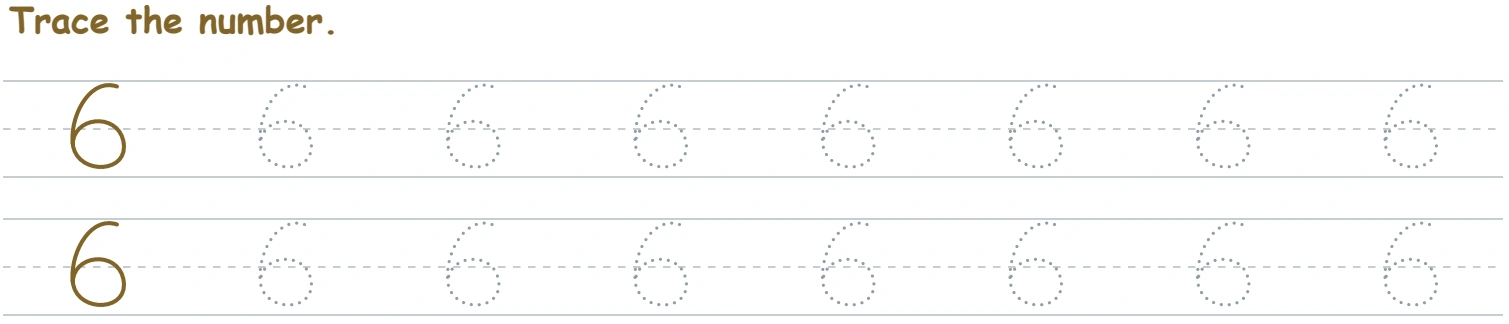
The solid 6 model has an upper curve leading toward a low rounded loop. Compare that orientation with a printed 9 in the numeral panel if the learner confuses the two. The question is about their actual shapes, not which word an adult says more strongly.
Follow one Number 6 Worksheet dotted example with a finger before tracing it. Keep the page upright and the solid model visible. A learner can inspect where the loop closes and how it sits relative to the upper part.
If the loop floats too high or remains open, compare that section with the source. Demonstrate a small correction on spare paper rather than filling a row with marks that repeat the same uncertainty.
Number 6 Worksheet quantity understanding and numeral formation can need different amounts of help. A learner may clearly establish six ducks while an adult records the answer, then return separately to the guide when writing practice is manageable.
A Number 6 Worksheet search begins with an empty target row
The thirty-entry numeral hunt contains six instances of 6. None is in the first row. Five occur in the middle row at columns one, three, four, six and seven; the remaining target is at column five of the bottom row.
That distribution makes a useful Number 6 Worksheet inspection task. A row with no targets still needs checking, and neighboring targets in the middle row each need a separate decision. Do not assume the matches are spread evenly.
Compare the target with every chosen symbol. If 9 is selected, locate its loop and compare it with the lower loop of the intended 6. When a child has found five matches, continue through the rest of the panel rather than stopping at the next convenient row ending.
On this Number 6 Worksheet, both the duck amount and the search total happen to be six. Explain that the agreement is incidental: one task counts ducks, while the other locates matching printed symbols.
Set up a Number 6 Worksheet observation pair in class
One learner describes the visible change between the upper and lower duck displays. A partner counts the selected collection and checks the report. Swap those jobs so the same child is not always the speaker or always the pointer.
The teacher can then demonstrate a single toy rearrangement with all objects visible. Number 6 Worksheet partners report both what moved and how they checked the amount. Keep the language tied to the demonstration rather than expecting an abstract explanation.
For ages three to six, adjust the preschool or kindergarten entry task. Some learners need an adult to help organize a six-object pointing route; others can predict, recount and explain why the observed spacing change did not change the total.
The large outline duck offers an optional coloring interval. Number 6 Worksheet creative choices can change its appearance without altering either printed quantity collection, giving another concrete distinction to discuss when the learner is interested.
Choose a Number 6 Worksheet correction that fits the evidence
If a duck is skipped, inspect the pointing route. If the wider group is declared larger without counting, invite a check of the same objects. If the written 6 is reversed or confused with 9, return to the numeral model instead of repeating the object experiment.
Name a specific useful action: “You checked the ducks waiting beside the tray too.” A later Number 6 Worksheet visit can repeat that method with a single display change, leaving other tasks available for another time.
The five-quantity worksheet activity supplies a nearby amount for a separate lesson. Explore initial pencil directions for basic movement support, or ten more varied line routes when tracing changes of direction is appropriate.
Obtain and print the Number 6 Worksheet observation sheet
The freely available original retains its branding. A qualifying membership that remains active provides the clean Number 6 Worksheet premium PDF, with worksheet website-name and domain watermarks removed and no added ads in the printable file.
Inspect the document in a portrait Letter-paper print setup. Both small duck rows, the dotted loop guides and all thirty search positions should fit inside the printer's margins. Keep the complete sheet visible when applying a page-fitting option.
Attached Premium Package takes you to the $3 ten-page number collection in one PDF. Check the objects when a display changes. A different-looking pond can still contain the same six ducks.
Popular Worksheets
Printable resources families and teachers are downloading now.
 Free
 Free
 Free
 Free