Confidence: 10 Powerful Ways to Help Children Try Again
A reachable first action and a helpful adult can change how a challenge feels. Explore ten practical strategies, with three existing worksheet starting points.
“Can you do it for me?” sometimes means a task is unfamiliar, the instructions are unclear or a child does not want to risk getting it wrong. Confidence grows through experiences adults can help make manageable, not through a demand to feel brave. These ten strategies offer parents and teachers ways to support children ages three to six during play, everyday jobs and worksheet activities. The aim is to help a child participate, recognise useful actions and ask for support. You can begin with one small change, observe the response and adjust without turning confidence into another achievement to measure.
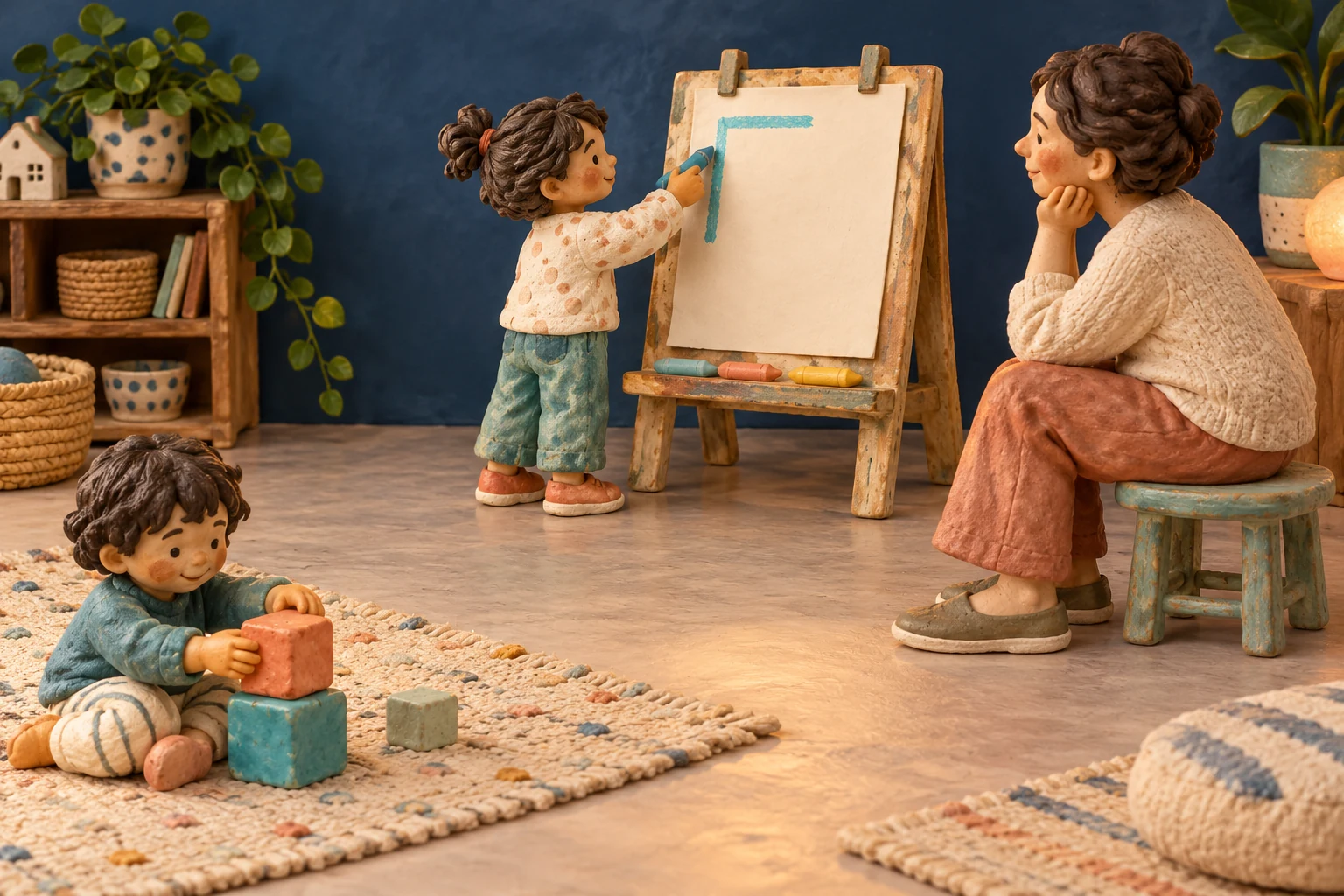
The separate activities give each child a manageable space without an adult guiding their hand.
🌱 Confidence can be quiet and specific
A child might feel capable of building a road but hesitate over a letter. Another may know an answer and prefer to point rather than speak in a group. Confidence is not the same as being outgoing, independent in every task or certain of success.
For this guide, confidence means a developing belief that a particular task is approachable, perhaps with help. Self-esteem concerns a broader sense of personal worth. Neither can be read accurately from one completed page. A hesitant attempt can carry more useful information than a loud declaration.
The Harvard Graduate School of Education’s explanation of resilience describes the importance of supportive relationships and developing capabilities. That established research summary dates from 2015. It supports keeping relationships central; it does not prove that the worksheet activities below are treatments or guaranteed confidence-building methods.
Confidence strategy 1: make belonging unconditional
Welcome the child before introducing a challenge. A friendly greeting, familiar place and adult who listens communicate that participation belongs within a relationship. Avoid making warmth depend on a tidy sheet or a quick answer.
Try separating two messages: “I’m glad you’re here” and “Let’s see what this activity asks.” The first does not need to be earned. This gives confidence a steadier setting when the second involves uncertainty.
At school, a child who watches before joining can still have a place in the group. At home, leave room for a learner to say a task feels difficult without hearing that they are disappointing you. Confidence does not require hiding hesitation from adults.
Confidence strategy 2: choose a reachable first action
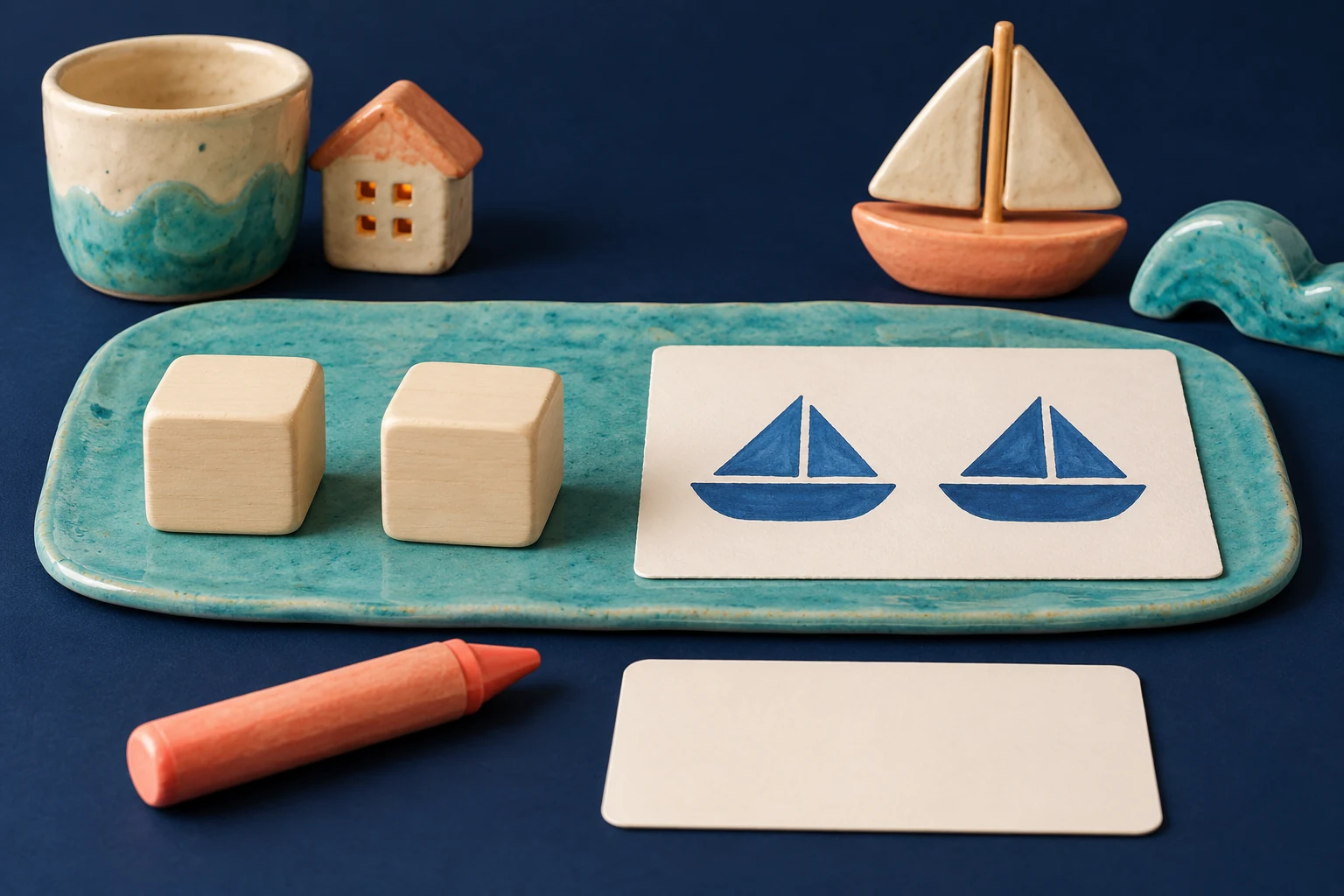
The matching props represent a selected pair; the other ceramic objects in the background are not part of the counting collection.
Offer Number 2 Worksheet: 6 Powerful Games for Happy Sailors when a two-object collection is a suitable starting point. Select the top pair of boats and match two large blocks to those pictures. Leave the other counting and numeral-writing areas for separate decisions.
Give confidence a first action
The initial goal might be placing one block beside each selected picture. It need not include writing the numeral, colouring a boat and completing every row. Confidence has a better opportunity to grow when the child can understand what counts as beginning.
If even that feels unclear, demonstrate one match and pause. If it is already familiar, invite the child to arrange the same two objects differently. Adjust the task rather than praising a child into tackling something they cannot yet access.
Confidence strategy 3: describe a useful action honestly
“You checked that both boats had a block” identifies something the child can use again. It is more informative than attaching a permanent label such as “the clever one.” Keep comments sincere and proportionate; every pencil mark does not need an announcement.
The Seattle Children’s guidance on effective praise, published in September 2026 recommends specific, timely and sincere observations. Apply that idea with attention to the child’s preferences. Some welcome a comment; others prefer a quiet acknowledgement.
Confidence should not depend on extracting approval after each action. Leave pauses in which the child can notice the result. You might ask what they changed, then listen without turning the answer into a fresh test.
Confidence strategy 4: show the task without taking it over
With Ll Worksheet: 4 Powerful Lion Corner Learning Wins, select uppercase L only if it matches the child’s current teaching. Demonstrate the school’s formation route on your own paper, then leave the model visible. The page also has lowercase l and a lion picture-word task; those are separate learning demands.
Explain what you are attending to in a few words. Let the child decide whether to watch another example, use a finger or try with a comfortable crayon. Confidence can coexist with a model and adult support.
Avoid completing the child’s row while describing it as their achievement. An accurate account is kinder and more useful: “I showed the route, and you tried the next one.” It recognises both contributions without pretending the learner worked alone.

These generic practice marks show a route and an exploratory mark, without grading them or reproducing the linked letter page.
Confidence strategy 5: offer a meaningful decision
Choose between two manageable ways to participate, such as pointing to a selected picture or placing an object beside it. Explain the choices briefly and accept the answer. A decision is meaningful only when either option is genuinely available.
Do not ask, “Would you like to work?” if refusal will immediately be punished. Where a classroom activity has a fixed purpose, identify the flexible part: the tool, location or amount of adult demonstration. Confidence benefits from an honest picture of what the child can influence.
If the child suggests a third workable option, consider it. The useful experience is making a decision within clear limits, not guessing the adult’s secretly preferred choice.
Confidence strategy 6: make asking for help a capable action
Agree on a way to ask: words, a gesture or a familiar communication aid. Respond before the task becomes a prolonged struggle. A child who requests a steadier surface or another demonstration is providing information, not failing an independence test.
Offer the smallest useful assistance and check whether it is enough. You might hold the paper while the child moves the crayon, rather than moving the child’s hand. Appropriate access support can remain in place for as long as it is needed.
Help and confidence can coexist
For confidence, the experience of receiving helpful support matters more than an arbitrary rule about how many requests are allowed. Notice what made participation possible and share that detail with the other adults involved.
Confidence strategy 7: treat a mismatch as information
When a count changes, look at the collection together. Was something moved twice? Did the instruction refer to a different group? Describe the problem without attaching it to the child’s identity.
An adult can model an ordinary correction: “I moved that one again. I’ll put the counted pieces here.” Confidence does not require pretending an incorrect result is correct. It needs a way to examine the result without shame.
Keep the comparison with the task itself. “Does every selected picture have one object?” is clearer than “Can you be as good as your partner?” If the child is too upset to inspect the problem, pause and return when a conversation is possible.
Confidence strategy 8: give practice a purpose the child recognises
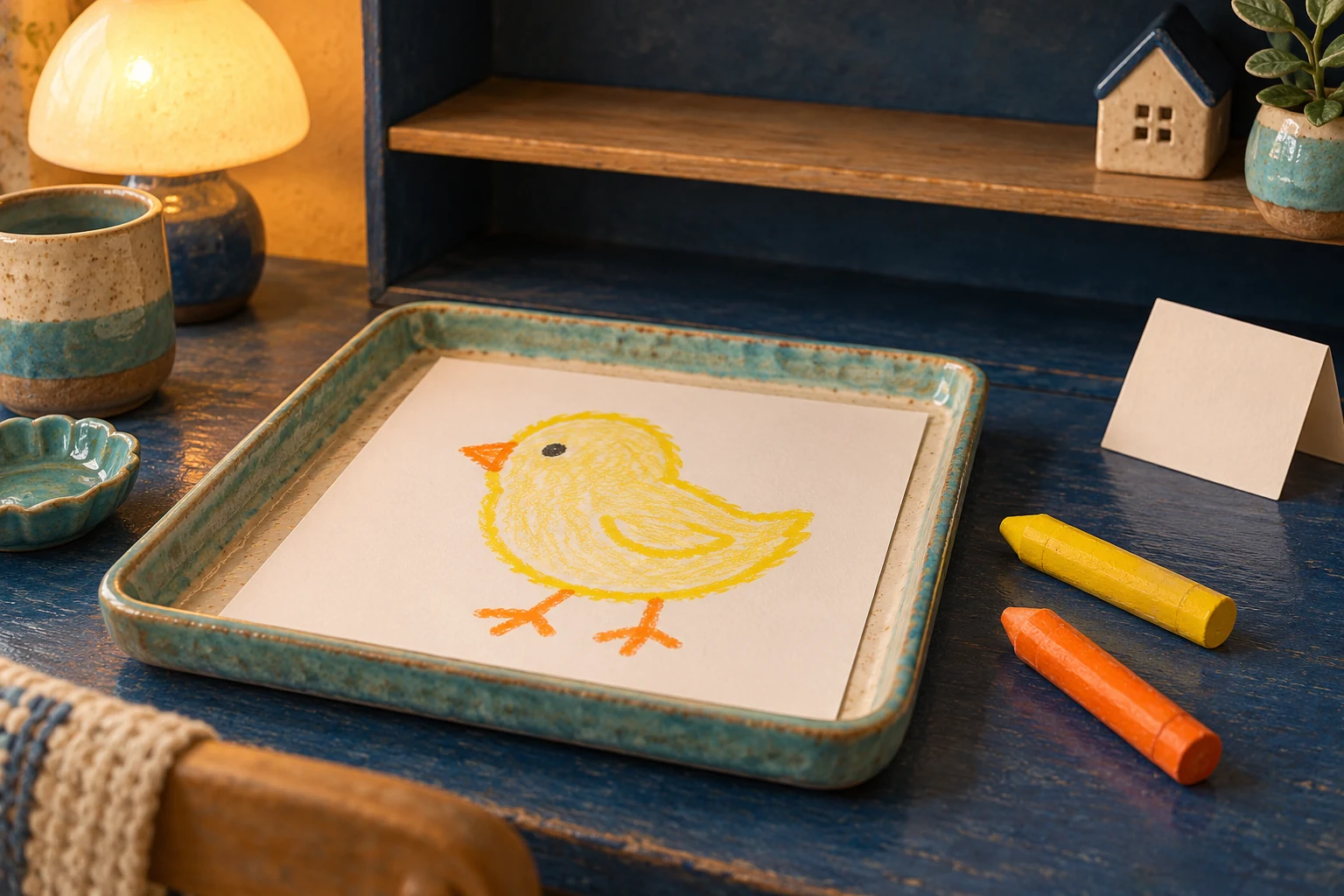
The generic coloured chick drawing provides a conversation prompt; the actual printable uses a large outline and smaller finished reference.
Offer Chick Coloring: 5 Brilliant Moves for Happy Artists to a child interested in making a picture for someone. The actual page has a large chick outline and a smaller finished yellow-and-orange reference. Invite a detail, a chosen patch of colour or another response the child can manage.
Copying the reference perfectly is unnecessary. Ask what they want the recipient to notice, and let an adult record a dictated message separately if wanted. Confidence can grow through contributing something meaningful, rather than collecting another finished page.
The illustration here shows a generic coloured chick drawing. It is not the PDF preview or a standard children should copy. Select materials and the amount of work from the individual child’s interest and comfort.
Confidence strategy 9: compare the child with a previous experience
With permission, keep a small example or a factual note about what happened. Later, ask whether anything felt different. Perhaps the child now recognises where to begin or asks for a tool before becoming frustrated.
Do not invent progress when the evidence is unclear. “Today you chose to show me your method” may be accurate even when the quantity or letter form is unchanged. Confidence includes noticing participation, communication and useful strategies.
Keep confidence observations private
Keep these observations private and avoid ranking classmates or siblings. A public ladder of “bravest children” can turn a supportive activity into another comparison. Let children choose whether their work is displayed and what they would like others to know about it.
Confidence strategy 10: leave a believable route back
Agree where unfinished work belongs and what might happen next. A child could save a page with an adult-written note: “Try the second boat with blocks.” The note preserves an idea rather than imposing a deadline.
When returning, offer the relevant support again. Confidence may differ from day to day, and needing a model after a break does not erase an earlier attempt. Be curious about changed conditions such as noise, tiredness or an unfamiliar instruction.
Sometimes the right decision is to change activities. Confidence is not proved by remaining with paper indefinitely. A child can practise useful skills through play and ordinary responsibilities while a particular worksheet waits.
Six gains to notice around confidence
- Clearer beginnings: confidence support starts when the child knows a first action without needing to understand the entire page at once.
- Useful self-knowledge: confidence conversations can reveal how children identify tools, people or demonstrations that make a task approachable.
- Honest checking: confidence need not rest on a correct answer; a result can be examined without equating a mismatch with personal failure.
- Meaningful contribution: confidence has a practical setting when a mark, count or message has a purpose beyond adult approval.
- More informative conversations: adults can describe the support and strategy instead of reporting only completion.
- A route to another attempt: saved materials or an agreed next action make returning easier to understand.
These are opportunities to observe, not guaranteed outcomes or a confidence score. Look across familiar situations and include the child’s own view where they want to share it.
Match confidence support to what is actually happening
| What an adult notices | A possible adjustment | A useful confidence question |
|---|---|---|
| The child does not know where to begin | Show one selected example | Is the first action now clearer? |
| Paper moves under the tool | Stabilise the surface or offer support | Can the child participate more comfortably? |
| A public answer feels uncomfortable | Offer pointing or a quieter exchange | Does another response show their understanding? |
| Every attempt becomes an approval request | Give one factual observation and time | What does the child notice about the result? |
The same behaviour can have several explanations. Ask and observe before deciding that a child lacks confidence. Persistent distress or avoidance that interferes with everyday participation deserves a conversation with the educator and an appropriate child-health professional.
Two hypothetical confidence moments
A confidence moment at home: a smaller start
Imagine a four-year-old refusing a whole number page. A parent selects the two top boats and offers two broad blocks. The child matches one, asks for the parent to stay and completes the pair. The parent names the matching action and stops there. This hypothetical example illustrates a manageable invitation; it does not promise that one success will remove future hesitation.
A confidence moment at school: a quiet choice
Picture a teacher noticing that a child avoids showing letter practice to the group. The teacher offers a private demonstration on separate paper and asks whether the child wants to point to the model or try a mark. The child points first. Confidence is supported by a usable response option, while the teacher keeps observing what the child understands about the taught form.
A five-step confidence check for adults
- Identify a specific activity the child wants or needs to approach. Avoid a broad goal such as “be more confident.”
- Describe what is currently difficult, including the language, equipment, setting and amount of help available.
- Choose one adjustment and explain the immediate action in familiar words.
- Watch the response, then offer an honest observation or a useful demonstration.
- Ask what to keep, change or save for next time. Record a factual detail if it will help another adult support the child.
Check the current worksheet download panels before printing. All three suggested pages offer free watermarked, single-page PDF samples; clean files require membership. Their age labels are starting points, not instructions to complete every task at that age.
Four extensions that give confidence another setting
Try a helper’s delivery: the child chooses a manageable item to bring to a shared activity and checks that it arrived where needed.
Make a show-me note. An adult records a strategy the child wants remembered, such as moving counted pieces aside. Return to the note only when useful.
Offer a practice invitation in which a toy asks to watch a familiar action. The child can demonstrate, point or invite an adult to model alongside them.
Create a small contribution basket holding a chosen drawing, message or construction plan. Let the child explain its purpose without requiring visitors to judge it.
Let confidence include support
An encouraging message can be both warm and accurate: “You found a way to begin, and you told me when help would be useful.” Keep belonging separate from performance. The most useful confidence routine may be a smaller first action, a clearer model or an adult who stays available. Leave room for the child to try, pause, ask and return while remaining valued throughout the experience.