Kindergarten Readiness 2027: 7 Essential Skills to Support
A helpful request, a familiar routine and a shared story offer clues for planning. Use seven areas to prepare support and talk with your child’s future school.
🎒 Plan a welcoming start, one everyday moment at a time
September is not the first chance to prepare for kindergarten, and a stack of completed pages is not the whole preparation. A child asking for help with a lunch box, joining a familiar game or telling you about a picture is showing something worth noticing. This readiness guide gives families planning for 2027 seven areas to explore through ordinary routines, play and selected Worksheets Gallery resources. Use the checklist to decide what support to offer and what to discuss with school. It is a conversation starter, not an entrance test or a prediction of school success.
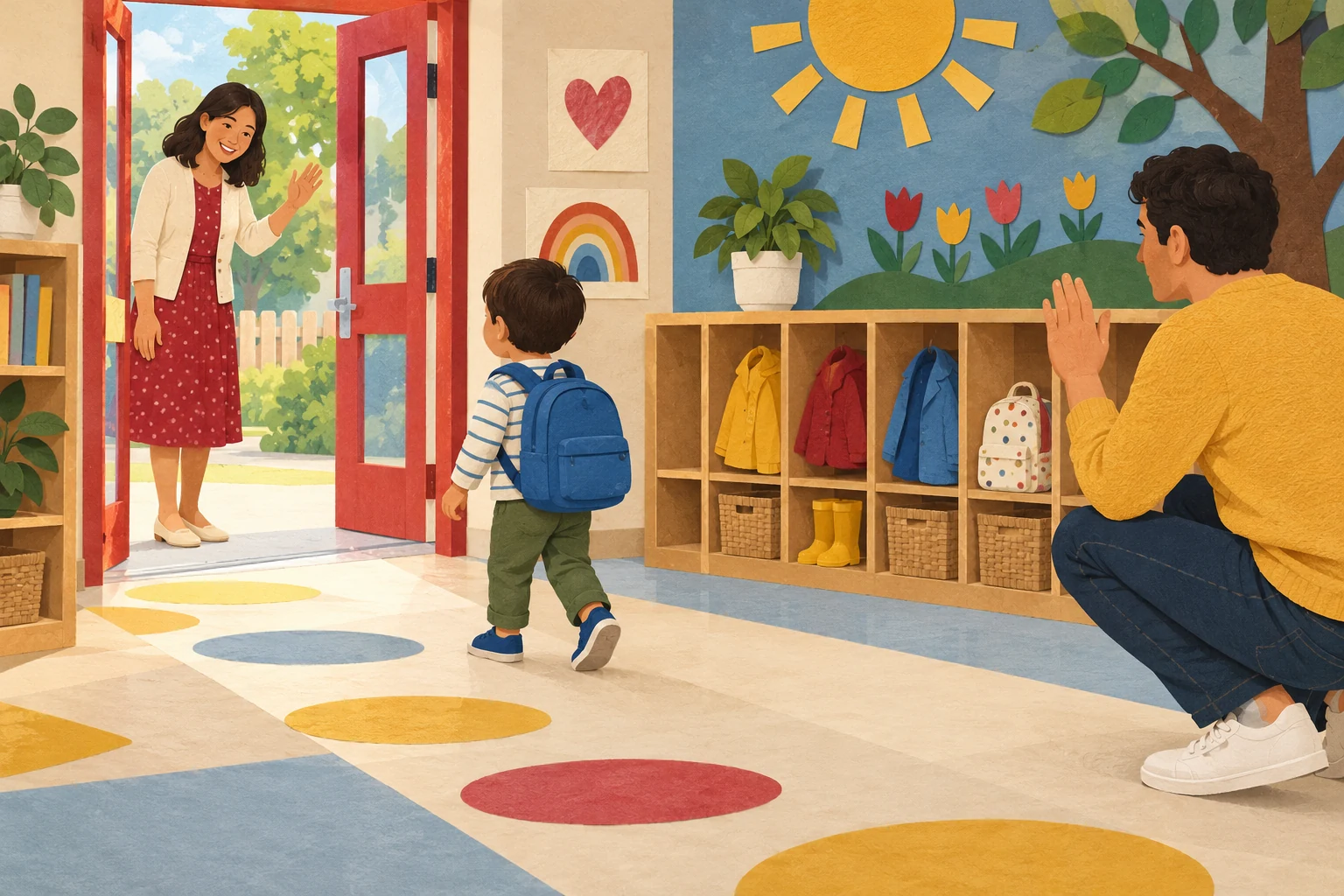
The doorway scene connects family, child and teacher while leaving a clear route into the room.
Readiness belongs to families and schools together
The Head Start overview of school readiness includes children’s development, families’ support and schools’ capacity to welcome children. That wider view matters: a child can need help and still belong in a learning community. Physical, social, emotional and cognitive experiences all contribute.
The seven areas below organise practical observations; they are not seven official developmental domains or newly announced 2027 standards. Readiness is broader than a worksheet score. Local entry ages, registration dates, documentation and support arrangements must be checked with the intended school.
Children communicate and participate in different ways. A home language, gesture, communication aid or supported movement can reveal understanding that an unfamiliar spoken instruction does not. Include those ways of participating in your readiness notes.
Keep context attached to readiness observations
“Opened the familiar container after a demonstration” tells a teacher more than “independent: yes.” Note the materials, help and setting alongside what happened. Avoid turning readiness into a total number of ticks.
You can copy the table below into a family notebook. It is an in-article planning checklist, not a new downloadable assessment. Revisit one or two areas when useful, rather than testing all seven in a single sitting.
A seven-area readiness conversation checklist
| Area to explore | An everyday observation | Support or question to record |
|---|---|---|
| 1. Communicating needs | Shows, says or signals that help is needed | Which words, gestures or aids are familiar? |
| 2. Relationships and feelings | Joins a game or seeks a trusted adult | What helps with waiting or a difficult moment? |
| 3. Practical self-care | Participates in bags, clothing or handwashing | Which equipment or adult assistance is useful? |
| 4. Listening and shared stories | Responds to a picture or familiar direction | Does a visual cue or home language help? |
| 5. Early print and mark-making | Notices familiar print or contributes marks | Which names, models or tools invite interest? |
| 6. Quantity and problem-solving | Counts a small group or compares objects | Is moving each object helpful? |
| 7. Curiosity and flexible participation | Tries an idea and returns with support | What interests or changes make entry easier? |
Beside any row, write “seen in this setting,” “trying with support,” or “another opportunity needed.” These labels describe your observation, not a child’s worth. Readiness can look different with familiar people and unfamiliar surroundings.
Readiness area 1: making a need understood
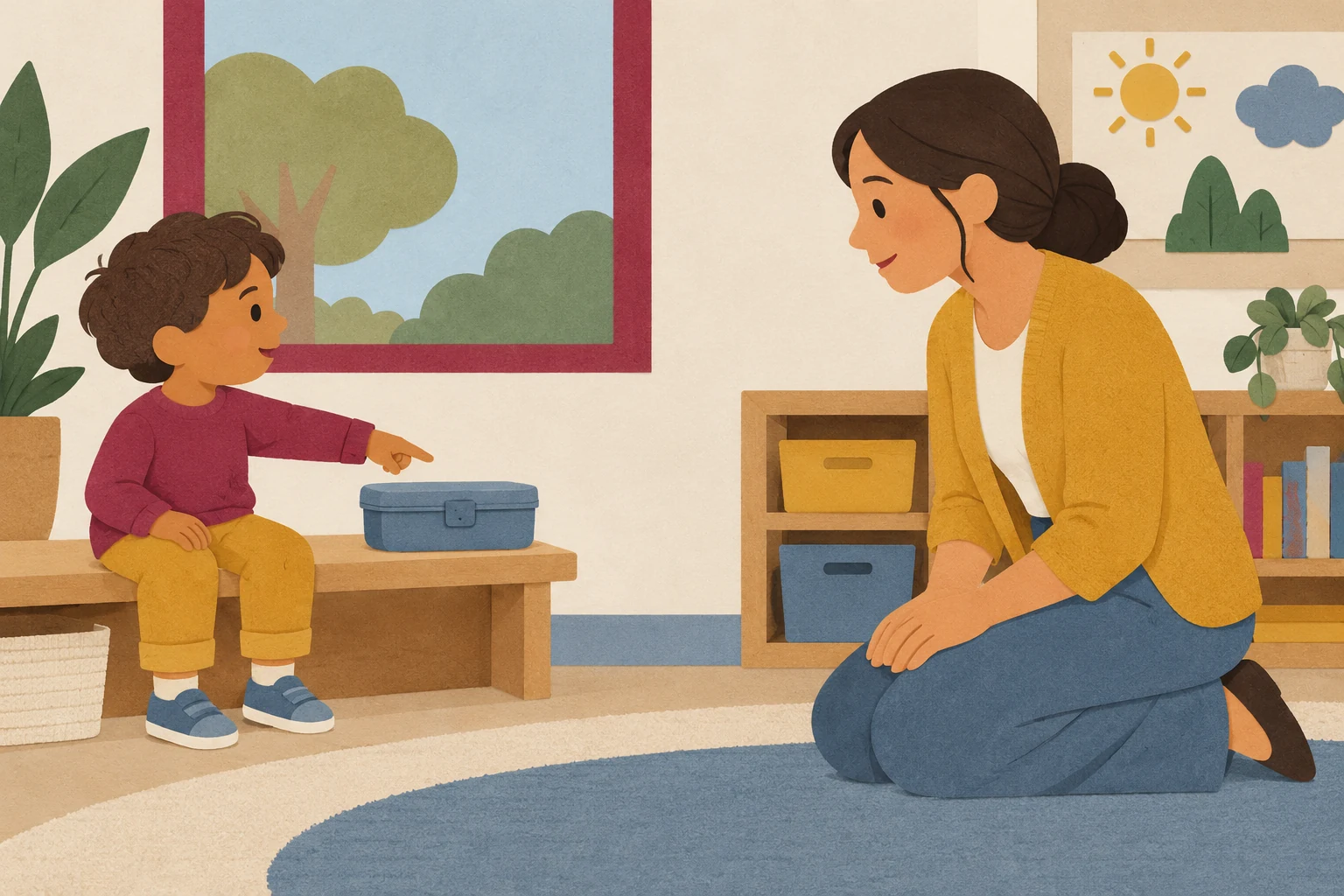
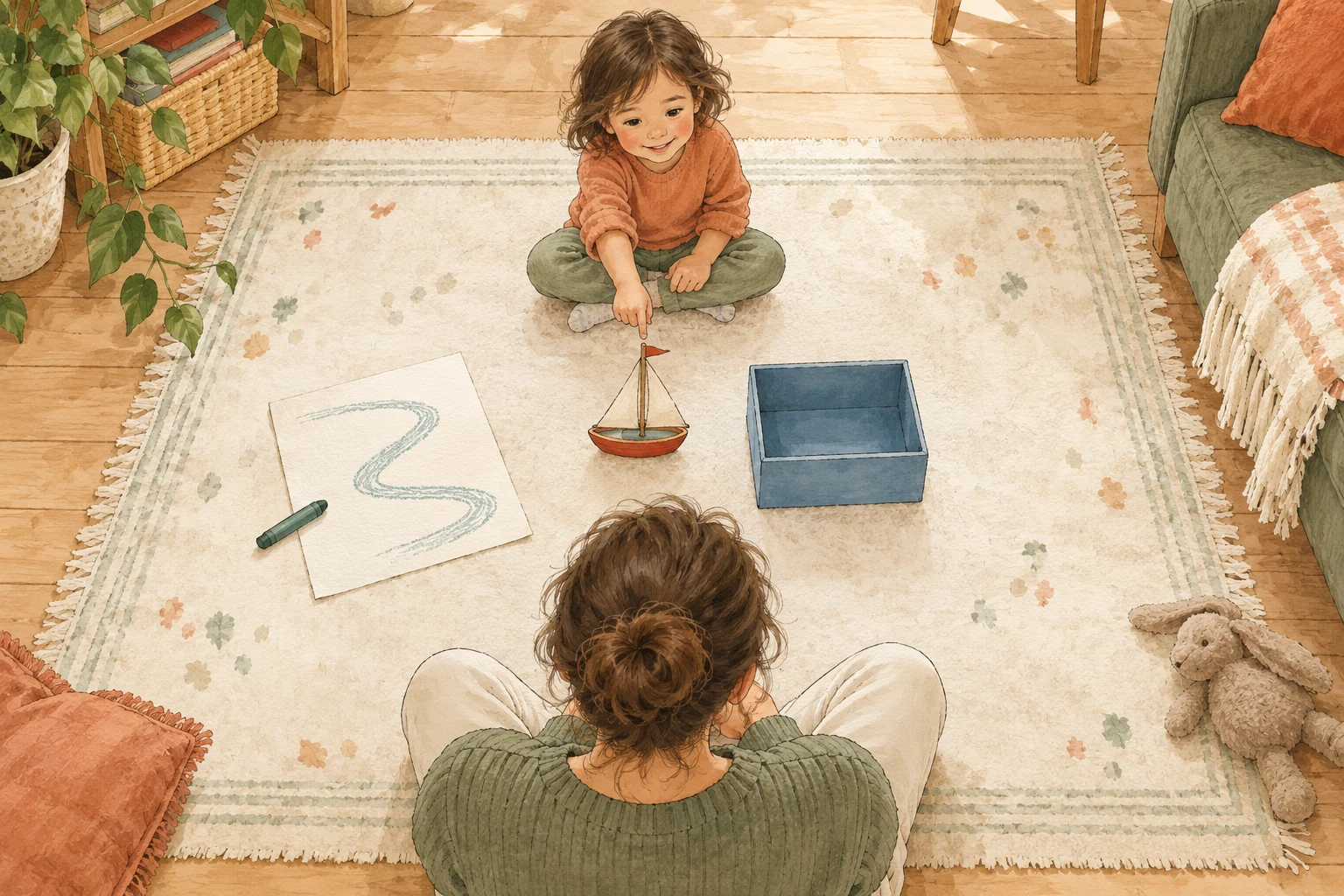
The help-seeking scene shows an adult responding at the child’s level without demanding a particular spoken phrase.
Try a natural invitation: place a familiar closed container nearby and let the child choose whether to open it or ask for assistance. Do not deliberately withhold essential help to create a test. Notice how they make their request known.
Model a useful phrase, sign or symbol such as “help, please,” then respond to the message. A pointing child may already have communicated clearly; adding words can be an offer rather than a condition for receiving help. Readiness grows within responsive exchanges.
Share communication that supports readiness
Tell the receiving teacher how your child indicates thirst, discomfort or uncertainty, especially when tired or in a new setting. Ask how adults will recognise and respond to those signals. This readiness conversation is useful even when your child speaks confidently at home.
Keep practice ordinary. Asking where a missing crayon belongs or choosing between two books creates a meaningful exchange without drilling a scripted interview answer.
Readiness area 2: relationships and big feelings
Offer a familiar cooperative activity, such as building a low road together. Notice how the child enters the activity, exchanges materials and responds when the plan changes. An adult can model a turn, name the disagreement and help find a next step.
Being upset at a goodbye does not by itself determine kindergarten readiness. Talk with the school about a predictable arrival routine, a trusted adult and any familiar comfort arrangements they allow. Rehearse a brief goodbye gently rather than promising the child will never feel nervous.
Support readiness before asking for self-control
When a block road falls, you might say, “That was frustrating. I can stay while we decide what to do.” Later, notice whether the child wants to repair, change activities or rest. A readiness observation includes what adult support made participation possible.
Peer relationships develop through repeated encounters. Joining for a short part of a game, watching first or asking an adult to help introduce an idea can all provide useful information for planning.
Readiness area 3: practical care with the right tools
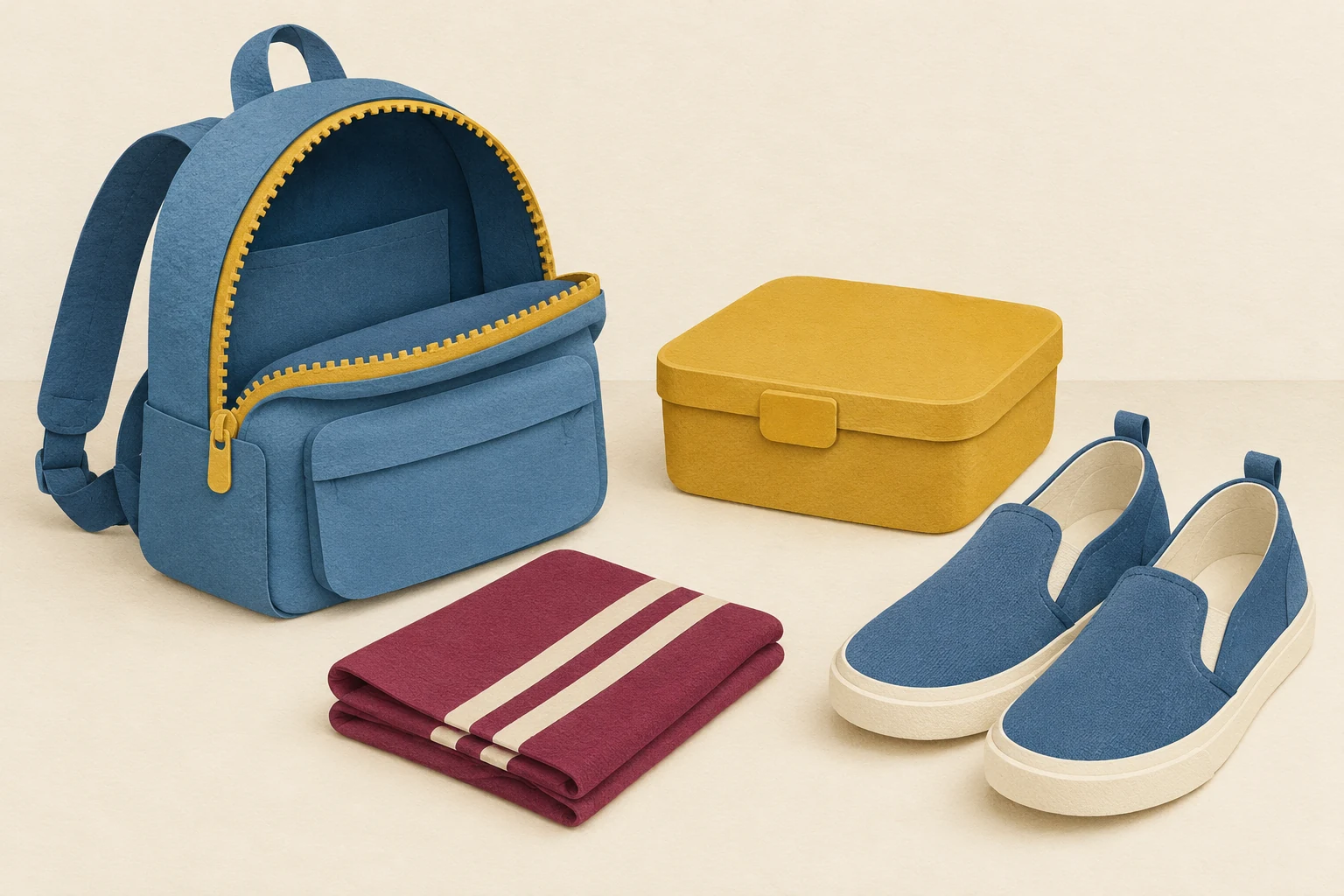
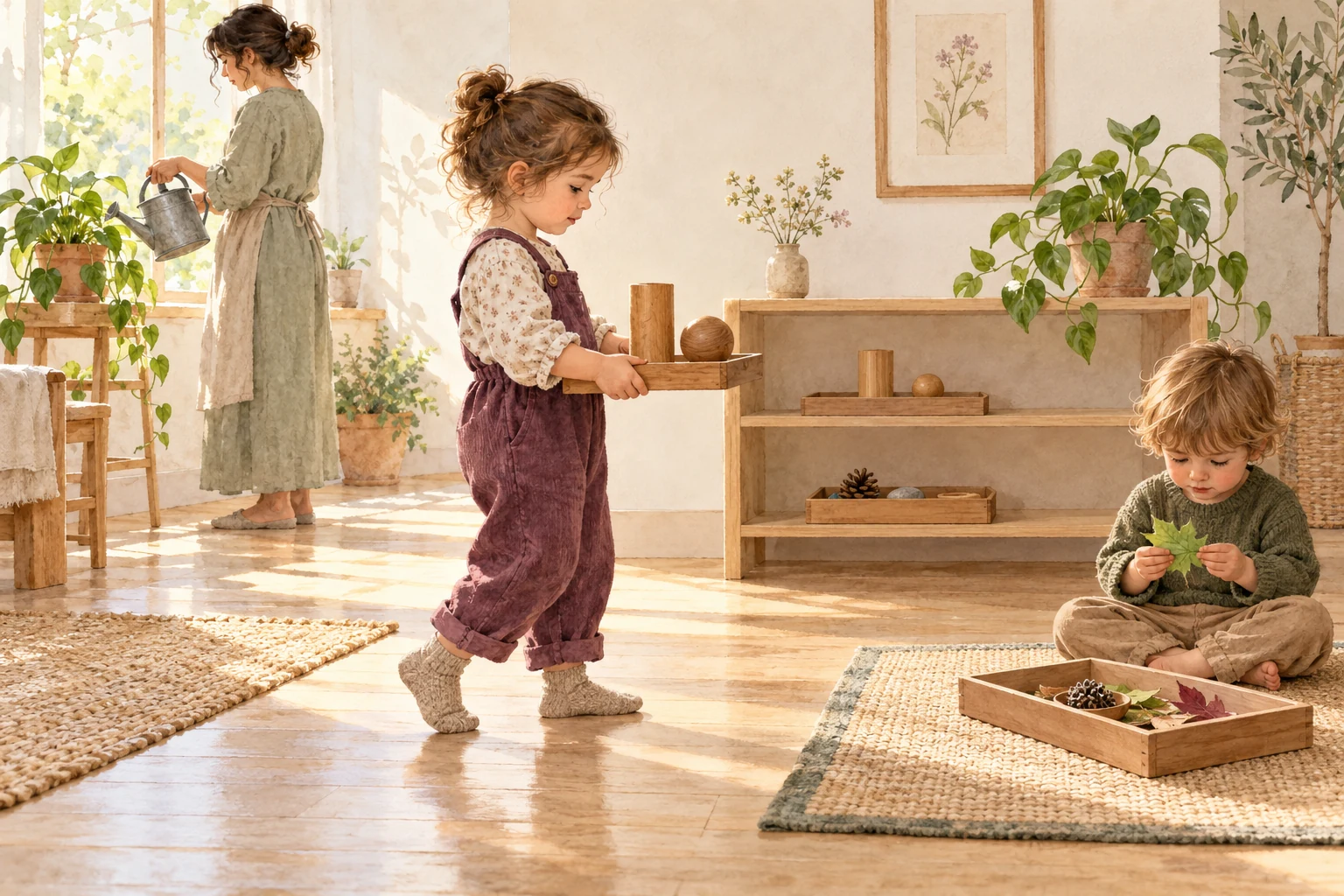
The practical still life invites a check of usable fastenings, storage and the assistance a child may need.
Use the actual bag, clothing fastenings and lunch container the child may take to school. Show one action, invite participation and check whether the item is manageable. A difficult catch may be an equipment problem rather than a reason to question readiness.
Practise handwashing within the real routine and discuss how to seek help with personal care. Agree any individual assistance with the school. This checklist does not set toileting, dressing or physical independence as universal admission conditions.
Plan the adult side of readiness routines
Ask about where belongings go, how water is accessed and who helps when clothing or containers are difficult. Follow the school’s communication process for individual care or health needs. Keep private details within the appropriate staff conversation.
For readiness at home, choose one manageable contribution: placing a cloth in the bag or indicating which item is missing. Support can be gradually adjusted from what you observe, without making every morning a timed independence challenge.
Readiness area 4: listening, talking and shared books
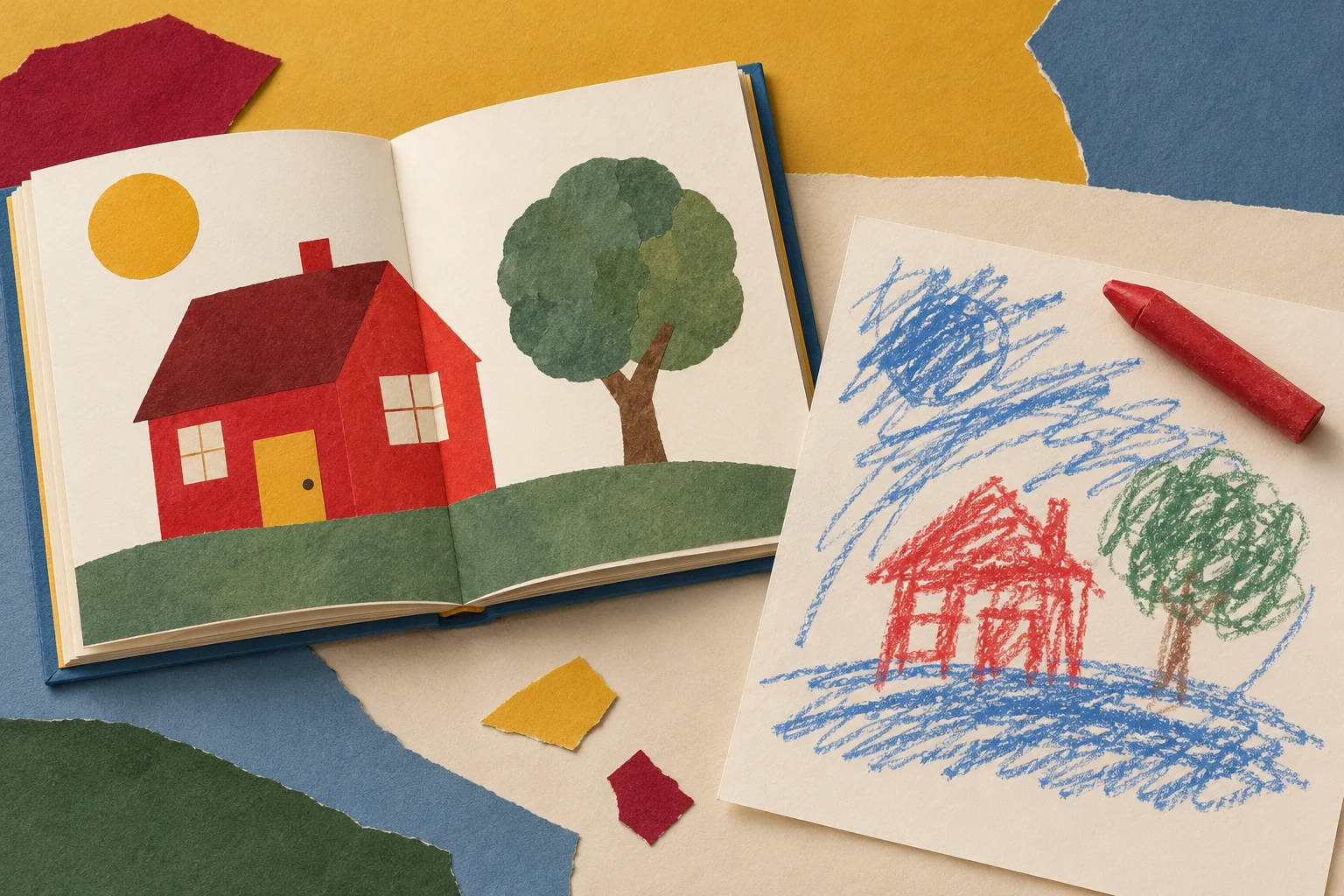
The picture-book study offers a context for conversation and drawing without setting a copying standard.
Read a picture book together and pause where the child has something to notice. They could point, predict, connect the scene with home or tell part of the story in a familiar language. Following your exact retelling is not the goal.
Try a short direction within a real activity: “Put the book on the shelf.” Add a demonstration or visual cue if useful. Readiness does not mean understanding every unfamiliar instruction immediately, especially in a language the child is still learning.
Make readiness conversations specific and reassuring
Discuss ordinary details such as where coats go and how children ask for help. The NAEYC guidance on transitioning to kindergarten recommends connection with the school and recognises the varied skills children bring. Its advice supports preparation through relationships and routines rather than drilling facts.
If a visit is available, note one detail the child wants to remember. A small drawing of the reading corner can make later readiness conversations more concrete than repeated questions about whether they feel ready.
Readiness area 5: familiar print and purposeful marks
Look for the child’s name on a homemade card or familiar belonging. Notice which features attract attention. They may recognise a whole familiar label before identifying every letter in it. Ask about their thinking without turning a correct guess into proof of full reading.
For a child already interested in M or m, offer Mm Worksheet: 5 Brilliant Moon Peak Journal Missions. Its uppercase and lowercase models, tracing rows and moon picture provide a specific starting point. If another letter is meaningful, use that taught model instead. The readiness purpose is a connection with familiar print, not completing the alphabet before school.
Let a message lead readiness mark-making
A drawing for the new teacher can contain scribbles, a known letter or dictated words. Ask what the child wants the marks to communicate, then offer a clear model where requested. Writing a full name unaided is not a universal readiness pass mark.
For a child choosing broad routes, Trace 5 Essential Lines and Curves: Fun Paths for Little Hands (Ages 3-5) offers lines, curves and circles with starting points. Select one route or make a larger version on plain paper. Observe comfortable tool use and participation rather than requiring every row to be finished.
Readiness area 6: quantities that mean something

The generic matching arrangement shows three objects paired with three pictures, separate from the layout of the linked printable.
Count a small set of large objects needed for a game or shared activity. Move each once and say the final quantity together. Compare two collections by matching their objects before asking which has more.
Offer Number 3 Worksheet: 4 Brilliant Rocket Mission Wins if a three-object group is appropriate. Select the top three rockets and match three large counters or blocks to them. Other rocket groups on the page belong to separate exercises. Readiness information comes from the selected count, not a total of every picture across the page.
Distinguish counting from writing in readiness notes
A child may make a collection of three while finding the numeral difficult to form. Record both observations accurately. Offer the model if wanted, but do not erase the successful counting because the written symbol looks different.
Ask a practical problem: “We have two places and three toys. What could we do?” Accept moving, pairing and testing as responses. Readiness includes ways of reasoning that do not yet require written arithmetic or a formal explanation.
Readiness area 7: curiosity and returning to a task
Choose something the child wants to investigate, such as making a toy vehicle fit through a block tunnel. Notice whether they try, watch, ask, change a piece or return after a pause. Those actions describe approaches to learning more clearly than an invented attention-span target.
Predictable invitations and manageable materials can support readiness. A noisy setting, hunger or an unfamiliar demand can change the response you see. Note the conditions instead of concluding that a single difficult afternoon defines the child.
Leave room for readiness plans to change
If the tunnel idea becomes a garage, ask about the new purpose. Persistence can include revising a plan, not simply continuing an adult’s original task. You might save a drawing or model to revisit, while accepting that the child may choose something else tomorrow.
Where concerns continue across settings, discuss your observations with the early-years educator and appropriate school support staff. This readiness checklist offers a shared starting point, not a diagnosis or a substitute for individual advice.
Five steps from readiness notes to a useful plan
- Pick an ordinary moment connected with one checklist row. Avoid creating a long test session.
- Note the child’s action and the support already available, including familiar language, tools and people.
- Choose one small next opportunity, such as trying a different container or sharing another picture book.
- Ask the school a specific question that follows from the observation, rather than sending a total score.
- Revisit the plan after a relevant experience or staff conversation. Keep what works and change the parts that do not.
For 2027 readiness planning, keep registration reminders separately from observations. A document deadline and a child’s learning are different matters; confirm the former directly with your intended school.
Six benefits of a broader readiness approach
- Clearer communication: concrete observations give families and teachers something useful to discuss.
- Visible strengths: a child’s interests and existing ways of participating stay in the picture.
- Better access: equipment, language and environmental adjustments become part of the plan.
- Purposeful practice: daily tasks supply a reason for counting, communicating and caring for belongings.
- Less comparison: attention stays with the individual child instead of another family’s completed pages.
- Shared responsibility: readiness includes what adults and schools can prepare, as well as what children are exploring.
These are practical aims, not guaranteed outcomes from using a checklist. Keep expectations flexible as you learn what the child needs.
Two imagined readiness conversations
A family changes the equipment
In this hypothetical example, a parent notices that a child asks for help each time a stiff lunch-box catch is closed. They try a manageable alternative together, then ask the school about its usual support. The readiness note becomes “opens this container after one demonstration,” rather than “cannot manage lunch.” A better tool changes the task without pretending the earlier difficulty never happened.
A teacher begins with an interest
Imagine a child who watches a classroom activity before joining. A teacher learns from the family that rockets are a favourite topic, offers the selected three-picture group and makes room for pointing. Later, the child joins a small construction game. This hypothetical readiness plan uses an interest as an invitation; it does not make worksheet completion a condition for joining the class.
Four playful readiness extensions before school
Create a helping puppet that needs to communicate about a missing tool. Let the child choose words, pointing or another familiar method, then swap roles.
Make a belongings rehearsal using the real bag. Choose two items to put away and one predictable place to find them, keeping the game brief.
Build a story of the journey with drawings of home, arrival and a welcoming activity. Update details after a real school visit rather than inventing promises.
Try a shared-materials game: each person needs one large block to begin a little road. Notice matching, requests and turn-taking in the same useful context.
Welcome the child with a supportive readiness plan
The suggested worksheet pages currently provide free watermarked, one-page PDF samples; their clean-file options require membership. Use a relevant part, inspect the preview and leave room for real play. Paper records only a small slice of readiness.
Offer a steady message: “We can find out how this works together.” A thoughtful readiness plan prepares familiar routines, identifies useful support and builds a relationship with the school. It leaves space for the child to keep developing after kindergarten begins.