Memory: 5 Smart Matching Games for Happy Learners
Two visible pairs can become a shared search. Explore open matching, covered locations and familiar quantity links with three existing number worksheets.
The kite was beside the boat a moment ago. Now two cards are face down, and a child has an idea about where to look. Memory games turn such small discoveries into shared play, especially when the collection is small enough to understand. For learners around three to six, matching can begin with every picture visible and grow into remembering a location. These five formats connect existing number worksheets with handmade cards, gentle turn-taking, and useful conversation. Parents and teachers can choose the version that makes the next decision inviting rather than overwhelming.
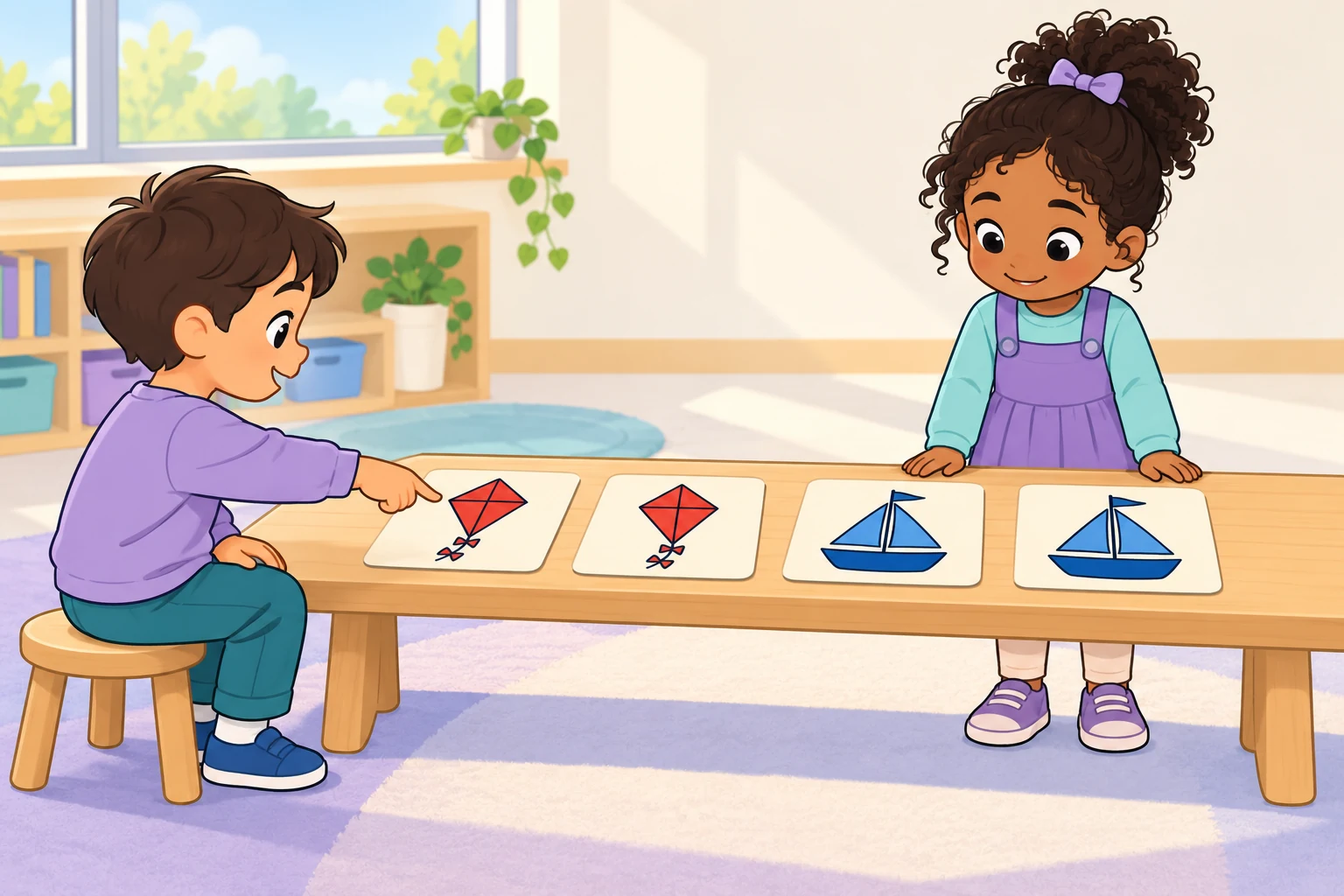
Two red kite cards and two blue boat cards create a small matching collection. The children share the memory-game decision without a winning pile.
What does this memory game ask the child to remember?
Memory matching and remembering are related tasks with different demands. During open memory play, with all cards visible, a child compares two pictures. When a picture is covered, the child must hold some information about it while looking elsewhere. Begin with the visible comparison so you can see whether the pictures themselves are clear.
For this memory collection, make two identical copies of each chosen picture on separate plain cards. A kite matches the same kite. A boat matches the same boat. Keep card backs, sizes, and paper thickness alike if you intend to hide the fronts; an obvious coloured back can reveal the answer without remembering a location.
For memory practice, you can also match a numeral with its quantity, but that changes the rule. A card with 2 and a card with two boats are related representations, not identical pictures. Introduce that variation separately, after the amount and symbol are familiar. State exactly what counts as a match before anyone turns a card.
Five memory formats with room to cooperate
1. Make an open picture partnership
Place two pairs face up. Invite the child to choose one card and search for its identical partner. Leave enough space between cards to point clearly. Describe the feature that supports the decision: “Both cards have one red kite.” In memory play, the learner can move a pair together or direct an adult to do so.
This first memory format gives you a useful starting observation. If the child matches by the card's background colour, check whether that is an accidental clue. Use plain backgrounds and compare the pictures together. Finishing two clear matches can be a complete session.
2. Cover one familiar destination
Keep one set face up as a reference and cover its partners in a short row. Look together before covering. The child chooses a visible picture and remembers where its partner was. Uncover the chosen card, inspect it, then decide whether it matches.
Keep the covered row still during this memory game. Moving the cards after the child has studied them changes the task. If the first choice does not match, return the card to the same place and use what you learned together. An adult can say where they remember seeing another picture without taking control of every turn.
3. Share a four-card search
For memory play, show two pairs in a small grid, then turn them face down. On a turn, reveal two cards. Matching pictures stay visible together; different pictures return to their original positions after everyone has had time to look. Alternate the person who chooses, even after a match, if that supports participation.
Treat this memory search as a joint puzzle. The group can aim to uncover the pairs together instead of collecting a winner's pile. A partner may remember the location that another person forgot. Offer a look at all four fronts again when the hidden information becomes too demanding.
4. Describe the place before revealing it
For a child ready to use spatial language, ask for a description before the next turn: “I think the kite is beside the boat.” Then reveal the selected card and check. Gestures count as descriptions too. A finger can indicate the intended place while an adult supplies a phrase.
Use memory language that fits the arrangement. With a two-by-two grid, “top row” and “bottom row” may help. Avoid treating left and right as an entry requirement. Keep your position beside the child when describing their view, and accept a simpler “this one” while they build confidence.
5. Build a picture-to-number connection
Try this optional memory variation with a familiar amount. Prepare a picture card showing two complete boats and a separate card bearing 2. Explain that these belong together because the numeral names the quantity. Demonstrate the relation with real objects before covering any cards.
Keep the number set small and the rule consistent. A learner can count the pictured objects after revealing a card; remembering a location does not require instant quantity recognition. If symbol matching becomes uncertain, return to identical picture pairs. The child should not have to solve two unfamiliar problems at once.
Assemble a memory set from existing worksheets
For memory play, these pages offer useful reference pictures and numeral models. Keep each printed worksheet intact. An adult can make separate simple cards from the idea being explored, using their own drawings. The extra memory cards are an activity you prepare, not a downloadable card pack promised by these pages.
One kite for the first memory picture
Number 1 Worksheet: 5 Brilliant Kite Discovery Games contains one complete kite beside the numeral 1, with further tracing, search, colouring, and recording tasks. Use its main picture to discuss what a whole kite looks like, then draw an identical kite on each of two plain cards. The coloured sections and tail remain parts of that one object.
For memory play, choose the same picture on both cards rather than changing its size or adding decorative clues. Return to the worksheet's numeral model when the child wants to connect the single kite with 1. Tracing every row is a separate choice.
Two boats for a memory connection
Number 2 Worksheet: 6 Powerful Games for Happy Sailors shows two complete sailboats and a large numeral 2. Invite the child to point to each boat before you prepare a quantity card. The sails do not become extra boats. A pair of identical boat-picture cards can support the open matching format.
Later, a two-boat picture may match a 2 card under the announced quantity rule. Keep that memory variation distinct from identical-picture matching. The same resource can support several decisions without requiring all of them in one sitting.
Three rockets for a later memory collection
Number 3 Worksheet: 4 Brilliant Rocket Mission Wins has three rockets arranged with two above and one below, beside its numeral model. Count complete rockets together if the learner is ready for this amount. Use a simple rocket drawing for an identical pair before introducing a card showing all three.
Add a new pair only when the existing memory set feels manageable. Increasing the collection is optional; a small familiar game can still provide useful practice. These three resources list ages three to six and one-page PDFs. Check their watermarked free sample and clean member-file options before downloading.
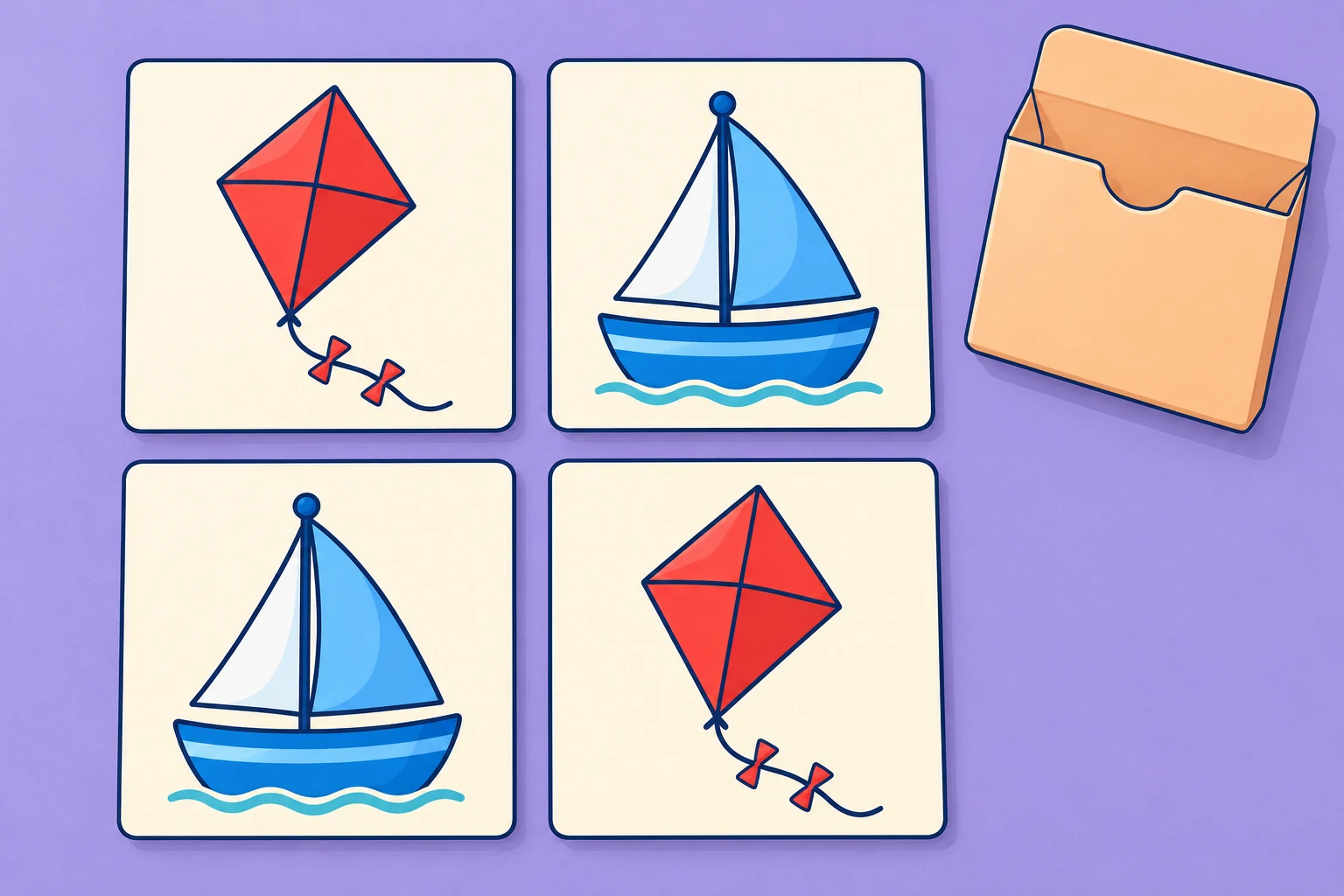
An envelope sits beside the four-card memory grid. These simple activity props are separate from the linked worksheet pages.
A short setup routine for adults
- Pick one memory rule: identical pictures or a familiar quantity and numeral.
- Make just two memory pairs with matching backs and clear fronts.
- Let the child inspect the full collection before covering anything.
- Demonstrate one complete turn, including what happens after a non-match.
- Agree on a simple stopping point, such as finding the two pairs together.
For memory play, choose a surface where the cards will not slide easily. Keep the picture orientation steady and leave room for the learner to lift a card. A child can ask an adult to turn the chosen card when handling it distracts from the intended decision.
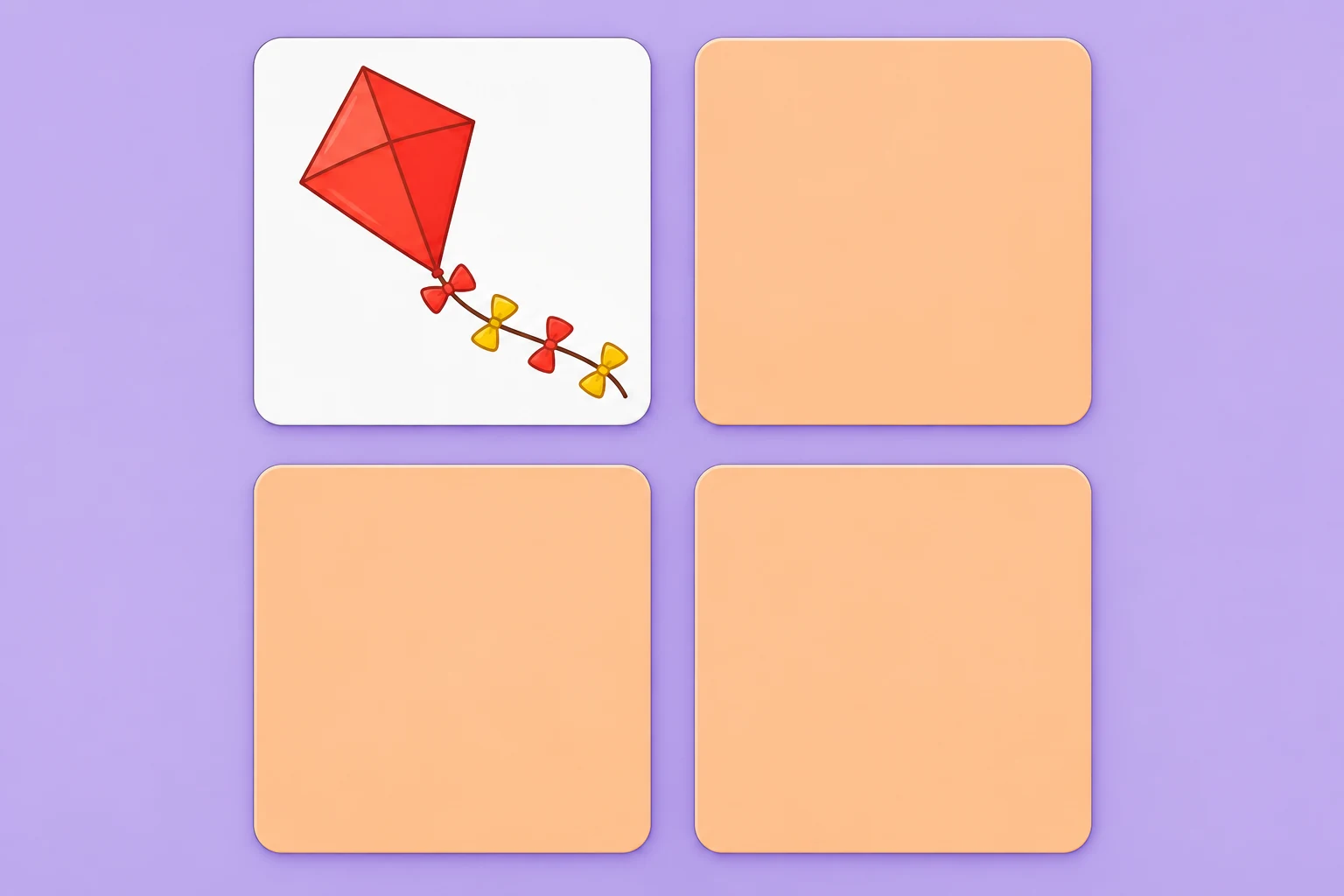
Three fronts stay covered while the top-left kite remains visible.
Six learning opportunities worth noticing
- Comparing visible features. The learner checks whether two memory pictures share the same relevant details before calling them a pair.
- Holding a location in mind. A small covered collection offers practice with information that is briefly out of sight.
- Following a shared rule. Children can notice the difference between an identical-picture rule and a quantity-matching rule.
- Using a previous reveal. A memory turn can provide information for the next choice, even when it does not uncover a pair.
- Explaining a decision. Pointing, gesture, a home-language phrase, or a spoken clue can make the learner's reasoning available to a partner.
- Accepting helpful support. Looking at the fronts again or reducing the collection keeps the activity available while the challenge changes.
These are opportunities to practise during play, not promises about later attainment. NAEYC's discussion of learning through games includes memory-card play among examples of supported early-years activities. The adult's choice of materials and level of help remains part of the experience.
Two small scenes, two useful adjustments
At home: one reveal changes the next choice
Imagine Isla playing with her father on a kitchen mat. She reveals a boat and a kite, then reaches for another card before replacing them. Her father pauses the memory turn and repeats the agreed sequence: look, compare, return. They put both cards back in the same spaces.
On Isla's next turn, she points to where she remembers the kite. Her father follows her choice. Whether the second card matches or not, they can describe the information she used. They finish after one shared pair and save the remaining search for later.
In class: remembering can be a shared job
In another imagined scene, a teacher sits with three children and four cards. One child chooses, another turns, and the third points to the remembered location. The teacher rotates those jobs so handling the cards does not become the only way to participate.
When the children begin guessing rapidly, she turns all fronts up and returns to visible matching. The memory challenge has changed, while the cooperative purpose stays clear. A later group may be ready to cover one row again. The teacher notes which support made the pictures easier to compare.
Change one memory demand at a time
| Memory challenge | A smaller next move | What stays steady |
|---|---|---|
| Pictures are hard to distinguish. | Use two very different familiar objects. | The identical-picture rule. |
| Card positions are soon forgotten. | Cover only one pair. | The original locations. |
| Turning cards takes all the attention. | Let an adult handle the selected card. | The child's choice. |
| Quantity and numeral are unfamiliar. | Return to identical pictures. | Clear explanation of a match. |
The Harvard Center on the Developing Child's activity guide offers age-grouped play ideas for practising executive-function skills. Use its guidance as another source of suitable activities, while watching the particular child in front of you. A larger memory grid is not automatically the better choice.
Four ways to extend the same small collection
🎒 Pack a familiar memory pair
Put two known pairs in an envelope. At a quiet moment, choose face-up matching or a small covered search according to the available space. Keep the memory arrangement stable rather than scattering cards over a moving surface.
🧸 Offer a puppet a memory turn
A puppet can ask the learner to show where a partner might be. Let it follow the child's clue. An occasional mistaken reveal can start a calm discussion about what everyone now knows.
🖍 Create a new identical pair together
Invite the child to choose a familiar object for two simple drawings. Compare the completed fronts before adding them to memory play. If the drawings differ greatly, discuss the intended matching rule openly.
🏠 Rebuild the grid in a new place
Move the whole activity to another mat on a later day, then study the new positions together. Treat it as a fresh arrangement. Old location clues need not remain true after a deliberate reset.
Let a non-match remain useful
Memory play contains plenty of moments when the next card surprises everyone. Name what the turn revealed, offer another look when needed, and keep the result separate from a judgement about the child. “We found the boat in the bottom row” gives the next choice a concrete starting point.
A helpful partner leaves time to look. Pause before replacing a non-match and invite the learner to explain or point. End with the shared discovery you made, whether that was one pair, a remembered place, or a clearer understanding of the rule. Small memory games can finish with a satisfying conversation.