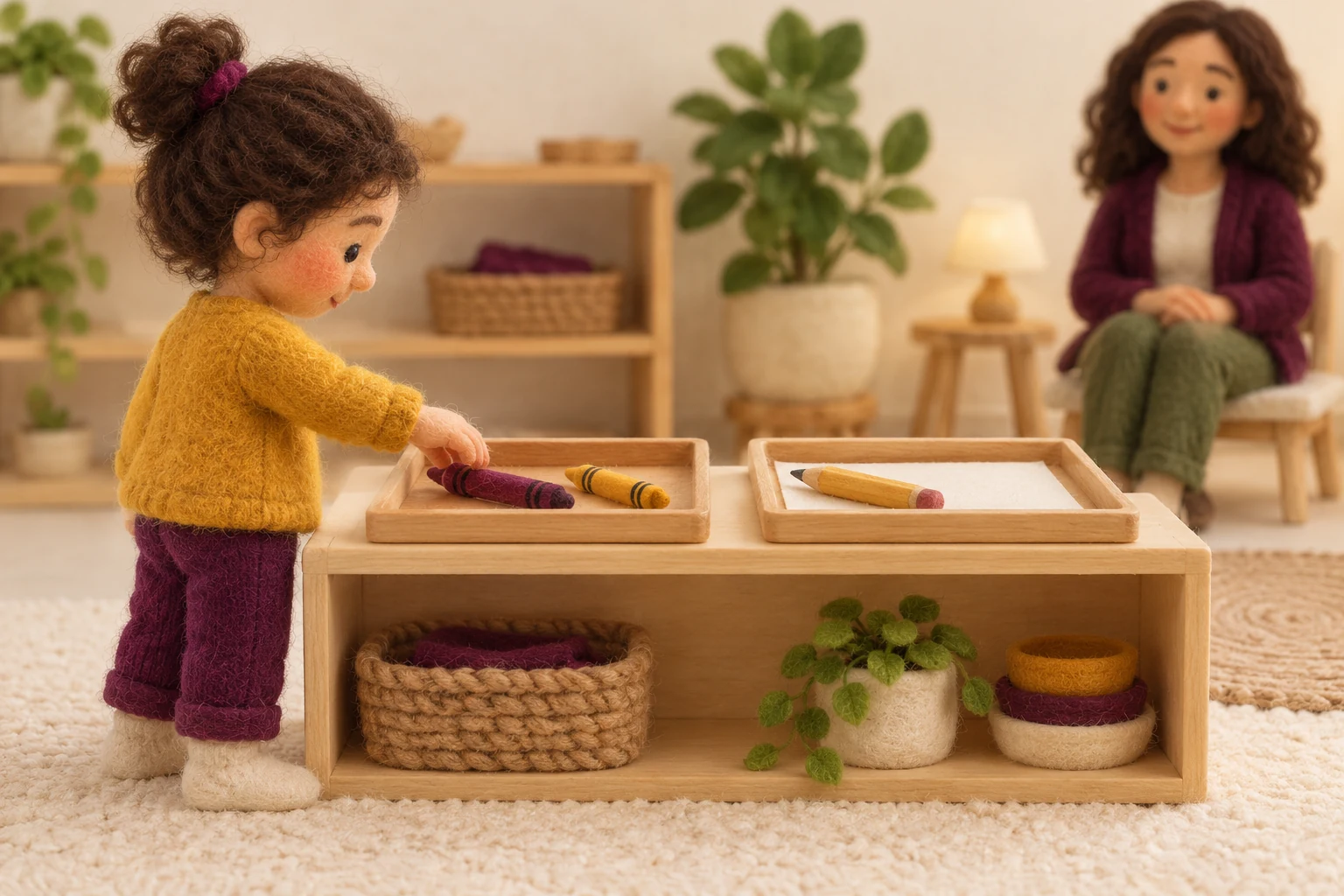
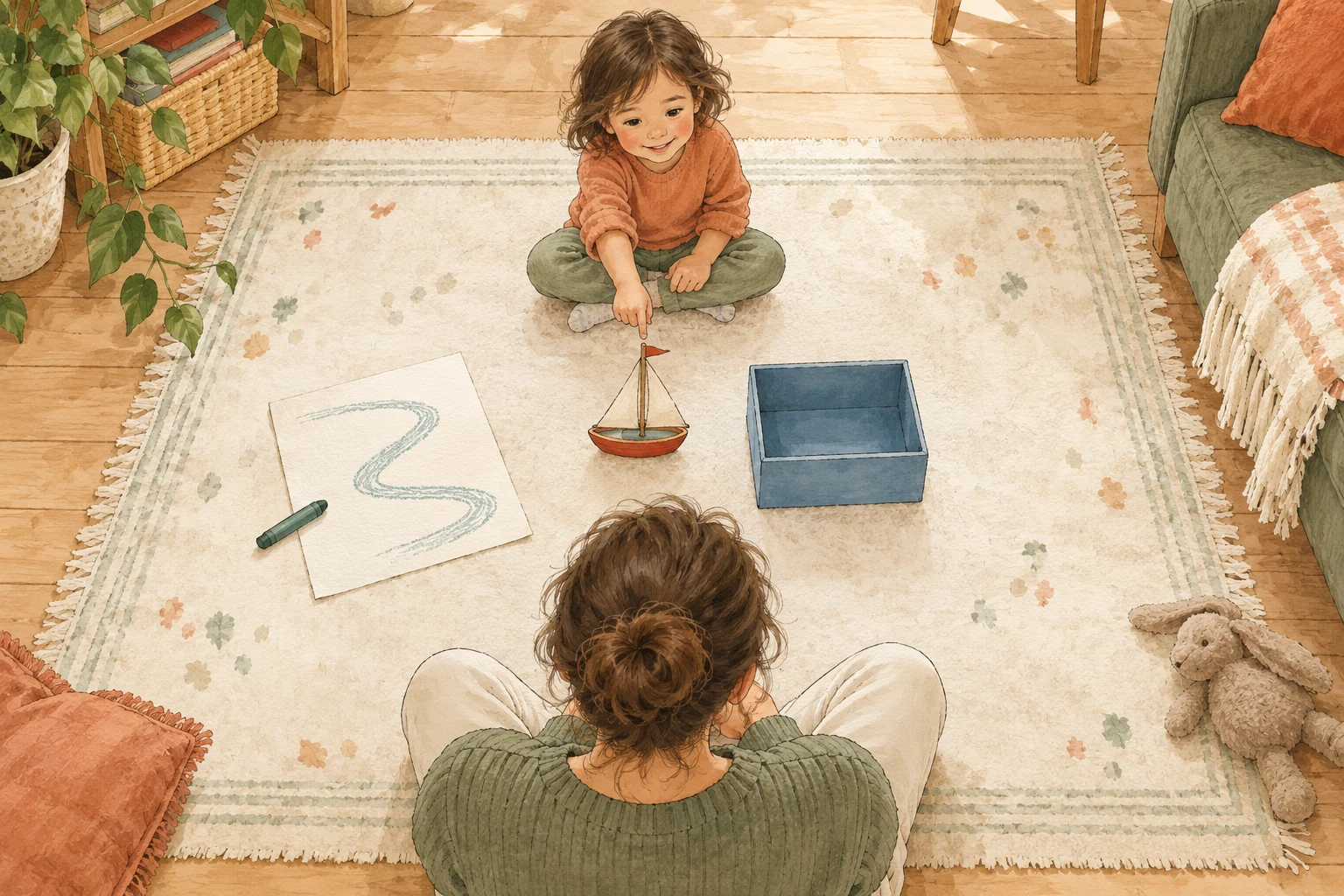
Stations: 4 Smart Routines for Calm Classroom Learning
A child should be able to see where to begin and where materials belong. Four routines connect three printables with manageable classroom participation.
Before children reach a practice table, the room has already given them instructions. A crowded pencil pot suggests searching; an empty tray gives no clue about where a sheet belongs. Carefully arranged stations can make those ordinary moments easier to understand. For preschool and kindergarten groups, a small worksheet area works best when children can see how to arrive, use materials, request help and leave. These four routines turn that journey into something adults can demonstrate, rehearse and adjust. Three existing printable resources offer manageable practice within a wider day of play, conversation and exploration.
Walk the route before opening the stations
Stand where a child will approach the area. Can you see the materials, a place to work and a destination for used paper? Is another child likely to cross that route while carrying a tray? A station's usefulness depends partly on these practical details, which a beautifully decorated display can easily conceal.
For this guide, stations are small, prepared learning areas with a clear activity and an understandable routine. They need not be timed rotations, and children do not need a separate worksheet at every stop. Start with one area whose materials and teaching purpose you can manage. Add another only when the existing arrangement is working for the group.
The Texas Education Agency's guidance on classroom organisation and routines describes accessible visual information, picture labels and predictable procedures. Use those ideas to check your actual room. A photograph of your own paper tray can be more informative than a decorative symbol that children have never been shown how to use.
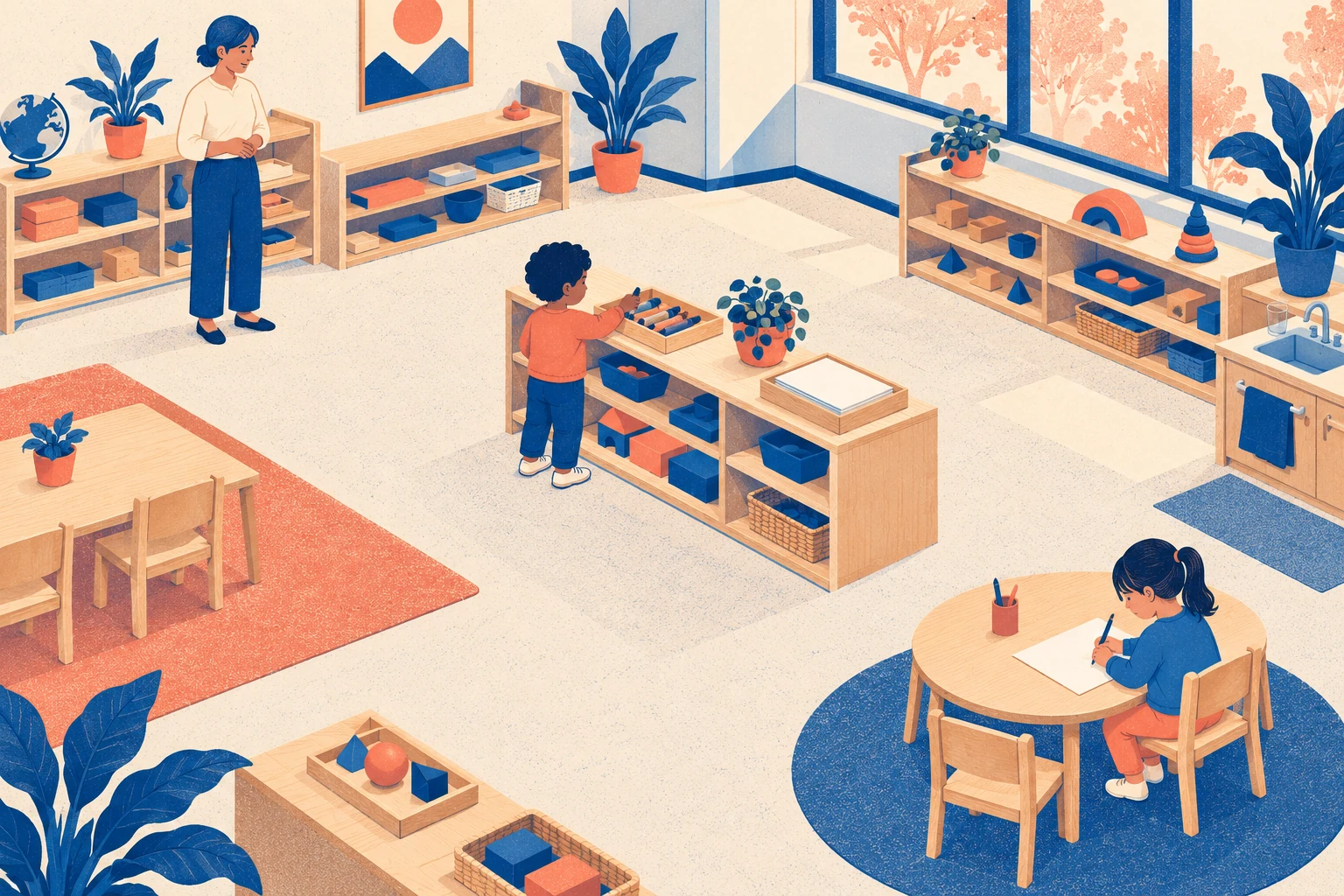
The wide classroom view separates a working table from the material shelf, leaving room to move between them.
Four routines that give stations a usable beginning and end
→ Arrive at stations: show what a place is ready for
Prepare only the materials required for the current invitation. At worksheet stations, one visible example and a small supply of usable tools may communicate more clearly than several activity packs piled together. Keep any model beside the task it explains, with the first action easy to identify.
Demonstrate an arrival from the child's viewpoint. Walk to the area, find the available place and indicate where your paper will rest. Explain how children know whether there is room to join. The signal might be the actual number of prepared workspaces; avoid introducing a complicated booking system merely to manage two seats.
An arrival routine should not become a reading test. Pair familiar pictures with spoken explanation and, where useful, words in the languages children know. Point to the same cue during practice. At shared stations, check that a wheelchair, supportive chair or different working posture can fit without blocking another child's access.
Rehearse before expecting independence. Invite a child to show you where they would begin, then notice where the arrangement fails to answer their question. If several children pause at the same point, revise the setup. More reminders may be less useful than moving a tray into view.
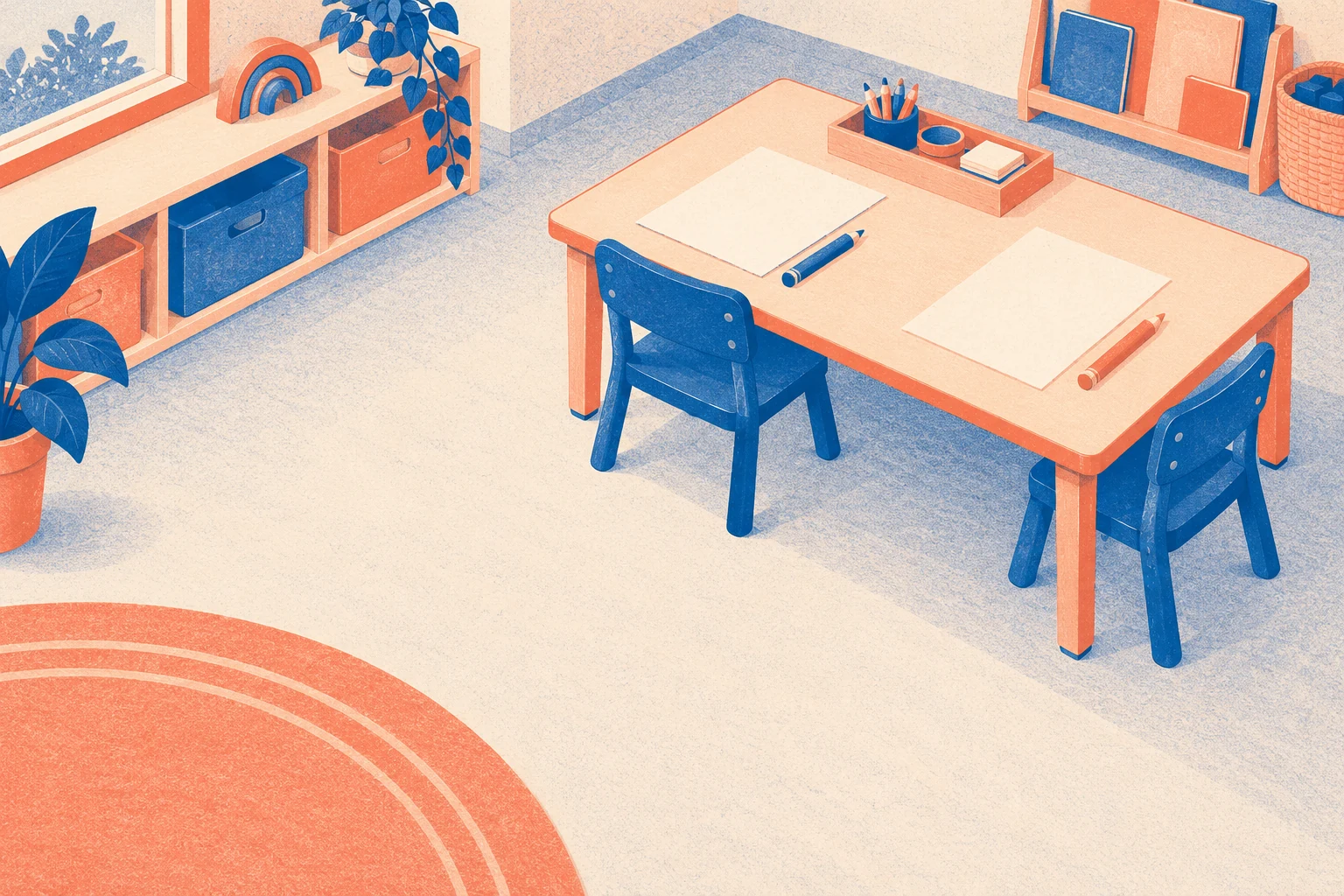
Two visible workspaces share a small supply tray.
→ Use stations materials: make each home visible
Give each tool a practical destination. A shallow tray allows children to see and reach pencils without rummaging through an opaque container. A photograph or simple object picture can indicate the return location. Test whether the tray remains understandable when some materials are being used.
Teach returning as part of using. Pick up a crayon, make a small mark on your own paper, then place the crayon back. Name that final action during the demonstration. In busy stations, children may otherwise assume that returning tools is an adult's later job rather than the last step of theirs.
Offer adaptations without making a special public performance of them. A larger tool or non-slip surface can be available beside other materials. Observe whether it improves access. The aim at stations is a workable route into the activity, with support adjusted to the learner rather than a requirement to handle identical equipment.
→ Ask at stations: practise a signal that brings help
Explain how a child can ask for assistance and what happens next. A raised hand, a familiar gesture or a picture card may suit your setting. Whatever signal you use, teach it through an actual exchange. A cue that nobody responds to is unlikely to remain useful.
At stations, help requests can concern several different problems: a tool that will not mark, an unclear starting point or a concept the child has not yet understood. Briefly find out which problem is present. Replacing a pencil will not explain a numeral, and repeating a direction will not repair a broken point.
If you are already supporting another child, acknowledge the request and give an achievable next action. The learner might look again at a visible model or pause with the materials safely on the table. Do not require a child to ask multiple peers before receiving adult help, especially when the question is new or the communication demand is difficult.
Review your own capacity honestly. Too many simultaneous stations can produce a queue of unanswered signals. Reduce the number of unfamiliar tasks, teach a routine again or stay beside the area temporarily. Independent participation grows from suitable preparation and responsive support; it is not proved by the adult remaining far away.
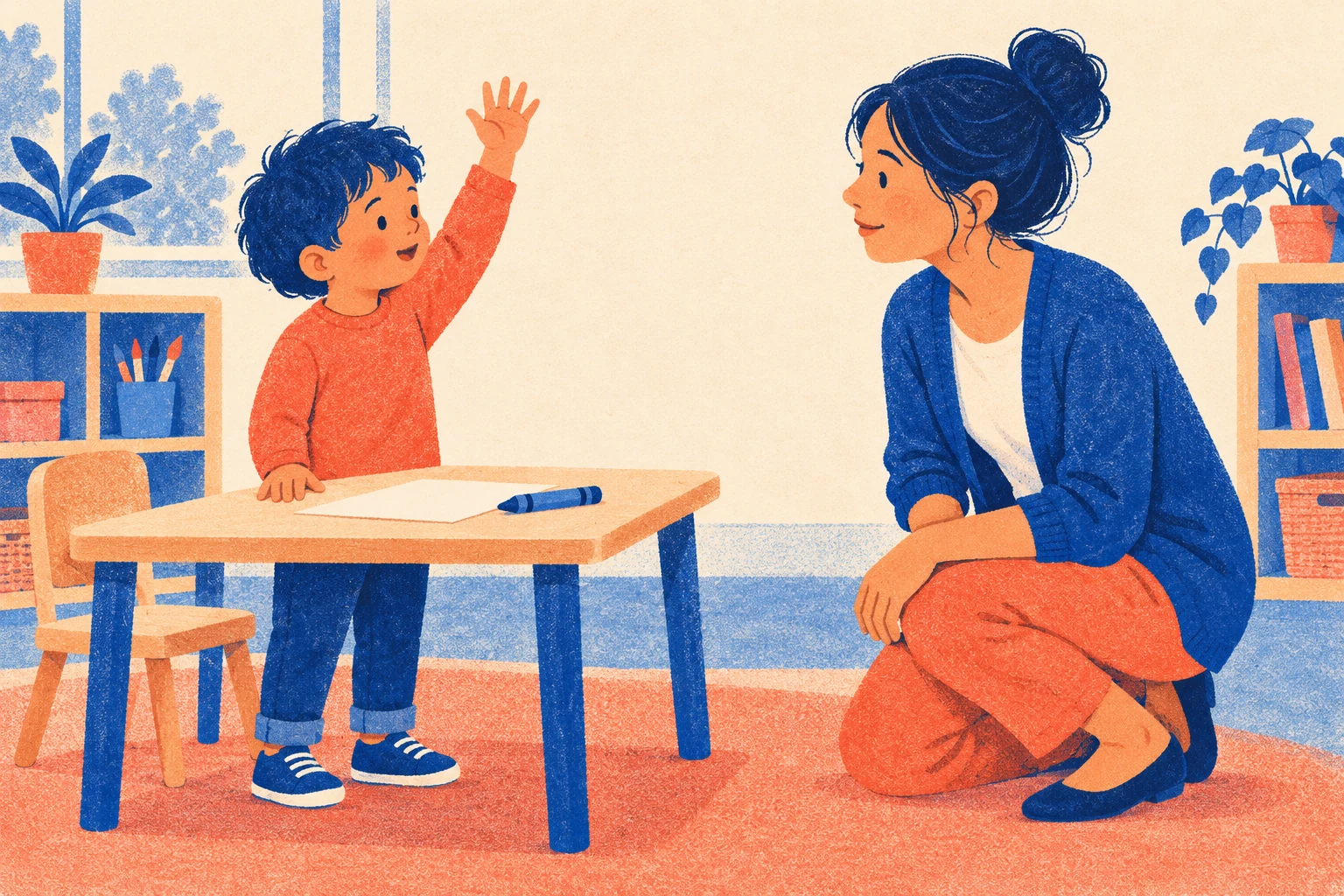
The adult comes to the child’s eye level.
→ Finish stations: distinguish stopping from completing every box
Tell children what the current invitation includes. It might be tracing two examples, comparing two picture groups or talking about one feature. A printed sheet can contain more practice than a learner needs in one visit. Stations should have a recognisable stopping point without turning every available line into a compulsory quota.
Prepare a destination for work that needs to be kept, and another clear arrangement for material that will be used again. Demonstrate placing a sheet flat rather than pushing it into the tool tray. If names are needed, decide how adults will assist children who do not yet write them independently.
Before leaving, show the reset: return the tool, clear the workspace and check that the next person can see the model. At stations with shared paper props, identify which pieces belong to the activity so that children do not mistakenly take them away. A simple reference photograph can show the ready arrangement.
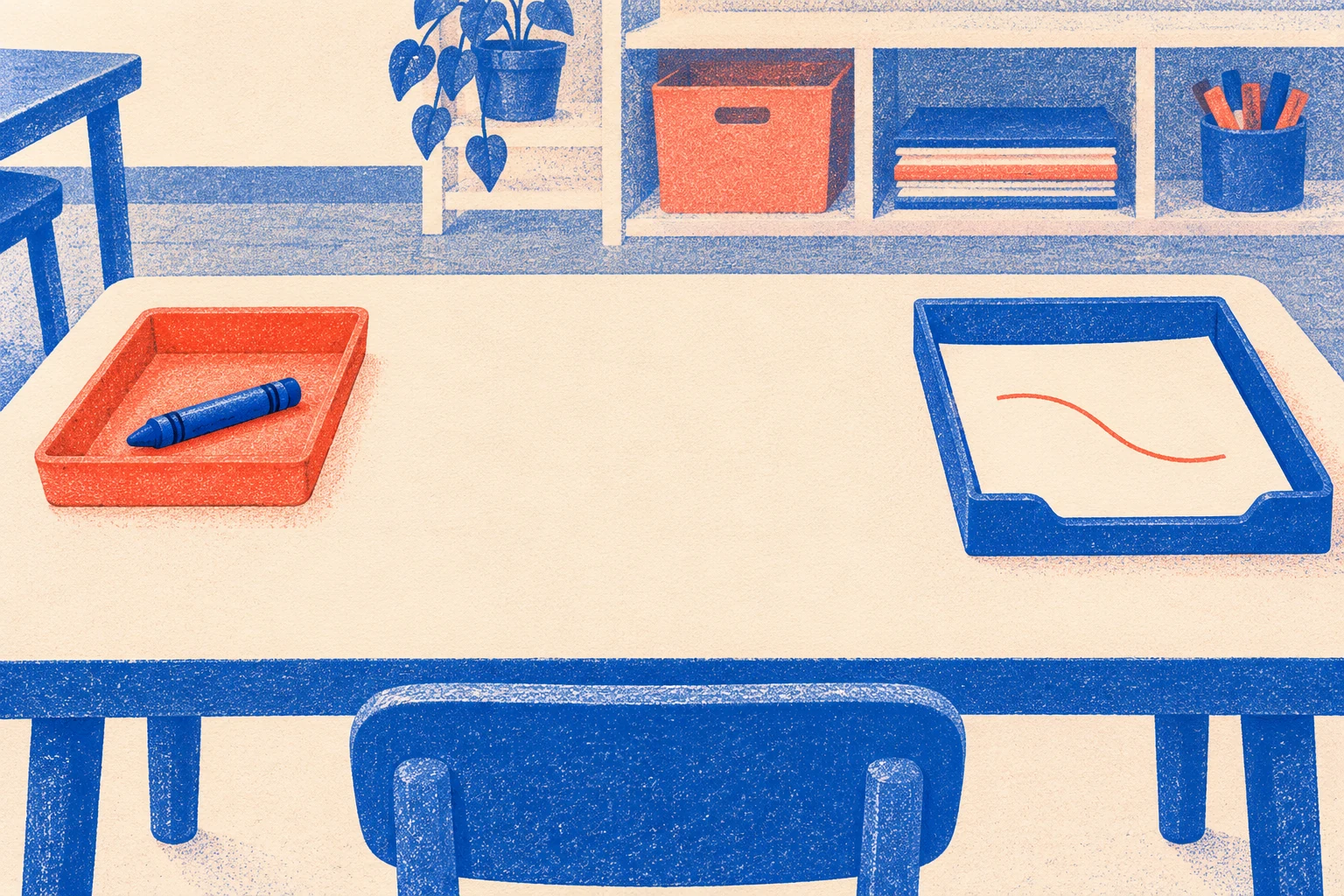
Separate trays leave the central workspace clear.
Match three printables with modest stations tasks
Line stations with a visible starting cue
Place Trace 5 Essential Lines and Curves: Fun Paths for Little Hands (Ages 3-5) at a small movement-practice table. Show one row and its starting cue, then invite a finger rehearsal before a selected pencil attempt. Keep other routes available for later rather than expecting the whole page during one visit. The resource is intended for ages three to five; choose the amount of precision expected from the individual learner.
At these stations, the model stays visible and the working sheet belongs to the child. A loose cover can hide unused rows without hiding the selected example. When the attempt ends, return the pencil and put the named page in its agreed destination. The routine supports the task without adding unrelated decorating or cutting demands.
Kite stations for a brief number conversation
Use Number 1 Worksheet: 5 Brilliant Kite Discovery Games after introducing the quantity and numeral with real objects. The page includes a complete kite picture, a numeral model and further tracing, search and count-writing tasks. Select the part that matches your intention. A child can point to the single kite and compare it with the displayed 1 before making one chosen mark.
Number stations need clear counting objects if you introduce them alongside the sheet. Use large, suitable props and keep them separate from pencil supplies. The child should know which materials remain in the area. A tray containing unrelated tiny counters can create management problems while contributing little to a conversation about one whole kite.
Igloo letter stations with an adult nearby
Set out Ii Worksheet: 4 Brilliant Igloo Dot Expeditions for learners already exploring I and i. The capital model has bars; the lowercase form includes a detached dot. Invite a comparison before tracing a selected example. If the initial space in igloo is used, discuss the whole lowercase letter rather than accepting a dot alone as the completed initial.
These literacy stations may need more adult involvement than a familiar line task. That difference should influence your placement and group size. Keep a scrap-paper demonstration surface close by. Recognising the correct letter, tracing a guide and writing independently give different evidence; record the action the child actually performed rather than grouping every result under “finished.”
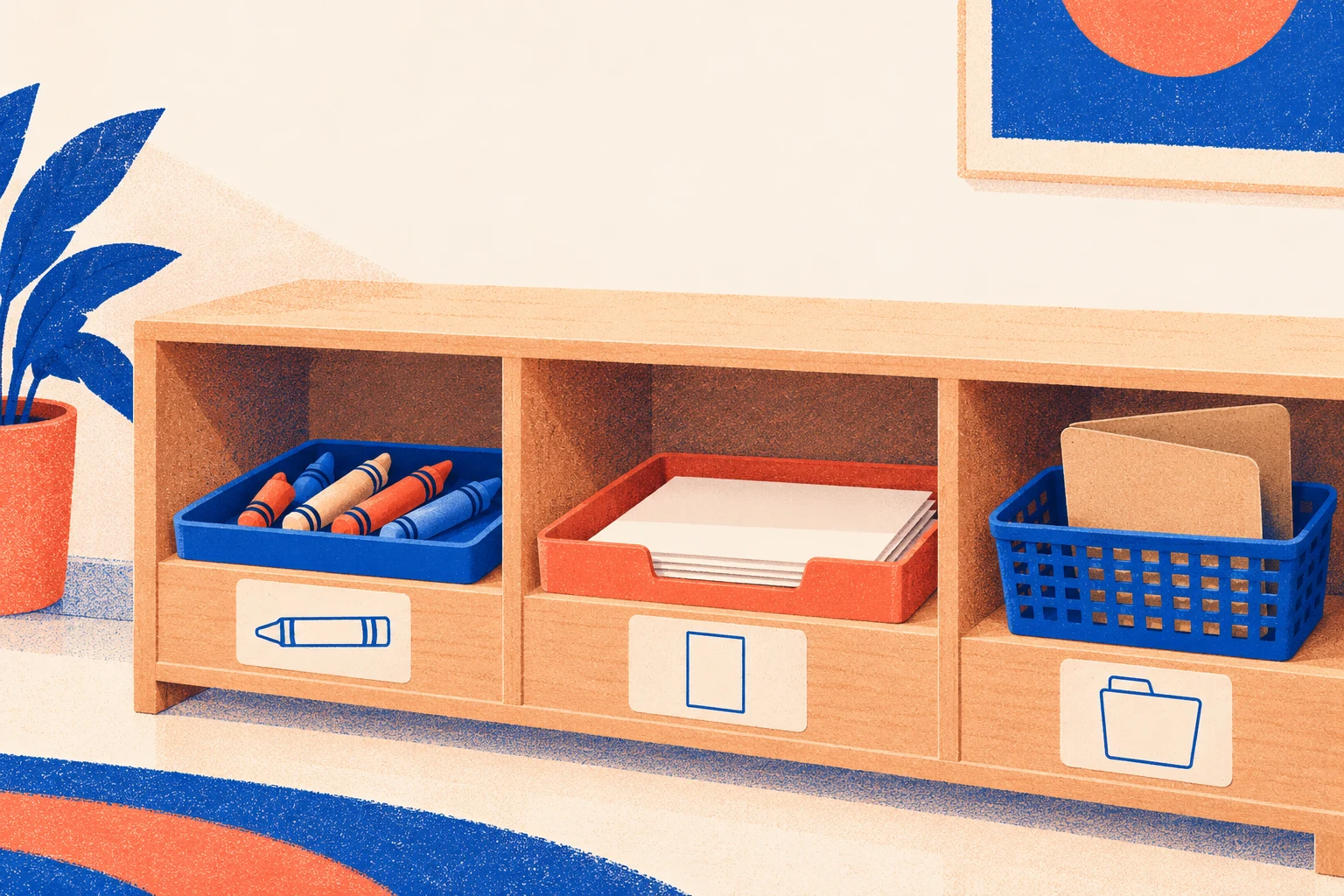
The shelf distinguishes tools, flat paper and a folder. These are classroom organisation props rather than additional downloadable resources.
What well-taught stations can make possible
- Finding materials. A visible, reachable location lets a child retrieve the intended tool. Watch whether the picture label is understood rather than assuming that its presence is enough.
- Keeping a short sequence. Arriving, attempting and returning provide a practical order. Repetition of a familiar routine can reduce the number of new instructions in one visit.
- Communicating a need. A taught help signal gives children an agreed way to request support. Adults still need to respond and interpret what is being asked.
- Sharing a working area. Predictable material homes make another person's turn easier to prepare. Children can notice the effect of leaving a usable workspace.
- Taking part in care. Returning a pencil is a small contribution to the classroom. Describe it as responsibility shared with adults, not a test of personal worth.
- Making learning visible. When the routine is familiar, an adult can more easily notice the child's approach to the actual task, including where a model or explanation is still needed.
A quick inspection chart for stations
| Look at | Ask yourself | A practical adjustment |
|---|---|---|
| Arrival at stations | Is the first action visible? | Place one example beside the working space |
| Tools at stations | Can children reach and return them? | Use a shallow tray with an understood picture |
| Help at stations | Does the signal bring a response? | Rehearse the exchange and reduce unfamiliar tasks |
| Finishing stations | Is the paper destination clear? | Separate the work tray from the tool tray |
| Routes between stations | Can people move comfortably? | Shift furniture or reduce simultaneous places |
Classroom stations: the pencil keeps disappearing
Imagine a teacher noticing that children carry pencils from the line table into a nearby picture area. Her first response is to check the stations arrangement. Both areas use the same unlabeled tub, and the return location is out of view. Repeating “put it back” has not clarified which destination she means.
She prepares a small pencil tray beside each working surface and demonstrates returning one tool. Children help compare a photograph with the ready arrangement. During the next session, she watches the return step before adding another activity. This imagined example illustrates an environment adjustment, not a claim that a tray solves every classroom difficulty.
At home, stations can fit on one shelf
A parent preparing a weekend activity may have only a corner of the dining table. Two stations can happen at different times using the same surface: a picture conversation first, then a short line activity after the materials change. There is no need to build a classroom at home.
In this illustrative scene, a child returns the crayons to a low shelf and places the chick picture in a folder. The parent checks that the next paper and pencil are visible before offering the new invitation. A sibling can join the conversation without being required to produce an identical sheet. The household routine should serve the available space and people.
Introduce stations in five deliberate steps
- Choose a familiar learning task. Inspect the printable and select a manageable part. Do not introduce a new concept and several unfamiliar procedures at the same moment.
- Arrange the route. Place the model, tools and paper destination within view. Check access from the child's height and working position.
- Demonstrate one complete visit. Show arrival, a short attempt, requesting help and resetting. Use the actual materials rather than relying entirely on verbal instructions.
- Rehearse with support. Stay close enough to respond while children try the routine. Adjust confusing cues immediately and keep the number of open stations manageable.
- Review one observation. Note the point where participation became difficult. Change that feature before adding extra tasks, more furniture or another set of rules.
NAEYC's discussion of materials, routines and literacy interactions also emphasises the adult's responsive role. An attractive environment alone does not ensure engagement. Apply that reminder when reviewing stations: the tools matter, and so does the conversation that makes their purpose understandable.
Four playful rehearsals for stations routines
A mixed-up puppet visits stations
A puppet puts a blank sheet into the crayon tray. Invite children to explain or show where it belongs. Keep the joke on the puppet's confusion, with no imitation of a particular child's mistake.
Ready-picture detectives inspect stations
Compare the empty working area with a photograph of its prepared arrangement. Find one missing item together. This is a looking game, not a race to make every table look identical.
Help-signal theatre at stations
An adult pretends a pencil will not mark, gives the agreed signal and waits for a partner to respond. Swap roles so children experience both noticing a request and making one.
Welcome the next visitor to stations
Partners prepare a comfortable place for a pretend visitor. Ask what the visitor will see first and where the tools will go afterwards. Their explanation can reveal which part of the stations routine still needs modelling.
Let stations routines carry some of the work
Clear stations leave children with fewer practical mysteries to solve before learning begins. They also give adults a more useful question than whether the room looks tidy: can this learner participate with the support available? Calm does not require silence or identical results. Conversation, movement and requests for help belong in a working classroom.
The linked worksheets offer free watermarked samples; clean files require active membership. Check the access panel and age guidance before printing. Start with a routine you can demonstrate and support. Keep the parts that work, revise the confusing ones and leave time beyond stations for the rest of an early learning day.