Mirror Puzzles: 5 Clever Games for Confident Shape Thinkers
Fold a shape, move a tile and check what sits opposite. Five hands-on games make reflection visible before children draw a missing half.
Two green triangles can sit on either side of a line and still point the wrong way. That puzzle gives children something more interesting to discuss than whether two shapes look alike. Mirror puzzles ask where a feature would land if it were flipped across a line. Kindergarten and early primary learners can explore that idea by folding paper, moving large pieces and checking distances before trying a pencil. Three existing worksheets offer different tasks to compare. Keep plenty of space around the materials so a child can move a piece, explain its position and try again.
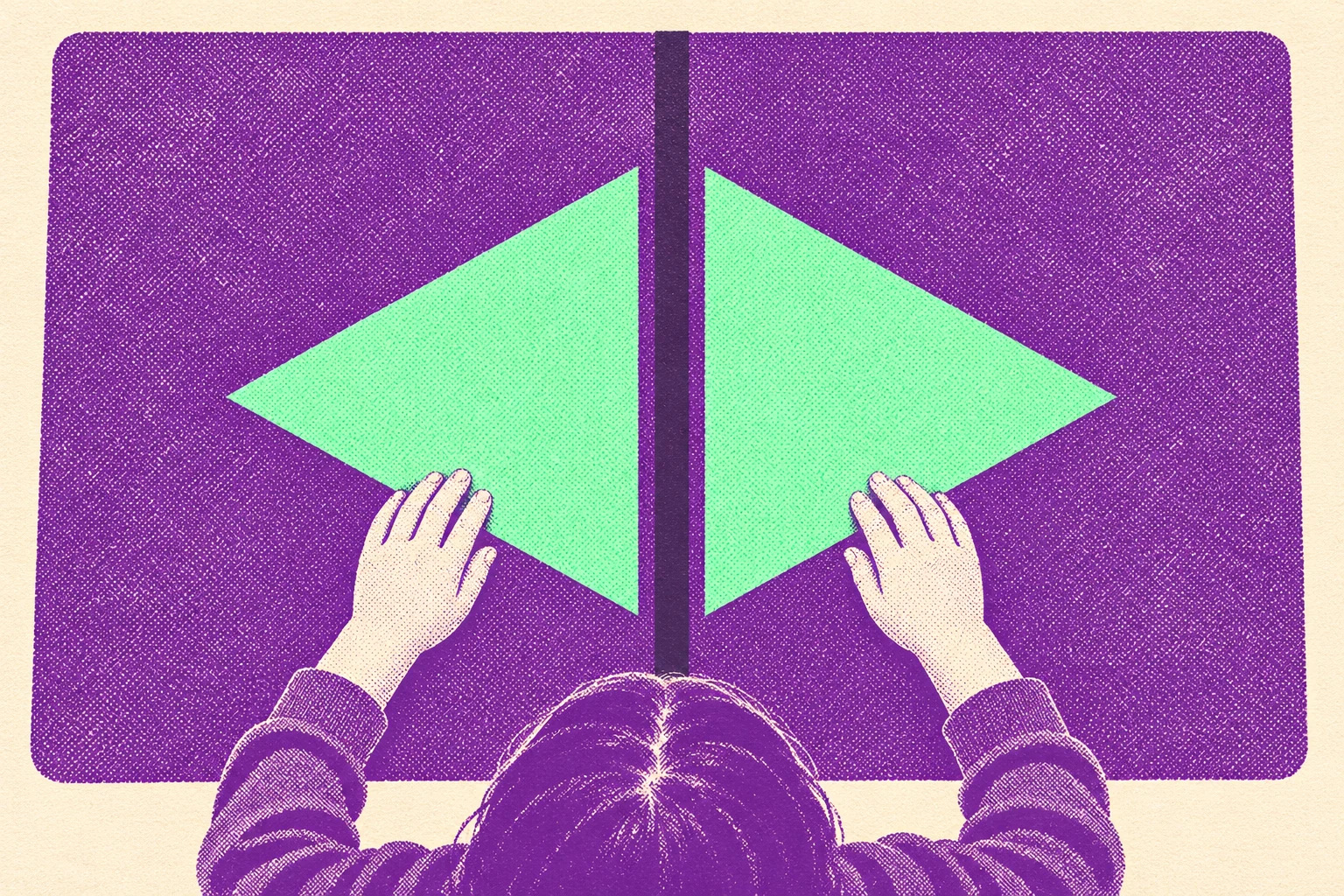
The paired pieces show what to inspect when testing a vertical reflection with movable shapes.
Look for a partner across the line
Imagine a straight line running up the middle of a page. Choose a dot on the left. Its reflected point would sit directly across on the right at the same distance from the line. If you folded the page on that line, the two dots would meet. A dot already on the line stays where it is. For a horizontal line the corresponding positions would be above and below. Start with one vertical line so the movement is easy to see.
An object with a directional feature makes the result more noticeable. A triangle pointing away from the vertical line on the left will point the other way in its reflection. Compare its upper corners and bottom corners at the same heights. Copying the triangle onto the other side without changing its orientation may preserve its size and shape while failing to reflect it. For beginners, a fold or a large movable piece makes that difference easier to check than a verbal rule by itself.
Five mirror puzzles to build before picking up a pencil
1. Find a useful crease
Cut or draw a broad, simple heart on a separate sheet and let the adult handle any cutting tools that are unsuitable for the learners. Fold it along its central vertical line and show which edges touch. Unfold it and point to features that landed on one another. Then try a crease away from the centre on a fresh example. Discuss what is left uncovered. An ordinary fold gives children visible evidence without special equipment.
The Math Learning Center's grade-one symmetry material provides examples of testing shapes by folding and noticing whether the halves overlap. Choose one large model and slow the comparison down for younger children. “Where will this corner touch?” is often more manageable than asking for every line of symmetry at once.
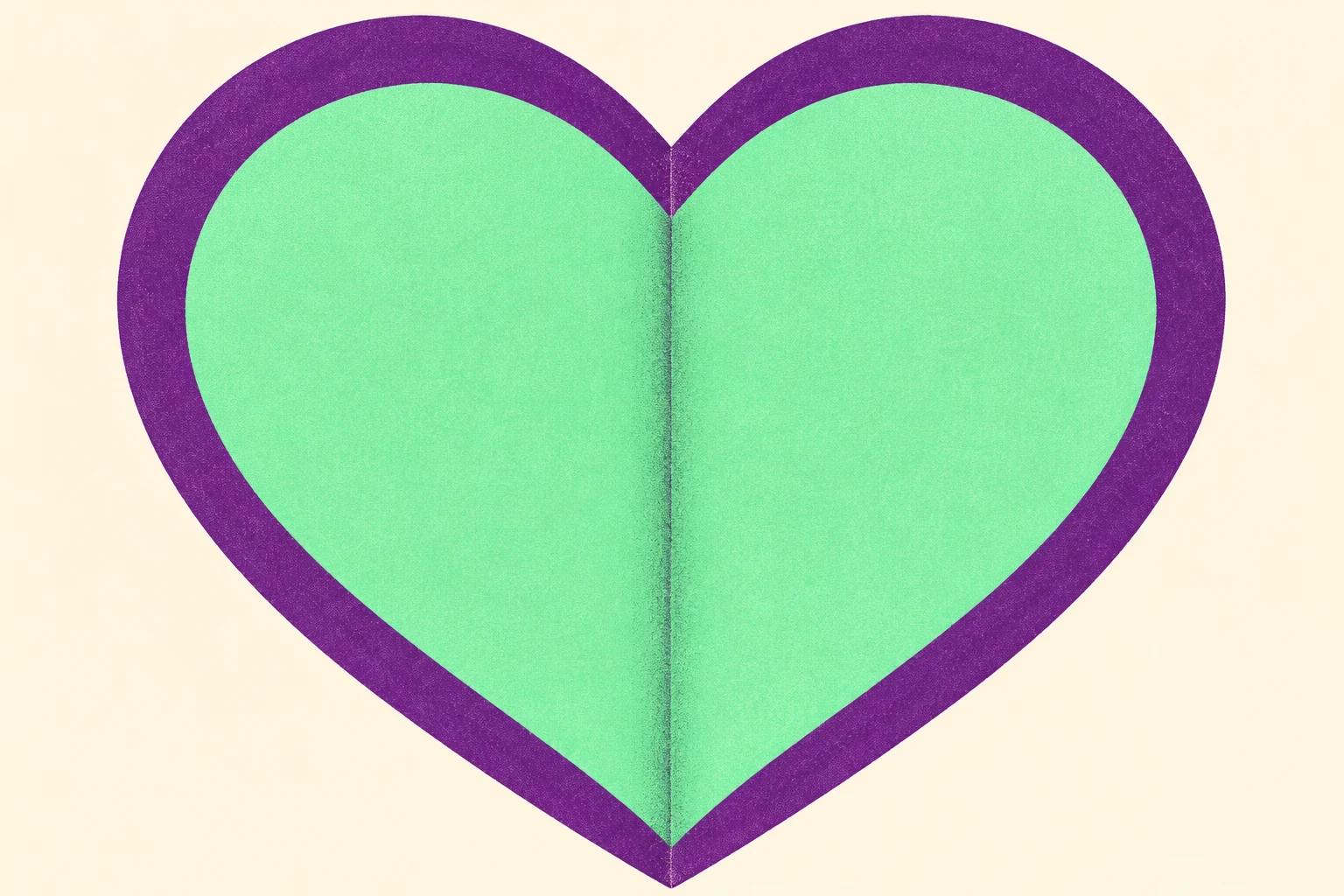
The heart shows one usable example of a line of symmetry before children work with dot guides.
2. Move a single point and send a message back
Lay down a broad removable tape line or use the seam of a folded mat. Put one large round paper piece left of the line. Give the child the second piece and ask where it would land across the fold. Start with a close position. If someone wants help estimating, use scrap strips of matching length to compare the two gaps. Move the original a little farther away and let the partner piece follow. Then reverse which side initiates the move.
Use the unequal circle spacing shown below as a discussion model. Both circles are the same shape and size, but if the line is fixed their positions do not correspond. Help the child say which piece they would move and how they would know when to stop. The aim is the relationship, not a perfectly measured drawing.
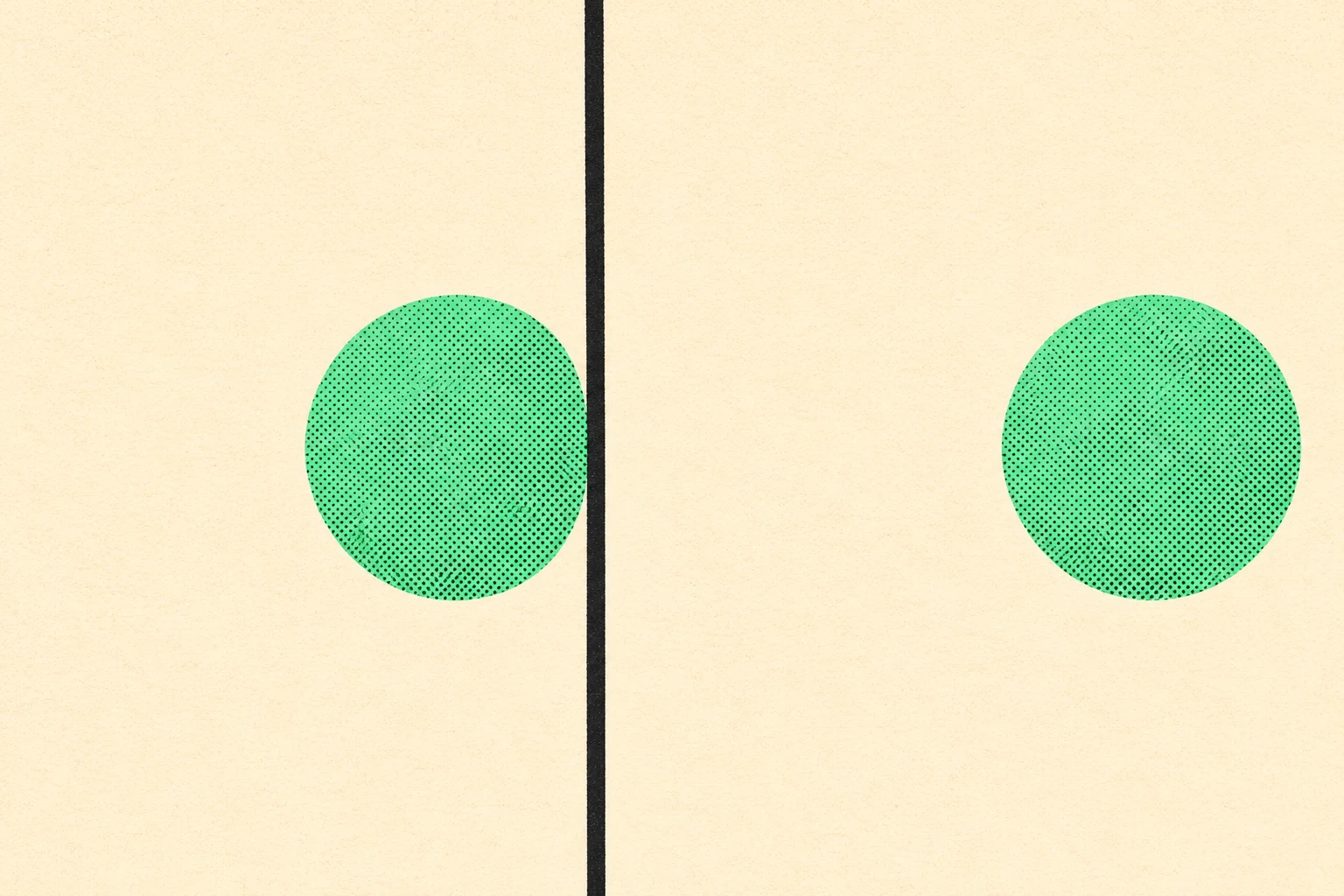
This purposely mismatched arrangement demonstrates why matching shape and size is only part of a reflection check.
3. Compare a copy with a flip
Use Shape Twin Comparisons: 6 Brilliant Order Checks for a same-order comparison. Its shape trios ask the learner to check which option has the matching positions. Discuss one choice: if a circle is first in the model, where is it in the proposed match? A group can contain the same shapes and still have them in a different order. Then turn to separate paper and place a large triangle next to a tape line. Try placing an identical triangle on the other side with both pointing the same way. Ask what would happen under a fold.
This contrast protects the meaning of each task. The worksheet asks for an exact order match. The handmade pair asks for a flip across a given line. A child who can explain both will know why an answer method changes even when the objects look the same.
4. Match one feature on a printed half
Open Mirror Half Drawing: 5 Brilliant Across-the-Line Ideas. The page shows a heart, a wing, a vase and a leaf, each with a printed left half and right-side dot guides. Pick one panel. Follow the vertical divider and locate a feature easy to recognize, such as a corner or a point where the shape reaches the line. Indicate the destination for that single feature on the opposite side. A child can point while the adult marks it, then decide which second point matters. Link the selected features only when their locations make sense.
For some learners a finger route is enough. When using a pencil, avoid asking the child to reproduce a curved edge by counting every tiny movement. First check the important endpoints. A broad approximation that begins and ends in sensible places may show more understanding than a neat freehand shape drawn in the wrong position.
5. Copy a grid, then make a new challenge
Use Mixed Shape Grid Copy: 6 Clever Pencil Studies with a child who can follow a small dot grid. Start with one feature in the supplied model and place it in the corresponding position on the copy. Check where the line begins, where it ends and where the pencil can lift before starting the next part. This page uses direct copying. Keep the current orientation when the task asks for it.
For an extra turn, draw your own spare dot grid with a centre line. Place one feature on one side and ask the learner to show its reflected position. An adult can number the spaces aloud if helpful. With a vertical line, stay at the same height and count the same number of steps away on the other side. Practise one model before inventing complex patterns. Agree in advance whether the job is copy or reflect.
How to tell which move the task needs
| Job | What stays the same | What changes |
|---|---|---|
| Direct copy on a new grid | Relative positions and directions | The whole arrangement goes on another grid. |
| Reflection across a vertical line | Size, height and distance from the line | Left and right positions switch across the line. |
| Turning a shape around a point | Size and shape | Direction changes by turning about a point. |
| Testing symmetry with a fold | Features overlap when the fold is a line of symmetry | A different fold may leave features uncovered. |
Use everyday language such as across, same height, nearer and farther. Offer a gesture or point alongside the word when learners need it. With a shape such as a circle, the direction change may be difficult to see. Add a separate marked notch on a homemade shape if the child wants to inspect direction. Avoid mistaking the hidden feature of the object for a difficult concept.
Six small observations to value
- Finding the reference line. A child can show which line the puzzle uses.
- Matching distance. They can adjust how far a partner sits from that line.
- Keeping the level. One reflected position stays level with its original across a vertical line.
- Checking direction. A child spots that a point faces a different way after flipping.
- Separating two instructions. They identify whether the current task asks for a copy or a reflection.
- Giving evidence. They use a fold, a point or a measuring scrap to explain a decision.
Imagine two places to try the games
A living-room fold that catches a mismatch
In a hypothetical example at home, a six-year-old makes a paper kite with a broad tail drawn to one side. They fold down the centre of the kite and see the right part of the outline overlap the left. The tail marks do not meet. The adult asks whether they are checking the outer figure or the whole decorated design. The child understands that the particular feature they include can change the answer to that question. They keep the asymmetrical tail because that is the picture they wanted.
A classroom pair that changes one position
Imagine two learners at a classroom table. One places a large rectangle two spaces from the middle line. A partner places an equal rectangle on the other side but a space higher. The teacher slides a loose strip across the table horizontally at the first rectangle's level. The partner moves their own piece down, then uses matching paper strips to compare the distance. In this hypothetical turn, the adult observes which checks the partner could use. Nobody needs to race or erase a completed drawing.
Four optional games for another day
Give a folded design two ways to prove itself
Draw a simple shape on folded paper so you can make a matched design with adult help. Ask the child to show what they predict before opening it. Reclose the crease to check. An adult may use a window or lamp to make overlapped edges easier to see. Keep the materials away from hot fixtures.
Make a large floor version with paper shapes
On a clear flat floor, a wide strip can represent the line. Arrange two large flat shapes across it. Keep hands and paper out of busy walking paths. Children can guide an adult to shift or turn one piece. A standing, seated or tabletop version can offer the same thinking with more comfortable access.
Give the pattern a deliberate mismatch
Place two equal pieces across a line with one noticeably too close. Let the child tell you whether the size, position or direction needs revision. Offer a second arrangement with a different error after the first one is understood. Keep the puzzle about the positions, not about catching somebody out.
Try a line that runs sideways
Turn a homemade mat a quarter turn before laying out the pieces. Now the line runs across the page and you compare the distances above and below. Show the change in your own demonstration. A child can be secure with the vertical arrangement and still need time for the new orientation.
Finish with the part someone can check
All three linked worksheet pages show a one-page free watermarked PDF and a clean membership option. The mirror and shape twin pages list ages four to six, and the grid-copy page lists ages four to seven. Use one panel when that is enough. Match the tools to the child if the printed dots are too small or a pencil grip makes the task uncomfortable.
Try “Show me where that corner would land if we closed the paper.” Your learner can point, move a piece or talk it through. A fold that reveals a mismatch gives the child information they can use. They may choose to make a change or leave a deliberately different design. The model is there to clarify the relationship.