Mixed-Age Homeschool: 6 Smart Ways to Share One Topic
Use a pretend flower shop to teach different skills at one time without asking siblings to do the same work.
A pretend flower shop can need a colour chooser, a person who plots a delivery and someone who checks the bouquet count. Those jobs fit inside one story without asking three children to practise the same skill. A mixed-age homeschool can work that way for one short block of the day. Gather around an idea, teach one child while another does a familiar activity and meet again to share what happened. Three existing flower-themed printables offer different levels of support. The shop itself can be made with large scrap-paper flowers and two ordinary baskets.
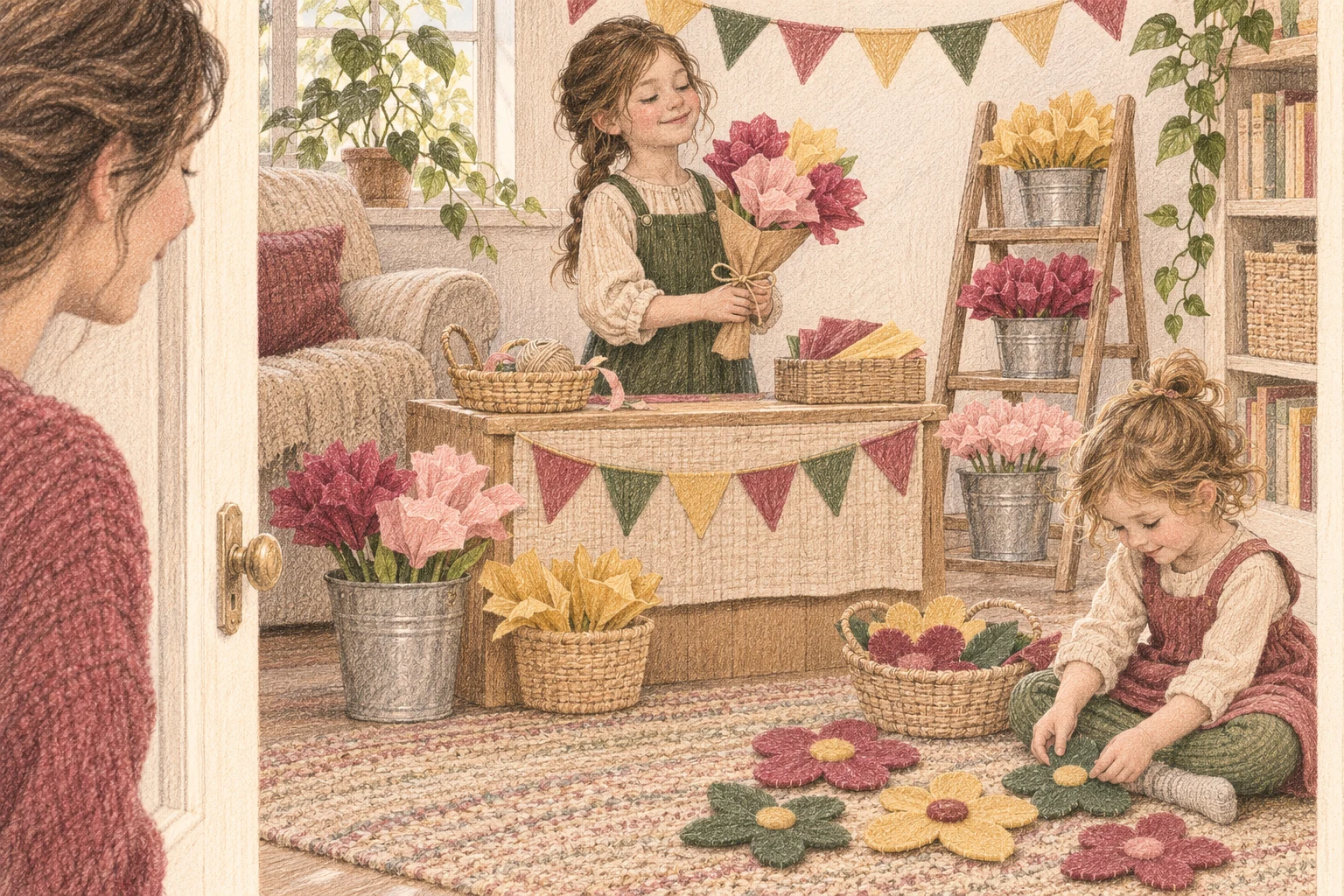
The room divides naturally into a floor work area and a counter without giving one child control over the other.
Plan for the people who are at your table
A seven-year-old may be ready to prove a total in two ways. A four-year-old in the same room may be deciding which picture belongs with each kind of flower. The younger learner still deserves a clear goal. The older learner needs an experience beyond waiting or doing the younger child's work. Giving everyone a different number of copies does not address those differences.
Start with what you can observe. Does the learner already recognize the picture key? Can they work with one flower at a time? Can they add within ten with objects they can move? A broad age range on a download page helps with selection. Use what you know about the child to decide which task is actually reasonable today.
NAEYC's developmentally appropriate teaching guidance encourages intentional, playful learning that builds on the strengths and experiences of children and families. Its classroom guidance can inform home planning. A shared story is an arrangement for teaching, not a guarantee that two learners will need the same pace.
Choose the right job before choosing the page
| A learner is ready to | Their own shop job | An adult can help by |
|---|---|---|
| Notice two visible features | Prepare a small display of rounded and pointed blossoms | Model each feature with one large shape. |
| Follow a short key | Work out the order of stops in one imaginary delivery | Point to the current symbol and keep the key available. |
| Combine parts within ten | Check whether the order has the requested total | Move one object at a time and record the two parts. |
| Share or describe a decision | Tell a customer how one part of the shop works | Invite a pointing, drawing, signing or spoken response. |
Decide whose turn needs your active attention first. If the other child has never used scissors, an unfamiliar printed maze is a poor independent job too. An open tray of familiar large shapes or repeating a previously taught activity may make it possible for you to teach a new step safely within sight.
Six ways to run a mixed-age homeschool session
Set one shared question at the opening
Ask, “How will a customer receive the bouquet they asked for?” Look at one pretend order together. The story provides a reason for grouping, finding and checking things. It can be offered with a picture, real objects or spoken words in a language the family uses comfortably. Do not begin with a tour of all the printables. Show the immediate problem and let the children propose who could help.
A learner does not have to take a role right away. They might spend a moment looking at the shapes or deciding which ones to bring. Keep the pretend orders few enough that you can see what is happening. No actual sales or real flowers are needed.
Open a sorting job with a visible difference
Put one rounded paper blossom and one pointed shape on a mat. Invite a child to find another with a similar outline. Flower Color Workshop: 4 Wonderful Petal-Pair Games has printed blooms with rounded and pointed forms and a watering can. Use the picture to locate that difference, then move to a handful of large paper props. The learner can point, group or choose a colour while the adult describes the feature.
Keep the chosen rule explicit. If the adult asks about shape and the child groups all yellow items together, notice that colour groups make sense too. Return to the intended comparison by pointing to the petal edge. An independent follow-up can be simply making a display with the two selected shapes.
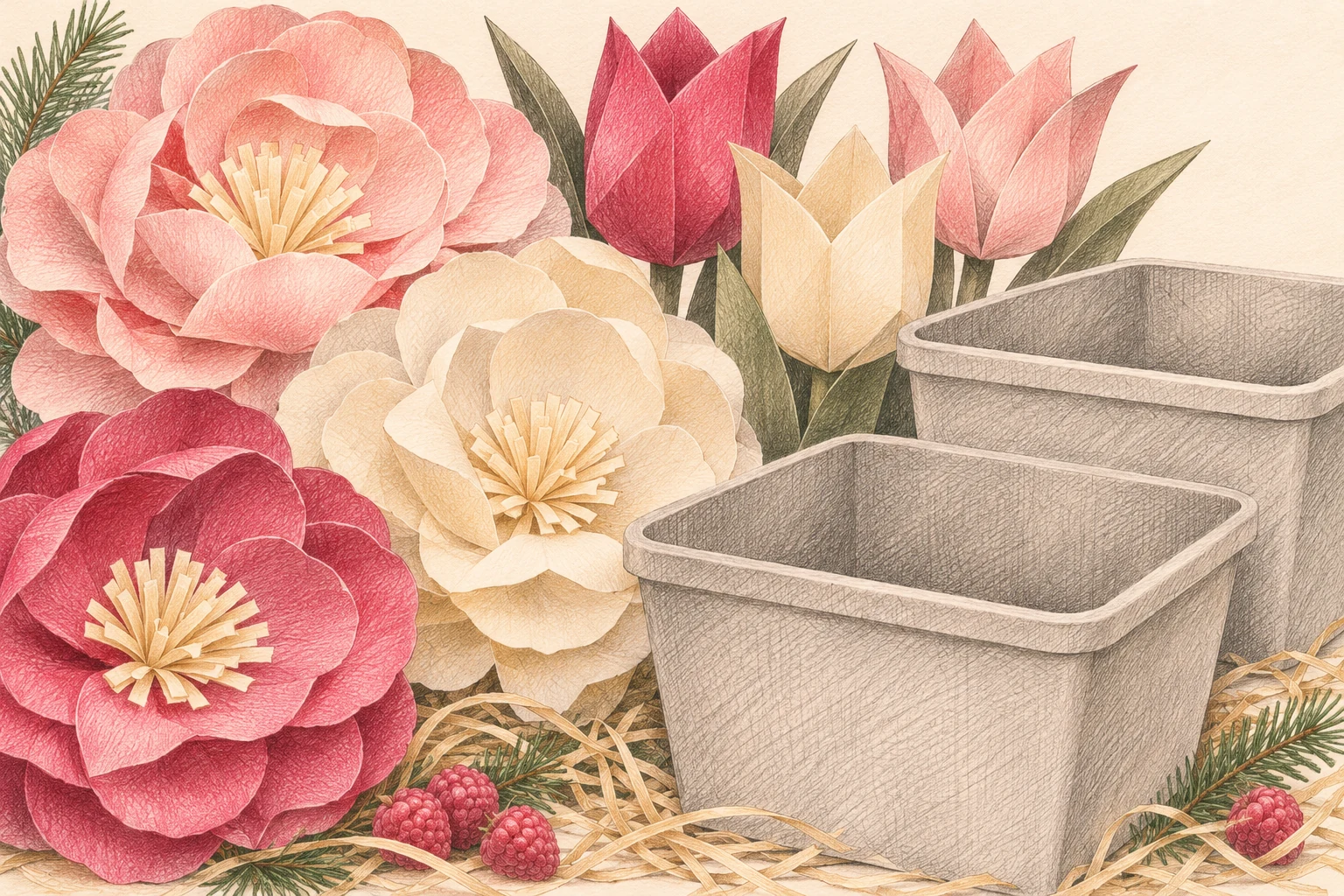
The paper shapes can be used as reusable props alongside the printed flower picture.
Give the route finder one delivery
Flower Route Mapper: 5 Delightful Petal-Picture Trips asks learners to use a key of six flowers and link the centres in order. Choose a panel and show the start. The child can keep one finger at the current flower and search the reference for the next one. Avoid counting petal points or drawing around a blossom, since the task follows the centres. If the page is too busy, use three large homemade paper pictures and give one direction at a time first.
Make a separate shop delivery after the paper task. Two empty baskets can mark places on the same table. The learner can move a pretend order between them while the other child keeps their own job. Leave enough time to check where it actually arrived.
Let the counter explain two parts
A learner who knows small totals can try one problem from Flower Shop Addition Worksheet: Lovely Bouquet Sums Within 10. Use two groups of large paper stems to represent the chosen parts. The younger sibling does not need to copy the equation. The older learner can say how each number in a recorded sum relates to the chosen flowers and check the total with a second method if ready.
The illustrated pair of groups, two flowers and three flowers, is a separate example. Point to the part that belongs to each group before combining them. If a learner has counted several petals from the same flower, stop and agree on the counting unit. One whole flower goes with one count even when some flowers have more petals than others.
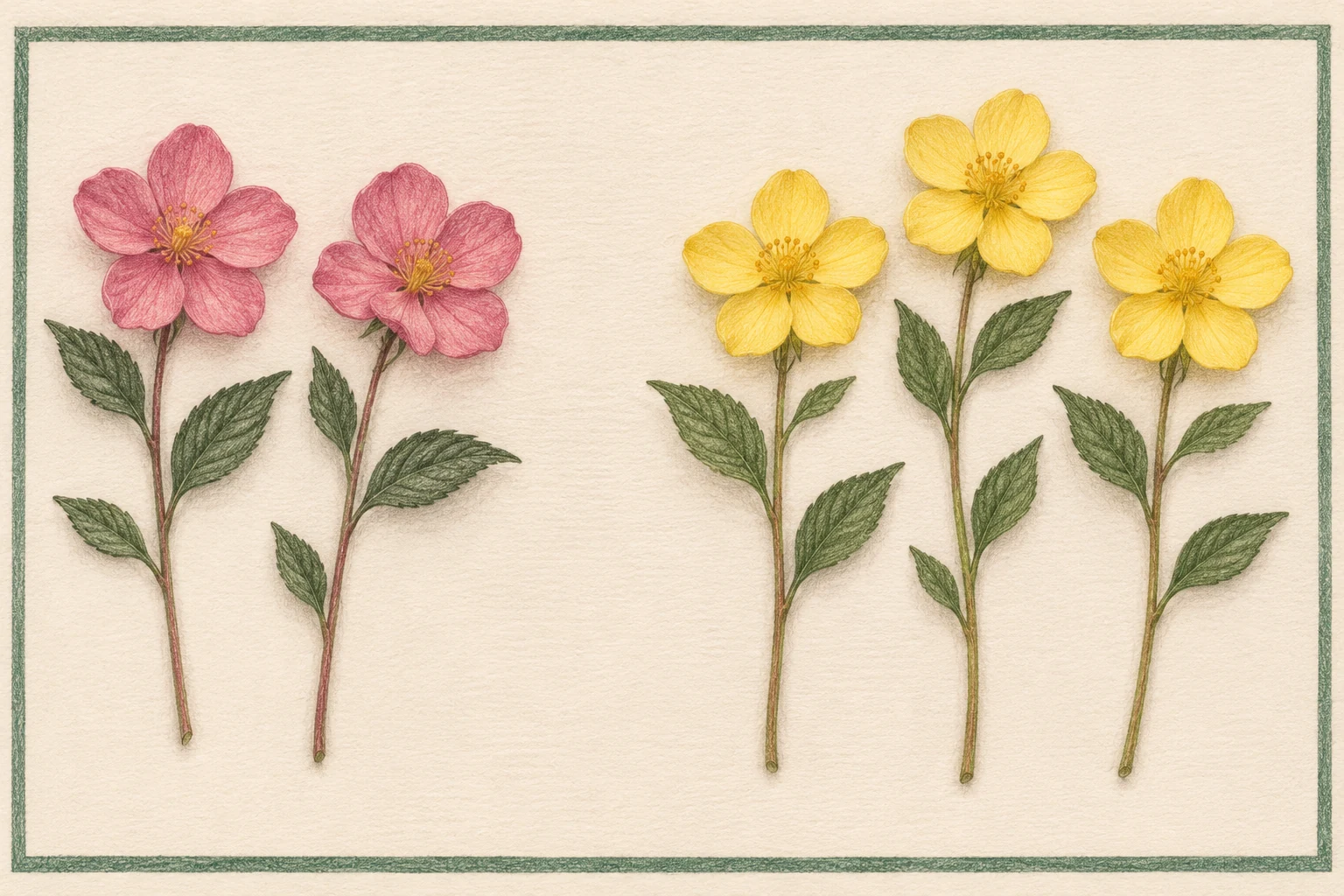
Keeping the groups visible gives an adult a place to discuss both parts before writing an equation.
Make the adult handoff explicit
Say who you are working with and what the other learner can try next. “I’ll listen to your bouquet count after I help with this first route” gives a clear order without making help a reward. A separate tray can hold a ready-to-show result. Children can keep a hand up, place an item on the tray or say they want help. Try one method that is practical for the family.
If both learners need you, shorten the first job or pause and take turns. Do not assign the child who understands the task to be the default teacher. A willing sibling can show a move and return to their own work. Adult responsibility for teaching and supervision remains with the adult.
Close with a common pickup shelf
At the end, assemble one demonstration from each job. The display maker shows two different blossoms. The route finder places the order at the appropriate basket. The counter says how many flowers the customer should receive and how they checked. The shared ending gives each child a reason to listen to the others. It can finish with one line per learner.
Let children save or dismantle the shop according to the family's time and space. Announce the next day of work only if you can keep that promise. If an idea mattered, save one picture or item rather than reserving an entire room.
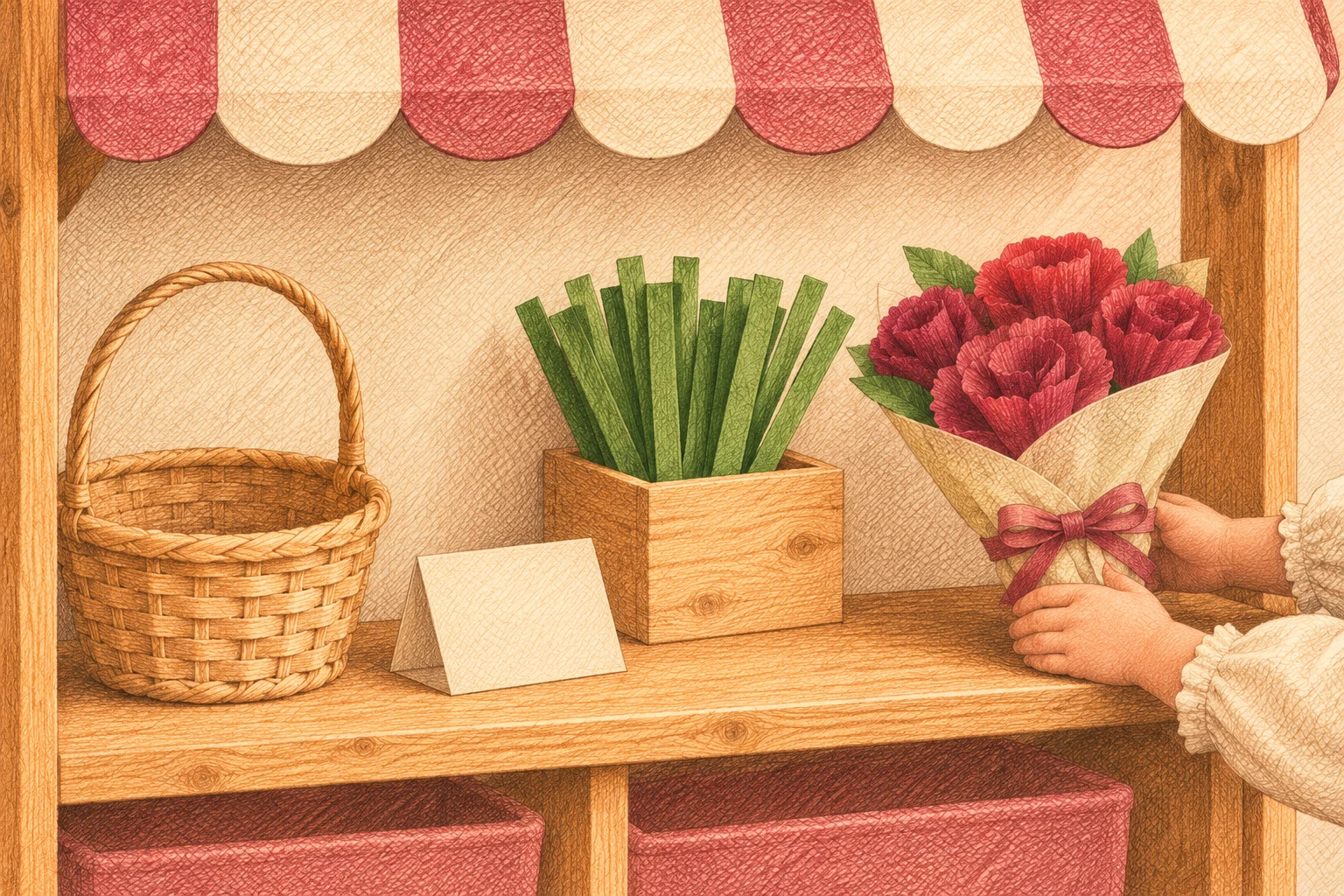
The pickup shelf offers a shared ending for different individual jobs.
Six signs the shared arrangement is working
- Different goals stay visible. Learners can describe their own current job.
- Relevant materials stay reachable. Each child can select what belongs to their task.
- An older learner gets more depth. They can check a result, explain an exception or plan another method.
- A younger learner contributes. A sensible drawing, grouping or gesture serves the common story.
- Adult time can move. Familiar materials offer a short, comfortable place to work while another learner gets instruction.
- Closing talk goes somewhere. The family can identify one useful next step from the jobs they observed.
Think through two possible sessions
A Saturday lesson at home
Imagine a four-year-old arranging paper blossoms and a seven-year-old preparing an order for five. The younger child surprises the adult by grouping rounded shapes without prompting. The older child counts both parts but leaves one flower uncounted where the groups touch. Their adult records one example from each child. On a future day, the sorter can try a new visible contrast, and the bouquet maker can spread the groups or move each stem while counting. In this hypothetical block the same theme leads to two different teaching decisions.
A borrowing idea for a classroom group
In a hypothetical mixed-age classroom, two children are ready to interpret a printed route and two want to talk about pictured flowers. One adult starts the route group and a second adult shows the sorting materials. A child from the route table wants to join sorting after finishing one panel. The adults allow the move because both groups have a clear ending and an accessible place for work. Set the sequence to match staffing and each child's available support. A solo homeschool adult may prefer two shorter turns completed one after the other.
Four other ways to change the shop without starting over
Add a customer with a clear request
A puppet asks for one rounded flower and one pointed one. Let the learner show two features and give the puppet a choice. The puppet does not have to be “wrong” for the child to teach it something. A short request also lets the adult hear which part of an instruction was clear.
Test a route with one closed stop
Mark a pretend pickup spot as temporarily closed with a blank folded card and tell everyone in advance. The route finder points to an available basket. When the child can explain the difference, invite a small updated order. This is an optional separate game, not another exercise printed on the flower route sheet.
Offer a different way to make the same bouquet
A child who is comfortable with small sums can make the same total from different groups of paper flowers. Compare the parts with the whole kept fixed. Give one example with two parts displayed apart, and ask what remains the same as the colour shares change.
Photograph or sketch one choice
With family consent and without sharing photos publicly, record one arrangement for next time. A scrap drawing works too. Ask the child which feature another person would need to see. Save the learner's contribution rather than every stage of the project.
Give each learner a fair ending
The current worksheet panels offer watermarked one-page PDF samples and clean membership access. The colouring page lists ages three to six, the route page four to seven, and the addition page five to eight. Preview before printing. A younger learner may be ready for a piece of the picture and an older one may still want it as art.
“You made the sign the customer needed” gives a child information about the work they did. Let the shared topic hold the group together and let the task match the learner. If the hour turns into a single conversation and a finished display, decide which practice to bring back another day.