Portfolio: 5 Powerful Ways to Celebrate Small Wins
Small marks and short explanations can hold a useful learning story. Choose three existing worksheet types, record the help provided, and turn selected samples into practical next steps.
A crumpled page can hold a discovery that a neat stack misses. Perhaps your child counted both boats before writing a numeral, or changed crayons after testing a mark. A learning portfolio gives those moments a place to stay, alongside a few chosen worksheets and the child's own explanation. For families learning with children around three to six, the useful question is what happened during the activity. These five approaches show parents and teachers how to select evidence, describe support, revisit a sample, and choose a manageable next experience together.
Open the portfolio at one meaningful moment
A portfolio is a selected collection with enough context to understand its contents. A traced path alone shows a mark. Add the date, what the child tried, and the help available, and you have a more useful starting point for conversation. A blank section can simply mean the child stopped there.
Keep the first portfolio entry small. A folder, envelope, or binder can hold a worksheet beside a short note. If a photograph is easier, keep the original order and connect it with the same note. Choose the method your family will comfortably revisit.
📂 A sample record, ready to adapt
Date: 24 October. Activity: two sailboats. What happened: pointed to each complete boat and said “one, two.” Support: adult read the instruction; child counted. Child's words: “One boat for each dock.”
This imagined portfolio note describes an action. Another line could say, “Next time, try two large toy boats.” Keep the observation, the adult's interpretation, and the proposed next step distinct.
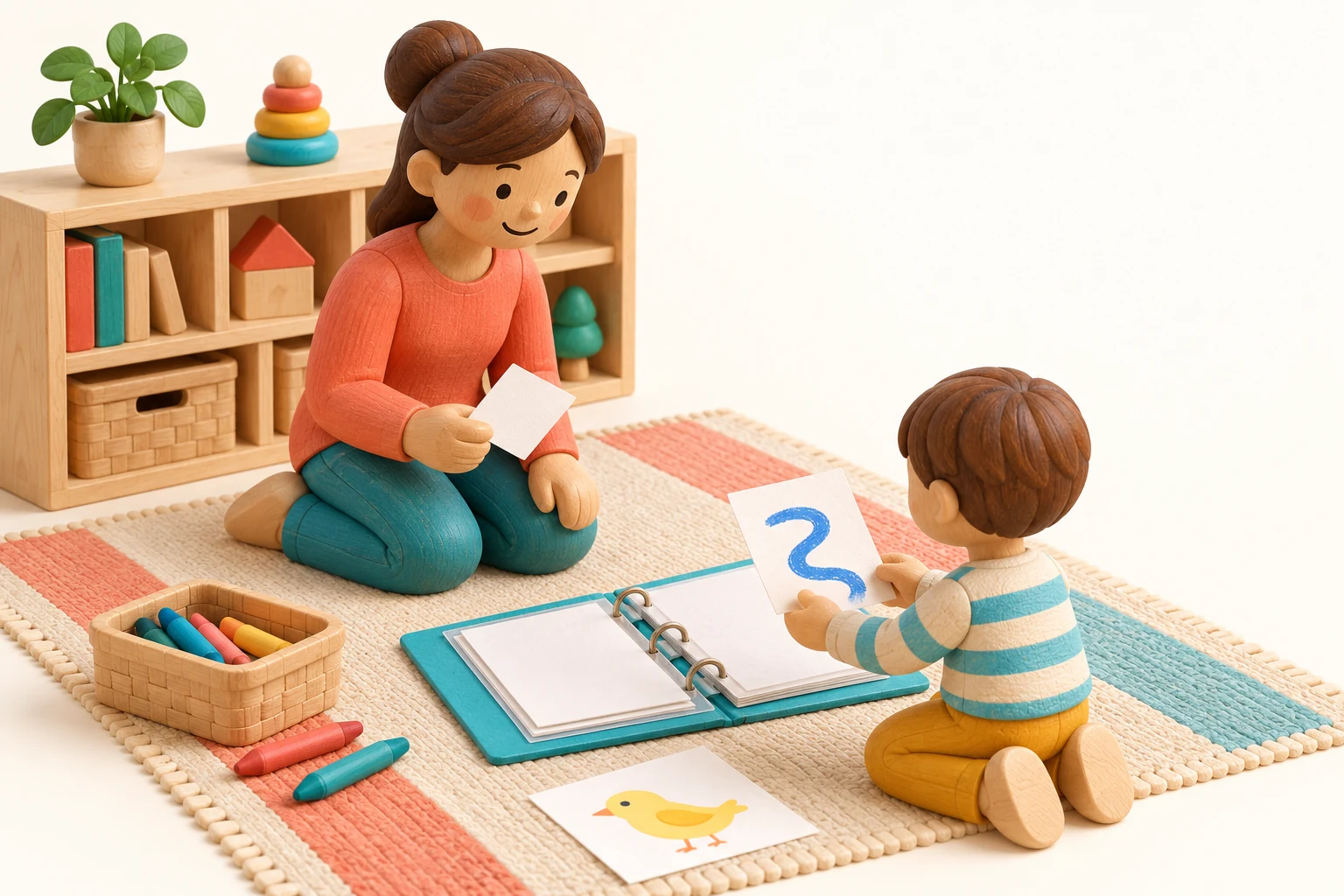
A separate blank note card leaves room for an adult to record the child's words. The open binder and simple drawing props suggest a relaxed portfolio conversation.
Five portfolio approaches that keep learning visible
Use these approaches whenever a sample is worth saving. There is no need to make every activity produce a new entry. The collection grows through small choices that explain something about the learner's thinking.
1. Choose a question before choosing a page
Give a portfolio sample a clear purpose. You might wonder whether the child follows a curved route, counts two whole objects, or chooses a colour after inspecting a reference. Pick one question that matches an activity the child already wants to try.
- Open a relevant worksheet preview and identify the task you will notice.
- Prepare the materials and demonstrate only what the learner needs to begin.
- Let the child work while you watch the chosen action.
- Offer a choice about which attempt or explanation to keep.
The portfolio question keeps your note specific. “Followed one bend after watching a finger demonstration” is more informative than “did writing.” Return to the activity itself once you have noticed enough.
2. Save the child's meaning beside the marks
A portfolio becomes more interesting when the learner contributes. Ask, “What would you like someone to notice?” A child might point, demonstrate, speak in a home language, or dictate a short sentence. Record their response faithfully rather than improving its grammar or adding an explanation they did not give.
Put an adult description on a separate card when the child uses a gesture. For example: “Moved a finger along the curved part.” You can invite words without requiring them. A portfolio entry can preserve a visible action when a spoken account is not available.
3. Make support part of the story
Include the assistance that shaped the portfolio sample. An adult reading directions, pointing to a starting place, or drawing a demonstration may affect what the finished page shows. A short description lets another adult understand the situation without guessing.
| Support available | A useful factual note |
|---|---|
| Directions read aloud | Adult read; child selected and counted the objects. |
| Starting point shown | Adult pointed once before the child began the path. |
| Adult recorded an explanation | Child dictated; adult wrote the sentence separately. |
| A task was demonstrated | Adult modelled one example; this was the child's next attempt. |
Keep the child's original marks visible. If you add a demonstration, use another sheet. The portfolio can hold both, clearly identifying who made each one.
4. Compare fairly when you look again
Before putting two portfolio samples side by side, check their conditions. A broad crayon path and a narrow pencil path demand different movements. Counting two boats with an adult pointing is also different from finding the objects independently.
Choose a similar task for a later visit and record any changes in materials or help. Ask what the child notices across the two attempts. A clearer explanation, an independent start, or a remembered strategy may be more useful than a tidier appearance.
In its early-childhood guidance, NAEYC describes purposeful observation and children's reflection on documentation. For this home portfolio, that suggests looking at evidence in context and using it to plan, while leaving room for individual variation.
5. Let one observation shape tomorrow's invitation
End a portfolio review with a small, practical choice. If the child understood two boats but found the tiny numeral difficult, offer another counting game before adding writing. If a broad tracing movement felt comfortable, invite one similar route on fresh paper.
Write the proposed invitation briefly, then return to ordinary play. The portfolio has done its job when it helps an adult offer something suitable. You can change the plan after seeing how the child responds.
Three existing worksheets for different kinds of evidence
Choose one source that suits your portfolio question. These suggestions connect the printed task with something observable; completing every row is optional. Inspect the preview and access choices before downloading.
✏ A movement to remember
Trace 5 Essential Lines and Curves: Fun Paths for Little Hands (Ages 3-5)
Choose one straight, slanted, or curved path from the page. Note where the child began and whether you pointed to its starting cue. Save the selected attempt with a description of the tool used.
A portfolio comparison could return to the same kind of route later. Keep the first sample so both attempts remain available for discussion.
⛵ An amount to explain
Number 2 Worksheet: 6 Powerful Games for Happy Sailors
Invite the child to point to each of the two complete sailboats while counting. The sails are parts of the boats, not extra objects in that task. Record what they counted before moving to numeral practice.
For this portfolio entry, keep spoken counting separate from tracing 2, finding matching numerals, or writing the amount. One page offers several tasks with different demands.
🐥 A creative choice to describe
Chick Coloring: 5 Brilliant Moves for Happy Artists
The roomy chick outline sits beside a smaller finished colour reference. Invite the learner to choose a part to colour and tell you about a tool or colour choice. A partly coloured wing can be worth saving.
Let the portfolio note identify the reference and the child's decision. Detailed shading or a fully filled outline is unnecessary for recording that moment.
These pages currently offer a watermarked free PDF sample and a clean file requiring active membership. The tracing page lists ages three to five; the other two list three to six. Select by the task and available support.
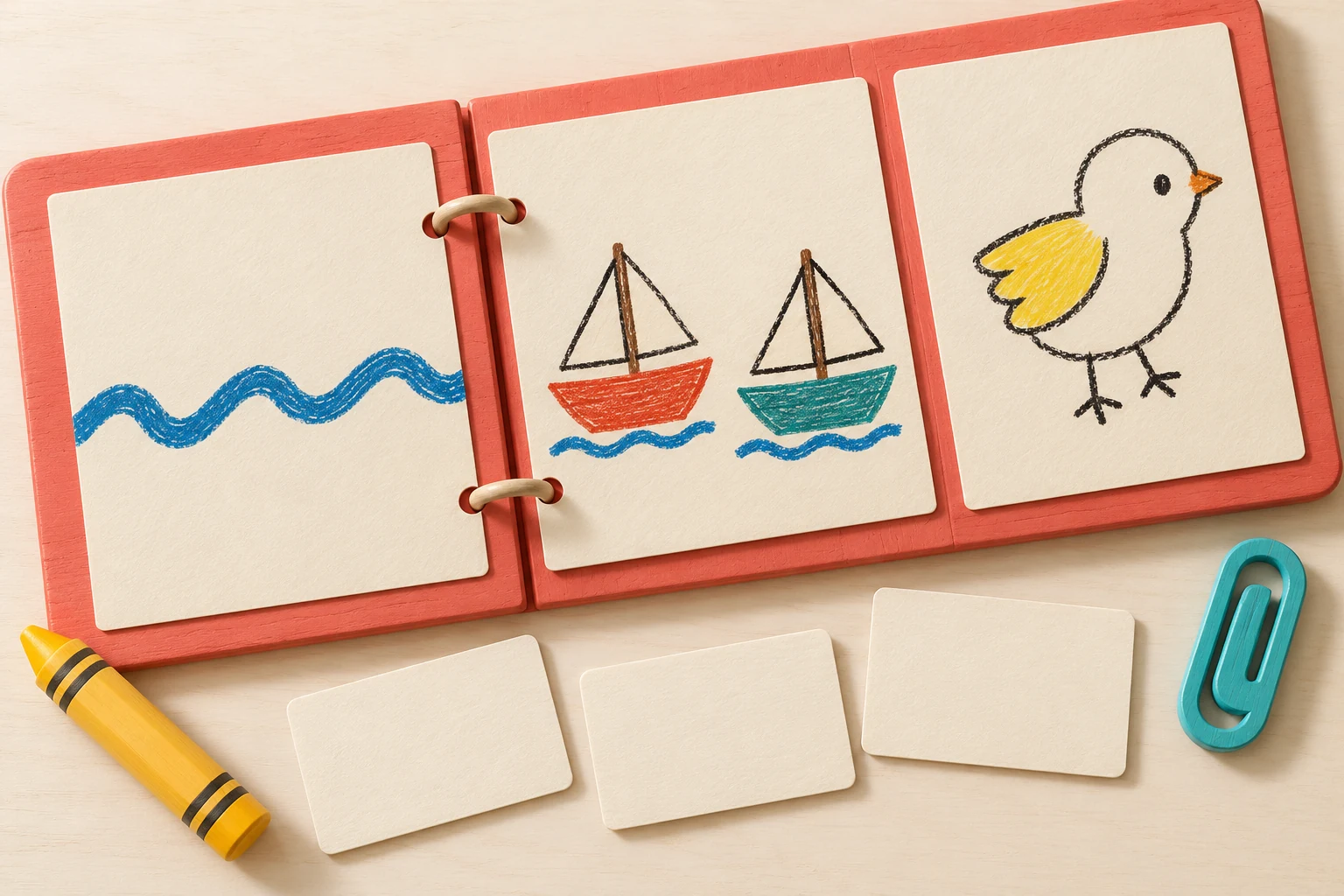
Separate blank cards leave space for context beside the path, boats, and chick drawings. These simple portfolio props do not reproduce the linked worksheet pages.
Seven reasons a small portfolio can be useful
- It preserves a fleeting explanation. A portfolio can keep the child's words beside a mark that would otherwise be hard to interpret later.
- It makes assistance visible. A portfolio note explains which parts involved adult help, so an attractive result does not hide the process.
- It gives the learner a say. Choosing a sample invites the child to identify something they value in their own activity.
- It supports a specific next choice. An observed action helps an adult select materials or a manageable variation for another day.
- It holds several ways of responding. Spoken counting, a gesture, a drawing, and a traced route can each have a place in the portfolio.
- It gives conversations a shared reference. A parent and teacher can discuss the same dated portfolio example instead of relying on a broad memory.
- It makes revisiting possible. Earlier and later samples offer something concrete to inspect, including strategies that remained helpful.
At home: the unfinished page earns its place
Imagine Dev pointing to the two boats, then leaving the numeral-writing box empty. His mother asks which part he wants to remember. He chooses his explanation about a place for each boat. They add that sentence to the portfolio beside a note saying his mother read the direction.
On another day, Dev moves two toy boats between two paper docks. His mother records that he matched one to each place. The portfolio connects a printed task with an everyday demonstration, while the unfinished writing space keeps its original meaning.
With a teacher: bring the context into the conversation
In a separate imagined classroom visit, a child brings one chosen portfolio sample from home. The teacher asks what the learner wants to explain, then reads the parent's short note about the help provided. A broad crayon curve becomes the starting point for a larger drawing route before the teacher offers a narrower one.
During the portfolio conversation, the teacher can share a classroom observation in return, keeping the two contexts visible. Head Start's guidance on organising observations describes dated collections and family contributions in early-years settings. A simple adaptation for a home portfolio is to keep samples in order and record where the activity happened.
Four playful ways to revisit a saved sample
🗣 Give a tiny guided tour
Let the child choose one portfolio page and tell a willing listener about it. A pointing tour works too. The visitor can name one detail they noticed without asking for another performance of every task.
🧸 Translate the idea into objects
Recreate the saved idea with large toys, a broad drawing, or pretend play. Two counted pictures might become two toy passengers. Add a short portfolio note about what stayed the same across the materials.
🎨 Make a new version by choice
Invite the learner to select a new colour or tool for a similar activity. Keep the earlier sample available. Talk about the changed material before deciding whether this belongs beside it.
✉ Leave a question for later
Place a simple child-chosen question with a saved page: “Could I make a longer path?” Reopen the portfolio when the child wants to explore it. A remembered question can provide continuity without a compulsory repetition schedule.
Close the folder while the child still owns the story
Keep a modest collection and review it together occasionally. The child can help choose which portfolio examples remain easy to find. Store notes with their samples, and keep adult interpretations clearly identified. A portfolio becomes usable through these small habits rather than elaborate decoration.
“You remembered why you changed that colour” offers a specific moment to celebrate. A portfolio can hold effort, explanation, and an interesting question. Choose one meaningful entry, enjoy the conversation it opens, and leave room for tomorrow's learning to surprise you.