
Flower Color Workshop: 4 Wonderful Petal-Pair Games
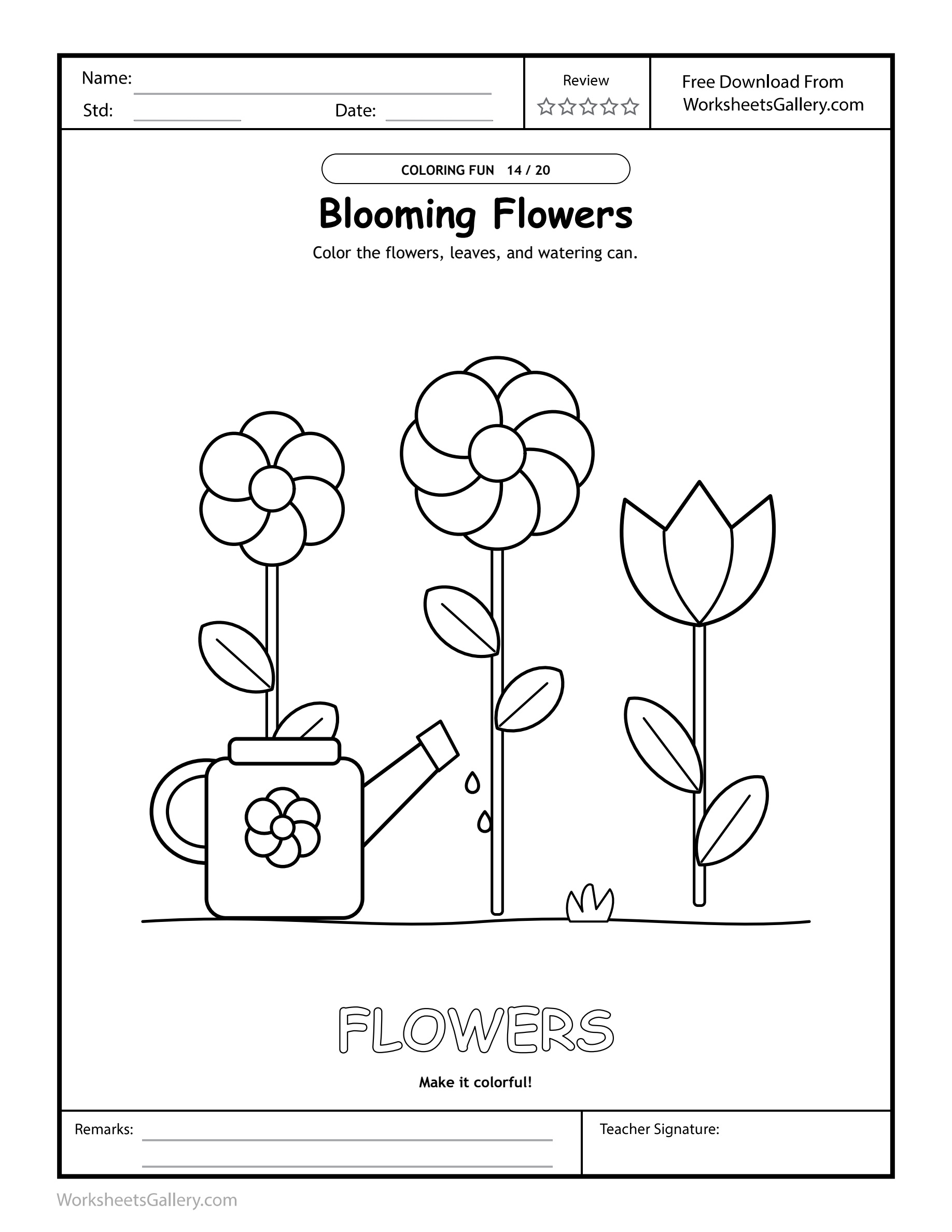
Round petals and pointed petals can share a garden without sharing every mark. Flower Color Workshop invites a preschool artist to notice how an outline changes the movement that feels comfortable inside it. The Blooming Flowers page brings two rounded flower heads, a pointed bloom, leaves and a decorated watering can into one open-choice scene. No printed palette tells the child what each region must become. Offer a familiar coloring tool and ask which flower edge catches their attention first. A single petal, a center or one broad can panel can be a useful beginning.
Flower Color Workshop reads shapes before naming plants
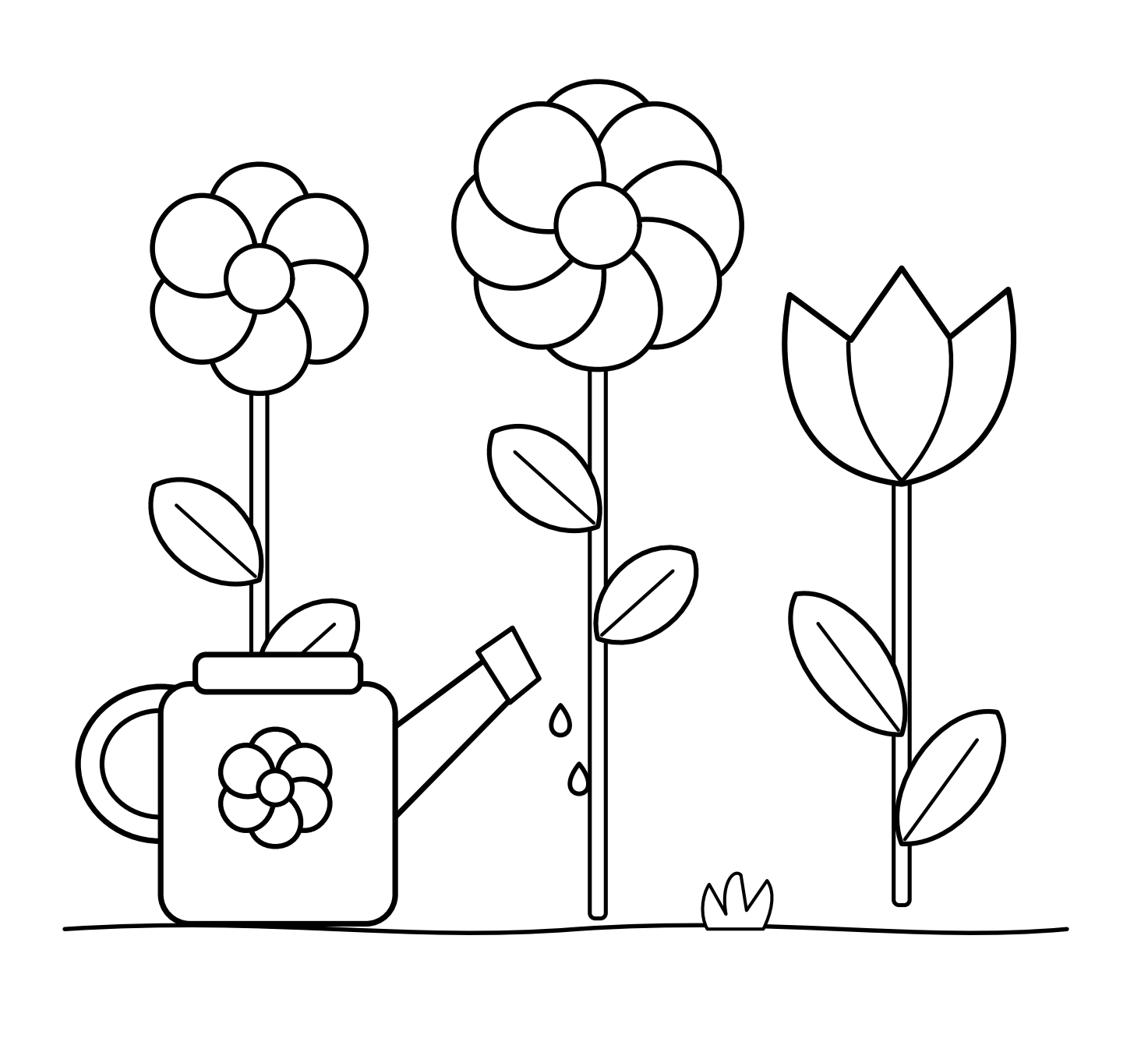
The source direction asks for color on flowers, leaves and the watering can. Its shapes supply the useful differences: rounded lobes around centers, a pointed upright bloom, narrow stems and the can's mixed straight and curved edges. These are visible drawing features, not a botanical identification test.
Flower Color Workshop can use everyday words such as round, pointed, long and narrow while the child indicates a part. There is no need to know a flower species before choosing a hue. Read the outlined FLOWERS label if it interests the learner, without introducing compulsory lettering work.
Four Flower Color Workshop games with different boundaries
These games give the maker a larger place to investigate a shape or color relationship. They can stand alone or lead back to a selected source region. Offer one at a time, keeping the drawing invitation manageable.
1. Flower Color Workshop opens a petal-pair comparison
Draw one rounded petal-like shape and one pointed shape on a scrap. Invite the same chosen hue into both and ask how the tool movement changes near the edges. Flower Color Workshop pairs make shape the changing feature while leaving the material familiar.
The Flower Color Workshop maker can prefer either shape or leave one unfinished. Ask what felt comfortable rather than which result looks neater. A shorter mark near a point is one possible strategy; a larger study may be a better adjustment for another child.
2. Flower Color Workshop gives the center a separate voice
Make a large bloom with a center and invite two color decisions, one for each region. The child dictates what the imaginary flower might announce. Flower Color Workshop messages might connect the center with a sun, button or tiny stage, depending on the story.
An adult writes the Flower Color Workshop message on another card and reads it back. The learner supplies meaning through marks and words; independent writing is unnecessary. Returning to the small source center remains optional after the larger trial.
3. Flower Color Workshop links a bloom to the can
Choose one flower color and test a little echo of it in a drawn can-shaped sample. Compare that version with a different accent. Flower Color Workshop echoes explore whether a repeated hue makes separate parts feel related, without requiring all flowers to match.
Let the Flower Color Workshop artist choose the stronger connection or reject both trials. A watering can may become the main feature instead. The purpose is to notice a relationship between picture parts, not establish a rule that repeated colors always look best.
4. Flower Color Workshop sends a shape clue
The maker selects a bloom and dictates a clue about its outline rather than its name. A partner finds the feature using the description. Flower Color Workshop clues can mention rounded edges, a high point or a center enclosed by petals, with adult reading when needed.
A Flower Color Workshop partner can answer by pointing. If the clue describes more than one feature, add another visible detail together. The exchange encourages clearer language without penalising a learner for not knowing a formal plant term.
Flower Color Workshop makes room for a rounded bloom
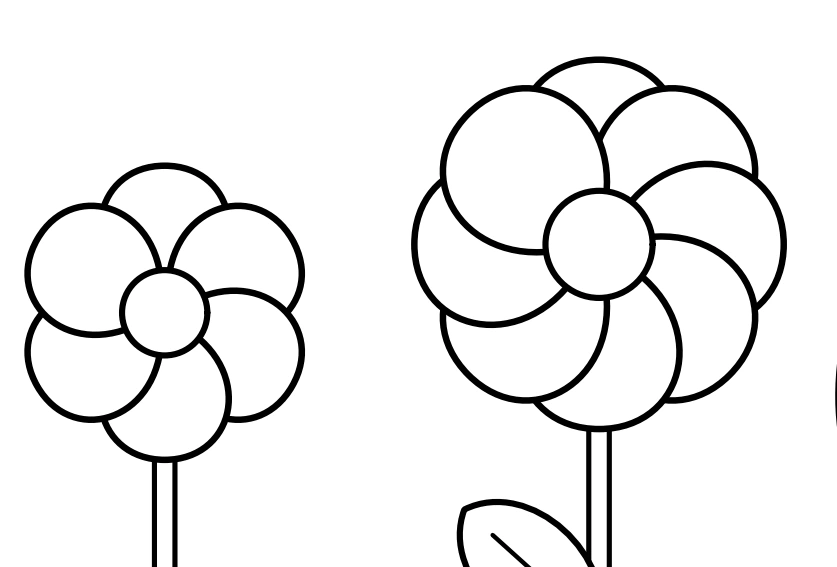
The two rounded flower heads contain separate centers. A broad outer region and a compact interior may invite different mark sizes. Before asking for careful edge control, find out whether the child wants the center to stand out, blend or remain open.
Flower Color Workshop can keep the two flowers alike or give each a different palette. Neither symmetry nor a repeated color order appears in the instruction. A chosen relationship becomes meaningful when the maker can indicate what they wanted, even if the filling is loose.
Yash gives Flower Color Workshop a garden-ticket theme
Yash and his mother imagine that their drawing is the entrance picture for a tiny garden show. He wants visitors to notice the pointed bloom first. His mother offers spare paper so he can compare a strong flower color with gentler marks around it.
During Flower Color Workshop, Yash changes his mind about the can. He makes its little decoration match his favorite bloom and dictates “LOOK FOR THE POINT” for a separate ticket. His mother follows the revised idea rather than requiring him to finish the plan he mentioned first.
Flower Color Workshop stories can stay brief. A child who does not enjoy pretend events may simply choose a petal and explore it quietly. The example supplies one social purpose for the picture; it does not create a second set of required tasks.
Flower Color Workshop meets a pointed neighbor
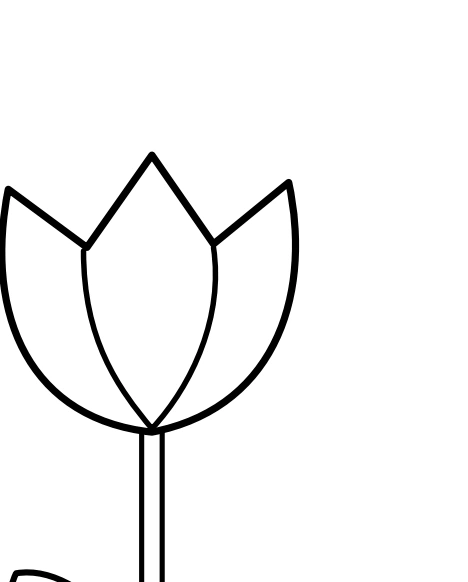
The upright right-hand bloom has pointed divisions unlike the rounder heads. A longer sweep that felt comfortable in a broad petal may reach this boundary sooner. Invite the learner to pause and choose another mark length if preserving the edge matters to them.
Flower Color Workshop can practise the point on a larger scrap first. Avoid physically directing every stroke or treating an outside mark as a spoiled picture. The child can still communicate a preferred hue or focal flower with developing control.
Six Flower Color Workshop opportunities to notice
- Outline comparison: distinguish rounded and pointed edges by looking at actual picture features.
- Movement selection: change stroke length or tool angle when a chosen region becomes narrower.
- Part relationships: compare a flower center with its surrounding petals and the can decoration.
- Descriptive language: use a shape clue to guide another person's attention to the intended bloom.
- Creative planning: select a focal feature and revise the palette when a new idea appeals.
- Social exchange: listen to a partner's observation and explain the decision behind a mark.
Flower Color Workshop combines thinking, movement and conversation without expecting them to be equally developed. A clear spoken clue can accompany broad marks. A quiet learner may demonstrate precise noticing through pointing while an adult supplies the words.
Flower Color Workshop at home follows one chosen feature
Put the page within comfortable reach, with a test scrap and a few familiar tools nearby. Read the direction aloud and ask which flower or can region the artist wants to explore. Offer a shape comparison only if it serves that interest.
For Flower Color Workshop at home, help with practical obstacles such as sliding paper rather than managing the palette. Let stretches of coloring happen without questions. A short discussion before or after working is often easier than answering while coordinating the hand.
Finish Flower Color Workshop by noticing evidence: “Your center color appears again on the little can flower.” That observation describes a relationship. It leaves the maker free to confirm the connection, explain another reason or choose a new direction next time.
Flower Color Workshop explores the little garden tool
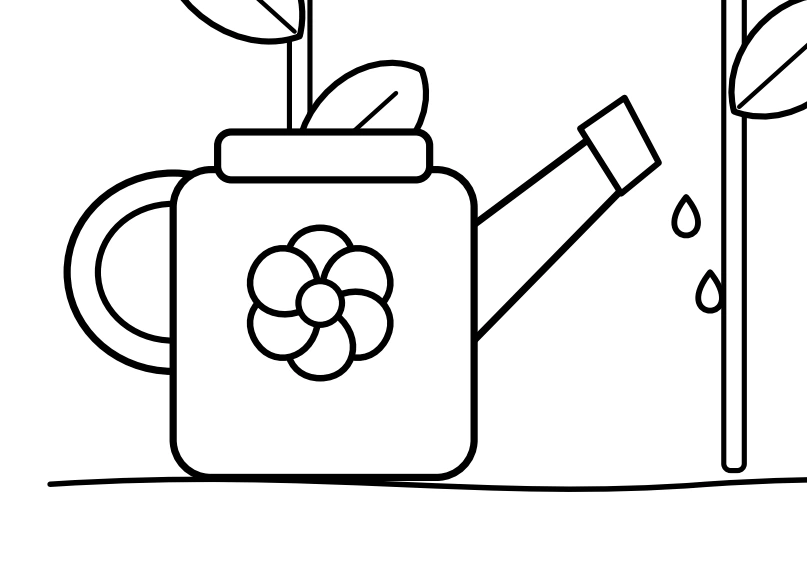
The can combines a broad body with a handle, sloping spout and small floral decoration. Its mixed outlines make it more than an afterthought below the plants. A learner may choose just this object as today's art focus.
Flower Color Workshop can compare a mark across the can body with one near a narrow handle. Keep expectations suited to the space and tool. The decorative flower need not receive the same treatment as the larger blooms, even if the child enjoys echoing one hue.
A classroom Flower Color Workshop clue board
Give each learner an individual sheet and a larger shape-study scrap. Children choose a feature, test a color movement and dictate one shape clue. The teacher places the note beside the work or reads it during a quiet partner exchange.
Flower Color Workshop viewers locate the described feature rather than vote for the most realistic flower. Some children may prefer to point privately with the teacher. Accept a single-region study as well as a broader scene, keeping completion level separate from participation.
The Flower Color Workshop board can show many palettes and several kinds of mark. This makes room for different intentions without implying that a fast-filled flower or a dense background is automatically a mistake. Ask whether the result suits the maker's own aim.
Flower Color Workshop leaves a small task for later
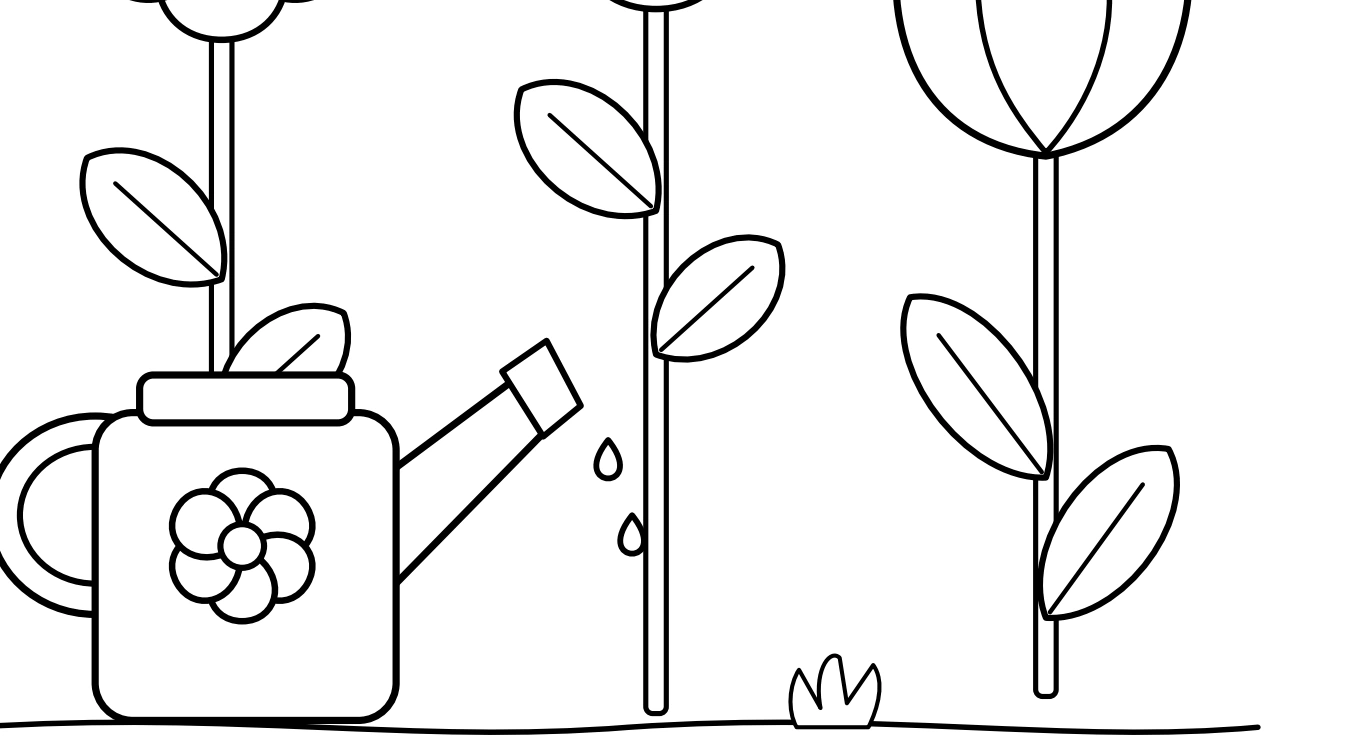
Narrow leaves and slender stems require smaller movements than the flower heads. They can remain available after a broad-color visit. If the artist wants to preserve an interior leaf line, try a light mark on a separate larger leaf before returning.
Flower Color Workshop does not require green leaves or a completely colored stem. Keep the source's open palette open. An imaginative garden can use surprising hues, with adult discussion distinguishing picture choices from claims about living plants.
Flower Color Workshop responds to common frustrations
| A difficulty appears | Try a smaller decision |
|---|---|
| A point feels hard to fill. | Explore a larger pointed shape first. |
| Too many colors feel confusing. | Offer a few options and allow another request. |
| The child wants only the can. | Let that object carry today's plan. |
Flower Color Workshop missteps often come from extra adult rules: assigning every petal a different hue, demanding botanical realism or turning the bottom word into mandatory handwriting. The supplied task is simpler. Support a color intention while allowing the amount attempted to remain flexible.
Flower Color Workshop uses a different material for comparison
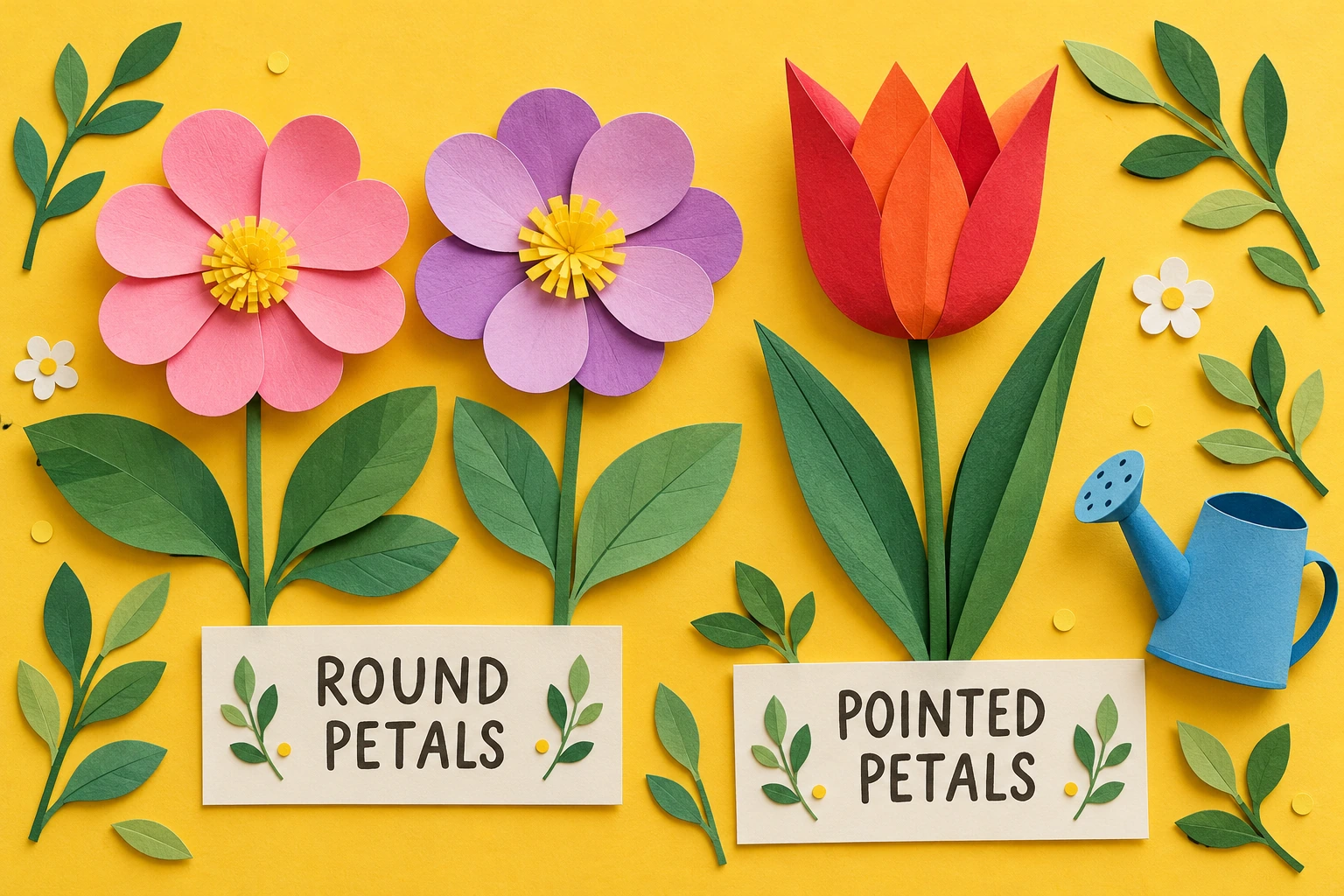
The paper studio illustration names ROUND PETALS and POINTED PETALS beside its cutout flowers. A small blue can accompanies the comparison. Its palette is illustrative, and it should not be read as the missing answer key for the printable.
Flower Color Workshop can lead to a child-invented flower drawing with entirely new shapes. That separate opportunity gives the learner more control over the outline itself, complementing rather than duplicating the choices available within the supplied page.
Flower Color Workshop can return in short visits
Many children in preschool or early kindergarten, roughly ages three to six, can enjoy the scene with adult help tailored to their tools and interests. Broad petals may be easier to access than compact decoration. Participation can start with selecting, pointing or making one sample.
Invite Flower Color Workshop back through a changed clue, a new center color or one leaf. Avoid a fixed quota of finished flowers. A comfortable pause for fatigue or frustration helps preserve the possibility of another willing art visit.
Save Flower Color Workshop for printing and further exploration
Find the clean Flower Color Workshop PDF in the premium attachment for an account whose active membership permits access. Download it as the member edition while retaining the original sample separately. Watermarks and website/domain branding are removed from the clean page; it also has no embedded advertisements. Inspect the US Letter print view with all flowers, stems, can and lettering included before selecting your printer's scaling. The website's surrounding ads are separate from this printable file.
For a directed color comparison, see the giraffe's reference colors or yellow-and-orange chick coloring. Water the Flowers paths provides a separate movement task. Adults can explore PBS Parents' making ideas and NAEYC's family creativity reading, while keeping independent, child-drawn artwork available too.
Popular Worksheets
Printable resources families and teachers are downloading now.
 Free
 Free
 Free
 Free