Printables: 6 Powerful Checks for Inclusive Learning
Before making a stack of copies, inspect the invitation. Six checks connect accessible preparation with three existing worksheets and practical adjustments.
A page can look inviting on a screen and feel quite different once it reaches a child's table. A pale guide may disappear, a useful picture may become tiny, or several activities may compete for attention. Choosing printables thoughtfully means checking how the actual learner will use them. This guide offers six practical checks for parents and teachers preparing early-learning resources, with three existing worksheet suggestions and simple ways to test an arrangement before making more copies. The goal is a clear invitation that leaves room for conversation, movement and a manageable attempt.
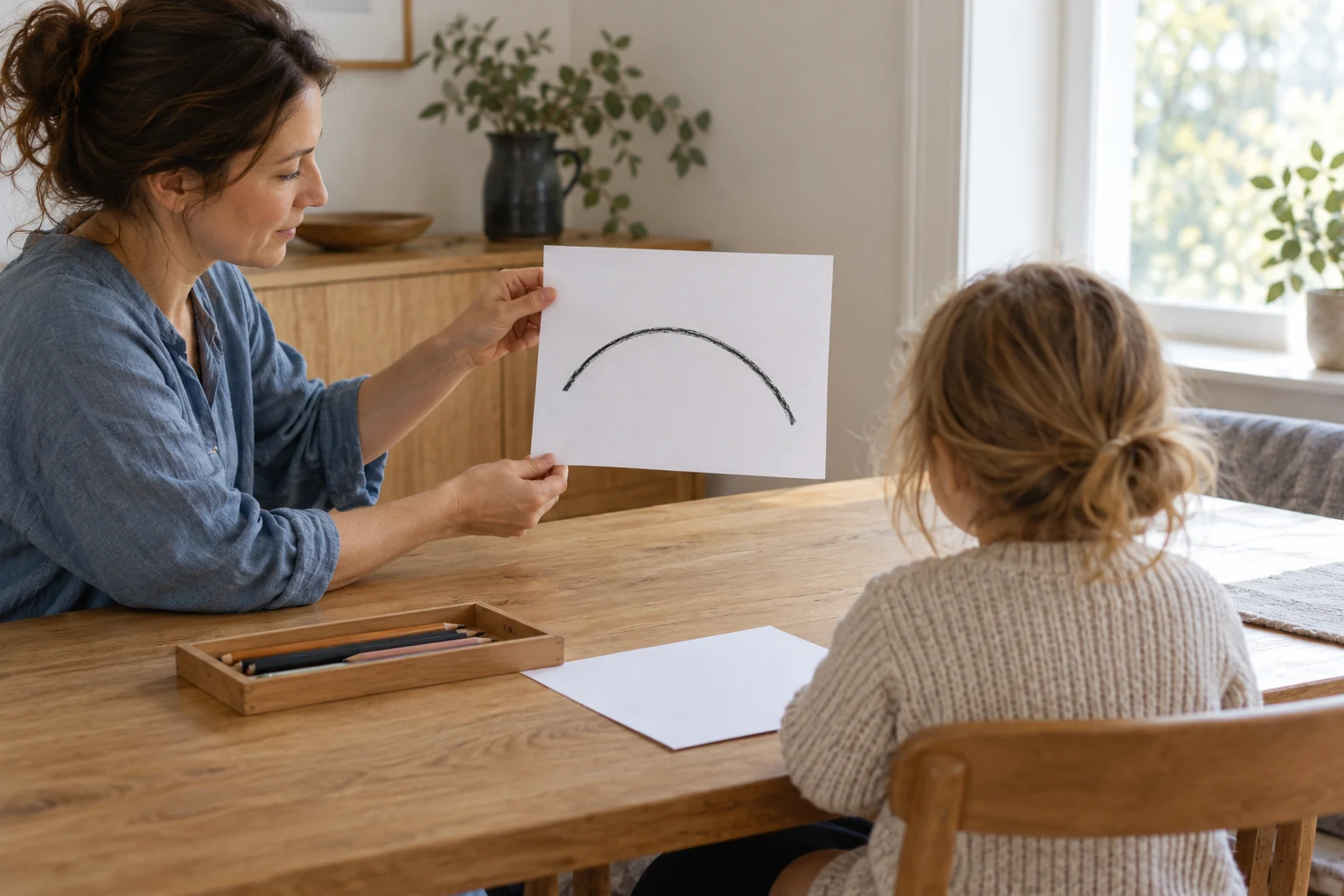
The separate demonstration sheet shows a broad movement while the table leaves room for the learner’s own paper.
📄 Start with the learner, then choose the printables
Inclusive resource preparation begins with a practical question: what does this child need to notice or do? A counting conversation might need clear pictures and an adult's explanation. A formation task needs a visible model and usable marking space. The same page can support different invitations, but those purposes should be chosen deliberately.
Contemporary approaches to accessible learning emphasise flexibility in how information is presented. CAST's guidance on perception includes adjustable displays and more than one way to encounter information. Applied to printables, a useful response might be a clear paper model alongside a spoken explanation and a real object. The paper remains one part of the experience.
With printables, there is no single page size, colour scheme or arrangement that suits every learner. Test the resource in the setting where it will be used. Watch whether the child can locate the relevant detail and participate with the support you offer, then adjust the part that gets in the way.
Check 1: printables should serve one clear purpose today
Write a short intention before selecting a file: compare a pictured quantity, explore a letter model, or notice colours in a reference. Choose printables whose actual tasks fit that intention. An attractive theme alone does not tell you whether the response required is suitable for the child.
For new printables, look across the whole preview. A page may combine recognition, tracing, colouring and recording. Decide which part you will use first and how you will explain the other sections if the child asks. Selecting one task is different from declaring the remaining panels unimportant; they may be useful another day.
For shared classroom practice, check what has already been taught. At home, use a familiar topic to introduce the paper activity. Printables work more coherently when the adult can explain the connection with something the learner knows, rather than presenting a succession of unrelated sheets.
Check 2: inspect the printables after one test copy
Open the downloaded file and check its print preview, paper size, orientation and scaling. For unfamiliar printables, print one example before producing a group set. Look at the actual page under the light available at the activity table, rather than assuming the on-screen appearance will be reproduced exactly.
For tracing printables, inspect the lightest guides and smallest starting cues. A missing dot can change how an unfamiliar route is understood. For picture tasks, check that each whole object is visible and its outline is clear. If the copy is poor, address the printing problem before interpreting a child's response to it.
When an edge is cut off, review the page setup and the PDF reader's fitting option. Enlarging everything automatically can create new cropping elsewhere. Compare the revised test copy with the original preview, keeping the learning model and required response areas intact.
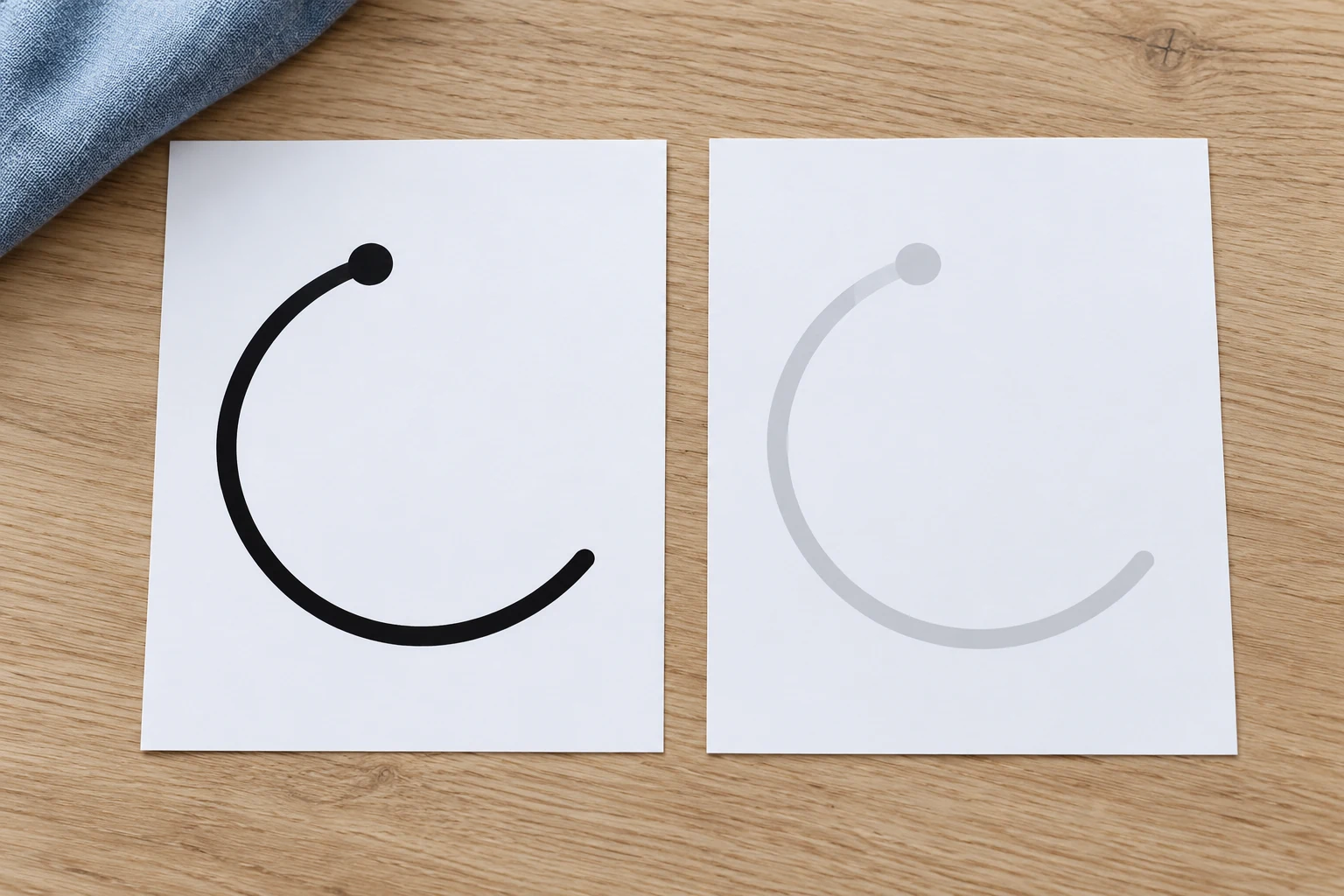
This demonstration compares two levels of visibility on separate activity cards; it is not a reproduction of a downloadable page.
Check 3: keep the relevant printables model in view
When using printables, a loose cover sheet can make one part easier to find while leaving the original file and paper intact. Place it over unused practice rows, then inspect what remains visible. The child still needs the selected model, its starting cue and enough of the instruction to understand the task.
With printables that ask for a comparison, both items must stay available. Covering a colour reference while asking the child to match it turns a visible comparison into a remembering task. Covering part of a counted group changes the collection. Use a cover to clarify the invitation, not accidentally alter its meaning.
Ask the learner to show where they would begin. Their gesture can reveal whether the arrangement communicates what you intended. If the cover moves during use, reposition it or remove it. An adjustment is useful only while it makes the task easier to understand.
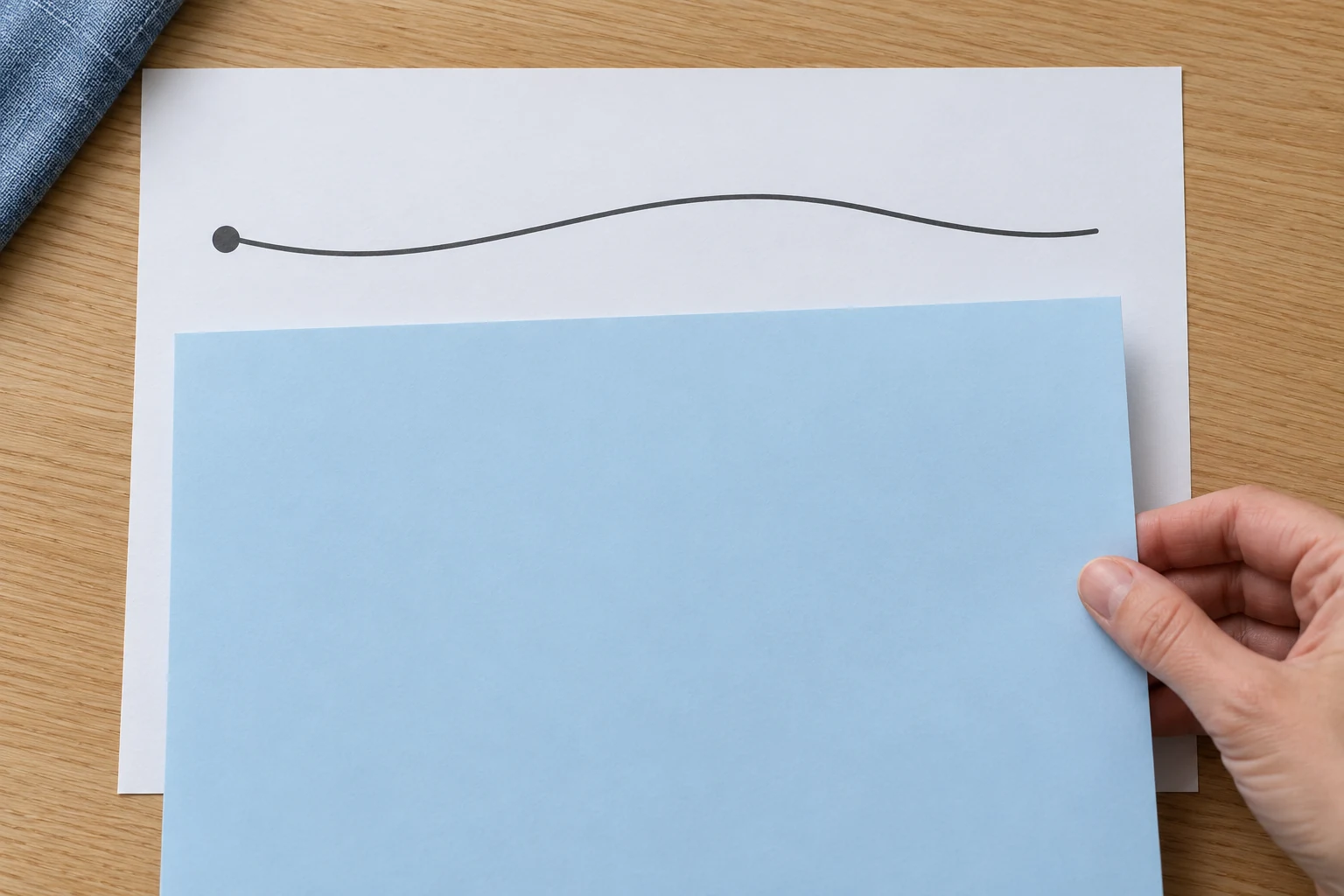
The example shows a separate demonstration sheet with the selected route unobstructed.
Check 4: printables need usable space and suitable tools
Try the proposed mark-making tool in a similar space on scrap paper. A thick crayon can make a bold mark in a large area but obscure a tiny tracing guide. A finer point may suit the printed space while being less comfortable for a particular learner. Test the combination rather than assuming one tool is universally best.
Keep printables steady and within reach. Let the child use a comfortable working position, with ordinary adjustments such as moving the paper or offering a non-slip surface where appropriate. Clear nearby materials that are not needed for the current task.
Printables can also support a pointing or spoken response when the purpose is recognition. If you need to observe independent writing, say so and provide a suitable opportunity. A child's thoughtful answer should not be overlooked because the marking arrangement prevented them from showing it on the page.

A separate practice sheet makes the broad mark visible without crowding the guide lines.
Check 5: decide whether colour carries information
Some printables use colour decoratively; others ask a child to compare a specific coloured model. Inspect the task before choosing a black-and-white copy. If the intended question is about yellow and orange, those reference colours must remain available through a suitable copy or a separate adult-provided model.
When colour is not part of the learning goal, a clear monochrome page may be sufficient. Check whether outlines and neighbouring objects remain distinguishable. Do not assume that changing colour mode preserves every detail simply because the file still prints successfully.
Talk about any deliberate change in the invitation. Exploring a child's own colours is a creative activity; matching the supplied reference is a comparison task. Either can be appropriate, but printables should not ask the learner to meet a requirement whose information has been removed.

Compare the reference colours before choosing tools for a colour-matching invitation.
Check 6: verify access and the plan for using printables
Before selecting printables, read the worksheet page's access panel. Check whether you are downloading a watermarked sample, a clean member file or a separately purchased resource. Confirm the format and page count instead of assuming that every visible resource includes a whole activity pack.
Keep a simple note of which printables you selected and why. Parents can record the task and support offered; teachers can connect the page with the lesson goal. There is no need to collect a large stack of unused PDFs to make a short practice session worthwhile.
Plan what will happen after the attempt. A conversation, an object demonstration or a return to play can extend the idea. Printables become part of a meaningful learning sequence when adults use the child's response to decide the next move, rather than measuring success by the number of completed boxes.
Three existing printables to examine with these checks
Letter printables to inspect closely
Open Tt Worksheet: 6 Powerful Tree Marker Label Games and compare the capital T with lowercase t. The capital has a top bar and upright; the small form has its own crossing and curved lower ending. Inspect whether the printed guides remain clear enough to discuss those features, with the large model visible beside any selected attempt.
The page includes tracing rows and a missing initial in tree. Choose a task that fits the form being taught in the child's setting. Printables should support a coherent writing model; if this version differs from the learner's established instruction, use the page for a suitable comparison or select another resource.
Number printables: keep the quantity group complete
In Number 4 Worksheet: 5 Wonderful Teddy Picnic Tasks, four whole bears appear in two columns of two above the other practice sections. If your intention is discussing that pictured quantity, keep every bear visible. A loose cover can hide unrelated tasks, but it should not turn the four-bear group into a different amount.
Later, the tracing, numeral search, colouring panel and lower count-writing task offer other invitations. Check them separately rather than expecting one attempt to show every skill. These printables can be useful across several brief sessions when the adult identifies which action is being observed.
Colour printables with a reference to preserve
Chick Coloring: 5 Brilliant Moves for Happy Artists pairs a large chick outline with a smaller completed yellow-and-orange example. Inspect that reference on your test copy when colour matching is the intention. If those colours are unavailable in the copy, supply a clear alternative model or describe a different creative invitation.
Keep both the large outline and the small reference in view during comparison. The three linked printables are single-page PDFs for ages three to six; each currently offers a free watermarked sample and a clean file requiring active membership. The demonstration cards in this article's images are separate props.
Six practical gains from checking printables
- A visible starting point. Clear models and cues can help the learner locate the intended action. Check whether they can indicate where to begin.
- A focused invitation. Selecting one relevant part reduces the number of simultaneous demands without requiring the entire page to be redesigned.
- More accurate observation. A usable copy makes it easier to distinguish a printing or layout problem from uncertainty about the learning task.
- A suitable response route. Pointing, speaking and marking can each contribute when they match the purpose of the activity.
- Less avoidable waste. Testing one copy can reveal clipping or faint guides before the same problem reaches an entire group.
- A clearer next step. Adults can revisit the relevant idea with objects, conversation or a selected new attempt, using evidence from the first exchange.
NAEYC's guidance on planning meaningful learning experiences connects goals, knowledge of individual children and flexible teaching. Use that principle when choosing printables: start with the child and the purpose, then decide how a particular page can contribute.
A quick preparation sequence for printables
- Identify one learning intention and inspect the complete resource preview.
- Confirm the file, access conditions and the specific task you will use.
- Print one copy and check guides, edges, colours and response space.
- Set out only the relevant model, paper and suitable tools.
- Try a short invitation, observe the response and adjust before making more copies.
Which printables adjustment changes the task?
| Proposed adjustment | What to preserve | What to explain |
|---|---|---|
| Hide unused rows | The relevant model and starting cue | Which attempt is being invited |
| Print in monochrome | Clear object outlines | Whether a colour question has changed |
| Offer a larger demonstration | The intended form or relationship | Whether the child will also use the original space |
| Use pointing before writing | The recognition question | That independent formation is a separate observation |
| Revisit later | A record of the selected task | The next invitation rather than a completion quota |
Printables at home: the guide is too faint
Imagine a parent printing a letter page in an economy setting. The large model is visible, but some small tracing guides are difficult to see. A child begins drawing elsewhere on the paper. The parent checks the copy before repeating an instruction about staying on the line.
They prepare a clearer example and explore one large form together. The useful adjustment concerns the material, not a judgement about the child's effort. This hypothetical scene illustrates why inspecting printables can come before interpreting the response they produce.
Printables in class: a cover hides one of the bears
In another imagined example, a teacher uses a loose sheet to focus attention on a number task but covers the lower part of its picture group. A child counts the visible bears and gives an answer that differs from the expected four. The teacher uncovers the complete group before asking again.
Her observation now distinguishes a changed display from a quantity misunderstanding. She checks the other prepared copies and keeps the entire relevant group visible. Careful use of printables includes noticing how an adult's adjustment changed the information available.
Four extensions beyond the printables
Printables model detective
Find the largest guide on a chosen page and compare it with one smaller example. Talk about the visible feature that should stay consistent, such as a crossing or a curve.
A tool test before printables
Make a small scrap-paper patch with two suitable tools. Choose one for the selected space and inspect whether the resulting mark remains clear beside the model.
Connect printables with real objects
After looking at a pictured quantity, gather a small related collection of real objects. Keep the conversation connected to the same amount without requiring another sheet.
Explain the printables invitation
Let a child show a puppet which part of the page they explored. Accept pointing and demonstration. Their explanation can reveal whether the purpose was clear enough to share.
Good printables leave room for the learner
For printables, the best preparation is responsive. An unfinished page may still contain a useful learning exchange. Notice what the child understood, what the copy made hard to see and what support allowed participation. Check the material before adding another demand. Keep the goal visible, choose a manageable part and let the next invitation grow from what happened. Thoughtful printables serve the learning conversation rather than determining its length.