Short Vowels: 5 Powerful Ways to Hear the Middle Sound
Use one sound contrast at a time, make the middle position visible and choose worksheet items children can name and read.
Say “cat” and “cot” at a comfortable pace. The start and finish can sound alike while one sound inside changes the whole word. Short vowels are easier to explore when a child knows precisely where to listen and has heard the chosen word before. This guide offers a small sequence for kindergarten and early primary learners who are working with taught English letter sounds. Three existing phonics printables supply optional words and pictures. Start with one contrast a child can hear, then connect the changing sound to a printed letter.

The pictured objects support oral examples. The blank cards can represent sound positions in a single spoken word.
Begin with the voice you actually use
In a simple three-sound English word such as map, the vowel sits between the first and last consonant sounds. Children who can pick out the first sound may still need help finding the vowel. Many short vowel sounds are less distinct in quick speech than they seem to an experienced reader. Some pronunciations vary by region, language background and speaker. Choose contrasts that are clear in ordinary talk for the children you teach. Ask the teacher which sound and spelling examples have already been introduced before practising at home.
Keep “How many sounds?” distinct from “How many letters?” In a common pronunciation, duck has three sounds. Its final spelling uses two letters for one sound. That distinction will matter later. Start with single-letter spellings throughout your first few practice words if that simplifies the lesson. Avoid turning a difference in pronunciation into a judgement about the child. What counts as a suitable example depends on how it is spoken and what spelling patterns the child has been taught.
What five small gains can sound like
- A stable starting word. A child knows which word they are listening to before the analysis begins.
- A position they can locate. Pointing to the middle place helps isolate which part the adult means.
- A sound that can be compared. The learner hears what changes while the other sounds stay available.
- A link with print. A familiar vowel letter represents the sound the child just heard.
- A fresh reading. Blending the revised word makes the effect of the letter swap audible.
Five moves for hearing and reading short vowels
1. Give the word a clear meaning
Tell the learner the word for the round before asking what they hear. If using pen, pick up an actual pen, say its name normally and let the child say it or acknowledge it. A photograph of something that might be named pencil calls for an agreement before a missing-letter exercise. If the child uses a sensible alternate name, confirm where it fits and explain which word this particular prompt is using.
An unfamiliar picture should never become the hidden prerequisite for the phonics task. In an early session, save ambiguous pictures for later and use a known object or an adult-supplied word. A child may work with a family language first to establish meaning, then hear the particular English example the lesson calls for.
2. Segment a word and show the middle place
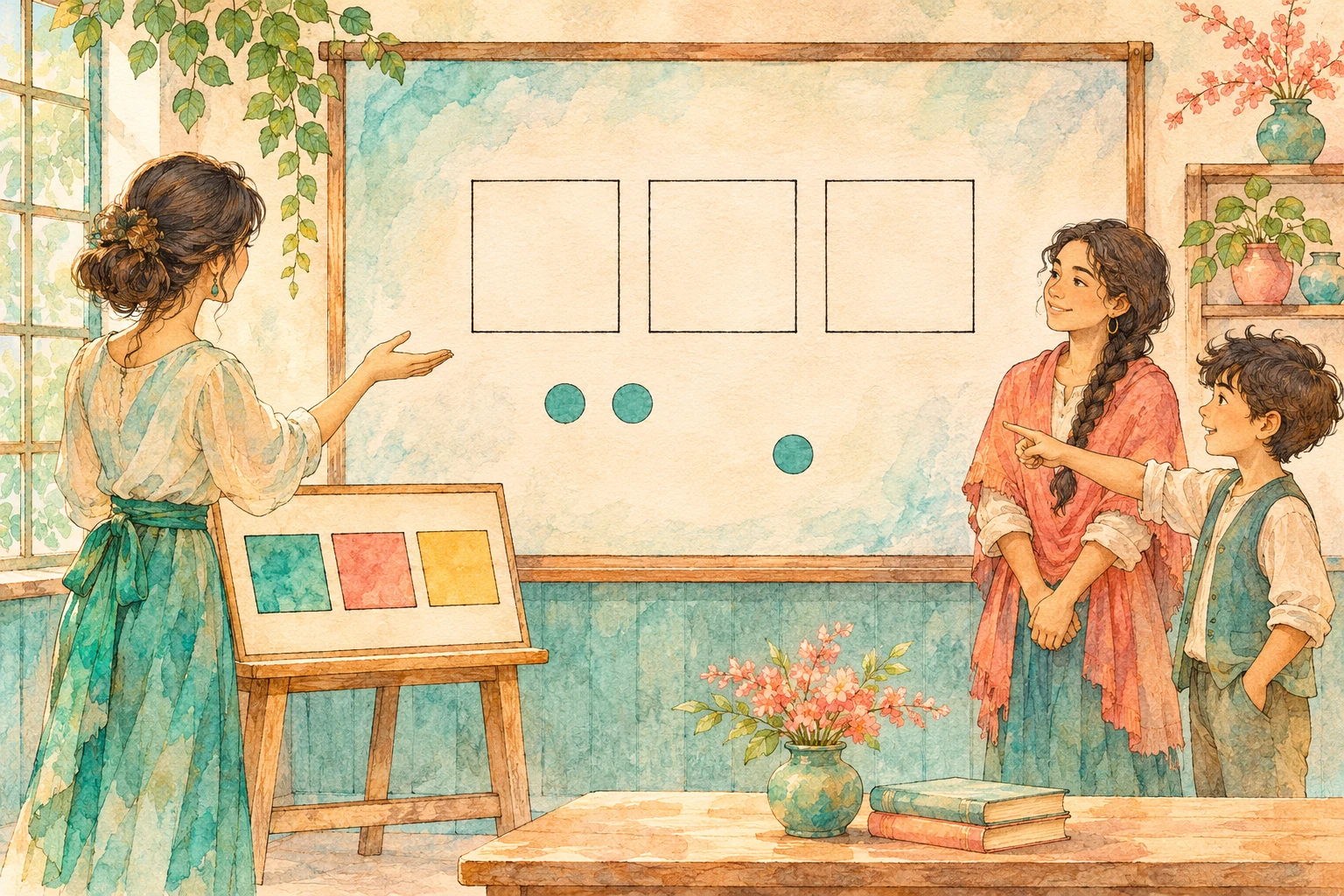
Lay out three large paper squares. Model saying map, separating its three sounds and touching one square per sound. Keep the mouth sounds natural. A consonant such as /m/ can be held briefly, but dropping a full extra vowel after it adds a sound the learner then has to remove. Join the sounds again and say the word normally.
Repeat on an item the learner knows. Point to the middle square and ask for the sound there. If they give you the last sound, return to the three positions together and show what “middle” means in this arrangement. Declining to read from the squares is reasonable because they contain no print. Use large cards and counters instead of loose small pieces for younger learners.
The What Works Clearinghouse foundational reading guide recommends teaching children to notice sound segments in speech and link them to letters. Its detailed examples include sound boxes and guided practice. The handmade squares here offer a place to begin when the child knows the spoken word.
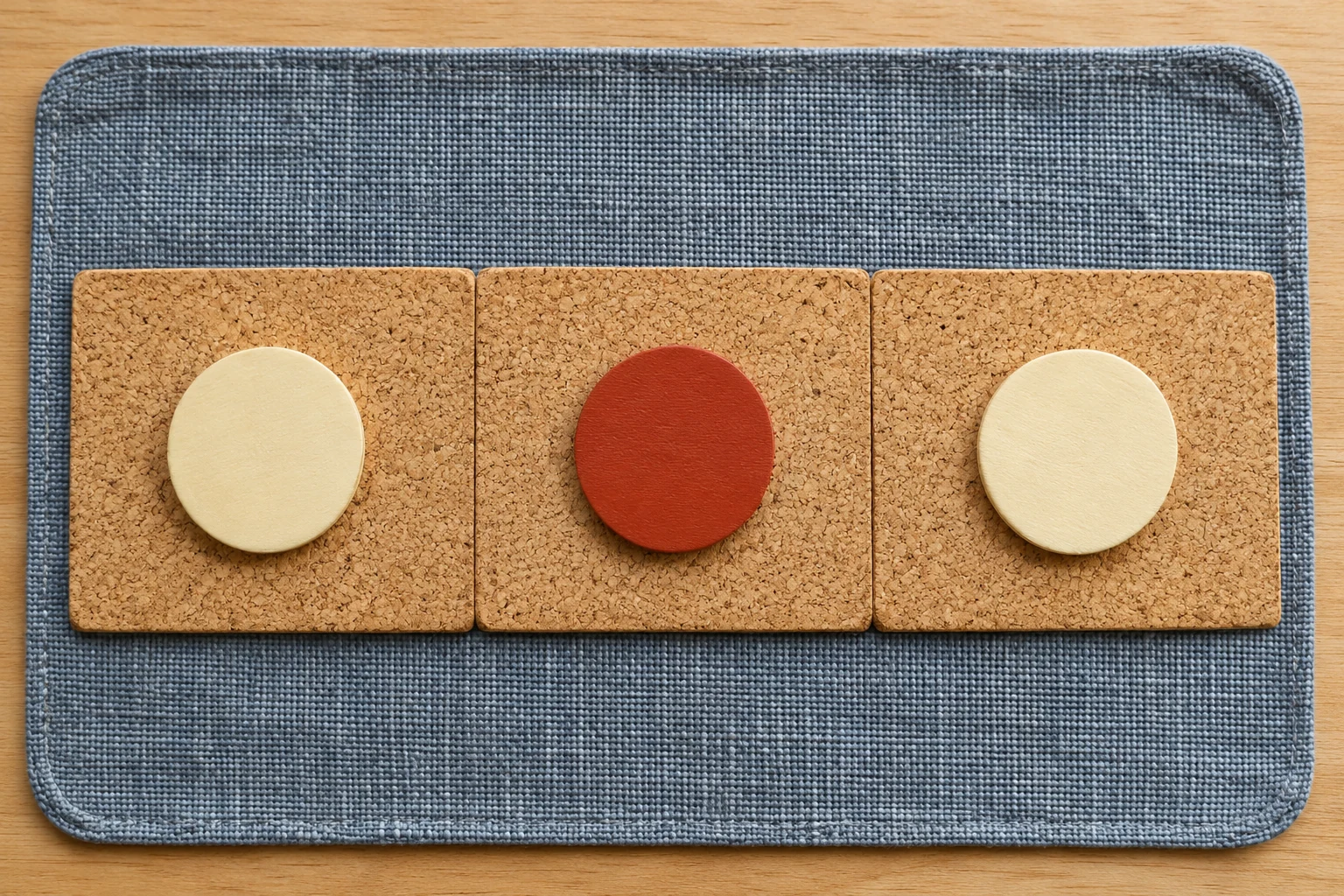
The homemade three-place aid uses one large counter for each sound and is separate from the published printable.
3. Ask what stayed the same
On separate cards use cap and cup if the learner knows the relevant sounds and the contrast is clear for your speakers. Say both words, listen to the first and last sounds, and compare the middle ones. Keep the outer cards in place and exchange only the vowel card. Then read the new word from the beginning. A swapped letter is meaningful because it changes what the whole word says.
If the learner can say the two words but cannot isolate the difference, make the comparison yourself using the squares. Invite observation and one short response. If the spoken contrast is clear but the print response is uncertain, reteach the two graphemes in separate, manageable examples. Those difficulties call for different instruction.
4. Preview picture choices before asking for a vowel
Master Short Vowels: 7 Crucial a e i o u Phonics Worksheet Steps! uses a five-letter vowel bank and missing-vowel picture prompts. Select an item that is familiar and uses the pattern your child has met. If the proposed answer is pen and the learner says pencil, show the real objects and establish which name to use. A fish or duck prompt can involve a final spelling of two letters for one consonant sound. Set those items aside until the necessary patterns fit the lesson, or explain them separately when already taught.
The centre letter is not always the centre sound when you count across several printed letters. Avoid using the general worksheet as evidence that all short-vowel words have three letters. Restrict the comparison so the concept remains clean. A child can say the intended vowel and point to a spelling even if pencil writing is being taught in another session.

Identifying the object word first keeps the child's response interpretable when two familiar names come to mind.
5. Use a familiar spelling family and then change something
Pick a taught word from Master 7 Essential CVC -at Words for Reading Triumph!, such as cat or sat if those patterns are familiar. Say or blend the chosen words and compare what stays the same after changing the first consonant. Keep more complex items such as flat for when the beginning consonant sequence has been taught. Picture matching and rhyme recognition have their own purposes. For this lesson ask the learner to consult the actual letters.
Master Tricky CVC -ap Words: 7 Stellar Practice Steps! supplies eight printed -ap examples with writing and tracing space. Choose one, perhaps cap, and let the child read it before tracing. Move to separate homemade cards for the cap to cup exchange. That exchange is a teaching extension and does not appear in the PDF. It prevents a row of unchanged -ap endings from becoming the only experience of looking at the vowel.
Work out what to teach from the response you hear
| Child's response | A plausible source of difficulty | Try next |
|---|---|---|
| Calls the picture a pencil | They recognized the object but chose another name | Supply the intended word and repeat the listening prompt. |
| Says the last sound for the vowel | They may have lost the requested position | Remap the spoken sounds onto three visible places. |
| Hears a difference but picks the wrong letter | A sound-to-letter link may be uncertain | Show two taught letters and reconnect each with a known word. |
| Changes the letter and reads the original word | The learner may be relying on the remembered answer | Blend from the first letter with the new card in place. |
There are many reasons for the same response. Listen before checking the box, and choose the next step from the information you have. If a pattern persists, collect several examples and share them with the child's teacher. A worksheet cannot tell you the cause of a language or reading difficulty.
Two brief lessons with different starting points
A kitchen lesson with an actual object
In this hypothetical home example, Jo calls a pictured pen a pencil, picks i and gets confused when the answer changes. Her parent brings a pen and a pencil, talks about the object shown and agrees that this round uses pen. They say the word, use three large squares and identify the vowel before looking at the vowel bank. Jo points to the letter she has been taught. They stop there and read a book together. The adult learns that agreeing on the object name changed the task.
A small group where the old word keeps returning
Picture a teacher presenting cap and then swapping the vowel to make cup. A child continues to say cap while looking at the changed word. In this hypothetical case, the teacher sets a cup nearby to establish meaning, then goes back to the cards and blends the changed sequence with the learner. A second turn starts with a different known word. Here the object helps establish meaning after decoding. It does not provide a shortcut past attention to the letters.
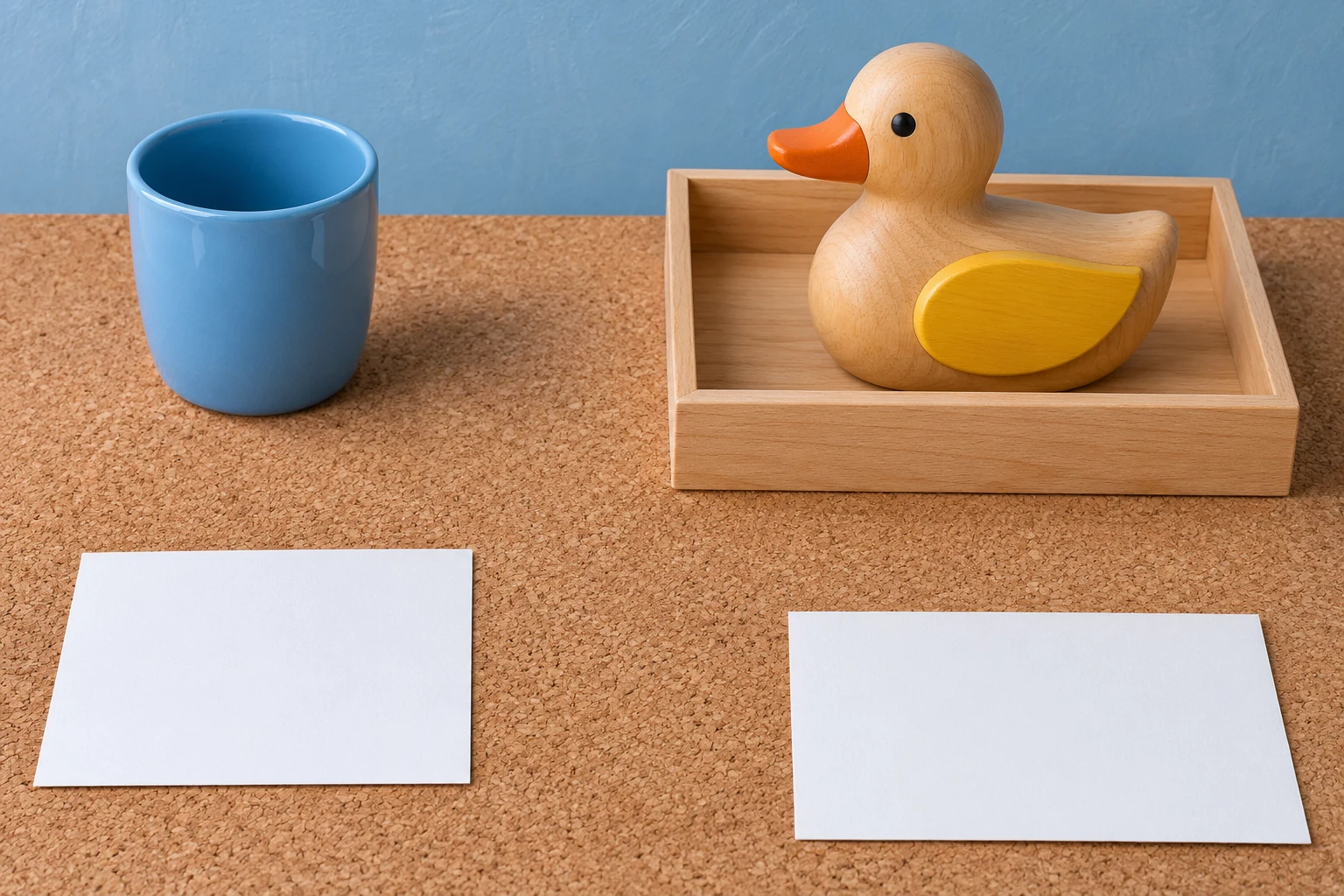
Use the objects for optional oral comparison before adding written spellings.
Four extensions with something concrete to listen for
Find the odd vowel while the consonants match
Say three known words, repeating one. For example, say cap, cup, cap at a natural volume. Ask which one changed. Give the actual words again if the sequence was hard to remember. Start with two words when three create an unnecessary memory task.
Make a listening tray for a same-sound pair
Bring a cup and a toy duck if your group's pronunciations share a vowel in those words. Say both slowly and compare their middle sounds orally. Save the written spellings for a later check if the child has not learned the final ck spelling. If the words work differently in a child's speech, use a different pair.
Send a letter card on one trip
An adult lays out two complete known words and tells the learner which vowel will travel between them. The learner finds it, checks which spot it fills and reads again. Rehearse simple choices rather than piling on words that are hard to pronounce or recognize. Reverse roles so the adult has to follow a clearly stated change.
Pick a word from a previously read sentence
When the child has read a short text suited to current instruction, revisit one familiar word. Say the word, point to the vowel and reread the sentence. The sentence gives meaning to the word after the code has been checked. There is no need to interrupt every line with a spelling explanation.
Leave the child with a next step they can remember
The linked pages show one-page free watermarked PDFs and list ages four to six. Check their current access panels and choose individual items with the matching instruction in mind. A child who wants another turn can try one more contrast. A child who is done can keep the cards in order for next time.
Say “You changed one sound and read a different word.” That describes a real event the learner can recognize. Make the change audible, make its position visible and give the printed word a fresh reading. A carefully taught pair can offer more information than a whole sheet finished without a conversation.