Little Minds, Big Focus: Helping Children Build Attention Spans in a Distracted World
Follow what happens when a child starts, gets pulled away and finds their place again. Try a visible marker, a clear first move and a comfortable stopping point.
On the fourth morning of a new puzzle station, Mira can describe every sound in the classroom but has lost the matching picture she was looking for. Her teacher slides one tray into view and points to the unfinished row. Mira chooses a tile, checks the picture and gets back into the game. Building attention spans can begin with this ordinary return. For preschool and kindergarten learners, the activities and printables below help adults make a task easier to enter, easier to resume and worth staying with.
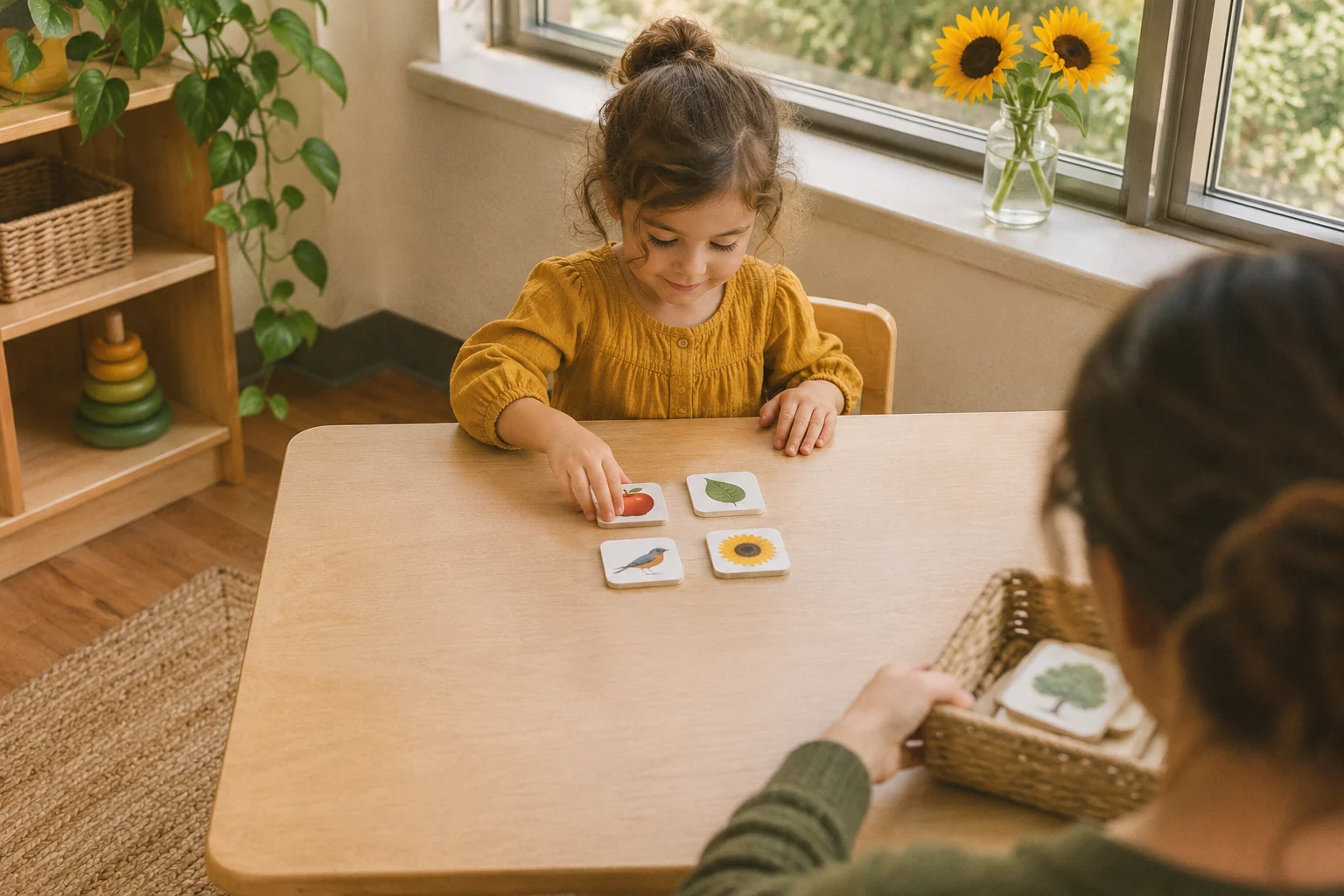
The selected pieces sit on an open area of the table beside a window.
Notice what the child can return to
Watching for entry, engagement and return is often more informative than timing a child from the moment a page reaches the table. During entry, the child figures out the goal and takes a first step. During engagement, they look for clues, make a mark, ask a relevant question or otherwise move the activity forward. Return happens when an interruption breaks the thread and the child finds it again. One child may settle quickly but lose the goal after a noise. Another may take a long time to start and then stay with a chosen activity until lunch. These are different situations that call for different support.
Suppose a child watches a passing trolley, then says, “I still need the sheep.” That glance is a change in gaze, and the sentence shows the target survived it. Another child may keep their eyes on the page while they no longer know which picture comes next. When you observe an activity, give more weight to purposeful actions than to posture or eye contact. A child may do their best looking while standing, moving a finger over the paper or listening while their hands are busy.
What makes attention spans easier to support?
| When the activity stalls | Inspect this part first | Change one thing next time |
|---|---|---|
| The page remains untouched | The opening action may be hidden in the instructions. | Point to one place to begin and give the child a turn. |
| The child keeps restarting | They may be losing their place when they look away. | Set a broad, easy-to-see marker beside the next step. |
| Talking washes over the task | Nearby speech might be competing with your directions. | Show a cue the child can consult without hearing it. |
| A once-favourite game ends abruptly | The hands may be tired or the task may have grown. | Let the child show the last answer by pointing. |
| The child works until the choice disappears | A partner might be moving materials without checking. | Give each learner their own visible turn or area. |
These are hypotheses. Try one change during a familiar task so you can see what it shifts. For instance, if the child finishes a picture hunt with the page folded and the classroom still noisy, the fold may have made the search area easier to organise. Bring the rest of the page back on a later day and see whether the child wants it. The table describes supports to try, and a child's needs can vary across days.
A short routine for busy rooms
Before the task, choose an opening move
Give the child an opening they can act on before you explain the rest. “Find a bus” gives them something visible to look for. If they are about to search a busy sheet, separate the starting row with a blank piece of paper. Show how to slide it down when the row is done. Children who benefit from seeing the full page can keep it open and point to the part they have chosen. Offer the support in a way the learner can move or remove.
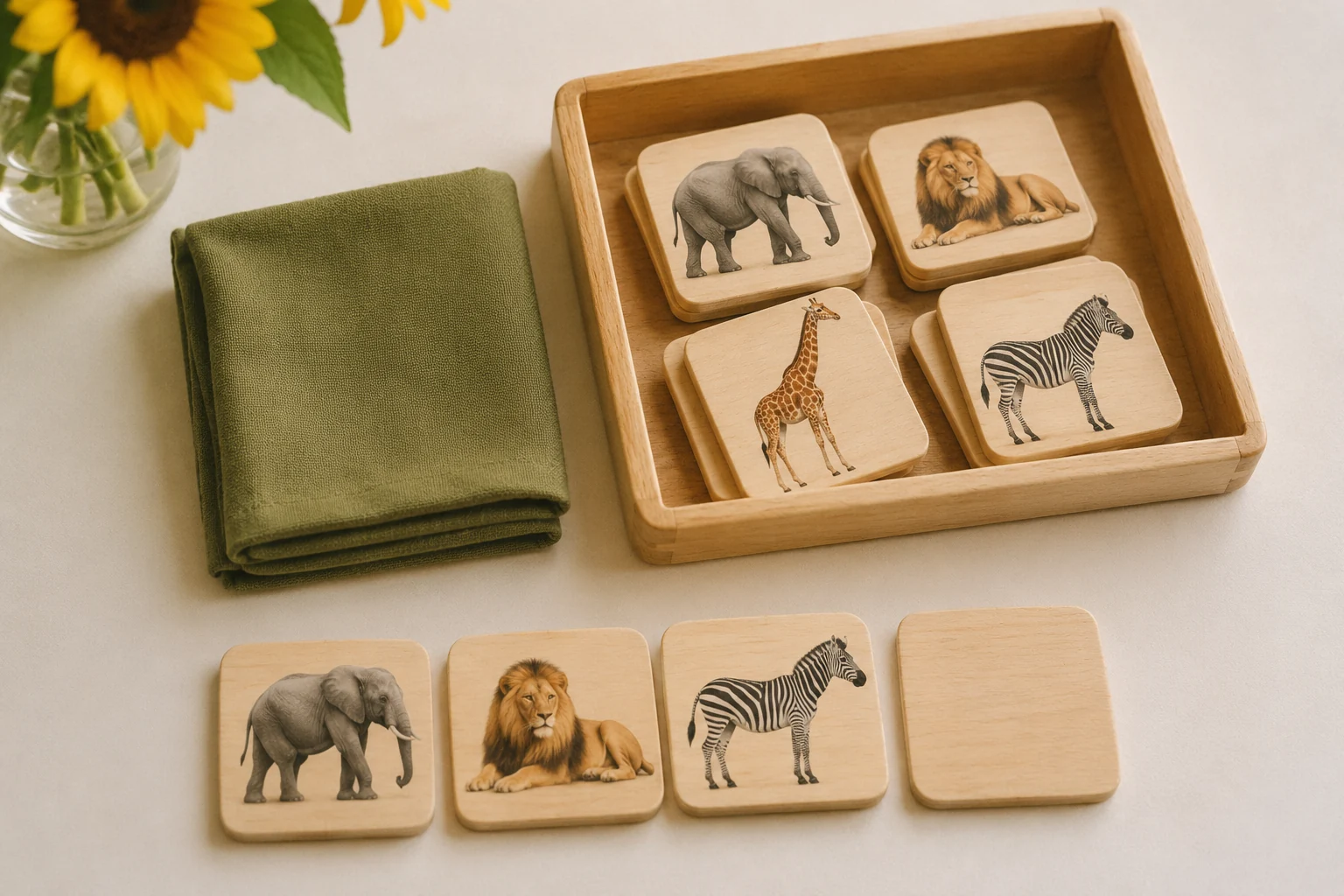
The separated tiles and the spare blank make it easier to point to the current part of the puzzle.
During the task, teach a pause and a return
Put a large coloured card beside the row a child is using. If someone calls them away, have the child leave the card there and tell you what part is next, through a word, a point or a quick demonstration. Later, ask, “Where did your marker stay?” Let them check instead of answering the question yourself. For a child who is drawn to touching the marker, use an upright card outside the drawing area or an edge of folded paper that stays flat.
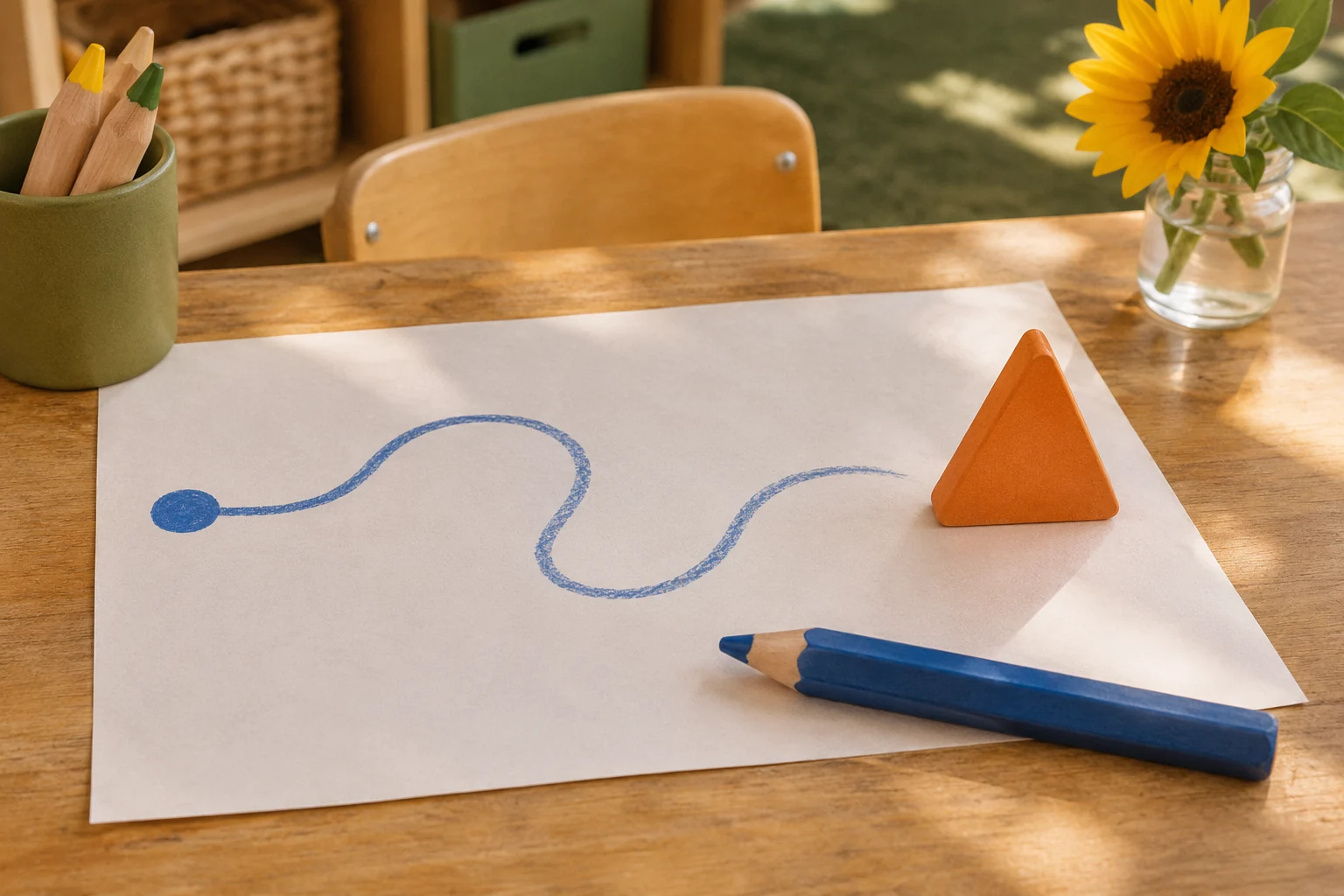
Place the marker beside the paper route when someone interrupts the drawing.
At the end, offer a small decision
When the agreed round is complete, say what you saw and offer a choice about the next turn. “You found two pictures and matched them to the list. Save the third for later or try it now?” A familiar stopping point makes starting safer for a child who expects every sheet to turn into a long exercise. Show them where an unfinished task can sit. In groups without storage space, have them draw a dot beside the next row before handing the work in.
Look for these six observable changes
- A quicker first action. The child picks a target, touches the first square or moves the matching object without waiting for a second general instruction.
- A useful request. “Show me the place” identifies a specific difficulty and lets the adult respond with less talking.
- More than one way to participate. Standing beside a table or tracing a route in the air may make it easier to stay with an idea.
- A return after distraction. The child checks a marker or tells a partner which picture they still need.
- Recognition of effort. Calling attention to how a child recovered their place gives them a strategy they can try on another day.
- A workable stopping point. A child can decide whether to continue a short round or save it while the route is still clear.
Three printable tasks with obvious stopping places
Pick a page according to the first bit of the activity you want to see. For Picnic Hidden Pictures: 6 Delightful Tiny Discoveries, look at one target picture and find it in the scene. Carry out the circle-and-check pair before choosing a fresh target. If the whole list competes for attention, use a paper edge to isolate a single item temporarily. Revisit the already checked box after an interruption and ask which target comes next.
On Vehicle Number Choice: 4 Brilliant Traffic Count Stops, choose one traffic count and agree where to place a finger after the last item. A child can count vehicles before using a pencil to select the answer. If pointing across a wider group causes them to lose their place, give them an erasable mark or ask a partner to quietly track the count. Keep the worksheet's picture clue as the shared reference.
Pencil Lift Practice: 4 Powerful Pause-and-Restart Games offers separate dot-to-ring paths. Agree on one route. The ring makes a visible finish, and the pencil lift gives the child a concrete way to end that action before deciding about a second. Let the child show just the start and finish with two fingers when drawing itself is demanding.
Four low-prep ways to practise coming back
The doorway marker
Make a route for a toy from a doorstep to an imaginary garden. While the child is following it, call a brief pause to let another toy cross. The child places a plain card at the last place they reached. Take the interruption slowly enough for the child to reach for the card themselves. Later, play in pairs and let the other person ask for the pause.
The cover that moves
Lay out three large objects and give the child one thing to find, such as something with a handle. Place a cloth over a few additional objects. The child may uncover another item when they have talked about the first clue. Give them control of what to reveal. If they immediately uncover everything and can explain their choice, let the search remain wide.
The quiet signal
Draw a simple listening cue on one broad card and a return cue on another. Show the signals while rehearsing a familiar group activity. When the room has something important to hear, your partner raises the listening cue. Hold up the return cue when work can resume. Ask a child to help decide which picture says “find your place again.” Use gestures, too, for learners who need a different way to receive the cue.
The one-line delivery
Have the child draw a single road segment for a pretend courier and show where it stops. Press pause to hand out the pretend parcels. When the game resumes, the child points to the saved stopping place and chooses the next destination. The chosen destination gives the drawing a purpose a stack of repeated lines rarely provides.
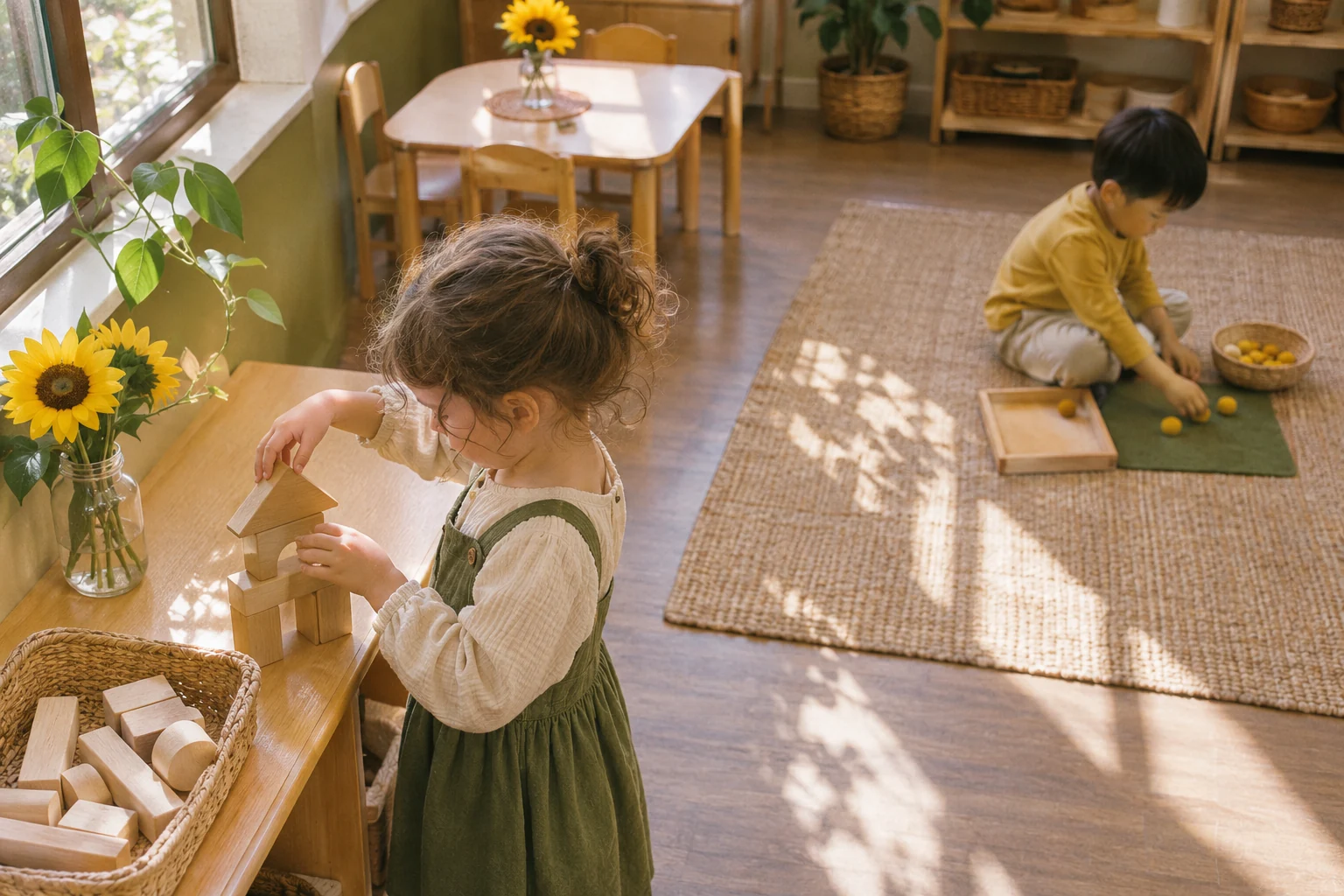
Separate work areas allow standing and seated play in the same room.
Two changes adults can test in ordinary routines
At home, take a competing voice out of the task
A caregiver and four-year-old are sorting envelopes for a pretend post office while a cooking video plays in the same room. Each time the video narrator changes tone, the child looks toward the sound and forgets which parcel they were carrying. The adult pauses the video and leaves the envelopes where they are. They agree that after one delivery they can choose another stamp or stop. Later, notice what the child does when the same background sound is stopped during a different shared task.
The American Academy of Pediatrics guide for families of toddlers and preschoolers gives parents questions about what media is crowding out, how a child uses it and what the household wants to make time for. Families can use that discussion to protect one short shared activity such as drawing, dressing a toy or reading in a language they use together. An easy first change can be an adult silencing their own alerts while they join the child.
In class, make the same cue travel
During a route station, six-year-old Dev moves to let a friend reach the pencils. His drawing survives, but his place disappears. The next day the teacher puts a broad marker next to his route and leaves a matching one at the picture station. Dev pauses a hunt when another child points out that their glue is stuck. He helps, then consults the same marker at the new station without waiting for the teacher to redirect him. This is what the teacher can describe to the family, with the activity and interruption both in the story.
Keep the request small and the invitation warm
In a busy room, the emotional difference between “Pay attention” and “Would a marker help you find where you were?” can matter. The second sentence offers the child an action and acknowledges that the room may have pulled them away. Let them decline a cue that adds confusion. I can stop after this piece and Show me where to come back are useful phrases to practise aloud, both when the activity is going well and later when the room gets lively.
Choose one activity for the next time you work together. Write down a detail about the conditions, such as a quieter table or fewer items to scan, and one thing the child did independently. Compare the child with their own earlier attempt at a similar task. The point of the note is to decide which support to offer next. If you are meeting with a teacher, swap descriptions of specific situations so each adult has something concrete to try. Give a child a place to begin and a place to return. The rest of the page can wait for another turn.