
Pencil Lift Practice: 4 Powerful Pause-and-Restart Games
Pencil lifts have a place alongside continuous routes. The $4 collection includes this pause-and-restart sheet and nineteen different concepts. Purchase the package for a merged twenty-page file without worksheet branding.
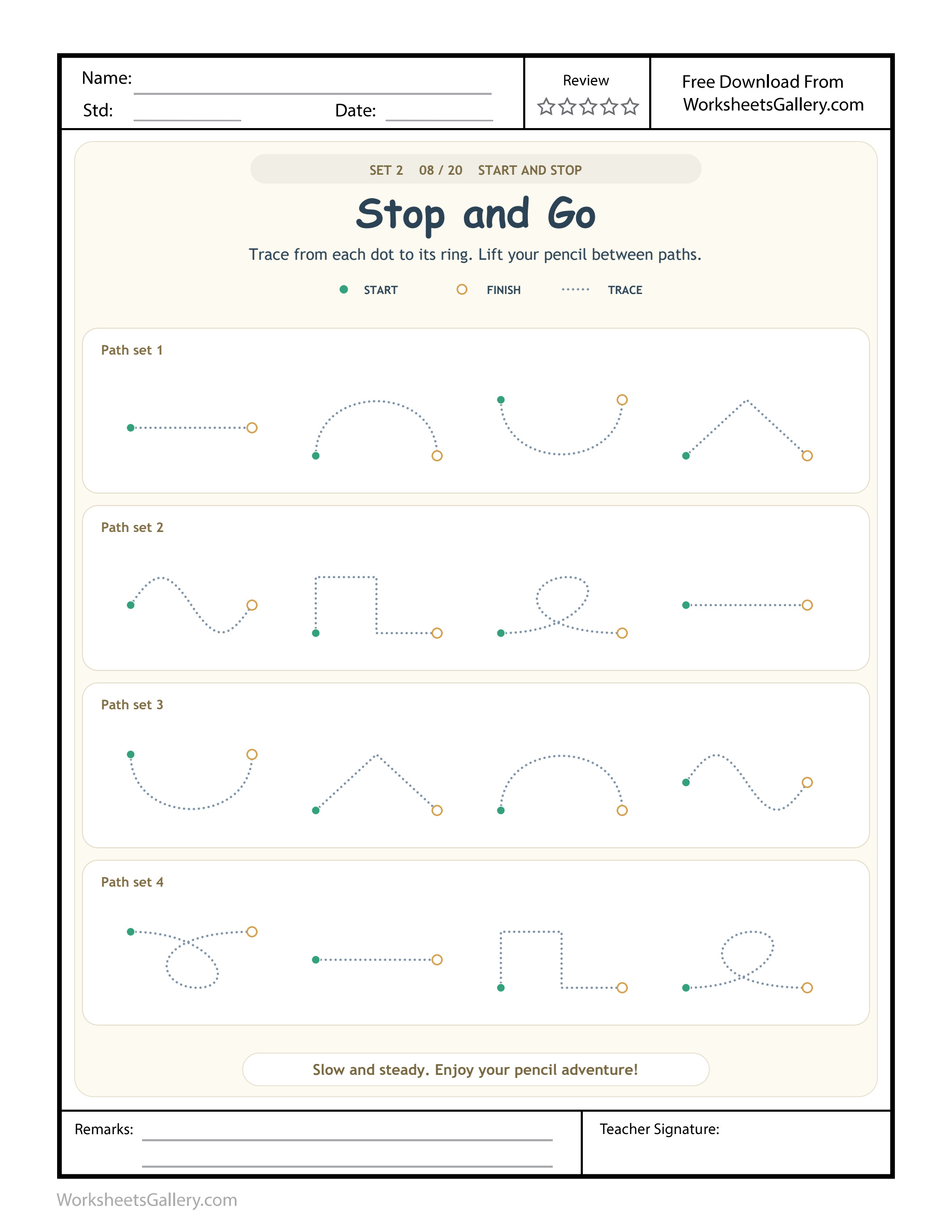
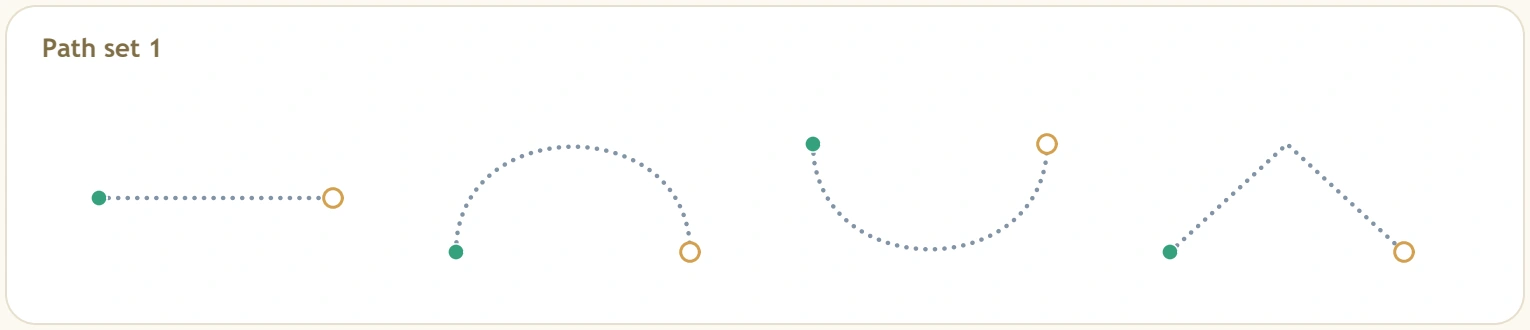
A pencil can finish one journey without carrying a line into the next. Pencil Lift Practice explores that useful pause through the Stop and Go worksheet's sixteen short paths. Children around three to six follow a dotted route from its green dot to its gold ring, lift, and move to another starting place. The gap is part of the task. Pencil Lift Practice gives an adult a clear way to talk about drawing, stopping and repositioning as separate actions, with a small completed movement available before the next decision begins.
Pencil Lift Practice gives the empty gap a purpose
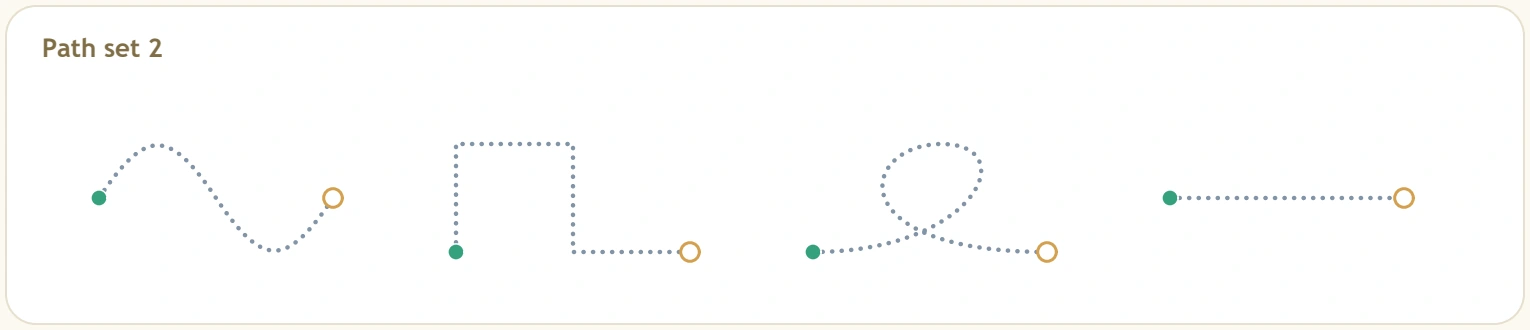
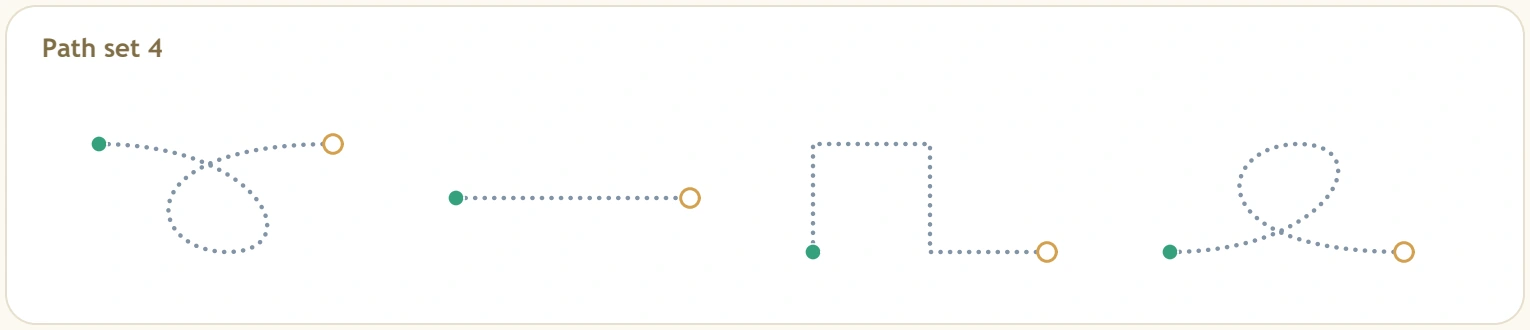
Four labelled path sets contain four distinct routes each. Their green dots and finish rings identify separate journeys rather than one long trail across a row. Pencil Lift Practice asks the child to trace each path and lift between paths. Joining one ring to the next dot adds a connector that the worksheet did not request.
Point to the air space between two routes before drawing. Ask how the pencil could reach the new beginning without leaving a mark there. Pencil Lift Practice becomes understandable when the child can show that raised movement. The lift is an intentional part of controlling the tool, not an interruption that needs to be hurried away.
Samira discovers the Pencil Lift Practice gap
Samira traces a straight path while her father watches. At the ring, she keeps drawing toward the next green dot. Her father asks her to inspect the two beginnings and endings. Pencil Lift Practice gives them a visible distinction: one route has finished, and another has not yet started.
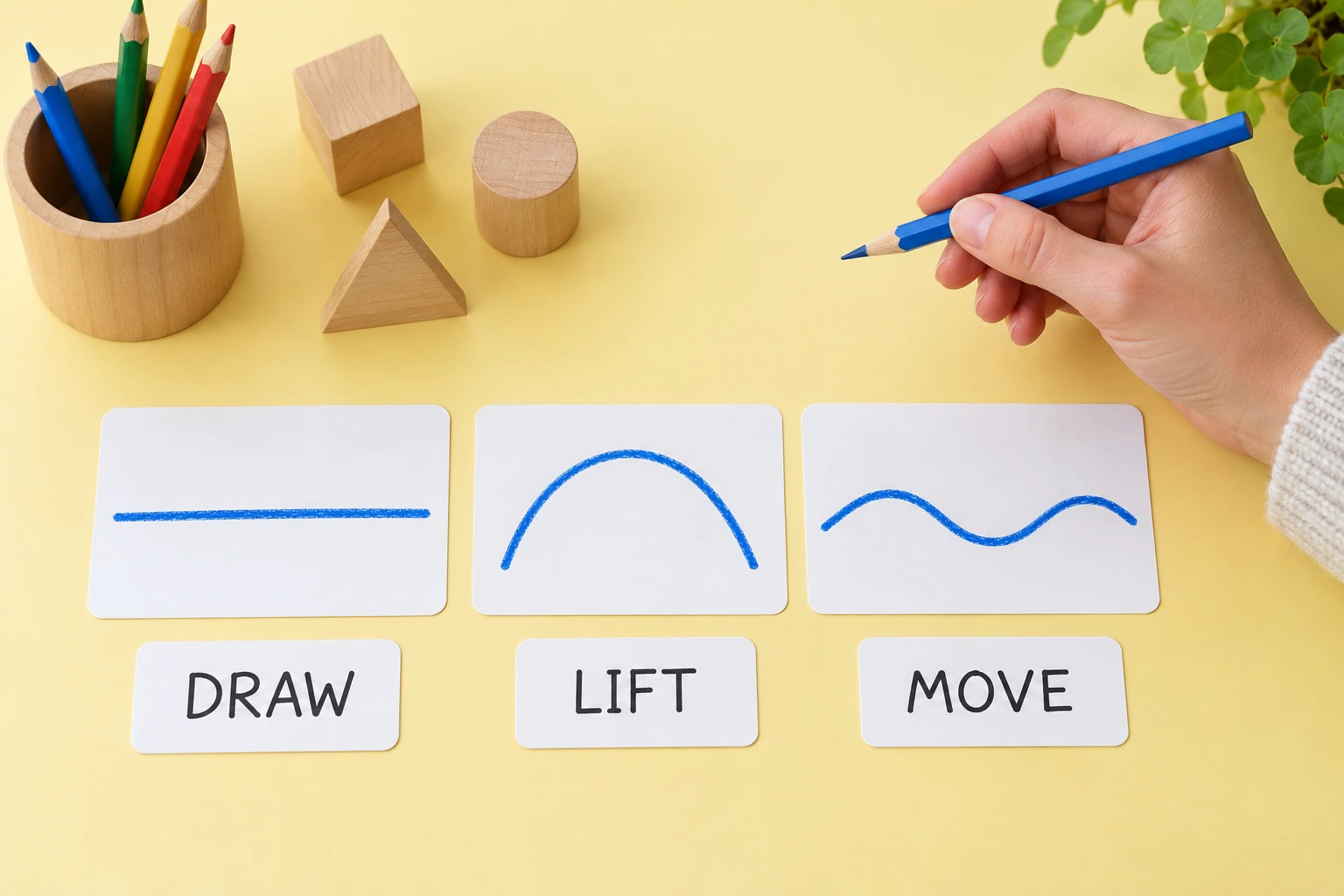
They rehearse the change above the paper. Samira raises the pencil, moves it across the gap and rests its tip at the next dot. Pencil Lift Practice now has three actions she can name: draw, lift, move. Her father lets her choose a new short path, leaving the earlier connector visible as something they noticed rather than something that must be erased immediately.
Six things the pause can help an adult observe
- Endpoint attention: Pencil Lift Practice makes arrival at a ring a reason to stop a mark.
- Repositioning: the child moves the tool to a new place without drawing through the space between tasks.
- Separate beginnings: each green dot can be located afresh before another stroke starts.
- Shape adjustment: Pencil Lift Practice changes among straight, curved, angled and looping paths.
- Action language: draw, lift, move and begin describe visible steps rather than abstract instructions.
- Self-checking: a child can inspect whether a new mark belongs to its own route or connects two different ones.
The useful evidence is specific. A child may make an uneven curve but lift deliberately afterward. Notice that decision without making the page a test of perfect tracing or a promise about later handwriting.
Four sets change the path while retaining the rule
| Printed grouping | What remains consistent | What needs another look |
|---|---|---|
| Path set 1 | Pencil Lift Practice ends each route at its ring. | The different straight and curved journeys |
| Path sets 2 and 3 | Separate dots begin separate routes. | Direction changes and rounded sections |
| Path set 4 | Pencil Lift Practice keeps the gaps unmarked. | The next beginning after a finished path |
The child does not need to trace all sixteen routes at once. Pencil Lift Practice can involve one chosen path followed by a single deliberate repositioning. That small amount gives an adult enough information to discuss the intended pause.
Introduce the Pencil Lift Practice ring before speed
Find the end ring with the child and ask what should happen there. Pencil Lift Practice makes the finish visible before the hand starts moving. A child who sees only the next green dot may rush toward it; locating the ring first clarifies where the current mark belongs.
Use a short spoken cue if needed, then leave space for the movement. Pencil Lift Practice does not benefit from an adult chanting faster than the child's hand can respond. The task is to recognise and use a stopping place, not to match the rhythm of someone else's voice. Pauses for another look are welcome.
Prepare one useful home turn
Place the sheet where it stays still and choose two neighbouring routes. Ask the child to point to both starts and both finishes. Pencil Lift Practice can begin with a dry rehearsal above the page: travel over one route, raise the tool, move over the gap and find the next beginning.
When the child understands that change, offer a comfortable pencil or crayon for an actual attempt. Pencil Lift Practice is easier to inspect when the line is narrow enough to leave the dotted guide visible. A broad marker may hide the ring or merge the end of one stroke with the beginning of another.
A classroom pause station with named actions
A teacher puts three completed word cards, DRAW, LIFT and MOVE, beside the writing table. Children choose a short route from Pencil Lift Practice and tell a partner what will happen at its ring. The partner can point to the next dot after the lift, while the drawing child retains control of the pencil.
Different children may choose different shapes. A teacher can notice whether the lift remains deliberate after a loop or corner, without comparing the number of paths completed. Pencil Lift Practice offers sixteen opportunities, but the purpose is not to fill a progress chart with sixteen ticks. One clearly understood transition can be a worthwhile table visit.
Loops and corners still have a finish
An interesting curve can draw attention away from its endpoint. Pencil Lift Practice asks the child to follow the whole printed route and then recognise the ring, even when the movement before it has been playful or complex. Pointing to the endpoint before starting can keep it part of the plan.
The balloon loop sheet and robot corner activity offer related movement comparisons. Pencil Lift Practice adds the repeated transition between separate tasks. Explain which rule is currently being used, so a child does not assume that every line activity must be joined or completed without lifting.
Four pause-and-reset games with a clear rule
Deliver the pencil to a new doorstep
Arrange two completed drawing cards with a space between them. Pretend each green beginning is a doorstep. After following the first little route with a finger, lift and carry the finger to the next doorstep. Pencil Lift Practice can follow when a pencil version is welcome. The raised journey is part of the delivery story, not a race.
Be a lift-signal announcer
Use a finished LIFT card while an adult makes a short pretend drawing movement in the air. The child signals when the tool reaches its imagined finish. Pencil Lift Practice gives real endpoint examples later. Swap roles so the child can experience both noticing a finish and responding with a raised hand.
Build a gallery with spaces between frames
Place three finished tiny drawings in separate paper frames and talk about their different beginnings. Move a pencil above the display without drawing on it. Pencil Lift Practice can connect that idea to the printed gaps. Keep the examples completed and clearly separated, with no need to fill the spaces between their frames.
Tell a three-action story
Choose a pretend character who draws a bridge, lifts a tool and moves to another job. Let the child supply what happens next. Pencil Lift Practice can lend its three action words to the story, while the imagined setting remains the child's choice. A spoken ending can finish the game without another worksheet attempt.
✎ Watch for an unintended joining line
A connector between two routes is the clearest sign that the lift instruction needs another look. Pencil Lift Practice lets the child compare that connector with the space on an untouched row. Ask what the pencil would need to do differently to leave the gap clear, then allow an air demonstration before another drawn attempt.
Other common difficulties include lifting before reaching the ring, starting at an arbitrary place, and treating all four shapes as a continuous row. Use finish this route first when that is the relevant cue. Pencil Lift Practice should not become a demand to correct every wobble while the main transition remains unexplained.
Keep the rule separate from a continuous-path task
Some worksheets invite a long uninterrupted journey. This one explicitly asks for a lift between its short paths. Pencil Lift Practice becomes clearer when adults name that difference rather than using one general instruction for every prewriting sheet. A child needs to know whether the gap is meant to remain empty.
For a longer movement experience, the continuous ocean-wave route offers a distinct comparison. Pencil Lift Practice can sit beside it as an exploration of another tool decision. The point of using both is to notice their different rules, rather than declare one way of moving the pencil universally correct.
Support ages three to six through a short transition
A younger preschooler may enjoy the lift gesture before wanting to trace a full route. An older child may compare whether different curves change how they approach the ring. Pencil Lift Practice can be shared at either level. Offer a comfortable position, enough space for the drawing arm and a sheet that remains stable.
Avoid moving the child's hand through the lift. Let them show the raised movement themselves when they are ready. Pencil Lift Practice is an invitation to notice control, not a test of compliance with an adult's timing. Stop for another activity if repeated cueing is replacing the child's own interest.
Return for a different kind of finish
On a later day, offer one shape the child has not yet tried and ask where it ends. Pencil Lift Practice can remain familiar through the action sequence while its printed route changes. Keep the amount manageable and let the child decide whether another transition would be interesting after the first.
For wider home ideas, browse NAEYC's family article about writing support. PBS Parents also offers literacy browsing for age four. Pencil Lift Practice can accompany everyday pictures and pretend notes, where separate marks often need their own starts and finishes.
Print Pencil Lift Practice with its gaps preserved
Use the free sample for the original branded sheet. The clean Pencil Lift Practice PDF is the premium membership choice; request it through the account carrying your current eligible plan. After the site's authorisation step, save the download and open the PDF in a viewer so you can inspect the full layout before printing.
The premium Pencil Lift Practice file keeps all sixteen routes, dots and rings, with no printed ads, watermark, website name or domain. Check the complete border in the print preview and choose a fit setting that retains each row. The native collection card provides a route to the $4 twenty-page purchase. The space between two paths is worth keeping.
Popular Worksheets
Printable resources families and teachers are downloading now.
 Free
 Free
 Free
 Free