
Drawing Size Choices: 5 Wonderful Window-Fitting Games
Changing drawing size is part of the broader set. Find the small, medium and large window tasks in the premium collection. All twenty supplied pages are merged into a clean PDF priced at $4.
Can a heart stay recognisable when its drawing space gets smaller? Drawing Size Choices explores that question through four familiar shape models and three windows for each one. Children around three to six look at a circle, triangle, heart or star, then draw versions that fit small, medium and large spaces. The Size Switch sheet leaves those responses open. Drawing Size Choices is about adjusting a mark to the room available, while retaining the features that make the shape itself. A tiny heart and a generous heart can still belong to the same family.
Drawing Size Choices begins with recognising the example
Before comparing windows, ask the child what they notice about one model. A circle curves around; a triangle has three sides; a heart combines rounded shoulders with a lower point. Drawing Size Choices needs those recognisable features to remain important even when the available room changes. Simply filling each box with a different mark would answer another question.
There are four rows and three independent response windows per row, giving twelve places to draw. Drawing Size Choices does not ask the child to trace a supplied answer inside those spaces. The example stays on the left, where it can be inspected again whenever a feature or proportion needs another look.

Twelve Drawing Size Choices windows without a quota
A child can select one shape and one window first. Drawing Size Choices is still taking place when they compare the model with a single response area. Completing every position in one sitting is unnecessary. An adult can return to another size later, leaving a practical reason to revisit the same shape.
The windows vary in their available width and height. Avoid describing them as exact mathematical enlargements of each other. Drawing Size Choices invites a sensible fit, not a prescribed magnification. A drawing should stay recognisable and within its chosen window, with enough room for the child to make its important turns.
A circle changes size without gaining corners
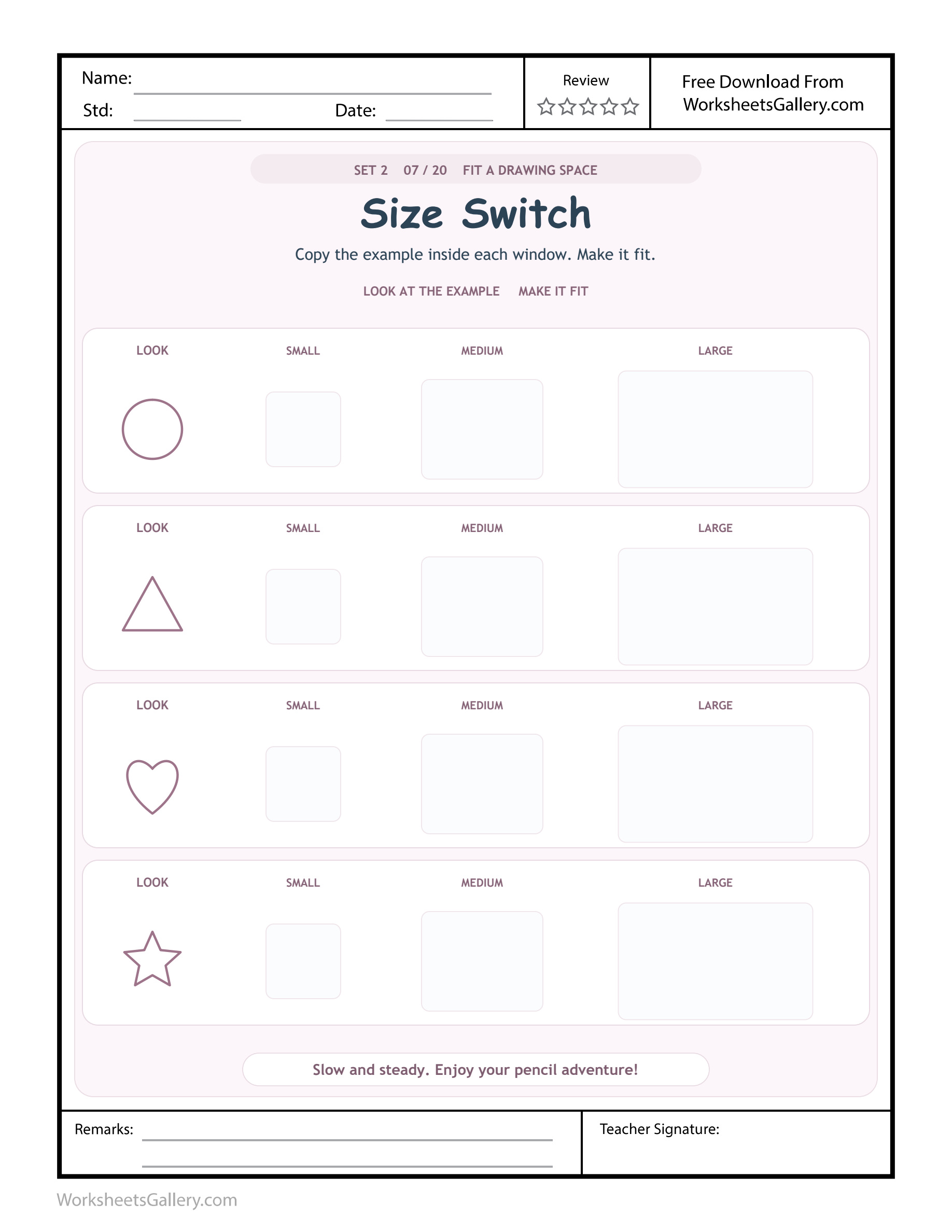
Look at the circle row and trace its model in the air. Drawing Size Choices asks the child to preserve a rounded journey while choosing how much space it will occupy. A small circle can be much smaller than the window itself; there is no instruction requiring its edge to touch every side of the box.
If the first drawing becomes a long oval, compare it with the model without labelling the entire attempt a failure. Drawing Size Choices can prompt a discussion about height and width. The related bubble outline activity offers a separate opportunity to explore rounded closure when that movement is the child's main interest.
Amy's Drawing Size Choices triangle finds three homes
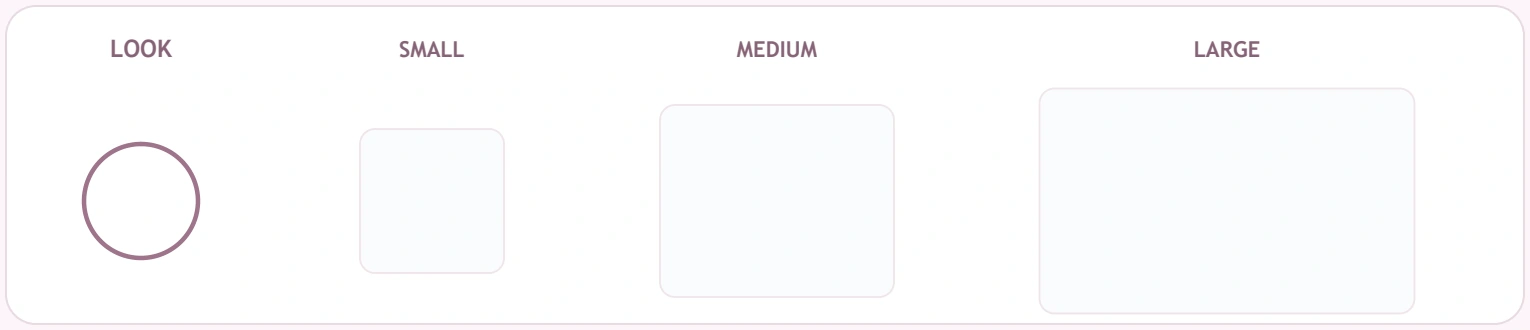
At home, Amy's grandfather calls the windows little drawing homes. Amy chooses the large one and makes a triangle whose top nearly reaches the upper edge. They inspect the smaller window before trying it. Drawing Size Choices gives them a concrete question: which part needs to start lower or turn sooner so the triangle can fit?
Amy points to the upper corner and makes a smaller air triangle. Her next drawing has uneven sides, but all three corners stay inside the frame. Drawing Size Choices has produced an adjustment she can explain. Her grandfather asks which triangle would make a good pretend tent, and they invent occupants for the three differently sized homes.
Five things Drawing Size Choices can show
- Size comparison: Drawing Size Choices gives small, medium and large a visible context on the same row.
- Feature retention: a child considers what must stay recognisable when a shape occupies less space.
- Movement adjustment: shorter stretches and smaller curves can help a drawing remain inside a tighter frame.
- Planning a beginning: Drawing Size Choices encourages looking at the whole window before placing the first mark.
- Descriptive language: wider, taller, smaller and enough room describe choices the child can point to in their own work.
These are useful things to notice, rather than expected achievements tied to a birthday. The child may compare windows verbally before wanting to fill them. A thoughtful explanation of available space is part of the invitation.
A Drawing Size Choices heart needs room
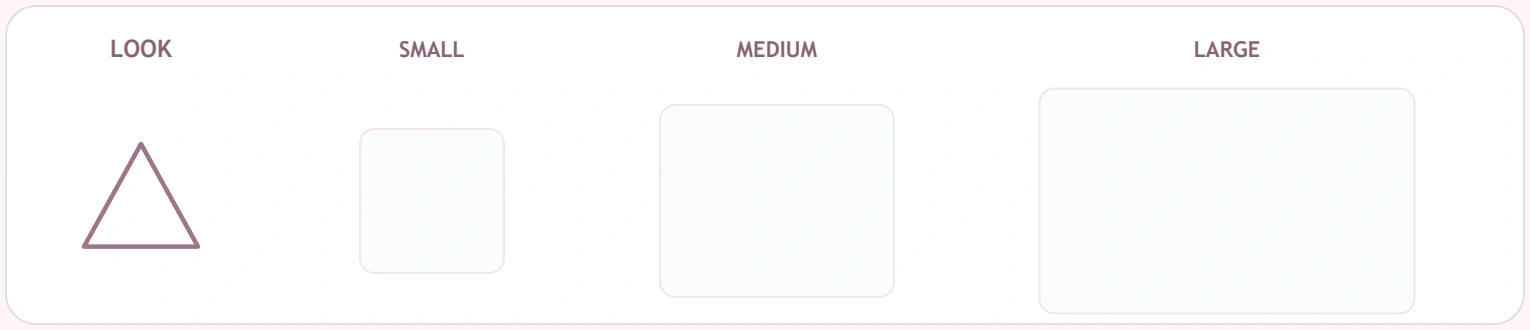
The heart row combines different kinds of features. Drawing Size Choices asks the child to leave room for the rounded top and lower meeting point rather than simply shorten one straight line. Inspect the model's widest part first, then look at where its bottom ends. Those two references can support a more deliberate beginning.
If the lower point reaches outside the frame, ask what the child notices about the starting position. Drawing Size Choices can lead to another attempt on separate paper or a later window, without requiring repeated erasing. The star-and-contour sheet offers another context for comparing rounded and pointed features.
Compare the Drawing Size Choices windows before drawing
| Window label | A useful planning question | A reasonable response |
|---|---|---|
| Small | Where can the whole shape fit? | A compact, recognisable Drawing Size Choices example |
| Medium | Which stretches can have more room? | A new drawing adjusted to this frame |
| Large | How much space would you like to use? | A larger version that still keeps its defining features |
Drawing Size Choices is not a demand to fill all available space. Keep that distinction clear, especially when a child chooses a modest drawing in the large window. Ask what they intended before suggesting that it should become bigger.
Put size words into a classroom conversation
At a drawing table, a teacher places completed shape cards beside the worksheet. Children select a model and explain which window they want to try. Drawing Size Choices can become a discussion of different plans: one child begins with the small circle, while another wants a large star. Neither choice needs to become a ranking of ability.
After a drawing, partners can point to the same feature on the example and response. Drawing Size Choices keeps that comparison visible. A teacher may ask where a triangle's corners are or how a heart's lower point fits, then wait for the artist's explanation. The useful evidence is the relationship noticed, not a uniform set of matching results.
The Drawing Size Choices star needs a whole-frame look
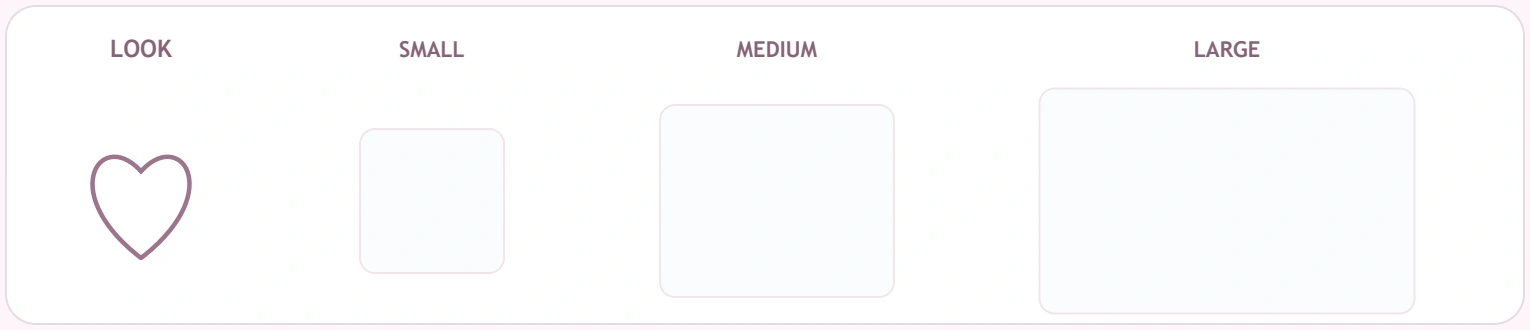
The star's points need space in several directions. Drawing Size Choices can help a child notice that beginning too close to one edge leaves little room for a later point. Examine the window first, then ask where the star might sit. A broad air drawing can make those outward directions easier to imagine.
The child may simplify a point or produce an irregular star. Drawing Size Choices offers a chance to compare recognisable features without demanding adult precision. For a different model-copy task, the shape-builder sheet provides related discussion of straight sides and corners. Use whichever feature currently interests the child.
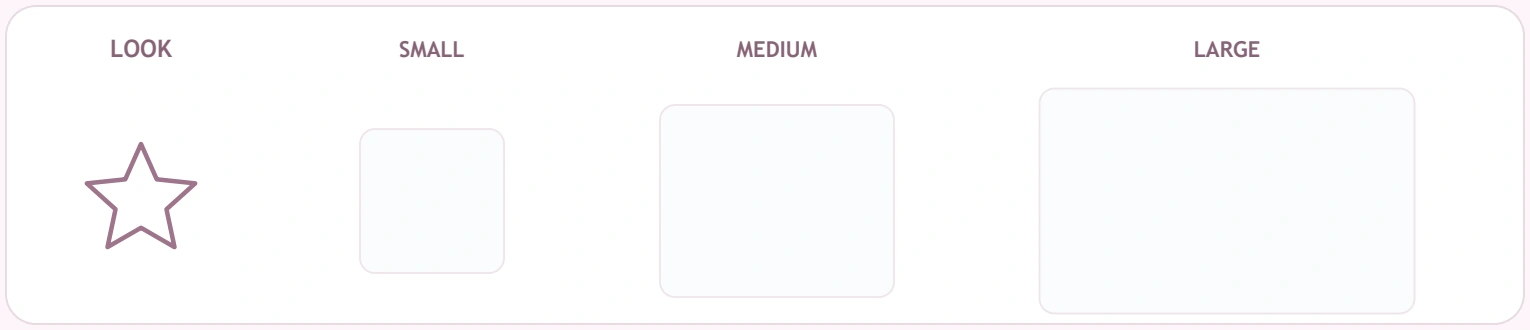
Four size games with finished examples
Set up a shape-family display
Make three completed versions of one shape on separate cards. Name them small, medium and large, and let the child arrange them as a family. Drawing Size Choices can follow if a drawn comparison is welcome. The cards should show meaningful finished shapes, leaving the conversation about size rather than about empty craft spaces.
Choose a frame for a visitor
Offer two paper frames and a finished shape card. Ask which frame gives the shape enough room, then compare what happens with a smaller version of the same shape. Drawing Size Choices brings that fitting question onto the worksheet. Keep the activity playful and let the visitor's pretend story explain why it wants a particular home.
Speak for a growing shape
An adult describes a circle becoming bigger while keeping its rounded edge. The child shows the change with two hands or a broad air movement. Drawing Size Choices can borrow that language before a new window is attempted. Swap speaker and mover so the child can give the adult a clear instruction too.
Curate a same-shape collection
Gather completed drawings of one shape at different sizes and ask a visitor what makes them belong together. Drawing Size Choices invites that feature comparison even when the drawings are uneven. Let the child select one piece to explain, and avoid choosing only the most adult-like example for display.
✎ Common fitting mistakes invite a specific comparison
Starting at the frame's edge, enlarging only one part, or forgetting a shape's defining feature can make a response feel different from the model. Drawing Size Choices lets an adult point to the exact relationship rather than say the whole drawing is wrong. Ask which part the child wanted to preserve and which part ran out of room.
Use a short reminder such as leave room for the whole shape. Drawing Size Choices should not become a cycle of erasing every imperfect corner. A new attempt on spare paper can be useful when the child wants it, while an unfinished row can simply wait for another day.
Adjust support for ages three to six
A younger preschooler may enjoy pointing to the largest window or drawing one familiar circle. An older child may compare all three versions of a star. Drawing Size Choices offers several entry points without requiring the same response from everyone. Keep the model visible, use a stable sheet and offer a drawing tool comfortable for the child.
Enlargement can make small frames easier to inspect, provided the complete layout stays within the printable area. Drawing Size Choices is a comparison activity, not a test of whether a child's marks are ready for a particular school level. A pause or an alternative form of play can be the most useful next choice.
Return with one new size question
Instead of asking for the whole unfinished row, invite a specific comparison: could the same heart fit another window? Drawing Size Choices can be revisited through a new frame, a different model or a spoken explanation of an earlier drawing. The child can choose a manageable amount and keep ownership of the decision to continue.
For broader family reading, NAEYC's article on supporting writing at home discusses everyday opportunities. The literacy area for age four at PBS Parents offers another collection to browse. Drawing Size Choices can accompany meaningful pictures, pretend signs and ordinary conversations about what a drawing needs.
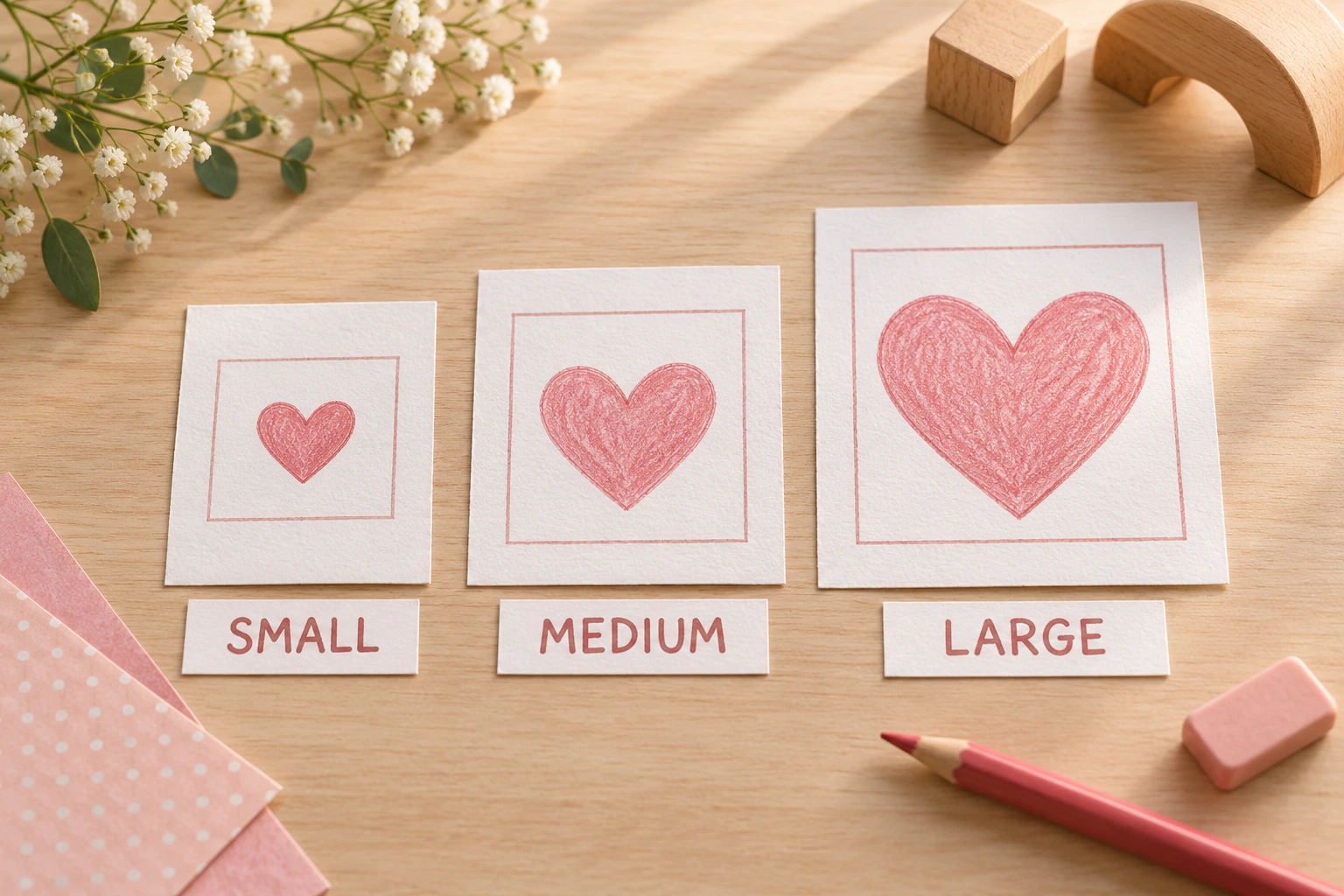
Save the clean size-comparison page
An original branded sample is offered through the free option. The clean Drawing Size Choices file uses this page's membership premium download, with access checked against the requesting account's current eligible plan. Choose that option after logging in, then save the authorised PDF before opening the printer settings.
The premium Drawing Size Choices edition retains all twelve response windows and the four models while removing the website name, domain, watermark and printed ads. Inspect the preview so the entire border and each label remain visible. To explore beyond size adjustment, the collection card leads to the complete $4 discovery purchase. One shape in one chosen window can be a complete first invitation.
Popular Worksheets
Printable resources families and teachers are downloading now.
 Free
 Free
 Free
 Free