
Picture Pair Routes: 6 Brilliant Match-and-Connect Games
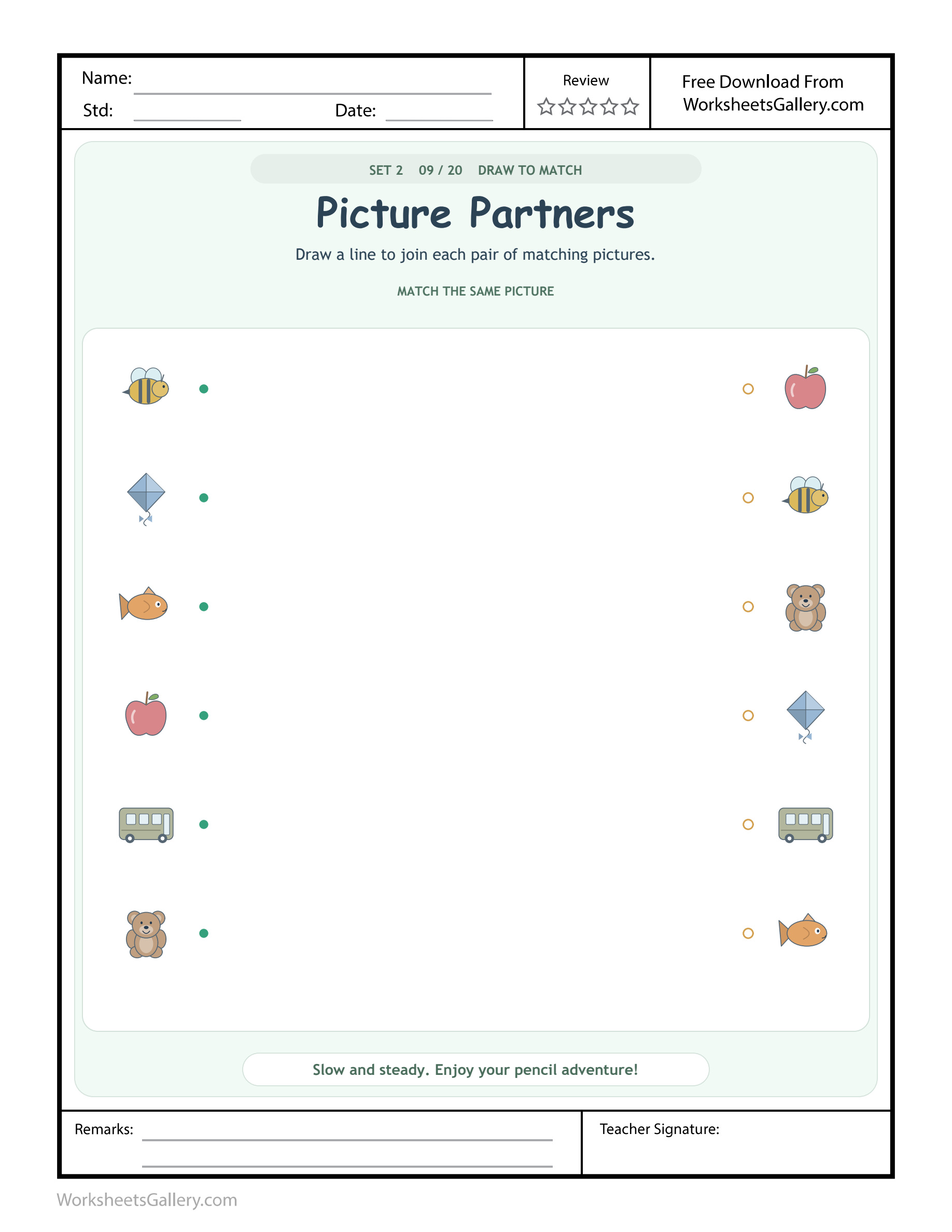
Matching pictures is one choice in the pencil workshop. This connection activity belongs to the twenty-sheet premium collection. Its $4 download keeps all supplied concepts together in a clean PDF.
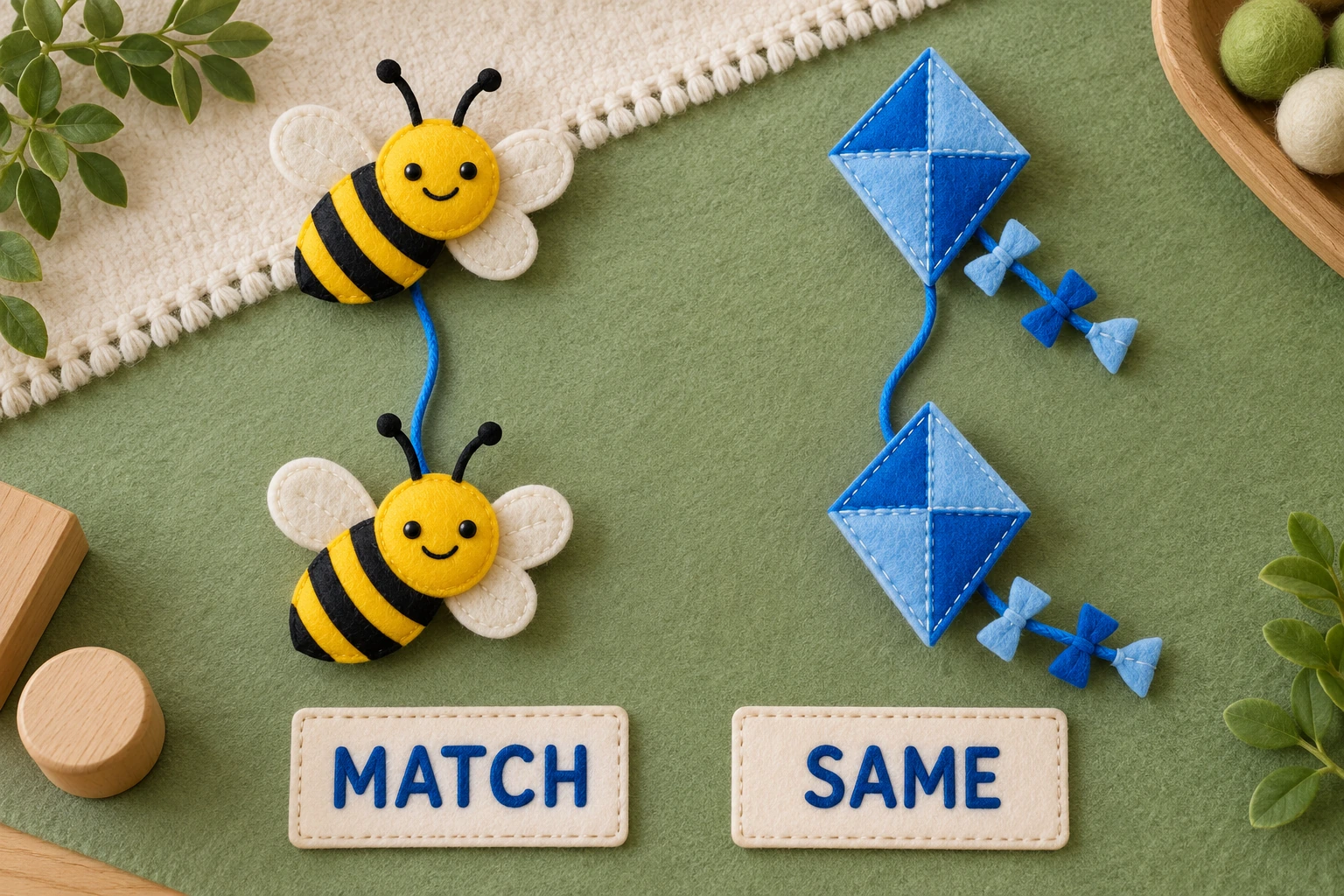
The bee's partner is not directly across from it, and that is where the looking begins. Picture Pair Routes uses six familiar pictures in two differently ordered columns, inviting children around three to six to find a match before drawing a connection. The Picture Partners worksheet gives each left picture a green starting dot and each right picture a gold ring. Picture Pair Routes makes the destination matter: a neat line to the wrong object does not complete the match, while a crossing line can still connect exactly the right pair.
Picture Pair Routes starts with identity
The left column contains a bee, kite, fish, apple, bus and teddy bear. The right column presents those pictures in another order. Picture Pair Routes asks the child to join each matching pair, so row height is not a reliable shortcut. A bee needs the other bee, even when an apple sits nearer the same horizontal level.
Begin by naming or pointing to one chosen object. Ask the child to inspect the entire other column before drawing. Picture Pair Routes can be shared without demanding that every picture be named aloud. A child can demonstrate a match with two pointing fingers, letting spoken vocabulary follow the visual recognition when useful.
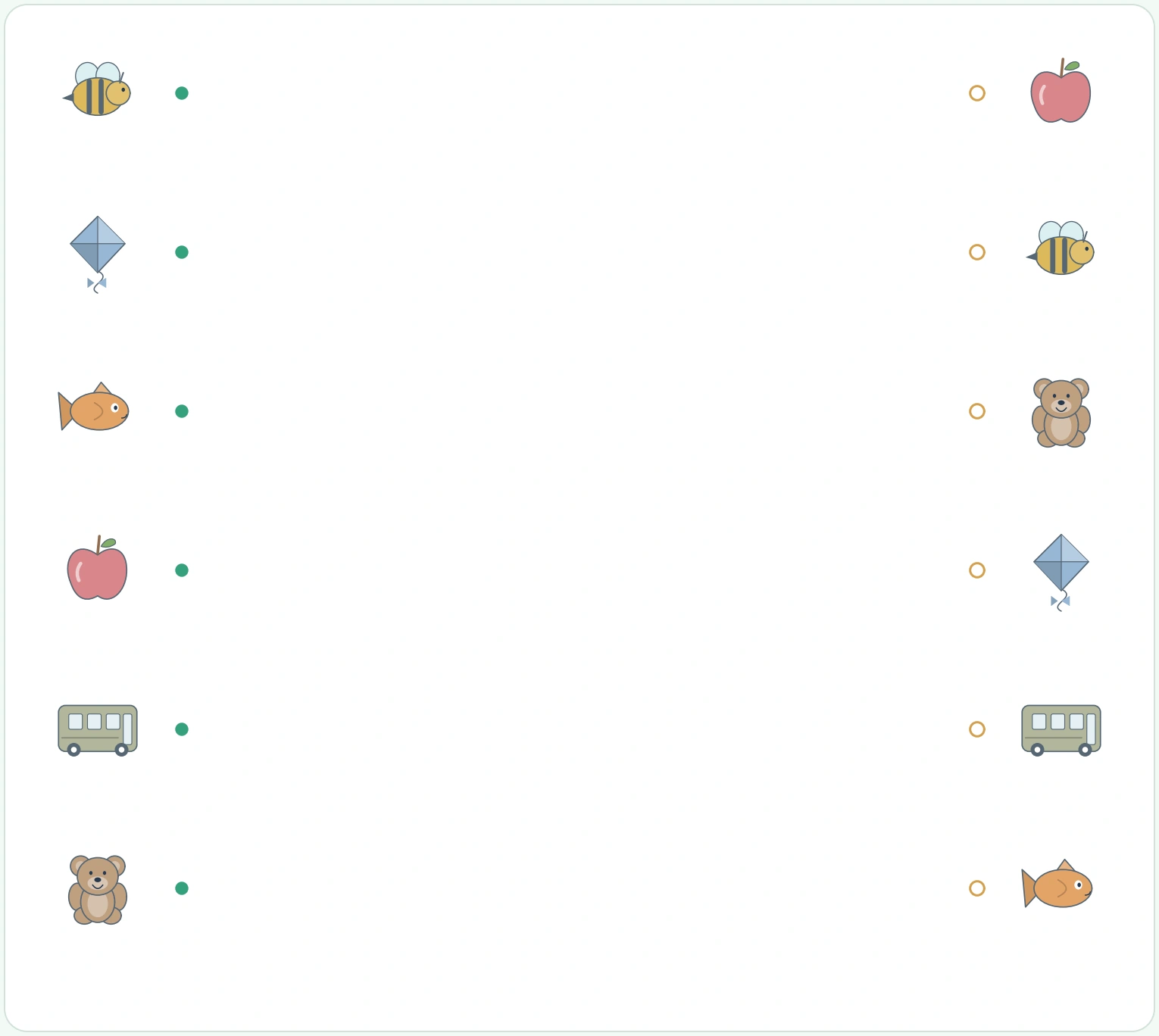
Six Picture Pair Routes pictures offer different clues
| Picture | A feature worth comparing |
|---|---|
| Bee | Striped body and wings |
| Kite | Diamond-shaped body with a tail |
| Fish | Body, eye and tail |
| Apple | Rounded fruit with a leaf |
| Bus | Long vehicle body and windows |
| Teddy bear | Round ears and seated body |
Picture Pair Routes gives each object a recognisable partner rather than asking for a category match. The fish does not join the bee simply because both are animals. Picture Pair Routes is also different from a same-row line exercise: the destination is chosen by what the picture is.
Nico checks the whole Picture Pair Routes column
Nico and an older cousin look at the upper bee on the worksheet. Nico first points to the apple across from it, then notices the bee farther down. His cousin asks which picture has the same striped body. Picture Pair Routes gives Nico a feature to compare instead of a vague instruction to look harder.
He points to both bees before drawing from the green dot toward the matching ring. The line slopes down. Picture Pair Routes has made that slope meaningful because the matching picture sits lower. His cousin describes the choice—he found the same insect—rather than praising a particular angle or expecting every connection to be horizontal.
Seven things Picture Pair Routes can reveal
- Feature checking: Picture Pair Routes encourages comparison of shape and detail before a mark is made.
- Column scanning: the child looks beyond the nearest opposite object to locate a partner.
- Destination planning: a line has a chosen endpoint before it begins.
- Directional control: Picture Pair Routes offers sloping and level journeys according to picture positions.
- Vocabulary use: familiar nouns and descriptive words can explain why two pictures belong together.
- Rule awareness: identity remains the matching rule even when another route is shorter.
- Self-correction: a child can reconsider a guessed partner by inspecting its features again.
Watch for those specific decisions without turning the page into a measure of general ability. A child may identify every match but prefer help with drawing, or enjoy making a line after an adult names the object. Those are useful differences to notice.
Picture Pair Routes matching comes before drawing
Give the child time to show both matching pictures before offering a route cue. Picture Pair Routes combines a visual choice with a movement, but separating the explanation of those jobs can make each one clearer. An adult can ask, “Which two belong together?” and wait for a point before discussing the green dot.
After the partner has been found, locate its ring. Picture Pair Routes then provides a definite journey from start to finish. The line need not be perfectly straight to show a correct match. Keep attention on where it begins and arrives, and let the child's own movement remain visible for discussion.
Upper pictures do not form an independent answer set
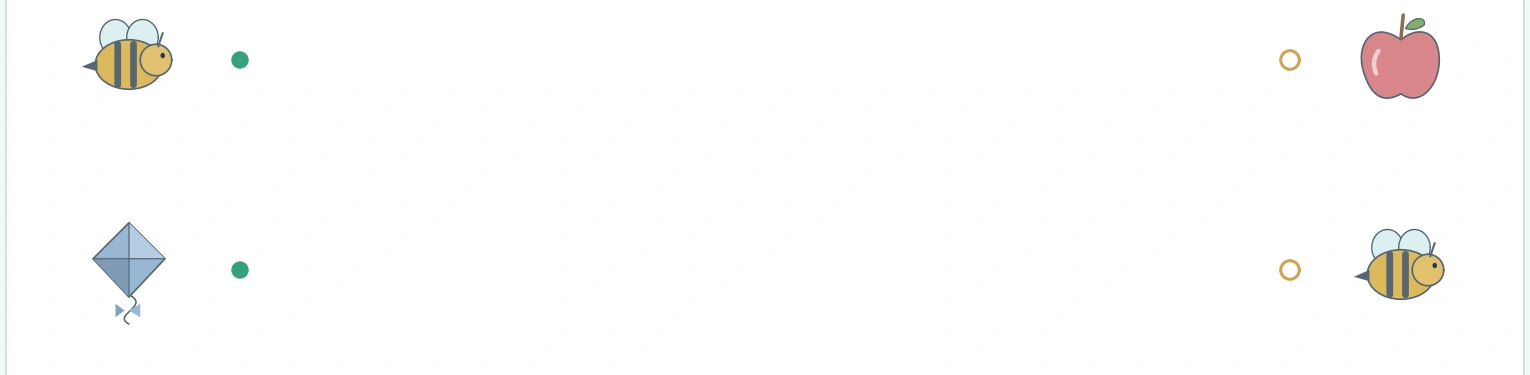
The bee and kite near the top of the left column have partners elsewhere on the right. Picture Pair Routes therefore needs a whole-column search. A close-up of upper pictures can help inspect details, but it should not suggest that the correct partner must be inside the same small crop.
If a child keeps choosing the nearest opposite picture, return to the full arrangement. Picture Pair Routes gives the adult an opportunity to point down the column without naming the answer immediately. Invite the child to look for one distinctive feature, such as the kite's tail, while keeping all possible partners visible.
Set up a home partner-finding turn
Put the complete sheet on the table and choose one object together. Keep both columns clear of pencils, sleeves and other materials. Picture Pair Routes relies on seeing all six choices. A toy or card covering a lower picture could make a sensible search appear unsuccessful simply because the partner is hidden.
At home, a child might tell an adult, “Find the bus,” while the adult points to its partner without drawing. Swap roles for the next picture. Picture Pair Routes can begin as a looking game, then become a pencil task when the child wants to connect the dots and rings themselves.
A classroom picture courier chooses a destination
A teacher invites children to imagine each left picture sending a message to its own partner. Each child uses an individual Picture Pair Routes sheet and names one destination before drawing. Partners can listen and compare features, while the child holding the pencil decides how to make the connection on their own page.
After one route, the teacher asks what made the chosen destination a match. Picture Pair Routes can prompt a pointed detail, a noun or a short explanation. Avoid treating the number of completed lines as the only evidence of engagement. A child carefully checking a teddy bear's features is still working with the matching rule.
Crossings do not automatically make a connection wrong
Because the columns are reordered, some useful lines may cross other lines. Picture Pair Routes does not print a rule forbidding crossings. The task remains to join the same picture on each side. An adult should not reject a correct pair merely because its route intersects another connection.
If several lines become hard to follow, inspect one starting picture and trace its drawn route visually to the endpoint. Picture Pair Routes can be checked one connection at a time. A fresh copy may be welcome later, but there is no need to erase correct matches solely to create an adult-preferred arrangement of non-crossing lines.
Six partner games with their own small purpose
Find two matching household labels
Use two finished picture cards for each of two familiar objects and spread them in a different order. Ask the child to point to a pair. Picture Pair Routes offers six printed pairs afterward, but the smaller card set can make the identity rule easy to explore before any connecting line is needed.
Send a picture postcard
A toy courier carries a completed bee card to its matching bee card across the table. The child explains the destination before moving the courier. Picture Pair Routes can borrow that story when a pencil route becomes interesting. Keep the pretend message on a separate prop so neither worksheet column is covered during the search.
Describe without naming
An adult describes one feature, such as round ears or a diamond body, and the child finds the picture being discussed. Picture Pair Routes provides recognisable examples, while the game gives descriptive words a job. Swap roles and let the child choose a feature for the adult to interpret.
Reorder a completed pair display
Arrange two sets of finished matching cards in columns, then change the order of one side. Ask what has changed and what still matches. Picture Pair Routes uses that same identity-versus-position distinction on paper. A child can rearrange the props freely without changing the source worksheet or inventing new printed positions.
Follow a cord to its partner
Lay a cord between two matching felt pictures. Add another pair with its own cord and follow one connection from end to end. Picture Pair Routes can prompt a discussion of crossings if they occur. The destination remains the useful check, rather than whether the cords create a tidy-looking display.
Host a partner explanation tour
Let the child choose a finished match to show a visitor. They can name both objects and point to one shared feature. Picture Pair Routes may supply the drawing, but a pair of craft cards works too. The explanation belongs to the child, including a gesture when a spoken description is not what they want to offer.
The lower pictures still need the whole page
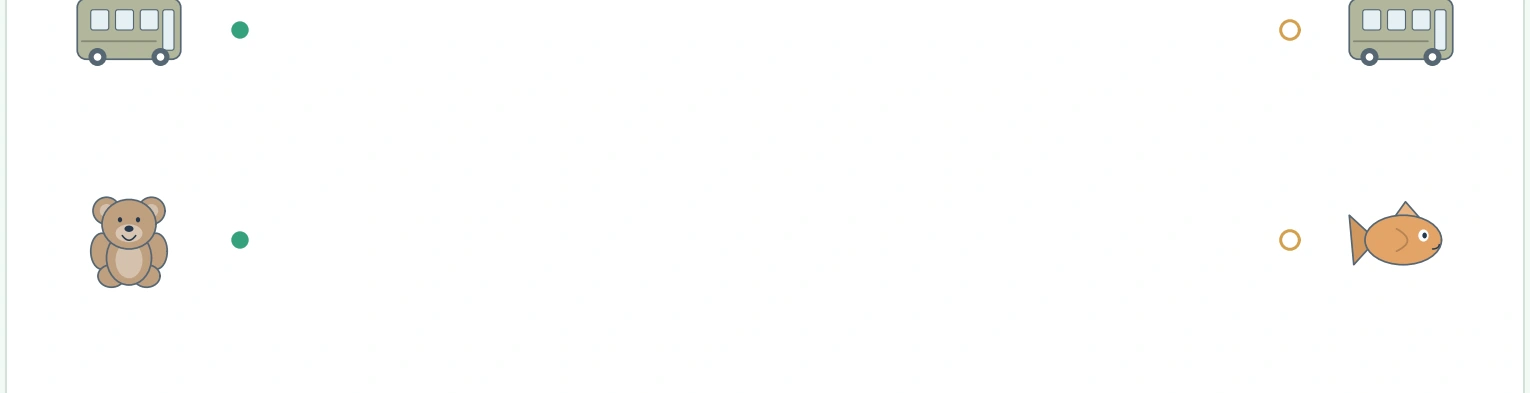
The bus has a partner at a similar height, while the teddy bear's partner is higher. Picture Pair Routes offers both kinds of relationship, making a uniform across-the-row habit unreliable. Ask the child to inspect each object afresh rather than infer a general direction from the last connection.
For related route work with a different purpose, try the flower-watering journeys. Picture Pair Routes adds a matching decision before movement, while those paths provide their own destinations. A child may enjoy either activity for different reasons, so explain the current task rather than borrowing one instruction for both.
✎ Common mix-ups have specific causes
Choosing the same row, matching a broad category instead of the same object, and starting a line before selecting a partner can all change the result. Picture Pair Routes lets an adult ask which feature was used in the decision. That answer is more informative than a general reminder to be careful.
Use find the same picture first when the child needs one clear cue. Picture Pair Routes should not become a tracing exercise with adult-drawn guide lines. If movement support is useful separately, the guided-to-independent road sheet offers a different invitation with its own visible route information.
A flexible invitation for ages three to six
Younger preschoolers can participate by pointing to a pair while an adult names it. Older children may enjoy explaining features and drawing several independent connections. Picture Pair Routes does not require a fixed amount of pencil work from everyone. Keep the full arrangement visible and offer a stable page with a comfortable tool.
On another day, invite a different picture choice rather than a quicker repeat of the entire sheet. Picture Pair Routes can stay interesting through a new clue or a courier story. For a third route comparison, the rain-line start-and-finish activity gives shorter movements without a picture-matching decision.
Keep everyday picture talk alongside the worksheet
Recognising a partner can lead into a story about a bus ride, a kite flight or a teddy's visit. Picture Pair Routes gives that conversation familiar starting points. Let drawing and speaking alternate rather than requiring the child to complete every line before their picture story is heard.
Families can explore home writing suggestions published by NAEYC and literacy material for four-year-olds from PBS Parents. Picture Pair Routes can accompany pretend messages and meaningful picture labels in ordinary play, with a real reason to look closely at what a mark or image communicates.
Download the complete Picture Pair Routes arrangement
The original branded worksheet is offered as a free sample. The clean Picture Pair Routes PDF is the premium membership version. Request it while using an account with current eligible access, then follow the site's protected download step. Save the file before printing and check that both full columns fit within the preview.
The premium Picture Pair Routes sheet removes printed advertising, the watermark, domain and website name, retaining all six matching pairs. Keep the page border and endpoint markers visible in your printer settings. The native package card connects to the complete discovery collection priced at $4. A matching destination is the important finish, even when the journey crosses another line.
Popular Worksheets
Printable resources families and teachers are downloading now.
 Free
 Free
 Free
 Free