
Small Mark Stories: 5 Wonderful Picture-Detail Ideas
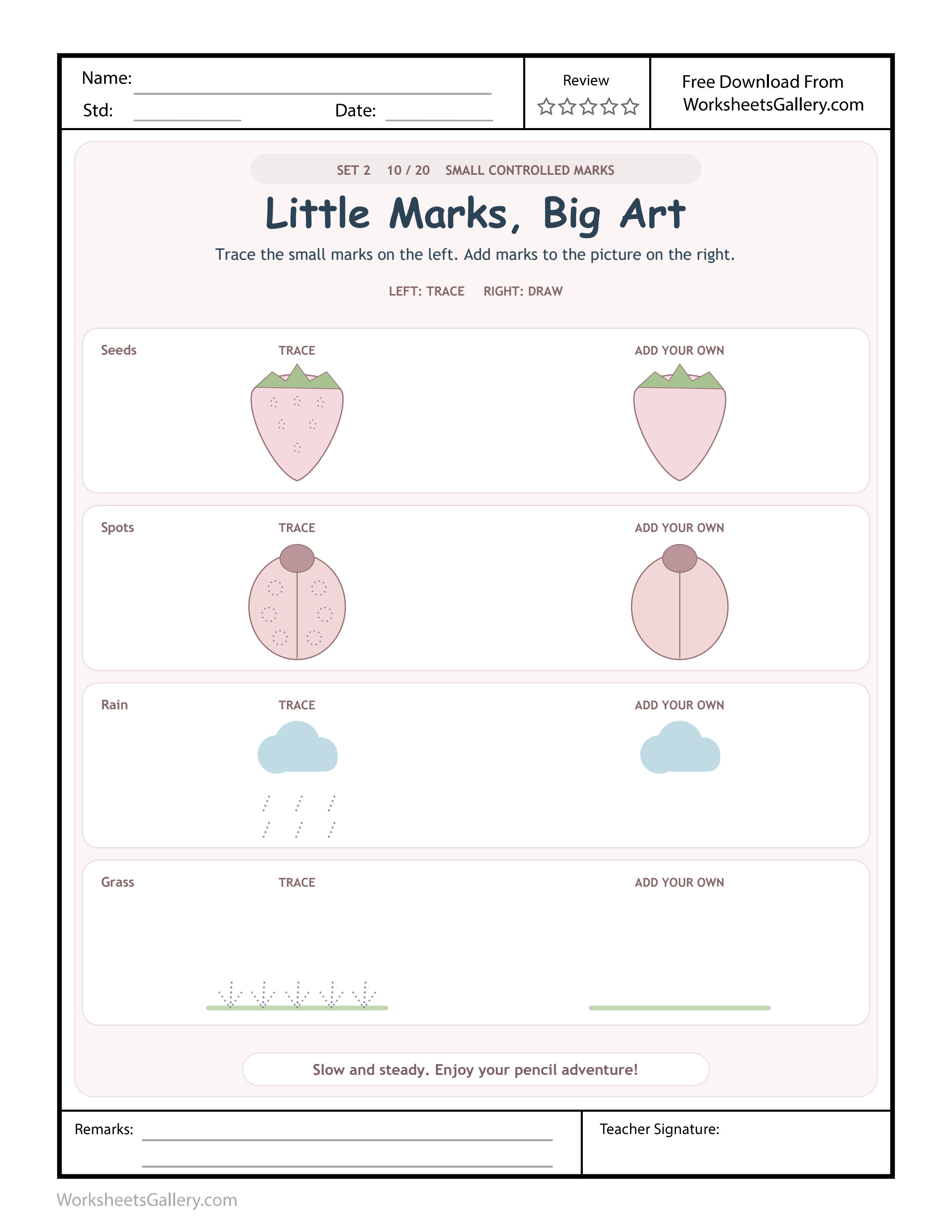
Small marks can join a bigger practice collection. The seeds, spots, rain and grass sheet is included in the $4 clean pack. One twenty-page file contains it and the other uploaded prewriting concepts.
A tiny mark can change what a picture seems to be made of. Small Mark Stories explores seeds on a strawberry, spots on a ladybug, rain below a cloud and grass along the ground. The Little Marks, Big Art sheet pairs a tracing example with an area for the child's own marks. For children around three to six, Small Mark Stories gives short pencil movements a recognisable purpose. The page invites a close look at the kind of detail being added, then leaves room for a child to decide how their own picture will use it.
Small Mark Stories gives each detail a job
The four rows are labelled Seeds, Spots, Rain and Grass. On the left, dotted examples invite tracing. On the right, a related picture or baseline waits for independently added marks. Small Mark Stories therefore changes from following supplied details to deciding where similar details should go. The two sides have related purposes without requiring an exact dot-for-dot duplicate.
Begin by asking what the picture might need. A strawberry's seeds and a ladybug's spots are both small, but their marks can look different. Small Mark Stories invites the child to notice that difference before reaching for a pencil. Naming the detail gives a reason for the kind of movement being practised.
Inspect a Small Mark Stories seed before drawing
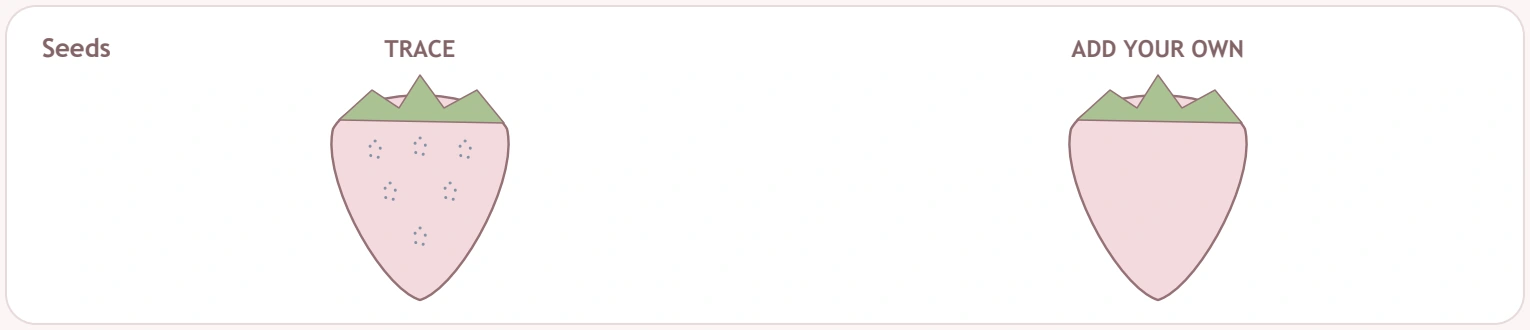
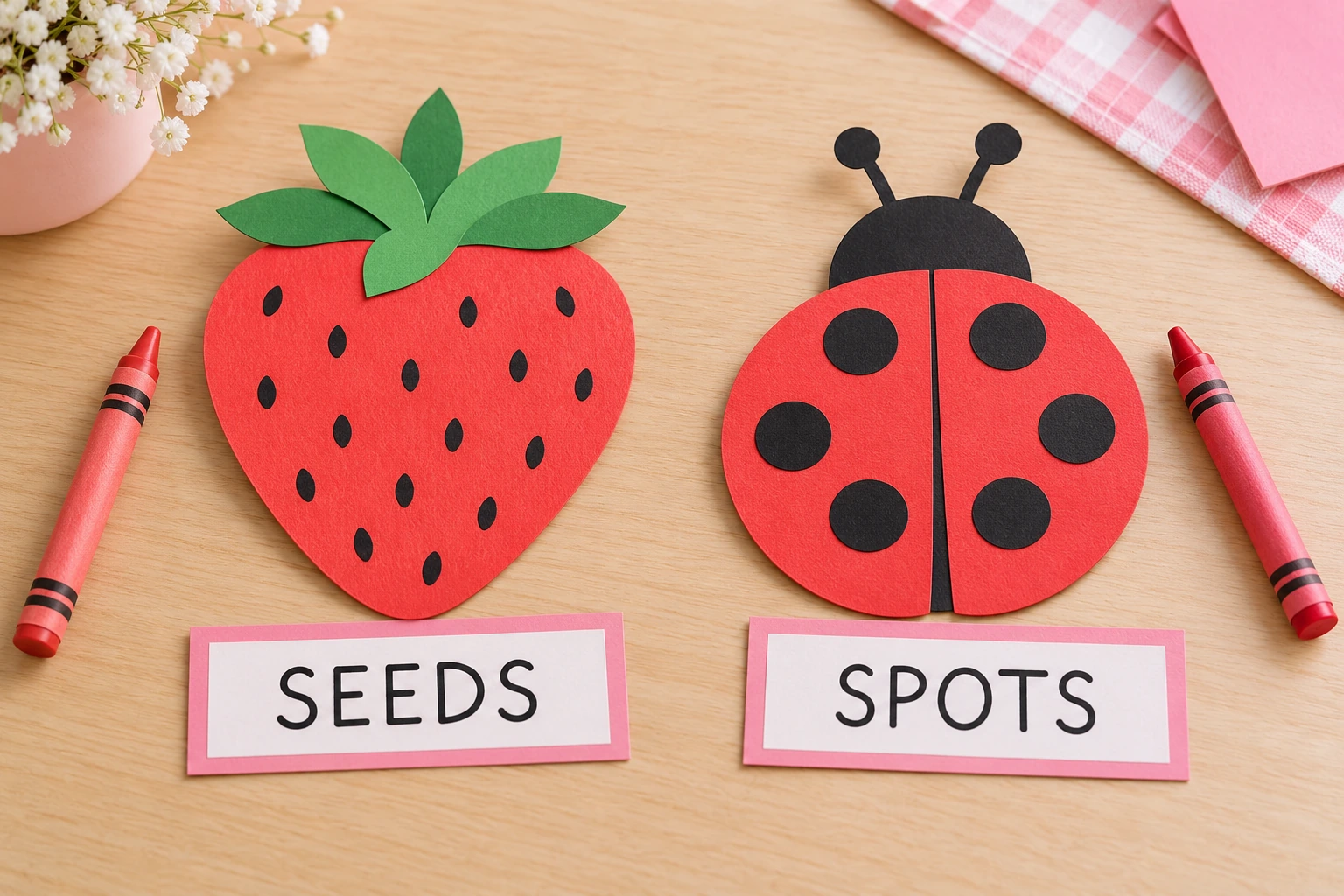
The seed row shows a strawberry containing small dotted marks beside another strawberry for the child's response. Small Mark Stories begins with those small details, not with colouring the whole fruit. Look at one seed shape and its position, then let the child choose a manageable area of the tracing example to explore.
On the independent side, ask where another seed might belong. Small Mark Stories leaves room for variation in placement. There is no need to demand exactly the same arrangement as the model. The important comparison concerns the kind of detail the child is adding and the controlled small movement used to make it.
Rae adds her Small Mark Stories spot
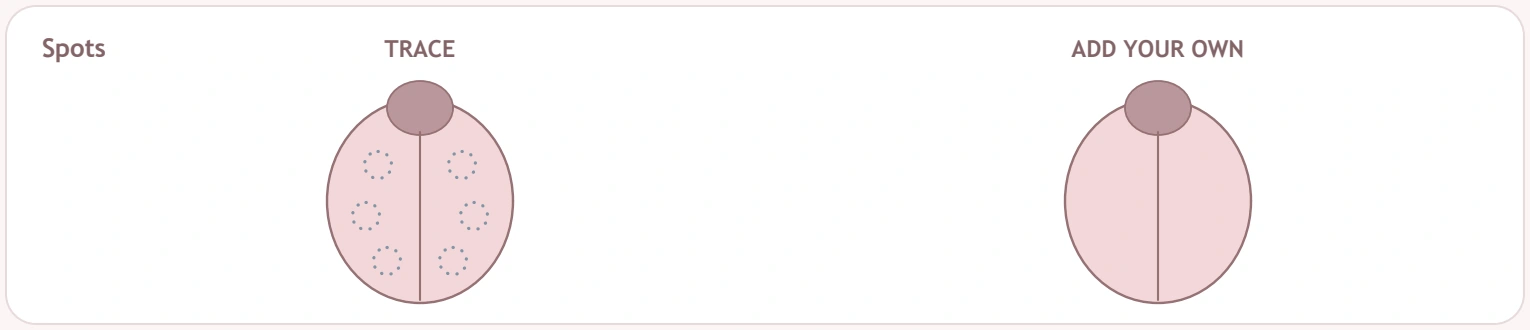
Rae's mother notices that Rae enjoys decorating pretend insects. They choose the Spots row and examine the dotted example together. Small Mark Stories gives Rae a way to name the rounded details before drawing her own. She traces a spot, lifts, then chooses a place on the other ladybug for another one.
Rae decides that her ladybug is dressed for a garden party. Her mother listens before asking which mark she will add next. Small Mark Stories has become a picture conversation as well as a pencil activity. Rae's response does not need to match the model's exact number or spacing of spots to show that she understood their role.
Six things Small Mark Stories can make visible
- Detail awareness: Small Mark Stories draws attention to features smaller than a picture's outer boundary.
- Short movement control: a child can begin and end one compact mark before deciding on another.
- Model-to-own transfer: the tracing example offers information for a separate independent response.
- Purposeful placement: Small Mark Stories gives a reason to put seeds inside fruit and rain below a cloud.
- Descriptive vocabulary: seed, spot, raindrop and grass name the effects the marks create.
- Creative explanation: the child can describe a picture's new details without needing an adult-made final design.
Look for these particular actions rather than expecting every row to be finished. A child might spend a useful visit discussing just one new detail and making a few carefully chosen marks.
Small Mark Stories changes the mark, not just the picture
| Row | Printed example | Independent invitation |
|---|---|---|
| Seeds | Small details inside a strawberry | Add seed-like marks to the second fruit. |
| Spots | Rounded details on a ladybug | Place spots on its partner. |
| Rain | Short falling strokes under a cloud | Draw rain below the other cloud. |
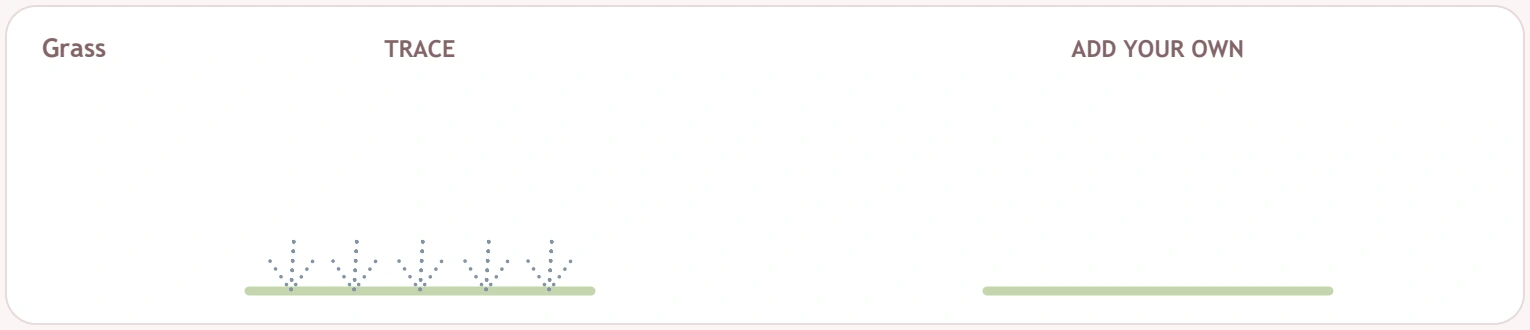
| Grass | Short pointed strokes along a baseline | Grow marks along the second ground line. |
Small Mark Stories is not one continuous trace through four scenes. Each row offers a different kind of short detail. Read the selected example again before assuming that the movement used for seeds will also make the grass the child intends.
Move from one traced detail to one independent choice
Choose a row and inspect its left example. Ask the child to show a single detail, then offer a comfortable tool for tracing it. Small Mark Stories can begin with that small amount. Afterward, point to the independent side and ask where the child would like to add a related mark.
Keep the distinction between the two sides clear. Small Mark Stories provides a guide on one side and space for a response on the other. An adult-drawn set of dots on the response picture would turn it into another tracing exercise, removing the child's opportunity to decide on placement.
At a classroom picture-materials table
A teacher places completed example cards labelled SEEDS, SPOTS, RAIN and GRASS beside the sheet. Children choose which material they want to add to a picture. Small Mark Stories becomes a conversation about what a mark represents. A partner can name a detail while the drawing child chooses where it will go.
After a few marks, invite the artist to describe what changed. Small Mark Stories might prompt a rainy sky, a dotted insect or a grassy patch. Keep the response open enough for the child's own story. The teacher can notice the particular short strokes used without requiring everyone to make identical-looking pictures.
Small Mark Stories rain gives strokes direction
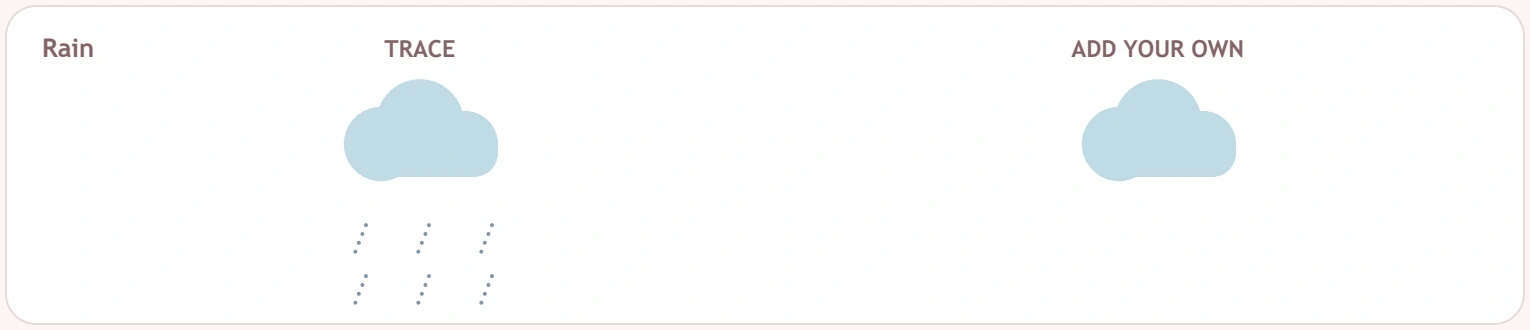
The Rain row places its tracing marks below a cloud. Small Mark Stories lets the adult discuss where the marks begin and the direction they travel. The second cloud offers a related space for independently drawn rain. Ask the child where it might fall before suggesting a particular arrangement.
The rain-line sheet with dot-to-drop journeys offers a different rain context. Small Mark Stories uses compact picture details, while that resource explores longer guided movements. Explain the difference when offering both, so a child does not search for endpoint markers that this detail row does not provide.
Five ways to play with picture materials
Open a seed illustrator's desk
Look at a real fruit picture and talk about the tiny features an illustrator might include. Make a separate finished labelled example before offering the worksheet. Small Mark Stories can follow if the child wants to add seeds with a pencil. The conversation can also end with pointing and describing instead of requiring another drawing.
Dress a pretend ladybug
Use a completed paper insect and removable round spots on a separate play mat. Let the child decide where the spots belong and tell you about the insect. Small Mark Stories gives a pencil-sized version of the detail afterward. Keep the props large enough to handle comfortably and separate from the printed response picture.
Conduct a short rain concert
Tap a finger softly for each imagined falling mark, then draw a few short strokes on spare paper. Small Mark Stories can connect those movements with its cloud row. The tapping is a playful rhythm, not a demand to draw faster or keep pace with an adult's count.
Grow a named grass patch
On separate paper, make a finished small patch of short pointed grass marks and label it GRASS. Ask the child which way its blades seem to reach. Small Mark Stories offers another baseline when the child wants to try the movement. Let the patch become a story setting for a toy animal afterward.
Curate a tiny-detail museum
Display a few completed seed, spot, rain and grass examples as named picture materials. Invite a visitor to ask what each mark represents. Small Mark Stories can supply the child's chosen work if they want to share it. The museum welcomes an explanation of a small detail rather than judging how fully the paper has been covered.
Grass is a collection of short changes
The Grass example uses short rising and falling marks along a ground line. Small Mark Stories invites a child to inspect their pointed changes before adding a patch to the independent baseline. A single long sweeping line would create a different effect, so compare the kind of movement rather than merely asking for more marks.
If pointed changes are especially interesting, the mountain zigzag resource offers a larger route comparison. Small Mark Stories keeps the movement compact and tied to picture detail. The same child may enjoy both scales for different reasons, without needing to treat one as a prerequisite for the other.
✎ Common problems can be discussed at mark size
Colouring the whole strawberry instead of tracing its seeds, drawing rain inside the cloud, or adding an unrelated scribble to every row can show that the detail invitation needs clarification. Small Mark Stories gives the adult a concrete example to point to. Ask what the child wants the mark to represent before supplying a correction.
The cue one small detail at a time can make the next action clear. Small Mark Stories should not require filling every available space. Crowding a picture with adult-requested marks can hide the thoughtful placement already made and turn a useful short visit into a completion demand.
A comfortable invitation for ages three to six
Younger children may enjoy a few larger marks on separate paper before using the compact examples. Older preschoolers can compare the traced detail with their own version and describe a difference. Small Mark Stories allows both approaches. Keep the guide visible, the paper steady and the amount chosen by the child's current interest.
If a tool's line is too broad to show the dotted seed or spot clearly, offer another comfortable option. Small Mark Stories is about noticing and controlling a particular detail, not about insisting on a particular writing instrument. An enlarged complete page can make the small examples easier to inspect when useful.
Come back to a new material
On another visit, offer a different row rather than asking for a denser repeat of the same fruit. Small Mark Stories can be revisited through a cloud story, an insect conversation or a grass-patch setting. A note about the child's chosen detail may provide a more welcoming reminder than a list of unfinished panels.
The garden contour sheet offers another picture-based movement comparison. Families can also explore NAEYC's ideas for encouraging writing in daily life and PBS Parents' literacy browsing for four-year-olds. Small Mark Stories can accompany meaningful everyday pictures rather than replace them.
Keep Small Mark Stories together in your download
The free sample is the original branded sheet. For the clean Small Mark Stories edition, use the page's premium membership download while logged into the account with a suitable current plan. The site checks that access before releasing the protected PDF. Save the file and open it to inspect every row before printing.
The premium Small Mark Stories page retains the tracing examples and independent areas. Watermarks and printed advertising are absent, and neither the site's name nor its domain appears in the premium file. Check the full border in the printer preview so the grass row and upper instructions remain visible. The collection card offers the twenty-page discovery purchase for $4. A few purposeful details can be enough for today.
Popular Worksheets
Printable resources families and teachers are downloading now.
 Free
 Free
 Free
 Free