10 Powerful Play-Based Activities for Happy Preschool Days
A clinic ticket, theatre backdrop or party plan gives paper a place in a story. Ten pretend-play invitations combine children’s choices with practical adult support.
A paper ticket becomes important when a toy dog needs an appointment. The marks on it have a job, even if they look nothing like adult writing. Play-based preschool activities give children reasons to count, draw, negotiate and explain within a story they can influence. These ten invitations use ordinary props and three existing worksheets as optional supports. Adapt adult help at home or with a small classroom group. Start with one situation that sounds familiar, then watch which detail the learners decide to change; that decision may be where the most useful conversation begins.
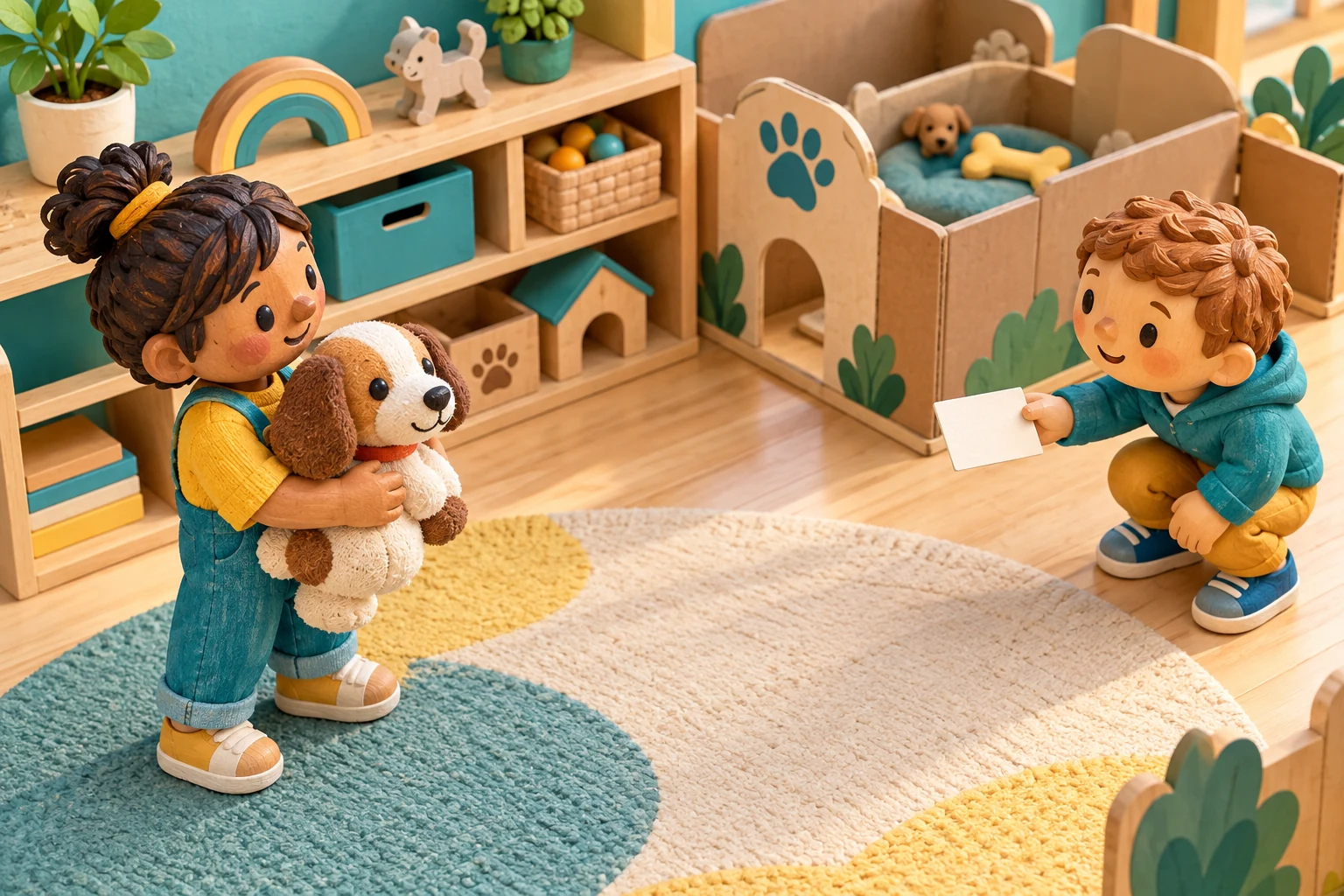
Two children use a toy dog, a paper ticket and a cardboard play setting to open an imaginary clinic.
🎭 Make room for a play-based decision
Putting a cartoon border around a task does not automatically make it play-based. Ask what the child can decide: a role, a problem, a prop’s meaning, the next event or whether to continue. An adult can have a learning intention while leaving the story open. If every action and answer is predetermined, describe the activity as practice rather than pretending the child is directing the play.
Paper props can support a play-based situation when they help someone do something meaningful. A ticket can welcome a patient; a count can organise decorations; a sun picture can start a weather report. Keep the printed page beside blank paper and real objects. Children may use it, adapt its purpose with adult support, or find that a different prop works better.
| A useful intention | A decision left to the child | A possible adult contribution |
|---|---|---|
| Notice a familiar letter | Choose the toy patient’s name | Show a checked letter model when asked |
| Count a small collection | Decide where decorations belong | Help track each whole object once |
| Explain an imagined event | Choose what happens next | Join the role without supplying the plot |
Prepare a play-based invitation without building a whole set
- Choose a shared play-based situation. Ask about familiar experiences or introduce a short story so children understand the roles available.
- Prepare play-based props safely. Large toys, blank paper and broad crayons are enough. Supervise play and avoid small loose pieces for children who mouth objects.
- Offer a starting problem. “The clinic needs a way to welcome its next patient” leaves room for a play-based solution, rather than a script to follow.
- Observe the play-based invitation before adding more. Join when invited, model a useful word or help solve a practical difficulty. Leave the children room to carry the idea forward.
1. A play-based pet clinic welcomes a visitor
Open Dd Worksheet: 5 Powerful Dog Door Discoveries if a dog picture and D/d model would help children create a clinic sign or appointment card. The actual page also has tracing and a picture word to complete; those sections need not become entry requirements for the pretend clinic. Use a toy dog and blank tickets alongside the page.
One child welcomes the patient while another explains what the toy needs: perhaps a quiet bed or a blanket. Keep the play-based problem imaginary and use safe toy props, without medicines or real medical equipment. An adult can model “appointment,” “waiting” or “comfortable,” then let the children decide whether another patient arrives. Writing may be dictated, invented marks or an adult’s clear label.
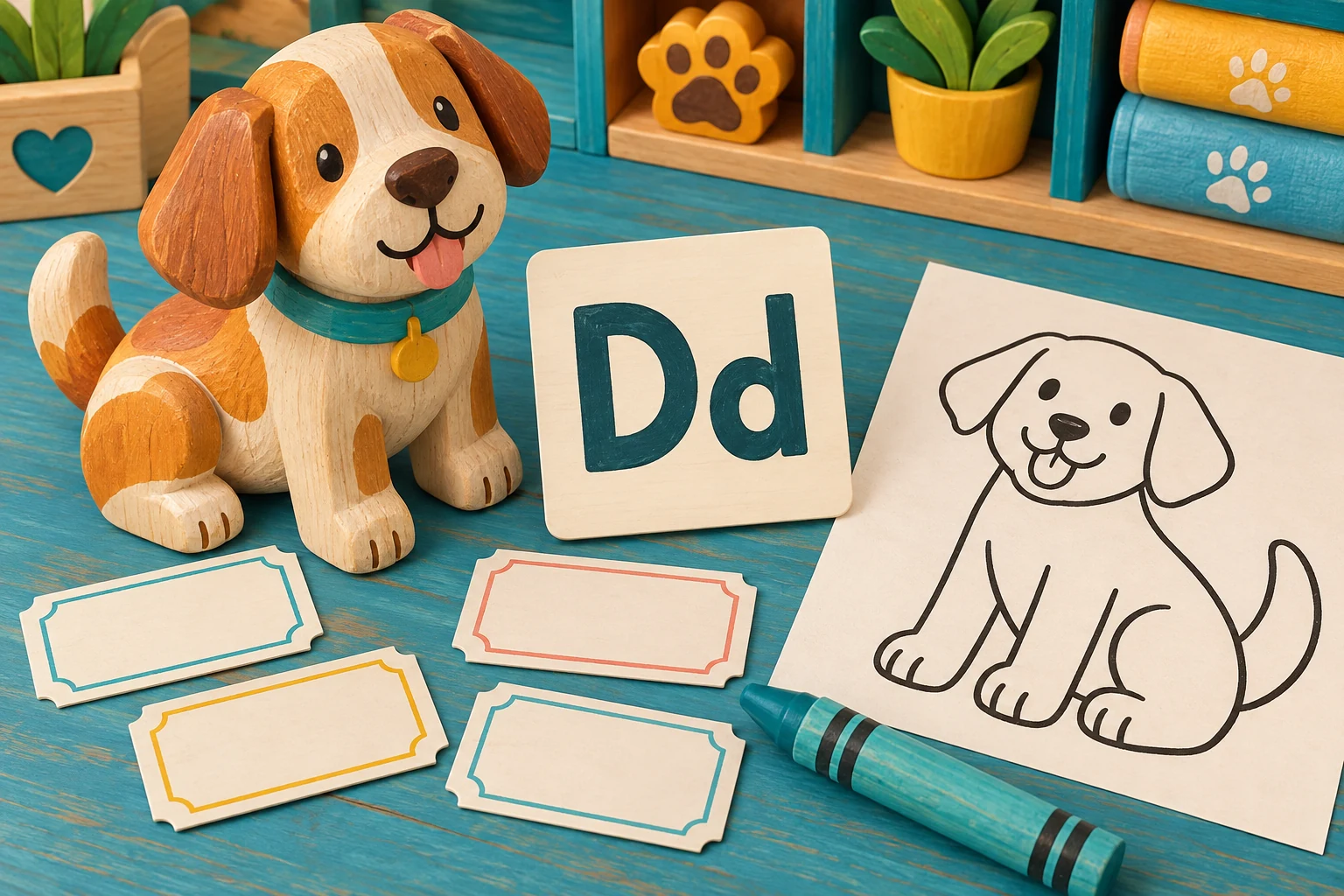
The simple dog and letter study illustrates possible play materials; the linked page shows the actual tracing resource.
2. A play-based party planner gives counting a reason
Number 10 Worksheet: 5 Powerful Balloon Party Wins offers ten whole balloons and the numeral 10, along with further number practice. Use the selected picture collection as an optional reference when planning pretend decorations. Ten is suitable only if the group can count it with support; a smaller real collection can serve the same play-based purpose.
Invite children to decide where large paper decorations should go, then check how many are needed. Count whole balloons rather than strings or coloured parts. An adult might ask whether the plan has enough decorations for both sides of a pretend doorway. The play-based decision concerns the party arrangement; it does not depend on completing all the tracing rows or making every decoration match the printed colours.
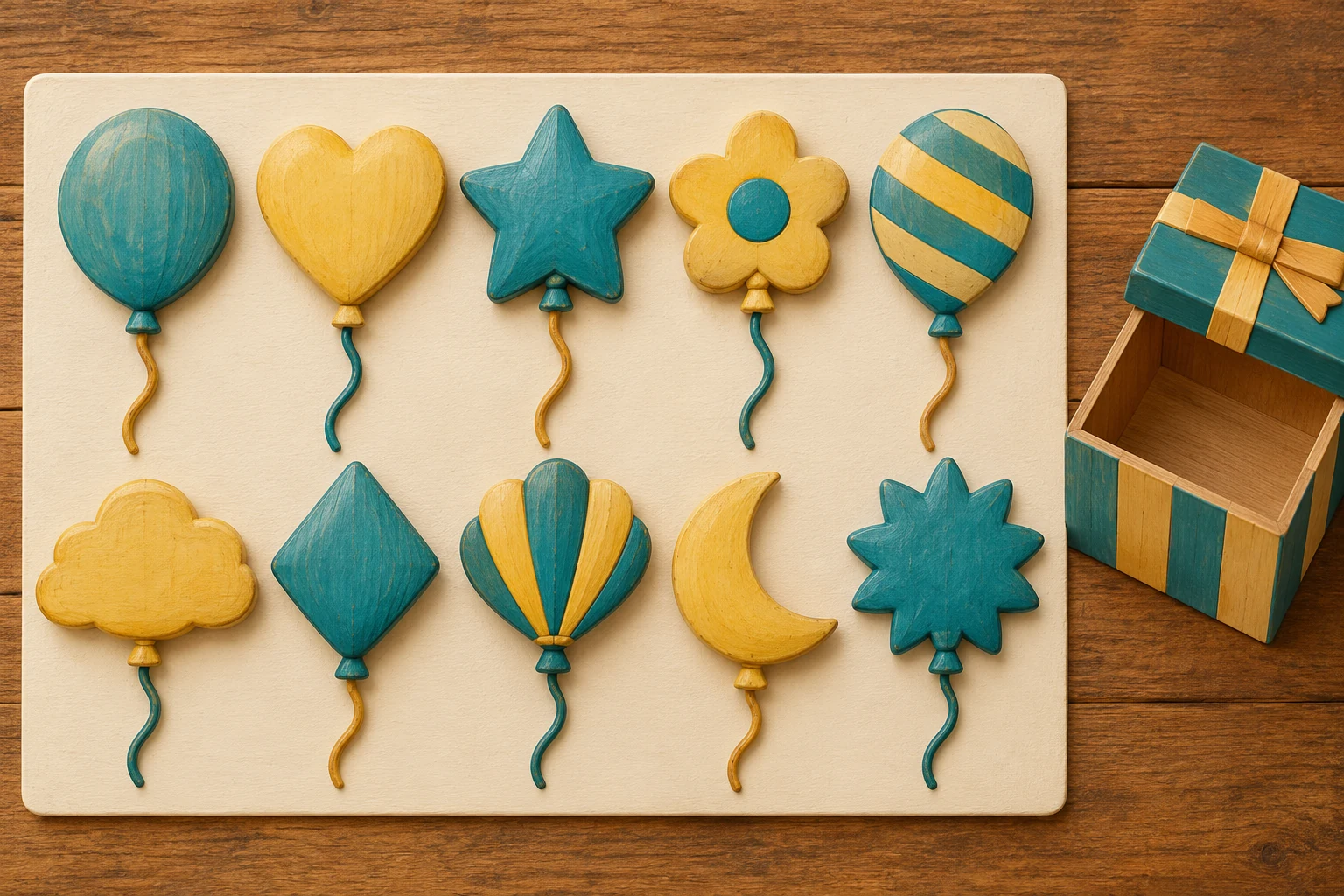
Different balloon shapes remain ten complete objects, separated clearly for a supported count.
3. A small play-based theatre lets the story change
Stand two large toy characters in front of a folded paper backdrop. Offer one opening event, such as a visitor arriving at a locked imaginary garden, then wait. Children can invent a helper, move the setting or decide that the visitor does not want to enter after all. That freedom makes the invitation play-based rather than a memorisation task.
A paper ticket can give an audience member a role without requiring reading. An adult can join as a character who has misunderstood a direction and ask for clarification. Keep the play-based exchange respectful: the character needs help, while the child’s idea supplies the next event. There is no need to stage a polished performance for other adults.
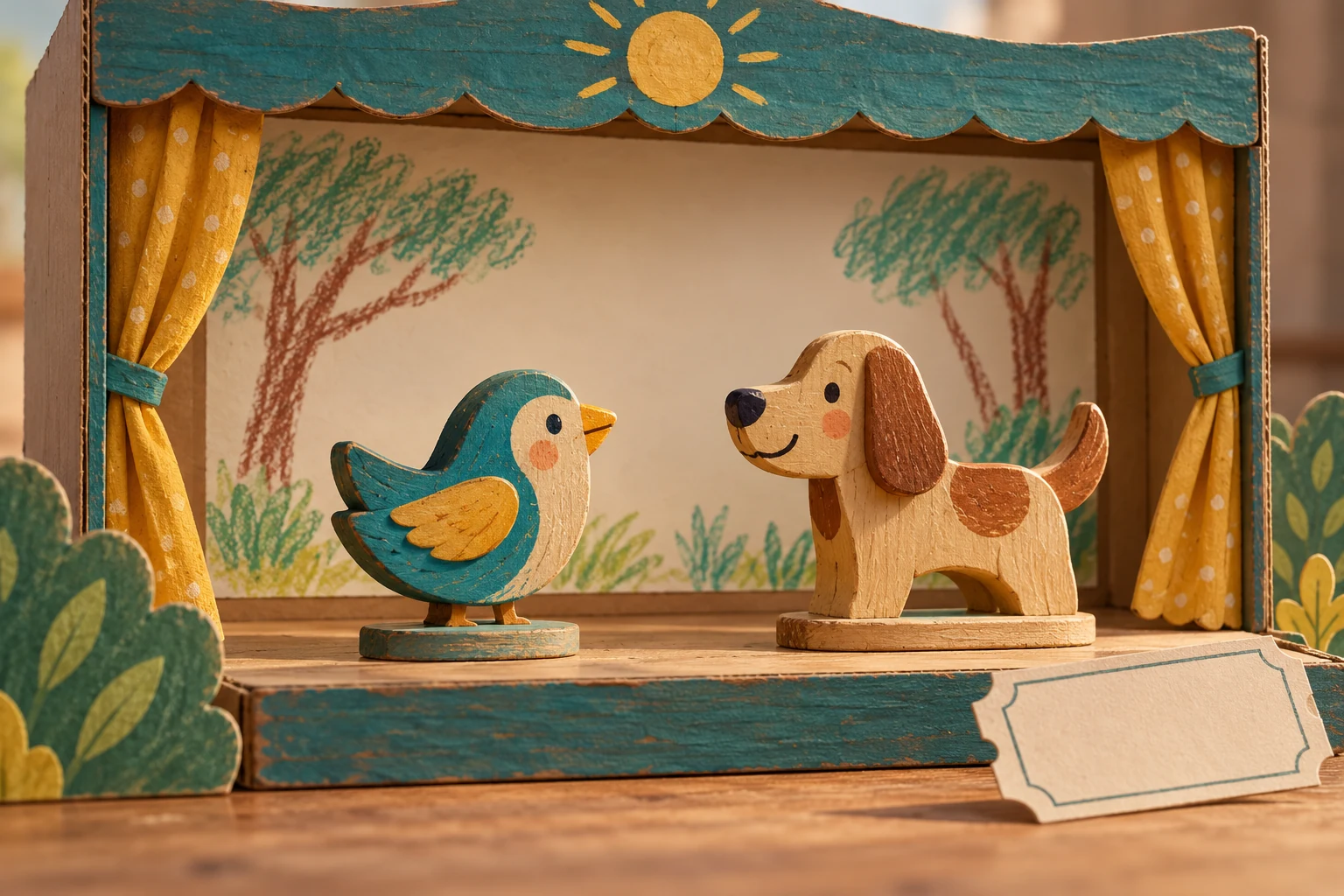
An uncluttered stage and simple backdrop leave room for children to choose the characters’ problem and next event.
4. A play-based library with books that need a home
Set out a few familiar picture books and large blank return slips. Children decide where the pretend library keeps stories about animals, journeys or whatever categories they invent. An adult helps handle books gently and can read a chosen title. The play-based challenge is making a system another person can use, not sorting every book into an adult’s preferred groups.
Let a child make a mark on a return slip or dictate a message about a book. Ask where a new visitor should put it back. If the system changes, compare the old and new plan without grading either one. A play-based library may end with shared reading rather than with a stack of completed slips.
5. A play-based repair desk investigates a toy problem
Use an intact toy vehicle and invent a harmless problem: it needs a parking sign, a wash or a route to its owner. Do not introduce broken parts, batteries or tools. Draw a simple job card on blank paper. Children choose which pretend job comes first and explain how they will know it is finished.
An adult can ask the customer what they requested, helping children compare the plan with the request. The play-based conversation may include “before,” “after,” “check” and “ready.” Leave room for a different solution. The job card records a decision made in the play; it does not become a compulsory writing exercise attached to an otherwise enjoyable story.
6. A play-based toy bus plans a journey for passengers
Arrange a few large toys beside a cardboard vehicle or an open box on the floor. Children choose destinations and decide which passenger wants each stop. Use a simple paper route with pictures rather than a complicated map. Keep the vehicle stationary as a pretend prop; children should not climb into an unsuitable container.
This play-based journey gives positional and sequence words a purpose. Ask whether a stop comes before or after another, then let the child alter the route. A passenger might change their mind. An adult can join as a visitor needing directions, while the young planner explains the route through pointing, speech or moving a toy along the paper.
7. A play-based campsite plans for an imaginary evening
Place a cloth on a clear floor space and invite children to decide what a toy camper might need. Draw large picture reminders on paper, such as a book, a blanket or a pretend torch. There is no real fire, food preparation or climbing structure. The play-based task is anticipating a character’s needs and choosing manageable props.
Ask what happens if the camper forgets a blanket or wants a story before resting. Children may change the setting to a garden or indoor den. Follow their decision where it remains safe. A play-based campsite can include quiet conversation and a book; it does not need to become a complicated craft or an overnight family commitment.
8. A play-based conductor chooses how the group will sound
Offer safe familiar sound makers or use hands for gentle claps. A child conductor draws a broad mark for a sound idea on paper and demonstrates it. Others can copy, suggest a variation or choose a quieter part. Keep the volume comfortable and offer watching or silent movements as ways to join.
The play-based decision is how a group will interpret the mark together. A long line might mean one sustained hum today, but the group can agree on something else tomorrow. An adult helps establish a clear beginning and ending, then hands the leadership back. Do not present the invented marks as standard musical notation or require everyone to enjoy the same sounds.
9. A play-based weather studio explains the view
Ss Worksheet: 5 Brilliant Sun Bend Activities supplies a sun cue and S/s models if they fit the group’s weather story. Keep tracing optional. Children can make a paper weather picture, look through a safe window and decide what their presenter should describe. The play-based report can distinguish today’s observation from an imagined storm in a story.
Use a large toy microphone or simply speak. An adult can be a listener who asks, “What did you notice outside?” Avoid turning the report into an unsupported forecast. The play-based value lies in selecting details and explaining them to another person. A child who wants clouds instead of sun can draw a different picture on blank paper.
10. A play-based lost-toy office makes directions useful
Choose a large familiar toy and place it somewhere safe and visible. Children pretend a visitor does not know where it belongs. Draw a simple location card showing one shelf or box, then let someone explain the return route. There is no hidden search in unsafe places and no need to make a child anxious about a genuinely missing toy.
In this play-based office, the learner can decide whether a picture, gesture or spoken instruction will help the visitor. An adult follows the directions and asks about an unclear step. Change roles afterward. The play-based problem is successful communication, rather than proving that the youngest participant can independently draw an accurate room plan.
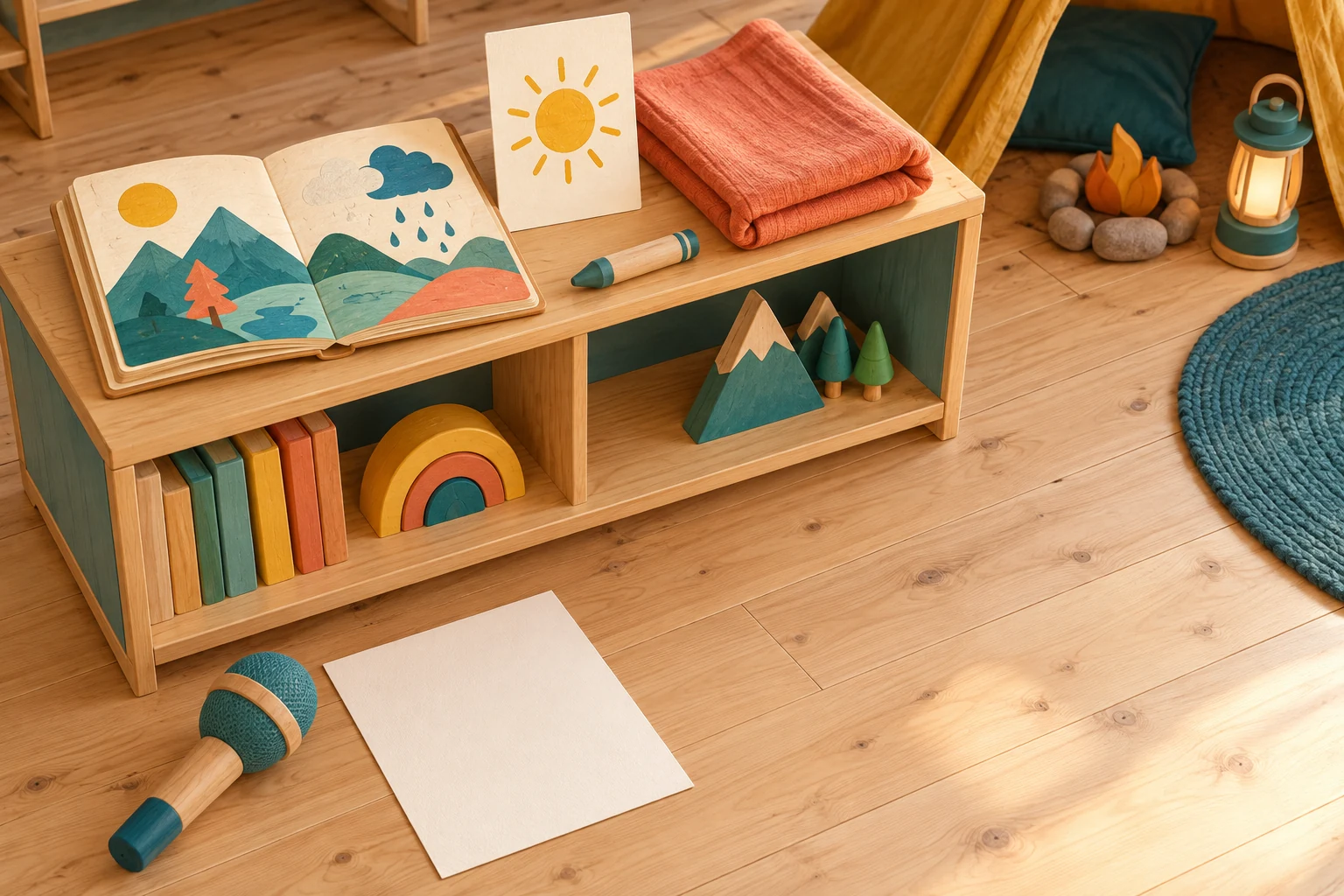
The shared props can support a library, weather studio or imaginary campsite, including a clearly pretend wooden campfire in the background.
Six things these play-based situations make visible
- Purposeful play-based marks. A child uses a ticket or sign to communicate something in the story. The intended message matters before the handwriting resembles an adult model.
- Quantity in context. Decorations and passengers create reasons to count, check and change an amount during play-based planning.
- Play-based role negotiation. Children explain who they want to be and listen to a partner’s preference. An adult can help make space for more than one contribution.
- Flexible representation. A block can stand for a passenger or a paper mark for a sound. Ask what it means within this particular play-based situation.
- Practical play-based problem solving. A plan can be tested against what a character needs. The result gives children something concrete to discuss.
- Interest in returning. An unfinished story may supply tomorrow’s starting point. Ask what should be saved rather than assuming another printed sheet is needed.
Why play-based teaching remains a current conversation
An October 2026 Harvard report on preschool social-cognition games describes research with particular games and groups. It highlights the importance of children’s social engagement. The ten invitations here are independently authored pretend-play ideas; they are not those studied games and do not inherit their measured outcomes.
NAEYC’s family guidance on joining children’s play connects engaged play with curiosity, initiative and persistence. For these play-based invitations, the practical adult role is to watch, join thoughtfully and respond to an emerging idea. A worksheet can support the story, but it cannot supply that relationship on its own.
Two play-based moments worth imagining
At home: the patient wants a different welcome
Imagine a child refusing to make a clinic ticket because the toy dog is “too sleepy.” A parent accepts the new story and asks where the dog can rest. The child draws a bed sign instead. The play-based intention—using marks to communicate—survives, while the child’s decision changes the prop. This is an illustrative home scene, not a claim about a particular child’s progress.
In class: two presenters want one microphone
Picture a teacher helping two children in the weather studio. Both want to present. The teacher asks what jobs the report needs; the children decide that one describes the view and one shows the picture, then swap. The play-based solution emerges through negotiation. A quieter child may choose a picture role without speaking to the whole group. No public performance is required to take part.
Four ways to extend play-based ideas without adding clutter
- Change a play-based character’s need. A library visitor wants a picture book instead of a story already chosen. Let children adapt their plan.
- Add a familiar home language. A welcome sign or dictated message can use the language a child wants to bring into the story.
- Save one useful prop. Keep a ticket, location card or sound mark with the child’s permission and ask what it meant before returning to it.
- Invite a new role. An adult becomes a visitor who needs an explanation. Ask a real question and allow the learner to decide how to answer.
Keep a play-based ending open
All three linked worksheet pages list ages three to six and currently provide a free watermarked single-page PDF, with clean membership options. Check the current preview and access label before downloading. The pages offer optional models and pictures, not a required play curriculum. A child’s choice can change the plan and still preserve its purpose. Ask which prop should stay ready. “The clinic can open again tomorrow” is enough when the most interesting part of the story has yet to happen.