The Power of Boredom: How Unstructured Play Nurtures Creativity and Problem-Solving
A cardboard box can become a shop without an adult planning the story. Leave time and space for children to invent, share and revisit their own play.
The empty box beside the sofa has been ignored for two days. Then a child sits next to it and puts a paper lid across the opening. “It's a shop. It only opens in the rain.” Nobody handed them that assignment. A comment like “There's nothing to do” can precede a stretch of unstructured play when a child has time, familiar materials and someone nearby. This guide shows parents and teachers how to protect that opening, with optional printables that can serve as props once a child has a game in mind.
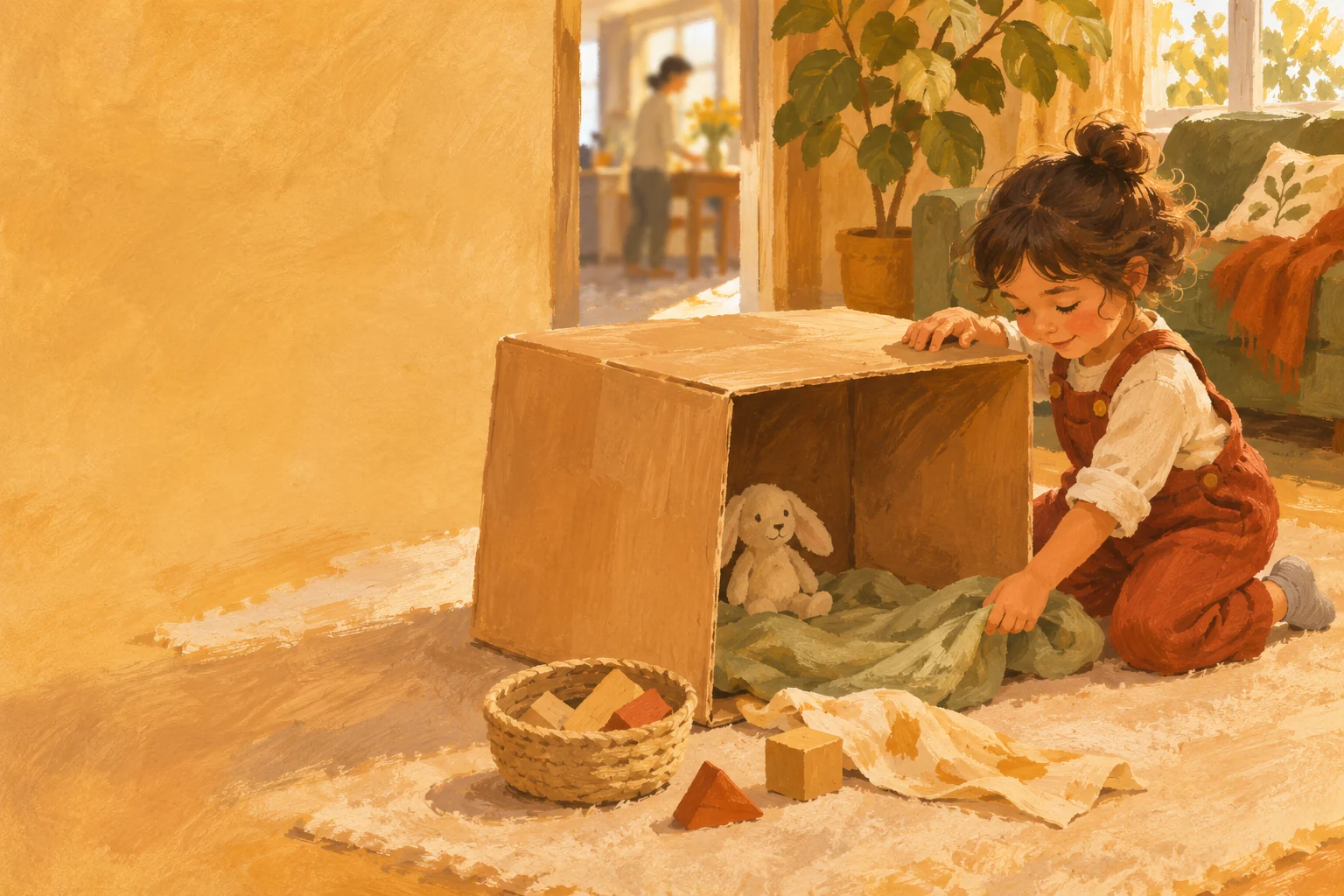
The open box and familiar toy can belong to many pretend scenes.
Who decides what the box becomes?
In child-directed play, the player can invent the purpose, change it or stop. The adult may set boundaries about what can be cut, which corner is shared or how long the room is available. Within those limits, an empty box can be a shop, a stage or merely a place to put cloth. Give the child a say in what the play becomes and how far it goes. If an adult has a useful idea, offer it as one possible contribution and wait for the invitation.
I'm bored is information. A tired child might want to rest with you. A child who just lost a playmate may be asking for company. Another may have plenty of materials and be having trouble choosing a first one. Start by listening. Try, “Do you want me near you or would you like some space?” In a classroom, a familiar adult can help a child join a group or locate materials they can use. That support leaves room for the child to decide what to do when they get there.
What to set out for unstructured play
Start with a place to work and two or three things that can serve several purposes. An empty cereal box, broad paper strips and a length of fabric are enough for the imaginary shop above. Use large, sturdy materials suitable for the children present and stay nearby. Arrange them within reach. Take any sharp tools, packaging hazards or equipment that needs direct adult handling out of the play space.

The cloth can cover a structure, and the paper strips can become roads or signs.
Give children a stretch of time where a new activity will not be announced immediately. Exact minutes matter less here than whether the child can start, pause and decide to return. Let them observe someone else or talk about a possible idea before asking them to use anything. Choose a visible place where work can wait if you need the floor back. A cloth, tray or agreed corner can carry a surprising amount of meaning once a child has decided what the materials are for.
Decide when to offer a hand
| What the adult notices | One useful response | What the child gets to decide |
|---|---|---|
| The child asks for company | Sit within reach and follow their lead. | Whether there is a role for you. |
| A tray has too many materials | Set out two pieces on a clear patch of floor. | Which piece to use first. |
| Someone keeps asking what to make | Place one item in view and wait for their contribution. | What the object stands for. |
| A shared prop causes a dispute | Help both children say what they need for the game. | How the prop can be shared or replaced. |
| An unfinished build blocks a walkway | Find a safe location and move what can travel. | Which part needs to survive the move. |
What children can do with an open stretch of time
Six decisions worth leaving in their hands
- Give a prop a meaning. A short strip of cloth becomes the river when the child says where it begins and which boat is going in.
- Invent a problem. A shop can run out of pretend bread. A delivery truck can meet a road too narrow for its wheels.
- Reuse something. One piece of card first becomes a sign and later becomes a roof when the group changes the game.
- Make a role for someone. A child can invite a quiet partner to be the person who opens the gates, or ask if they would like to watch first.
- Revise a rule. If the pretend bus leaves before the shoppers arrive, its passengers can agree to add a stop.
- Return to a plan. Leaving a few meaningful props in a tray lets a learner pick up the story tomorrow, or choose a new one.
The interesting part of a child's idea is often in the explanation. If a child moves the box back toward the wall halfway through play, ask gently what the extra floor space is for. You may learn that a character needs a place to wait for the shop to open. That detail is a small act of planning. A reply such as “You made room for the line” makes it available for conversation without telling the child what comes next.
When a worksheet fits the game
Use the published pages as optional material. Let children tell you what the paper is for. Someone building a pretend neighbourhood might use Color the house: 5 Amazing Steps for Creative Learning! to choose a house colour, then place the printed house on a floor plan. Give them a loose strip of paper if they want to add a road. The colour page can be the address, an invitation to visit or a house that belongs to one of the toys.
A child who invents a bakery may enjoy consulting Sweet Shop Sequences: 5 Joyful Treat-Label Routes to see how an order can remember the sequence of treats. Read one number and find its treat in the key together. Then let the baker draw a new pretend order on scrap paper or tell a customer what they have. If they would rather have an empty receipt, the worksheet has already served as a reference.
If a toy rabbit needs a lunch spot, offer Bunny Picnic Colors: 4 Brilliant Carrot-Story Games as a prop. Ask which carrots the rabbit is taking and where it plans to eat. Invite a child to draw another part of the story separately, perhaps a picnic blanket big enough for a surprise guest. They can stop after talking about the picture. Leave the crayons and the paper where the idea can grow during another visit.
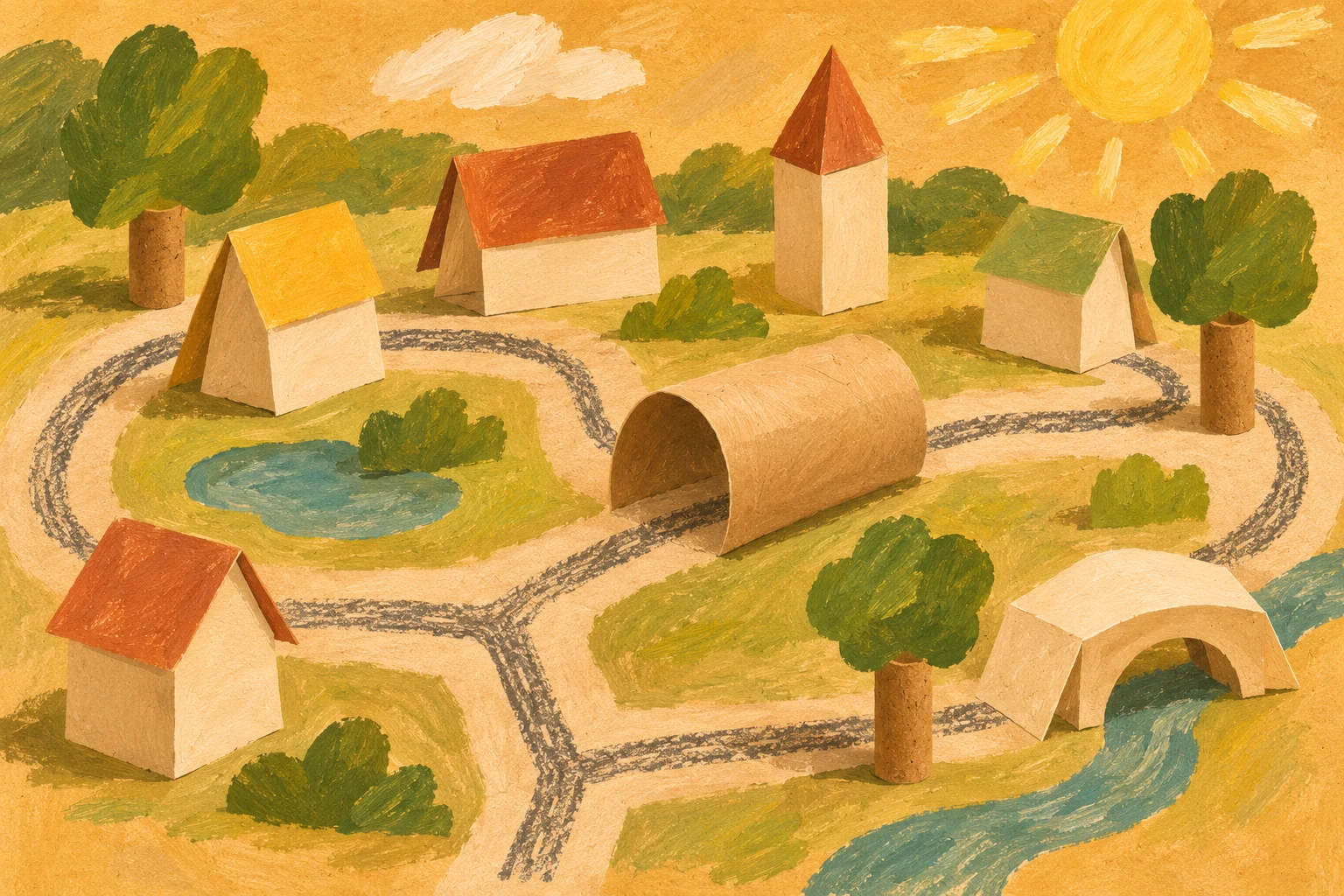
A tube and an open stretch of floor invite different routes through the same town.
Four scenes that leave the outcome open
A town with a road that ends
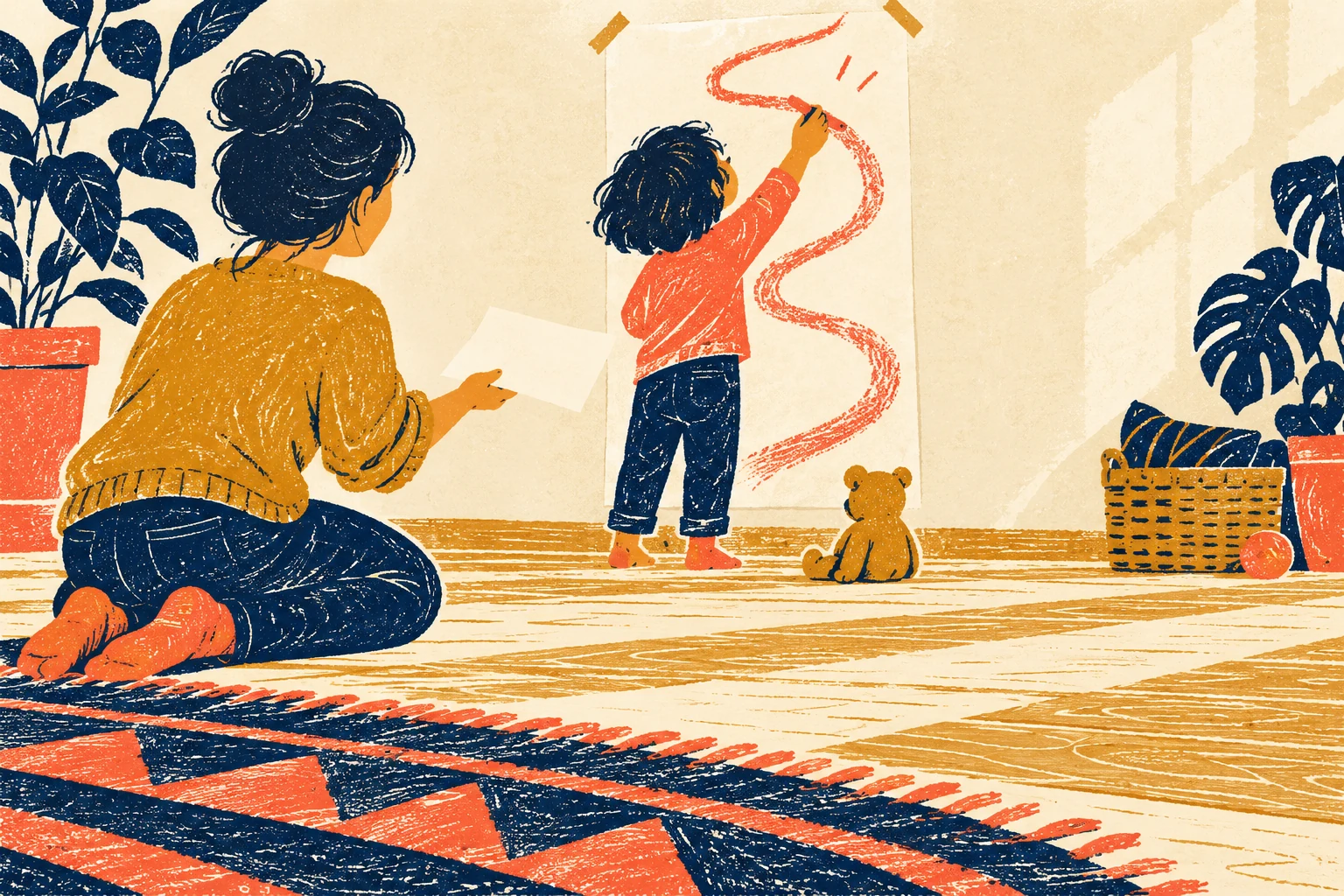
Give children a few broad strips of paper and cardboard shapes to stand on. Someone can lay a road between places. Ask where they want a vehicle to go when a strip comes to an end. The child might make a tunnel from a tube or announce that visitors must leave their cars at that point. If the play is going well, sit close enough to hear and let children ask for help if a piece keeps slipping.
A tent that changes its job
Drape a short piece of cloth low between secure cardboard boxes, with an adult available to keep the floor clear and the boxes steady. Ask whether the child wants the cloth up or down. It can become a quiet shade shelter, a pretend shop or a surface to lay out papers. Give peers time to describe what they imagined. If both ideas need the same cloth, offer another piece or make space for one game to follow the other.
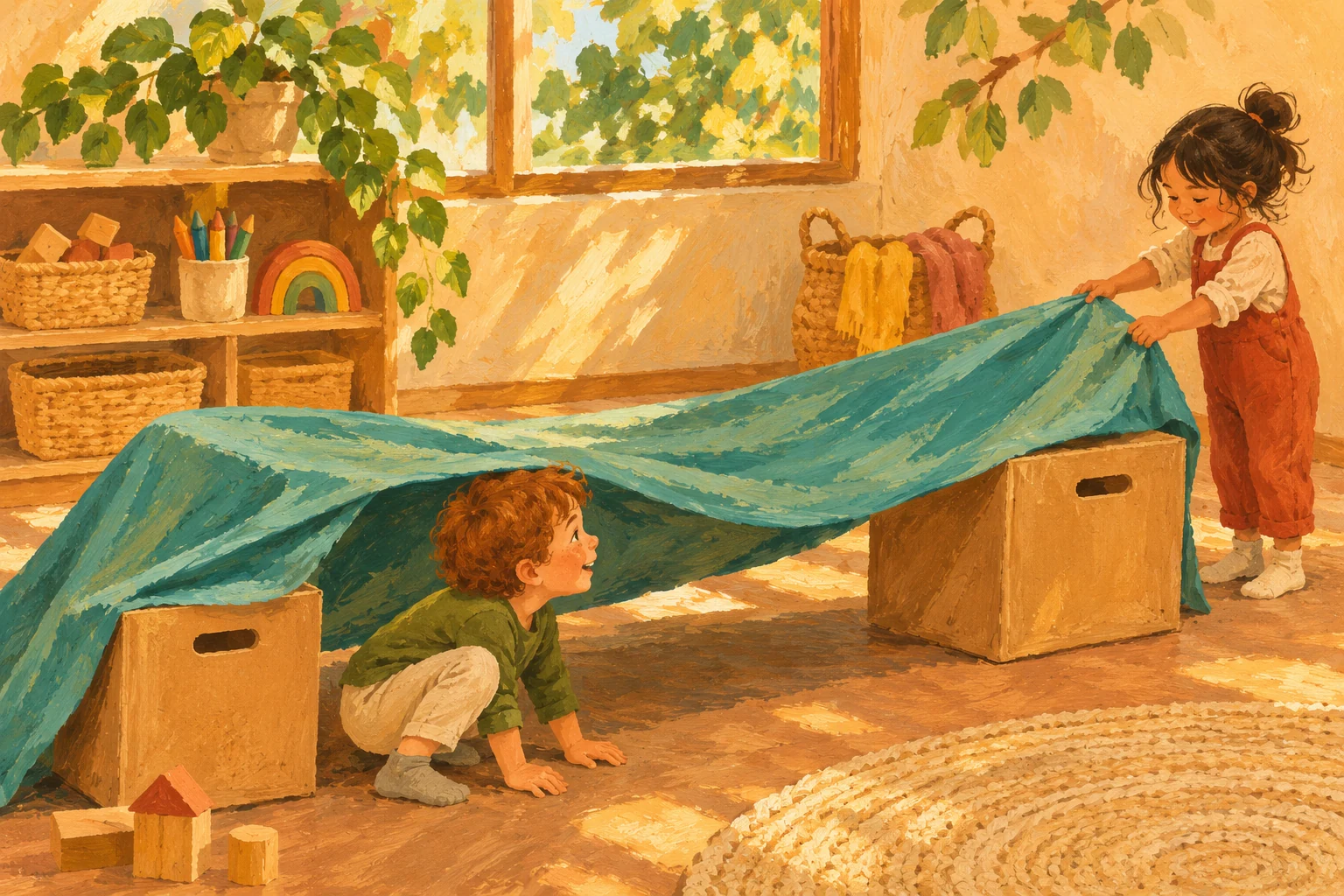
Children at different ends can suggest how the cloth fits their game.
A parcel that does not fit
A child can choose a soft toy and decide what would make a comfortable package for a pretend trip. Offer a large tray and an empty box. When the toy would rather ride with its head out, see how the child rearranges the box or asks a second child to help. You can join as the person delivering the parcel. Leave the name and destination to whichever child chose to play the sender.
A bakery with no menu yet
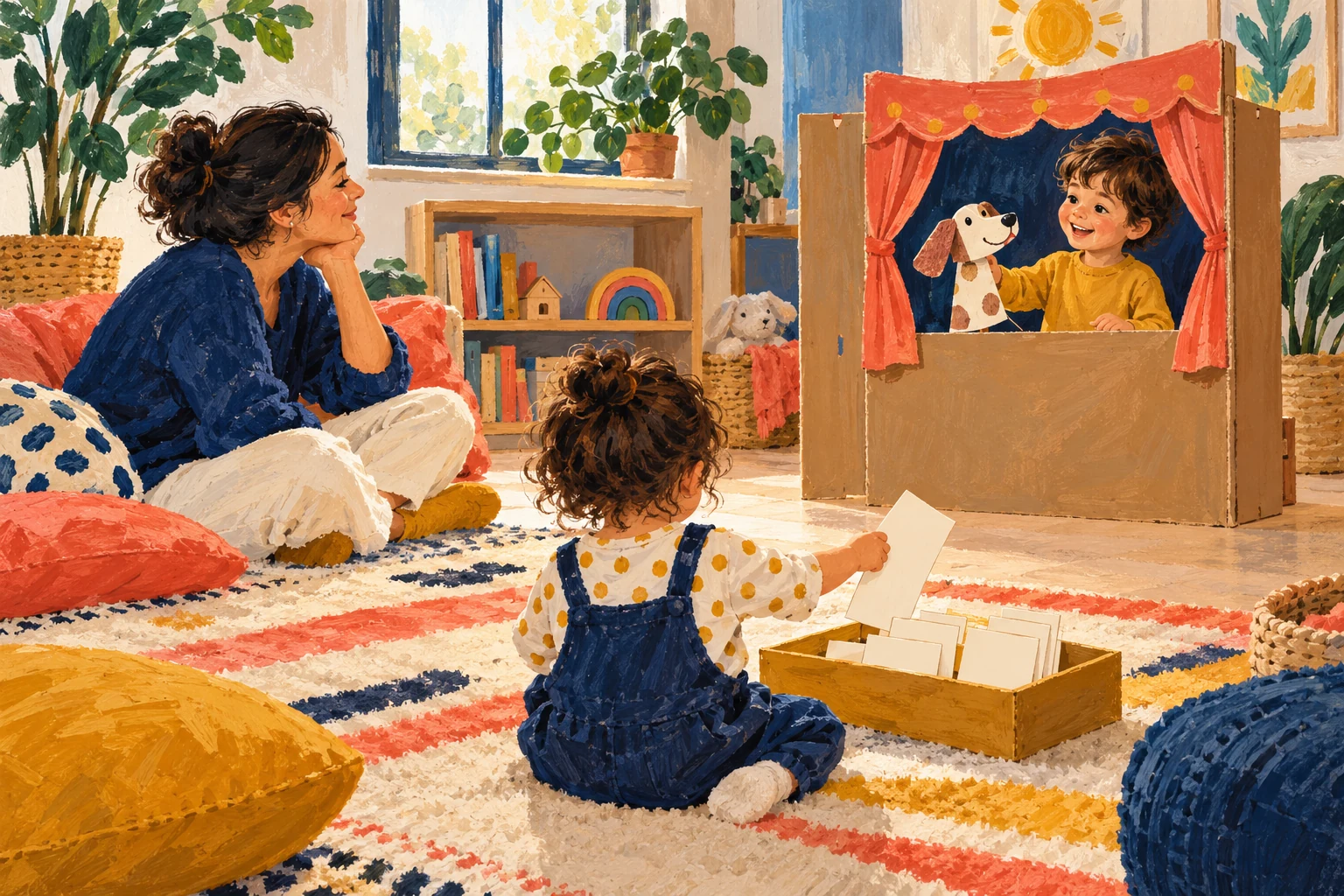
Clear a corner and place blank cards there. If children ask what the cards are for, try “Someone might want to remember something.” A baker may draw a picture, a customer may make a sign for the entrance and another child may build a pretend oven. When you notice everyone has ideas, resist organising them into one set of instructions. Ask which parts of the stories can happen in the same place.
The quieter parts count
A rainy afternoon at home
Imagine a five-year-old circling the sitting room, announcing that there's nothing to do. Their caregiver needs to stay nearby to fold laundry. They make a clear area and leave a cloth and box there. The child watches the folding, asks for a small piece of fabric and puts it over the box. Twelve minutes later it is a station for animals that need “a quiet room,” and the caregiver gets a short role as the person checking whether the station is open. The offer worked because someone was there to respond and the available materials could become many things.
A weekday classroom choice
A preschool teacher discovers that a child usually sits near the construction area but never joins. The teacher arranges a low tray beside the build and asks permission to look at the child's work. The child watches first, then draws a crooked track and asks a classmate to drive along it. Quiet observation was part of entering the game. The adult could describe that choice to the family and ask where the child likes to watch a shared activity before joining it.
Protect the space you have
In its 2026 statement on the role of school recess, the American Academy of Pediatrics discusses preserving choice during K–12 recess and including options for quiet as well as active participation. For a preschool group, the practical question is similar. Where in the day can children choose a pace, a partner or a project? A supervised outdoor corner, a classroom choice period or a familiar play space at home gives that question a concrete answer.
Start by protecting one real opening in tomorrow's routine. If the schedule changes, acknowledge it and tell the children when they can return. Keep an accessible place for unfinished play, with clear paths around it. Offer help with sharing, settling or finding material when a child asks. Later, let the child describe what they want saved. Keep the work they care about available.
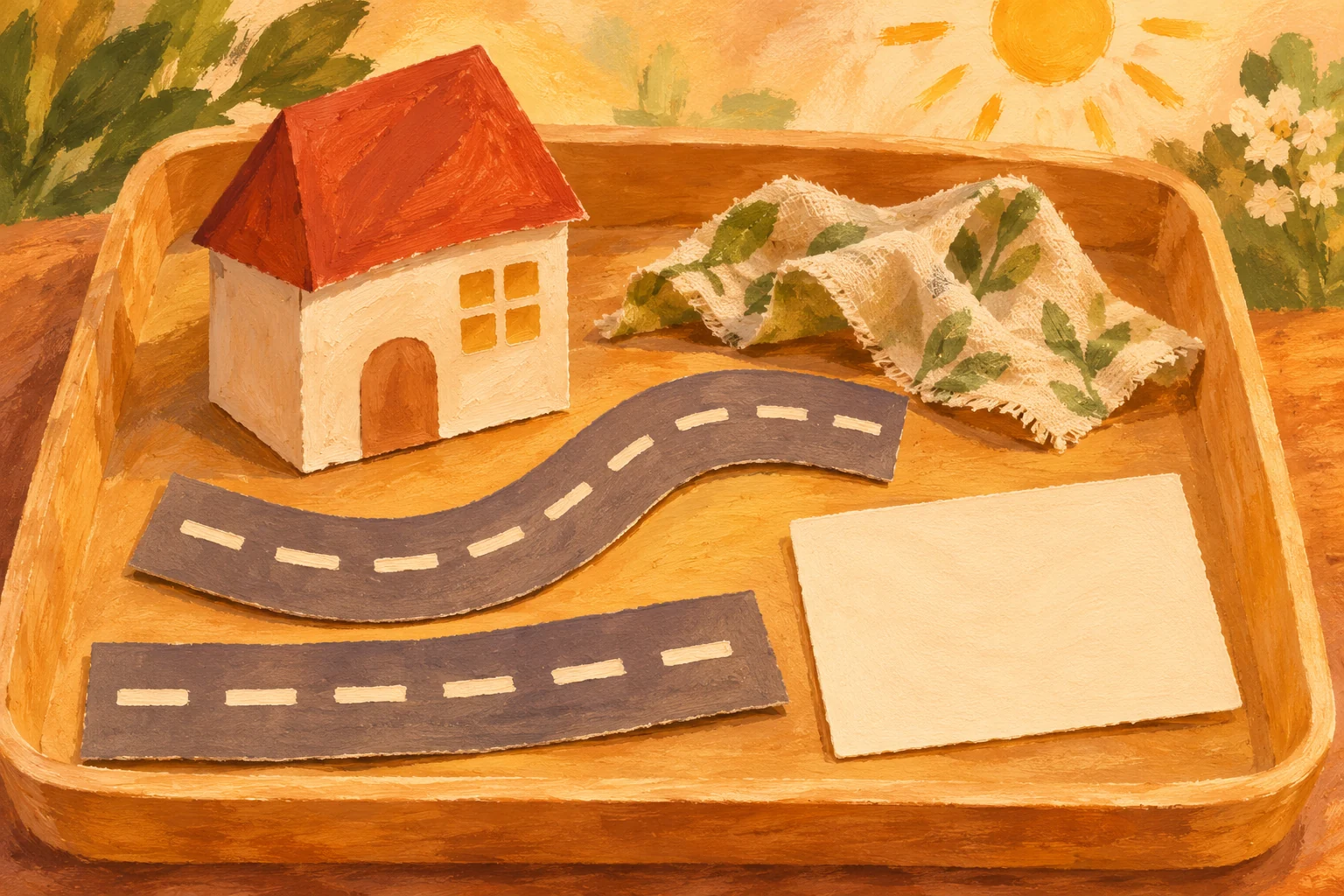
The tray preserves the small objects children might need to resume the story.
That same box might hold an animal station one day and be ignored on the next. A child's choice to rest, read or stay close to an adult can be just as meaningful as a new construction. Make the space available again when it fits the day. When a game starts, listen for the moment a child gives something an unexpected job. “It only opens in the rain” is enough of a beginning for the child to see where it goes.