Think Before You Ask AI: Teaching Young Children Independent Thinking Skills
Use a paper bridge, a picture key or a grid address to give young children experience checking a confident answer and explaining how they know.
A paper bridge bends under one block. Ishan says the river is too wide. His friend Asha thinks the paper needs a fold. The teacher asks them to choose one thing to change and try again. That small conversation teaches independent thinking skills that matter when a confident answer is a tap away. Preschoolers can practise asking for a reason, checking a clue and changing their minds with paper, blocks and picture puzzles. The printable ideas below give children a place to point when an opinion needs evidence.
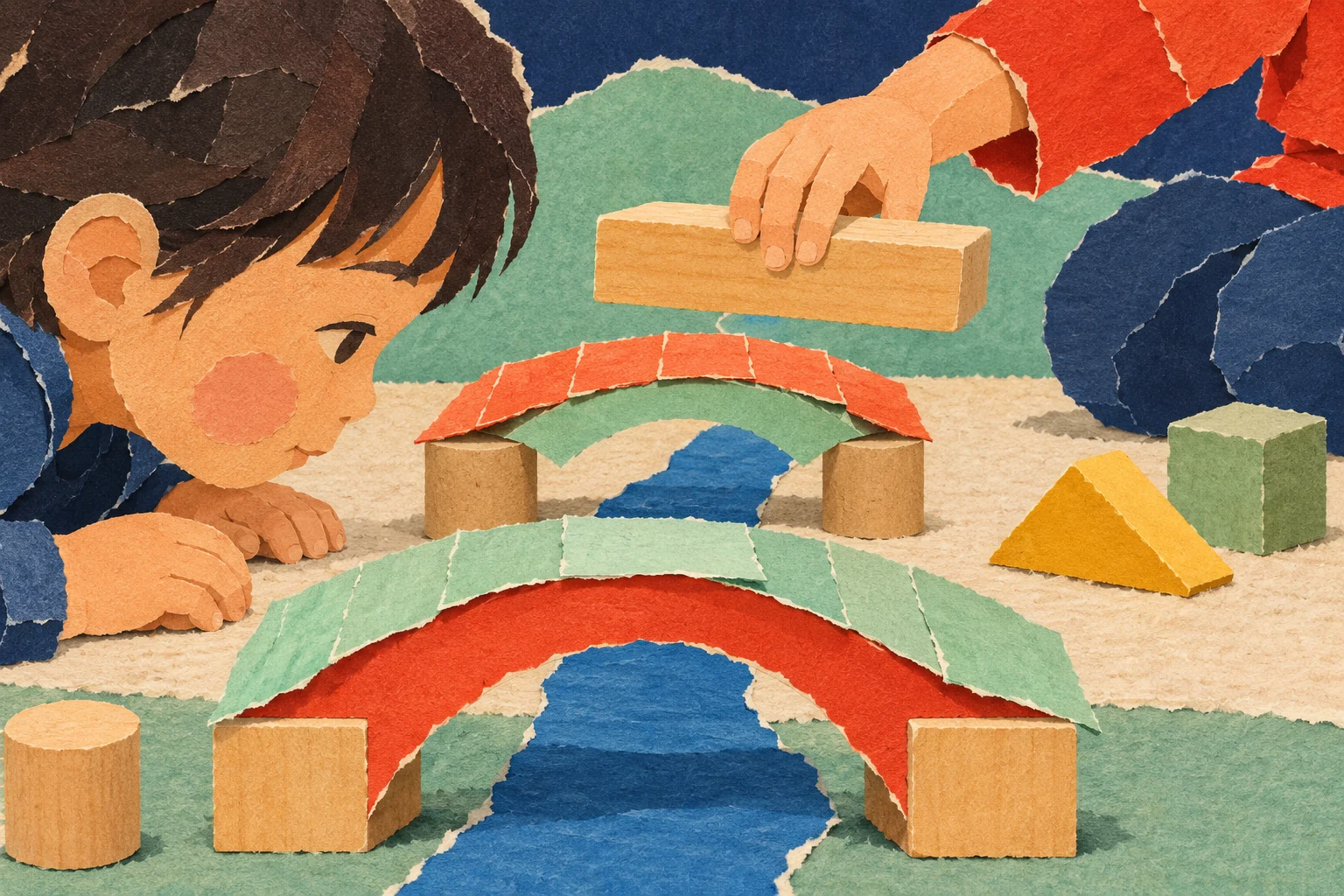
The bridges, supports and load are available for the group to inspect together.
Keep the decision with the child
An adult can provide the paper, stabilise a block or explain the word span. The child can still decide what might make the bridge hold. Independence describes who gets to make the next meaningful judgement. It can happen between children, with an interpreter or with a teacher who keeps a picture clue in view. Give enough support for the child to have access to the problem. Leave at least one part where they must choose a clue, a test or a new idea.
Try describing the decision in one sentence before starting. “You get to decide which fold to test first” is a decision a child can recognise. If the instructions specify a fold and the adult demonstrates the only acceptable result, the exercise may still teach a useful technique. A few minutes later, offer two ways to reinforce a fresh piece of paper so the child can decide what to do with that technique. Ask for a reason in whichever form they can show it.
Let both ideas reach the table
In the bridge story, both children have plausible guesses. Ishan could bring the supports closer. Asha could fold the paper. Give each one a turn to explain what they think will happen. Use the same load for the first two bridges, and keep their supports the same distance apart if you are comparing the folds. A small difference the children can inspect matters more than a result that looks impressive. Save the larger adjustments for another round.
Try a three-turn routine for independent thinking skills
First turn. Make a claim you can check.
Say, “I think this bridge will hold one block.” “Paper is strong” can lead anywhere, but this bridge, one block gives the children a specific idea to examine. Let a child put a token beside the bridge they expect to hold. A learner who uses pictures to communicate can choose between an image of the block staying up and one of the paper bending. Keep the question open until everyone who wants a turn has one.
Second turn. Find evidence you can share.
Slow down over one instant. Did the paper sag before the block fell? Did the support shift? Ask a child to point to the first place they saw a change. A peer may have noticed something different. Listen to both observations and decide on a way to do a second trial that everyone can see. Leave the block near the bridge so learners can refer to it. Ask for a clue another person can look at.
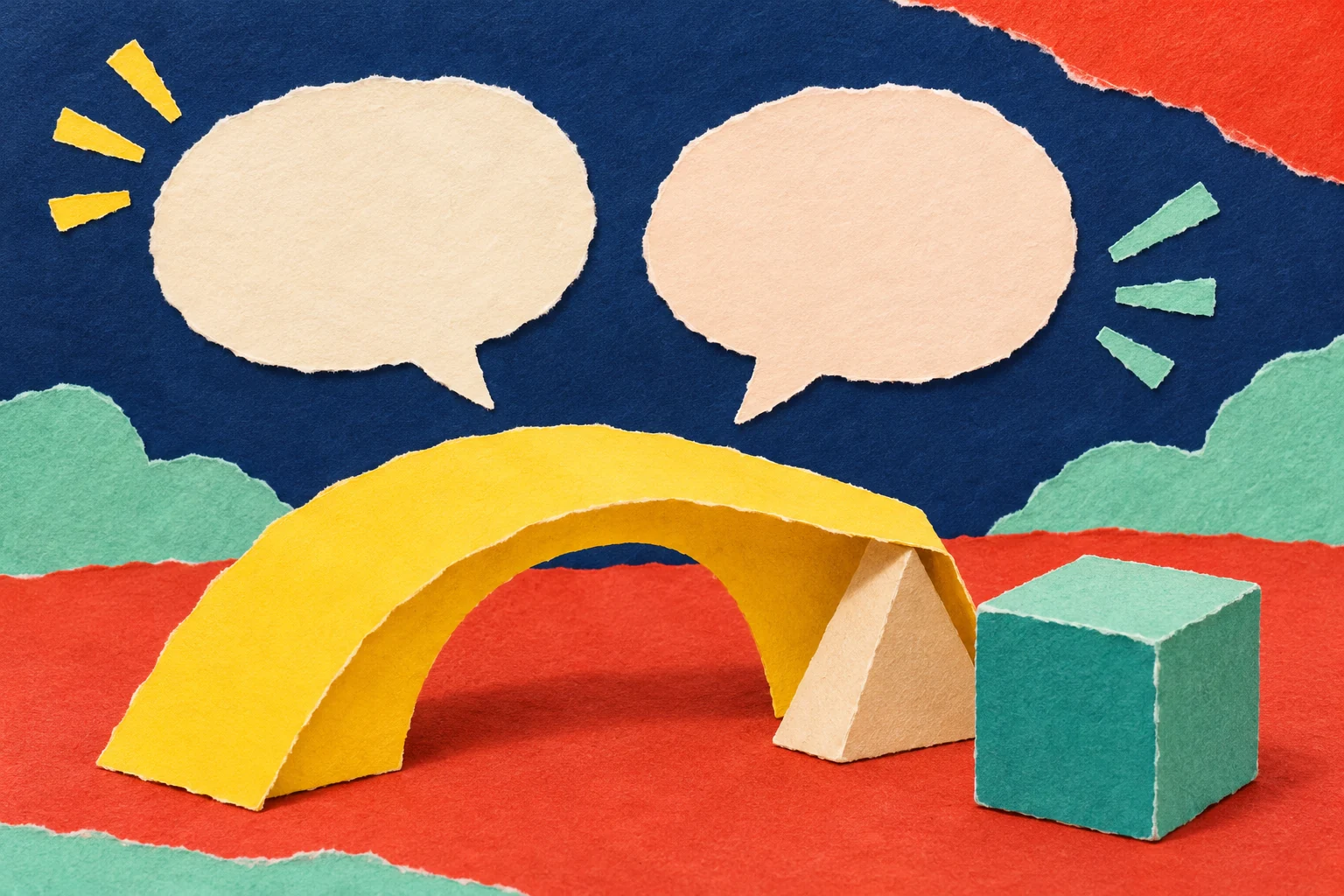
The empty bubbles leave room for two ideas about the same bridge.
Third turn. Say what you would change.
When a bridge collapses, the children can leave both guesses on the table while they discuss what they found. “The block rolled when the side slipped. I want to brace that side.” That is a more informative revision than “I was wrong.” Model changing a small part of your own idea. If the first trial worked, ask what else the children are curious about and let a later trial answer that different question.
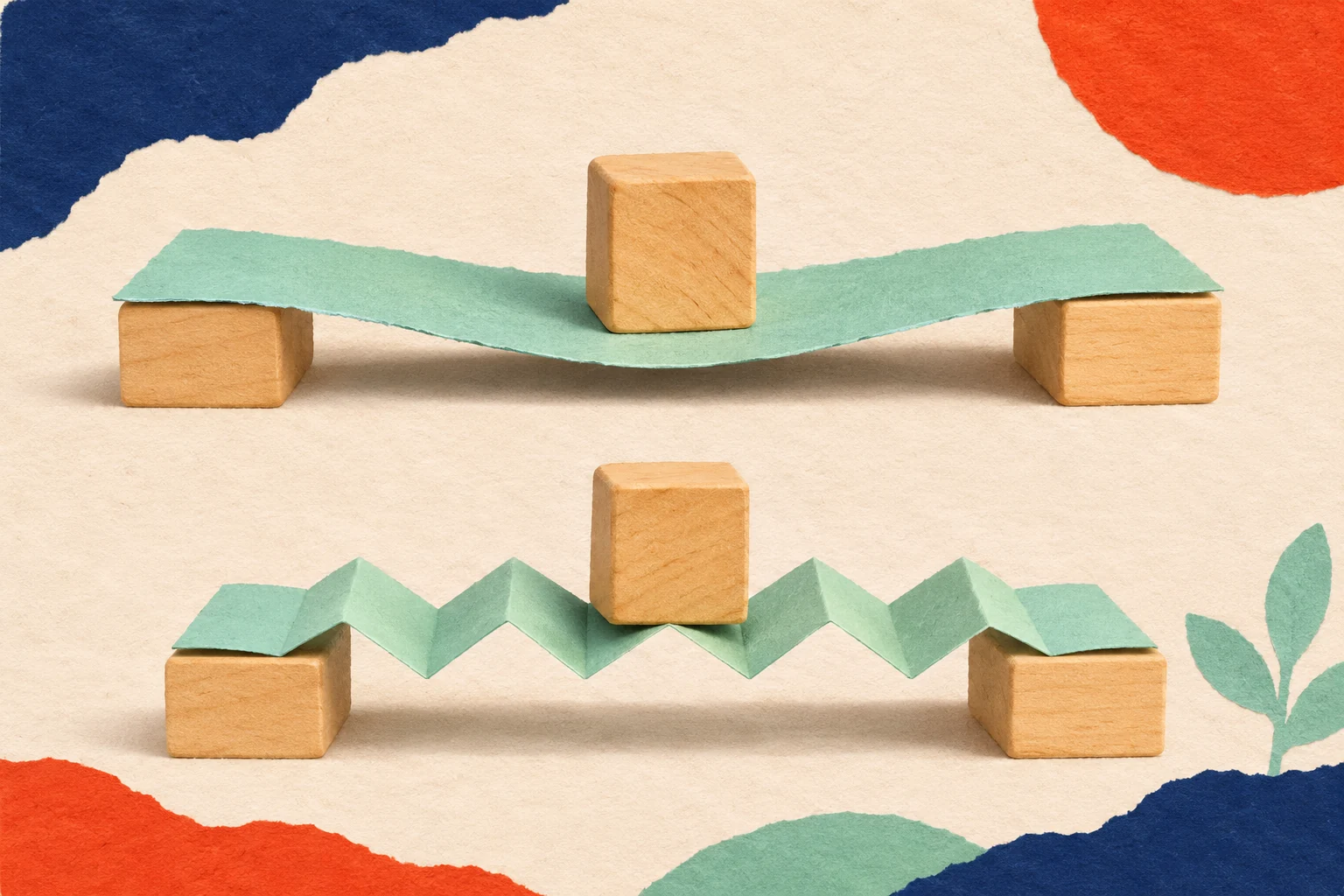
The side view makes the different folds visible between pairs of supports.
Where an adult might otherwise supply the answer
| A quick answer comes to mind | Keep this decision available | What the child can show |
|---|---|---|
| “It goes there.” | Which feature at the destination fits the clue? | A finger on the matching symbol. |
| “Those shapes are the same.” | What stays the same when a piece turns? | Pieces laid side by side or rotated. |
| “This is the right route.” | Which two labels tell a partner where to look? | A point to each part of an address. |
| “That will never work.” | What would a small trial tell us? | One step and a reason to try it. |
| “Your friend already answered.” | Can a second learner find different evidence? | A gesture, an object or a fresh explanation. |
Give the adults who share a classroom the same question to try for a week. If one adult asks where the proof is and another immediately points to it, compare what children do in the two situations. Leave thinking time after the question and grant a turn to a child who communicates without speaking. The answer can come from anywhere in the group if learners can inspect what it is based on.
Three checks inside existing puzzles
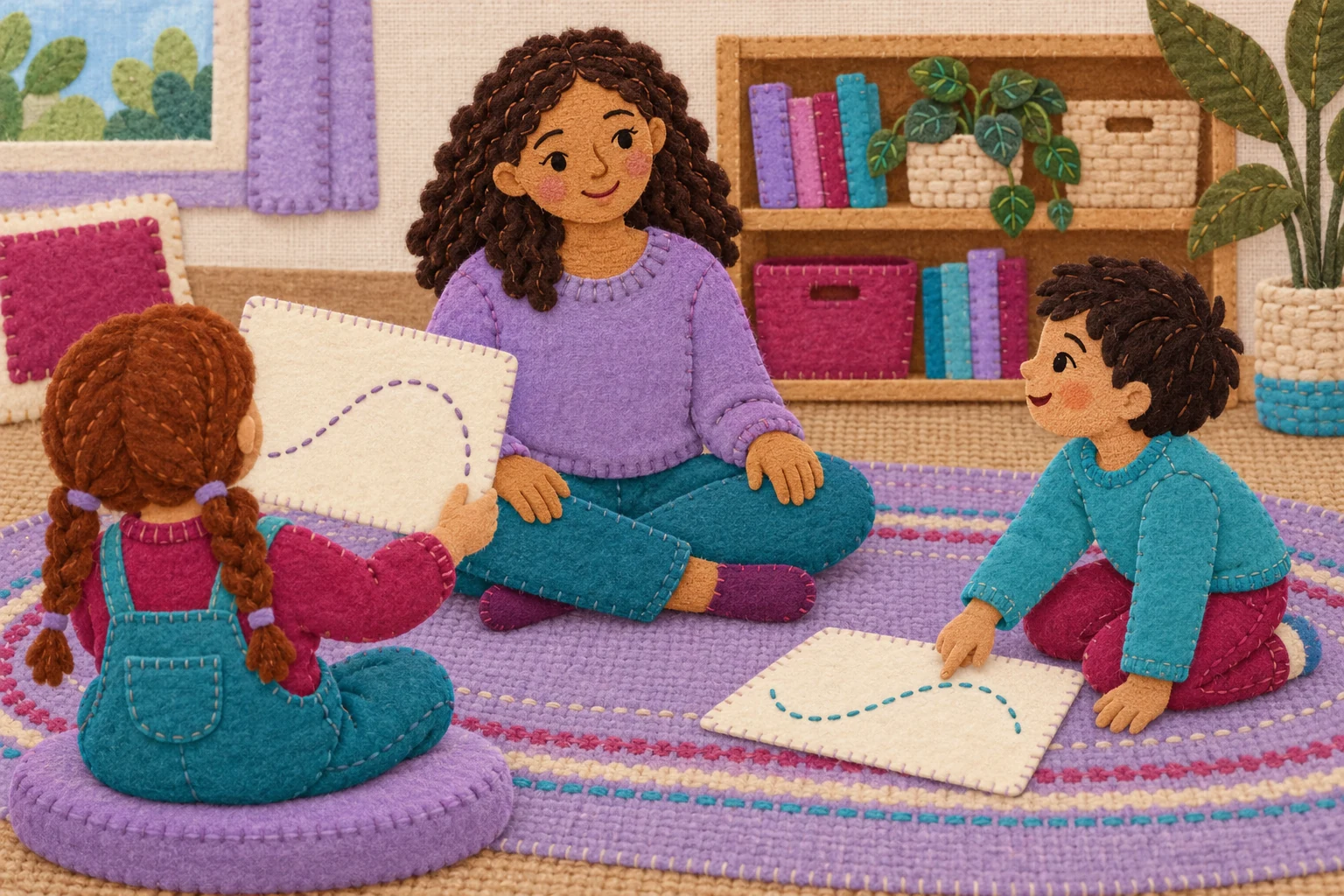
Open Zigzag Grid Matching Worksheet: 6 Brilliant Bends to Recreate when children already understand what it means to follow a line through a grid. Ask each child to choose one bend they think will help a partner reproduce the route. One might highlight the place it turns, and another the direction it travels. Point to the printed model to settle a question about the landing point. Keep the comparison focused on a single route before asking anyone to redraw more.
With Park Grid References: 6 Brilliant Picture Addresses, choose one landmark and have a child propose its picture address. Invite a partner to trace the column and row back to the square. If their fingers land in different places, return to the printed labels and read the address in its letter-first order. A pair can play it without writing by sliding counters along the two edges of the grid.
On Farmyard Route Key: 4 Wonderful Barn-to-Duck Puzzles, share a claim such as “This number takes us to the barn.” Ask the learner to point to the number in the key and then to the picture in the puzzle. Treat the key as a reference that anyone can inspect. For a child who is still learning the destination words, say the word while they point, and then let them ask a peer to verify it.
What these small decisions let children practise
- Separating a thought from a clue. A child can have a sensible guess before they have seen what happens.
- Asking a question that fits the resources. “Does it hold one block?” can be explored with the paper already in the room.
- Finding a check that another person can repeat. Two children can look at the same turn, picture key or address.
- Keeping a second explanation alive. If a landing spot is different from the one expected, the child can consider a turn or a missed row before choosing a reason.
- Changing course in public. An adult revising a claim aloud gives children language for doing it gracefully.
Two moments when the answer can wait
At a kitchen table
Someone wants to know whether a folded piece of card will make a ramp for a toy. The adult reaches for a phone because it is nearby. Instead, the child puts a wood block under the end of the card and makes a choice about where to let the toy go. The first run stops against a folded edge. The adult asks the child to point to where the toy stopped. Together they agree what to keep in place for another run. The child volunteers the next idea and can tell a sibling why it is worth trying.
In a kindergarten picture game
Two students disagree about a marker in a grid. One has followed the row from the wrong side. The teacher asks both to pretend they are giving instructions to someone who has never seen the grid. A child moves a finger along the printed row name while their partner checks the column. When they reach the same place, the teacher asks them what resolved the disagreement. They can describe a feature of the grid, and the answer stays available to another group using the same page.
Four ways to practise without a chatbot
- The convincing puppet. Let a puppet wrongly announce there are more square blocks than round ones. Ask children to show how the puppet could count fairly. Swap its claim on the next turn and let a child be the voice.
- The lost picture label. Put a picture beside two possible storage boxes. Give children time to inspect what each box contains and choose a useful place for the label. Ask the next person to try finding a piece using it.
- The paper roof. Invite a builder to cover a toy with paper and choose where the two supports go. Put a light object on top only if the child wants to test it. Compare one change in the spacing after the trial.
- A clue for later. After a shared puzzle, have the child draw one mark that would help someone check the answer tomorrow. Bring the mark and puzzle together next time and let a partner see whether the mark is informative.
What children need to know about fast answers
“People can ask a computer for an answer. We can look at what it says and ask what we could check.” An adult can use this sentence without starting a chatbot session. That matters with young learners. UNESCO's guidance on generative AI in education asks education systems to consider age appropriateness and data privacy. In early childhood, paper examples and conversations about familiar things leave children free to practise the judgement itself. Adults can use a fictional suggestion on a card if they want to model how to question a confident statement. Keep children's names, work and images out of the example.
Try one fictional suggestion such as “Every zigzag ends higher than it starts.” Put two hand-drawn routes in front of the children and let them show which provides a check. Ask a partner to make a third route that ends at the height they choose. A child can recognise a counterexample through a finger on two points. Teach the child to trust that act of checking enough to explain it, even when an imaginary answer sounds impressive.
Make room for “I want to look again”
One of the best turns in a classroom discussion happens when a child puts down the marker and asks for the picture again. It shows the child has another way to make a decision. Keep the relevant picture or object accessible and leave time to change an answer quietly. A partner can invite a second look with “Show me what made you choose that.” Respond to a useful clue even when a first guess turns out to be mistaken. Encourage children to say, “I want to look again,” early and often. That sentence gives them a next move whenever an adult, a friend or a tool offers an instant answer.