
Trace Number 1 Worksheet: 10 Brilliant Steps for Early Math Triumph!

Introducing the Number One: A Foundational Skill
Embarking on the journey of early mathematics is an exciting time for young learners, and mastering the number '1' is a crucial first step. This Trace Number 1 Worksheet provides a solid foundation, offering a delightful and effective way for children to connect with this fundamental numeral. It’s more than just tracing; it’s about building confidence and a positive association with numbers from the very beginning.
Why Focus on the Number One First?

The number one is unique. It represents singularity, the beginning of counting, and the concept of 'one of something.' For young children, understanding 'one' is the gateway to grasping quantities, comparison, and the entire number system. This worksheet zeroes in on this essential concept, ensuring a strong start before moving on to more complex numerals. It’s about building a robust understanding from the ground up.
Key Learning Benefits of This Trace Number 1 Worksheet
- Enhanced Fine Motor Skills: The act of carefully tracing the numeral '1' refines the small muscles in a child's hands and fingers, which is vital for developing handwriting proficiency.
- Improved Hand-Eye Coordination: Following the dotted lines requires children to coordinate what they see with the movement of their hands, a skill transferable to many other tasks.
- Number Recognition: Repeated exposure to the numeral '1' in a clear, distinct format helps children recognize it instantly, a cornerstone of early numeracy.
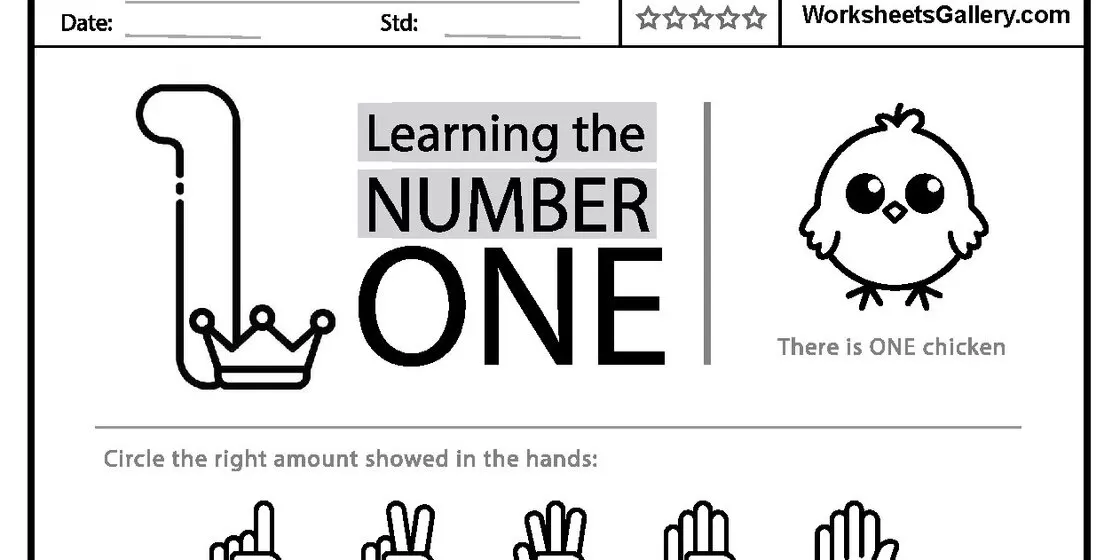
- Understanding Quantity: The worksheet associates the numeral '1' with a single object (like the chicken illustration), reinforcing the concept of 'one' as a count.
- Concentration and Focus: Completing the tracing and coloring activities encourages sustained attention, helping children develop their ability to focus on a task.
- Building Confidence: Successfully completing each section of the worksheet provides a sense of accomplishment, fostering a positive attitude towards learning numbers.
- Introduction to Writing Strokes: The simple vertical line of the number '1' is often one of the first strokes children learn, making this worksheet a gentle introduction to writing.
Hands-On Activities Included
This worksheet is thoughtfully designed with multiple engaging activities:
Tracing Practice
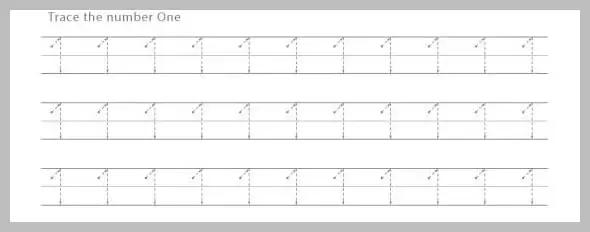
Multiple rows of dotted '1's provide ample opportunity for children to practice forming the numeral correctly. This repetition is key to muscle memory development.
Visual Association
An illustration of a single chicken alongside the number '1' helps children connect the abstract symbol to a concrete quantity.
Hands Demonstration
A visual guide showing hands with one finger raised reinforces the concept of 'one' in a relatable, human way.
Coloring Activity
Coloring the 'ONE Stars' provides a fun, creative outlet that also reinforces the concept of quantity (one star for each). This is a great way to end the numerical practice.
Practical Use: Home and Classroom Scenarios
This versatile worksheet can be seamlessly integrated into various learning environments:
At Home
Imagine a cozy afternoon. Your child sits at the kitchen table with crayons and this worksheet. You can guide them through tracing the number '1', talking about how it looks like a tall stick. Point to the chicken and say, "See? There is ONE chicken, just like the number we are tracing!" After tracing, they can color the stars. This creates a relaxed, positive learning experience, building their confidence for future math endeavors. It’s a wonderful way to spend quality time while supporting their educational development. For more structured number practice, consider our Master Number 1 to 10 Tracing resource.
In the Classroom
A teacher can introduce the number '1' during circle time using this worksheet as a visual aid. After a brief discussion about what 'one' means, children can take the worksheets back to their desks for individual practice. The clear layout and engaging visuals make it easy for young learners to follow along. Teachers can observe each child's progress, noting their ability to trace the numeral and their understanding of the quantity. This worksheet serves as an excellent tool for small group instruction or independent work stations, allowing for differentiated support. It’s also a great way to assess initial understanding before moving to numbers like two or three, perhaps using resources like our Master Number 2 Tracing worksheet.
Developing Essential Skills
Beyond just learning the number one, this worksheet is a powerful tool for developing a range of crucial early childhood skills:
Cognitive Skills
Number recognition, understanding quantity, and associating symbols with objects are key cognitive functions strengthened here.
Fine Motor Skills
Grasping a crayon or pencil and carefully tracing lines directly enhances dexterity and control in the hands.
Language Development
Discussing the number 'one', the chicken, the hands, and the stars provides opportunities for vocabulary building and sentence formation.
Pre-Writing Skills
The simple vertical stroke of the number '1' is a foundational element for learning to write letters and other numerals.
Common Mistakes and How to Address Them
It's common for young children to make mistakes as they learn. Here are a few to watch for and how to help:
Inconsistent Tracing
Issue: The child’s '1' might be wobbly, slanted, or not a straight line.
Solution: Gently guide their hand, emphasizing the straight, vertical motion. Use verbal cues like "straight down." You can also trace it yourself slowly, exaggerating the movement.
Incorrect Quantity Association
Issue: The child doesn't consistently connect the numeral '1' with a single item.
Solution: Point to the chicken and say, "This is ONE chicken." Count other single objects around them: "ONE book," "ONE chair." Reinforce the concept through everyday examples.
Difficulty Holding the Writing Tool
Issue: The child grips the crayon or pencil too tightly or uses an incorrect grasp.
Solution: Ensure they are using age-appropriate writing tools. Model a relaxed, functional grip (tripod grasp). Offer chunky crayons or pencils with grips. Don't force it; focus on making the experience enjoyable.
Encouraging Consistent Practice
Making learning a habit is key. Here’s how to encourage regular practice:
- Keep Sessions Short and Sweet: Aim for 5-10 minutes of focused practice daily rather than long, infrequent sessions.
- Make it Fun: Use colorful crayons, fun stickers as rewards, or sing songs about the number one.
- Integrate into Daily Routines: Count one object at snack time, point out one car, or ask "How many cookies do you want?" (aiming for one).
- Positive Reinforcement: Offer specific praise for effort and progress, like "You traced that '1' so neatly!" or "Great job counting one star!"
- Variety is Key: While this worksheet is excellent, supplement with other activities like number puzzles or building with one block at a time. Explore our Trace 5 Essential Lines for broader pre-writing skill development.
Extending the Learning: Fun Activities Beyond the Worksheet
Take the learning further with these creative ideas:
Number One Scavenger Hunt
Hide one specific object (e.g., a red block) around a room and have your child find it. Celebrate when they find the ONE item.
One-Object Art
Provide paper and a single color of paint or crayon. Ask them to draw something using only that one color, focusing on the concept of 'one'.
Storytelling with 'One'
Create a simple story where the main character finds or does only one thing. For example, "The little bear found ONE shiny berry." This reinforces the concept through narrative.
Fingerplay Fun
Use fingerplays like "One, little, two, little, three, little Indians" (or a more culturally sensitive version) to associate the number one with a physical action.
Why Children Enjoy This Activity
Children are naturally drawn to activities that are visually appealing and provide a sense of accomplishment. The clear, bold numeral '1', the cute chicken illustration, and the opportunity to use colorful crayons make this worksheet inviting. The step-by-step nature of tracing provides a manageable challenge, and successfully completing each section offers immediate positive feedback. The coloring activity at the end adds an element of creative freedom, making the entire experience enjoyable and rewarding.
Recommended Age Group
This worksheet is ideally suited for children aged 3-5 years old. At this age, children are typically developing their fine motor skills and beginning to recognize numerals. It serves as an excellent introduction for preschoolers and early kindergarteners.
Download Instructions
Getting this valuable learning resource is simple:
- Click on the download link provided.
- The worksheet will open in a new tab or window, ready for download.
- Save the file to your computer or device.
- Print the worksheet on standard paper.
You'll receive a high-quality, printable PDF file, completely free of watermarks and advertisements, ensuring a clean and focused learning experience for your child.
Ready to start?
Download this Trace Number 1 Worksheet today and give your child a fantastic head start in their math journey!
Popular Worksheets
Printable resources families and teachers are downloading now.
 Free
Free
 Free
Free
 Free
Free
 Free
Free