
Addition Pairs: 5 Brilliant Games for Happy Math Talk
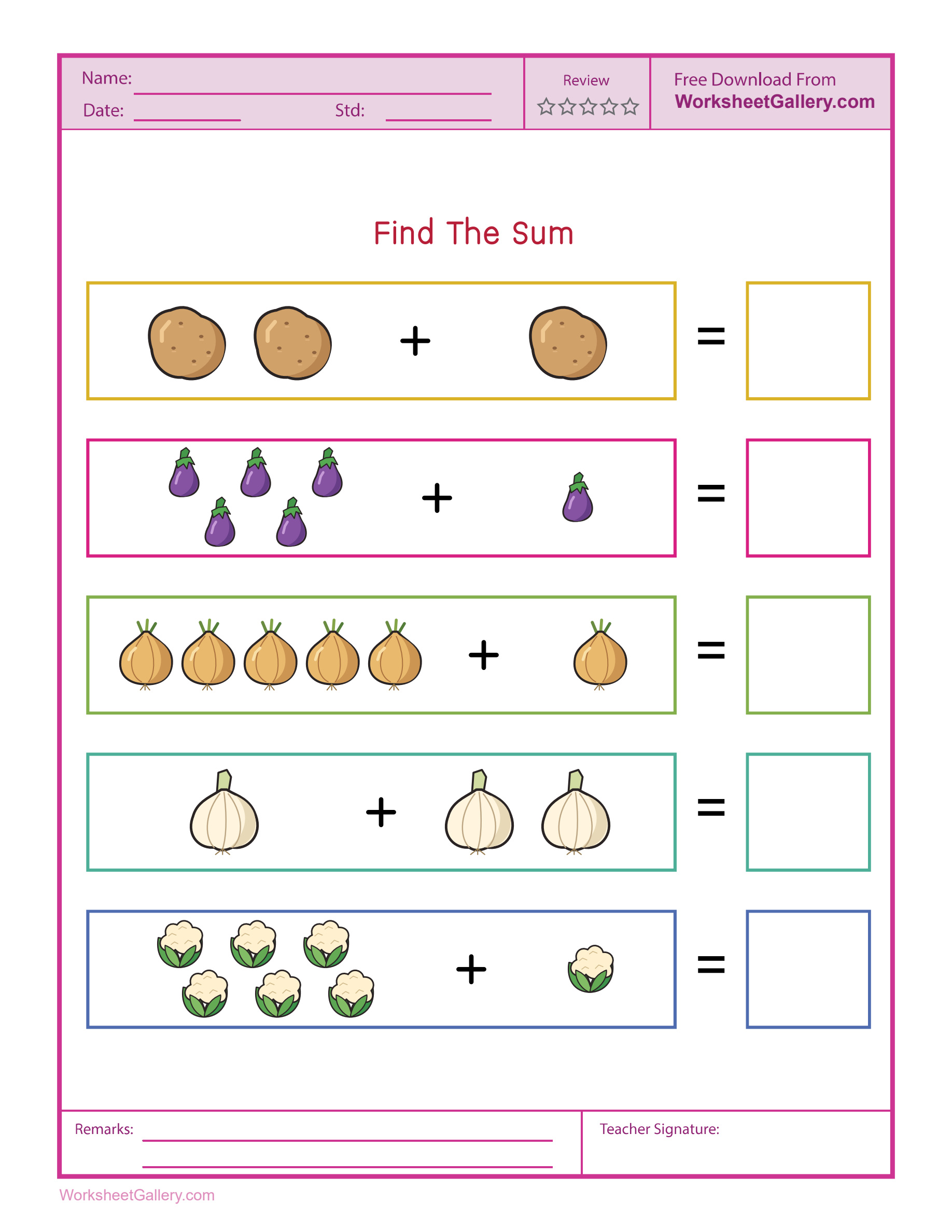
Two waiting on one platform and one on another still make three travelers. Addition Pairs begin with that simple quantity relationship, using potato pictures before a pretend train journey. This sheet also shows one garlic bulb with two more, and two different arrangements of five pictures with one extra. Children can compare the parts, count their combined amount and explain what matches across rows. Bring Addition Pairs into a station conversation where moving a paper passenger changes its waiting place without creating a new traveler. The answer becomes something a child can demonstrate.
Read the potato Addition Pairs before writing three

The top equation contains two potato pictures before the plus sign and one afterward. Indicate the first pair, the single picture and the complete collection in turn. A learner can hear “two and one” while seeing the separate parts, then count three across the full equation.
Each potato drawing contributes one object. The little eye marks inside its outline are details of that potato, not additional items. Establish this unit before counting so the child is answering the question represented by the pictures.
Addition Pairs concern the relationship between both groups and their combined quantity. The right-hand potato is not itself the answer. The separate square beyond the equals sign is where the total is recorded after all the objects in that row have been included.
The starting amounts are illustrated, with no printed operand numerals to read. An adult can supply the number words while the learner points. Addition Pairs can therefore begin as a shared observation before independent number-sentence reading or handwriting is expected.
Eli moves the Addition Pairs passengers between platforms
Eli and his father put three large paper potato passengers beside a toy railway. Two wait on one platform and one waits on the other. Before the train arrives, Eli describes how many passengers are waiting altogether and shows the three pictures he counted.
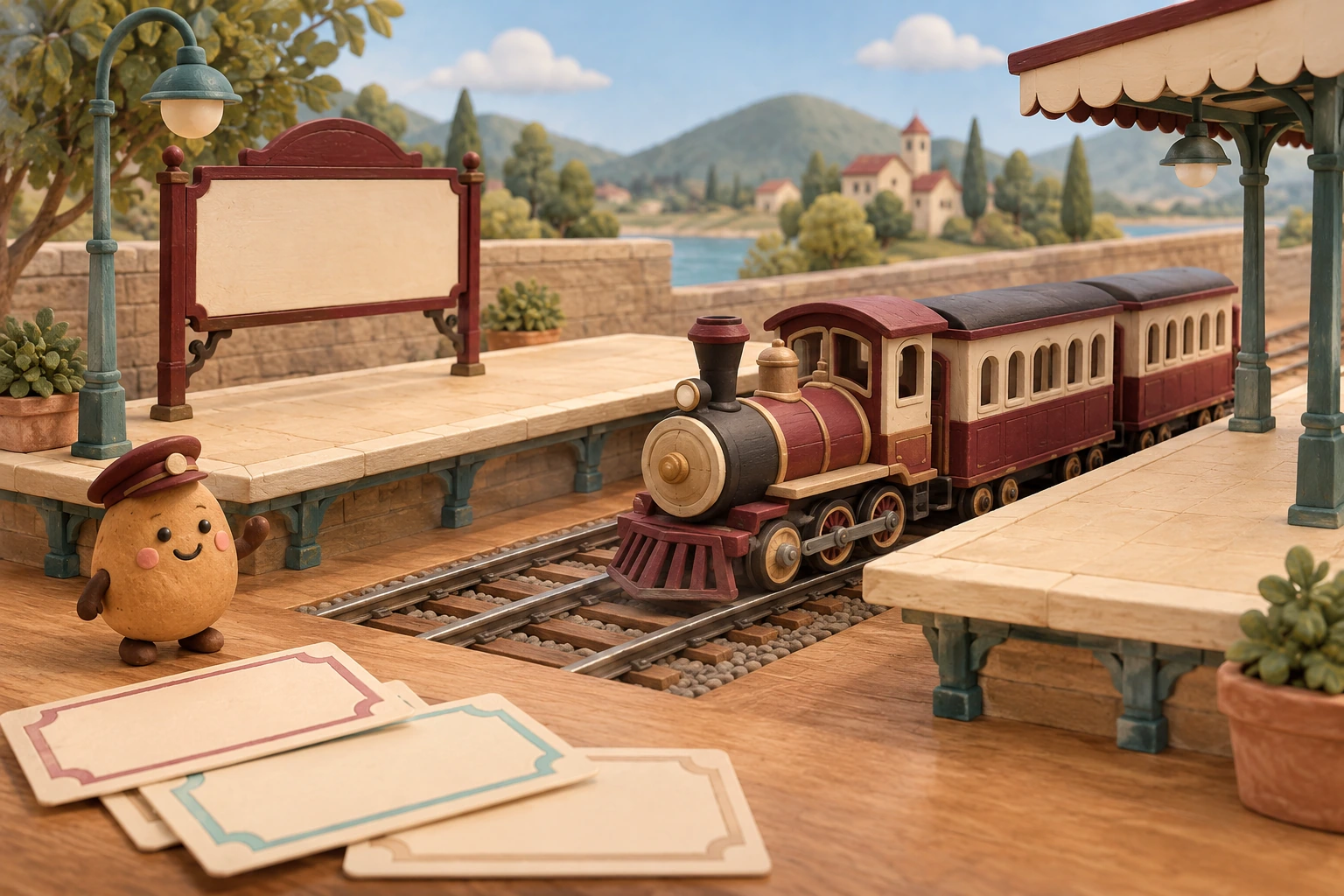
His father switches which platform holds the pair and which holds the single passenger. Nobody boards or leaves. Eli checks the paper pieces and confirms that three travelers are still waiting, despite the change in their two group positions.
They return to the Addition Pairs worksheet and name the potato parts. The printed garlic row offers the reverse quantity order, one and two, although it uses different objects. Rebuilding those quantities with the same paper passengers lets Eli investigate the order change directly.
The miniature station image introduces the setting; its empty platforms do not provide a solved counting example. Use counted paper pieces or the original equation pictures for arithmetic. This Addition Pairs story gives a child a reason to justify an unchanged total rather than merely agree with an adult.
The garlic Addition Pairs put two on the right

One garlic bulb appears before the plus sign and two appear after it. Its combined quantity is three, just as the potato row contains three pictures. The larger group is now on the opposite side. Point out that location change after the quantities have been established.
For Addition Pairs, a child can count all the garlic pictures from one without using a shortcut. Someone ready to compare familiar quantities can describe the one-and-two parts before counting the whole collection as a check. Accept a pointing explanation alongside spoken words.
Count a whole pictured bulb once. Its drawn divisions suggest cloves inside the bulb, but the exercise counts complete drawings. Likewise, the cauliflower row counts heads rather than their individual florets or leaves.
The equals sign connects the combined pictured amount with its written total. Addition Pairs do not change that relationship when the larger group moves to the right. Keep both groups visible while discussing the answer instead of letting the eye settle only on the first collection.
Five Addition Pairs gains with visible evidence
| Learning opportunity | What the learner can show |
|---|---|
| Addition Pairs structure | Identify two separate groups and include both when explaining the whole amount. |
| Addition Pairs flexibility | Recognize that one with two and two with one can each contain three objects. |
| Addition Pairs visual judgment | Establish five in a staggered arrangement and five in a straight line through counting. |
| Addition Pairs language | Tell a partner which part is being described, using quantities as well as object names. |
| Addition Pairs recording | Connect the spoken total with a numeral in the square belonging to the selected row. |
For ages three to six, choose an entry task that suits the individual preschool or kindergarten learner. The three-object examples provide a shorter count; the larger collections can wait until the learner is ready. An adult may handle writing while the child supplies the quantity and explanation.
Motor, cognitive and language demands overlap without being identical. Addition Pairs pointing requires coordinated movement, comparing groups requires attention to quantity, and explaining the result requires communication. Observe each response instead of expecting one skill to stand in for all the others.
Two Addition Pairs rows share five and one
Eggplant Addition Pairs spread five over two levels

The eggplant row shows three pictures above two in its first group, followed by a single extra picture. These vegetables are also called aubergines. Name them in the way familiar to the child, then establish five before including the final drawing.
A deliberate pointing route can cover the upper three and then the lower two. Addition Pairs here total six. Let the learner show which picture received the last count, so the answer has an observable connection with the complete row.
Onion Addition Pairs place five along a line

Five onion pictures form a horizontal starting group, with one more beyond the plus sign. Count those objects and compare the two part amounts with the eggplant equation. Both use five and one even though the vegetables and their arrangement differ.
Do not assume that a child will recognize the shared structure from appearance alone. Addition Pairs comparison should follow established quantities. Once five and one are secure in each row, ask what numeral belongs in each answer square and why.
A classroom call can fit more than one Addition Pairs row
A teacher asks learners to find an equation with five pictures in one group and one in the other. A child selects onions; another selects eggplants. Instead of deciding that only the teacher's first choice counts, the group checks both selections against the spoken quantities.
The Addition Pairs evidence supports both responses. The teacher invites children to explain what differs visually and what remains mathematically the same. Their observations can refer to the straight line, the two-level arrangement, the picture names and the shared five-and-one parts.
Then she changes the call to one with two. Learners locate garlic and show which part contains two. A later call to two with one identifies potatoes. Addition Pairs now give the children a reason to listen to the order of the description while recognizing the equal total.
Keep the task small enough for everyone to participate. One learner may point, another may name the parts and another may write the answer. Each contribution should still refer to the actual chosen equation, making its role in the shared explanation clear.
Five Addition Pairs station jobs after the first count
1. Swap the Addition Pairs waiting places
Place three paper passengers into a two-and-one arrangement. Switch which platform holds each group while keeping the same pieces. Let the learner explain whether any passenger arrived or left, then recount if a check is wanted.
This Addition Pairs job explores group order through a concrete change. End by describing the two new part positions and the unchanged amount waiting for the train.
2. Find the Addition Pairs twin request
Select either the onion or eggplant equation and describe its two quantities without naming the vegetable. Ask for another row that fits those amounts. The learner can count each candidate before deciding which request matches.
Finish by explaining the common five-and-one structure. Addition Pairs matching concerns quantities, so different picture names do not prevent two rows from answering the same request.
3. Make an Addition Pairs announcement in order
An adult points to the garlic row while the child voices a station announcement: one group is waiting here and two are waiting there. The listener indicates each collection as it is described, then asks for the complete passenger amount.
Supply vocabulary when needed. Addition Pairs announcements can use pointing and short phrases rather than a polished sentence, provided the message accounts for the correct quantities.
4. Give Addition Pairs one sound per pictured traveler
Use the potato equation and pair each indicated picture with one soft tabletop tap while counting aloud. Stop when the final drawing has received its tap. Compare the spoken total with the number of pictured objects.
The sound is a way of coordinating attention with the counting unit. Addition Pairs should not gain extra passengers because the adult taps twice for one drawing; return to slower pointing if the actions separate.
5. Record the Addition Pairs station total
Let the child dictate the total for a selected equation to a pretend ticket clerk. The adult writes the numeral on spare paper and reads it back. Check the ticket against both picture groups before putting the same numeral in the row's square.
This Addition Pairs activity gives recording a listener and a purpose. A learner who knows the quantity can participate even when the adult supplies the pencil work.
Keep this Addition Pairs result reference with the adult
| Source equation | Picture quantities | Whole amount |
|---|---|---|
| Potatoes | 2 + 1 | 3 |
| Eggplants | 5 + 1 | 6 |
| Onions | 5 + 1 | 6 |
| Garlic bulbs | 1 + 2 | 3 |
| Cauliflower heads | 6 + 1 | 7 |
All answer spaces in the printable remain empty. Use this reference to check an explanation after the child has established a quantity. If an answer differs, observe the counting process before deciding which support is needed.
The cauliflower starting group has three heads above three more. Its single newcomer makes seven. This is the longest collection on the sheet, so it can extend Addition Pairs practice after the shorter examples rather than becoming the required starting task.
Notice which Addition Pairs demand needs attention
An answer of two for potatoes may reflect attention to the first group alone. Ask the learner to indicate what happened to the single picture beyond the plus sign. An answer greater than three calls for watching whether a potato was revisited or an interior mark counted separately.
For the staggered eggplants or cauliflower, agree on a route through one level and then the other. Keep the hand clear enough that the next drawing stays visible. Addition Pairs become harder to track when the learner must guess where pointing has already occurred.
Writing can create another difficulty. A correctly spoken six may be followed by an uncertain numeral or an answer placed beside the wrong frame. Acknowledge the accurate quantity, model the numeral separately if needed and locate the square attached to that equation.
Return to Addition Pairs with a new station call
On a later visit, change the announcement rather than repeating every answer. Ask for five with one, or for one with two, and invite the child to find evidence for a choice. One explained selection can make a useful session without a completely filled page.
Describe the specific successful action: a second row matched the five-and-one request, both platforms were included, or the larger group on the right was remembered. Check the parts before trusting the appearance. That reminder keeps Addition Pairs connected to the quantities under discussion.
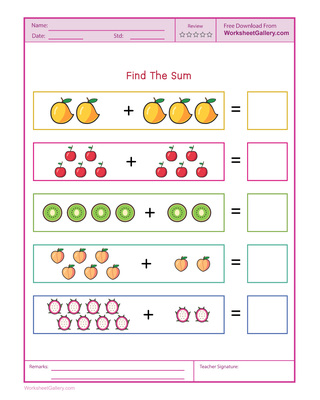
Further contexts appear in the Find the Sum picture-group lesson and the fruit-based addition practice. For a focused numeral activity, try the number-five tracing and object count alongside the two five-picture starting groups.
Download Addition Pairs for the next train announcement
Use the free sample selection for the worksheet with its original branding. The clean premium Addition Pairs PDF is reserved for a currently eligible active membership. Its printable has no website-name credit, domain lettering or promotional watermark. No advertising has been inserted into this clean edition.
Open your selected file and inspect all five equations. Choose portrait printing on US Letter paper, fitting the outer frame inside the printer's printable region. A test copy should show the lower eggplants, all six cauliflower pictures in their first group and the full blank answer boxes.
Place the Addition Pairs sheet where the child can see both groups comfortably. Start with a quantity the learner can explain, then let the toy train wait for an accurate announcement: two parts, one combined amount.
Popular Worksheets
Printable resources families and teachers are downloading now.
 Free
 Free
 Free
 Free