
Fruit Addition: 5 Powerful Ways to Build Happy Totals
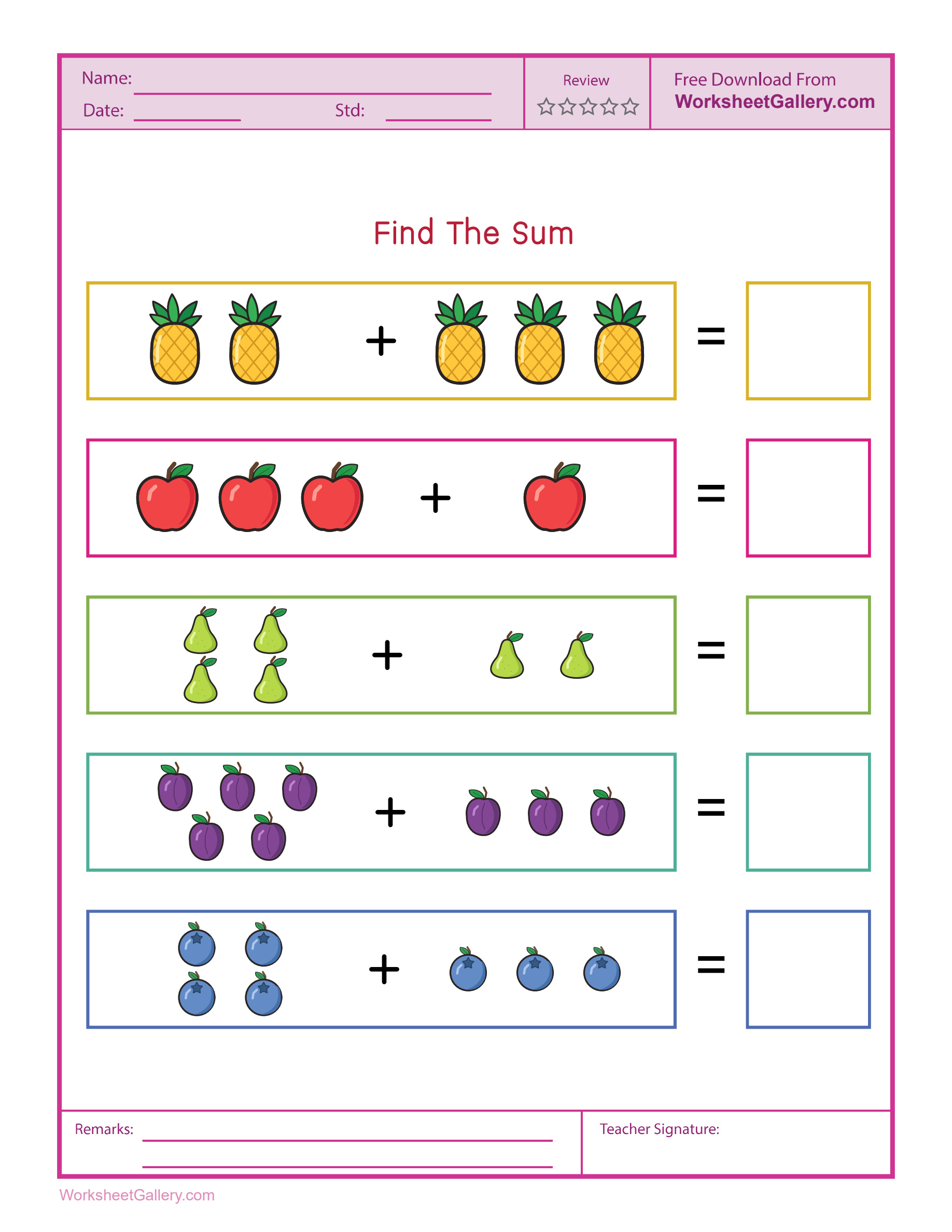
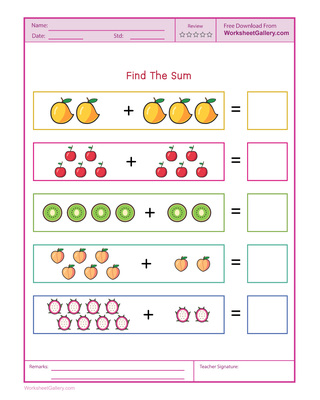
A packing crate needs one total, even when the fruit arrives in two batches. Fruit Addition begins with that useful question: how many pieces belong in the crate altogether? This colorful sheet shows five pairs of fruit groups, with a plus sign between each pair and an empty square after the equals sign. Children can point, count and explain before writing a numeral. Explore Fruit Addition with pineapples, apples, pears, plums and blueberries, keeping each pictured fruit attached to one count and each equation attached to its own total.
Start Fruit Addition with the complete pineapple equation

Two pineapples appear before the plus sign and three after it. Ask the learner to count the first group, then the second, and finally all the pineapples belonging to that equation. The combined quantity is five. Nothing needs to disappear or be shared out; both groups contribute to the total.
The worksheet uses pictures for its starting quantities, not printed operand numerals. An adult can say “two and three make five” while pointing to the relevant groups. That spoken sentence gives Fruit Addition meaning before a child is asked to read an abstract number sentence.
Use a fingertip to indicate one pineapple at a time, keeping the count synchronized with the pictures. Count the whole fruit, not its separate leaves, outline marks or sections. Fruit Addition asks how many pictured objects there are; the decorative details do not create additional items.
The yellow Fruit Addition frame contains the two groups. Its answer square is separate, beyond the equals sign. Follow that horizontal relationship with your hand so the learner knows which square belongs to the pineapples before moving to another row.
Three jobs in every Fruit Addition row
The plus sign joins the pictured groups for one count of the combined quantity.
The equals sign says the fruit quantity and the recorded number represent the same amount.
The blank square holds the answer for that equation after both groups have been considered.
In Fruit Addition, the right-hand group is part of the problem, not its answer. If a learner reports three for the first row, ask which pineapples have been included in that count. Point back to the pair waiting on the left and invite a combined recount.
Treat the equals sign as a relationship rather than merely a command to write something. You can point to all five pineapples, then to an adult-written 5, and describe how both show the same quantity. That explanation connects Fruit Addition pictures with a numeral without expecting fluent symbol reading.
Fruit Addition partners check what the count includes
At a small table, a teacher gives each pair a sheet and chooses the apple equation. One child points while the other says the numbers aloud. They count three apples on the left and one on the right, then explain why the total includes both sides.
The teacher asks the pointing partner to show the last apple counted. This makes a rushed answer easier to investigate: did the spoken count stay with the pictures, or did a finger skip ahead? Fruit Addition gives the partners visible evidence for checking together.
They swap jobs for a later row. Before writing, each partner identifies the matching answer square using the colored frame as a guide. The color supports tracking, but quantity comes from counting fruit; it does not supply the Fruit Addition answer.
Learners around ages three to six may need different responses. A preschooler can point to every apple while an adult records the total. A kindergarten learner may count, explain and write independently. Keep Fruit Addition accessible by separating the thinking task from the handwriting demand.
Six Fruit Addition gains beyond a filled square
One count belongs to one Fruit Addition object
Touching or indicating each picture while saying one number supports one-to-one correspondence. The adult can see whether a repeated count came from revisiting a fruit or from a break in the spoken sequence. A slower matching action is more useful than simply supplying the final answer.
A Fruit Addition total includes both starting groups
In Fruit Addition, the child compares two visible collections and treats them as parts of a larger quantity. That is the mathematical purpose of the plus sign here. Explaining which pictures belong to the total distinguishes combining from naming only the larger or more recent group.
Fruit Addition gives attention a route to follow
Tracking a single equation across its frame and into its answer square asks the learner to hold one job in mind. Returning to that same row for a check supports a deliberate visual routine, especially when several similar fruits appear nearby.
Fruit Addition makes spatial organization useful
The pear, plum and blueberry groups include pictures arranged over two levels. Choosing a reliable route through those arrangements reduces skipped or repeated objects. The learner can compare a visual layout with the quantity it represents rather than assuming that spread-out pictures must mean more.
Fruit Addition links language with a reason
Words such as both, altogether, first group and total help a child explain what was counted. A partner can act on that explanation or ask for clarification. The language serves a real checking conversation instead of becoming a list of terms to recite.
Fruit Addition separates reasoning from recording
Writing an answer requires numeral formation and controlled hand movement. A child may know the total yet struggle to produce its digit. Letting an adult scribe that answer preserves the mathematical contribution while identifying a different skill that can receive attention later.
Hana combines two home Fruit Addition deliveries
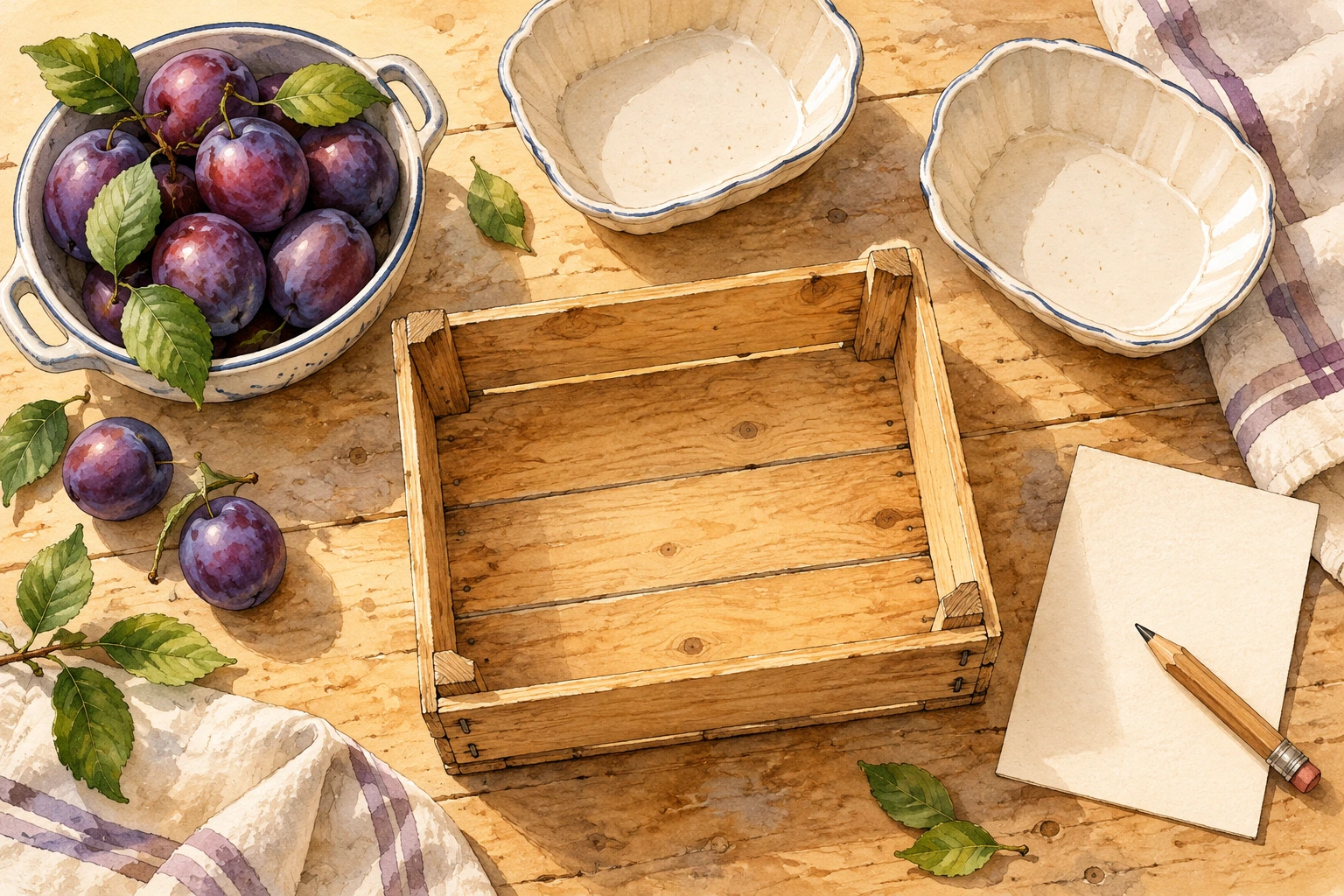
Hana and her father prepare a pretend fruit delivery using large paper plum pictures. Five arrive on one paper tray, with three more on another. She counts each batch and explains that both must go into the same empty crate before the delivery can leave.
They move the paper fruit into one collection, then count it again. Hana discovers that the total is eight even though the arrangement has changed. Her father asks her to show where the first batch went, giving her time to connect the new collection with its two starting parts.
Now they find the plum equation on the worksheet. The pictures stay printed in two groups, but the Fruit Addition question is the same as the delivery question. Hana points across both groups and asks her father to write 8 in the corresponding square.
The supporting illustration suggests a packing setting, not a countable answer model. Use the exact worksheet groups or your own counted paper pieces for arithmetic. Fruit Addition can remain a conversation even without real fruit, and the pretend delivery can continue after one equation has been understood.
A Fruit Addition answer ledger for the adult
| Picture row | Groups combined | Total to record |
|---|---|---|
| Pineapples | 2 + 3 | 5 |
| Apples | 3 + 1 | 4 |
| Pears | 4 + 2 | 6 |
| Plums | 5 + 3 | 8 |
| Blueberries | 4 + 3 | 7 |
These Fruit Addition totals describe this particular sheet. They range from four to eight and do not increase in simple row order. Check the counted objects rather than encouraging a learner to guess the next answer from the previous one.
Use this Fruit Addition ledger after the child's explanation, leaving the printed answer squares blank until a total has been established. If an answer differs, ask for another count with visible pointing. That reveals the reason for the difference more clearly than saying only whether the numeral is right.
Five Fruit Addition dispatch games to revisit
1. Give the Fruit Addition crate a delivery message
Choose one equation and ask the learner to tell an imaginary receiver how many fruits are arriving altogether. Let the receiver ask which two batches were combined. The child can point to each batch while the adult supplies any unfamiliar fruit name.
Record the spoken total on a separate blank card before transferring it to the worksheet. This gives Fruit Addition recording a purpose: the person receiving the crate needs the combined amount.
2. Rearrange a Fruit Addition batch without adding pieces
Make one pictured group using large paper fruit shapes. Spread those pieces into a longer line, then bring them closer together without changing their number. Count after each arrangement and discuss what stayed the same.
Return to the matching group on the sheet. Fruit Addition depends on how many pieces belong to each collection, so a wider spread should not be treated as an extra fruit.
3. Let a Fruit Addition partner audit the route
One player counts the pear row while another watches the pointing. The watching player explains whether every pear received one count. Swap jobs so both have a chance to count and to check.
Keep the focus on an observable action: a skipped pear or a repeated touch. A Fruit Addition audit works best as shared checking, with time for the counter to explain or revise the route.
4. Tell Fruit Addition as two arrivals
Use a selected row to invent a brief delivery story. The first pictured batch arrives, then the other batch joins it. Ask the learner what changed and how many pieces are present at the end.
An adult may write the corresponding numerals on spare paper after hearing the explanation. Fruit Addition symbols then summarize an event the child has already described, rather than introducing several unfamiliar demands at once.
5. Choose a Fruit Addition method and explain it
Offer counting every object from one or, for a learner ready for it, starting from the first known quantity and counting on through the second group. Demonstrate the chosen method with exact pointing.
For 3+1, counting on means keeping three in mind and saying four for the added apple. Fruit Addition does not require a younger learner to use this shortcut; counting all remains a valid way to establish the total.
Two-level Fruit Addition groups need a counting plan
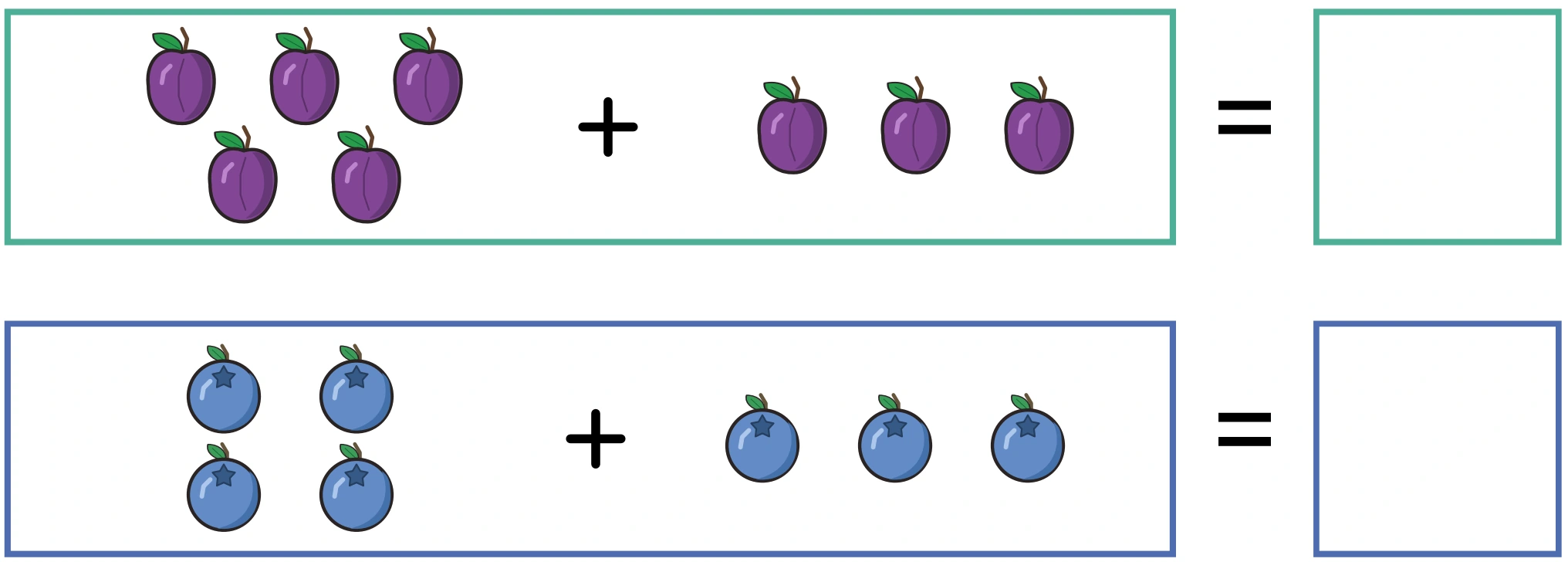
The plum group on the left has three pictures above two more. The blueberry group below begins with four berries arranged as two above two. Both equations then add three pictures on their right. Because the starting quantities differ, their final totals differ too.
For Fruit Addition with these layouts, choose a visible order through one group before crossing the plus sign. An adult might indicate the upper pictures, then the lower pictures, naming each count exactly once. Keep a finger clear of the next object so the learner can still see it.
Do not restart the combined count at one when you reach the second group. That would provide another part count instead of the total. If separate group counts have already been made, explicitly announce that the next Fruit Addition count includes all the pictures in that equation.
When Fruit Addition answers need a second look
A child may count a plum's leaf as another plum, overlook a lower picture or drift into the next equation. Identify the specific source of uncertainty and return to that location. A broad instruction to “count properly” gives little information about what should change.
If the spoken total is correct but the numeral is reversed, acknowledge the quantity first. Model the numeral separately or write it for the learner. Fruit Addition understanding should not disappear behind a handwriting correction.
For regular practice, save a meaningful delivery choice rather than assigning the entire sheet repeatedly. Later, invite the learner to explain the pear row or check a partner's blueberry count. A short, well-tracked count is worth returning to. Describing the improvement keeps encouragement tied to something the child actually did.
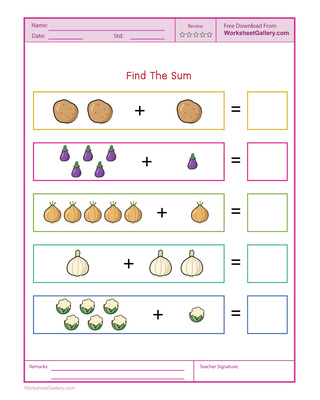
Compare other fruit sets in the fruit sums up to ten resource. The separate Find the Sum lesson offers different picture groups, while number five counting and tracing can support recording after the pineapple total is understood.
Download Fruit Addition with every picture and square intact
Choose the original branded free sample or the clean premium Fruit Addition PDF available to an eligible active member. The member edition removes the worksheet website's name, domain lettering and promotional watermark. Its printable page has no added advertisements, and all five original equations remain present.
Open the selected file before printing. Use US Letter paper with a portrait page setup, adjusting the scale so the outer frame stays within the printer's available area. Check a test print for the small blueberry outlines and the lower plum pictures, as well as the five empty answer squares.
Set the page on a steady surface with a pencil nearby. Begin Fruit Addition by asking what belongs in one combined delivery, then let the child show the count. Both batches belong to the same total is a useful idea to carry into the next pretend crate.
Popular Worksheets
Printable resources families and teachers are downloading now.
 Free
 Free
 Free
 Free