
Vegetable Addition: 4 Brilliant Games for Happy Counts
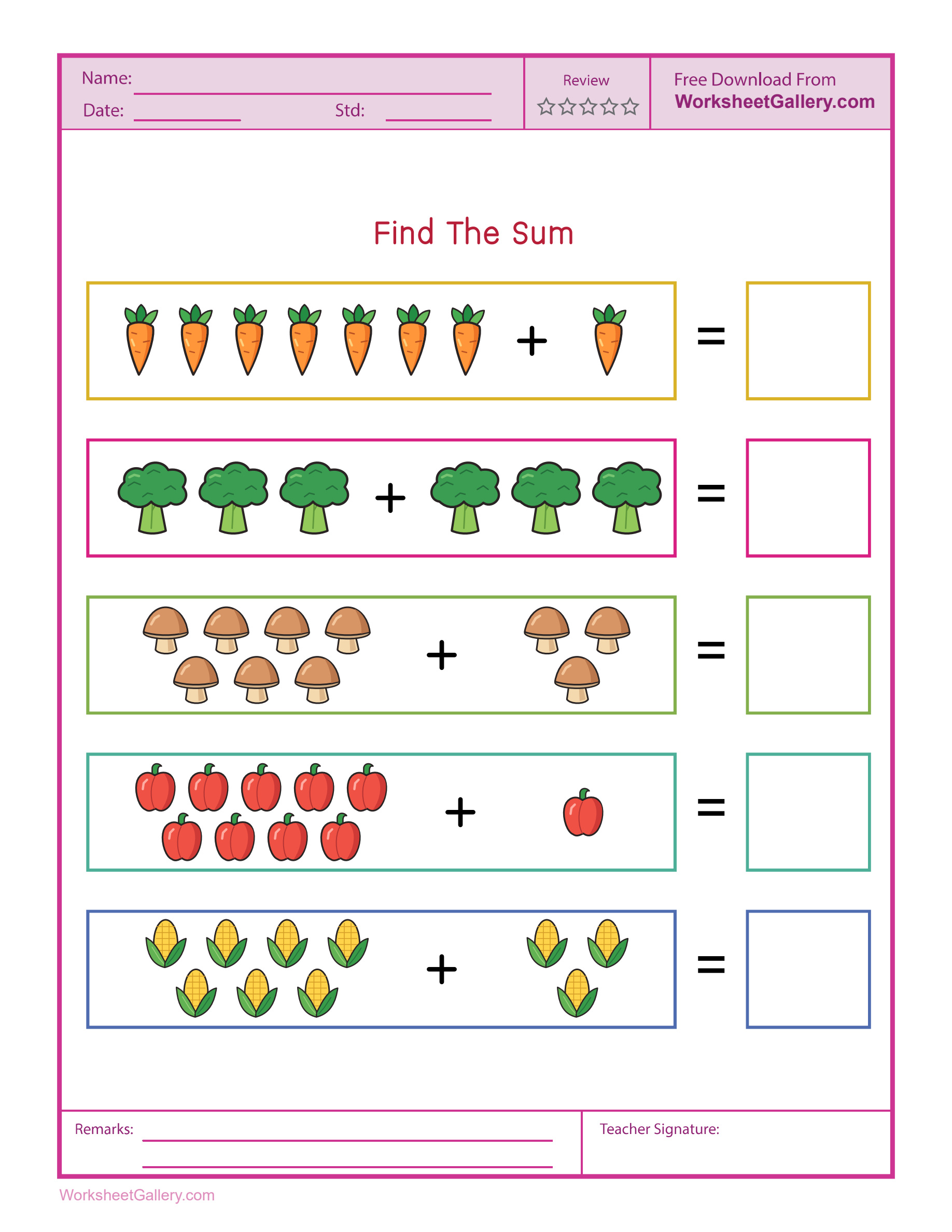
Before counting again, notice how much has joined the group. Seven carrot pictures receive one more carrot, while seven mushroom pictures receive three more mushrooms. Vegetable Addition makes that difference visible through five colored equations, each with a separate answer square. Broccoli, peppers and corn offer further chances to inspect the newcomers before finding a total. Bring Vegetable Addition into a pretend kitchen where an ingredient request can change by one or by three. Children can describe that change, point through the pictures and choose a sensible way to check their answer.
Vegetable Addition begins with the size of the extra group

This Vegetable Addition carrot row has seven pictures to the left of the plus sign and a single carrot on its right. The complete equation contains eight carrots. Before asking for that total, invite the learner to show which carrot is the extra one and which collection was already present.
Now inspect the Vegetable Addition mushroom row. It also starts with seven pictures, but three newcomers appear after the plus sign. The larger added group changes the outcome. Vegetable Addition offers a reason to inspect both parts instead of assuming that every row asks for the next counting number.
The carrot and pepper equations each add one pictured object to their starting collection.
Broccoli, mushrooms and corn each contribute three pictures on the right of their plus sign.
The printed starting amounts are pictures rather than numerals. An adult can name the quantities after counting them. For Vegetable Addition, the spoken number sentence should describe the visible groups, giving each word and symbol something concrete to refer to.
Choose a Vegetable Addition counting method the child understands
Counting every Vegetable Addition picture
A learner can begin at one and indicate every carrot in the equation, continuing through the extra carrot without beginning a new count. The last number said reports the combined amount. Ask which picture received the final count so the answer stays attached to the objects.
This Vegetable Addition method is useful when either group is unfamiliar. An adult can demonstrate a slow pointing route and let the child supply the words, or switch those jobs. Keep the separate group counts and the combined count clearly distinguished in conversation.
Counting on in Vegetable Addition
When a learner securely identifies the first seven, demonstrate keeping that amount in mind and saying eight for the one extra carrot. For seven mushrooms plus three, the added pictures receive eight, nine and ten. Each new number corresponds to a particular newcomer.
Use this Vegetable Addition approach only when its starting quantity makes sense to the child. Counting on should express an understood collection, not become a quick recital detached from the drawings. Counting all is still available whenever a learner wants to check.
A Vegetable Addition narrator describes what joined
A teacher opens with an observation job: find a row that adds one and indicate its right-hand picture. Learners may select carrots or peppers. She asks another child to locate a row with three newcomers and explain how they can tell.
The group has now inspected the Vegetable Addition problems before calculating. The teacher chooses carrots and mushrooms, identifies the starting seven in each, then demonstrates how their added quantities differ. Children can describe that difference through pointing, counting or ordinary phrases such as “only one there.”
At tables, one learner becomes the narrator and another follows the description. The narrator names the selected pictures and tells how many have joined. The listener points to the matching group before they work out the total together. Vegetable Addition language has an immediate purpose: someone else must understand the change.
Swap those roles after a short attempt. For preschool and kindergarten children around ages three to six, reduce the demand where needed. An adult may establish the starting group while the child inspects the extra pictures. A learner ready for more independence can count, explain and record the entire equation.
Six Vegetable Addition skills hiding in the ingredient requests
- Vegetable Addition observation. Identifying one extra object or three directs attention to the actual change before an answer is attempted.
- Vegetable Addition number sense. Comparing the carrot and mushroom starts shows why the same seven can produce different totals when a different amount joins it.
- Vegetable Addition tracking. A consistent path through a group keeps pointing and spoken numbers synchronized, especially where pictures occupy two levels.
- Vegetable Addition vocabulary. Already, extra, another and altogether describe relationships the learner can show, helping a partner understand which quantity is being discussed.
- Vegetable Addition hand control. Indicating small pictures and placing a numeral inside its matching square involve separate movements that an adult can support individually.
- Vegetable Addition self-review. Showing which newcomers were included gives a child evidence for checking an unexpected answer instead of changing it through guesswork.
These Vegetable Addition skills do not have to develop together at one speed. A child who can explain the added group may still need help remembering a longer count. Another may count reliably but prefer an adult to write the numeral. Choose a response that reveals the mathematical thinking.
Vegetable Addition peppers show one more after nine

Nine red pepper pictures appear as five above four in the first group. A single pepper follows the plus sign. Count the nine carefully before discussing the newcomer; the complete amount is ten. The two-level arrangement makes an organized route particularly helpful.
In Vegetable Addition, each pepper drawing contributes one count. Its curved lobes and green stem are features of that pepper, not additional ingredients. The same unit decision matters elsewhere: count a complete mushroom picture once, a broccoli picture once and a whole corn-cob drawing once.
Corn kernels, carrot leaves and mushroom caps can draw a child's eye. Establish what the task calls one object before beginning. This keeps Vegetable Addition focused on the pictured collections rather than on a surprising count of decorative details.
Point from the peppers through the equals sign to their own square. The symbol relates the combined quantity to its recorded numeral. If a child writes beside a neighboring row, trace the current frame across the page and locate the intended recording space again.
Ari changes a Vegetable Addition soup request
Ari and his grandmother lay paper ingredient pictures beside a toy pot. He is in charge of explaining a recipe request. The first card asks for seven carrots. His grandmother supplies another carrot picture and asks what the revised request should say.
Ari counts eight and dictates the change. Later, they set up seven mushroom pictures and add three. His grandmother waits while he decides how to count this new request. Ari notices that saying only the next number would leave two newcomers unaccounted for.
They find both requests on the Vegetable Addition sheet and compare the picture groups. Ari can narrate what changed before anyone writes. The pretend recipe gives him a reason to communicate an accurate amount, with an adult available to record the numeral after hearing his explanation.
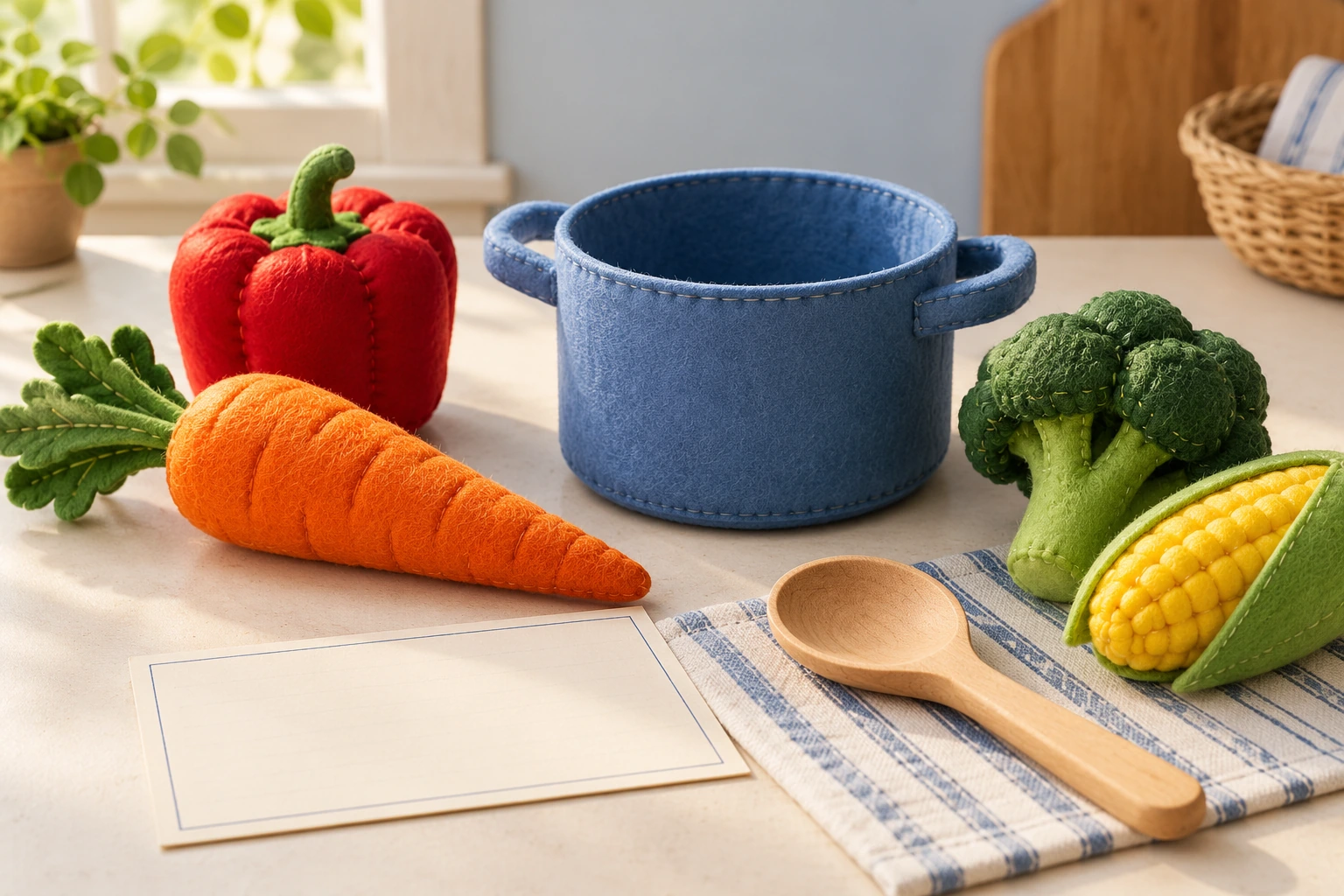
The photograph shows felt play props that suggest the kitchen setting. They are not arranged as one of the printed equations. Use the exact source pictures or separately counted paper pieces for the arithmetic, letting the supporting scene invite talk rather than supply an answer to copy.
Four Vegetable Addition kitchen games with different jobs
1. Announce the Vegetable Addition recipe change
Choose an equation and let one player explain what was already on the ingredient card and what has just joined. Another player repeats the request, then points to the two collections. Resolve any unclear wording before calculating.
Finish by stating the revised amount. This Vegetable Addition exchange gives the child practice distinguishing a starting quantity, an added quantity and the total, with a listener who needs an accurate message.
2. Find a Vegetable Addition request that adds one
Ask the learner to choose between carrots and peppers, both of which add one picture. Establish the starting amount in the chosen row, then identify its single newcomer. Count all or count on according to readiness.
Move to the other row only if the learner is interested. The Vegetable Addition comparison concerns one extra picture in different situations; it does not require the starting collections or final totals to match.
3. Give Vegetable Addition corn a reliable route
Use the corn equation to plan a pointing order through the first group: four pictures above and three beneath. After checking that group, include the right-hand trio, arranged as two above one. Let a partner watch for repeated or missed pictures.
Ask the counter to explain the route afterward. This Vegetable Addition game makes organization something the learner can describe and reuse, rather than merely asking for a faster answer.
4. Make the Vegetable Addition helper ask a useful question
An adult voices a toy helper who knows the first collection contains seven but has not noticed how many pictures were added. The child selects the carrot or mushroom row and tells the helper what to inspect next.
The helper follows that advice and counts the newcomers. End with the whole quantity explained correctly. Vegetable Addition becomes a small teaching conversation in which the learner's observation changes what another character understands.
A Vegetable Addition check table for the grown-up
| Equation pictures | What joins the first group? | Result |
|---|---|---|
| Carrots: 7 + 1 | One carrot | 8 |
| Broccoli: 3 + 3 | Three broccoli pictures | 6 |
| Mushrooms: 7 + 3 | Three mushrooms | 10 |
| Peppers: 9 + 1 | One pepper | 10 |
| Corn cobs: 7 + 3 | Three cobs | 10 |
Consult these results after the learner has shown how the count was made. The downloadable worksheet keeps its answer squares empty. When an answer differs from the table, watch the pointing and ask which extra pictures were included before offering another demonstration.
The broccoli row starts with the smallest group on this page. It can be a manageable Vegetable Addition choice when seven or nine pictures demand too much tracking. Readiness, rather than top-to-bottom page order, can determine the first equation you use.
When Vegetable Addition loses a newcomer along the way
Reporting eight for the mushroom row may indicate that a learner treated the added group as a single object. Point to its three separate pictures and ask what remains after the first newcomer has been counted. Let the child inspect that evidence before supplying the total.
A different difficulty occurs when someone counts the first row accurately but then includes pictures from the equation beneath it. Follow the current colored frame to keep the Vegetable Addition job visible. A temporary cover over neighboring work can help, provided it leaves both selected groups and their answer square in view.
Writing 10 also introduces two digits where earlier answers may have needed one. Acknowledge a correct spoken total independently of the written form. Model the numeral on spare paper or act as scribe when the child is concentrating on the quantity relationship.
Return to Vegetable Addition through a changed request
For a later short visit, let Ari's recipe helper ask for one more ingredient picture or three more. Choose a single equation and explain why that request fits it. The learner can revisit a familiar counting method while making a fresh observation about the added amount.
Encourage the precise action that improved: all three newcomers were counted, the lower pepper pictures were remembered, or the answer square matched the selected equation. Notice the extra group before choosing the next count. That reminder gives Vegetable Addition a clear purpose even when the child completes only one row.
For other picture collections, explore the illustrated addition ideas in Find the Sum. Another option is the fruit picture sums collection. If numeral recording needs separate attention, the count-and-write number five sheet offers a smaller quantity to practice.
Download Vegetable Addition for another kitchen conversation
The original worksheet is offered through the free sample download. A qualifying membership that is currently active provides the clean premium Vegetable Addition PDF. Website-name lettering, the domain and the promotional watermark have been removed from that edition; no advertisements are added to the printable itself.
Check the downloaded page before printing a set. Select US Letter portrait output and adjust sizing to retain the entire outside border. Look closely at the nine-pepper group and the small corn drawings on a test copy, confirming that every separate object and all five answer squares are readable.
Put the Vegetable Addition sheet within comfortable reach beside a pencil. Ask the learner what has joined the chosen collection, then listen to the explanation. One newcomer or three? is a small question that can lead to a careful count and another enjoyable pretend recipe.
Popular Worksheets
Printable resources families and teachers are downloading now.
 Free
 Free
 Free
 Free