
Make Ten: 5 Brilliant Picture Games for Happy Learners
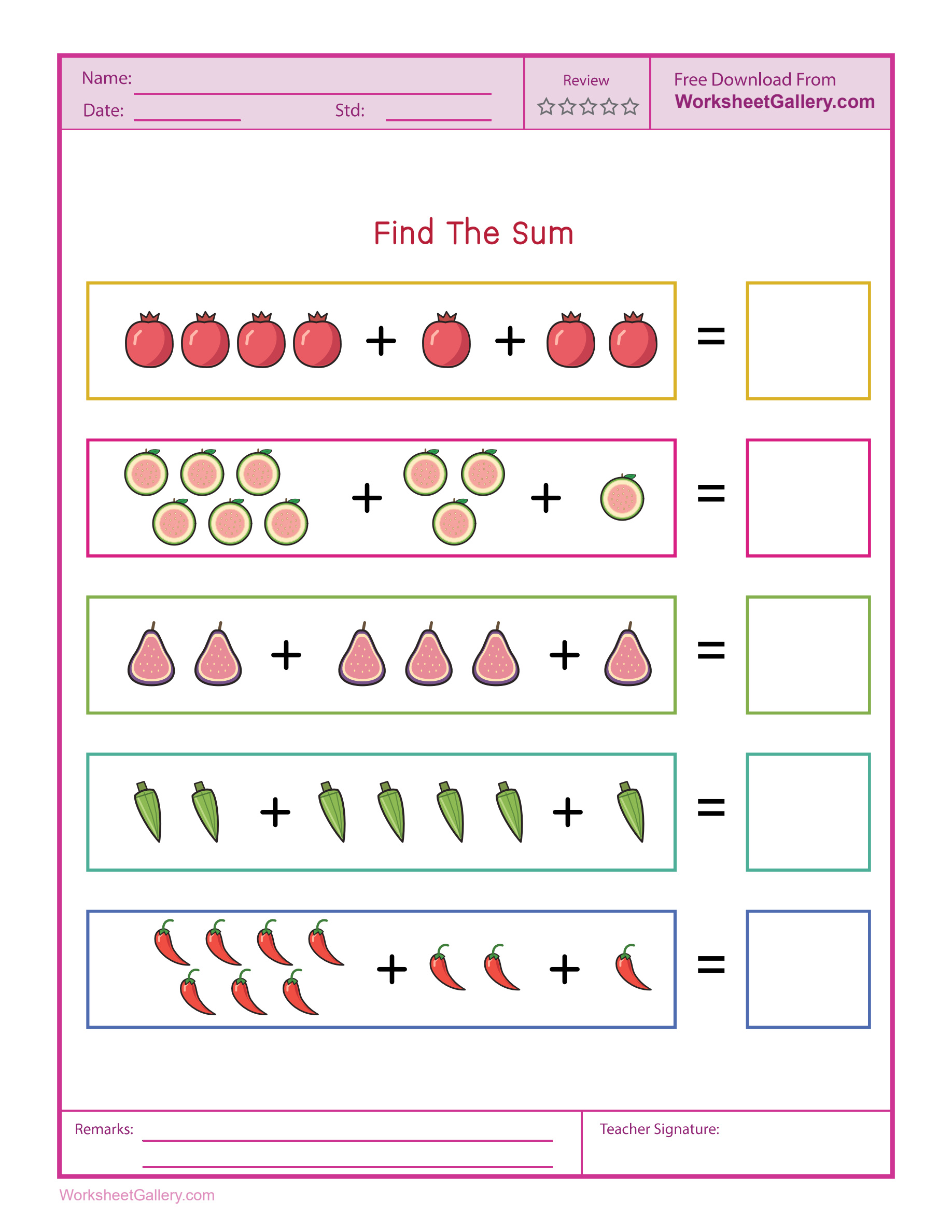
One last picture can turn nine so far into ten altogether. Make Ten practice on this sheet begins with six guava drawings, adds three and then includes a final single drawing. The chili equation reaches the same completed amount using seven, two and one. Other rows finish at six or seven, so the learner still needs to inspect each collection. Explore Make Ten through a simple counter board, where one empty space can make the final addition visible. Let the pictures explain the number before asking a child to record it.
Make Ten starts with the guava parts

Six guava drawings occupy the first group, arranged three above three. For this Make Ten example, the middle group has three more, shown as two above one. A final single drawing appears after the second plus sign. Count those parts separately before discussing their complete amount.
Six with three gives nine so far. The remaining picture brings that amount to ten. Make Ten here depends on including the final group, while keeping clear that nine was a correct description of the first two collections only.
An adult can say “six, three and one” while indicating the groups, then demonstrate a connected count through every drawing. The learner may count all or, when the starting quantity is understood, count on through the additional pictures. Choose the method the child can connect to visible objects.
The seeds inside a guava slice are not separate objects for this question. Count each complete drawing once. This Make Ten example uses picture units, without asking the child to infer how many whole fruits might have been cut to create them.
See the last Make Ten space waiting
A separate ten-space example shows why one final counter completes a collection of ten.
In this Make Ten demonstration, point to the occupied spaces and the unoccupied one. Establish nine before asking what happens when another counter is placed in the remaining position. The board gives Make Ten a visible destination; it does not replace counting the original equation's groups.
Prepare the same arrangement on paper using two rows of five spaces. Keep each counter large enough to handle comfortably. An adult can draw the spaces and help track placement while the learner supplies number words or indicates which place is still waiting.
Imani completes a Make Ten board at home
Imani and her grandfather put six large counters on their paper board. They add three more and inspect what has changed. Imani notices an empty space, but her grandfather asks her to check the number already present before deciding the amount that will complete it.
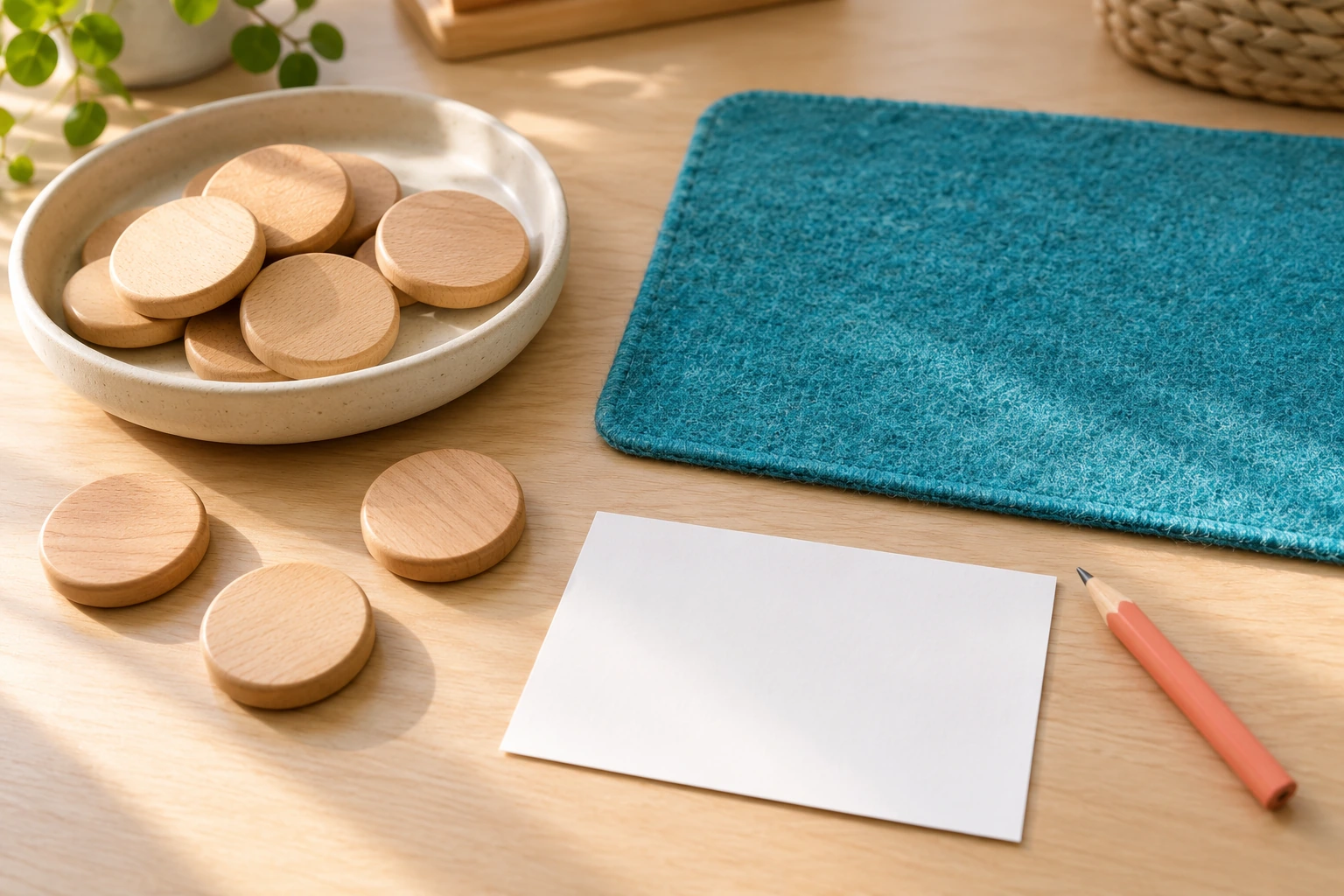
They count nine occupied places. Imani places one final counter in the empty space and announces ten. Her grandfather then asks her to show how the six, three and one from the guava row correspond to the counters they placed.
Their Make Ten explanation can involve pointing and ordinary language. The paper board records positions, while the worksheet keeps the three source groups visible. If Imani wants her grandfather to write 10, she can dictate the numeral after showing what its quantity includes.
The photograph suggests materials for this play, rather than an exact counted set. Prepare the quantities deliberately for the game. Make Ten does not require a purchased board; drawn spaces and suitable counters can provide the same comparison between nine occupied places and one remaining place.
Five Make Ten observations with practical value
Make Ten part relationships
Six, three and one retain their identities while contributing to a combined ten. Showing which counters came from each part helps the learner connect the worksheet's three collections with the final amount, instead of treating ten as an unrelated answer word.
Make Ten quantity landmarks
An established nine gives the final one a clear role. A child can explain what is present before the last counter and what changes afterward. This supports attention to a completed amount without assuming that every equation on the page shares it.
Make Ten hand-and-eye work
Placing one counter into one space gives the adult a way to observe correspondence. The learner coordinates the movement with the spoken count, while a helping hand can steady the paper. Writing the numeral adds a separate movement that can be supported afterward.
Make Ten language choices
Phrases such as nine so far, one remains and ten altogether distinguish an intermediate amount from a finished count. The learner can use that language to tell a partner what the board shows and which picture group still needs to be included.
Make Ten evidence checks
Comparing an answer with both the picture groups and the prepared counters makes a result open to inspection. A learner can reconsider an omitted object by locating it, with a specific action to change rather than an instruction simply to try harder.
The chili Make Ten route begins with seven

Seven chili pictures appear in the first collection, four above three. The middle group has two more and the final group has one. Seven with two again gives nine before the last picture completes ten. This row provides another route to the same nine-and-one comparison.
Establish each group through counting before expecting the relationship to be recognized. Make Ten should not rely on guessing that a spread-out collection must be larger or that two rows with similar colors must have matching amounts.
For preschool or kindergarten use, usually around ages three to six, choose support according to readiness. A learner may inspect the final single picture while an adult establishes the initial seven. Another may manage the entire count and record its result independently.
Count each complete chili drawing, not its curved stem or pointed tip as an extra part. The picture describes one object for this exercise. Make Ten comparison is clearer when the counting unit is agreed before the sequence begins.
Five Make Ten counter-board invitations
1. Leave the last Make Ten place available
Build the guava quantities with six counters and then three, leaving the final space unoccupied. Ask the learner to describe the board before placing the last counter. Confirm nine so far, then check the completed amount after the final placement.
The Make Ten invitation is a before-and-after explanation, not a race to fill the board. Let a child point to the difference even if the adult supplies the numeral.
2. Build the other Make Ten start
Use seven counters followed by two to represent the chili row. Compare the number present before the last counter with the earlier guava demonstration. Ask what changed in the starting parts and what remained the same at that stage.
Let the learner inspect both source equations. Make Ten can be explored through two concrete constructions without requiring a memorized rule about which numbers must be combined.
3. Give the Make Ten partner a placement report
One player says how many counters to place first, next and last, following a chosen equation. The other prepares the board and explains the amount after each instruction. Check the report against the printed groups before accepting its conclusion.
Change speakers so the learner can give the quantities as well as follow them. Make Ten language has an immediate listener who needs enough information to make the intended collection.
4. Test a Make Ten claim against the figs
Ask whether the fig equation finishes at ten too, keeping the question open. Count its two, three and one pictures and establish six. Discuss why a useful Make Ten board does not mean every printed row must fill it.
The learner may leave four spaces empty when representing six on a ten-space board, with adult help. The point is to follow the selected quantities instead of changing them to force the familiar answer.
5. Write a Make Ten conclusion after checking
Let the learner choose guavas or chilies, explain the complete amount and dictate a short report to an adult. Write 10 clearly on spare paper, read it as ten and compare it with the counted collection.
Only then decide whether the child will record the numeral in the worksheet square. Make Ten reasoning can be complete even when writing its two digits still needs adult assistance.
The fig row checks a Make Ten assumption

Two fig pictures come first, three occupy the middle and one appears at the end. The combined quantity is six. Its three-group layout resembles the structure of the other rows, but the actual amounts determine this result.
Ask the learner to explain why the answer is six without using a previous answer as evidence. Make Ten work benefits from this check because recognizing a target amount should not replace inspecting the current problem.
The pomegranate row finishes at seven, using four, one and two. The okra row also finishes at seven, using two, four and one. These are additional reminders that one page can contain several completed quantities, even when two particular equations are useful for composing ten.
A classroom pauses at nine before the Make Ten finish
A teacher prepares a large ten-space example and establishes six followed by three. Before the final counter arrives, she asks learners what the board currently contains. Children may point to the empty place, count the occupied places or explain the nine already present.
She then indicates the final single guava picture and asks what should happen next. One counter is placed, the whole board is checked and the class names ten. The Make Ten answer is tied to a visible change and the full source equation.
For individual work, allow a choice of response: describe the parts, indicate the final object, count every picture or record the result. Keep the selected equation available while the adult checks what each contribution includes.
Introduce the fig row afterward as a genuine checking question. Make Ten teaching should leave room for a child to say that a different row totals six and demonstrate why. The observation is more valuable than agreement with an expected answer.
Check each source amount alongside Make Ten
| Picture row | All three parts | Finished quantity |
|---|---|---|
| Pomegranates | 4 + 1 + 2 | 7 |
| Guavas | 6 + 3 + 1 | 10 |
| Figs | 2 + 3 + 1 | 6 |
| Okra | 2 + 4 + 1 | 7 |
| Chilies | 7 + 2 + 1 | 10 |
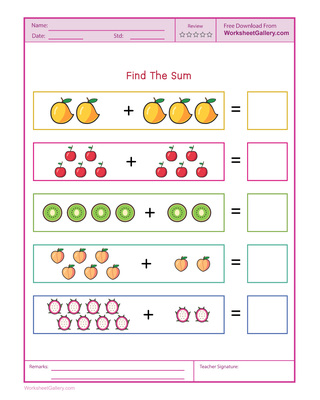
This adult reference describes the uploaded worksheet. Its answer squares remain empty in the printable. Hear the learner's explanation before consulting the checked quantities, then investigate which pictures were included if an answer differs.
In the guava middle group, remember the lower single drawing beneath its upper pair. In the chili starting group, remember the lower three beneath the upper four. Make Ten tracking needs those levels to remain part of the count rather than fading into the page's overall pattern.
Keep Make Ten practice responsive to the evidence
A Make Ten answer of nine for a target row may describe the first two groups accurately. Ask the learner to locate the final group instead of treating the entire count as unsuccessful. If an answer exceeds ten, watch for repeated pictures, counted seeds or an extra counter placed in an already occupied space.
For a later brief visit, Imani can choose which source row to represent before the board is prepared. Notice whether her report distinguishes an amount so far from a final amount. Choose the pictures first; let their quantities determine the result. That keeps Make Ten practice from becoming an automatic response.
Try further picture sets in the Find the Sum illustrated activity or the fruit sums resource with totals within ten. The five-picture number-writing activity can support numeral formation separately from the larger quantity discussion.
Download Make Ten and keep the other answers available
The free sample retains the source worksheet's original branding. A valid eligible membership provides the clean premium Make Ten PDF through the member download. That printable omits the worksheet website name, domain lettering and promotional watermark, with no advertisements inserted into its page.
Open the selected file to confirm that every three-part equation is present. Use US Letter paper and portrait orientation, adjusting the print scale to preserve the complete outside frame. Inspect a test copy for the lower guava, the lower chili pictures and the final single drawings, as well as all blank response squares.
Set the Make Ten sheet beside a pencil and begin with a question the learner can explain. Nine so far, then one more can become a checked observation, while the other rows remain opportunities to discover a different complete amount.
Popular Worksheets
Printable resources families and teachers are downloading now.
 Free
 Free
 Free
 Free