
Addition to 11: 6 Brilliant Games for Joyful Counting
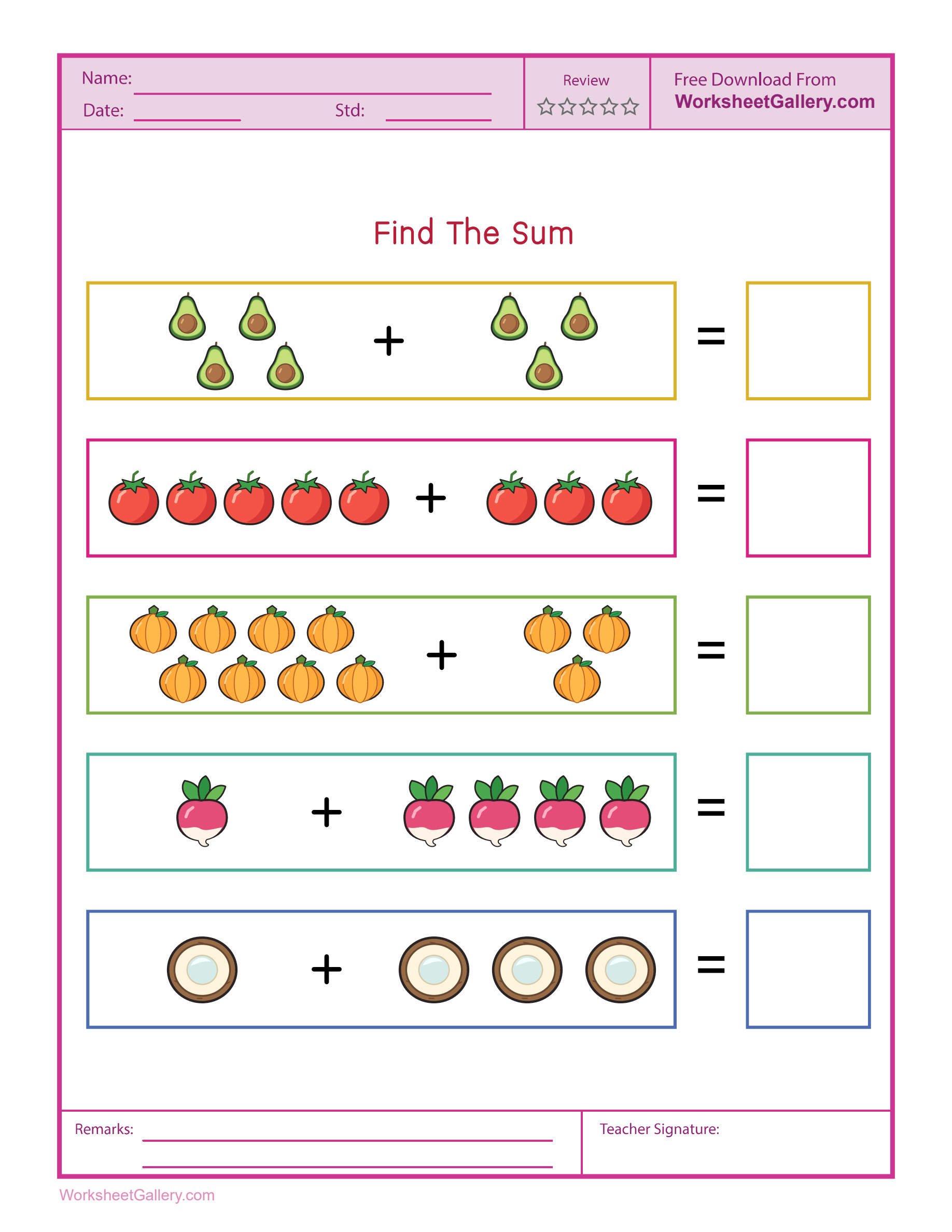
The count does not have to end when you reach ten. Addition to 11 becomes visible here when eight pumpkin pictures meet three more, leaving one picture to count after ten has been spoken. Four other equations offer smaller totals, so the learner can choose a comfortable beginning before exploring that longer count. Use Addition to 11 as a chance to connect a number word, a particular picture and a written numeral. A toy squirrel's imaginary garden visits can give the final pumpkin a reason to be noticed rather than skipped.
Find a starting place before Addition to 11

On this Addition to 11 page, the avocado equation combines four pictures with three. Its first group has two drawings above two, while the second has two above one. A child can follow those seven pictures in a planned order and explain where the count finished before approaching a larger collection.
Elsewhere, one pink-and-white root picture joins four, and one coconut picture joins three. Those totals are five and four. Addition to 11 does not require the top row to be the first row attempted; choose the problem that lets the learner demonstrate a known skill.
Each avocado cross-section counts as one drawing for this task. Do not count its seed separately or try to convert the illustrated pieces into an inferred number of whole fruits. The coconut drawings also represent picture units. Establishing that unit keeps the addition question clear.
For preschool and kindergarten learners, often around three to six years old, the larger pumpkin quantity may need adult support. Treat Addition to 11 as an available next investigation after familiar counting, rather than a target every child must reach during the same session.
Seven Addition to 11 discoveries to notice
- Addition to 11 sequence. The pumpkin equation supplies a visible object for the number word after ten, giving the spoken sequence a concrete continuation.
- Addition to 11 correspondence. Every picture needs one spoken count, including the final low pumpkin on the right, so overlooked objects can be located precisely.
- Addition to 11 organization. Two levels of pictures encourage a deliberate route that covers the entire collection without circling back over an object.
- Addition to 11 part awareness. Eight starting pictures and three added pictures remain identifiable even while the learner counts their combined quantity.
- Addition to 11 recording. The two digits in 11 provide an opportunity to connect a written numeral with the single total eleven.
- Addition to 11 explanation. Describing which pumpkin received ten and which received eleven makes an answer open to checking by another person.
- Addition to 11 persistence. A surprising extra picture can become a reason to inspect the count again, with support that focuses on evidence rather than speed.
Watch these responses separately. A child may continue the spoken count correctly yet need help writing its numeral, or recognize the two parts while losing track of a lower picture. The next invitation should address the observed difficulty instead of repeating every task on the sheet.
Addition to 11 reaches the last pumpkin on the right

The left group contains eight pumpkins, arranged four above four. The right group contains three, arranged two above one. One workable route counts the upper left pictures first, then the lower left pictures, and finally the right-hand group.
Following that route, the two upper pumpkins on the right receive nine and ten. The remaining lower pumpkin receives eleven. Point out that final object while saying its number normally. Addition to 11 needs that last picture to stay connected to the spoken count.
A learner who is comfortable identifying the first eight can count on through the extra group: nine, ten, eleven. Another can count all the drawings from one. Both approaches can show the quantity; use whichever method the learner can explain with reference to the pictures.
Keep the entire equation visible when checking. If the child's finger stops at ten, ask what remains within this row's frame. That gives Addition to 11 a specific place to resume, without treating the child's earlier correct counts as if they had not happened.
Two written digits record one Addition to 11 total
A collection can still contain another object after the word ten. Inspect the remaining pictures before deciding the count is finished.
Its two digits belong together as the numeral for this total. Say eleven while indicating the complete written symbol.
An adult may model 11 on spare paper and let the learner compare it with the pumpkin total. Leave enough room to see both digits. Addition to 11 combines mathematical reasoning with a separate recording task, so writing can be shared when needed.
If the learner states eleven accurately but writes a single 1, acknowledge the correct quantity and demonstrate its complete numeral. If a drawing wanders outside the square, model it elsewhere before requesting another attempt. The answer's meaning and the hand movement deserve distinct feedback.
Read the equals sign as a relationship between the complete pictured amount and the recorded total. It does not mean the child should copy the number in just one starting group. Addition to 11 asks about all eight pictures together with all three newcomers.
Ravi plans Addition to 11 garden visits
Ravi and his uncle prepare a small pretend garden for a wooden squirrel. They agree that each pumpkin picture on the worksheet will earn the toy one imaginary visit. Ravi points to the pictures while his uncle moves the toy through the play scene at the same pace.
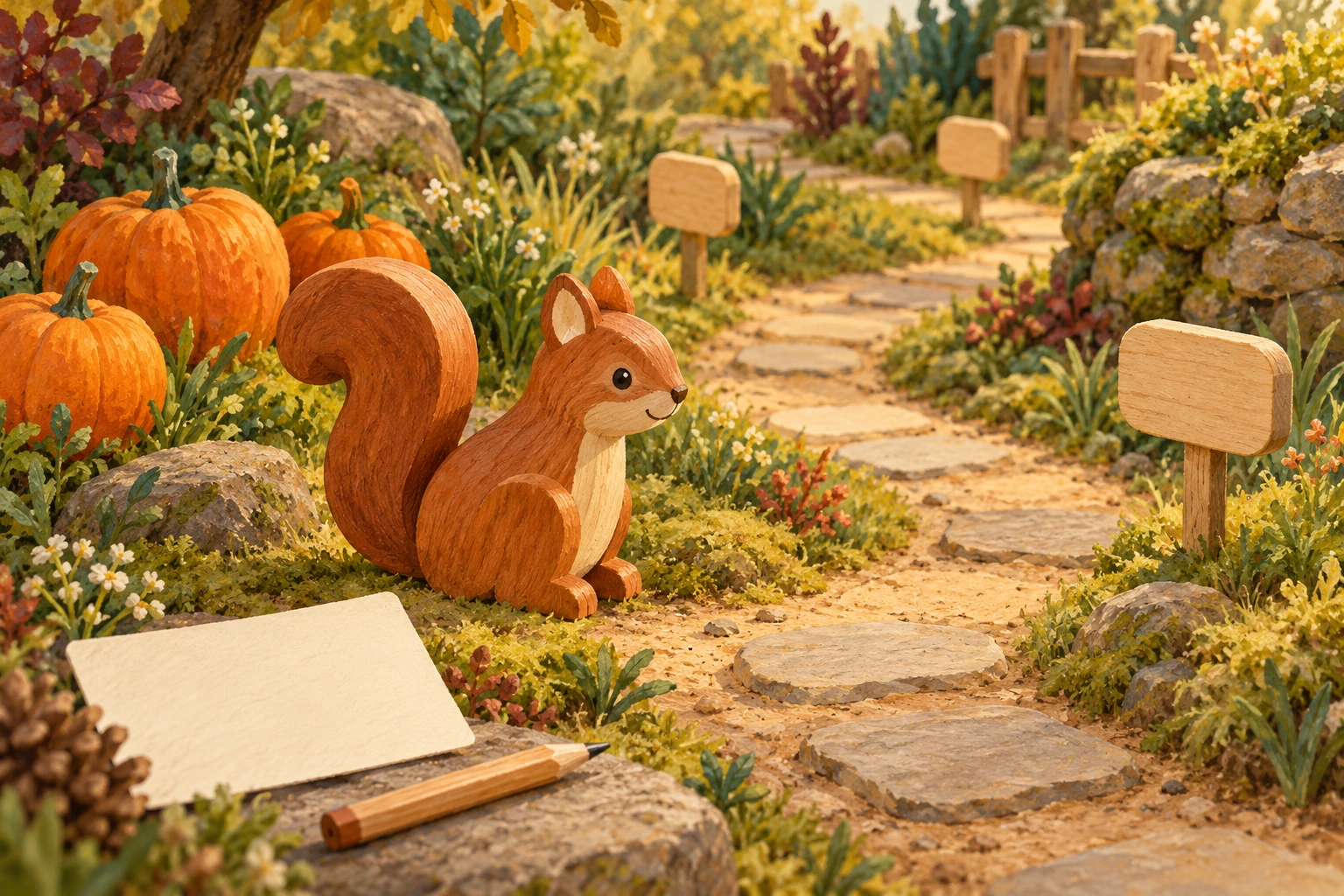
When they reach ten, the squirrel has not finished its visits. Ravi notices the lower pumpkin still waiting on the right. His uncle pauses the story while he checks that picture, then follows Ravi's instruction to give the squirrel its eleventh stop.
They return to the Addition to 11 equation and compare the spoken total with an adult-written 11. Ravi chooses whether to record the answer himself or dictate it. The story's ending depends on accounting for the final picture, giving the arithmetic a small but understandable purpose.
The artwork creates a garden setting, without showing an exact counted route. Use the worksheet pictures as the evidence for how many visits occur. Addition to 11 should come from the original eight-and-three collection, not from counting decorative path markers in the illustration.
Six Addition to 11 games along the garden path
1. Reserve the final Addition to 11 garden visit
Follow the pumpkin route until ten has been spoken, then ask whether any pictured stop remains. Let the child indicate the uncounted pumpkin and finish the count. An adult can move the toy in response to the learner's pointing.
End by naming the complete amount. This Addition to 11 game gives eleven a visible job rather than presenting it as an isolated word to repeat.
2. Give an Addition to 11 route description
Ask the learner to describe how a partner should move through the two levels of pumpkins. The partner follows the description and checks whether every picture has received a count. Clarify an uncertain instruction together before continuing.
The useful Addition to 11 response may be a gesture or a phrase such as “these four, then those four.” The child is planning a route another person can use.
3. Prepare a smaller Addition to 11 warm-up

Choose the coconut equation and count one picture with three others. Let the learner identify the square that belongs to that row and explain the total of four. Decide afterward whether to try a larger collection.
This Addition to 11 warm-up is not a promise that the child will be ready for eleven immediately. It supplies a successful starting response and information about the support that may help next.
4. Match an Addition to 11 numeral to its collection
An adult writes 11 on a card and reads it aloud. The learner checks it against the complete pumpkin count, then places the card beside the equation. Remove the card before the child writes in the square if independent recording is the chosen task.
The Addition to 11 connection is between a quantity and its numeral; decorative handwriting or rapid recognition is unnecessary for the first comparison.
5. Let the Addition to 11 toy ask for proof
Voice the squirrel asking how the learner knows every visit has been included. Invite a pointing demonstration that shows the first eight and the additional three. The toy can ask which picture was last, giving the explanation a listener.
Finish with the correct full count. Addition to 11 checking can be friendly while still requiring evidence from the actual drawing groups.
6. Move an Addition to 11 paper collection
Prepare eight large paper pumpkin pictures and three more. Combine them, rearrange the same pieces and recount. Discuss whether any pictures were introduced or removed during the move, keeping the source equation nearby for comparison.
This Addition to 11 investigation links the printed arrangement with movable objects. A different layout should be checked by quantity, not by how much tabletop space it occupies.
Classroom Addition to 11 landmarks reveal the route
A teacher shows the pumpkin equation and establishes a pointing order with the group. She asks children to indicate the picture that receives eight, then the picture that receives ten. Once those positions are clear, she asks what the next pictured object receives.
The response connects eleven with a particular location. For Addition to 11, this can reveal whether a learner is following the count or merely joining the final spoken word. Allow children to answer through pointing while an adult supplies language when appropriate.
During individual work, let a child count while an adult observes silently. Afterward, discuss one landmark rather than interrupting each number. If the child has omitted a picture, revisit that location with an enlarged source crop or a fresh demonstration.
Learners who need a shorter sequence can use the root or avocado equation while the group discusses the larger example. Addition to 11 can be modeled collectively without requiring every learner to complete its recording independently.
The adult's Addition to 11 and smaller-sum check
| Picture collection | Calculation | Recorded total |
|---|---|---|
| Avocado drawings | 4 + 3 | 7 |
| Tomatoes | 5 + 3 | 8 |
| Pumpkins | 8 + 3 | 11 |
| Pink-and-white roots | 1 + 4 | 5 |
| Coconut drawings | 1 + 3 | 4 |
These are the verified quantities on this sheet. Its printable answer squares have no supplied numerals. Use the table to check the learner's explanation after counting, rather than as a set of answers to copy into the boxes.
The pink-and-white roots are not named in the document. Naming them by their visible appearance keeps the Addition to 11 lesson accurate without making an uncertain vegetable label part of the assessment. Their leaves and white tips remain features of each single picture.
Support an Addition to 11 count that has lost its place
A restart at one in the second group reports a new part count instead of a connected combined count. Explain that distinction with visible pointing. If ten becomes an automatic stopping point, look for an object that has not yet received a number.
Avoid treating the plus or equals sign as another counted object. Keep the counting unit as one illustrated food picture, and use the symbols to discuss the relationship between groups and answer. Addition to 11 should not acquire extra objects through its notation.
For another visit, leave Ravi's squirrel a question about its last garden stop. Describe a concrete success when the learner returns: the final pumpkin was remembered, both digits were recorded, or the route was explained clearly. Complete the collection's count before closing the story.
Further practice can use the other illustrated sums lesson. Compare a lower ceiling in the fruit picture activity limited to ten, or choose number-five counting with numeral formation when a shorter recording task is useful.
Download Addition to 11 with the final pumpkin included
Select the branded original through the free sample option. The clean premium Addition to 11 PDF is supplied to members whose current plan qualifies for access. Its worksheet website branding, domain text and promotional watermark are removed, with no advertisements added to the printable page.
Open the chosen edition to inspect the full sheet. Print on US Letter in portrait, scaling within the printer's usable margins so no outer edge is clipped. On a test print, check both levels of the pumpkin group and the single lower pumpkin to its right, as well as the complete recording squares.
Set out a pencil and choose a starting equation the learner can engage with. Addition to 11 can grow from a smaller successful count into the discovery that one picture is still waiting after ten.
Popular Worksheets
Printable resources families and teachers are downloading now.
 Free
 Free
 Free
 Free