
Picture Addition: 5 Brilliant Ways to Reach a Happy Ten
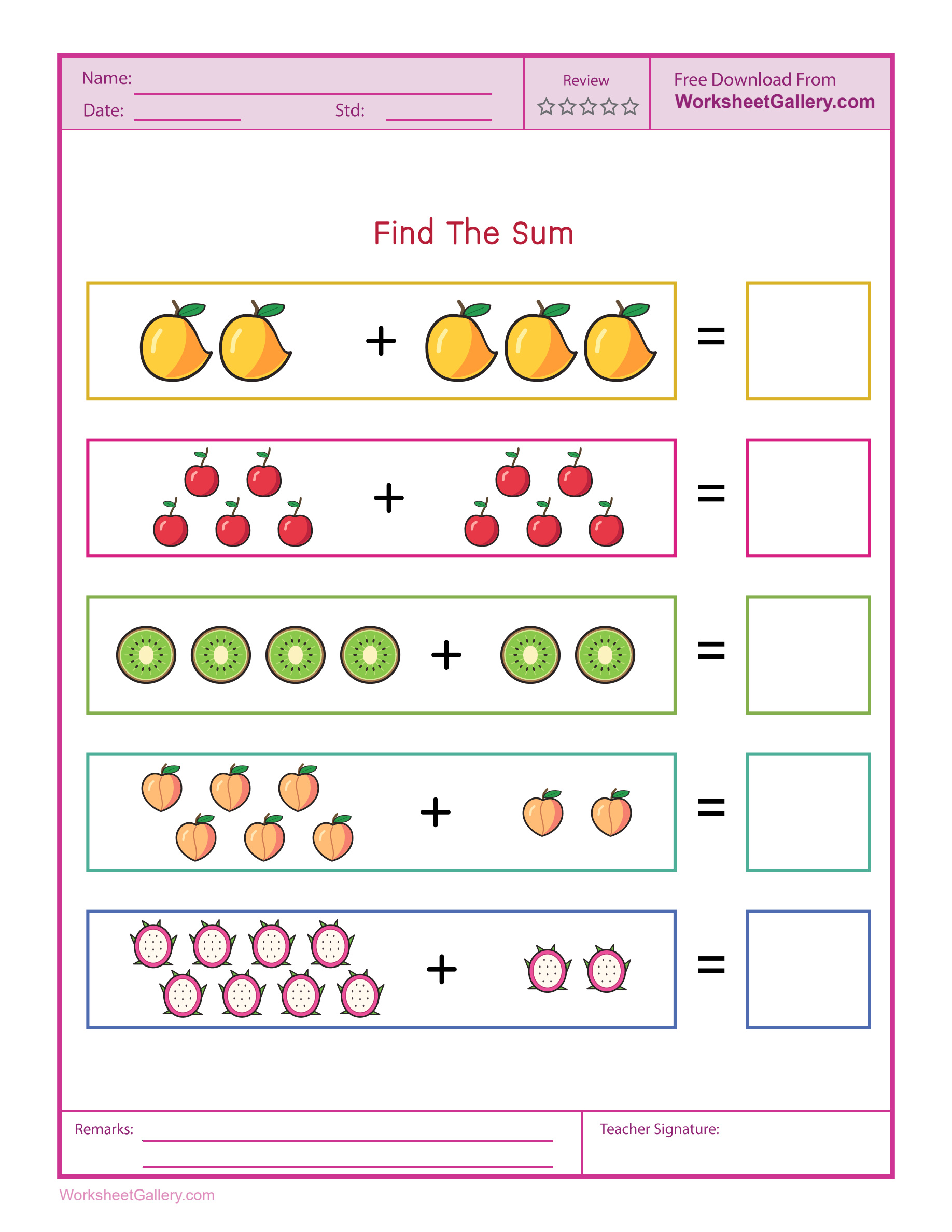
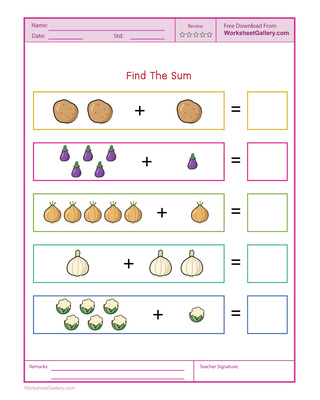
Ten can appear twice without telling the same counting story. Picture Addition on this sheet brings five red fruits together with five more, then reaches ten again using eight dragon fruit pictures and two extra pictures. Those matching totals invite a useful conversation: can different groups show the same amount? Mangoes, kiwi slices and peaches supply three further equations to investigate. Let Picture Addition begin with noticing and comparing, then choose a counting route that keeps every picture accounted for. The written answer can follow the explanation instead of rushing ahead of it.
A Picture Addition question for a tiny fruit gallery
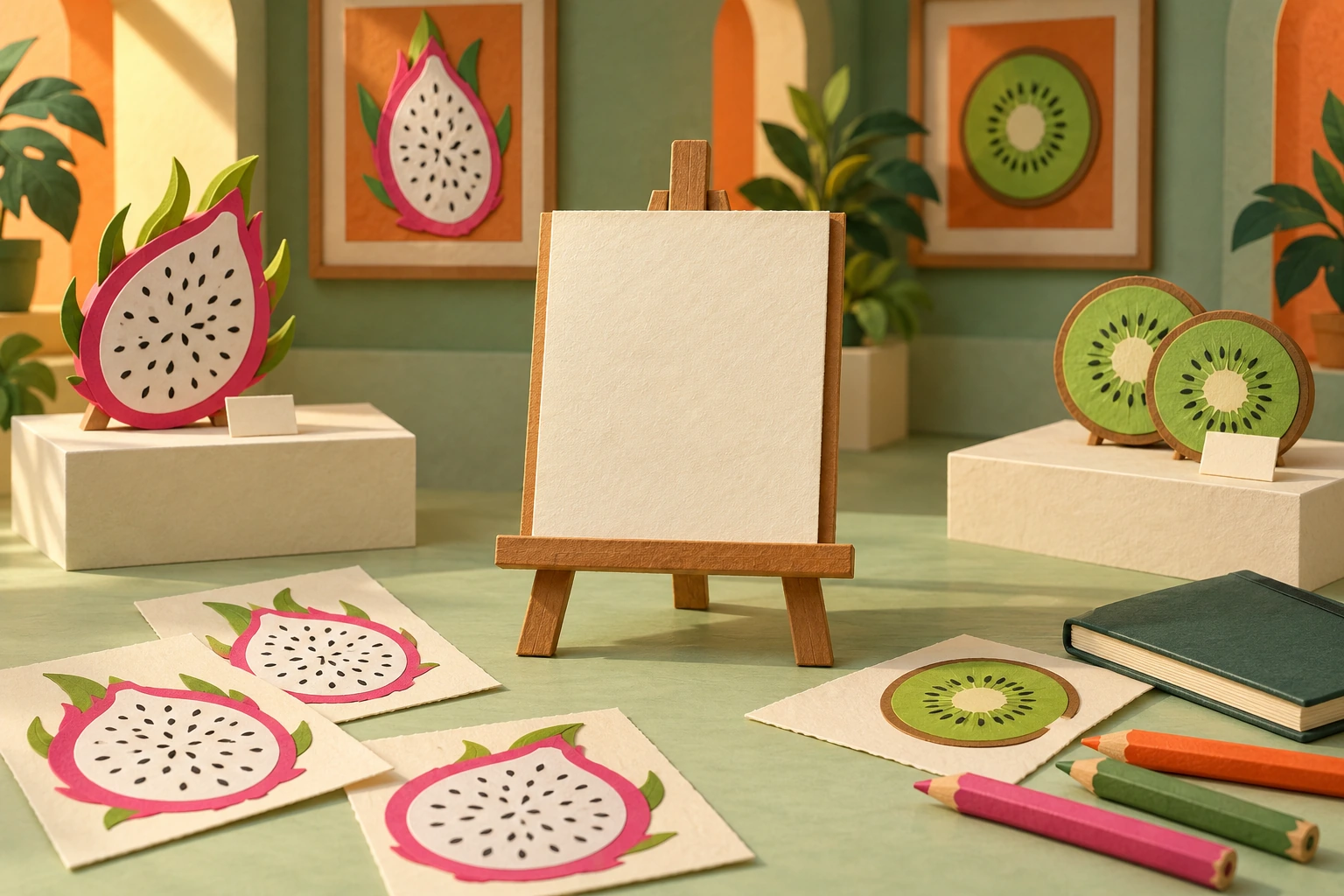
For Picture Addition play, Noor and her mother are making a pretend exhibition of fruit pictures. Noor arranges eight paper dragon fruit drawings on a table. Her mother brings two more from a sketchbook and asks whether the display label needs changing. Noor recounts the exhibition and decides that its new label should say ten.
Then they look at the worksheet's two red-fruit groups. Each contains five pictures. Noor counts those and gets ten as well. She wonders whether she has made a mistake because her exhibition began with eight, not five.
Her mother invites her to check both collections. Picture Addition permits more than one way of composing a total. The two starting amounts can differ while the final amount agrees. Noor can demonstrate that agreement with paper pictures before writing an answer on the sheet.
The artwork supplies an exhibition setting, rather than an arithmetic example to copy. Make your own accurately counted paper groups or use the printed equations. This Picture Addition story gives a child a reason to reconsider an answer without treating a surprising result as evidence of failure.
Inspect the two fives in Picture Addition

The second Picture Addition equation shows five red fruits before the plus sign and another five after it. Within each group, two pictures sit above three. The matching arrangement makes comparison possible, but children should still establish what each group contains rather than relying on its overall width.
The fruit type is not named on the source. Calling these red fruits keeps the Picture Addition discussion accurate and leaves attention on their quantity. A child may offer a familiar fruit name; the adult can acknowledge the suggestion while continuing to count the visible pictures.
Count the first five and the second five separately when introducing the row. Then make clear that the question concerns their combined amount. For Picture Addition, saying “five” for each part does not yet report how many pictures belong to the complete equation.
The equals sign relates those combined pictures to the number recorded in the separate answer square. It says they represent the same quantity. An adult can model the spoken sentence “five plus five equals ten” while pointing to its pictured parts and the place reserved for the numeral.
Five Picture Addition observations with lasting value
- Picture Addition part awareness
- Comparing 5+5 with 8+2 asks a learner to distinguish the starting collections from their shared final quantity. That is a concrete part-and-whole relationship.
- Picture Addition visual organization
- Rows of two, three or four pictures provide landmarks for a deliberate counting route, making omissions easier to identify during a check.
- Picture Addition numerical language
- Words such as equal, different parts and same total let children explain why two unlike arrangements can receive the same answer.
- Picture Addition coordination
- Pointing through the pictures while speaking a count joins eye tracking, hand movement and number words in a task the adult can observe.
- Picture Addition flexible checking
- Recounting or rebuilding an unexpected result gives the learner evidence for revising a decision, instead of changing an answer merely because someone disagrees.
These opportunities fit preschool and kindergarten use, roughly ages three to six, with support chosen for the individual child. Quantities reaching ten may be unfamiliar to a younger learner. Offer a smaller row first and let an adult record the answer when writing is a separate challenge.
In class, explain why both Picture Addition answers can be ten
A teacher selects the red-fruit equation and asks a small group how many pictures appear on either side of its plus sign. Children indicate the two groups before one volunteer counts the combined collection. The teacher records ten on separate paper, keeping the worksheet available for inspection.
Next she introduces the dragon fruit row. The left group has eight pictures and the right group has two. Another learner counts, then compares that answer with the recorded ten. The Picture Addition discussion now has two examples to refer to instead of an unexplained rule to memorize.
Invite a learner to describe what changed between the equations. The fruits changed, their arrangements changed and the sizes of the parts changed. The total did not. A Picture Addition explanation can include pointing and ordinary language; the child does not need a formal definition of equivalence.
Finish by choosing one row for individual work. Keep the model in view and ask the learner to identify the correct answer square. An adult can scribe a spoken total while the child concentrates on counting. That preserves participation when numeral formation takes more effort than the arithmetic.
Read every Picture Addition row on its own evidence
| Source pictures | Visible parts | Checked amount |
|---|---|---|
| Mangoes | Two and three | 5 |
| Red fruits | Five and five | 10 |
| Kiwi slices | Four and two | 6 |
| Peaches | Six and two | 8 |
| Dragon fruit pictures | Eight and two | 10 |
The table is an adult check for this particular Picture Addition sheet. Each printed answer square remains empty for the learner's response. Read the explanation before consulting the checked amount, so the comparison still tells you how the child arrived at it.
Kiwi, peach and dragon fruit equations all add two, yet begin with four, six and eight respectively. Discuss one pair of those equations if the learner is interested. A constant second part does not make every Picture Addition answer identical; the first part contributes to the total too.
Count a kiwi slice as one pictured piece. Its seeds are details inside that piece, not extra objects for this task. The same principle applies to the dragon fruit drawings: choose a consistent picture unit before starting the count.
Locate eight in Picture Addition before adding two

The bottom equation organizes its first eight dragon fruit pictures as four above four. Two more wait to the right of the plus sign. Point through one level, then the next, using a count that stays attached to the pictures instead of jumping between nearby shapes.
For a Picture Addition learner who counts everything, continue across all ten drawings in a clear route. If the child securely knows the first group is eight, an adult can demonstrate counting on: keep eight in mind, then say nine and ten for the additional pictures. Both methods can establish this Picture Addition total.
Do not introduce counting on as a speed requirement. The child needs to understand what the starting eight represents, otherwise the shortcut can become an unexplained number chant. Picture Addition is more useful when a learner can show what each spoken number accounts for.
Compare this ten with the red-fruit ten only after the bottom row is understood. Ask the child to indicate the two parts in each. Same total does not require identical parts. The pictures make that relationship available for inspection whenever the learner wants to check again.
Five Picture Addition investigations for the exhibition
1. Make two Picture Addition labels agree
Create paper groups matching five and five, then eight and two. Count each complete collection and let the child dictate its display label. Read the labels back and compare their amounts with the visible groups.
The purpose is an explained agreement. Ask the learner to show why both Picture Addition labels can say ten, even though the separate groups were prepared differently. An adult handles writing when needed.
2. Change a Picture Addition arrangement, keep its pieces
Choose one group of paper fruit pictures and rearrange it into a curved line. Ask whether any pieces were added or taken away, then recount to check. Compare that arrangement with the original grouping on the sheet.
This Picture Addition investigation concerns quantity staying stable through a layout change. Give the child time to inspect the moved pictures before requesting a judgment, especially if a wider spread makes the group look larger.
3. Become the Picture Addition exhibition guide
The child describes one equation to an imaginary visitor who cannot see which row was chosen. Include the fruit or color, the two group amounts and the final quantity. The adult uses the message to identify the intended row.
If the description fits more than one feature, ask for another clue. Picture Addition language now has a listener who needs enough information, rather than a list of words the child must repeat.
4. Investigate the Picture Addition pair that adds two
Select the kiwi and peach rows. Count four with two more, then six with two more. Ask what stayed at two and which starting group changed. Let the learner point to the evidence while explaining the different totals.
There is no need to generalize a rule from the first comparison. This Picture Addition activity can end with two correctly explained examples and a question to revisit when the child chooses the dragon fruit row later.
5. Repair a Picture Addition counting message
An adult deliberately reports only one group from a chosen equation, then asks whether the message includes everything shown. Keep the question friendly and the source visible. The child can indicate the missing group and supply a corrected combined count.
Finish with the complete, accurate explanation. Picture Addition checking should leave a clear final example, so the deliberate omission does not become the version the learner remembers.
Give Picture Addition mistakes a specific next step
If a child answers five for the red-fruit row, investigate whether one whole group was omitted. If the answer is more than ten, watch for repeated pictures or counted leaves. Different errors call for different observations; another full worksheet is not automatically the most useful response.
Numeral 10 may also need recording support. A learner can state the quantity correctly while struggling to place its two digits in the square. Model the numeral elsewhere or write it on the child's behalf after the Picture Addition reasoning has been heard.
When attention drifts between rows, use a plain piece of paper to cover neighboring equations temporarily, leaving the entire chosen equation and its answer square visible. Remove it before changing rows. The aim is a clear view of one Picture Addition task, with every relevant group still available.
Return to Picture Addition with a question worth checking
Noor can reopen the exhibition another day and ask whether its two ten labels still agree with the pictures. An adult may invite one recount or a description of the parts. Leave space for the child to choose which display to explain, rather than requiring a second complete performance of the page.
Notice a concrete success: both five-picture groups were included, the second level of dragon fruit was remembered, or the answer was explained before writing. Such feedback gives Picture Addition practice a reason to continue beyond receiving a general approval mark.
For another selection of objects, visit the earlier illustrated Find the Sum activity. The fruit addition resource within ten offers a further arrangement, and the five-object counting and numeral practice can accompany the two-five comparison.
Print Picture Addition for a fresh gallery visit
The free download contains the original branded worksheet. Access to the clean premium Picture Addition PDF depends on a current eligible membership. That member copy omits the worksheet website's domain, name and promotional watermark, contains no added advertisements, and retains every equation and blank answer square.
After downloading, inspect the file before making copies. Set the printer for a portrait US Letter page, fitting the complete frame within its printable margins. Check that the small red fruits remain distinguishable and that all eight pictures in the last left-hand group are visible.
Offer the Picture Addition page with a pencil and an invitation to explain one display. Different parts, an equal amount can begin as a curious observation, then become something the learner can demonstrate with the pictures in front of them.
Popular Worksheets
Printable resources families and teachers are downloading now.
 Free
 Free
 Free
 Free