
Ant Trail Number 6 Worksheet: 5 Powerful Counting Moves
Continue beyond six with all ten clean garden sheets in one numbered PDF. Revisit the ant activity or choose another garden character.
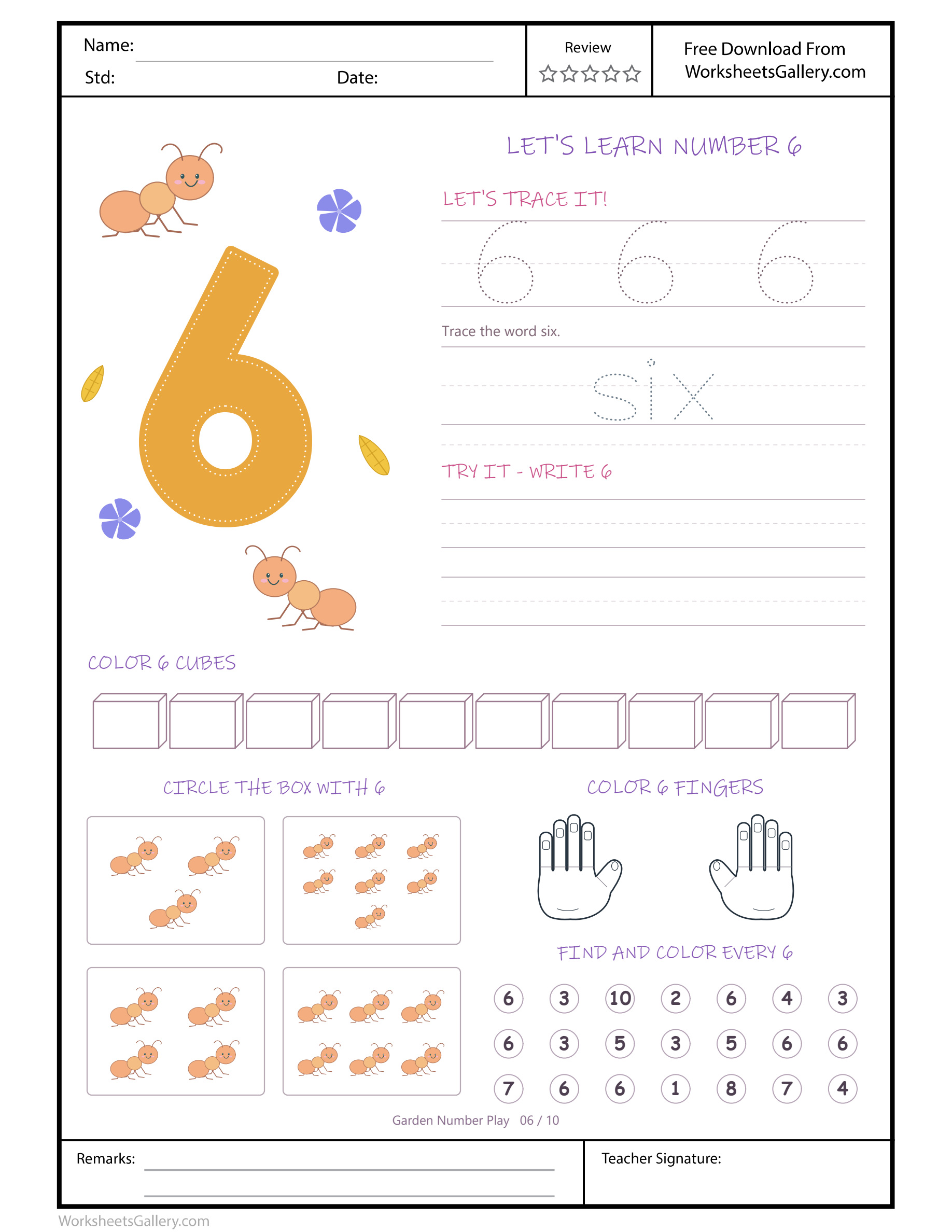
Ari is one token short when he checks for six. That little interruption gives the Number 6 Worksheet a place to begin. An extra finger alongside a full hand brings six into view. The small ant pictures let the child check the same amount in a less regular arrangement. Use one-to-one matching before you ask an early learner to fill a writing line. The orange model, printed word and lined practice area then give a handwriting lesson its own space. Stop after one good explanation if energy for an entire page is limited.
Work with a messenger and a checker
Put six paper ants on the classroom table and choose a messenger to deliver toy crumbs. Ask the checker to speak one number for every delivery. Once the jobs are clear, mix the positions of the ants and let the children agree on a way to track them.
Set out the printable. Give the pupil who still needs to see five fingers a moment to show the familiar hand before raising one more finger. Then ask the messenger to find the matching framed group. A writer can practice the upper reach and lower loop of 6 while the group chooses one correctly colored circle to explain.
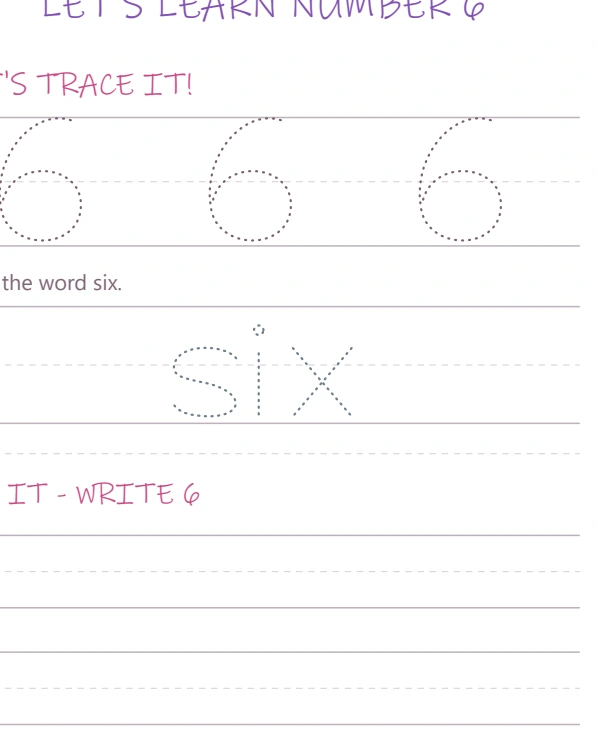
After practice with a pencil, look at the word six beside the model. Say it clearly during one finger-following pass. A child who knows the word in conversation may need time to recognize its printed length or recall where the x falls. Keep the word practice apart from the task of choosing matching digits.
An ant carries the extra piece with Number 6 Worksheet
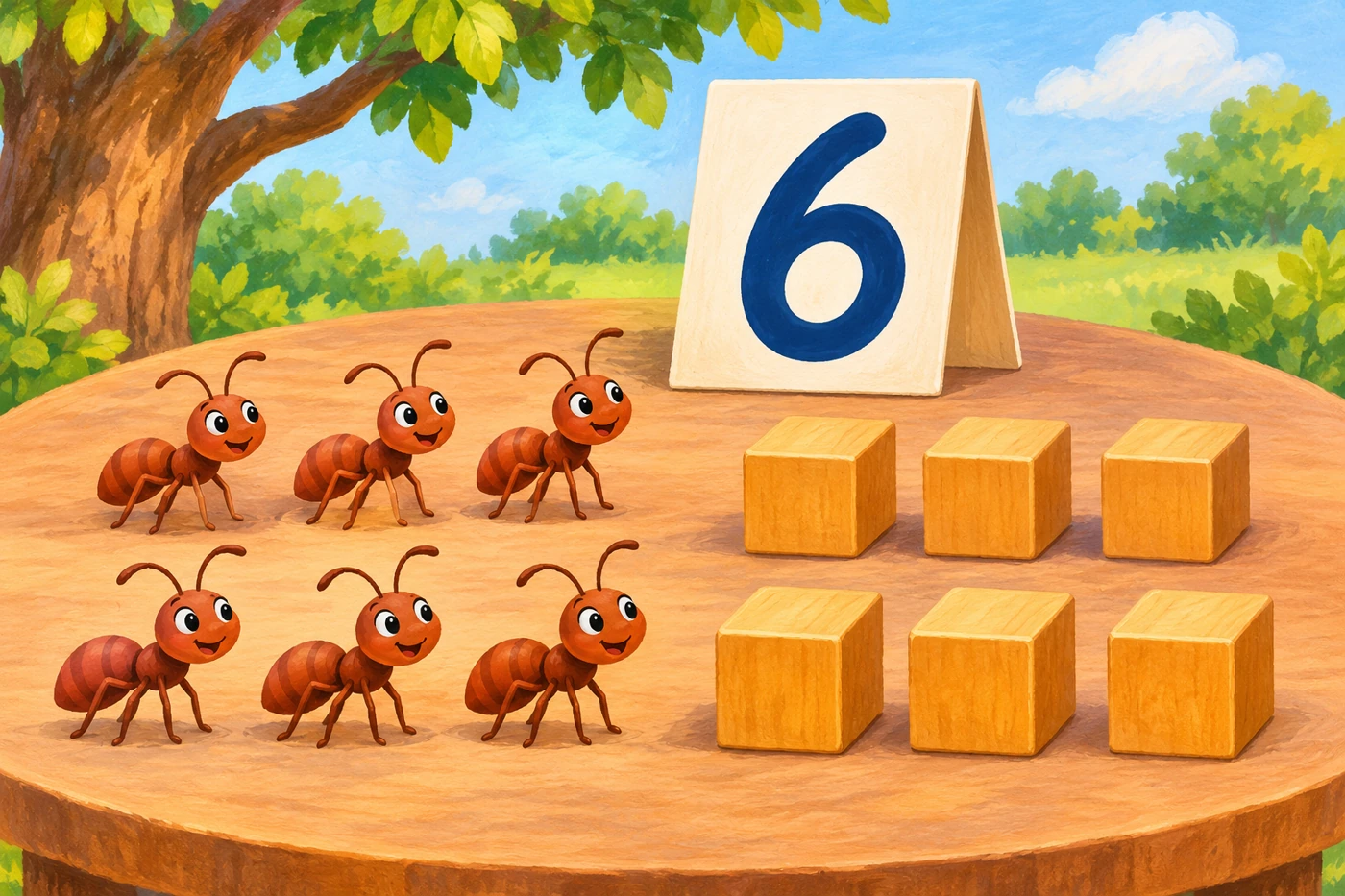
Ari wants each of six pretend ants to carry one crumb to a picnic spot. Six pretend ants need one crumb each. Ari can lay out six large blocks as the ants and six tokens as the crumbs, then match the two rows. An unmatched crumb prompts a recount. This offers a reason to care about each paired count before looking at a framed group.
Ari can arrange six wooden pieces with five in a closely spaced group and one separated. Put them on a firm tray and invite a child to move the single piece until it sits in the row. Ask what should happen to the number card as pieces move without leaving the tray. The action prepares them to see six in a spread-out ant group.
Following the ant sheet’s lower loop
On the ant page, look for a tall turning stroke and closed lower loop in the large example. Follow one pale guide with a finger before reaching for a pencil. Say six once while looking at the result. Ask the child to show the corresponding word with a fingertip. If they are still following whole number words by sight, pronounce the word naturally as they trace it instead of asking for separate letter names.
Let the first partner count the ants using a route that makes sense to them. A second partner can use one token for each picture and report the result. If the reports differ, have the partners line up the tokens and point to the pictures as a team. The aim is to make the source of a count visible.
Where the six curves around
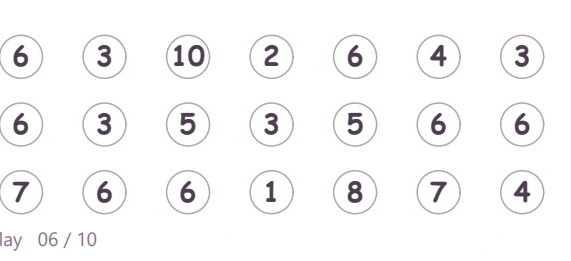
Look at the opening above the lower loop on the large model. An 8 in a hunt circle has a different upper shape. Give the child a moment to locate the part that helped them decide. This works particularly well before coloring the run of symbols in the second row.
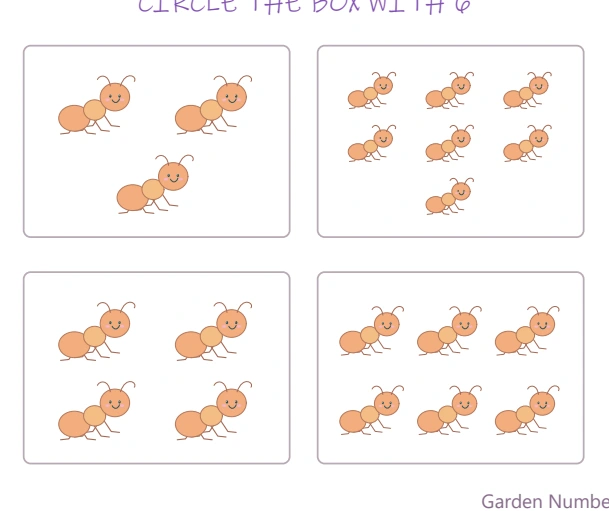
There are seven correct choices for 6 in the twenty-one circles on the ant page. For the ant hunt, use a strip of paper to reveal one row at a time if the child wants help keeping the search in order.
Ask Ari to use the 6 label when checking an earlier decision in the ant hunt.
Play ideas that carry the ant count into the room
Ant picnic
Give six pretend ants each a paper crumb. Have one partner check the pairing before moving the props.
Make the loop
Bend a piece of yarn into a rough 6 and compare the lower closed shape with the worksheet model.
One goes outside
Place five cubes inside a drawn square and one beside it. Check six once every cube belongs to the set.
Two lines of three
Arrange the ant counters in two lines and use a bridge of scrap paper to join them.
Compare 5 and 6
Ask which of two nests holds a whole hand and one extra toy.
One after the familiar hand
Ask for an open hand and one raised finger across the other. Say the final number aloud after the extra finger goes up. Then make a different six with three fingers on each hand. Both displays can be checked slowly if the way the fingers are distributed distracts the child.
Allow pointing through the ants before anyone picks up a crayon. For adult review, the four counts on the ant sheet read 3, 7, 4, 6 in reading order. The lower right box supplies 6. Let the ant illustration draw the learner in, then direct the count to the framed pictures.
Check the counted unit. A child can point out a whole ant picture in the count. Model pointing without picking out decorative details such as wings. Then allow the learner to choose a direction and maintain it until the 6 task is finished. The completed ring should surround a matching box.
Offer a basket of six before dinner
Invite Ari to place six big wooden blocks on a tray. He can move five to one side first, or start by filling a short row of three. Ask what would need to happen for a seventh piece to join. Check with six remaining before he takes the story back to the printed ants.
Make a five-and-one group and a three-and-three group from the same six objects. Compare the totals by moving the objects into one line.

How Ari can return to the ant task tomorrow
If the child sees the loop in 6 and chooses an 8 in the hunt, let them compare the top of each symbol while the original digit stays visible.
When Ari returns to a tray of pretend picnic crumbs, offer a choice of moving blocks, tracing the numeral, or describing the picture count. Date that attempt so there is a record of the chosen 6 activity to revisit.
| Moment | What to watch | Prompt or setup |
|---|---|---|
| Starting the ant count | Point to one unit in the collection before using the word six. | Use the first couple of objects from a tray of pretend picnic crumbs for a demonstration. |
| Writing 6 | Check the pale example where the child paused before trying a second copy. | Give the ant page its own clear space on the tabletop. |
| Looking for 6 | Have the child show a choice they skipped and explain its shape. | Keep the 6 label beside the top of the paper. |
Teaching observations around the first extra finger
- Quantity. Stopping at six gives the learner a reason to track what was selected, especially when the row keeps going.
- Object tracking. The ant picture choices offer a chance to keep track of what was touched and what still needs a count.
- Fine motor work. Following the supplied 6 model and then circling a group puts long pencil strokes and slower turning movements within the same lesson.
- Listening and speaking. Invite a complete sentence about the ants. Saying which amount is shown gives the learner language for comparing the two situations.
- Visual recognition. Looking from the big 6 to crowded symbols encourages a closer comparison of the numeral’s shape.
- Self-checking. The ant page offers a chance to pause and use the printed instruction to decide whether a selection is finished.
A familiar five plus one supports a mental reference for six. Observe whether a child keeps the new finger tied to the spoken count, and whether a lower loop leads them to a correct match or an 8 distractor. The language of an extra item and purposeful pencil movement connect the counting and writing moments without requiring the same speed.
Try a snack-time setup with six empty spots, three on either side of a line on a paper mat. Ask for enough objects to occupy those spots. Talk about both sides before naming the whole. The ant activity gives the same child a way to compare six with an amount laid out in a different shape.
What to open after the ant practice
Choose the next page by listening to how Ari counted. For another way of matching objects and numerals, try a different picture theme for counting through ten after six. If the adult heard a steady count but saw difficulty with pencil direction, use number-word and digit tracing alongside the ant sheet to spend more time on written shapes. Children who want to show a number without a pencil can go on to other finger representations to compare with 6. Compare their spoken count with the amount they can show after moving the supplies.
Adults planning a sequence past the ant page can read the What Works Clearinghouse guide to early math. Its progression can help you decide whether to spend another session on recognizing a small set, accurately counting it, or comparing its size with a second group.
Print the ant activity for a short session
Choose the free download for the original ant page with its printed site credit. The individual clean PDF is available through the worksheet’s eligible membership download. Open the attached $3 package if you want the whole set of ten clean pages. The ant page remains an individual one-page activity in either option.
Use US Letter paper in portrait orientation and choose Actual Size or 100% when the printer can accommodate the margins. Start with a single test copy and check the fine tracing guides around 6. Paper, a pencil and a crayon are enough for a first turn, with blocks handy only if you want to extend the session.
Related Topics
Popular Worksheets
Printable resources families and teachers are downloading now.
 Free
 Free
 Free
 Free