
Garden Number Play: 10 Brilliant Little Counting Lessons
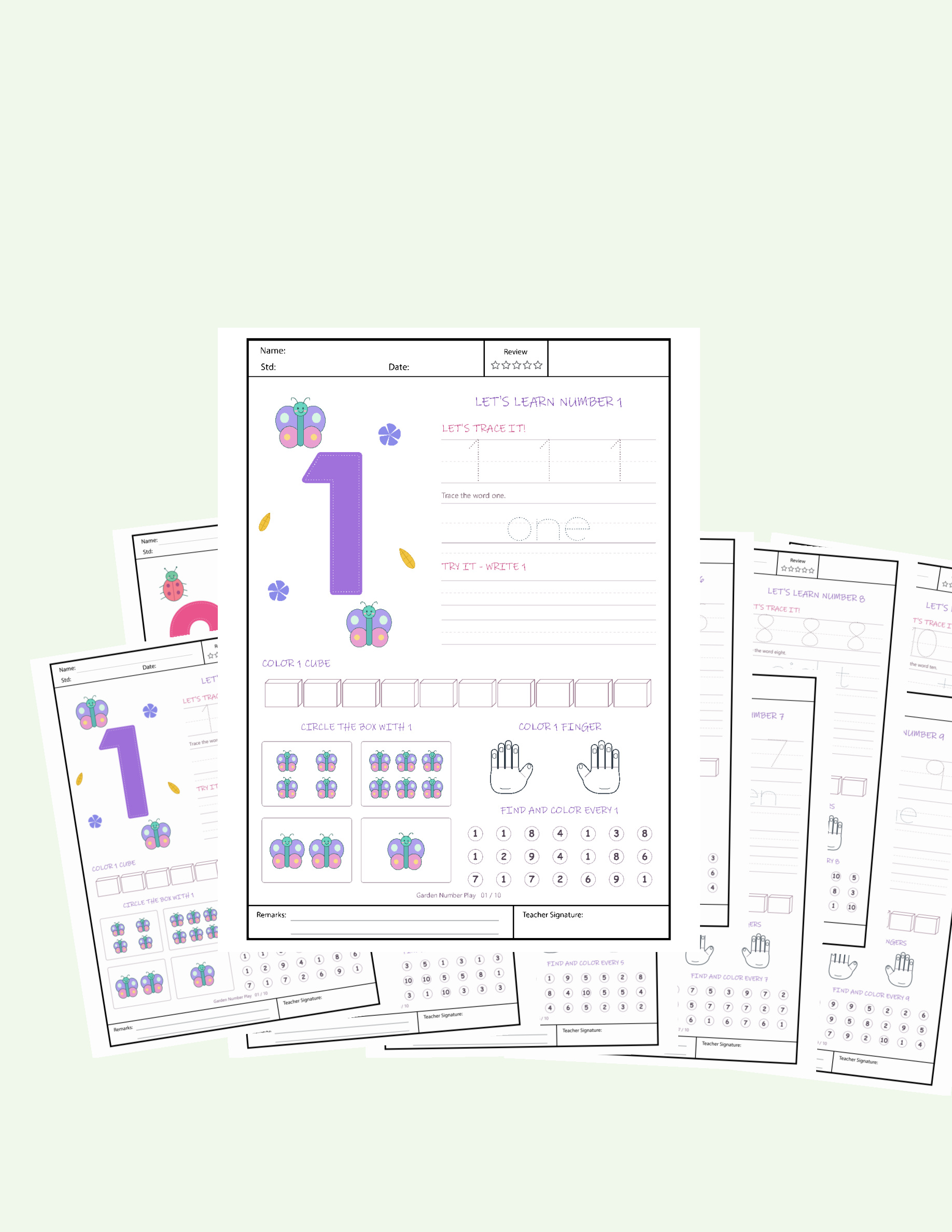
Ten garden characters take turns introducing the numerals in Garden Number Play. Use the numbers in order for a familiar sequence, or select a page to revisit an idea such as five as a full hand or nine as one shy of ten. Preschool and kindergarten learners can visit just one sheet at first. Keep the sheets in number order so it is easy to return tomorrow. The repeated activity positions make it possible to observe how a child approaches a new quantity in a familiar space.
A season of short number lessons with Garden Number Play
Kit decides which garden to revisit after lunch. Start with two sheets open side by side. A familiar arrangement helps a child anticipate where a direction belongs, while the changed numeral and illustrations require a fresh decision. The position of the matching picture box varies, so following yesterday's pencil path will sometimes give a wrong choice.
On the first day, offer a choice between the cube row and the picture groups. Keep the adult notes off to one side. Over several visits, record details you actually hear, such as a child saying 'I got to five and then I added another.' A date beside that observation is more useful than a score for how much of the sheet is filled.
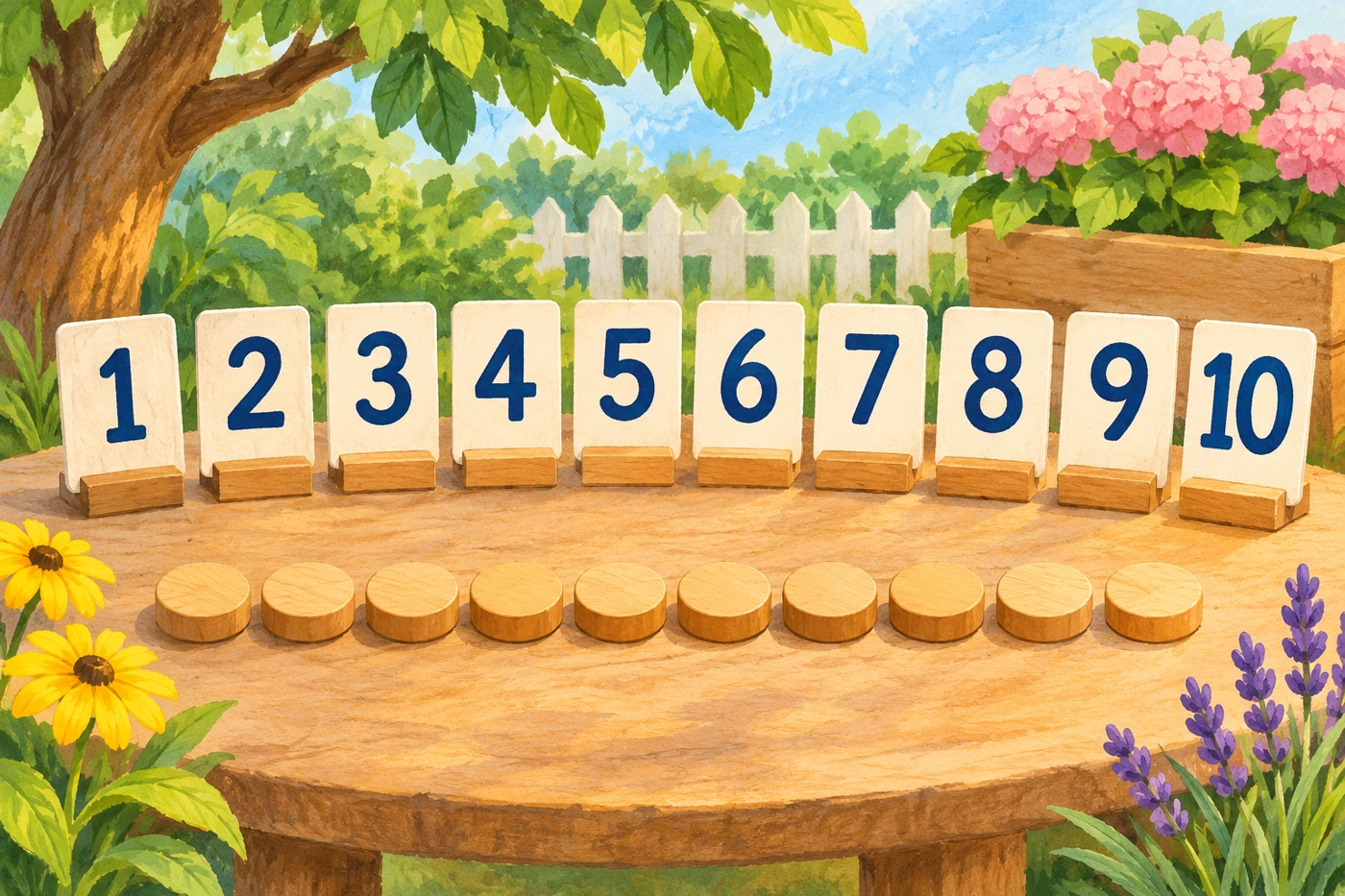
Separate the writing lesson from the count
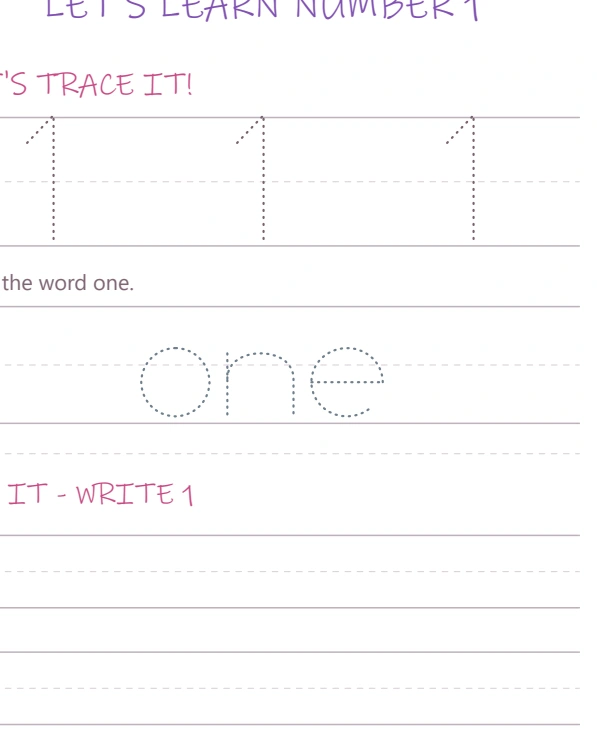
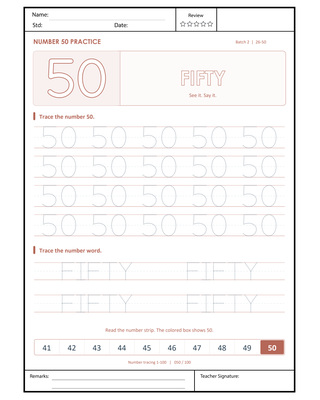
Use a large printed model on the sheet you choose. Let the child trace it in the air and find the pale guides on the page. Say the last number said once while looking at the result. Ask the child to show the corresponding word with a fingertip. If they are still following whole number words by sight, pronounce the word naturally as they trace it instead of asking for separate letter names.
The two-digit example makes a useful final comparison. Hold page one next to page ten and notice that the mark found alone on the butterfly sheet is only the first part on the firefly sheet. Ask the learner to name the ten after looking at the entire print shape. A child may be ready for this reading task even if their hand needs to trace for a while longer.
Compare what transfers
Try turning the familiar cube row into a conversation about parts. Cover a few blank cubes and ask which information is hidden. On seven, nine and ten, reveal the complete strip again and let a child explain the difference between the amount colored and the capacity of the strip.
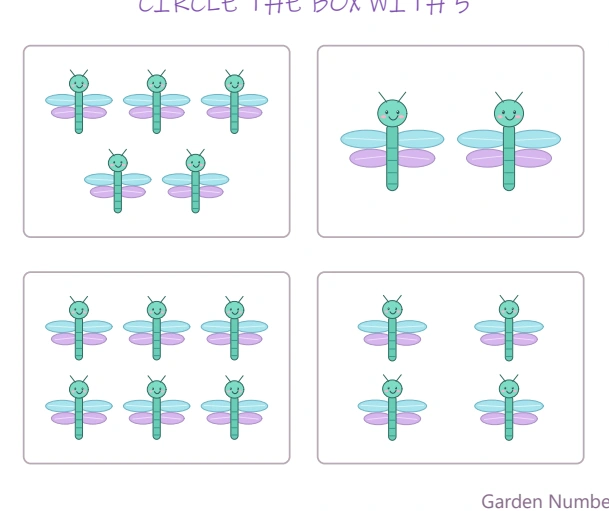
Allow pointing through the garden characters before anyone picks up a crayon. The arrangement and answer position vary. On the dragonfly page, a group of five is at the upper left. On the grasshopper page, the lower-right choice shows nine. Let the garden illustration draw the learner in, then direct the count to the framed pictures.
Agree on the unit. Check that the child includes whole creatures when comparing boxes on each page. Model pointing without picking out decorative details such as wings. Then allow the learner to choose a direction and maintain it until the 1–10 task is finished. The completed ring should surround a matching box.
Catch an accidental shortcut
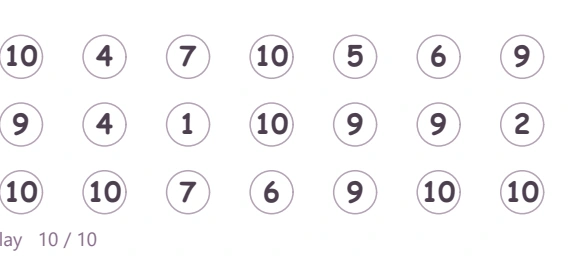
A learner may color seven entries in every hunt by remembering yesterday's result. Ask them to name the symbol first and justify a choice from a middle row. Knowing how many matches happened to appear is useful for adult review. Each child's selection should still be based on comparing the printed entries.
There are seven correct choices for the printed target in the twenty-one circles on the garden collection. For the garden hunt, use a strip of paper to reveal one row at a time if the child wants help keeping the search in order.
Ask Kit to use each numeral in sequence when checking an earlier decision in the garden hunt.
Walk the sheets in small groups
Let one child pick a printed character and ask a classmate to find the sheet with the same number in the title. At a second station, turn over one of three cards and build its amount with large garden counters. At a third, compare the guided trace with a fresh mark. A class can rotate during the week, with the same children returning to the station that gave them the most to talk about.
Use the table as a progress record over several visits. If one pupil is ready to show eight with four and four and another is working on the word two, hold both goals at the same time. Ask each pupil for an explanation tied to their specific activity instead of comparing how many sheets they completed.
Prepare three mats with different counts rather than laying out every page. Let partners tell each other which printable could label each mat. The adults can shift the stations to smaller or larger amounts between sessions. No one needs to work through the pages on a schedule. Classroom pairs can keep a copy of a favorite garden lesson in a numeracy folder and revisit the matching box with a different finger route.
How choices change from sheet to sheet
- Quantity. Stopping at the last number said gives the learner a reason to track what was selected, especially when the row keeps going.
- Object tracking. The garden picture choices offer a chance to keep track of what was touched and what still needs a count.
- Fine motor work. Following the supplied 1–10 model and then circling a group puts long pencil strokes and slower turning movements within the same lesson.
- Listening and speaking. Invite a complete sentence about the garden characters. Saying which amount is shown gives the learner language for comparing the two situations.
- Visual recognition. Looking from the big 1–10 to crowded symbols encourages a closer comparison of the numeral’s shape.
- Self-checking. The garden collection offers a chance to pause and use the printed instruction to decide whether a selection is finished.
Name one quantity for the day. Make it with objects first and place a written label beside the result. Give adults a separate job of recording whether the learner tracks each item, recognizes the mark, says the number word, and controls the pencil. Appreciation for the step that actually changed gives the learner a specific reason to try another page.
Have a learner build the same target at two points in the week. First use craft objects arranged evenly. Later let the learner choose a cluster and explain how to keep a count without rows. If you add another page, look for a child who notices that the method travels even though the total and illustration change.
Build a small collection across the week
Choose two days when there is already time around a table at home. On one day, ask a child to move loose objects into a numbered container. The next time, count pictures on a garden page before collecting objects. The change in materials can show a child which decisions travel from the tray to the paper. Make the object collection larger only when it is useful.
Track a single behavior across the set, such as stopping on the requested quantity, and use the dated pages to compare the child's own strategies over time.

How Kit can return to the garden task tomorrow
Compare a page with a very small group and a page with a full row. The repetition of the worksheet layout lets the adult see which changes are about the number itself.
When Kit returns to a basket of garden tools, offer a choice of moving seed packets, tracing the numeral, or describing the picture count. Date that attempt so there is a record of the chosen 1–10 activity to revisit.
| Moment | What to watch | Prompt or setup |
|---|---|---|
| Starting the garden count | Point to one unit in the collection before using the word the last number said. | Use the first couple of objects from a basket of garden tools for a demonstration. |
| Writing 1–10 | Check the pale example where the child paused before trying a second copy. | Give the garden collection its own clear space on the tabletop. |
| Looking for the printed target | Have the child show a choice they skipped and explain its shape. | Keep each numeral in sequence beside the top of the paper. |
Play ideas that carry the garden count into the room
Choose a companion
Pair any two sheets and ask what stayed in the same place even though the creatures changed.
Bring a number outdoors
Draw a numeral on the playground with chalk. Invite children to put that many large leaf shapes beside it and count the displayed collection.
Set out an empty spot
Use a ten-space tray and compare the spaces remaining after filling it for five, eight and ten.
Let the learner be the guide
They can make an adult trace one model, count a picture box and explain an intentional mistake.
What to open after the garden practice
Choose the next page by listening to how Kit counted. For another way of matching objects and numerals, try a different picture theme for counting through ten after one through ten. If the adult heard a steady count but saw difficulty with pencil direction, use number-word and digit tracing alongside the garden sheet to spend more time on written shapes. Children who want to show a number without a pencil can go on to other finger representations to compare with 1–10. Compare their spoken count with the amount they can show after moving the supplies.
Adults planning a sequence past the garden collection can read the What Works Clearinghouse guide to early math. Its progression can help you decide whether to spend another session on recognizing a small set, accurately counting it, or comparing its size with a second group.
Print the clean ten-sheet collection
Use the $3 purchase button to open checkout for the complete ten-page garden bundle. Sign in with the account you plan to use for access. Open the protected download after purchase, or sign in through a membership plan that includes paid worksheets. The printable has no watermark or ads. Its original frame, activity layout and response spaces are all preserved.
Use US Letter paper in portrait orientation and choose Actual Size or 100% when the printer can accommodate the margins. Start with a single test copy and check the fine tracing guides around 1–10. Paper, a pencil and a crayon are enough for a first turn, with seed packets handy only if you want to extend the session.
Related Topics
Popular Worksheets
Printable resources families and teachers are downloading now.
 Free
 Free
 Free
 Free