
Finger Number Studio: 10 Brilliant Counting Worksheets
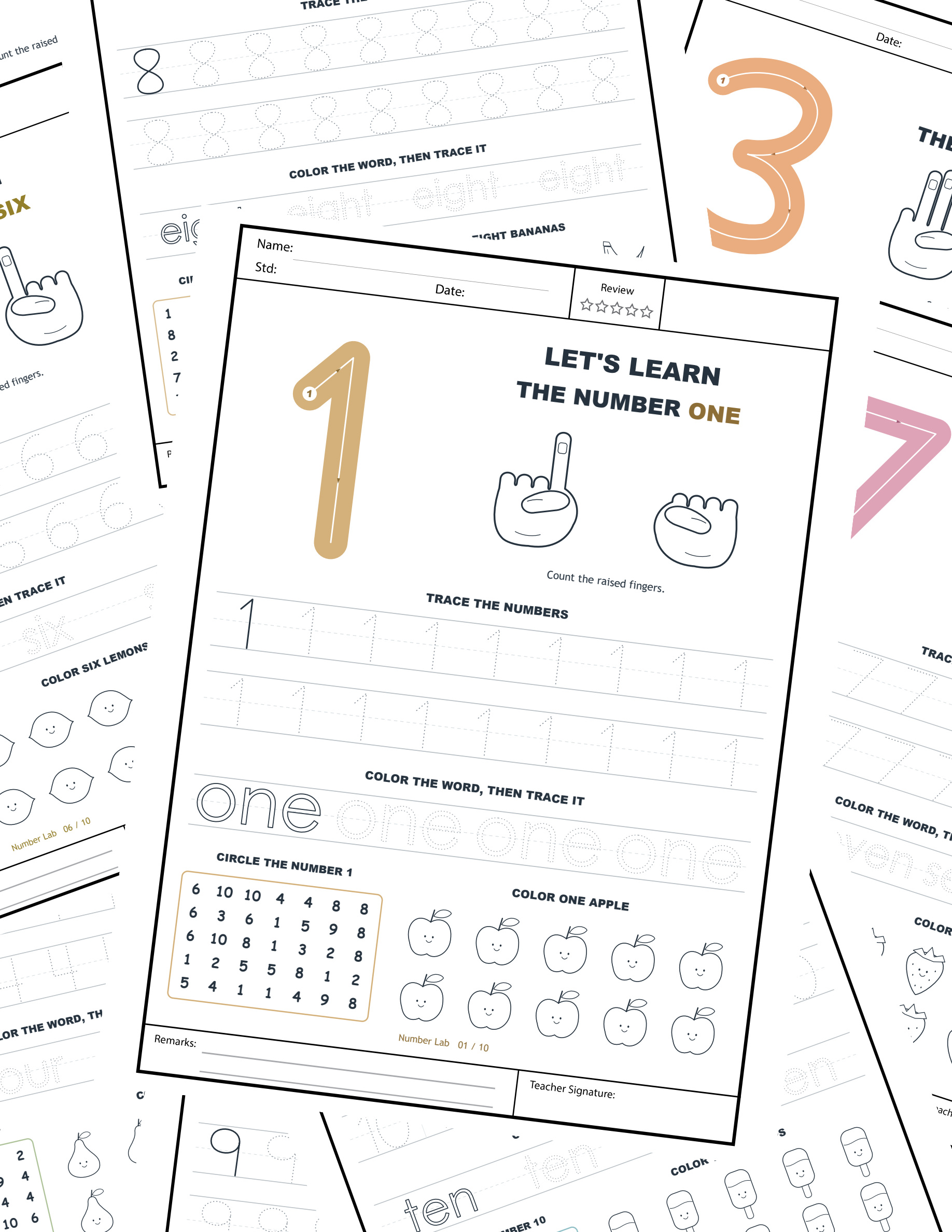
A raised finger, a written numeral and a coloured picture can all tell the same number story. Finger Number Studio gathers ten supplied number lessons into one clean PDF, moving from one to ten without changing the familiar activity arrangement between sheets. Each page introduces an amount with hands, then offers numeral tracing, a number name, a symbol hunt and a food-picture choice. The complete collection costs $2. Choose one number for a short visit, or keep the ordered file ready for a child who enjoys returning to a familiar learning routine.
LESSONS
10 number visits
DOWNLOAD
1 ordered PDF
COLLECTION
$2 purchase
🔎 Choose the amount before choosing the pencil — Finger Number Studio
The useful starting question in Finger Number Studio is “Which amount would be interesting today?” A child counting three toy animals may have a reason to open the three page. Another learner may be ready to investigate six because one hand no longer holds the whole amount. Page order provides a convenient filing system rather than a compulsory daily schedule.
Keep the Finger Number Studio lesson small enough to discuss. The hand picture, writing bands and two lower tasks give several entry points. There is no need to require every dotted copy before a child can count a food group. An adult can observe understanding in the spoken explanation, a pointed selection or a pencil mark, depending on the learner's current comfort.
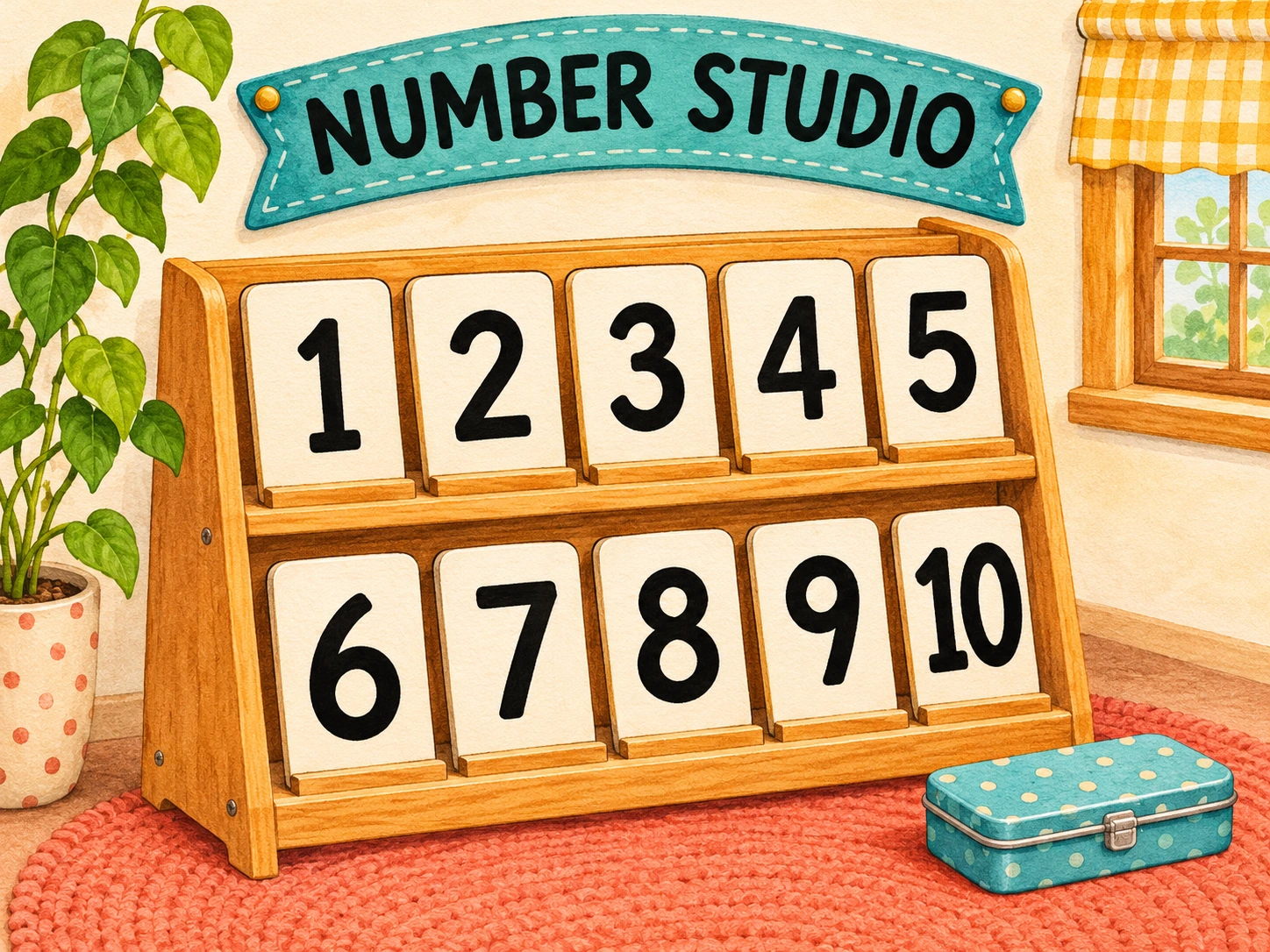
Ten page choices in the studio drawer: Finger Number Studio
| Number lesson | Raised-finger groups | Food selection from ten |
|---|---|---|
| 1 / one | 1 and 0 | One apple |
| 2 / two | 2 and 0 | Two avocados |
| 3 / three | 3 and 0 | Three carrots |
| 4 / four | 4 and 0 | Four pears |
| 5 / five | 5 and 0 | Five pineapples |
| 6 / six | 5 and 1 | Six lemons |
| 7 / seven | 5 and 2 | Seven strawberries |
| 8 / eight | 5 and 3 | Eight bananas |
| 9 / nine | 5 and 4 | Nine mushrooms |
| 10 / ten | 5 and 5 | Ten ice pops |
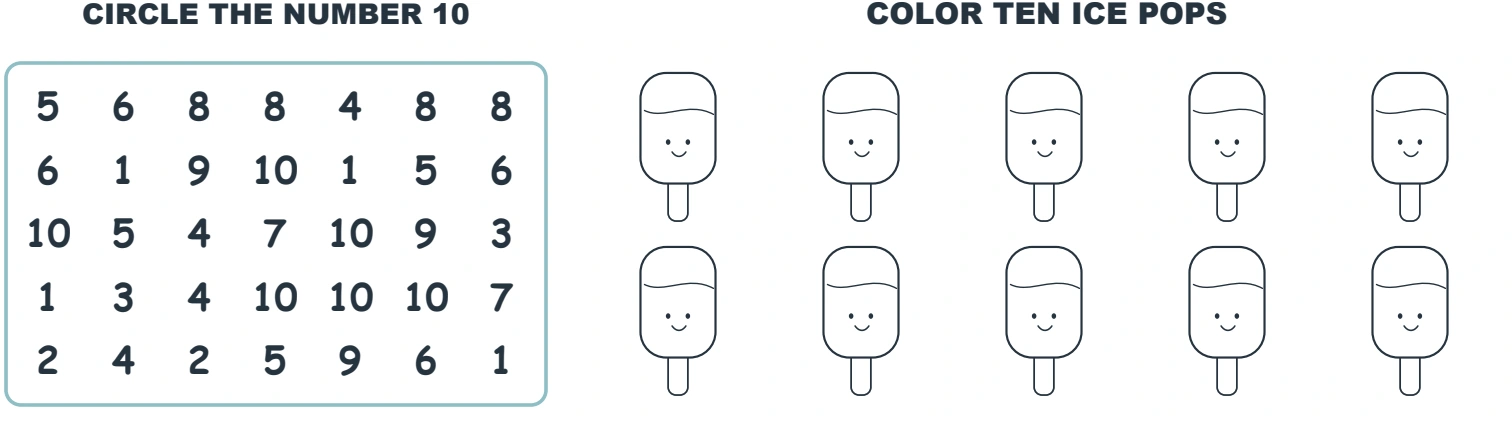
Every Finger Number Studio food panel contains ten whole pictures. The printed instruction determines how many to colour. Children may select any valid group of the requested size; matching an adult's preferred left-to-right colouring pattern is not part of the exercise. On the ten page, all pictures belong to the selected group. On the one page, nine remain uncoloured.
What the hand models make visible
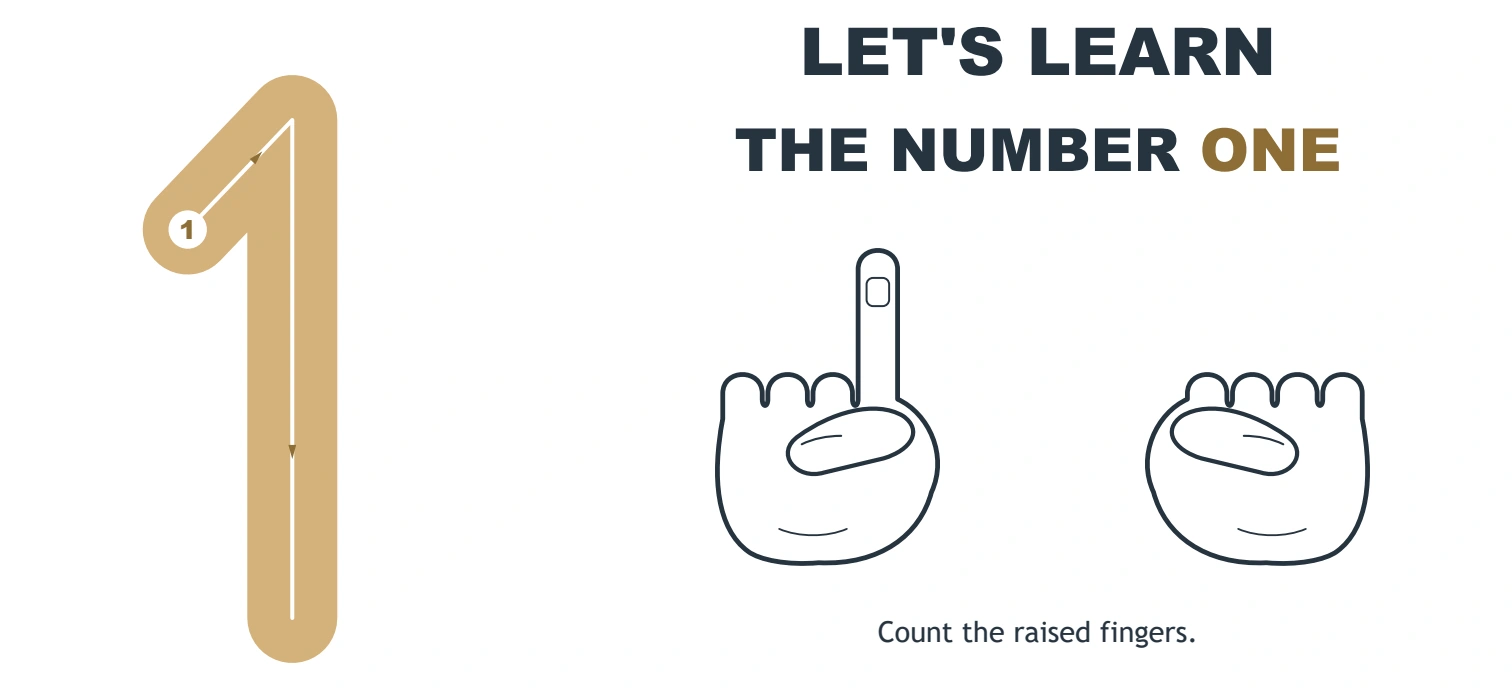
For numbers one through five, Finger Number Studio shows the requested amount on the first hand and a closed second hand. Numbers six through ten use a full first hand with the remainder on the second. Count extended fingers only. The outline of a folded thumb or curled finger is part of the drawing, but it does not increase the raised-finger total.
What changes when the amount passes five
The six page gives Finger Number Studio a useful turning point: five fingers are already available, and one more joins them. Let a child count every raised finger initially. When that feels secure, invite “five, then six” as another way to describe the picture. Counting on is an option to explore, not a performance requirement or a reason to reject a correct count from one.
A complete lesson has several different jobs: Finger Number Studio
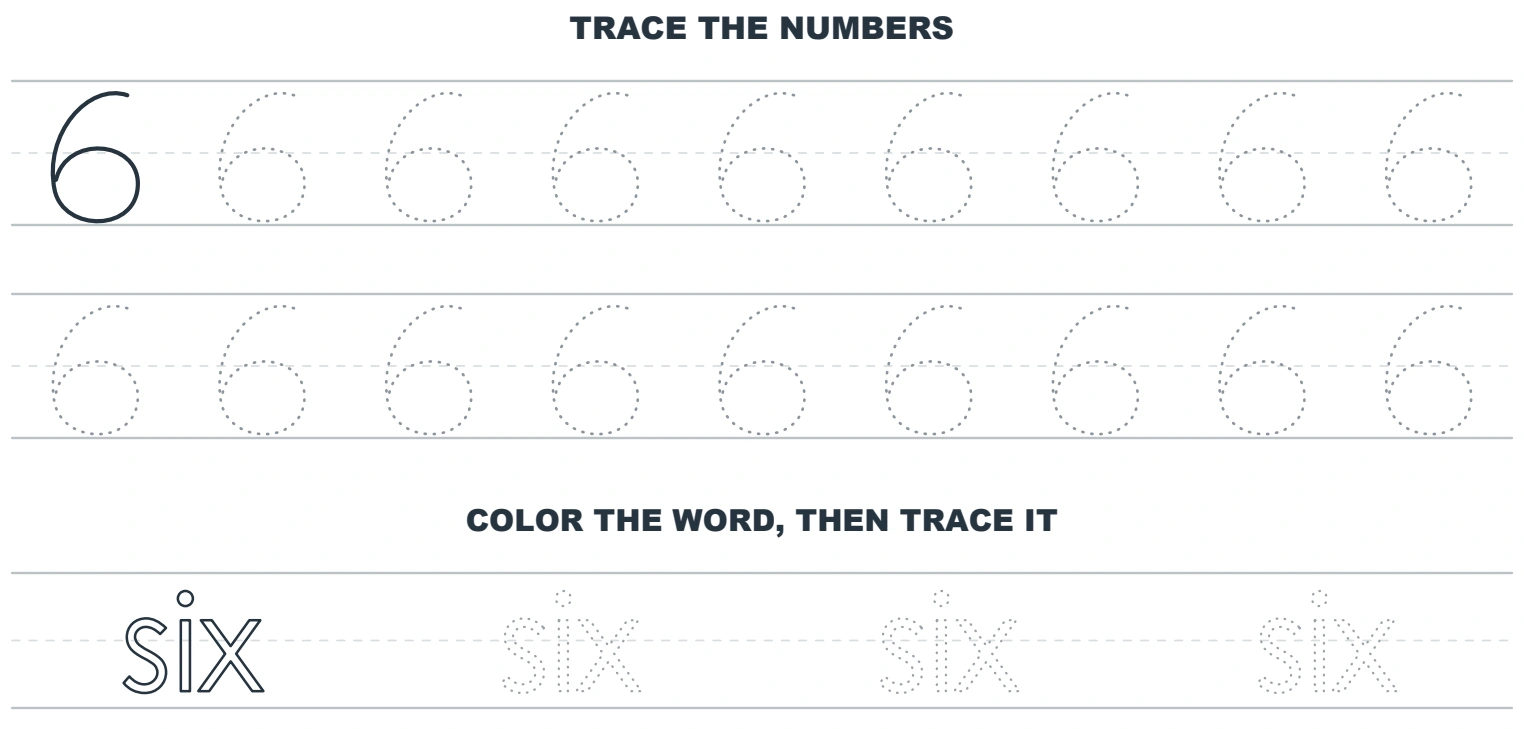
The large numeral in Finger Number Studio carries a visible writing route. Beneath it, a solid model begins two numeral-practice rows. The number-name band asks for colouring the outlined word and tracing three dotted copies. Reading the whole number word aloud before tracing keeps the lettering attached to a meaning, rather than making it a string of unrelated pencil movements.
Read a hunt entry as one entry: Finger Number Studio
Each Finger Number Studio hunt has five rows with seven entries per row, and six complete entries match the page's target. Ten is especially useful to discuss: its 1 and 0 belong together. A lone 1 elsewhere in that grid is not a match for 10. Sweep across one row at a time and allow a second inspection before marking additional circles.
Separate finding from selecting an amount
The lower Finger Number Studio panels ask different questions. The grid means “Where is this written number?” The food pictures mean “Can you choose this many?” Finding six target symbols does not mean colouring six foods on every sheet. Read the two headings separately, and point back to the relevant instruction whenever a child carries one panel's rule into the other.
Six observations that can guide an adult: Finger Number Studio
Quantity stays connected to a spoken count: Finger Number Studio
In Finger Number Studio, touching a raised finger or a food picture while saying one count word gives the adult something specific to notice. A child may know the chant yet move a pointing finger twice over one item. Slowing the pointing action can resolve that difficulty without adding more writing or demanding a longer number sequence.
A symbol can stand for an entire collection: Finger Number Studio
The Finger Number Studio numeral identifies the total, although its shape does not resemble the food pictures. Place the page beside a small real group and ask which printed mark tells about that group. This comparison brings written number recognition into a meaningful exchange. It also reveals whether a correct answer comes from reading the numeral or guessing from page position.
Searching can become more deliberate: Finger Number Studio
Repeated distractors make Finger Number Studio an opportunity to practise an orderly visual route. A paper strip beneath the current row can reduce the visible field. Removing that aid later changes the search demand without changing the mathematical target. Look for careful revisiting of uncertain entries, rather than treating the quickest search as the strongest one.
Pencil movement can follow a visible plan: Finger Number Studio
With Finger Number Studio, the learner can look at a model before deciding where a stroke begins or turns. Tracing is one available form of motor practice; it does not by itself establish independent numeral writing. A relaxed grip and a few purposeful copies provide more useful information than a page filled while the child is visibly pressing too hard.
Number words extend the conversation: Finger Number Studio
Say the Finger Number Studio number name naturally in a sentence about the chosen pictures. Some learners will notice individual letters, while others simply connect the printed word with the spoken amount. Both responses can support the activity. Read unfamiliar word forms aloud and avoid turning the number lesson into an unsupported spelling test.
Checking becomes a shared reasoning habit
Ask a Finger Number Studio learner to show how a selection was checked. “I touched each lemon” tells you something different from “It looked like six.” Neither explanation needs a public score. When an answer changes, notice the checking action that made the change possible. That language gives children a way to ask for help with a specific step.
A home visit built around one useful question: Finger Number Studio
Imagine Nela setting out cups for three toy guests. This is a possible home activity, not a reported result. A parent opens the three lesson from Finger Number Studio, names the carrot task and asks Nela to build the same amount with cups. The pencil stays aside until the real collection has been counted and its final amount named.
For this Finger Number Studio visit, offer a choice between tracing a few 3 models and finding a grid row containing 3. Read the word three together, then choose three carrots to colour. Finish by comparing the selected pictures with the cups. If the child can explain that both groups contain three, the conversation has a clear endpoint even when the second writing row is untouched.
A classroom station with a checker role
A teacher could put the six, seven and eight lessons from Finger Number Studio in separate labelled folders. At one station, a learner chooses a folder and a partner listens to the hand explanation. The partner's job is to ask where the full five appears, not to tell the answer before the first child has looked. This is an optional classroom arrangement.
Rotate the Finger Number Studio roles after one lower-panel task. Let children point instead of write when the purpose is quantity reasoning, and provide a thicker pencil when tracing is the chosen focus. Record a brief observation such as “counted five and two separately” or “kept 10 together in the hunt.” Specific notes make the next invitation easier to choose.
Five ways to continue beyond these sheets: Finger Number Studio
1. Build a number drawer: Finger Number Studio
Label ten envelopes with the numerals used in Finger Number Studio. Invite the child to place a matching drawing in one envelope, then explain its amount to another person. The drawings can be simple dots or familiar objects. Use only a few envelopes at first so the activity remains a classification choice rather than a race through an entire set.
2. Give a five-and-more report: Finger Number Studio
Choose one of the higher Finger Number Studio numbers and arrange objects in a group of five with a smaller group beside it. Ask for a report describing both parts. Then combine them into one line and recount. The arrangement changes; the total remains available to check. No written addition equation is required from the child.
3. Make a tiny word exhibition: Finger Number Studio
Pick two Finger Number Studio number words, write them on finished cards and display each beside a matching quantity drawing. Read the cards aloud when a visitor arrives. A learner who cannot yet decode the words can still explain the pictures. Keep the focus on connecting a name with an amount instead of memorising every spelling in one sitting.
4. Change the search field: Finger Number Studio
An adult can write a short row of mixed numeral entries inspired by Finger Number Studio. Include one chosen target several times and ask the child to explain each selection. For ten, write the 1 and 0 close enough to read together. Change the order on a later day so remembered positions do not replace recognition.
5. Deliver a counted parcel
Use a Finger Number Studio page as a pretend order reference and ask a learner to pack that many safe, suitably sized play objects. The recipient counts the parcel before accepting it. A wrong amount becomes a reason to adjust the delivery. Children can exchange roles, giving the adult a chance to model a calm recount.
Readiness, frustration and reasons to return: Finger Number Studio
For many learners between three and six, the useful level of adult support will vary with Finger Number Studio. Age alone does not decide readiness. A child who enjoys quantity play may still tire during tracing; another may trace neatly while needing help to coordinate a count. Offer oral responses, larger movements and fewer visible entries according to the task you are observing.
Keep Finger Number Studio visits predictable without making them compulsory marathons. Return to a familiar number after a real reason appears, such as counting pencils or toy wheels. Praise a precise action: noticing a folded finger, checking the final food total, or asking where to start. If shoulders tighten or marks become rushed, save the page and stop at a named checkpoint.
More counting routes and adult play ideas: Finger Number Studio
For a smaller starting range beside Finger Number Studio, try the number-one kite lesson. The five-turtle activity offers a different pictured collection, while the ten-balloon page gives another reason to read a two-character numeral. Choose the next page for a particular learning need rather than printing everything at once.
Adults planning Finger Number Studio conversations can explore PBS Parents learning ideas and NAEYC family play resources. These separate educational sites offer wider activity ideas. Their presence does not add worksheets to this purchase or imply that either organisation has reviewed the collection.
Purchase, save and print the whole collection
Choose the $2 collection purchase control for Finger Number Studio, complete the site's checkout and use the protected download supplied for your account. The purchased file contains ten clean worksheet pages in order, one through ten. Membership by itself does not unlock this separately priced collection. Individual lessons also offer their own free original samples and eligible-member clean copies through their respective pages.
Save the Finger Number Studio PDF, open it in a PDF reader and print selected pages at Actual Size or 100% on US Letter paper. The purchased printable has no website watermark, domain promotion or advertisements within its worksheet pages. Check a first print for visible dotted guides and complete borders before making classroom copies. The layered preview is a display of actual sheets; it is not an additional worksheet page inside the download.
Popular Worksheets
Printable resources families and teachers are downloading now.
 Free
 Free
 Free
 Free