
Pear Number Four: 6 Brilliant Checks with Hands and Words
The $2 studio collection includes this pear page and the nine other supplied number lessons.
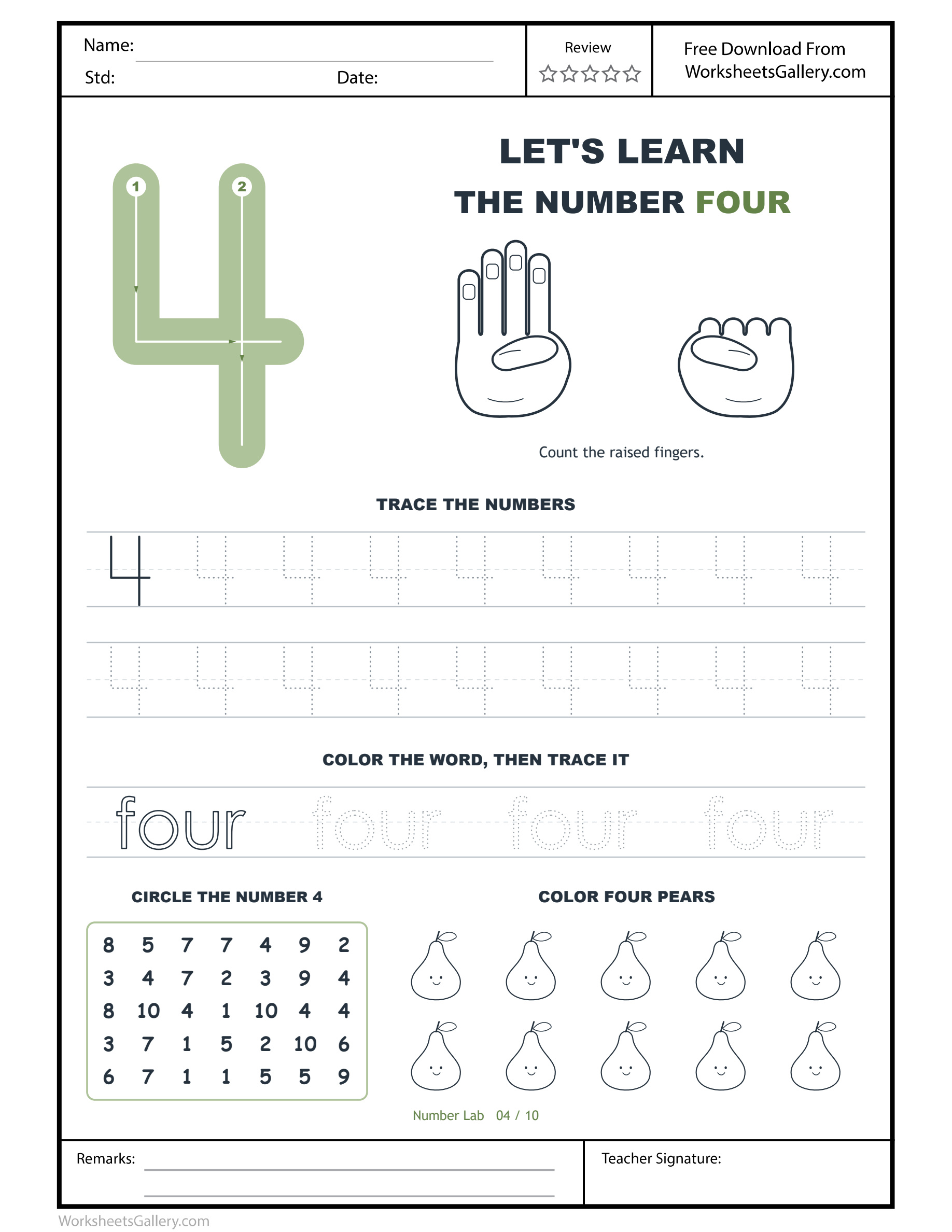
Four pears can sit in one line, two pairs or a scattered picnic group and still make the same amount. Pear Number Four explores that idea through a supplied finger-counting sheet with a large 4, guided writing, the number name four, a numeral hunt and a ten-pear selection task. A folded thumb in the hand picture gives children a precise feature to notice before counting. Adults can use the page for a supported preschool or kindergarten visit, choosing an oral, visual or pencil activity according to the learner's attention and current confidence.
AMOUNT
4 / four
HAND PARTS
4 + 0
FOOD CHECK
4 of 10 pears
🍐 Decide which kind of help is useful today — Pear Number Four
Around ages three to six, children may meet different parts of Pear Number Four with very different levels of ease. A learner who counts four objects reliably may still find the pencil route unfamiliar. Someone who enjoys tracing may need support choosing four from ten. Start with a small demonstration and observe the response rather than assuming one successful section proves readiness for every other task.
Provide Pear Number Four instructions aloud and let pointing be an acceptable answer. If the hand pose is difficult to copy physically, the child can point to its raised fingers instead. If the number field looks crowded, show one row at a time. A useful adjustment keeps the number question visible while making the response easier to manage. Stop when the learner has completed the agreed check, even if several practice copies remain.
The first hand shows four, not five: Pear Number Four
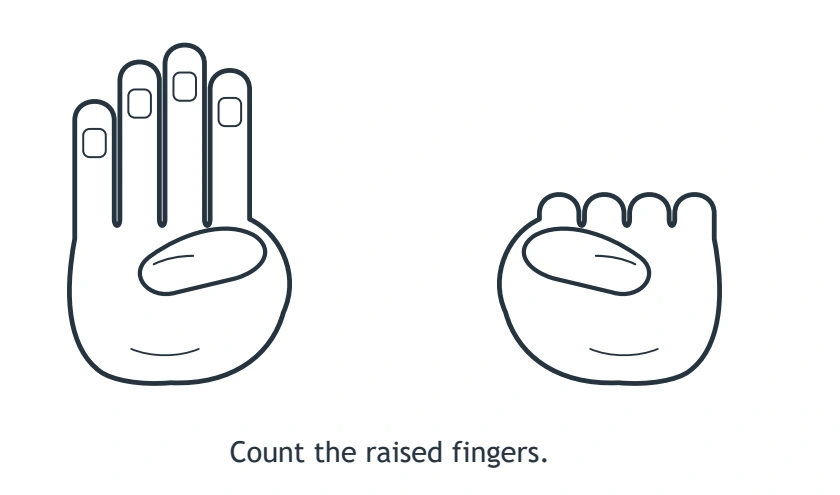
Look closely at the Pear Number Four hand model: four fingers extend upward, while the thumb is folded across the palm. The second hand has no raised fingers. Touch the four extended fingertips one at a time and say the count words at the same pace. Then ask how many raised fingers there are altogether. The outline of the thumb is not an extra count.
Read the numbered writing route
The large 4 in Pear Number Four shows two numbered starting points. Follow the supplied model to notice the upright-and-across portion and the separate downward stroke. Trace in the air before using a dotted copy if the sequence needs a larger movement. Keep the printed example nearby rather than replacing it with a different handwriting style during the first attempt.
Give the written name a spoken meaning: Pear Number Four
The Pear Number Four word strip contains an outlined four followed by three dotted copies. Read the whole word aloud and point to the four raised fingers while saying it again. A child can colour the outlined letters before tracing, as the page requests. Knowing the spoken amount is enough to participate; independent decoding or memorised spelling is not required for this number activity.

A picnic discussion at home: Pear Number Four
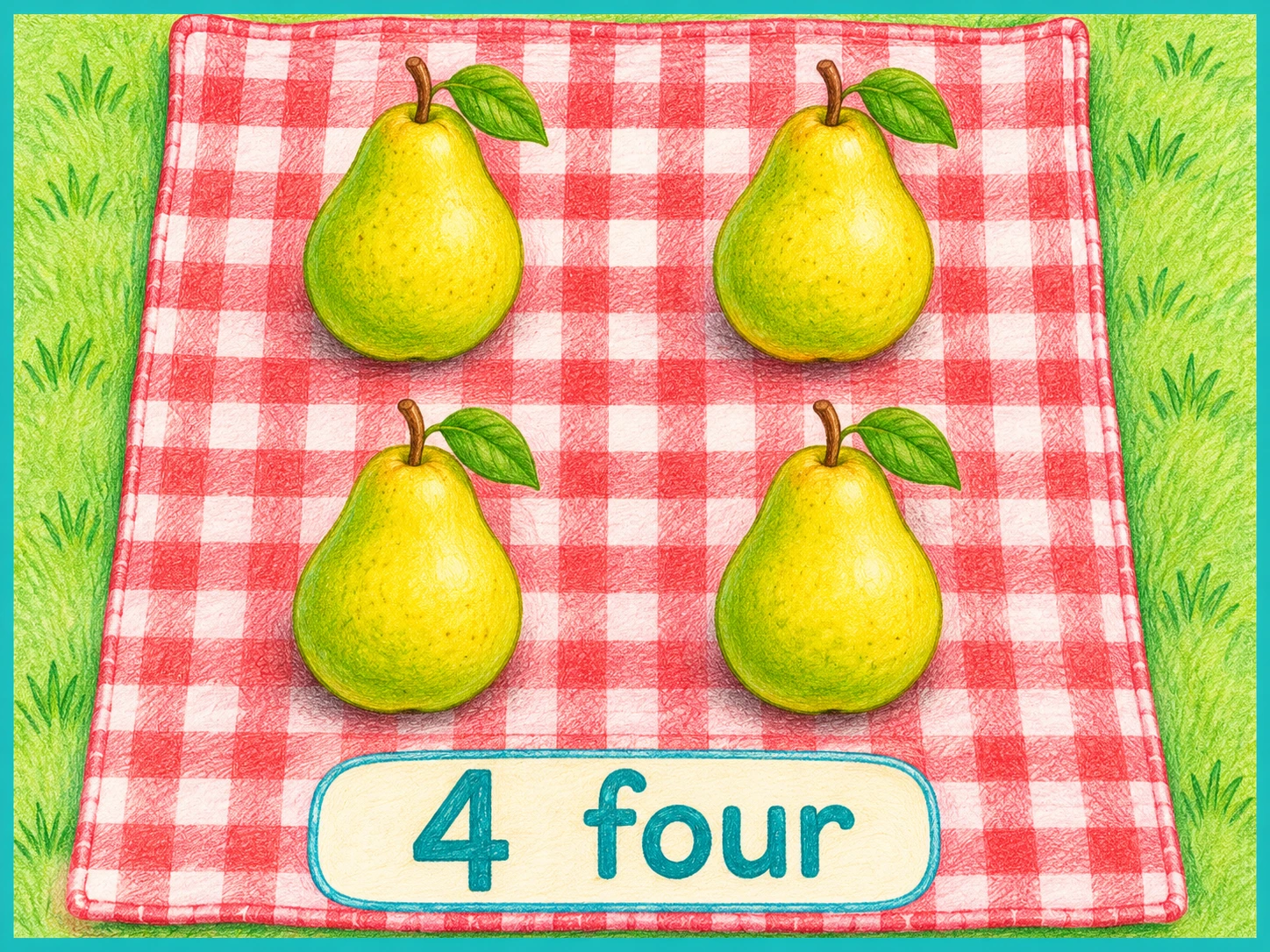
In a possible Pear Number Four home scenario, Deni places four play pears on a cloth for a pretend picnic. A parent arranges them as two pairs and asks for the total. Deni can count across both pairs or bring them into a line. The adult then spreads the pears farther apart and asks whether the picnic received any extra fruit.
Bring that question back to Pear Number Four. Deni points to four chosen pear outlines before adding colour. The parent checks the final selection without insisting that the pictures form the same two-by-two arrangement as the play pears. End by finding four on the page's word band or tracing a few 4 copies. This sequence links a changeable real arrangement with the stable printed target.
Six things a four lesson can reveal: Pear Number Four
Counting follows whole pears: Pear Number Four
The Pear Number Four food pictures include stems, leaves and faces. Those features belong to each whole pear. Ask the learner to identify the counted object before beginning. This helps distinguish a counting error from a change in what the child decided to count. A later activity could count leaves, but this instruction specifically names pears.
Four can be selected from more than four: Pear Number Four
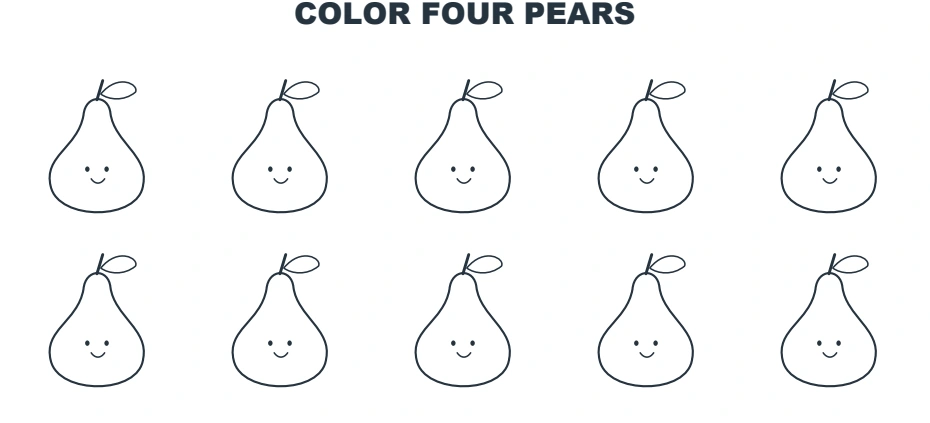
Choosing four pictures from ten in Pear Number Four requires a different decision from counting a group that an adult already prepared. Let the child plan a selection, check it and stop. If the amount is uncertain, use four movable objects as a reference alongside the page before adding crayon marks.
A count survives a new arrangement: Pear Number Four
The picnic idea accompanying Pear Number Four invites children to compare a line with two pairs. Recounting after a move is welcome. The point is to notice that changing position alone does not add or remove pears. An explanation based on what moved can be more informative than a quick answer given without looking.
Search decisions can be explained: Pear Number Four
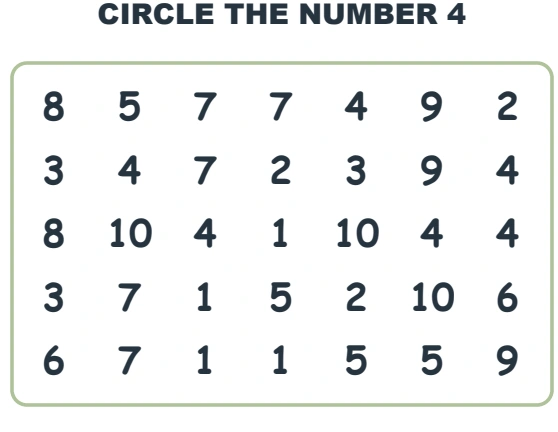
Every complete 4 entry in the Pear Number Four grid is a target. Ask what part of a chosen symbol matches the large model. A child might describe its crossing line or its long upright stroke. Shape vocabulary supports visual reasoning, while an adult can still read unfamiliar surrounding numerals aloud when useful.
Two writing starts can be coordinated: Pear Number Four
The numbered 4 model in Pear Number Four offers an observable sequence for motor practice. Watch how the learner lifts and repositions the pencil between strokes. A pause to look again can be helpful. A few controlled attempts may be enough for one visit; forcing more copies after the route becomes rushed provides less useful practice.
A number sentence can describe a choice: Pear Number Four
After the Pear Number Four pear selection, invite a report such as “Four pears have colour.” Adults can add the word remaining while pointing to the other six. This gives number vocabulary a visible reference. The learner can dictate the sentence, say part of it or point while the adult provides a complete model.
The checking details are specific to this sheet
| Evidence for number four | Reference result |
|---|---|
| Extended fingers | 4 on the first hand and 0 on the second |
| Number hunt | 6 matches in a 5-row, 7-column field |
| Match positions | 5, 9, 14, 17, 20, 21 |
| Pear selection | 4 coloured, 6 left uncoloured |
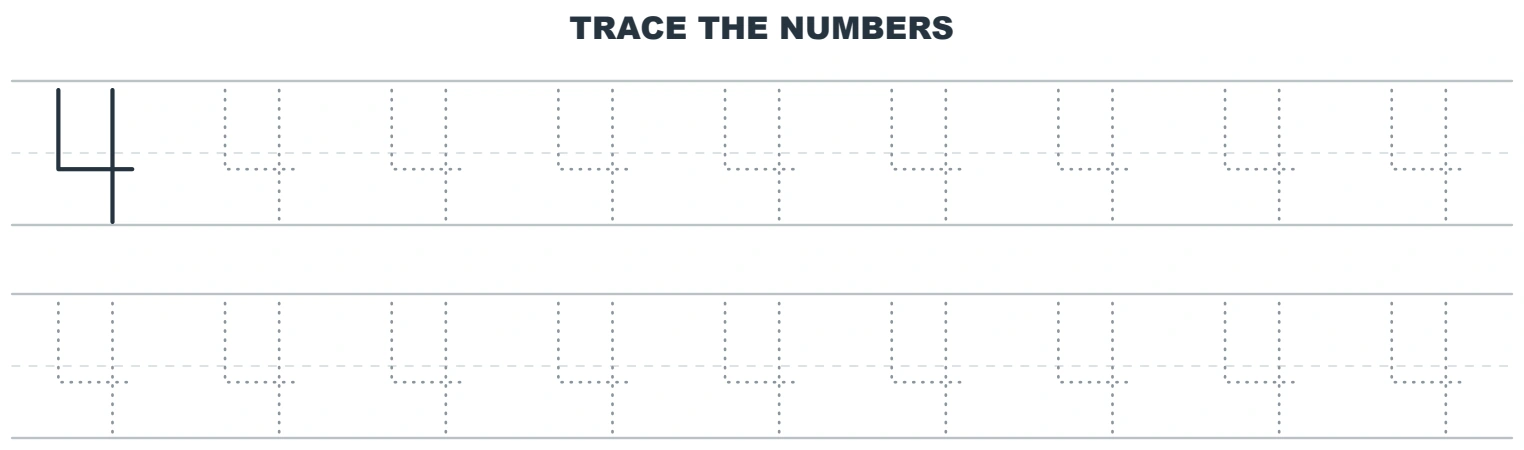
| Writing and word bands | 2 numeral rows; 1 outlined four; 3 dotted word copies |
Count Pear Number Four hunt positions across the first row before continuing downward. The reference is intended for an adult checking completed work. Six target circles belong in this hunt even though the page studies four. Keep the numeral-search instruction separate from the pear instruction so the number of matches does not become an accidental food-colouring rule.
A classroom picnic station with a reason to compare
A teacher could place two picnic mats at a Pear Number Four station. One has four play objects in a row; the other has four in two pairs. Children act as picnic inspectors, deciding whether each mat serves the same amount. This is a suggested activity rather than a reported classroom outcome. Keep the object type consistent on the first turn so size and identity do not overwhelm the amount question.
After the inspection, a Pear Number Four learner chooses a small paper task while a partner listens to the explanation. Swap the inspector role before repeating. The teacher might note whether the child recounted a changed arrangement or used the absence of added objects to explain the result. Either observation can guide a later conversation, without turning the station into a comparison between classmates.
Four invitations for a fresh encounter with four: Pear Number Four
1. Build a four-corner display: Pear Number Four
Put one large counter near each corner of a square mat. Use Pear Number Four as the numeral reference, then count all four counters. Move one counter into the centre and ask whether the total changed. This game separates location language from quantity. The mat's four corners are useful places to start, but the counters remain countable after they leave those places.
2. Turn a pretend menu into an order: Pear Number Four
An adult writes a completed 4 card for a pretend picnic order. The Pear Number Four learner chooses four play foods and describes the delivery. A partner checks before accepting it. Add a deliberate adult delivery of three on another turn and invite a correction. The missing item gives a concrete reason to revisit the instruction.
3. Make a route with two starts: Pear Number Four
On large paper, copy the visible numeral model from Pear Number Four and mark its two starts clearly. Let the child trace using a finger, then a comfortable drawing tool. Talk about where the hand lifts rather than how fast the route is finished. The larger version is an optional movement activity; it does not replace the actual supplied worksheet model.
4. Record four picnic sounds: Pear Number Four
Choose a gentle sound such as tapping a wooden spoon against a mat. Make four taps and ask the Pear Number Four learner to draw four simple marks as a record. Count the marks against a second performance. This connects listening with a visible quantity while allowing the written record to be dots or short lines rather than correctly formed numerals.
Work out what a mistake is telling you: Pear Number Four
Counting five raised fingers in Pear Number Four calls for attention to the folded thumb. Losing the 4 route calls for returning to its numbered starts. Colouring an extra pear calls for checking the selected group. These situations need different responses. Point to the exact evidence involved, offer one small adjustment and leave room for the child to try again.
When Pear Number Four returns, change the entry point or the pretend picnic role. Ask the learner which part they want to explain to someone else. Specific encouragement can recognise a useful action: “You checked the thumb before counting” or “You counted the selected pears again.” Avoid requiring a perfect page before the child is allowed to stop. A comfortable finish makes the next short visit easier to offer.
Where a pear investigation can lead: Pear Number Four
The four-teddy lesson gives Pear Number Four another object group for comparison. The five-turtle worksheet can introduce the next amount, while the three-rocket page offers a smaller collection. Choose a new picture context when it answers a specific question about counting or symbol recognition.
Adults accompanying Pear Number Four may also find ideas in PBS Parents' learning pages and NAEYC resources on family play. These are optional independent destinations. The worksheet tasks remain complete without them, and no extra files from those organisations are included in this download.
Choose a printable edition for the picnic table
The free Pear Number Four control supplies the retained original worksheet. An active eligible membership unlocks the separate clean premium copy, whose pages contain no website watermark, domain promotion or advertisements. The package card offers the full one-to-ten collection as a $2 purchase. That separately priced collection combines ten clean sheets rather than changing the membership price.
Print Pear Number Four on US Letter at 100% or Actual Size after saving the PDF locally. A test copy should show both starts of the large 4, its dotted practice copies and every edge of the frame. From the combined file, select the number-four lesson. Set aside enough table space for pointing to the pear group without covering the numeral model, then invite a short, purposeful picnic check.
Popular Worksheets
Printable resources families and teachers are downloading now.
 Free
 Free
 Free
 Free