
Three Carrot Counting: 5 Wonderful Number Connections
Take the carrot lesson into an ordered ten-page number collection, with the clean 1–10 sheets together.
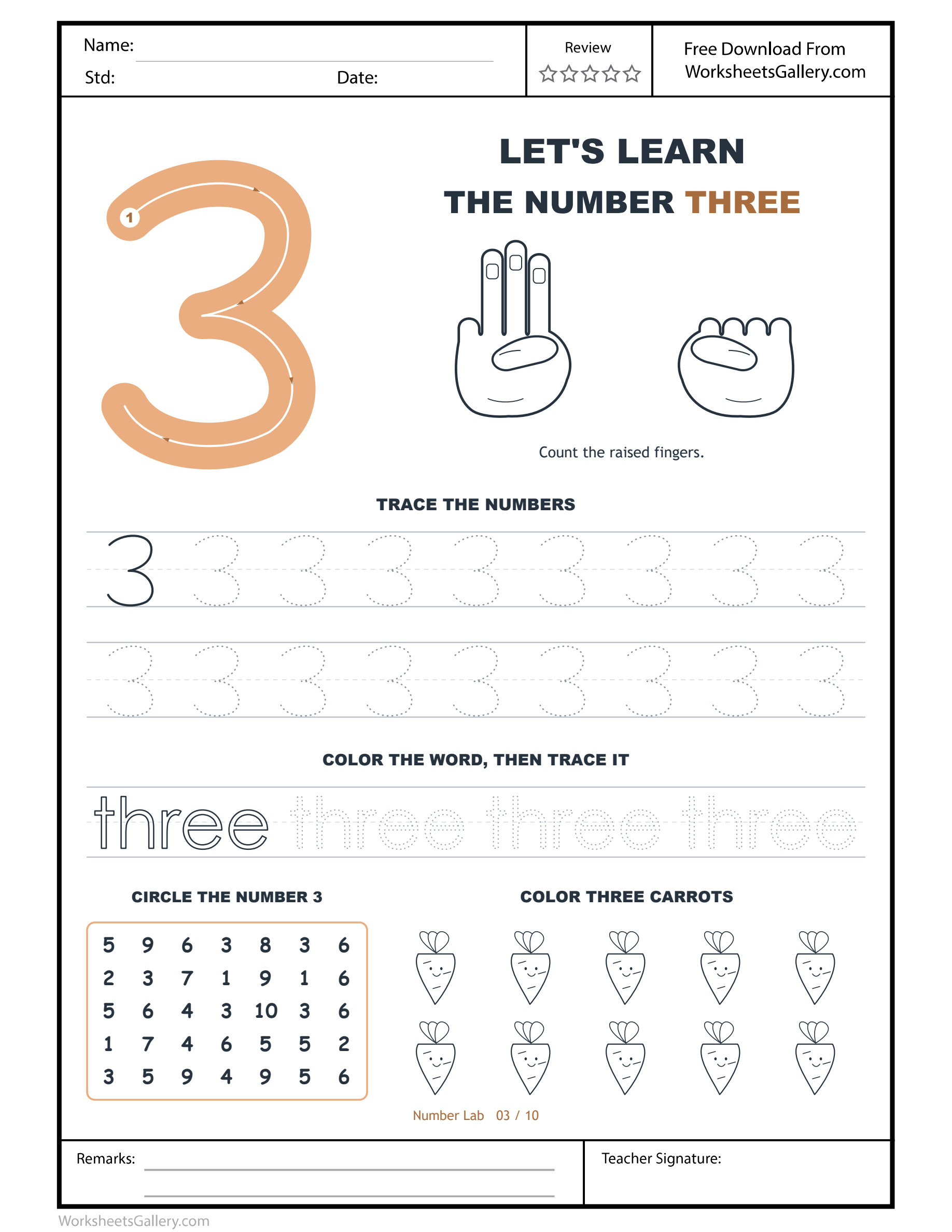
A carrot has several leaves, but those leaves do not turn it into several carrots. Three Carrot Counting keeps the counted unit clear while connecting three whole food pictures with a three-finger model, the numeral 3 and the printed word three. Two tracing rows and a mixed-number search offer different ways to work with the same target. Children can begin with looking and speaking, then choose a pencil task when ready. This preschool and kindergarten page gives an adult several specific things to discuss without needing to introduce a new amount at every step.
AMOUNT
3 / three
HAND PARTS
3 + 0
FOOD CHECK
3 of 10 carrots
🥕 Count the carrot, including its leafy top — Three Carrot Counting
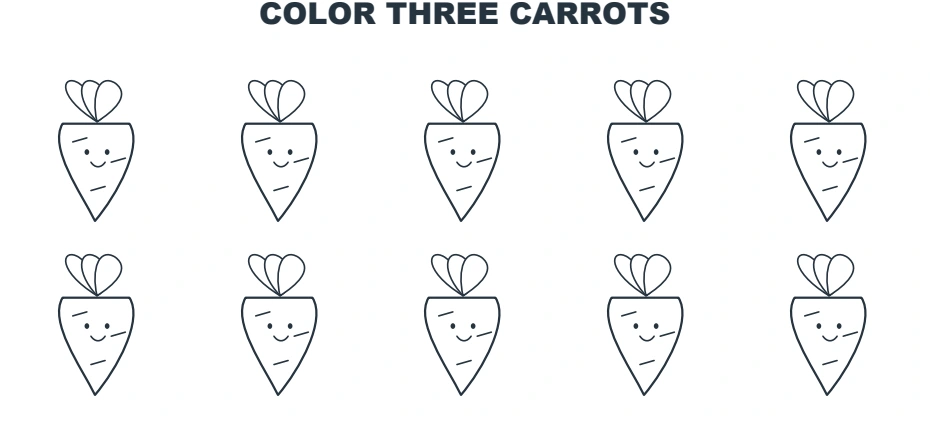
The ten carrot pictures in Three Carrot Counting are complete objects. Count each body and its attached leaves as one carrot. Young learners sometimes count the most noticeable small features, especially when a leafy cluster is visually interesting. Outline one whole carrot with a pointing finger and ask what object the instruction names before beginning the selection.
For Three Carrot Counting, the requested group contains three carrots. A learner can choose any three pictures across the two rows. It is useful to point to the intended group before colouring, then count the finished selection afterwards. If the chosen locations differ from an adult's example, compare amounts rather than correcting the arrangement. Three remains three wherever the selected carrots sit.
A garden-packing visit at home: Three Carrot Counting
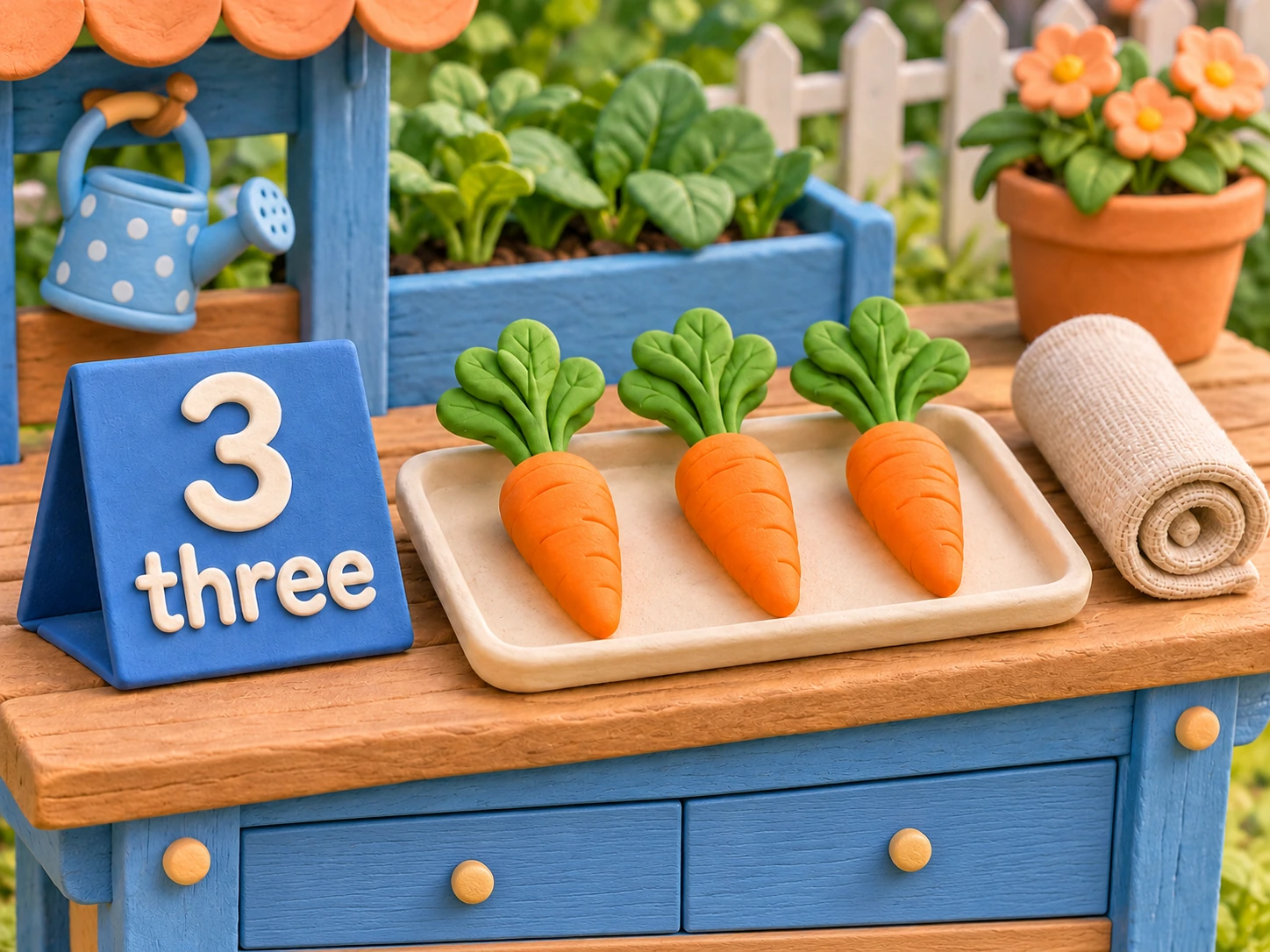
Imagine Cora packing three pretend carrots for a toy rabbit. In this possible Three Carrot Counting activity, an adult first asks Cora to deliver the amount with movable objects. If only drawings are available, the adult can make three separate carrot cards. The rabbit's order gives the count a purpose, while a quiet recount checks that each complete object was visited once.
After the delivery, Cora finds the hand picture in Three Carrot Counting. The adult reads three, compares the raised fingers with the packed carrots and offers a choice of tracing or searching. Finish by asking whether the rabbit's order matches the coloured group. The small story can end there; a successful comparison does not require every dotted numeral to be completed in the same sitting.
Three different forms, one amount: Three Carrot Counting
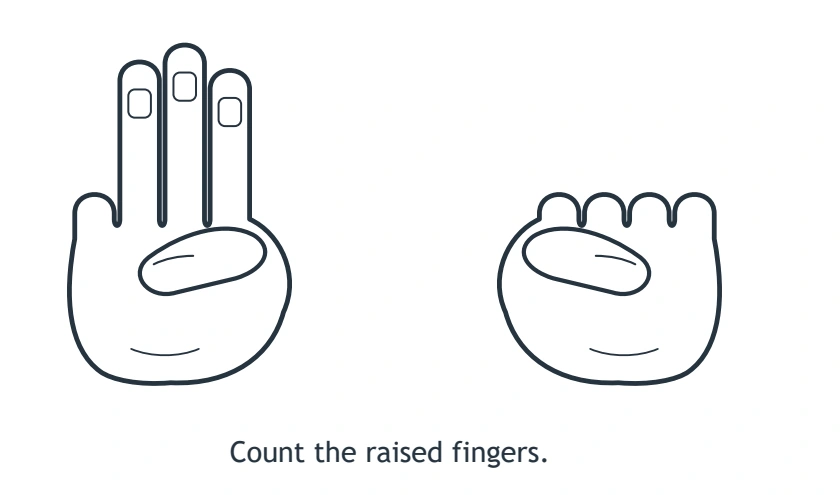
The three raised fingers in Three Carrot Counting show an amount directly. The numeral 3 represents that amount with a single written mark, while the word three names it in print. Let a child move a pointing finger between these forms as the adult says a sentence about the carrots. Looking back and forth is part of the comparison rather than evidence that the child should work without references.
Follow both bends of the model: Three Carrot Counting
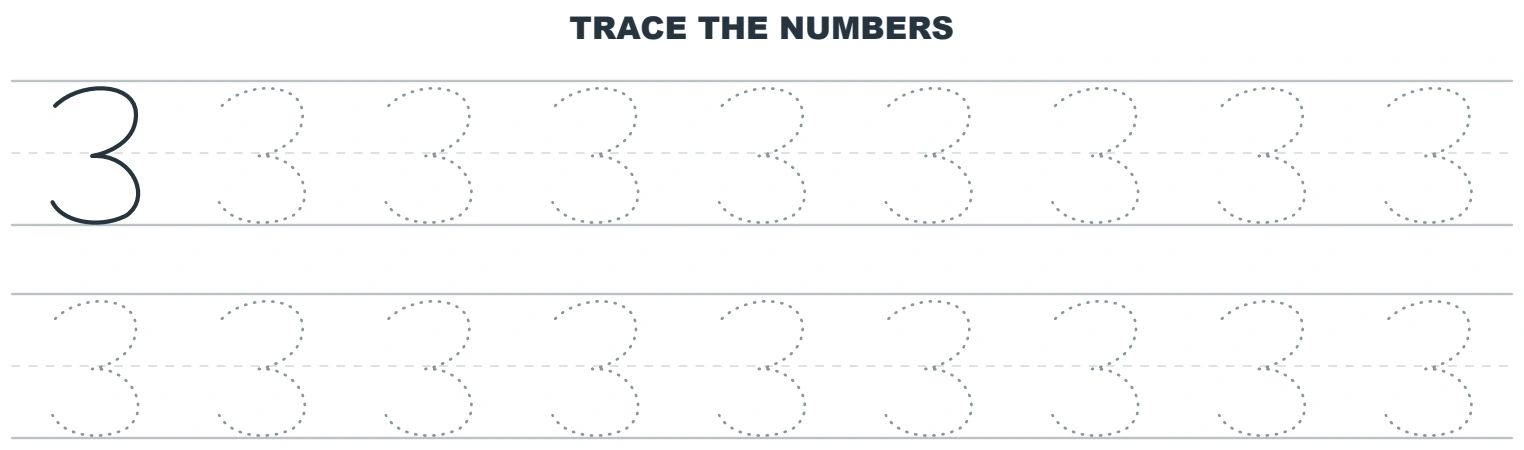
Notice the upper and lower curved parts in the large Three Carrot Counting numeral. Ask where the printed route begins and how it passes through the middle. A big air movement or a finger trace can precede the dotted copies. Avoid describing 3 as a pair of closed circles: its left side remains open, and the visible source model provides the clearest reference.
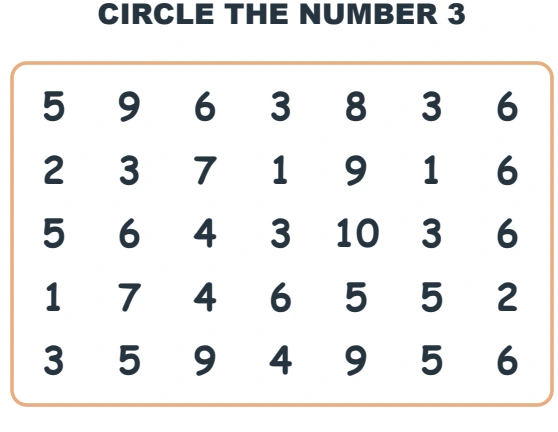
Find complete threes across the grid: Three Carrot Counting
Six hunt entries in Three Carrot Counting match 3. They occur at positions 4, 6, 9, 18, 20 and 29 when positions are counted across seven columns and then down the five rows. Let the learner attempt a row before using this adult reference. Some rows have more targets than others, so a regular spacing pattern cannot replace inspecting the entries.
A compact adult checking ledger
| Three investigation | What is actually printed |
|---|---|
| Hand total | 3 extended fingers plus 0 on the second hand |
| Writing supply | A solid numeral model followed by dotted 3 copies in two rows |
| Word task | Colour three once; trace three dotted repetitions |
| Hunt target | 6 complete 3 entries among 35 choices |
| Carrot target | Colour 3 whole carrots out of 10; leave 7 uncoloured |
The Three Carrot Counting table distinguishes task quantities. The hunt needs six target circles, one for each complete matching 3. Three coloured carrots belong in the food panel because its instruction specifies three. Read the two headings again if a child transfers the hunt's final circle count into the colouring task. This is an instruction change, not a request to perform an addition problem.
Five useful gains to watch for: Three Carrot Counting
Keeping an object boundary in view: Three Carrot Counting
The Three Carrot Counting carrot task encourages a learner to treat a whole pictured object as one unit. This attention can carry into other picture-counting activities with wheels, petals or spots. Ask what is being counted, then trace one object's boundary. The aim is a clear unit, not a rule that small details can never be counted in a different task.
Attaching a last count word to a group: Three Carrot Counting
After touching three carrots in Three Carrot Counting, ask “How many did you choose?” The learner may recount or answer from the completed count. Both responses reveal how the final word is being used. An adult can model that three describes the whole selected group, not only the last carrot touched, while keeping the explanation short and connected to the pictures.
Comparing shapes during a search: Three Carrot Counting
In Three Carrot Counting, distractors may share a curved feature with 3. Invite a closer look at whether the whole symbol matches the model. This is visual discrimination with a meaningful target. A correct choice made after checking is useful evidence; rushing through the grid is not necessary, and a temporary row cover can reduce visual clutter.
Coordinating a curved pencil route: Three Carrot Counting
The two Three Carrot Counting tracing lines offer repeated opportunities to control a change of direction. A child can practise a few shapes and compare one with the solid example. Watch the hand's comfort and the page's stability. Pencil control, recognising the numeral and understanding three are separate observations that may develop at different rates.
Explaining a selection in a sentence: Three Carrot Counting
Use the Three Carrot Counting word band to support a simple report about the chosen carrots. An adult reads three aloud and offers vocabulary such as selected, remaining and whole. The learner may say “I coloured three” or point while the adult describes the action. This exchange connects number language with an observable result without requiring independent spelling.
A classroom packing bench with two roles: Three Carrot Counting
A teacher could arrange a Three Carrot Counting station with an order reader and a packer. The reader points to 3 on a finished card; the packer chooses three large play objects from a supply. After checking, children compare the order with the worksheet food panel. This is a suggested classroom scenario, an invitation to try a specific exchange with the learners in your group.
Keep the Three Carrot Counting roles small. One child can explain a finger picture while a partner checks a search row, then they swap. An adult note might say “counted leaves initially, then identified whole carrots.” That records the useful change in strategy. It also suggests a sensible next activity involving complete objects rather than simply assigning more tracing.
Five garden jobs to try away from paper
1. Repack the same harvest: Three Carrot Counting
Arrange three toy carrots in a line, then put them into a triangular group. Ask a Three Carrot Counting learner whether the harvest changed. Touch and count to settle the question. Changing position without adding or removing objects lets the child check quantity against appearance, especially when a wider arrangement initially looks like more.
2. Give three quiet knocks
Make a pretend garden-door game with Three Carrot Counting: the rabbit opens the door after three gentle knocks. Count the sounds aloud first, then try a listening turn. Let the child signal when the third knock has arrived. If an extra knock happens, describe the actual count and reset the game without treating it as a failed performance.
3. Sort the harvest labels: Three Carrot Counting
An adult writes 3, three and a drawing of three dots on separate completed cards. Ask the Three Carrot Counting learner to explain how the cards belong together. Add a card with two dots only when the first connection is secure. The child can remove the mismatch by pointing or describing; the printed word should be read aloud when needed.
4. Give a rabbit a route: Three Carrot Counting
Draw three large stepping stones for a toy rabbit, then move the toy once onto each stone. The Three Carrot Counting numeral can mark the end of the route. This changes the count into a sequence of actions. Keep one move per stone and recount the destinations if the toy starts hopping twice in one place.
5. Let the adult make the packing error
Pack four objects while holding a 3 order card and invite a Three Carrot Counting checker to inspect the parcel. The child can remove one or ask the adult to repack it. Explain what was changed in the group. A deliberate adult error makes checking playful while keeping the learner's own worksheet marks out of the spotlight.
Support a careful return to three: Three Carrot Counting
For ages three to six, Three Carrot Counting can be adjusted through pointing, spoken responses, larger movements and shorter writing choices. The hand pose is a reference, not a physical test of how easily a child can hold fingers independently. If the learner understands the pictured amount but cannot copy the pose comfortably, let them point to the extended fingers instead.
Avoid insisting that Three Carrot Counting always starts with tracing. On another day, begin with a food choice or a single grid row. Return when three appears naturally in play, and name the step the child handled thoughtfully: checking a whole carrot, pausing at the third item or comparing a curve. Those observations give regular practice a purpose beyond repeatedly filling an identical page.
Extend the idea with another pictured group
The three-rocket lesson gives Three Carrot Counting a different set of whole objects. The four-teddy activity offers a possible next amount, while the two-sailboat page supplies a smaller comparison. Match the next choice to the learner's question rather than assuming that a larger number is always the best next step.
For more adult-led play around Three Carrot Counting, explore NAEYC's family play collection and PBS Parents learning-and-growing ideas. They provide independent educational reading beyond this download. No external resource is required to count the carrots, and the links do not imply an endorsement of this worksheet.
Print a carrot lesson in the edition you need: Three Carrot Counting
Choose the free original Three Carrot Counting sample, or use a qualifying current member account to obtain the clean three-carrot PDF. The premium printable keeps the source exercises and frame and omits website promotional marks, watermarks and advertising from the printable lessons. The native collection card leads to a separately purchased $2 PDF containing all ten number lessons in order.
For Three Carrot Counting, choose a Letter-sized sheet, then use the reader’s 100% setting rather than shrinking the page. Check the curved dotted numerals and full outer border on the first copy. If using the collection, print its number-three page for this activity. Put a comfortable pencil beside the sheet and invite one clear job: choose, count or trace. The rest can become another garden visit.
Popular Worksheets
Printable resources families and teachers are downloading now.
 Free
 Free
 Free
 Free