
Twin Finger Counts: 6 Clever Steps for Learning Number 2
Keep two beside the other nine clean lessons in the $2 Finger Number Studio collection.
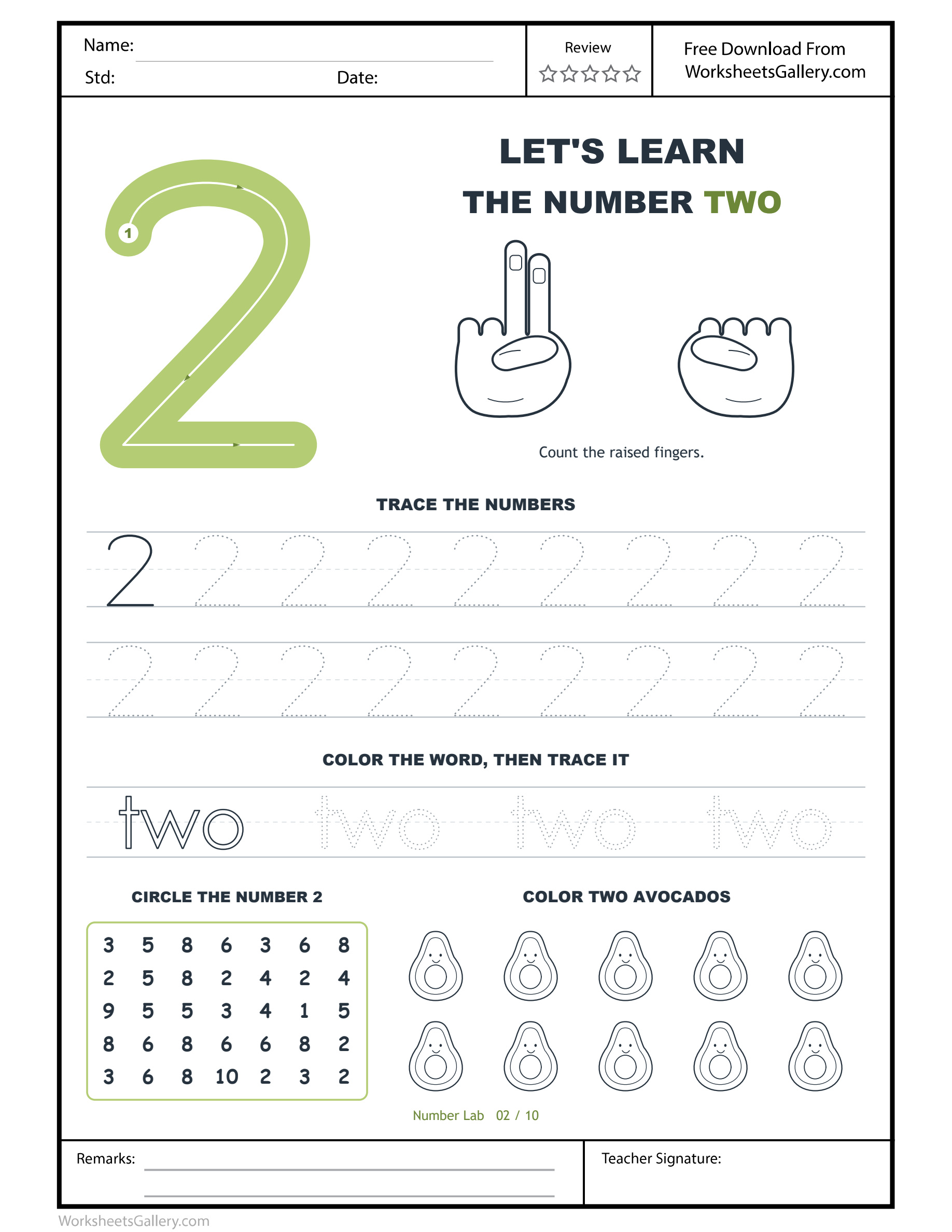
Two display cups need two avocados, but the number on an order card is only one written symbol. Twin Finger Counts uses that small contrast to bring quantity, numeral recognition and pencil practice together. The supplied page shows two raised fingers, the numeral 2, the word two and ten avocado outlines from which a learner selects a pair. A mixed-number grid adds a separate spotting challenge. Read the instructions aloud, invite a careful count and let a child choose a manageable part of the page before moving to another kind of number evidence.
AMOUNT
2 / two
HAND PARTS
2 + 0
FOOD CHECK
2 of 10 avocados
🥑 A pretend order makes the amount useful — Twin Finger Counts
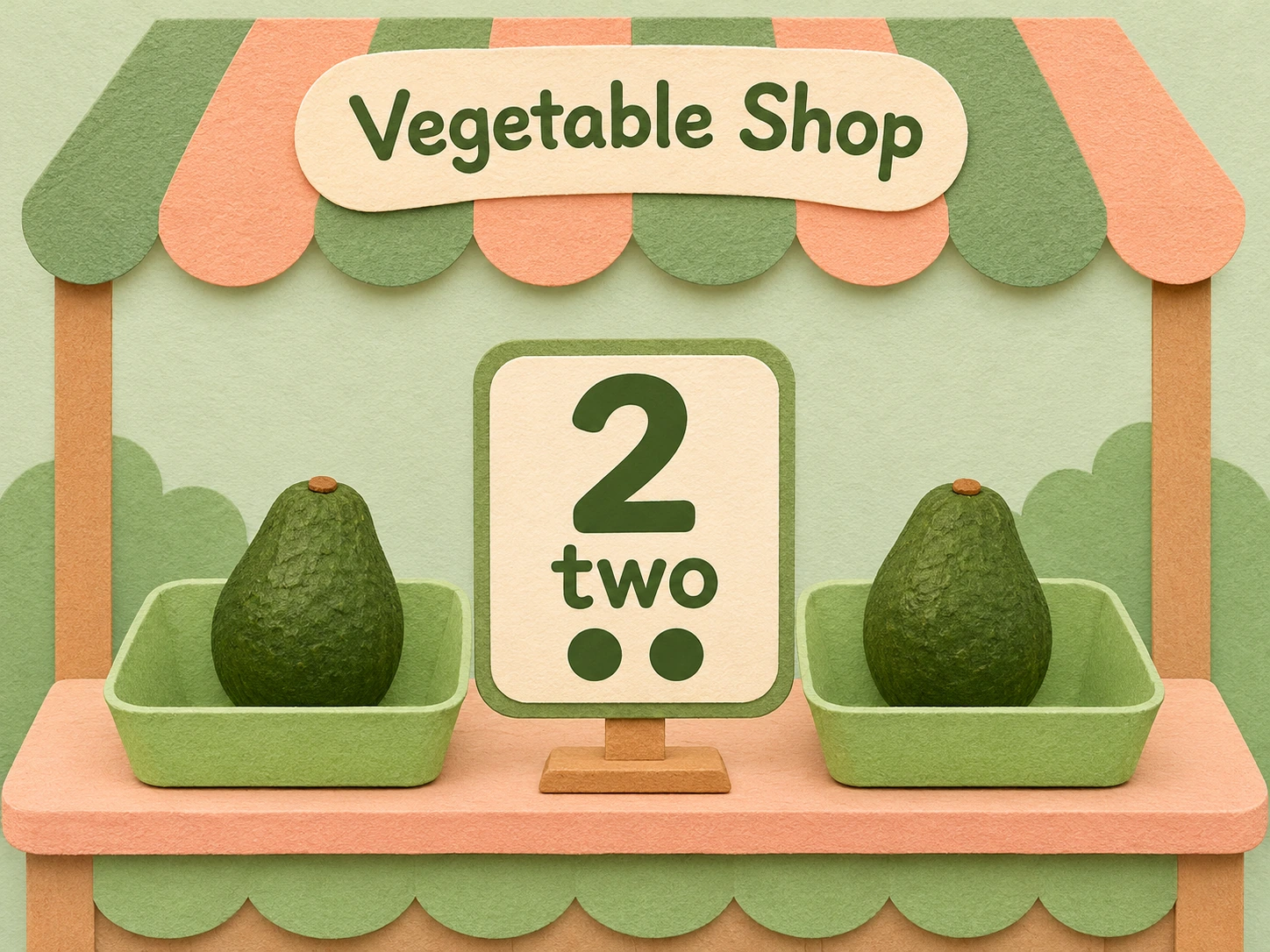
Set out two empty play cups before opening Twin Finger Counts. Ask a learner to put one safe toy object in each cup, then count the whole delivery. The cups provide places to check, but the spoken total still comes from the objects. Leave the objects separate enough that a finger can visit each once. Afterwards, point to the numeral that would tell a pretend shopkeeper about the order.
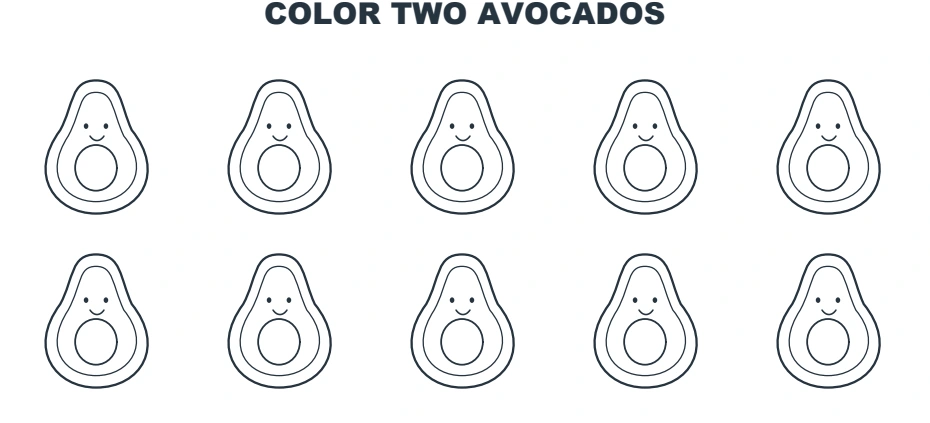
The Twin Finger Counts avocado illustration offers the same decision on paper. There are ten outlines rather than only two, so the learner must select a smaller group. Any two whole avocados can be coloured. They may sit next to one another or in different rows. The selected amount matters more than the selected locations. Ask for a count after the choice instead of specifying which pictures to use.
Follow the curve before the lower resting line: Twin Finger Counts
The large route in Twin Finger Counts gives the adult and child a shared 2 to inspect. Notice its upper bend, descending direction and lower horizontal finish. Use the supplied arrowed example as the reference rather than expecting a child to infer a route from a verbal description alone. An air trace can make the overall movement easier to feel before narrowing it to a dotted guide.
A short home sequence for Bea: Twin Finger Counts
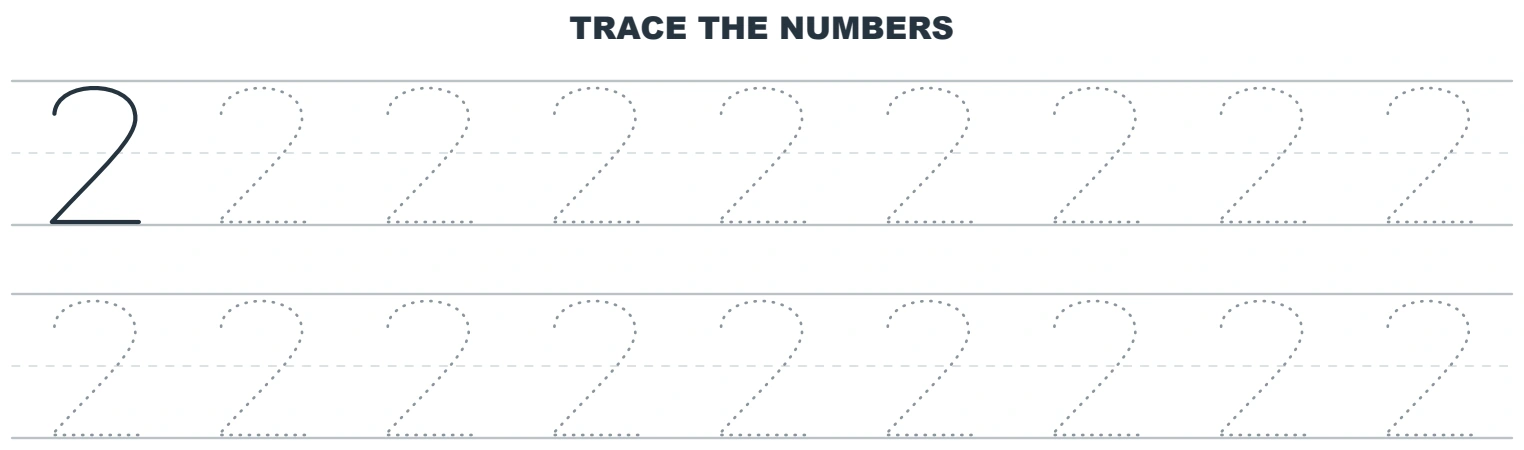
Imagine Bea making two pretend shop parcels with a grandparent. This possible Twin Finger Counts session begins with the physical pair, then the grandparent reads the page title and points to the two raised fingers. Bea follows a few dotted 2 copies and chooses the avocado task. The adult asks for a check by touching each coloured picture, pausing until Bea has named the final total.
In this Twin Finger Counts routine, the word two comes after the quantity is established. Bea colours the outlined word, hears its pronunciation and traces one dotted copy. The other copies can stay for another day. Before packing away, the grandparent changes the spacing between the two pretend parcels and asks whether anything was added. That final question tests the amount without demanding another row of writing.
Adult reference for the two lesson: Twin Finger Counts
| Number-two checkpoint | Printed detail | Possible prompt |
|---|---|---|
| Raised hands | 2 raised fingers, then none | Which fingers are extended? |
| Writing | 2 numeral rows beginning with a solid model | Where does this 2 finish? |
| Number name | two outlined once, dotted three times | Which word names our pair? |
| Search | 6 matching 2 entries | Inspect complete entries |
| Food choice | Colour 2 of 10 avocados | How many remain without colour? |
For Twin Finger Counts, the six hunt matches occupy positions 8, 11, 13, 28, 33 and 35. Count positions across each seven-entry row, continuing onto the next row. Two avocados are coloured, leaving eight uncoloured. These numbers let an adult check quietly after a child has worked; keep them for checking rather than announcing the target locations during the first search.
Six small abilities with separate evidence: Twin Finger Counts
Keep the pair intact while moving it
After counting two objects beside Twin Finger Counts, spread them farther apart. Ask the learner to check whether the total changed. The wider display may look larger without containing more objects. A recount or a one-to-one comparison can settle the question. Use the child's explanation to decide whether another physical demonstration would be useful before returning to pictures.
Distinguish raised fingers from drawn fingers: Twin Finger Counts
There are many finger outlines in the Twin Finger Counts hand illustrations, yet only two fingers are extended. Pointing to those two features makes the rule visible. A child does not have to reproduce the exact hand pose perfectly to understand the count. They can indicate the raised fingers on the print while an adult names the remainder as folded.
Recognise 2 among changing neighbours: Twin Finger Counts
The Twin Finger Counts hunt mixes the target with unrelated numerals, so the learner must inspect identity rather than remember a position. Cover all but one row if the grid feels busy. Ask the child what feature made a particular entry look like 2. The explanation may refer to its curve or lower line; either provides something concrete to revisit.
Let a model support controlled writing: Twin Finger Counts
Tracing in Twin Finger Counts offers a chance to coordinate looking, moving and resting the pencil. A child may need to pause between copies rather than carry momentum across the line. Check that the page is supported and the forearm has room. Accuracy can improve through a slower route, while repeated pressure or hand fatigue may call for a break.
Use a written number name conversationally: Twin Finger Counts
Read two aloud in Twin Finger Counts, then place it in a sentence about the avocados. The printed word is a reference, not an independent reading requirement. Learners who notice its letters can talk about them; others can simply point from word to quantity. This flexible language task keeps the lesson accessible while making written vocabulary part of the same counting experience.

Plan a selection and stop at its total: Twin Finger Counts
Before colouring in Twin Finger Counts, ask which two avocados the learner intends to choose. Pointing first makes the plan observable. After colouring, recount only those selected pictures. This sequence involves attention and inhibition as well as counting. It gives the adult a way to notice whether an extra picture was coloured because the amount was unclear or because the plan was forgotten.
A classroom exchange between customer and checker
A possible Twin Finger Counts station uses two roles: a customer holds a finished order card showing 2, and a checker counts the delivered play objects. The customer can point to the worksheet model when explaining the order. Neither role needs to write independently. Once the delivery is checked, children exchange jobs and choose which part of the page to investigate.
For a teacher observing Twin Finger Counts, one useful note is whether a child says one count word per object. Another is whether the child can select two from a larger supply rather than merely count a prepared pair. Those tasks are related but distinct. Provide an uncluttered tray for the first attempt, and add the larger supply only when the basic exchange is understood.
Four pair games that change the demand: Twin Finger Counts
1. Put the pair behind a screen: Twin Finger Counts
Count two large blocks together, then hide them behind a folder while keeping the Twin Finger Counts numeral visible. Ask the learner how many are waiting. Reveal the group for a check rather than insisting on an unaided memory answer. This small game brings a number name into a conversation about a collection that is temporarily out of sight.
2. Make unequal-looking partners: Twin Finger Counts
Place one tall toy and one short toy beside Twin Finger Counts. Ask whether the group contains two toys despite their different sizes. Then replace the tall toy with a short one and count again. The purpose is to keep the object unit stable. Count complete toys, not their arms, wheels or decorative parts, while discussing what belongs to the group.
3. Send a sound order: Twin Finger Counts
Tap twice with a short pause between taps, then ask a partner to show the matching Twin Finger Counts numeral or two fingers. Let the partner become the sound-maker. If three taps accidentally occur, describe the actual sound count and try again calmly. Keeping the signal gentle and the turns clear makes listening, rather than surprise, the focus of the game.
4. Draw the customer a receipt: Twin Finger Counts
Invite a child to draw two simple avocado shapes for a pretend sale inspired by Twin Finger Counts. An adult may add the completed numeral 2 and word two if writing is still difficult. The customer checks the pictured order before accepting the receipt. This is a different challenge from tracing, because the learner chooses how to represent the two objects on an open surface.
When a response needs a closer look: Twin Finger Counts
Colouring one avocado and saying “two” may mean that the Twin Finger Counts count words are familiar but the selected group has not been checked. Count the coloured pictures while touching them, then ask what would make the order complete. By contrast, colouring three after correctly selecting two can signal a lost stopping point. Return to the plan rather than introducing a harder numeral.
If a Twin Finger Counts numeral is reversed, compare it with the visible model and trace the route together in a larger space. Understanding a two-item amount needs its own check, even when the pencil has reversed the numeral. If the hunt is disorganised, narrow the field to a row. Each adjustment answers a different observation, so avoid giving several corrections at once.
Make practice fit the learner: Twin Finger Counts
For adults supporting ages three to six, Twin Finger Counts can be a pointed conversation, a short tracing task or a fuller number visit. Read instructions and number words aloud whenever needed. A child learning to hold a pencil can use the hand and picture activities without proving neat handwriting first. Offer a stable chair and a comfortable tool, and let the working time follow attention rather than a fixed page quota.
Revisit Twin Finger Counts when two is useful: two mittens for a toy, two seats for passengers or two crayons for a drawing. Ask the learner to choose a role or an avocado colour. Notice the evidence in a small success, such as checking both selected pictures. A predictable finish after that check can make another visit feel approachable instead of turning a familiar sheet into a repeated test.
Choose a different representation next: Twin Finger Counts
Alongside Twin Finger Counts, the two-sailboat lesson supplies a new pictured pair. The three-rocket activity offers a possible next amount, and the one-kite page can support a simpler comparison. Choose whichever representation answers the question the learner is currently asking.
For adults extending Twin Finger Counts through conversation and play, PBS Parents has family learning suggestions, while NAEYC discusses playful learning with families. These optional destinations belong to independent education organisations. They do not supply the downloaded worksheet or change its membership and collection purchase options.
Save the number-two lesson from the collection
The original Twin Finger Counts worksheet is available through the free sample control. Its clean premium counterpart uses the site's eligible active-membership download option. The clean printable contains the same learning tasks without the promotional domain, website watermark or any advertising on its printable page. A separate $2 collection purchase provides all ten number sheets together; use the native package card when that full set suits your plans.
Open the saved Twin Finger Counts PDF on US Letter settings and keep printing scale at 100%, which a reader may label Actual Size. Inspect the lower 2 line, dotted word copies and complete outer frame are visible on a trial copy. When printing from the combined file, choose its number-two lesson. Keep the finished sheet for a later comparison if the child would enjoy seeing how a first pair was checked.
Popular Worksheets
Printable resources families and teachers are downloading now.
 Free
 Free
 Free
 Free