
Apple Count One: 5 Brilliant Ways to Notice a Single Item
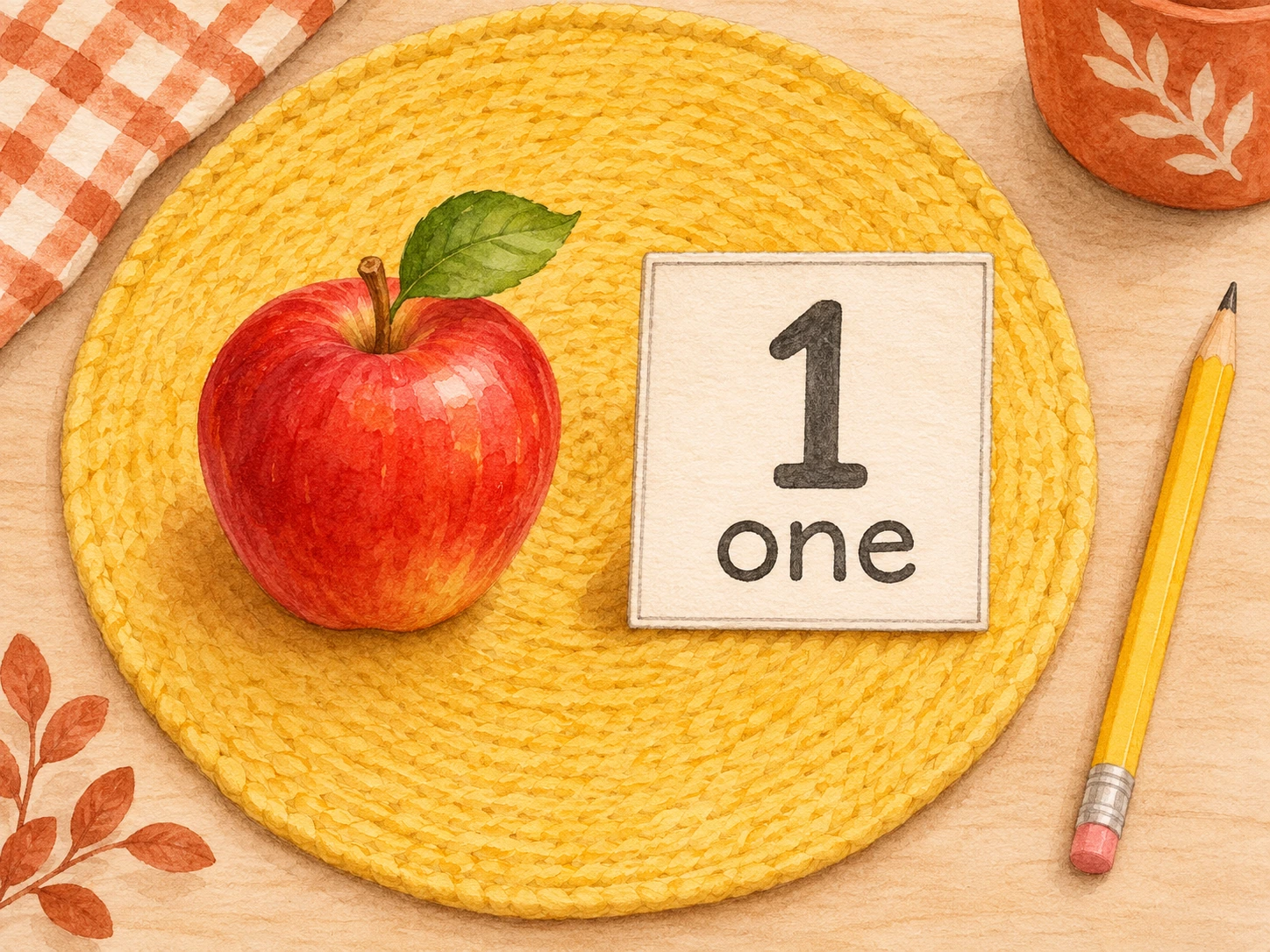
Explore the whole ten-lesson studio when one apple is ready to become a starting point for more number visits.
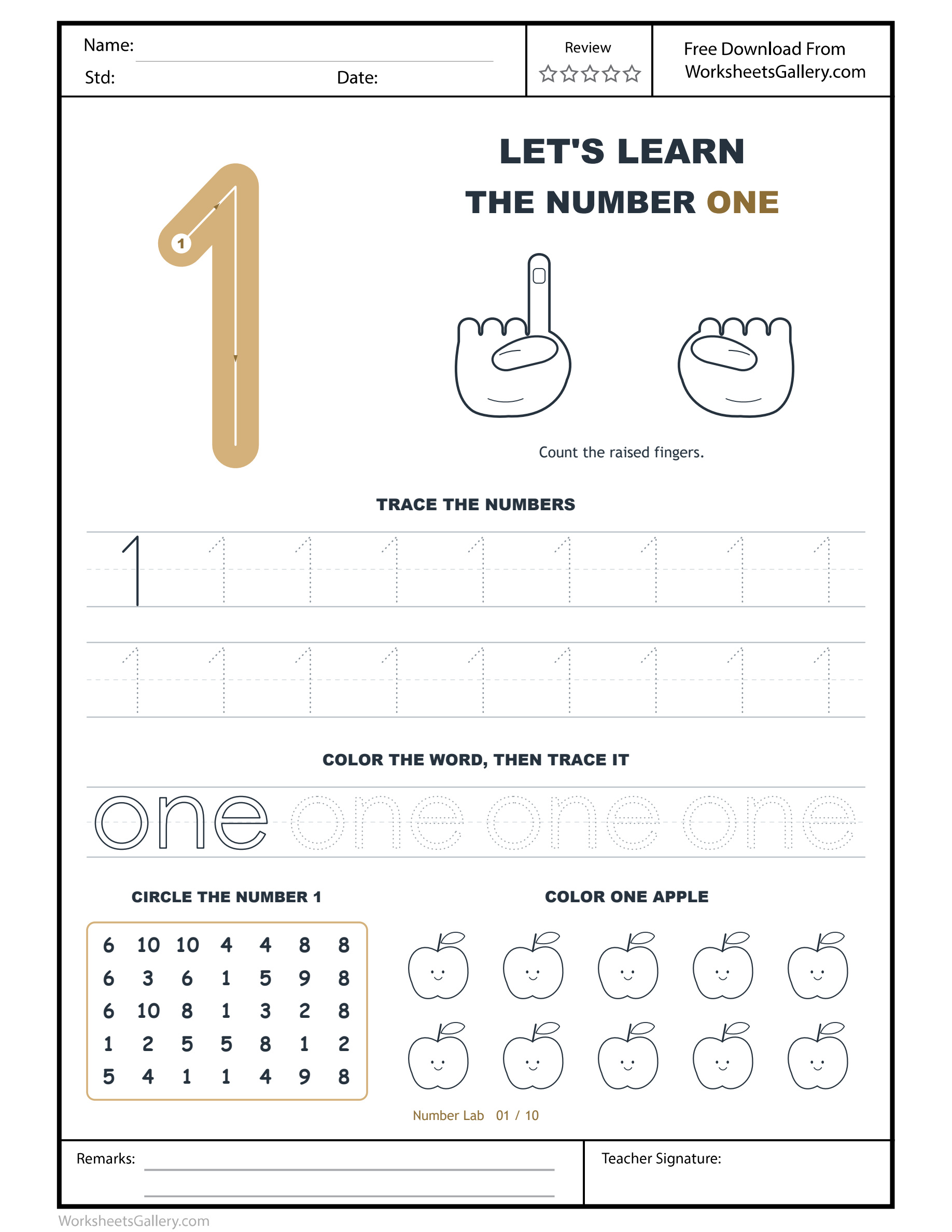
One apple is enough to make a complete counting task. Apple Count One invites a young learner to notice a single raised finger, follow the numeral 1, explore the written word one and choose exactly one apple from a larger picture group. The page also contains a number hunt, where more than one matching symbol may be found. That difference gives adults a useful conversation starter. Offer this printable when a child is beginning to connect a spoken amount with a visible group, or when a short, focused return to one would feel satisfying.
AMOUNT
1 / one
HAND PARTS
1 + 0
FOOD CHECK
1 of 10 apples
🍎 Begin with a stopping point — Apple Count One
In Apple Count One, saying “one” is only half the useful action. The child also stops after selecting one item. Put a single toy apple or a drawing on a mat and ask, “Have we made one yet?” Once the answer is checked, leave the group alone. Adding another object would change the amount, even though the first object would still be present.
The printed apple panel in Apple Count One contains ten pictures. Its job is not to fill them all with colour. A child may choose an apple anywhere in either row and then stop. This is an opportunity to practise holding a small goal in mind while many attractive alternatives remain available. Colour choice belongs to the child; quantity comes from the instruction.
A quick route through the printed evidence
| One-page location | What to look for | Adult check |
|---|---|---|
| Hands | One raised finger and a closed hand | 1 plus 0 raised fingers |
| Numeral band | One solid 1 followed by dotted copies | Two ruled practice rows |
| Word band | Outlined one and three dotted words | Say the complete name |
| Search panel | Six entries showing 1 | Positions 11, 18, 22, 27, 31, 32 |
| Apple panel | Ten whole apples | Colour one; leave nine uncoloured |
Positions in the Apple Count One reference count across seven entries in each row before moving downward. The first row occupies positions 1–7, and the last occupies 29–35. These position numbers are an adult checking aid, not an extra numbering task for the child. You can use them after an independent attempt without reading out the locations in advance.
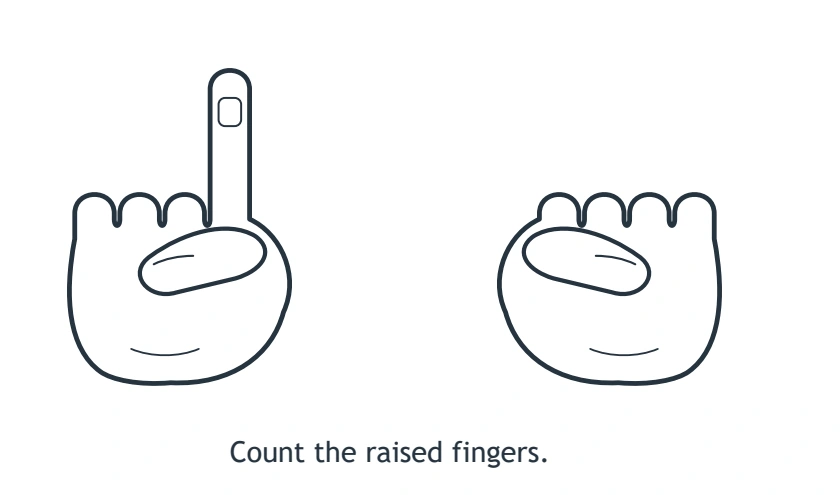
A closed hand contributes no raised fingers: Apple Count One
The second hand in Apple Count One is drawn with curled fingers. It does not represent another raised finger simply because it is another hand. Ask the learner to point to the part that is sticking up on the first drawing. Then compare the second drawing. An adult can say, “This hand has none raised,” while keeping the page's target amount clearly at one.
One target can appear several times: Apple Count One
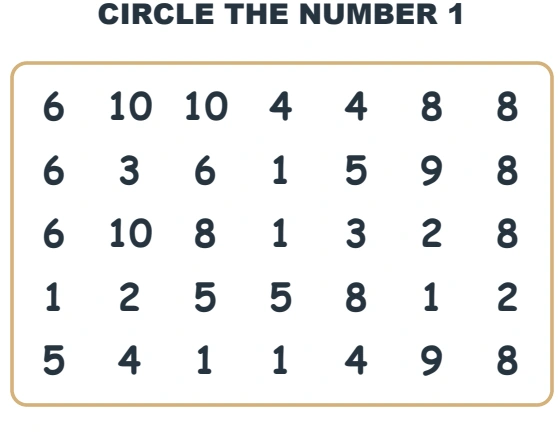
There are six numeral-1 matches in Apple Count One. Children should circle every matching entry, while colouring only one apple in the neighbouring activity. Read each panel heading separately. The phrase “the number one” names the symbol being sought; it does not limit the hunt to one circle. This distinction often becomes clearer when an adult points to each heading before describing the required action.
A first home attempt with Ari: Apple Count One
Picture a possible afternoon scene: Ari asks for an apple sticker for a notebook. A parent uses that request to introduce Apple Count One. Before peeling anything, they place one sticker on the table and match it to the raised-finger picture. Ari can point, speak, or show a finger. The adult waits for a response instead of repeating the count rapidly.
For this Apple Count One attempt, the parent reads one aloud and models a single numeral trace. Ari chooses a few dotted copies, then colours one apple. Before the page is put away, the adult asks whether another apple needs colour. “No, we have one” is a useful explanation. The remaining practice marks can wait for a later visit; finishing the quantity question gives this session a clear ending.
Five learning observations worth keeping: Apple Count One
A single item can be a whole collection: Apple Count One
Some children expect counting to involve a long line. Apple Count One makes a group of one legitimate and complete. Ask for one spoon or one block during play, then pause before another item arrives. That pause gives the child time to attach the last spoken count word to the whole group, even when the group is very small.
A writing model can guide the next movement: Apple Count One
The large 1 in Apple Count One includes a visible route, and the practice band begins with a solid example. Notice where the child starts, where the hand changes direction, and whether the pencil pressure stays comfortable. These are motor observations rather than a verdict about mathematical understanding. A learner can recognise one correctly while still developing control over a narrow tracing line.
A word can name the same amount: Apple Count One
Say the word one while pointing to the complete word band in Apple Count One. Its spelling may be unfamiliar to a beginning reader, so provide the pronunciation rather than expecting the child to work it out alone. Use a sentence such as “One apple is ready.” The written name, numeral and picture group then have a shared conversational meaning.
A search can follow a reliable path: Apple Count One
The 35-entry grid in Apple Count One invites deliberate visual scanning. Start at one edge, move across a row, and return to the beginning of the next. A child may need a card below the current line to avoid jumping around. Watch for recognition of a complete 1 entry, particularly beside 10, where the 1 belongs to a different written number.
A chosen amount can be checked independently: Apple Count One
After colouring in Apple Count One, ask the child to touch only the coloured apple and count it. The nine uncoloured pictures can remain visible without joining the selected group. This check combines attention, language and an intentional stopping action. It also offers an accessible way to explain the answer without requiring an additional written response.
A classroom job for one materials helper: Apple Count One
In a possible classroom use of Apple Count One, a teacher asks one helper to deliver one crayon to a toy bear's place. The helper then finds the equivalent amount on the sheet. Another child checks the delivery by touching the single crayon and naming the total. The small task gives each role a visible purpose without setting up a speed contest.
At the Apple Count One table, read the two bottom instructions with different gestures: circle an example numeral in the air, then mime colouring one apple. Ask the learner to choose which task to try first. If several children share a group, give each a separate copy rather than asking them to imitate a neighbour's apple location. Different valid choices can lead to a useful discussion about equal amounts.
Five little investigations after the page: Apple Count One
1. Open a one-item gallery: Apple Count One
Find three safe household objects and place each on its own small mat. Inspired by Apple Count One, label the displays 1 and one. Ask a visitor how many objects belong to each separate display. The objects can differ in size: one large brush and one small block still each make a group of one. Keep the mat boundaries clear while talking.
2. Make a single sound signal
An adult taps a table once, then the child responds by pointing to the Apple Count One numeral. Swap the roles and ask the adult to wait until the sound is finished. This game moves the amount away from pictures and into listening. Use an ordinary gentle tap rather than a loud surprise, and separate turns so echoes or repeated demonstrations do not confuse the count.
3. Pack a tiny delivery
Give a pretend shopkeeper a card reading one. The shopkeeper packs one large play object, and a recipient checks the parcel. Apple Count One can sit beside the shop as a visual reference. A second object can be offered as a deliberate question: “Would this still match the order?” Let the child explain or demonstrate what needs to be removed.
4. Compare one and none raised: Apple Count One
Use your own comfortable hand positions alongside Apple Count One. Show one extended finger, then close the hand. Ask which display matches the sheet's first hand and which resembles its second. There is no need to teach a formal zero-writing lesson at the same time. The immediate purpose is to notice whether a raised finger is present.
5. Rescue a mistaken apple instruction
Draw two apples on scrap paper, colour both, and say that you intended to colour one. Invite a Apple Count One learner to explain the mismatch. Because the error belongs to the adult, the child can act as a checker without embarrassment. Make a corrected drawing beside it or use movable counters; avoid suggesting that a crayon mark can simply disappear from the original sheet.
Common mix-ups have different solutions: Apple Count One
If a child circles 10 in Apple Count One because it contains a 1, place the two complete entries side by side and name them separately. Trace a loose boundary around each entire entry with a pointing finger. The hunt is about recognising the whole number being shown. This is different from a letter-finding task that asks for a character hidden inside a longer word.
Colouring extra apples calls for another Apple Count One response: return to the quantity instruction and count the selected pictures. A child who traces a wobbly 1 may simply need a wider movement, lighter pressure or fewer copies. Avoid treating these three situations as the same mistake. Identifying the source of uncertainty lets the next step remain small and relevant.
Age, choice and a comfortable return: Apple Count One
Offer Apple Count One with adult support around preschool and kindergarten ages three to six, adjusting the visible workload to the learner. A younger child can point and choose while an adult reads. Someone ready for writing can compare a few traces with the model. Neat colouring is not a prerequisite for discussing a correct amount, and recognising one does not depend on finishing every dotted copy.
Bring Apple Count One back when a useful “one” moment occurs: one missing shoe, one toy passenger or one place setting. Let the child choose an apple colour or a search row, then end after the agreed job. Encouragement can name the successful decision: “You stopped after the apple you counted.” This gives the learner a concrete action to recognise on another day.
Other places to explore a single amount: Apple Count One
After Apple Count One, the one-kite worksheet offers a different object to count. For a next quantity, try the two-sailboat page. A child ready to compare several small symbols may enjoy the three-rocket counting lesson. Keep the next choice connected to what the child wants to investigate.
The adult leading Apple Count One can also visit NAEYC's family information about play or browse PBS Parents activities for growing learners. Use those independent resources for broader play ideas; they are separate from this printable and do not determine how many worksheet sections a child should complete.
Get the printable and keep its two editions clear: Apple Count One
Use the free download control for the original Apple Count One sample. For the clean premium edition, open the premium option from your currently eligible member account. That PDF preserves the activities while removing the worksheet's website watermark, domain promotion and advertisements from the printable itself. The ten-page number collection is a separate $2 purchase, reachable through this page's package card.
Save Apple Count One before printing, open the PDF in a reader and set the sheet size to US Letter and keep scaling at Actual Size, also called 100%. Look at one test copy to make sure the dotted 1 guides remain visible and the outer border fits. Select the number-one page when printing the complete collection. A quiet table, a comfortable pencil and an invitation to count one apple are enough to begin.
Popular Worksheets
Printable resources families and teachers are downloading now.
 Free
 Free
 Free
 Free