
Nine Mushroom Numbers: 5 Clever Almost-Ten Learning Jobs
A $2 collection keeps the nine-mushroom page alongside every other number from one through ten.
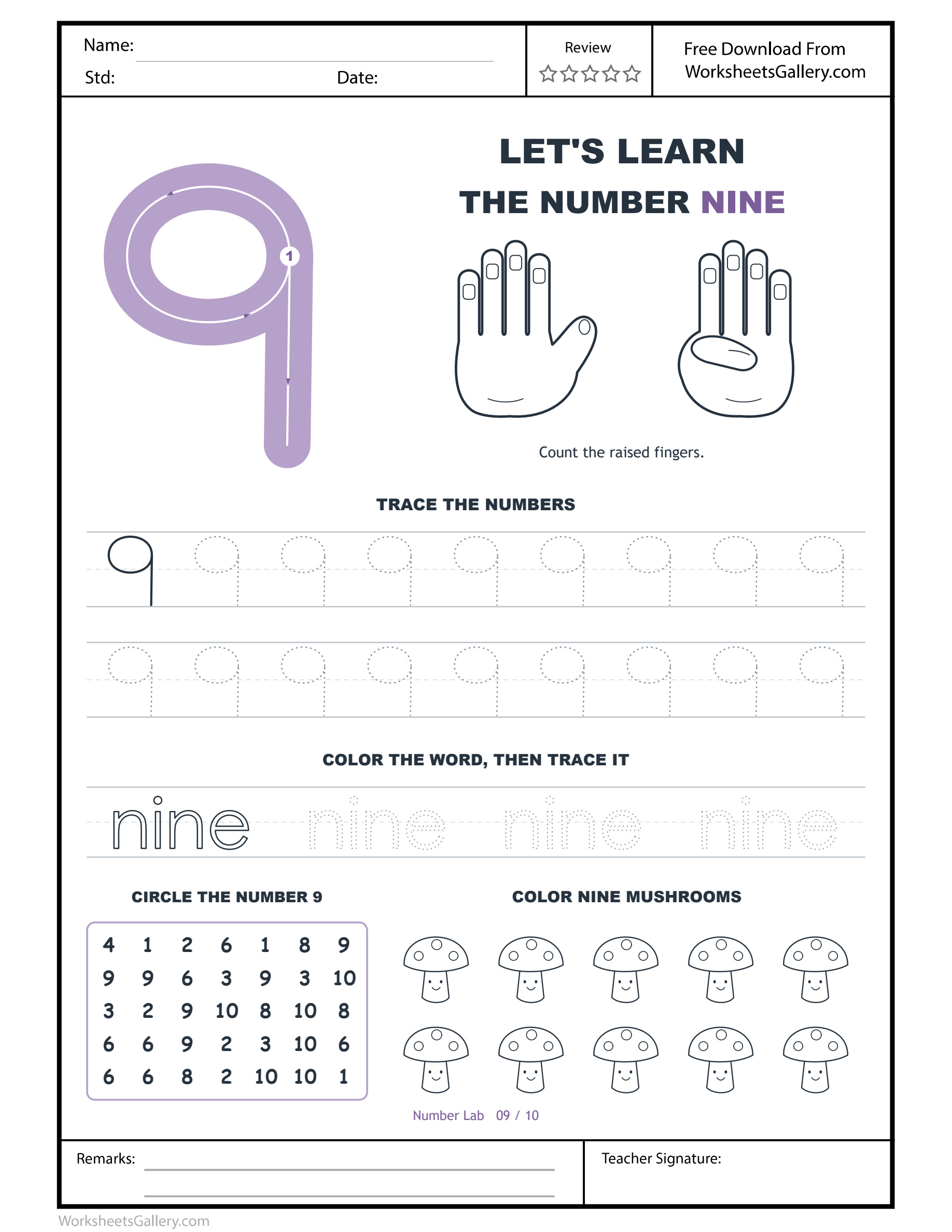
One mushroom remains without colour when nine of the ten pictures have been selected. Nine Mushroom Numbers makes that remaining item part of the conversation, alongside a hand model showing five raised fingers and four more. The page includes a large 9, numeral tracing, the written name nine and a search containing six matching symbols. Children can count the selected group first and inspect the remaining picture afterwards. This gives a parent or teacher two clear views of the same food task while keeping writing practice separate from the question of how many were chosen.
AMOUNT
9 / nine
HAND PARTS
5 + 4
FOOD CHECK
9 of 10 mushrooms
🍄 Begin with the mushroom that stays uncoloured — Nine Mushroom Numbers
Ask a Nine Mushroom Numbers learner to inspect all ten mushroom pictures before planning a selection. Nine will receive colour, and one will remain unchanged. The child may choose which picture to leave. That small choice creates agency within a fixed numerical goal. It also gives the adult a visible checkpoint after the selected group has been counted.
Do not let the remaining-item shortcut replace every count in Nine Mushroom Numbers. A child might leave one picture by imitation without recognising nine as the selected total. Ask them to touch and count the coloured mushrooms as one group, then check the lone uncoloured picture. The two checks answer related questions. One names the selected amount; the other describes what is still outside that selection.
The hand picture offers five and four: Nine Mushroom Numbers
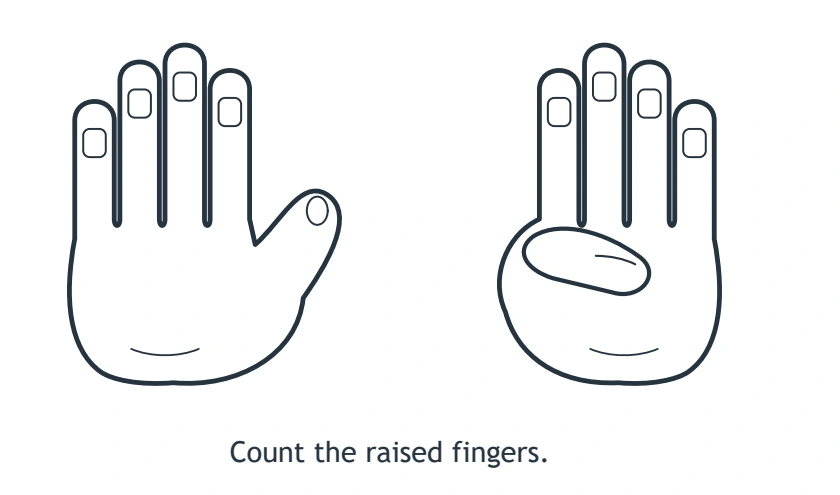
The first Nine Mushroom Numbers hand has all five fingers extended, and the second has four raised fingers with its thumb folded. Count only the extensions. An adult can establish nine by counting from one across both hands, then discuss how the amount is organised. Recognising five plus four may become useful, but a full recount remains an appropriate verification method.
Compare the top enclosure and downward tail
The large numeral in Nine Mushroom Numbers provides the visible route for 9. Notice its upper loop and descending stroke. The nearby hunt includes 6 entries, making orientation worth checking carefully. Ask which part of the model sits above and which direction the tail continues. This is a symbol comparison, distinct from counting the features inside the numeral as if they represented its quantity.
Read nine as a complete name
The Nine Mushroom Numbers word band contains the outlined name nine and three dotted nine repetitions. Say the name together then invite a sentence describing the chosen mushrooms. A learner may notice letters shared with other words, but independent spelling is not a condition of taking part. The adult can supply the spoken form while the child connects it with the hand picture or selected group.
A home inspection led by Ivo: Nine Mushroom Numbers
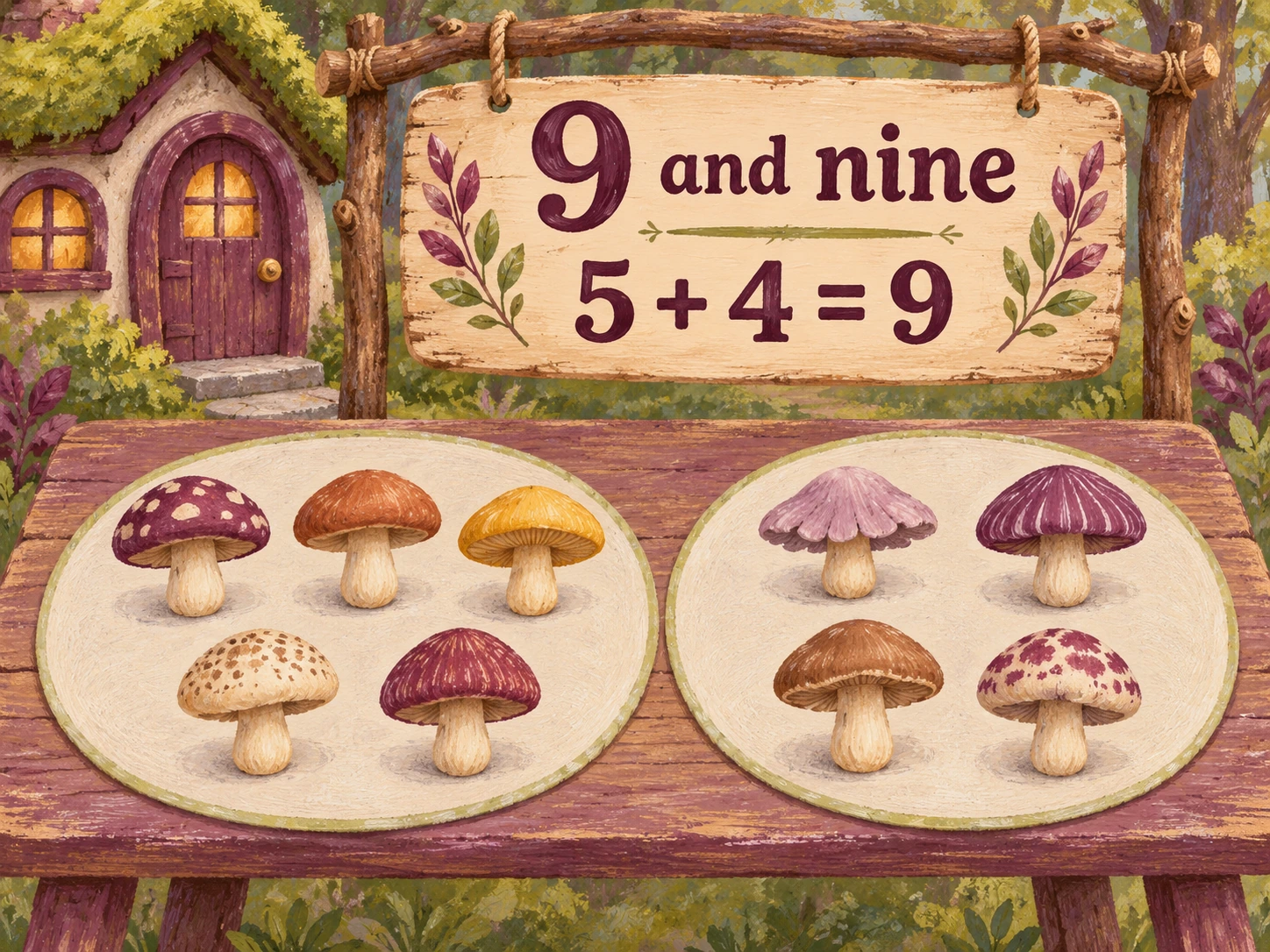
Imagine Ivo preparing a pretend woodland display with nine large mushroom cards. In this possible Nine Mushroom Numbers home activity, an adult sets five cards on one mat and four on another. Ivo checks the two groups and compares them with the hands. The adult asks about the whole display, making clear that both mats belong to the same collection.
Next, Ivo chooses the mushroom that will remain uncoloured in Nine Mushroom Numbers. The adult waits while Ivo points to the other nine, then offers crayons. Afterwards, they count the selected pictures and look at the remaining one. A final spoken display report gives the activity an ending. The child can choose whether a few numeral traces belong in the same visit or another one.
The number-nine reference ledger: Nine Mushroom Numbers
| Nine evidence | Printed result to check |
|---|---|
| Raised fingers | 5 on the first hand, 4 on the second |
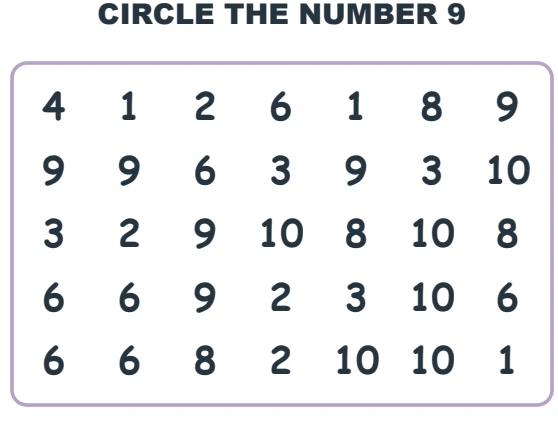
| Search field | 35 numeral entries in five rows of seven |
| Six 9 matches | Positions 7, 8, 9, 12, 17, 24 |
| Mushroom choice | 9 coloured whole pictures and 1 uncoloured |
| Practice supply | Two numeral rows and three dotted nine words after the outlined name |
Count Nine Mushroom Numbers grid positions from left to right within each row, continuing downward. The six matching symbols do not form the amount to colour in the mushroom task. Read the separate headings whenever the current rule becomes uncertain. A learner can recognise every 9 correctly and still need help planning a nine-picture selection from the larger group.
Five observations beyond a correct total: Nine Mushroom Numbers
An almost-full group can be described precisely: Nine Mushroom Numbers
In Nine Mushroom Numbers, nine selected pictures leave one of the original ten outside the group. Count both groups and use language such as selected and remaining. This develops a comparison that the learner can see. There is no need to introduce a written subtraction equation unless the child independently wants to represent the relationship that way.
A whole mushroom stays one unit: Nine Mushroom Numbers
Caps, stalks and spots belong to one complete Nine Mushroom Numbers mushroom. If a count becomes unexpectedly large, ask which features received count words. A boundary gesture around a whole picture can clarify the unit. The spots could be counted in another invented game, but the printed instruction specifically asks for mushrooms, so each whole drawing contributes one.
Orientation matters for numeral identity
The Nine Mushroom Numbers search provides a reason to compare 9 with other curved symbols. Use the model to discuss the upper enclosure and downward part. A child who confuses 6 and 9 may need a closer visual comparison while still understanding both quantities with objects. Avoid treating a reversed or misnamed symbol as proof that all counting knowledge is absent.
A search can hold a target across rows: Nine Mushroom Numbers
The Nine Mushroom Numbers matches are concentrated in the earlier rows, with none in the final row. A child still needs to inspect that last row rather than assume every line must contain a target. Recognise a careful no-match decision. Covering lower rows temporarily can support attention without changing what number the learner is trying to recognise.
A report can link speech, print and quantity: Nine Mushroom Numbers
Ask a Nine Mushroom Numbers learner to tell a visitor about the nine coloured mushrooms. The child can point to nine in the word band, use a full sentence or dictate a report to an adult. This gives language a real explanatory purpose. The numeral, printed word and selected pictures remain available for reference throughout the exchange.
A teacher's display-checking station: Nine Mushroom Numbers
A teacher could offer Nine Mushroom Numbers with a curator and an inspector role. The curator creates a nine-item display from ten large counters, leaving one aside. The inspector checks the amount and asks which item was excluded. This possible classroom arrangement encourages a reasoned selection, while the adult keeps the two roles cooperative rather than competitive.
Once the Nine Mushroom Numbers display is checked, let each partner choose one small page job. One may trace a few 9 models while the other searches a row, then they explain what they noticed. Record an actual strategy if useful: “used the upper loop to reject 6,” for example. Pencil control, visual recognition and quantity reasoning can then be supported separately on the next visit.
Four ways to revisit nine without repeating the same task: Nine Mushroom Numbers
1. Reserve one exhibition place
Draw ten large places on a mat and ask a Nine Mushroom Numbers learner to fill nine with toy objects, leaving one empty. Count the objects before comparing the remaining place. Then choose a different empty place and repeat the check. The selected locations change while the amount remains nine, making the learner's decision visible without requiring new worksheet marks.
2. Trade the two display groups: Nine Mushroom Numbers
Arrange nine counters as five plus four beside Nine Mushroom Numbers. Move one from the larger group to the smaller group and ask about the whole total. A child may recount every counter to verify that none was added or removed. The activity explores changes within a collection rather than demanding memorised addition combinations or a written calculation.
3. Make a numeral orientation window
Place completed 6 and 9 cards upright beside the Nine Mushroom Numbers model. Ask the learner to identify the upper and lower features on each. Turn one card deliberately and discuss what the printed shape resembles now. Keep the cards in their normal reading orientation for the actual matching task so the adult demonstration does not create an ambiguous answer rule.
4. Send a nine-object inventory note: Nine Mushroom Numbers
Invite the child to draw nine simple marks for a pretend display inventory. An adult can add the word nine and numeral 9 using Nine Mushroom Numbers as a reference. Ask another person to compare the note with nine large play objects. This gives a reason to make the marks separate enough to count, while realistic mushroom drawing remains optional.
Common mistakes point to different next steps: Nine Mushroom Numbers
If all ten mushrooms receive colour in Nine Mushroom Numbers, return to the selection plan and the picture chosen to remain unchanged. A fresh copy or movable counters can demonstrate the intended amount without pretending that permanent colouring can be undone. If only eight receive colour, count the selected group and decide whether another whole mushroom belongs in it.
If a Nine Mushroom Numbers learner loses the hunt route, narrow the visible field to a row. If a 9 trace becomes a 6-like shape, inspect the model's orientation in a larger space. If the child counts the second hand as four but cannot report the whole, ask about both hands together. Give one relevant prompt at a time, then let the learner investigate the evidence.
Readiness is more than a birthday: Nine Mushroom Numbers
For children around ages three to six, Nine Mushroom Numbers is best offered with flexible adult support. Read the word and instructions, allow pointing and use physical counters where pictures are hard to track. Reproducing the hand pose is optional. A child may understand the selected amount through a spoken count while needing more time for the small pencil route.
Return to Nine Mushroom Numbers when a nine-item display or a “one place left” situation appears in play. Let the child decide whether to inspect, curate or label. Specific encouragement can recognise a useful check rather than only a finished page. Ending after the agreed job makes another visit possible without turning the same worksheet into a daily test of every skill at once.
Other amounts and wider adult play ideas: Nine Mushroom Numbers
The nine-fish worksheet offers Nine Mushroom Numbers a new collection to inspect. Compare it with the eight-ice-cream lesson or the ten-balloon page. Nearby amounts can support a meaningful comparison when the learner is ready to discuss what changed.
Adults planning another Nine Mushroom Numbers conversation can consult NAEYC's family-focused play information alongside PBS Parents’ suggestions for growing learners. These optional education links lead to independent organisations. Their material is not included in this PDF, and the links do not imply that they reviewed the worksheet or its collection.
Download a clean nine lesson or the ordered set: Nine Mushroom Numbers
The original Nine Mushroom Numbers original can be downloaded with the free sample option. The separate premium edition requires eligible membership that is currently active. It retains the exercises, removes the website watermark and promotional domain, and contains no printed advertisements. A native package card connects this page with the $2 collection purchase containing all ten clean number sheets. The collection is priced separately from membership access to individual premium copies.
Save Nine Mushroom Numbers as a PDF before printing. Choose US Letter and a 100% or Actual Size setting, then inspect one test copy for the upper 9 loop, faint dotted guides and complete frame. In the combined collection, select the ninth page for this task. Leave enough space beside the paper for a five-and-four counter display if the learner wants another way to explain nine.
Popular Worksheets
Printable resources families and teachers are downloading now.
 Free
 Free
 Free
 Free