
Banana Eight Practice: 6 Wonderful Number Investigations
The complete clean studio brings this banana lesson together with nine other focused number pages.
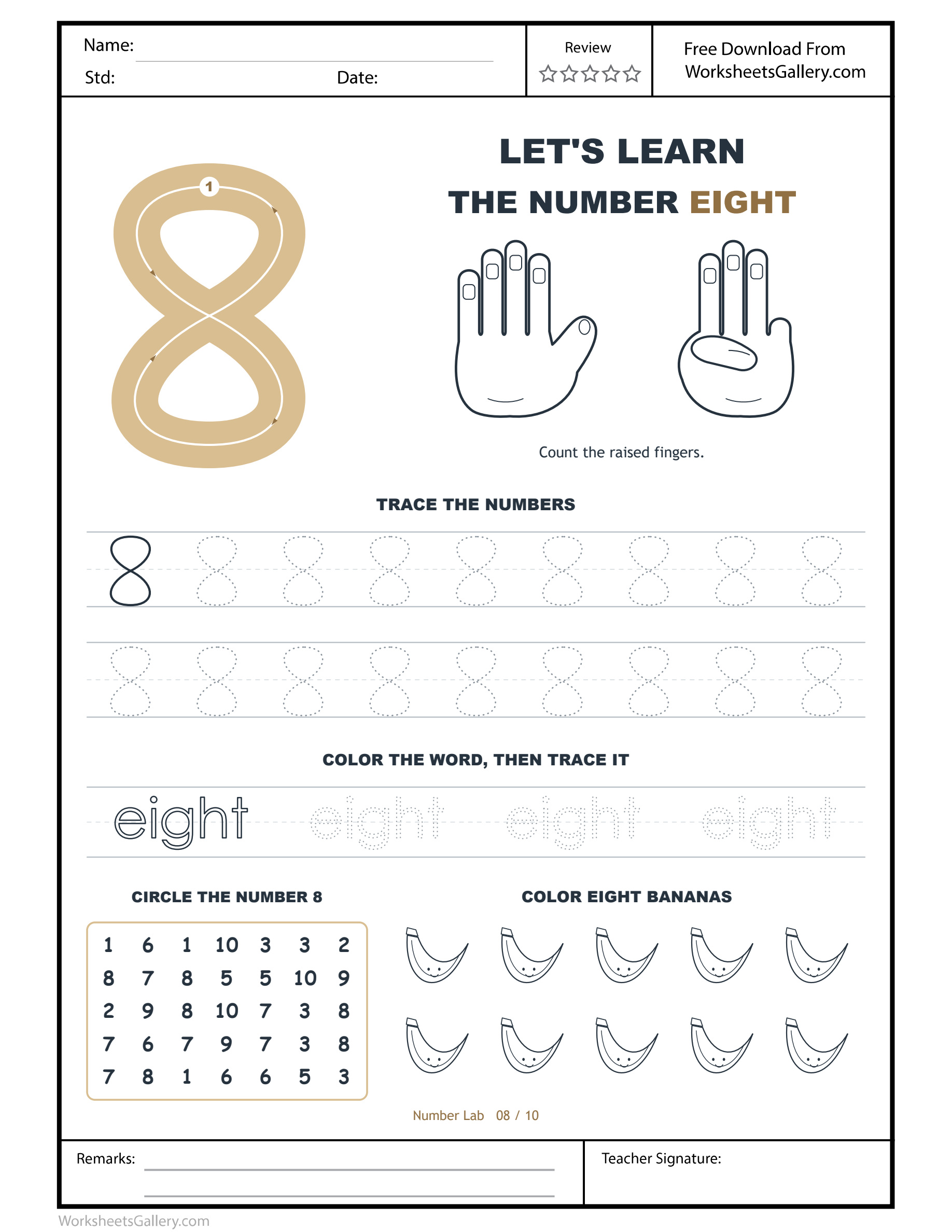
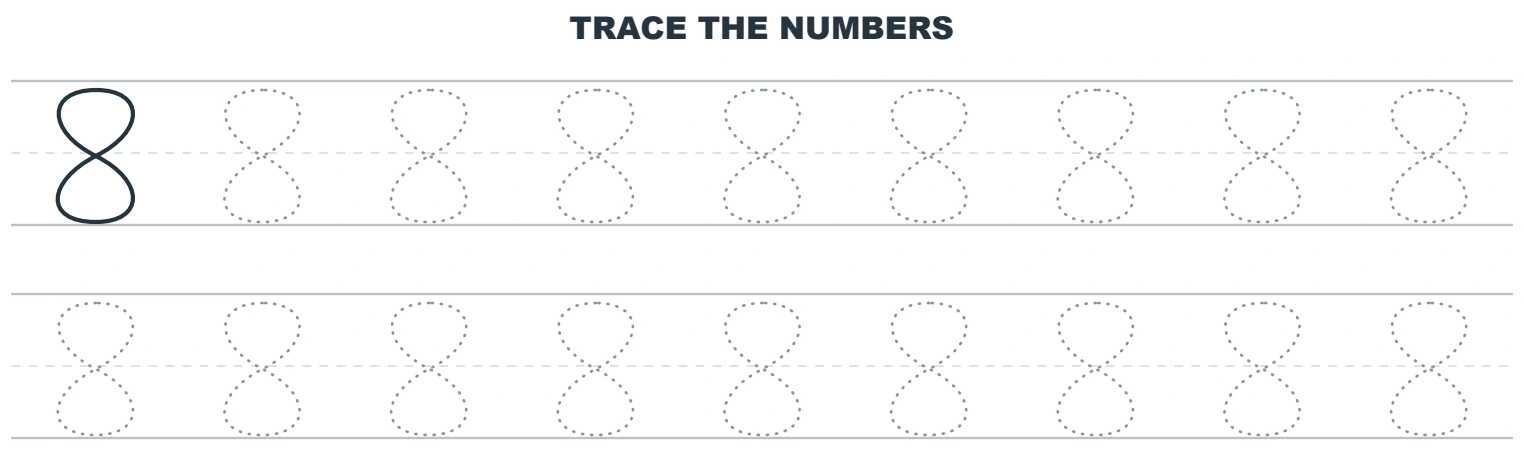
An 8 has two enclosed spaces, while a 3 leaves its curved side open. Banana Eight Practice invites that careful shape comparison alongside a quantity lesson built from five raised fingers and three more. The supplied sheet includes a large writing route, two numeral rows, the word eight, a mixed-number hunt and ten banana outlines. Children choose eight bananas and check the amount across both rows. Adults can use the visible models to connect looking, counting and writing, with a smaller response option whenever a whole page feels like too much at once.
AMOUNT
8 / eight
HAND PARTS
5 + 3
FOOD CHECK
8 of 10 bananas
🔍 Look closely before naming the symbol — Banana Eight Practice
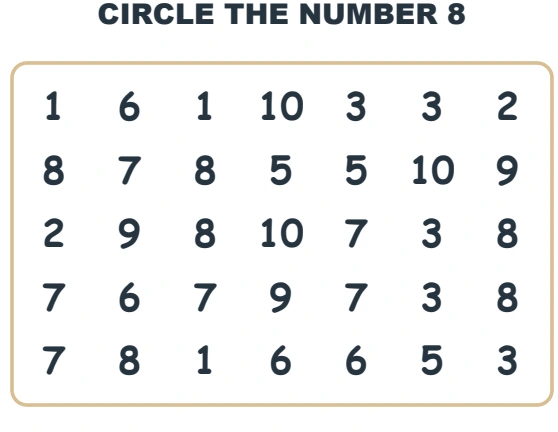
The Banana Eight Practice hunt contains 8 among numerals with other curved features, including 3 and 6. Put the large model beside a doubtful entry by pointing back to it. Ask whether both enclosed spaces are present and whether the complete shape matches. This keeps the comparison specific. A child may know the count eight while still needing time to recognise its written form among distractors.
Comparing Banana Eight Practice shapes is different from counting their parts. Two enclosed spaces do not make 8 mean two. The numeral represents a quantity of eight, as the hand picture and banana selection show. An adult can name those two questions separately: “What features do you see?” and “Which amount does this numeral stand for?” That distinction prevents a useful shape observation from turning into a new counting rule.
Trace the crossing route without rushing the joins: Banana Eight Practice
The large Banana Eight Practice numeral includes a route through its middle and around both rounded sections. Follow the supplied arrows before using the dotted guides. A broad air trace can help a learner feel the change in direction. Do not replace the source model with two disconnected circles if the current goal is to follow its particular writing route.
Read the whole word eight: Banana Eight Practice
An outlined eight begins the Banana Eight Practice word band, with three dotted examples alongside it. Pronounce the name for the learner while the learner looks at the complete name. Its spelling needs adult support for many beginning readers. The activity is a chance to connect a printed number name with a known amount; the child does not have to decode it independently before counting or colouring.

Five fingers and three fingers share one total: Banana Eight Practice
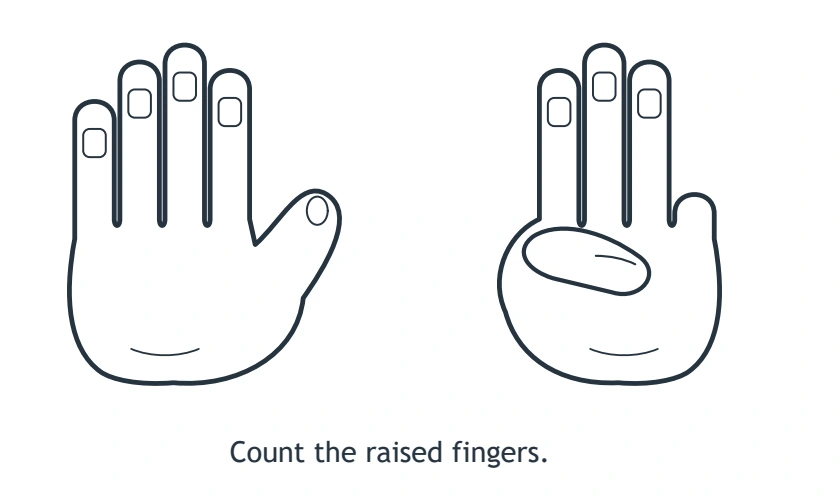
The Banana Eight Practice hand display groups eight as five plus three. Start with a full count of all the extended fingers, then identify how many belong to each hand. A child can point rather than copy the pose physically. Ask whether both hands belong to the amount described by the page. That question matters when a learner names five and three separately without yet reporting the combined total.
The supporting shelf scene for Banana Eight Practice makes the same grouping visible with bananas: five on the upper step, three on the lower. Read the completed equation if the child asks about it, but keep the supplied worksheet activity focused on counting and choosing. The illustration offers another arrangement to discuss; it does not add an equation-writing requirement to the printable.
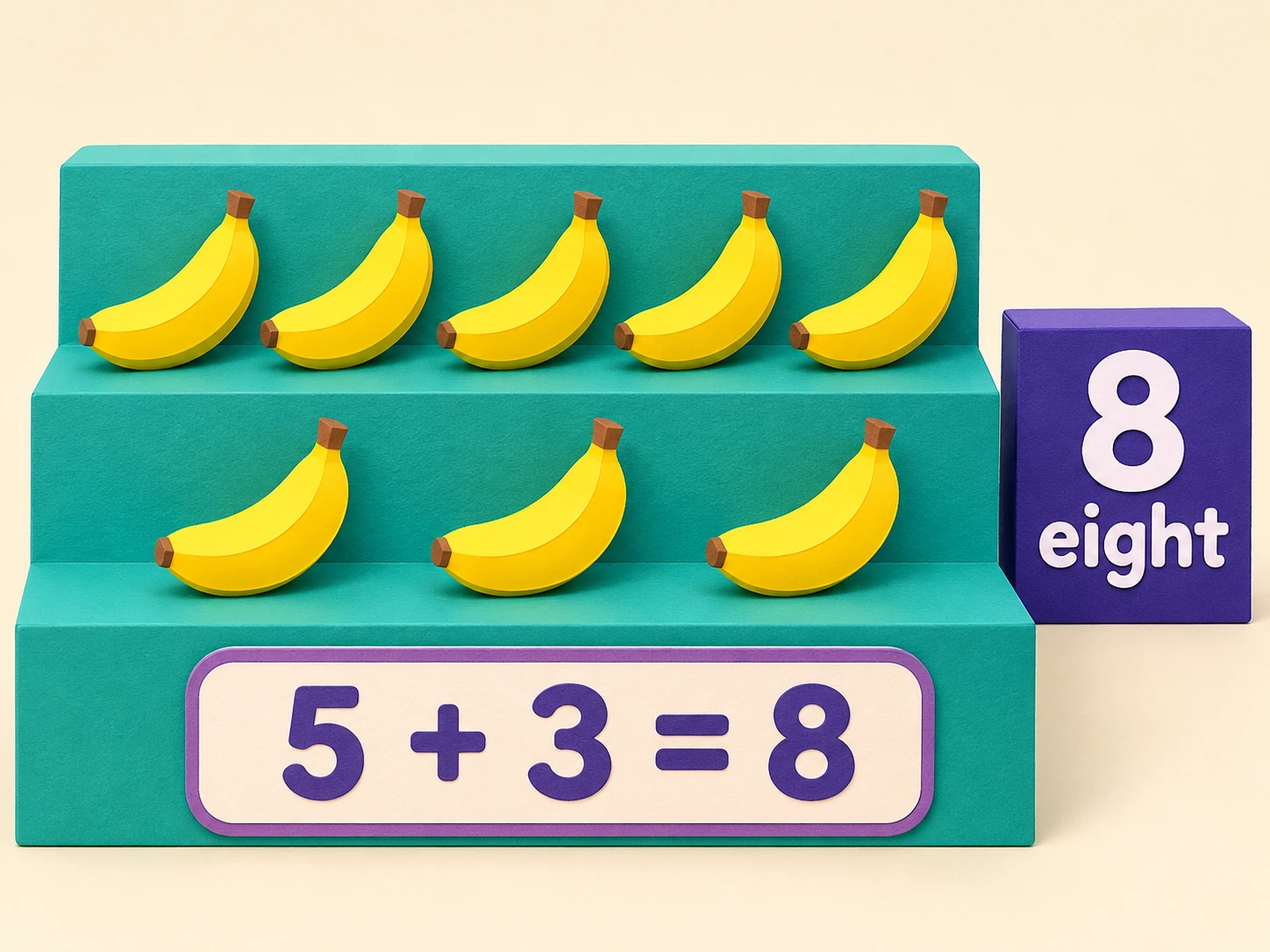
A shelf-stocking visit with Hani: Banana Eight Practice
Imagine Hani helping stock a pretend fruit shelf at home. An adult sets out five large banana cards above three more, then opens Banana Eight Practice. Hani counts the whole stock and compares the groups with the hands. This possible activity makes the lower shelf part of the same delivery rather than a new count that starts over at one.
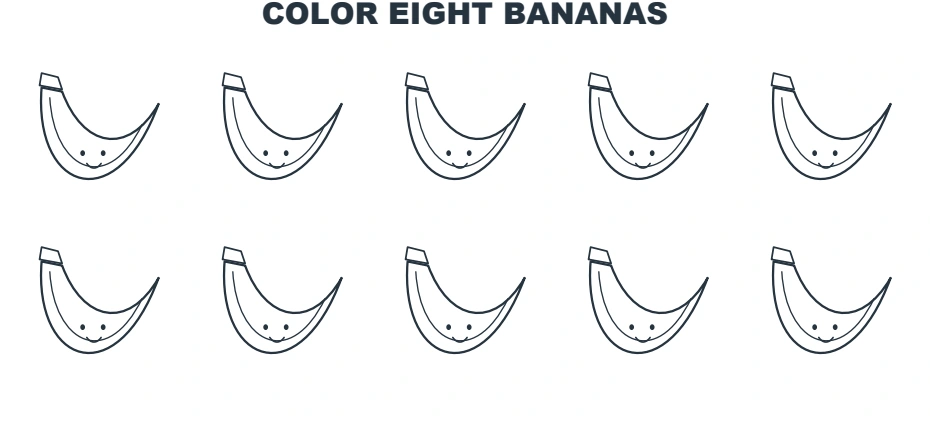
For the paper response, Hani selects eight banana outlines in Banana Eight Practice before colouring. The adult asks how many of the ten will remain without colour. Hani may count the unused pictures directly rather than calculate mentally. Finish with a few numeral traces or a spoken shelf report. The visit can stop after the selected quantity has been checked and described.
A reference for checking this eight sheet
| Number-eight feature | Adult reference |
|---|---|
| Raised-finger parts | 5 on the first hand, 3 on the other |
| Practice bands | 2 numeral rows and 3 dotted eight words after the outline |
| Hunt target count | 6 matching 8 entries in 35 choices |
| Target positions | 8, 10, 17, 21, 28, 30 |
| Banana outcome | 8 coloured whole bananas, 2 uncoloured |
For the Banana Eight Practice hunt positions, count seven entries across a row and then continue to the next. The first row has no matching 8 entries. A learner can inspect it correctly without drawing a circle. The lower banana task has a different goal: select eight objects, not the six matches found in the search panel.
Six kinds of useful evidence from an eight visit: Banana Eight Practice
Shape language can support a decision
In Banana Eight Practice, words such as open, closed, upper and lower give the adult and child a precise way to discuss a numeral. Use them while pointing to visible features. The learner may use gestures instead of those words initially. A reasoned comparison is more useful than simply being told that a chosen entry is wrong.
A structured quantity can be checked in parts: Banana Eight Practice
The five-and-three display in Banana Eight Practice encourages attention to a familiar larger group and a smaller remainder. Let a child verify both before naming the whole. This makes part-and-whole reasoning available without demanding instant recognition. A correct count from one remains an appropriate strategy while the child becomes more familiar with the structure.
A count can continue through a second row: Banana Eight Practice
The Banana Eight Practice banana field contains two rows of five pictures. Selecting eight may require continuing a count across the row break. A pointing route helps the learner avoid restarting or revisiting an earlier banana. Count the chosen objects as one collection, regardless of which positions were selected or which colours the child used.
A pencil can coordinate a middle crossing: Banana Eight Practice
The 8 route in Banana Eight Practice combines curves with a return through the middle. Notice where the movement becomes hesitant and compare that region with the large model. Offer fewer copies or a larger tracing surface if needed. This motor task provides its own information and should not be used as the sole measure of understanding the amount eight.
A written name can enter a real report: Banana Eight Practice
After a Banana Eight Practice shelf check, read eight and invite a sentence about the stock. The learner might point to the printed word while saying the amount. This links oral language with a visible written reference. An adult can provide pronunciation and sentence structure without taking over the child's decision about which quantity was selected.
The remaining group can verify the plan: Banana Eight Practice
When Banana Eight Practice has eight coloured bananas, two should remain uncoloured. Count those remaining pictures after checking the selected group. This offers a second view of the task without requiring formal subtraction notation. If three are uncoloured, the learner can return to the coloured group and investigate rather than guessing which picture to change.
A classroom shelf audit with separate jobs
A teacher could use Banana Eight Practice with a stock keeper and a label reader. The stock keeper creates an eight-item display; the reader compares it with a completed 8 card and the hand model. Ask both children to explain their check before returning to paper. This is a suggested classroom arrangement, and the learner may use a full recount whenever that is helpful.
At the Banana Eight Practice worksheet station, let one partner compare one search line with the 8 model while the partner audits the banana selection, then exchange roles. A teacher can record the actual strategy used, such as noticing closed loops or carrying the count to the second row. The observation then guides a later task instead of becoming a broad judgement about the child's overall number ability.
Four extensions that keep eight interesting: Banana Eight Practice
1. Compare a numeral museum: Banana Eight Practice
Display finished cards with 3, 6 and 8 beside Banana Eight Practice. Ask the learner to group them by a visible feature, explaining that a shared curve does not make them the same number. An adult can name each card and invite a match with a quantity drawing. Keep the first museum small enough that inspection remains thoughtful.
2. Rebuild the banana shelves: Banana Eight Practice
Arrange eight counters as five and three, then as four and four. A Banana Eight Practice learner checks both displays and decides whether the stock changed. Pairing or recounting can verify the result. This explores different parts of the same total while avoiding a demand to write or memorise every possible addition fact.
3. Send an eight-sound message: Banana Eight Practice
Make a gentle sound sequence with a clear pause after five taps and three further taps. Ask a Banana Eight Practice listener to explain what the pause did to the amount. Count together if needed. The pause separates groups in time, just as the shelves separate groups in space, while all eight sounds still belong to one message.
4. Correct the stock label: Banana Eight Practice
Prepare seven large play objects under an 8 card and invite a Banana Eight Practice checker to inspect the display. The child can add one object to satisfy the label, then recount. Swap the roles and let the learner create a mismatch for the adult. Checking becomes a practical inventory job instead of a correction focused on the learner's own marks.
Keep the challenge within a comfortable range: Banana Eight Practice
Around ages three to six, Banana Eight Practice may need adult reading, a row cover or objects to move. A learner who understands eight might still find a dense grid tiring. Shorten the visible field rather than changing the mathematical target immediately. If pencil pressure becomes heavy, pause the tracing and return to a pointed comparison or a spoken report.
Bring Banana Eight Practice back with a different starting question: which numeral has two enclosed spaces, which hand adds three, or which bananas remain uncoloured? Offer a choice of one small job and a clear finish. Notice careful checking when it happens. A thoughtful second look is useful work. Regular practice can remain brief and connected to an actual question instead of becoming an automatic demand for another complete sheet.
More groups and independent play resources: Banana Eight Practice
The eight-ice-cream lesson gives Banana Eight Practice a fresh object context. Compare with the seven-umbrella worksheet or explore the nearby amount on the nine-fish page. A different pictured group can help an adult see whether a strategy carries into a new arrangement.
For adult planning alongside Banana Eight Practice, PBS Parents offers learning activities for families, and NAEYC provides family information on play. The two organisations are independent of this worksheet. Their optional resources are separate from the files available through the download and collection purchase controls.
Print the eight lesson with its guides intact
Use the free original Banana Eight Practice sample or the clean premium PDF offered to eligible active members. The clean version preserves each exercise and excludes the worksheet’s promotional website marks. No domain label, watermark or advertisements appear on its printable lesson. For every number from one through ten, use the related package card to buy the complete clean collection for $2; it is a separate purchase option.
Save Banana Eight Practice and print from a PDF reader using US Letter and Actual Size or 100%. Inspect a trial sheet for visible middle crossings in the dotted 8 guides and an uncropped border. The eighth page of the combined collection contains this activity. Keep the large model clear of crayons at the table so it remains available during each shape comparison.
Popular Worksheets
Printable resources families and teachers are downloading now.
 Free
 Free
 Free
 Free