
Seven Strawberry Steps: 5 Brilliant Counting Discoveries
Continue from seven strawberries to the rest of the studio’s one-to-ten number lessons in one PDF.
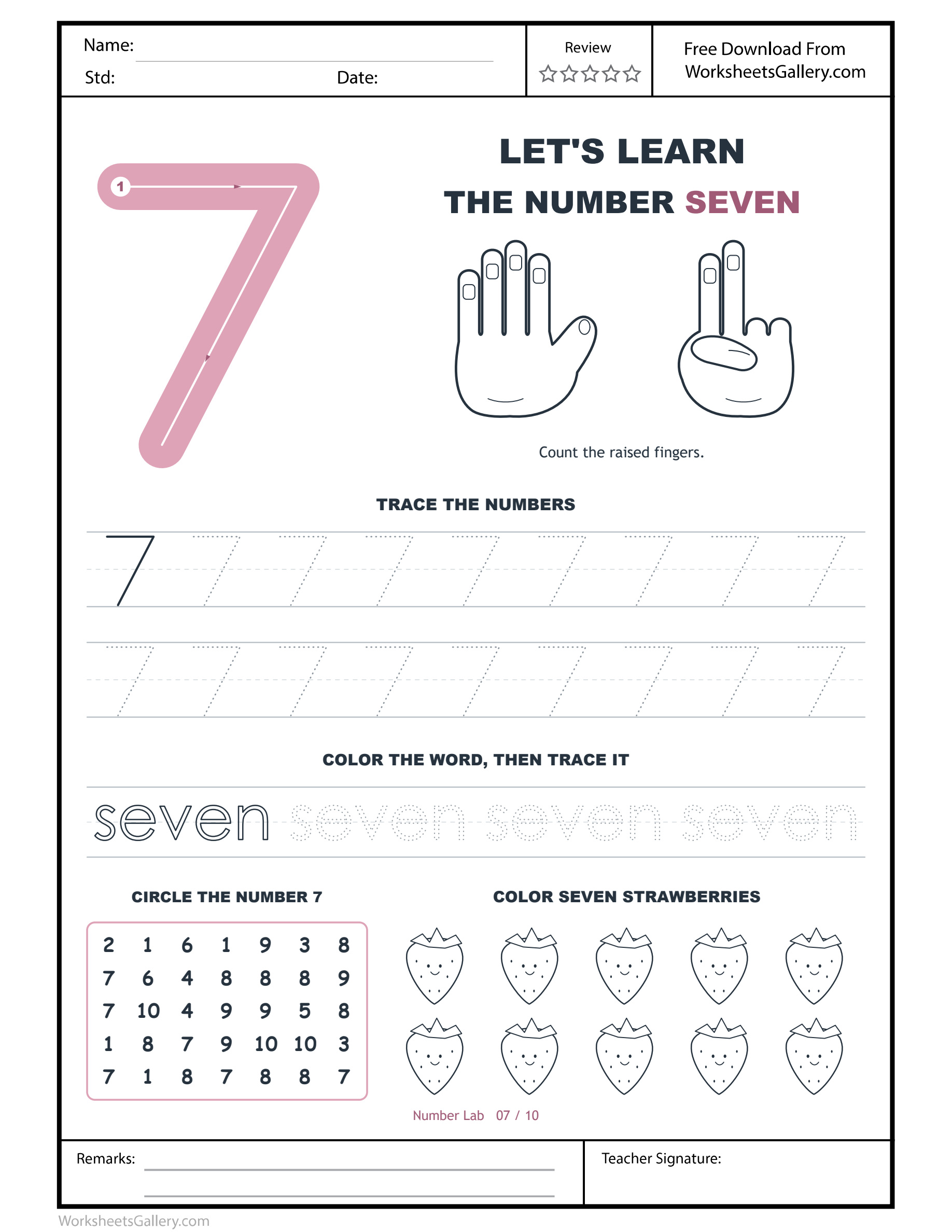
A strawberry count does not return to one simply because the next picture sits on a lower row. Seven Strawberry Steps gives children a reason to carry a count across that break, selecting seven whole berries from ten available outlines. Above the food task, five raised fingers and two more show another arrangement of the same amount. Numeral tracing, a number-word band and a search for 7 add separate ways to explore it. Read the page with the learner, then choose a short job that makes the seven-item goal easy to see.
AMOUNT
7 / seven
HAND PARTS
5 + 2
FOOD CHECK
7 of 10 strawberries
🍓 Start at a classroom order desk — Seven Strawberry Steps
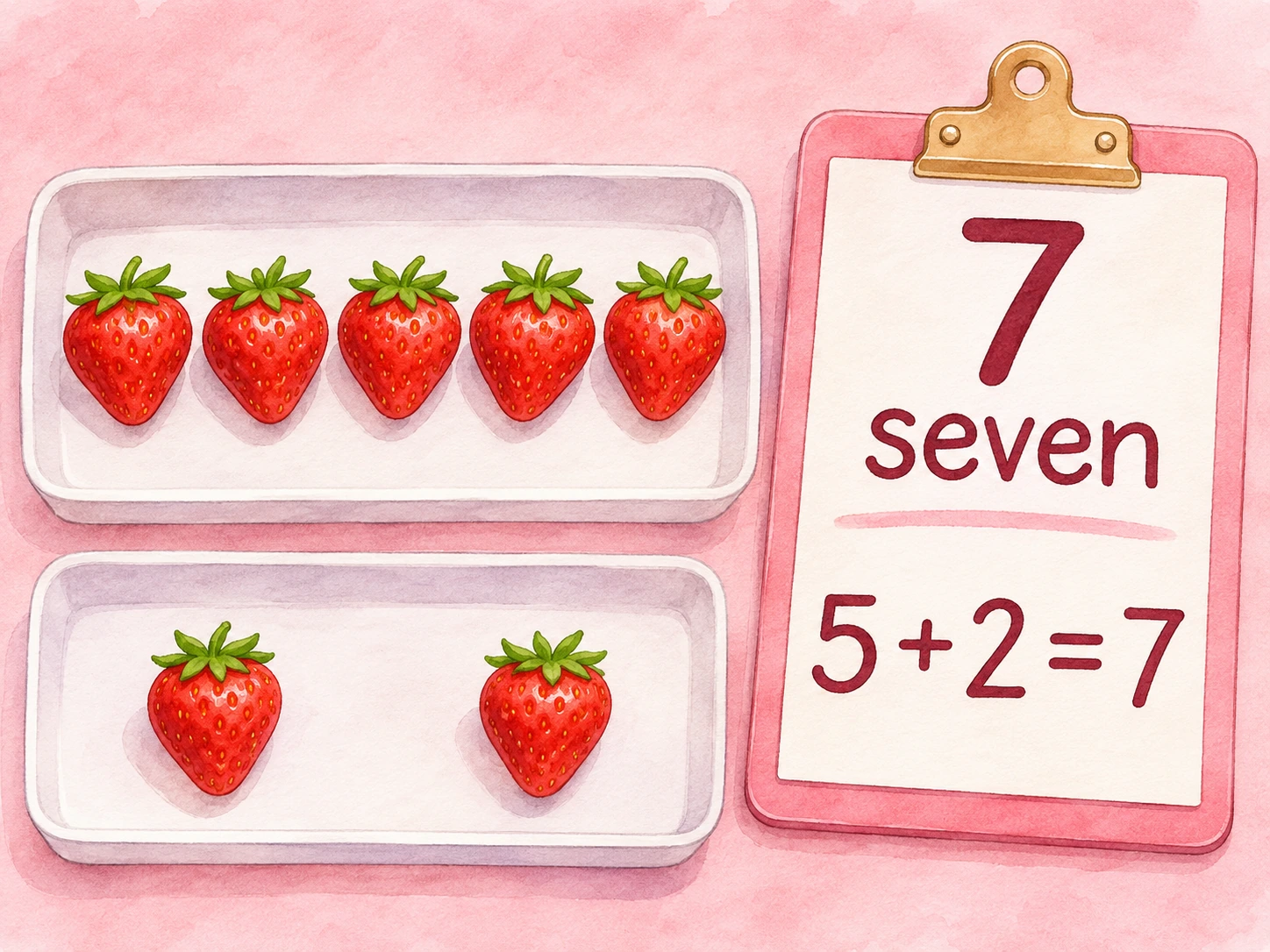
A teacher could introduce Seven Strawberry Steps through a pretend seven-berry order. One learner places five large counters in a top tray and two in a lower tray. A partner checks the entire delivery. The trays create a visible pause in the arrangement, giving the adult a chance to ask whether both groups belong to one order. This is a possible classroom use, not a report of tested results.
Bring Seven Strawberry Steps into the exchange after the objects are counted. The partners compare the trays with the hand picture, then decide which paper task to attempt. One could point to the raised fingers while the other explains how the count continues. Rotate the reporter role later. A short, clearly explained order is a reasonable endpoint before moving to a different classroom activity.
Seven belongs to both hands together: Seven Strawberry Steps
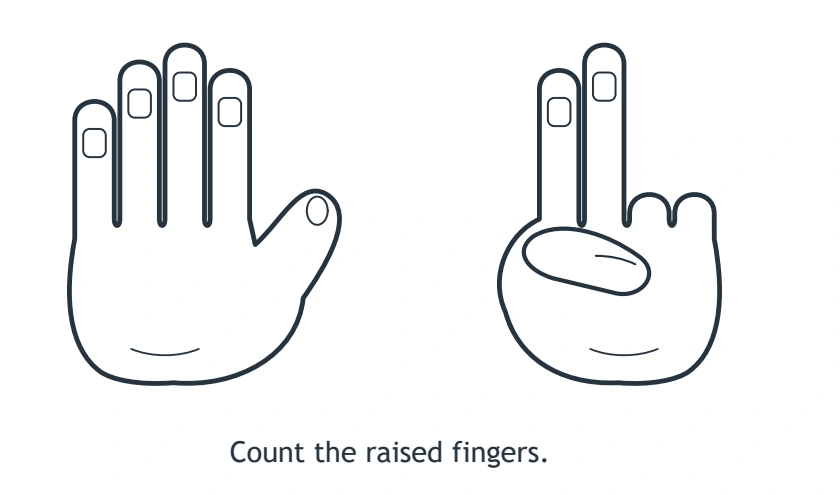
The first hand in Seven Strawberry Steps contributes five raised fingers. The other contributes two. Count every extended finger initially, taking care not to include the folded ones. Once seven is established, an adult can describe the parts as five and two. A child may continue counting from one on later turns; the structured description is an additional way to understand the display.
Keep the writing turn short enough to plan: Seven Strawberry Steps
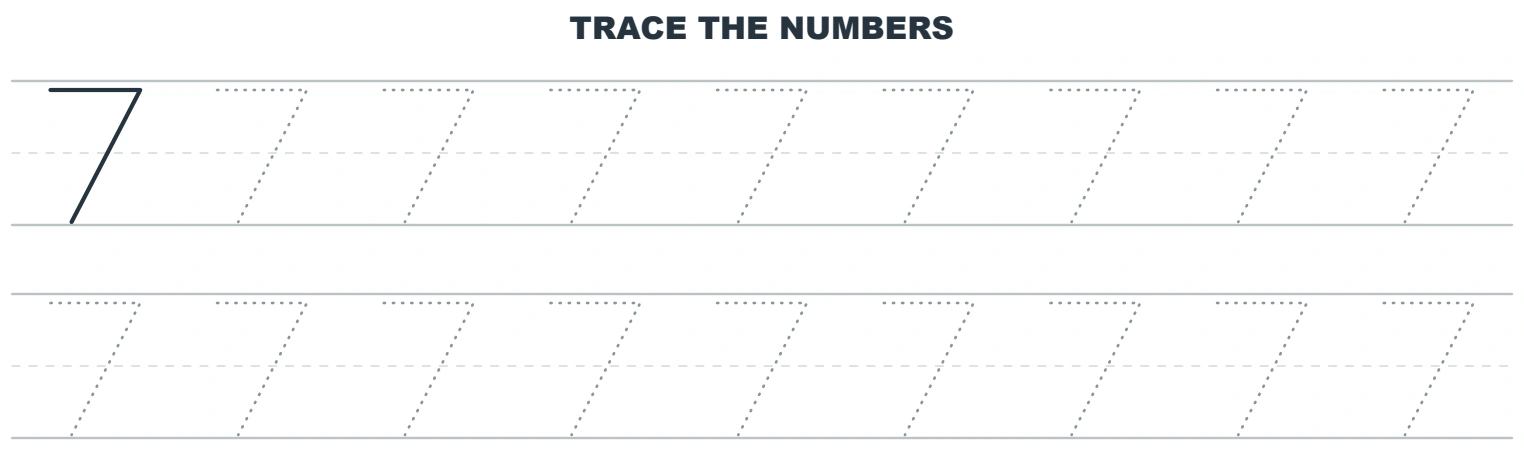
The large Seven Strawberry Steps numeral shows the upper line and slanting route of 7. Compare it with the solid model that begins the two practice rows. Ask the learner to inspect where the line changes direction before tracing. The task is not improved by racing through all the copies. A pause to look again can support a more deliberate next movement.
Speak the word while the amount is visible: Seven Strawberry Steps
The Seven Strawberry Steps name band offers an outlined seven and three dotted repetitions. Read seven aloud as the child looks at the full word, then connect it with the hand total or selected berries. The written form is available as a reference. A learner can participate through pointing and listening even when independently reading a five-letter number word is beyond their current experience.
A number-seven reference with two different lower tasks: Seven Strawberry Steps
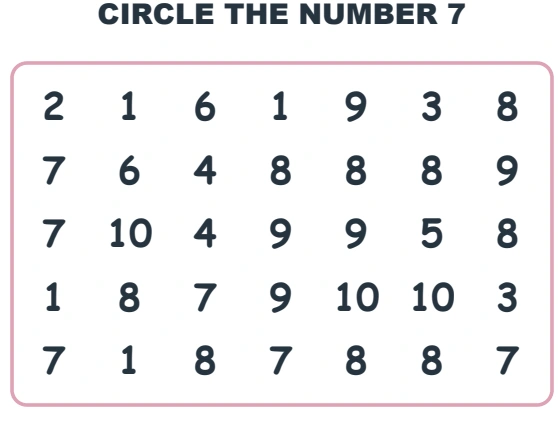
| Seven checkpoint | Accurate sheet detail | What an adult can ask |
|---|---|---|
| Hands | 5 plus 2 raised fingers | Where are the two extra fingers? |
| Tracing | A solid 7 and dotted practice over two rows | Where does the top line turn? |
| Hunt field | 35 entries in 5 rows of 7 | Did this entire entry match 7? |
| Hunt answers | Positions 8, 15, 24, 29, 32, 35 | Which row still needs checking? |
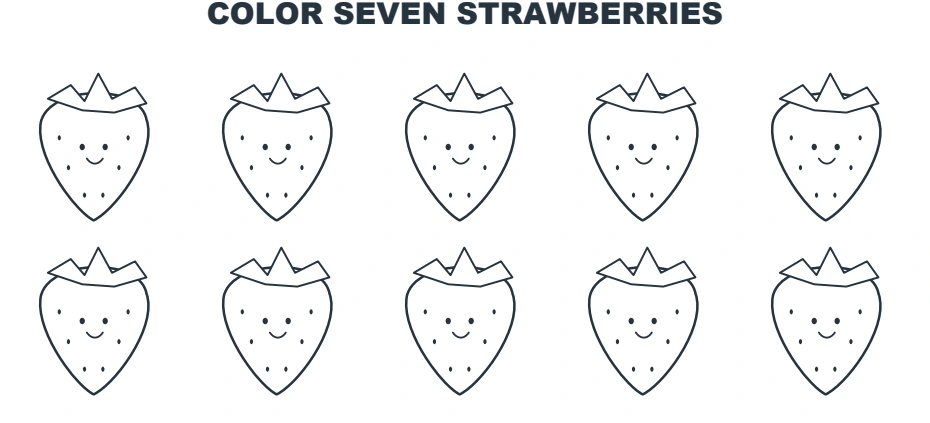
| Food choice | 7 coloured strawberries, 3 uncoloured | Did the count include both rows? |
The Seven Strawberry Steps position reference counts across each row before moving down. Six matching numerals appear in the hunt; seven selected strawberries belong in the neighbouring food panel. These are different totals. Name the relevant heading before checking a response so the learner knows whether the current question concerns symbol identity or the size of a chosen group.
Follow the berries beyond the first row: Seven Strawberry Steps
There are five strawberry outlines on each row in Seven Strawberry Steps. A learner who chooses the entire first row needs two more to reach seven, but other selections are valid too. The row boundary does not begin a new order. Count the selected berries as one group. Point to the next uncounted picture after the break if the learner loses the route.
Five abilities hiding inside an ordinary order: Seven Strawberry Steps
The count can cross a visual break
In Seven Strawberry Steps, moving from the upper food row to the lower one calls for remembering the current count. A child may restart because a new line looks like a new task. Ask which pictures belong to the same selection and sweep across them together. This is an attention demand as well as a number-sequence demand, so a slower pointing route can help.
Five can organise a larger amount: Seven Strawberry Steps
The Seven Strawberry Steps hand display and the suggested trays share a five-and-two structure. Compare the parts after a full count, then invite the learner to name them. This gives the adult a way to discuss grouping without insisting that the child count on fluently. The visible five remains available for verification whenever the shorter description feels uncertain.
A number name can describe an action: Seven Strawberry Steps
Use seven in a Seven Strawberry Steps sentence about packing or colouring. The printed word then has a conversational job, rather than existing only as a row of letters to trace. Encourage a child to explain what they chose, or provide the sentence while the child points. Oral language and number reasoning can develop through the same clear, concrete exchange.
A search benefits from selective attention: Seven Strawberry Steps
The Seven Strawberry Steps grid contains many entries that should remain uncircled. The learner must keep the model in mind while comparing each whole entry. A temporary row guide can reduce wandering. Notice a careful rejection of a distractor as well as a correct circle, because deciding what does not match is part of the search.
Pencil movement has a visible destination: Seven Strawberry Steps
The sloping 7 route in Seven Strawberry Steps provides a specific place to start and a direction to follow. Watch how the child handles the change from the upper line to the descending section. Comfortable pressure and a supported page matter. This motor task can be shortened independently of the counting task, preserving a useful number conversation even when writing energy is low.
Gita's possible kitchen-table order
Imagine Gita making a pretend strawberry delivery for a toy café at home. An adult reads Seven Strawberry Steps and asks for seven large play objects. Gita fills a five-place tray, then adds two to a second tray. The adult asks about the whole order before introducing the word seven. If the learner recounts from one, allow the check to finish at a comfortable pace.
Gita then points to seven printed berries in Seven Strawberry Steps, chooses colours and checks the final group. The adult might ask whether choosing a different lower-row berry would change the amount. This gives a new question without adding more pencil copies. Finish by setting a completed 7 card beside the pretend café order so the number remains connected to a visible purpose.
Understand the detour before offering a correction: Seven Strawberry Steps
If a Seven Strawberry Steps learner counts five on the first row and one, two on the second, they may have named the parts accurately without yet answering the whole-total question. Ask how many were selected altogether and invite a continuous recount. If a child reaches seven but colours another berry, return to the agreed stopping point rather than reteaching the entire sequence.
For a hunt mistake in Seven Strawberry Steps, compare the questionable numeral with the large model. For a difficult pencil route, enlarge the movement or reduce the repeats. For counting seeds instead of berries, identify a whole strawberry as the unit. Separate these sources of difficulty so the child receives one relevant prompt and a real chance to respond.
Five playful ways to send another seven order
1. Put a bridge between two trays: Seven Strawberry Steps
Arrange five counters and two counters on mats separated by a short strip of paper. A Seven Strawberry Steps learner traces a pointing path over the paper bridge while maintaining the count. The bridge makes the move between groups explicit. Afterwards, remove it and check whether the same route can be followed without the visual aid.
2. Mix the colours, keep the total: Seven Strawberry Steps
Use seven large counters in two colours beside Seven Strawberry Steps. Invite different colour arrangements and count the whole collection each time. A child may describe five of one colour and two of another, but the game need not become a written addition exercise. Ask which changes affected appearance and whether any object was actually added or removed.
3. Listen for the seventh stop: Seven Strawberry Steps
Draw seven large stations on a pretend delivery road and move a toy once to each. Let the Seven Strawberry Steps partner call the count. Stop when the seventh station is reached and identify the completed delivery. If the toy jumps over a station, return to that part of the route and check rather than simply repeating the number words faster.
4. Write a complete café label: Seven Strawberry Steps
An adult can help a Seven Strawberry Steps learner make a finished sign with 7, seven and a drawing of seven simple berry shapes. Display it beside the pretend order. Ask a visitor to compare the sign with the tray count. The sign communicates an amount; detailed fruit artwork or independently spelled vocabulary is not required.
5. Audit a deliberately short order: Seven Strawberry Steps
Pack six pretend berries and label the parcel 7. Invite a Seven Strawberry Steps checker to inspect it before dispatch. The child can add an item and recount, then explain what changed. Let the child design the next short parcel for the adult to audit. A wrong adult parcel gives checking a playful purpose without making the child's own drawing the problem.
Age, agency and an inviting repeat: Seven Strawberry Steps
For preschool and kindergarten ages three to six, Seven Strawberry Steps may need substantial adult reading support. Offer counters, oral answers or pointing before small writing. The aim of the hand picture is a visible quantity, so physically reproducing the pose is optional. Learners can show understanding in different ways, and a clear spoken explanation deserves attention even when tracing is still developing.
Keep Seven Strawberry Steps available for a natural seven moment, such as packing seven toy visitors or setting seven large blocks on a shelf. Agree on one job before starting. A child can choose the reporter role or the berry colours while the quantity remains fixed. Recognise checking across the row break when it occurs, and end after the selected goal rather than assigning another section automatically.
Other representations for a seven-sized order
The seven-umbrella lesson gives Seven Strawberry Steps another whole-object collection. The six-duck page supplies a nearby smaller amount, while the eight-ice-cream activity offers a possible next comparison. Let a question about counting or grouping determine which page to print.
Adults extending Seven Strawberry Steps can read NAEYC's ideas about family play and explore learning suggestions from PBS Parents. Those optional resources belong to independent education sites. They do not alter the worksheet instructions or form part of the purchased number collection.
Save the strawberry sheet in the right edition: Seven Strawberry Steps
Choose the free original Seven Strawberry Steps sample or use an eligible active-membership account for the clean premium version. The premium printable retains the source tasks with the website’s watermark and promotional domain removed. Its printable activity page is free of advertisements. The package card also offers all ten clean lessons together as a separate $2 purchase, with the seven sheet included in number order.
For a clear Seven Strawberry Steps printout, open the file in a reader, choose Letter paper and leave the scale at 100%. Inspect the dotted sloping strokes and the last strawberry row on one trial copy. Select the seventh page if printing from the collection. Leave the hand model uncovered at the table so the learner can consult it while describing the final seven-berry order.
Popular Worksheets
Printable resources families and teachers are downloading now.
 Free
 Free
 Free
 Free