
Ten Finger Finish: 6 Brilliant Two-Digit Counting Wins
Keep the ten lesson with the complete ordered studio, a separately purchased clean ten-page PDF.
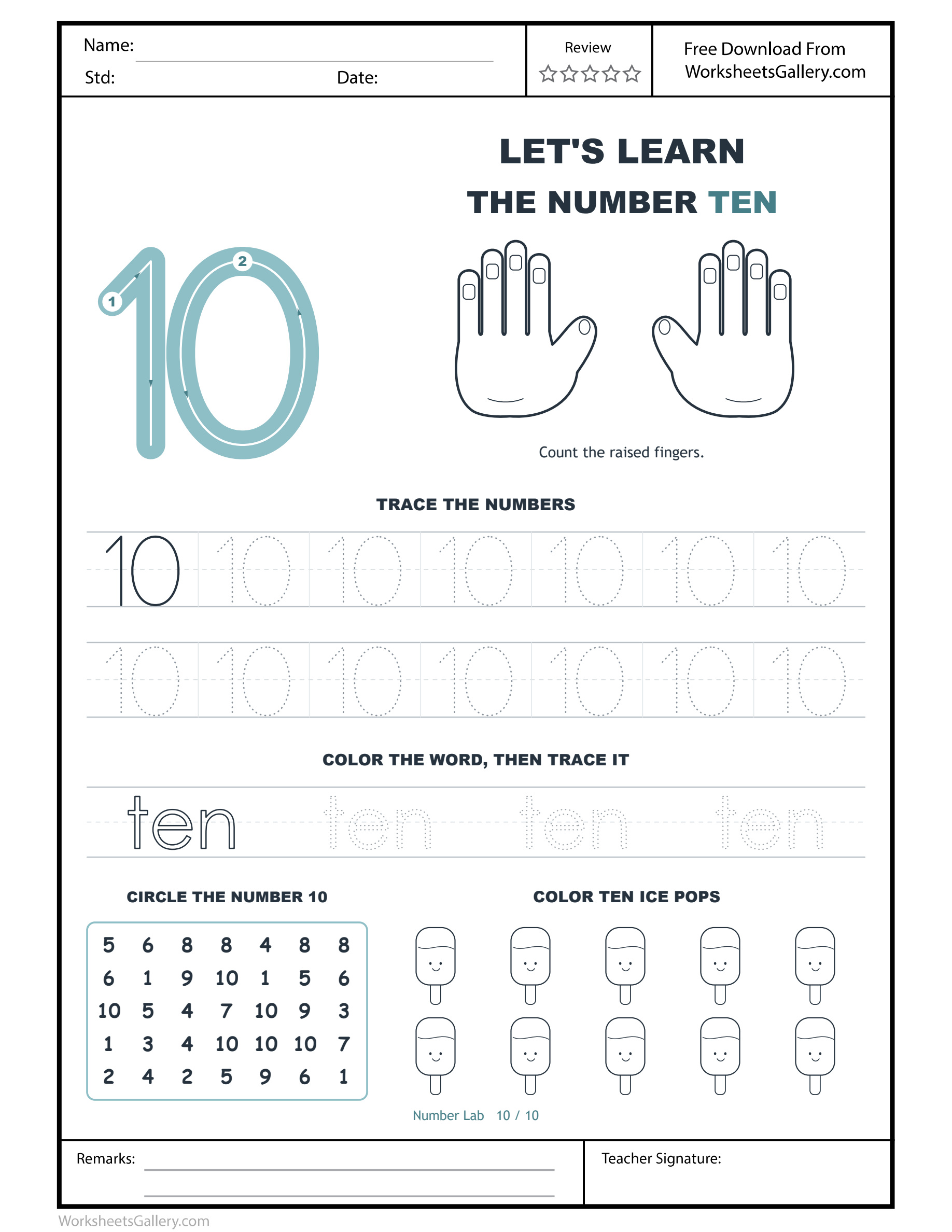
Ten uses two written characters to name one amount. Ten Finger Finish gives that idea a visible setting: two full hands, a large 10, paired tracing models, the word ten and ten ice-pop pictures. The learner searches for complete 10 entries rather than isolated 1s or 0s, then colours the entire food group. A parent or teacher can begin with the amount before discussing how it is written. This final number-lab sheet offers a focused preschool or kindergarten visit without assuming that a child who can count ten already understands its two-character form.
AMOUNT
10 / ten
HAND PARTS
5 + 5
FOOD CHECK
10 of 10 ice pops
🎟️ A ticket for one complete number — Ten Finger Finish
Put a completed 10 card beside Ten Finger Finish and read it as ten. The 1 and 0 sit together to represent one number. Then show a separate 1 card and name it one. Ask which card would describe ten play objects. The immediate aim is to recognise the complete entry; a formal place-value explanation can wait for a learner who is ready and interested.
The Ten Finger Finish hunt contains both 1 and 10 among its choices. A child searching for ten needs to inspect the whole entry, keeping the neighbouring 1 and 0 together. Circle around the complete target rather than around only one character. If the learner is unsure, point back to the large model and compare its two-character form before returning to the search.
Ten on two full hands: Ten Finger Finish
The Ten Finger Finish first hand shows five extended fingers, and the second shows five more. Count the whole display and then name the two equal parts. An adult can say five and five while pointing. A child may recount all ten to verify the amount. Copying the exact pose is not necessary; pointing to the printed fingers is a valid way to participate.
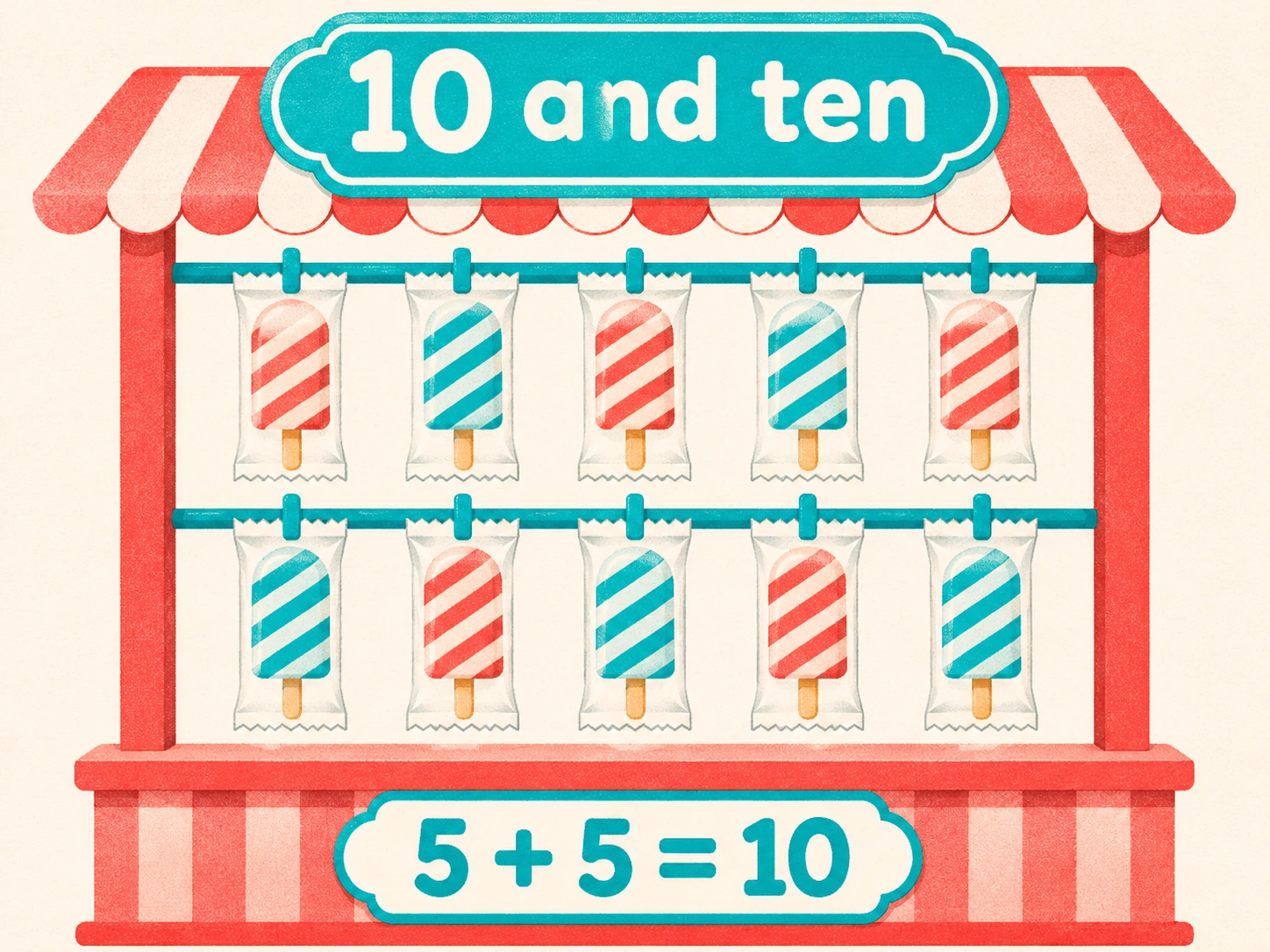
The illustrated ice-pop kiosk beside Ten Finger Finish offers another five-and-five arrangement. Its two rails each hold five separate ice pops, and the completed label names the total. Use it to compare groups if that interests the learner. The supporting equation is already supplied in the illustration; the worksheet itself does not require a new written addition answer.
A paired writing route needs a little space: Ten Finger Finish
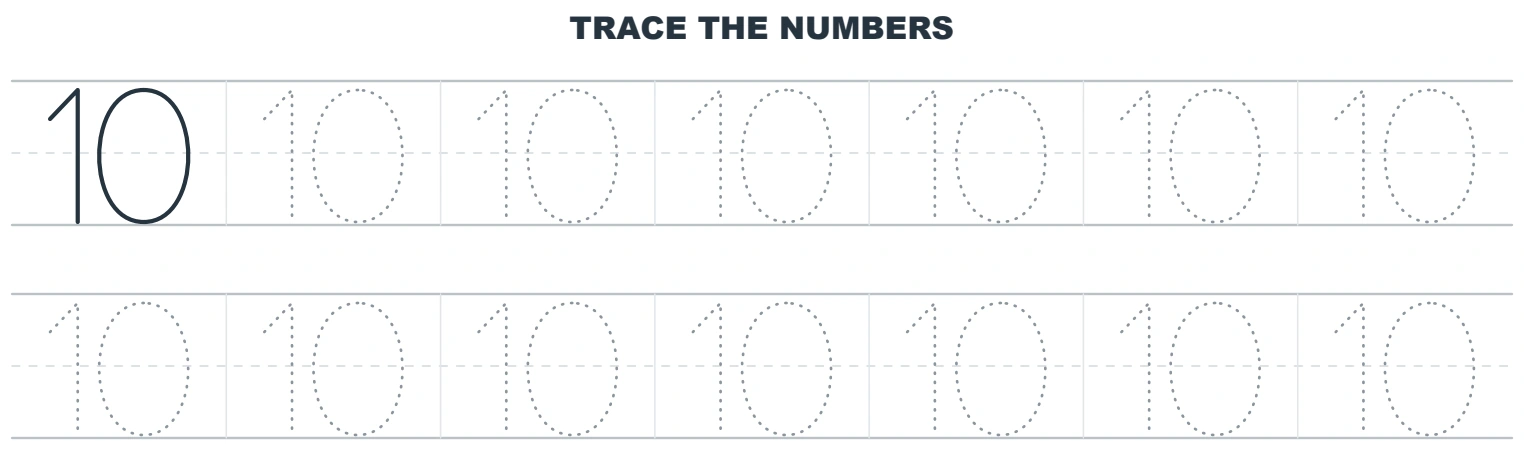
The large Ten Finger Finish model marks a route for 1 and a separate route for 0. Inspect both before tracing a small 10. The characters should stay close enough to read as a pair without merging into one unclear mark. A learner can practise a broad movement first, then use the source's dotted pairs. Keep the visible model available instead of expecting the spacing to be remembered immediately.
The number name is shorter than its amount: Ten Finger Finish
The Ten Finger Finish word band introduces ten as an outlined word with three dotted repetitions. Read the whole name aloud, then compare it with the ten raised fingers. Three letters in the word do not mean three objects. This is another opportunity to distinguish the features of a written representation from the quantity that representation names.

A home kiosk check with Jia: Ten Finger Finish
Imagine Jia opening a pretend ice-pop kiosk at home. An adult prepares ten large play cards, five on each of two shelves, and uses Ten Finger Finish as the stock reference. Jia counts both shelves as one inventory. The adult asks which printed entry belongs on the stock label: 1 or 10. This is a possible learning scene rather than a report of a particular result.
Jia then turns to Ten Finger Finish and chooses a few paired numeral traces. The adult reads ten and asks whether any food pictures will remain uncoloured when the printed instruction is completed. Jia can count every picture before deciding. End with a stock report about the complete group, leaving extra writing for another day if the child has reached a comfortable stopping point.
What belongs in the number-ten inventory: Ten Finger Finish
| Ten check | Printed evidence | Meaning of the result |
|---|---|---|
| Raised hands | 5 and 5 | 10 extended fingers altogether |
| Writing models | Two rows of complete 10 pairs | Keep both characters in each entry |
| Word band | Outlined ten plus 3 dotted copies | One written number name |
| Hunt matches | Positions 11, 15, 19, 25, 26, 27 | 6 complete 10 entries |
| Ice-pop selection | 10 whole pictures | Colour all 10; none remain uncoloured |
The Ten Finger Finish position numbers run across seven entries per row, continuing through five rows. An adult can use them to check after the learner searches. Exactly six complete entries match the requested 10, so each receives its own circle. Ten coloured ice pops belong in the food task because its instruction specifies the amount ten. The two totals answer different questions.
Six useful observations at the end of the number range: Ten Finger Finish
A learner can treat 10 as one entry
Watch whether a Ten Finger Finish search circle encloses both characters. Reading ten as a complete number is different from naming 1 and 0 separately. An adult can acknowledge the character names, then provide the whole-number reading. The child does not need a full explanation of tens and ones to begin matching the complete printed target.
Counting can cross between two equal groups: Ten Finger Finish
The Ten Finger Finish hands and kiosk both show five plus five. Ask about each group, then about the amount altogether. A learner who restarts at one on the second group may be describing its local count rather than the total. A continuous pointing sweep can make the whole-group question clearer without making the child abandon a full recount.
Every food picture belongs to the selection: Ten Finger Finish
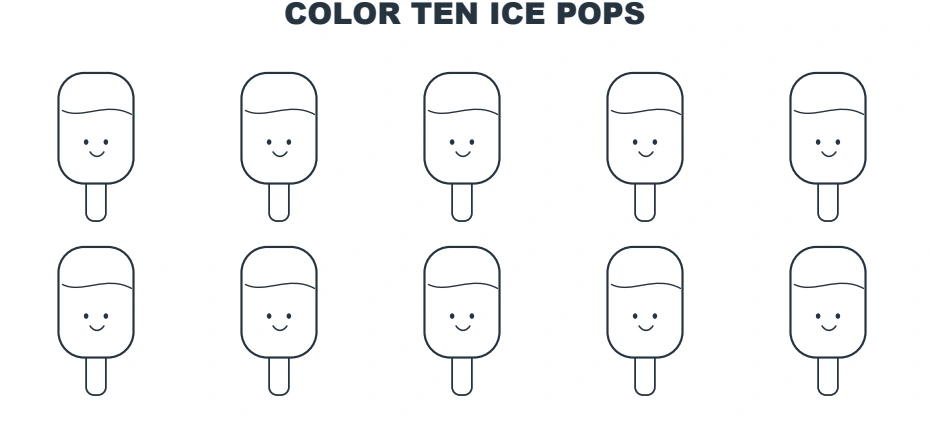
Unlike smaller number sheets, Ten Finger Finish asks for all ten ice pops to receive colour. Count the whole objects before colouring, then check that none was missed. This can reveal whether the learner follows the instruction or assumes every food panel must leave some pictures untouched. The rule comes from this page's heading, not from a remembered pattern on another sheet.
Two characters can share a writing space: Ten Finger Finish
The paired Ten Finger Finish guides invite attention to relative spacing and height. A child may form each character reasonably well but leave them too far apart to look like one entry. Point to a source pair and compare the space between its characters. Offer a larger paired model or fewer repetitions when the combined movement is new.
A printed word can carry a stock report: Ten Finger Finish
Use the Ten Finger Finish word ten in a sentence about the complete kiosk inventory. Read it aloud and let the learner point to the matching quantity. A child may dictate a report for an adult to write. This gives number vocabulary a meaningful communication role while keeping independent reading and spelling demands appropriate to the learner.
A checker can explain a rejected choice: Ten Finger Finish
In the Ten Finger Finish hunt, leaving a lone 1 uncircled is a purposeful decision when the target is 10. Ask the learner to explain that difference using the models. A thoughtful rejection tells the adult something about symbol recognition. It also shifts attention from the number of circles drawn to the reasoning behind each choice.
A classroom kiosk with a stock keeper and label reader
A teacher could set up a Ten Finger Finish kiosk with ten large counters arranged on two shelves. One child checks the stock, while another selects a completed numeral label. Invite them to explain why 10 is appropriate before returning to the worksheet. This suggested station separates quantity checking from written-number recognition so each role has a clear, observable job.
On paper, the Ten Finger Finish partners can choose different small tasks and then exchange explanations. One might audit complete entries in one search line while the partner reports the coloured ice-pop total. Rotate roles later. A teacher note could describe a specific observed action, such as circling whole 10 entries or maintaining the count across shelves, rather than reducing the entire visit to whether a page was finished.
Five kiosk games after the printable: Ten Finger Finish
1. Deliver two full trays: Ten Finger Finish
Prepare two trays of five large play objects beside Ten Finger Finish. Ask a learner to describe each tray and the complete delivery. Move the trays closer together and farther apart without changing their contents. Check whether the inventory still contains ten. The activity gives arrangement changes a visible role while allowing a recount to verify the total.
2. Match complete number tickets
Make several finished cards showing either 1 or 10. A Ten Finger Finish learner sorts them by complete entry and explains a choice. Keep each card's characters clearly spaced. Add other numerals only when the initial comparison is comfortable, so the game remains a focused inspection rather than a large memory test.
3. Pack a ten-mark receipt: Ten Finger Finish
Invite the child to draw ten simple marks on a receipt for a pretend kiosk sale. An adult can add ten and 10 using Ten Finger Finish as a reference. The customer compares the receipt with a ten-object parcel before accepting it. The marks need to be countable, but they do not need to resemble detailed ice-pop illustrations.
4. Check a missing item before opening: Ten Finger Finish
Set out nine objects under a 10 label and ask a Ten Finger Finish inspector whether the kiosk is ready. The child can add one object and recount. Give the learner a turn preparing stock for the adult to inspect. The deliberately short stock belongs to the pretend game, making correction a shared job rather than a judgement of the child's own worksheet work.
5. Hear ten in two sound groups: Ten Finger Finish
Make five gentle taps, pause clearly, then make five more. Ask the Ten Finger Finish partner whether the pause ended the message or separated its parts. Count the whole performance together if needed. This carries the five-and-five idea into listening while keeping the sound sequence slow enough for one count word per event.
Make the final number page a comfortable visit: Ten Finger Finish
For learners around ages three to six, Ten Finger Finish may need substantial support with its two-character numeral, word and crowded grid. Read instructions aloud, offer a row cover and use objects when pictures are hard to track. A child can show quantity understanding by pointing or speaking before controlling a narrow paired trace. Treat those responses as useful evidence in their own right.
If a Ten Finger Finish learner circles only 1, compare whole entries. If the food count stops after one row, ask about both rows together. If the pencil spacing becomes difficult, enlarge the paired model. These are different next steps. Offer one relevant prompt and time to respond rather than explaining every possible issue after a single uncertain mark.
Return to Ten Finger Finish when ten has a purpose, such as stocking a pretend shelf or preparing a ten-object display. Let the learner choose the stock keeper or label-reader role and agree on a short finish. Notice a precise check, especially keeping 1 beside 0 or counting the complete two-row group. Regular practice can remain a small, meaningful exchange instead of a compulsory repeat of every section.
A different collection for the same complete numeral: Ten Finger Finish
The ten-balloon lesson offers Ten Finger Finish another pictured inventory. The nine-fish page supports a nearby comparison, while the five-turtle activity returns to one of the visible parts. Use the next page when it clarifies a question about amount or written form.
For wider adult-led play alongside Ten Finger Finish, visit PBS Parents' family learning resources or read NAEYC's material about play for families. These independent education destinations offer optional ideas beyond this printable. Their links do not add files to the collection purchase or imply endorsement of this number-lab page.
Get the ten sheet and keep the collection option clear
The free Ten Finger Finish control supplies the retained original sample. Choose the separate premium control through an account with a qualifying membership in force. This clean file keeps the learning tasks and removes the website’s promotional domain and watermark; the PDF pages contain no advertisements. The native package card points to a separately purchased $2 collection with every clean number lesson from one to ten. The collection has its own purchase requirement.
Save Ten Finger Finish, open the PDF and use an unscaled US Letter print setting: Actual Size or 100%. Check a first copy for visible dotted 10 pairs and the complete outer frame. When printing the collection, select its final page for this lesson. Keep a completed 10 card and two five-object groups nearby if the learner wants to explain the amount before picking up a pencil.
Popular Worksheets
Printable resources families and teachers are downloading now.
 Free
 Free
 Free
 Free