
Five Finger Findings: 5 Amazing Pineapple Practice Jobs
Use the complete number studio to revisit five, then explore the larger finger groups at your own pace.
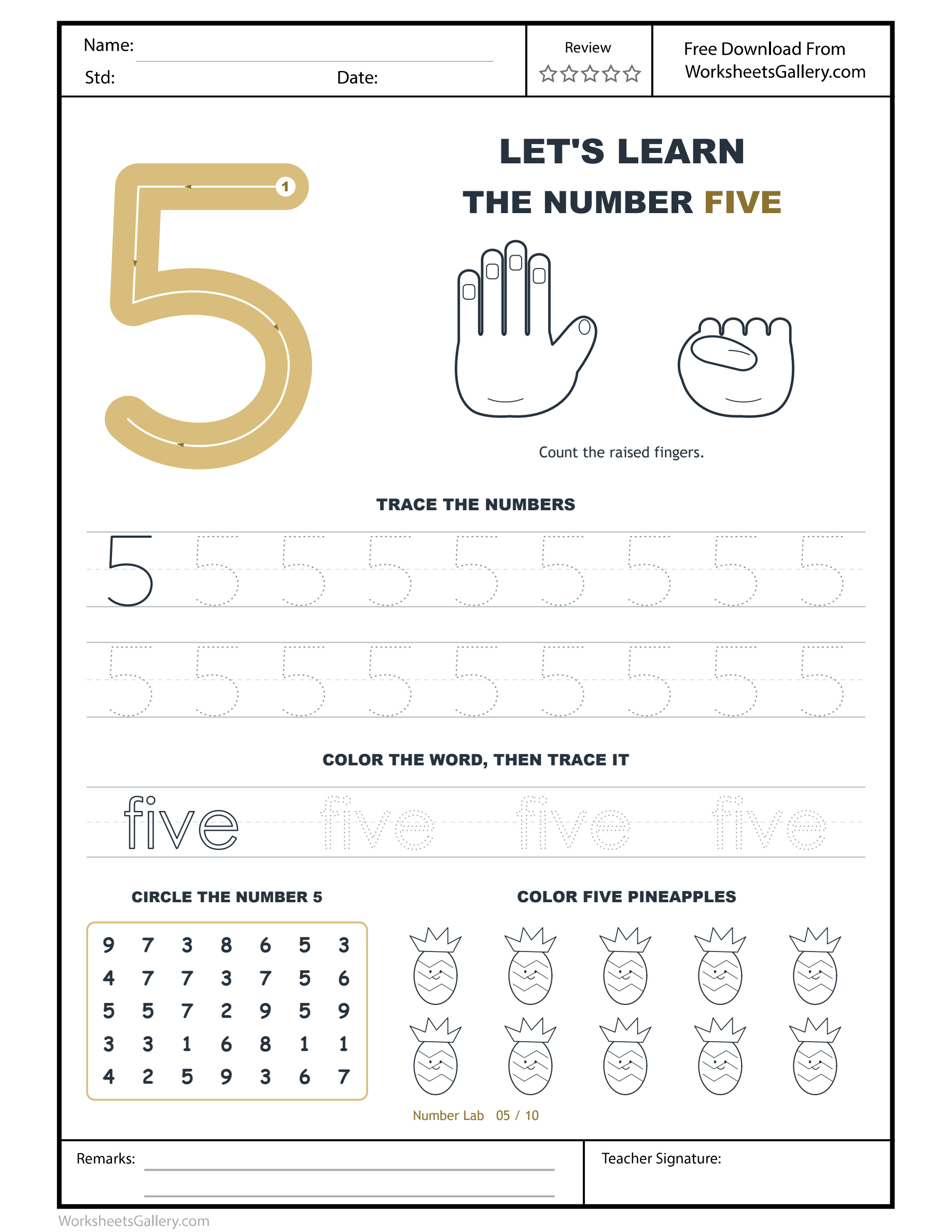
An open hand offers a familiar collection that can travel anywhere. Five Finger Findings pairs that five-finger display with a large numeral, guided 5 practice, the word five and two lower activities involving symbol search and pineapple selection. The sheet invites learners to connect a whole hand with a spoken amount before recording it in different ways. Adults can begin with the finger picture, a real group or the food task. The aim is a clear relationship between representations, with enough choice to keep a short preschool or kindergarten number visit comfortable.
AMOUNT
5 / five
HAND PARTS
5 + 0
FOOD CHECK
5 of 10 pineapples
🖐️ Read the two lower rules separately — Five Finger Findings
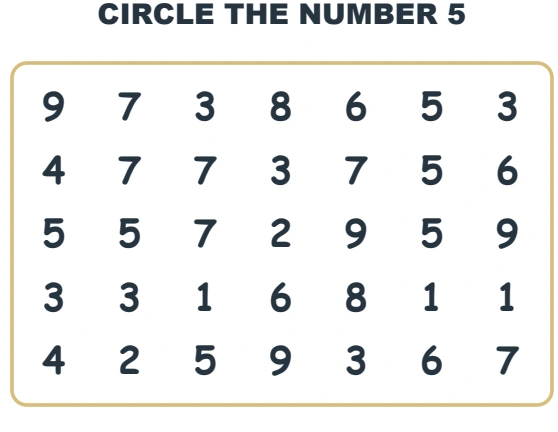
The Five Finger Findings hunt asks for every matching 5 entry; there are six. The pineapple activity asks for five coloured pictures; there are ten available. These totals differ because the tasks ask different questions. If a learner colours six pineapples after counting six search circles, reread the pineapple heading rather than assuming the child cannot count five.
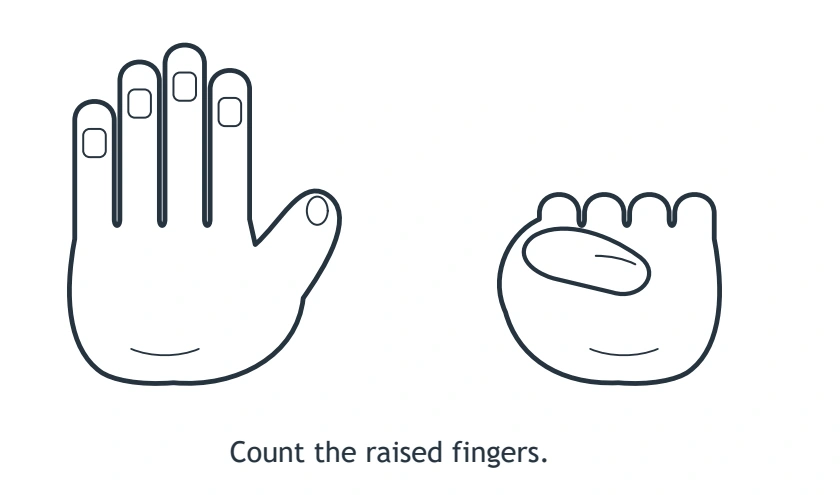
Another Five Finger Findings mix-up concerns the hand drawings. The first hand has all five fingers extended, including its thumb. The closed second hand has none raised. Count the five visible extensions with the child before using “a whole hand” as a convenient description. Recognising the group as five can follow a careful count; it need not be demanded immediately from memory.
A first visit in four manageable moves: Five Finger Findings
Begin Five Finger Findings by saying five and inspecting the open hand. Then follow the large numeral route with a pointing finger. Next, let the learner choose a few dotted copies or a search row. Finish with a five-pineapple selection and a recount. The outlined word and its three dotted repetitions can join this visit or provide another starting point later.
Keep the Five Finger Findings model visible while writing. Its large 5 starts along the upper route, then continues downward and around the lower curve. The solid example at the beginning of the practice band gives a smaller reference. Pause between copies if the route starts to lose its shape. A child can count accurately even when the pencil is still learning to coordinate these changes of direction.
What five means on this particular page: Five Finger Findings
| Five evidence | Page-specific detail |
|---|---|
| Hands | 5 raised fingers and 0 raised fingers |
| Number writing | Two ruled rows with a solid 5 to begin |
| Number name | five outlined once, then three dotted copies |
| Hunt matches | Positions 6, 13, 15, 16, 20, 31 |
| Picture choice | Colour 5 of 10 pineapples; leave 5 without colour |
In the Five Finger Findings reference, hunt positions run left to right across seven columns and continue through five rows. Use the locations to review the finished pineapple-page search quietly. The six matches are scattered unevenly. A child who expects one target in every row will need to return to the actual entries rather than complete a repeating position pattern.
A pineapple is one object, despite its many marks
The fruit drawings in Five Finger Findings have pointed crowns and patterned bodies. Count each whole pineapple once. Ask a learner to trace a loose boundary around one picture before counting if the crown points attract repeated count words. The same drawing could support another question about shapes, but the printed instruction names whole fruits, so that is the unit for this activity.
Five selected and five remaining
After colouring in Five Finger Findings, there should be five coloured pineapples and five uncoloured ones. A child might choose an entire row, but that arrangement is optional. Selections spread across the two rows are equally valid when the total is five. Compare the two groups by counting or pairing rather than insisting on the adult's preferred colouring arrangement.
Eli's possible shelf inspection at home
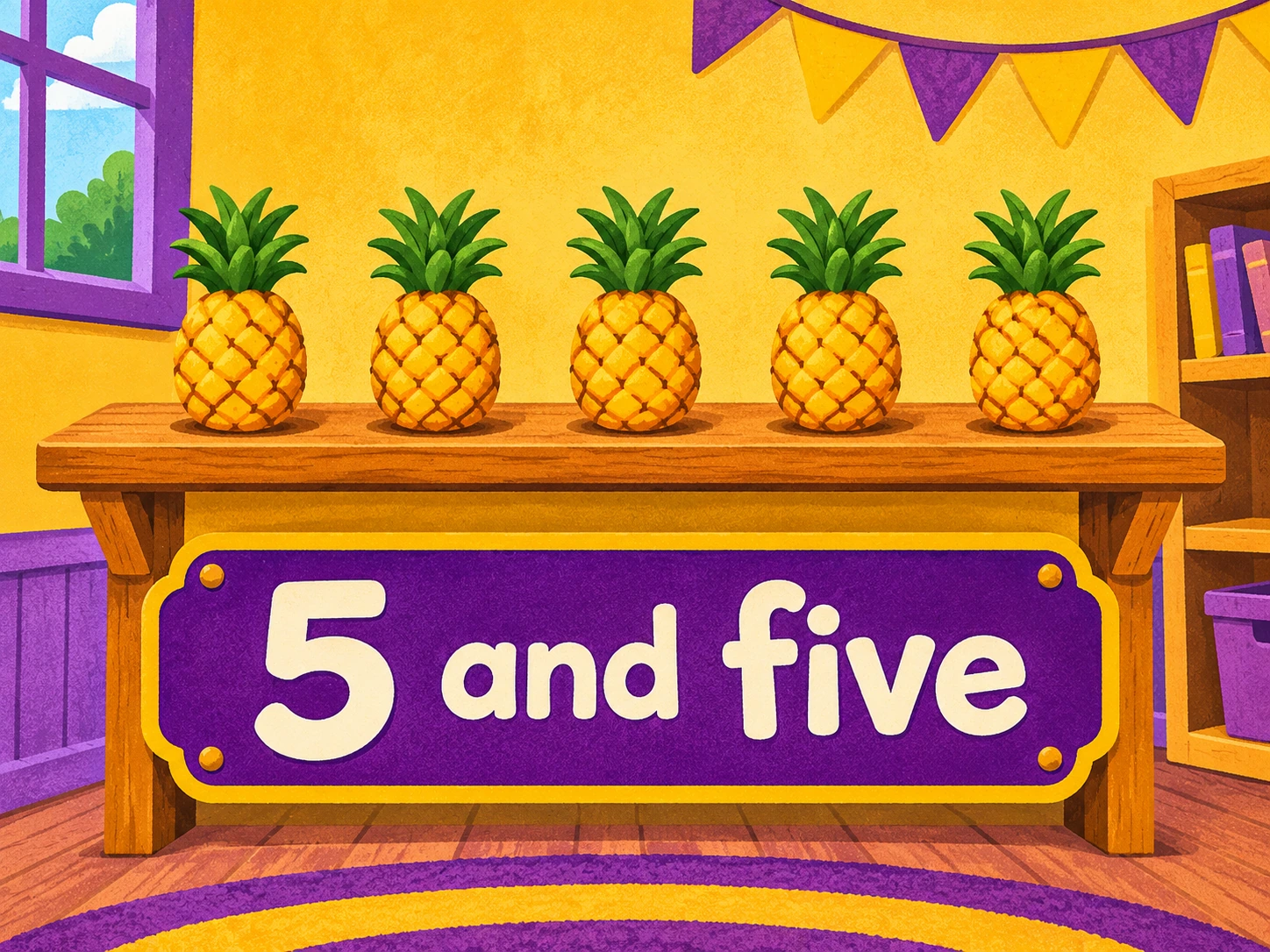
Imagine Eli setting five play objects on a low shelf and calling them a pretend pineapple display. A parent opens Five Finger Findings and asks whether the shelf amount matches the open hand. Eli counts the objects, then the fingers, before deciding. This is a suggested home scene; it does not assume that recognising a whole-hand quantity will already be easy.
For the next Five Finger Findings choice, Eli decides which five printed pineapples will belong to the display. The parent waits for the pointed plan, then offers crayons. Once the selection is checked, they read five together and place a completed 5 card near the shelf. The visit ends with a meaningful label, while unused tracing copies remain available for another occasion.
Five connected gains with different demands: Five Finger Findings
A familiar group can become a reference: Five Finger Findings
Counting the first Five Finger Findings hand establishes that a full set of raised fingers is five. Adults can later invite the learner to recognise that group without recounting every finger, while still allowing verification. A familiar reference amount is useful when larger numbers arrive. It should remain something the child can explain, not a fact used to hurry them past a count they need.
Whole-picture counting strengthens the unit: Five Finger Findings
The Five Finger Findings pineapple panel encourages attention to one complete object at a time. A crown, face and body pattern all belong to the same fruit. When a count seems too large, ask what was touched for each number word. This can reveal a unit change more clearly than asking the child to repeat the same faster chant.
Selecting five involves a stopping decision
With Five Finger Findings, a child chooses five from a supply of ten. Planning the selected group and checking it afterwards gives working attention a practical task. The adult can help by asking which picture will be the last chosen one. That does not prescribe the whole selection; it makes the stopping goal easier to remember.
Written forms can hold a spoken idea: Five Finger Findings
The numeral and word in Five Finger Findings represent the same amount with different marks. Read five aloud and ask where else that amount appears on the page. A learner can point to fingers or selected pictures. This small language exchange gives the word a job beyond tracing its letters and gives the adult a way to model a complete number sentence.
Looking and movement can work together: Five Finger Findings
The Five Finger Findings tracing bands ask the eyes to compare a route while the hand follows it. Notice comfortable pencil pressure, deliberate turns and pauses to look again. These are useful motor behaviours even before independent numeral writing is secure. Offer a larger movement or a shorter writing choice when the small guide is tiring.
A classroom inventory for a display team: Five Finger Findings
A teacher could use Five Finger Findings with a display maker and an inventory checker. The maker arranges five large objects; the checker compares the amount with the hand picture. Let the display spread out or curve without changing its objects. The children then explain whether the inventory still matches the 5 label. This possible classroom arrangement makes quantity checking social without making speed the goal.
At the Five Finger Findings table, ask each learner to choose a separate paper response: one traces a few numerals while another selects pineapples, then they explain their work. Rotate roles on a later turn. An adult note might record “counted all five, then recognised the same hand on a second look.” This specific observation is more useful for planning than a single broad judgement about being good at numbers.
Five whole-hand investigations beyond the printable
1. Build a five-place parking strip: Five Finger Findings
Draw five large places for toy vehicles and number them completely from 1 to 5. A Five Finger Findings learner parks one vehicle in each place, then reports the total. Move the vehicles off the strip and rearrange them for a recount. The parking places give a starting structure, while the second arrangement checks whether the amount remains attached to the vehicles.
2. Match a hand to a sound pattern: Five Finger Findings
Make five gentle claps with clear spaces between them. Ask a Five Finger Findings partner to show the open-hand reference after listening. Count together on the first turn, then offer a listening turn without the chant. The child can request another performance. Avoid adding rhythm flourishes that might make a single beat sound like several separate events.
3. Describe two equal display groups: Five Finger Findings
Put ten large counters into two groups of five beside Five Finger Findings. Ask the child to compare them by matching partners across the groups. Then move one group farther apart. This explores equal quantities without requiring formal fraction vocabulary. Children can describe what they see with “the same number” while an adult checks the pairing with them.
4. Write a pretend inspection label: Five Finger Findings
Let the learner draw five simple fruits on an open card and dictate a short label. An adult can write five alongside the Five Finger Findings numeral model. The drawing does not need to resemble the worksheet artwork. Its job is to communicate a countable collection to someone else, giving the child a reason to leave the objects clear and separate.
5. Catch a missing shelf item: Five Finger Findings
Prepare four objects beside a completed 5 label and invite a Five Finger Findings inspector to check the mismatch. Ask what would make the display agree with its label. Adding one is one solution; changing the label would answer a different pretend-shop decision. Discuss which rule the current game uses, then let the child prepare an inspection for the adult.
Keep a whole-hand routine inviting: Five Finger Findings
Use Five Finger Findings around ages three to six with the support the individual learner needs. Read the word and instructions aloud, stabilise the paper and allow an oral response when writing is not the focus. If a child is interested in the pineapple patterns, offer a separate drawing opportunity after checking the selected amount. That preserves the counting instruction without treating creative interest as a problem.
For regular Five Finger Findings visits, choose a small question before putting out the sheet. Today might involve finding a 5 row; another day might compare coloured and remaining fruits. Notice a strategy, such as checking the whole hand or recounting selected pictures. Avoid promising that more completed copies automatically produce understanding. A short conversation about a thoughtful choice gives the return a clearer purpose.
A next page for a different counting question: Five Finger Findings
The five-turtle lesson offers Five Finger Findings a new complete-object group. The six-duck activity can open discussion of one beyond five, while the four-teddy page gives a smaller contrast. Use a change of representation when it makes the child's current question easier to see.
An adult can broaden Five Finger Findings play with family play reading from NAEYC and everyday activity suggestions at PBS Parents. These independent sites are optional resources beyond the worksheet. Their links do not include extra products or imply that either organisation created this number page.
Download the five lesson or its complete collection: Five Finger Findings
Use the original Five Finger Findings free-sample control when that edition is sufficient. With an eligible membership active on your account, the premium option supplies a clean exercise PDF. It omits the website watermark and domain advertising; no ads sit on the printable page. For all ten numbers in one clean file, the page's package card leads to the separately priced $2 collection purchase.
Save Five Finger Findings, open it in a PDF reader and use US Letter at Actual Size or 100%. Inspect the first print for visible dotted 5 shapes and an intact outer border. The number-five page can be selected on its own from the combined collection. Put the model where it can be seen easily, and begin with an open hand before deciding how much pencil work suits the visit.
Popular Worksheets
Printable resources families and teachers are downloading now.
 Free
 Free
 Free
 Free