
Butterfly Number 1 Worksheet: 6 Delightful First Steps
Continue beyond one with all ten clean garden sheets in one numbered PDF. Revisit the butterfly activity or choose another garden character.
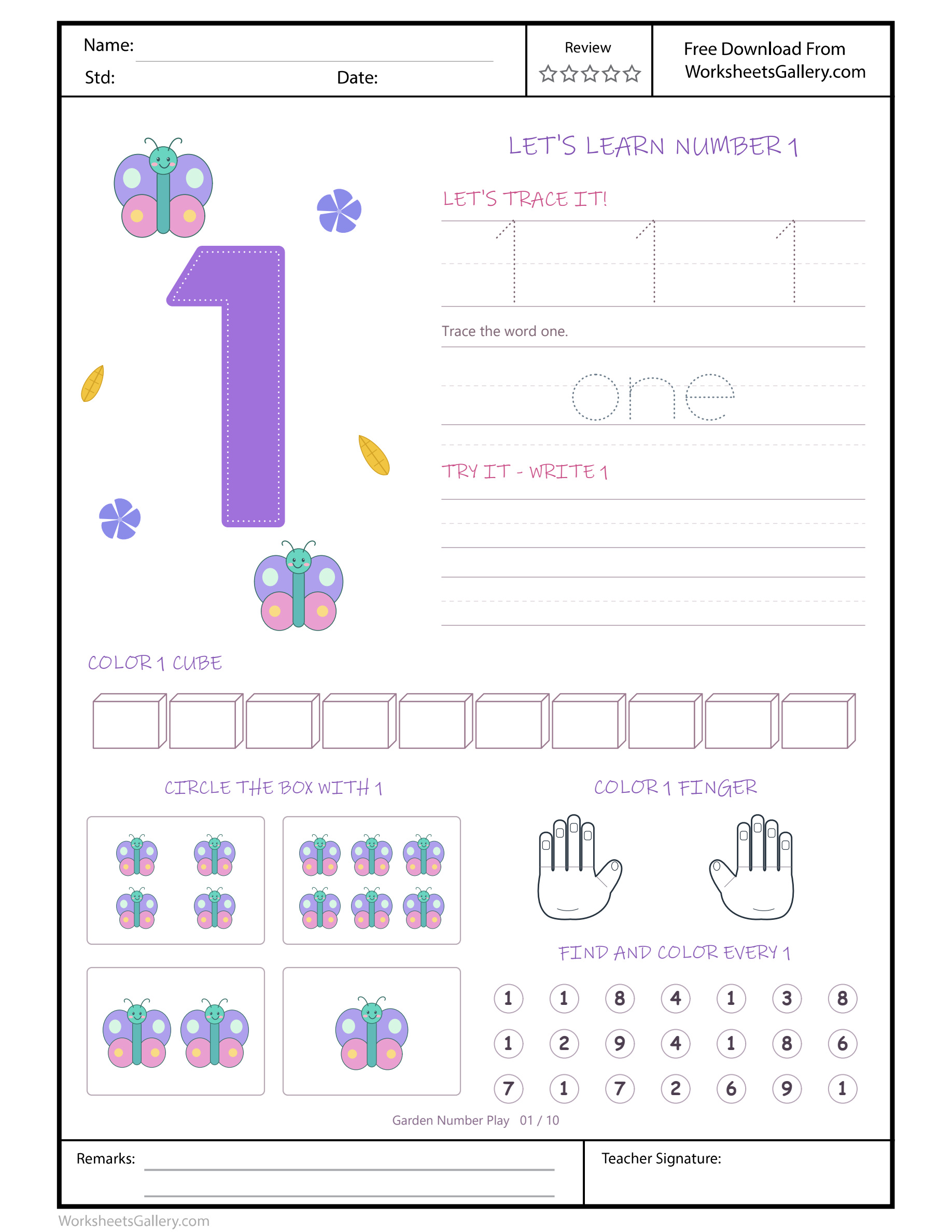
Mina has room for a seed in just one pot. That small choice sets up the Number 1 Worksheet. A single butterfly hides among boxes with several. That clear contrast gives first-time counters a reason to check which pictures belong inside each box. The purple model, pale writing lanes and picture choices let a preschooler show understanding with pointing first. A pencil can wait until the child knows which kind of response the direction asks for. Leave time for the discovery that the same numeral appears repeatedly.
The butterfly’s single stop with Number 1 Worksheet
Mina wants to reserve a single pot for the first seed. Draw a row of pots on scrap paper. Ask Mina to give only one an imaginary seed. She might choose a pot at the end or one in the middle. Both meet the request. When you move to the cubes, this matters because choosing the first outline is a convenient method, not part of the answer.
Give Mina a paper garden with a pot already filled and two blank spots. Hand her a small sticker as the one seed she is allowed to place. Ask where it will go. After the choice, point to the two unfilled or otherwise unchosen spots and let Mina explain why the new seed goes only in the spot she selected.

Does one still mean one over there?
Slide the selected button across a placemat. Cover it with a paper cup, ask how many are under the cup, then uncover it. Offer a second cup with two buttons and ask her to show the one-button cup. This makes one a description of quantity across changes in position.
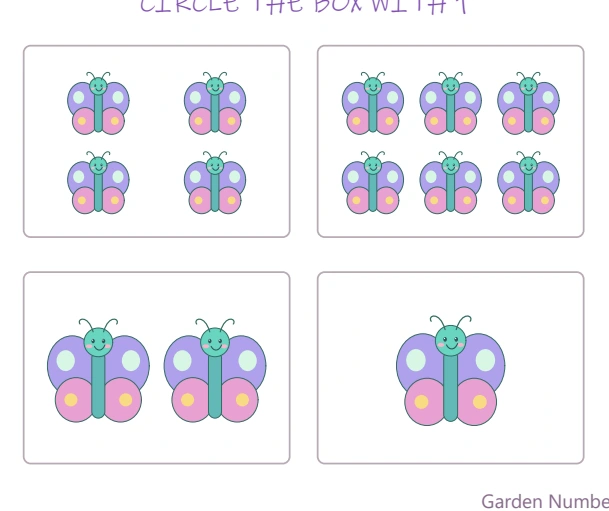
Allow pointing through the butterflies before anyone picks up a crayon. For adult review, the four counts on the butterfly sheet read 4, 6, 2, 1 in reading order. The lower right box supplies 1. Let the butterfly illustration draw the learner in, then direct the count to the framed pictures.
Check the counted unit. A child can point out a whole butterfly picture in the count. Model pointing without picking out decorative details such as wings. Then allow the learner to choose a direction and maintain it until the 1 task is finished. The completed ring should surround a matching box.
Set the table with one job in mind
Place a cup beside two saucers and ask Mina to take a single button from your collection. Point out how several positions might be open for it. If Mina hesitates, ask which one has room instead of putting the object there yourself. A tiny job like this can be repeated when an adult is sorting supplies, so the child sees that a quantity request can be satisfied more than one way.
Explore the difference between making a single selection and looking for every occurrence of a symbol.
A search that goes past the first find
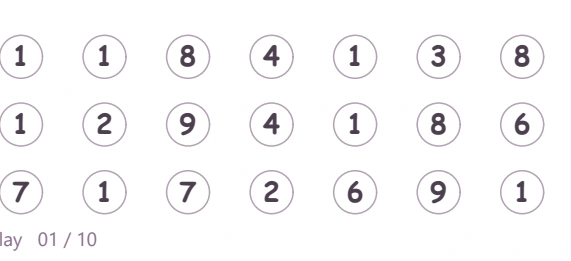
In the three-row hunt, let Mina name the very first matching 1 and move a bookmark to show where she will look next. Ask what the direction 'every' tells her to do. Compare it with the single mark on the cube strip, where making a second selection would change the answer.
There are seven correct choices for 1 in the twenty-one circles on the butterfly page. For the butterfly hunt, use a strip of paper to reveal one row at a time if the child wants help keeping the search in order.
Ask Mina to use the 1 label when checking an earlier decision in the butterfly hunt.
One path for the butterfly numeral
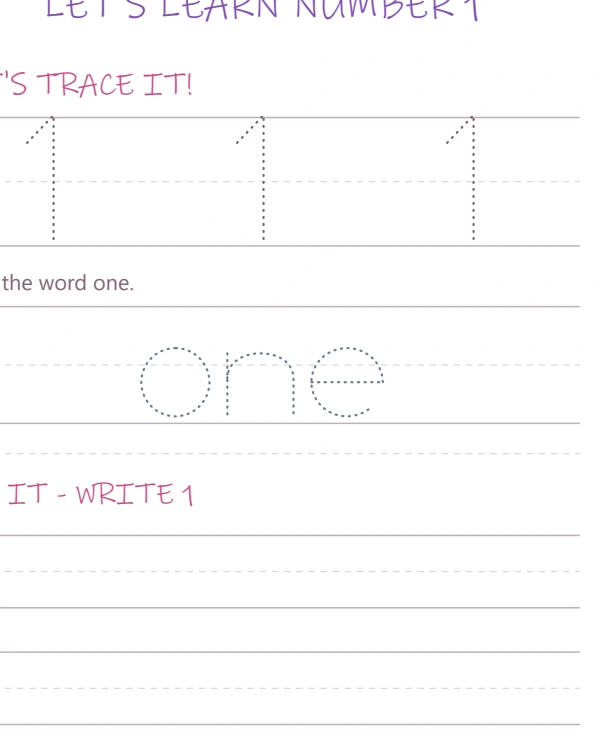
On the butterfly page, look for a single upright stroke in the large example. Follow one pale guide with a finger before reaching for a pencil. Say one once while looking at the result. Ask the child to show the corresponding word with a fingertip. If they are still following whole number words by sight, pronounce the word naturally as they trace it instead of asking for separate letter names.
Print places a purple reference at the left of three pale numeral models. For this activity, invite the child to rest a thumb beside the big 1, place an index finger on a guide and follow the upright direction. A preschooler who starts at the bottom can still recognize the model. Show the school's preferred starting point when it's time to hold a pencil.
Listen for the word one in different jobs
- Object tracking. The butterfly picture choices offer a chance to keep track of what was touched and what still needs a count.
- Fine motor work. Following the supplied 1 model and then circling a group puts long pencil strokes and slower turning movements within the same lesson.
- Listening and speaking. Invite a complete sentence about the butterflies. Saying which amount is shown gives the learner language for comparing the two situations.
- Visual recognition. Looking from the big 1 to crowded symbols encourages a closer comparison of the numeral’s shape.
- Self-checking. The butterfly page offers a chance to pause and use the printed instruction to decide whether a selection is finished.
- Quantity. Stopping at one gives the learner a reason to track what was selected, especially when the row keeps going.
An adult can make separate notes about recognition of the 1, using the singular 'butterfly,' and keeping one firm mark inside a small outline. Pointing at one item, following an upright stroke, and searching a whole row place different demands on a child. Smile when they offer to choose the next activity. Their choice can tell you where confidence is growing.
Place a mini cup beneath a butterfly picture and a second cup beneath three. Ask the child for a one-button order and see where the button arrives. When an adult joins the game, switch roles. Mina can invent a request that would need a different amount. Then go back to the sheet and see her use the word one consistently.
Give each learner a butterfly ticket
At a preschool writing table, issue one scrap-paper butterfly ticket to every child. Invite them to place it next to a cube they might choose to color. Next, count the pictures in one frame and watch for a pupil who stops counting after finding any single insect. Ask the pupil to finish the box before circling it. A partner may catch a difference by saying the final number aloud.
On the writing pass, hand the ticket back and ask the child to make a 1 that could identify it. Talk about the direction of the printed stroke and leave room to retry. Ask everyone to hold up one choice at the end, even if they found numerous copies of 1 in the hunt. That contrast goes to the heart of the page.
Listen for a complete word when a learner names the count. One might come out with a laugh or a quick shout during the butterfly game. In a quiet turn, invite 'I see one butterfly.' That sentence connects the one short sound with the whole object. Tracing the letters of the word is an additional print activity and can wait.
Play ideas that carry the butterfly count into the room
One-message post
Prepare three envelopes and ask Mina to deliver a single note to one chosen address. Compare the chosen and unchosen addresses.
Find the solo singer
Tap a drum one time for the butterfly. Contrast a single sound with two beats, then invite Mina to lead.
Quiet sticker choice
Ask the child to pick one sticker before they see where it will go. Name the amount while they place it.
One little rest stop
Let a toy butterfly visit multiple paper flowers on an imaginary flight, while it rests on one at a time.
How Mina can return to the butterfly task tomorrow
If the child insists on circling one insect rather than one box, trace the perimeter of a sample frame with a finger and invite a fresh look at the directions.
When Mina returns to a line of flower pots, offer a choice of moving buttons, tracing the numeral, or describing the picture count. Date that attempt so there is a record of the chosen 1 activity to revisit.
| Moment | What to watch | Prompt or setup |
|---|---|---|
| Starting the butterfly count | Point to one unit in the collection before using the word one. | Use the first couple of objects from a line of flower pots for a demonstration. |
| Writing 1 | Check the pale example where the child paused before trying a second copy. | Give the butterfly page its own clear space on the tabletop. |
| Looking for 1 | Have the child show a choice they skipped and explain its shape. | Keep the 1 label beside the top of the paper. |
What to open after the butterfly practice
Choose the next page by listening to how Mina counted. For another way of matching objects and numerals, try a different picture theme for counting through ten after one. If the adult heard a steady count but saw difficulty with pencil direction, use number-word and digit tracing alongside the butterfly sheet to spend more time on written shapes. Children who want to show a number without a pencil can go on to other finger representations to compare with 1. Compare their spoken count with the amount they can show after moving the supplies.
Adults planning a sequence past the butterfly page can read the What Works Clearinghouse guide to early math. Its progression can help you decide whether to spend another session on recognizing a small set, accurately counting it, or comparing its size with a second group.
Send the butterfly sheet to the printer
Choose the free download for the original butterfly page with its printed site credit. The individual clean PDF is available through the worksheet’s eligible membership download. Open the attached $3 package if you want the whole set of ten clean pages. The butterfly page remains an individual one-page activity in either option.
Use US Letter paper in portrait orientation and choose Actual Size or 100% when the printer can accommodate the margins. Start with a single test copy and check the fine tracing guides around 1. Paper, a pencil and a crayon are enough for a first turn, with buttons handy only if you want to extend the session.
Related Topics
Popular Worksheets
Printable resources families and teachers are downloading now.
 Free
 Free
 Free
 Free