
Ladybug Number 2 Worksheet: 5 Wonderful Pairing Games
Continue beyond two with all ten clean garden sheets in one numbered PDF. Revisit the ladybug activity or choose another garden character.
Sana discovers that a pair can spread out and stay a pair. Bring that idea to the Number 2 Worksheet. Two spots on a mat can be near each other or far apart. Turn that observation into a search for the ladybug pair and a decision about which cubes to color. For a child beginning kindergarten, start with the actual objects on a tray. Read each direction aloud and let the child tell you why a pair they made belongs with the pink numeral. The choice matters more than how evenly the two marks are colored.
Borrow a laundry basket
Ask Sana to help make a delivery of two socks to a pretend shop. She may choose a matching pair or choose socks with different patterns. Count the selected socks where they are placed, then move one across the table. Ask why the order still has two. Let Sana be the customer in a second round and read her directions back to her.
Try one finger on each hand and then both on one hand. A new distribution can still show the same number.
A ladybug pair in motion with Number 2 Worksheet
Sana sets out slippers and notices how each belongs to a different foot. When Sana puts one sock near each slipper, ask whether a sock remains available for an extra slipper. Try a large yellow sock and a small blue one. A pair can contain things that look different, and two is still the count when they sit in different parts of the room.
Before showing the page, leave one sock by each of two slippers and ask Sana to tell you what the socks have in common. She might notice color first. Let her check the number with a point to each. Move one sock out of its shoe without putting it away. Both remain part of the collection if the game is still counting socks.
Slide one ladybug away
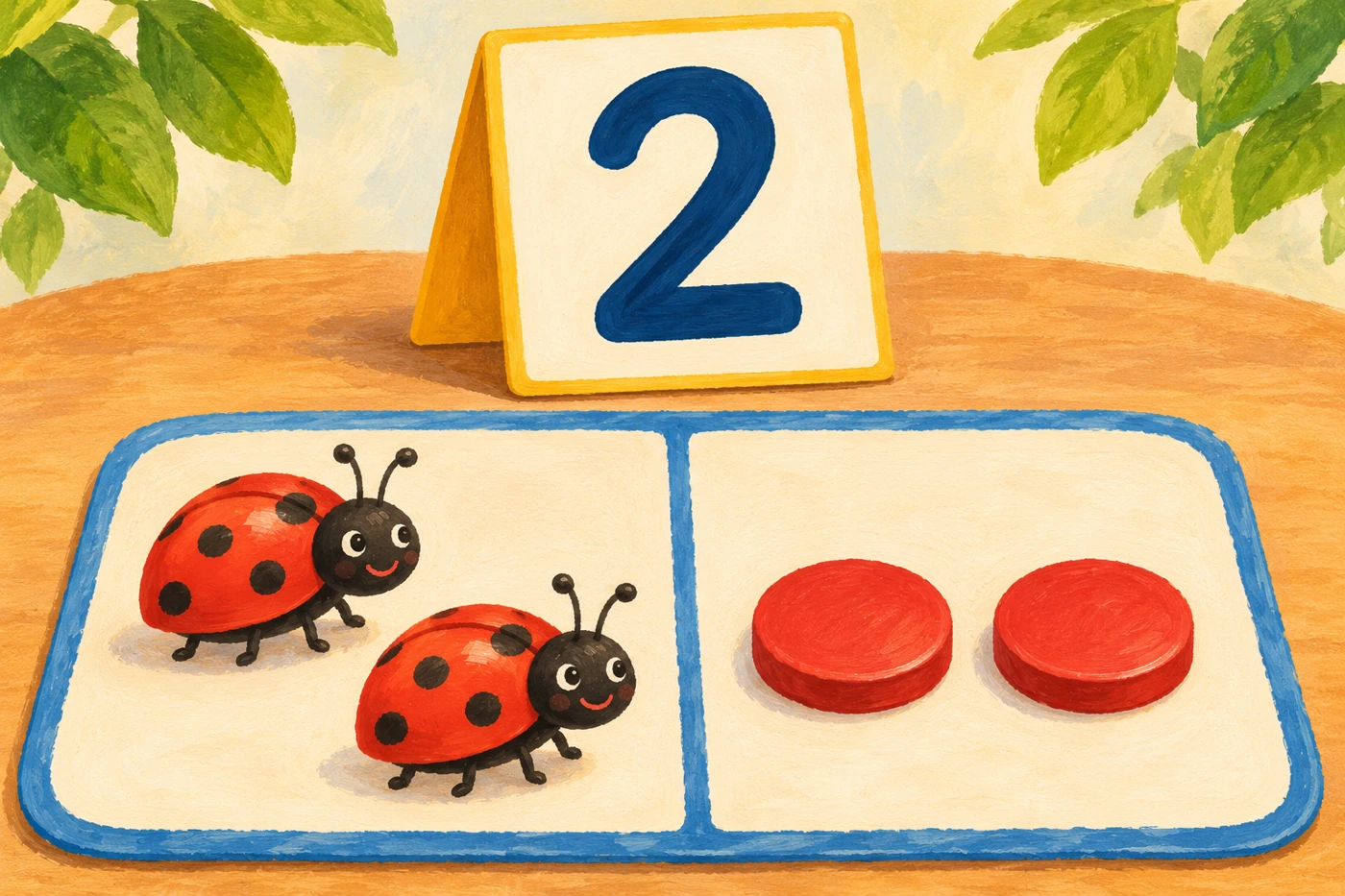
Use two red paper circles as pretend bugs. Move one near a plant label and keep the other at the edge of the counting mat. Sana can say 'two' before and after the move. The number of objects stays steady. Move on to the picture boxes once she can explain which things she counted.
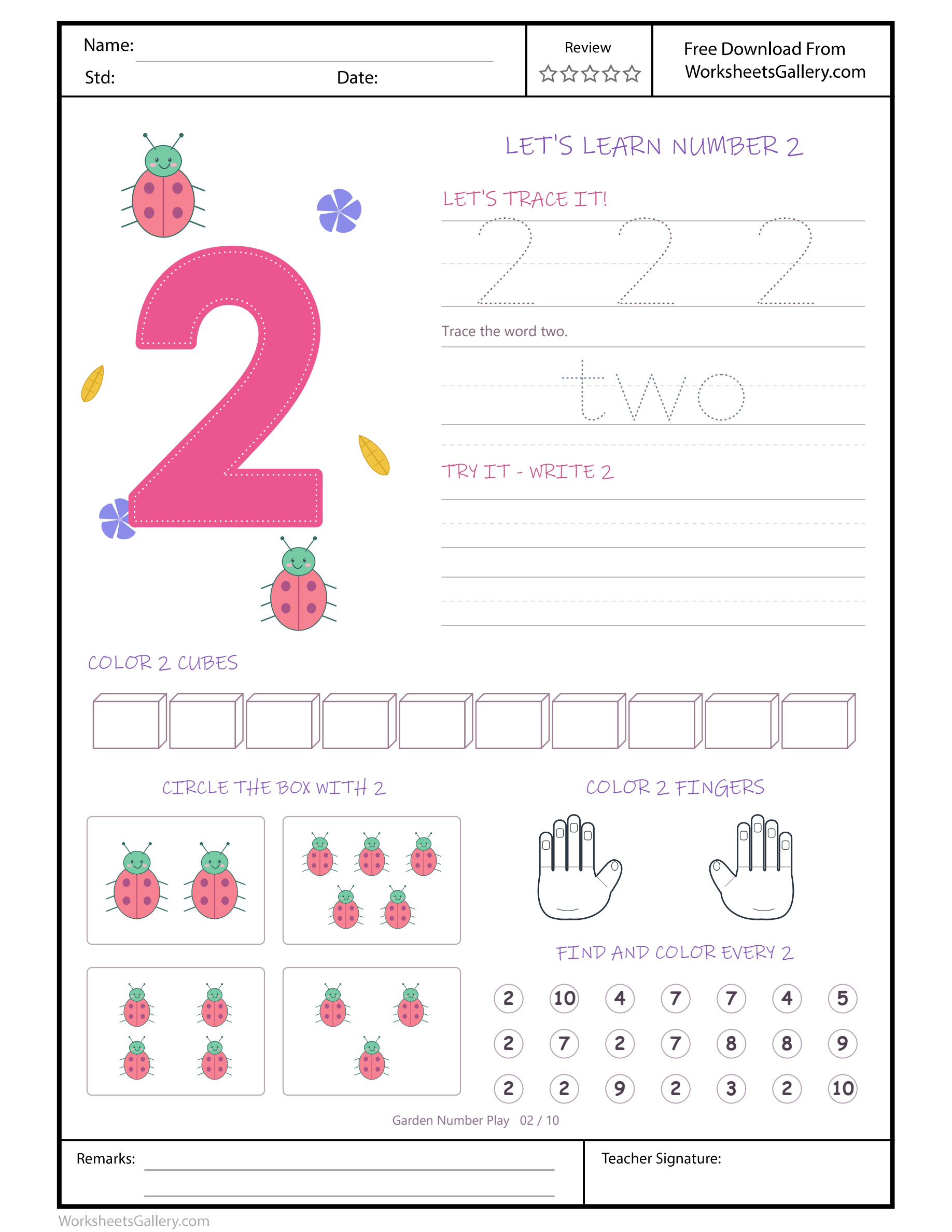
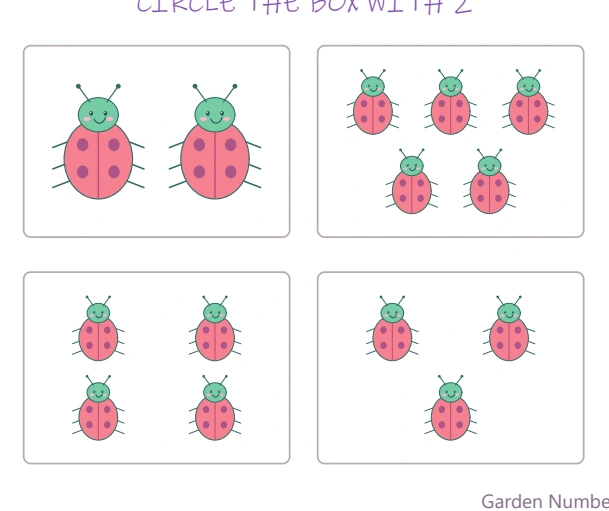
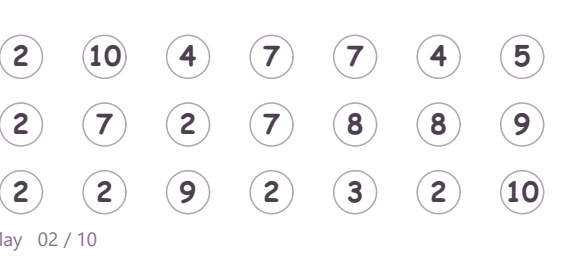
Allow pointing through the ladybugs before anyone picks up a crayon. For adult review, the four counts on the ladybug sheet read 2, 5, 4, 3 in reading order. The upper left box supplies 2. Let the ladybug illustration draw the learner in, then direct the count to the framed pictures.
Check the counted unit. A child can point out a whole ladybug picture in the count. Model pointing without picking out decorative details such as wings. Then allow the learner to choose a direction and maintain it until the 2 task is finished. The completed ring should surround a matching box.
What grows from making a pair
- Fine motor work. Following the supplied 2 model and then circling a group puts long pencil strokes and slower turning movements within the same lesson.
- Listening and speaking. Invite a complete sentence about the ladybugs. Saying which amount is shown gives the learner language for comparing the two situations.
- Visual recognition. Looking from the big 2 to crowded symbols encourages a closer comparison of the numeral’s shape.
- Self-checking. The ladybug page offers a chance to pause and use the printed instruction to decide whether a selection is finished.
- Quantity. Stopping at two gives the learner a reason to track what was selected, especially when the row keeps going.
- Object tracking. The ladybug picture choices offer a chance to keep track of what was touched and what still needs a count.
Holding two items in mind while they move supports attention to the count. A child coordinates a finger point with a spoken number in the ladybug frame. Trace-and-try lanes invite more deliberate pencil control, and naming 'two socks' brings quantity into ordinary language. Someone who guesses the number hunt on first glance can practice pointing at a curve or straight base as evidence.
Have the child walk a puppet to two play dishes. Put one toy food in each dish, then redistribute the pieces. Keep the number of dishes out of this question. Try a second round that asks about dishes with food. It gives a gentle way to hear whether 'two' depends on which objects the adult names.
From the ladybug’s 2 to independent print
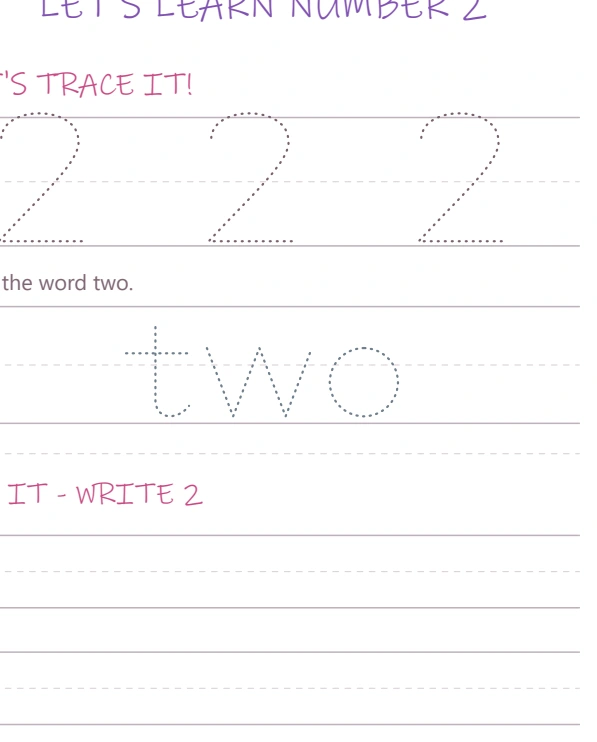
On the ladybug page, look for an upper bend, diagonal and short baseline in the large example. Follow one pale guide with a finger before reaching for a pencil. Say two once while looking at the result. Ask the child to show the corresponding word with a fingertip. If they are still following whole number words by sight, pronounce the word naturally as they trace it instead of asking for separate letter names.
At a table group, tape two paper spots far enough apart that small hands can touch each comfortably. One partner makes the pair, and the other pushes the objects farther apart. Take a moment to ask how they know that movement left the original count unchanged, and let a third learner read the number card to verify.
Set up a two-part table game
Break the class into pairs and hand each pair a little tray. Let one child set out a pair of unlike objects while the other puts a 2 prompt beside it. Then each partner has to show two in a different way with their fingers. Give the spoken total a turn before anyone picks up paper.
On the ladybug sheet, ask the learners to point out what they want to circle and compare their intended frame. One child can justify the choice by touching each insect once. A second can suggest a different direction to count. Use that two-way check for a pair who is ready to look at the distinct size of the other picture groups.
Many children recognize a pair in one glance when it resembles a familiar pattern. Give a quick look at two paper dots and another look at two mismatched toys. A quick answer followed by an accurate count brings more confidence to the target box. The crayon choice then becomes a record of an idea the learner already tested.
An open curve comes down to a foot
Follow the tracing model from its upper curve to the lower stretch. Ask where the crayon is when the change of direction happens. In the independent lane, one spacious 2 lets you see whether the child remembers the turn. When the mark is hard to recognize, use the big pink example to choose one place to adjust.
There are seven correct choices for 2 in the twenty-one circles on the ladybug page. For the ladybug hunt, use a strip of paper to reveal one row at a time if the child wants help keeping the search in order.
Ask Sana to use the 2 label when checking an earlier decision in the ladybug hunt.
How Sana can return to the ladybug task tomorrow
If two chosen cubes touch, ask the child to point to the separate cube outlines. Make the boundary concrete by sliding two blocks apart.
When Sana returns to a basket of toy plates, offer a choice of moving socks, tracing the numeral, or describing the picture count. Date that attempt so there is a record of the chosen 2 activity to revisit.
| Moment | What to watch | Prompt or setup |
|---|---|---|
| Starting the ladybug count | Point to one unit in the collection before using the word two. | Use the first couple of objects from a basket of toy plates for a demonstration. |
| Writing 2 | Check the pale example where the child paused before trying a second copy. | Give the ladybug page its own clear space on the tabletop. |
| Looking for 2 | Have the child show a choice they skipped and explain its shape. | Keep the 2 label beside the top of the paper. |
Play ideas that carry the ladybug count into the room
Paired prints
Draw one ladybug on each side of folded paper and ask Sana to count the two parts when the sheet opens.
Collection of two
Make a pair from a big toy and a small toy. Ask a child to show where each member belongs after you rearrange them.
Two lunch places
Set a napkin near each of two plates and count the plates separately from the napkins.
Partner echo
Trade a two-clap rhythm with a neighbor and ask for two steps in reply.
Share the crayons
Pass two crayons from one learner to the next and check that neither color gets left behind.
What to open after the ladybug practice
Choose the next page by listening to how Sana counted. For another way of matching objects and numerals, try a different picture theme for counting through ten after two. If the adult heard a steady count but saw difficulty with pencil direction, use number-word and digit tracing alongside the ladybug sheet to spend more time on written shapes. Children who want to show a number without a pencil can go on to other finger representations to compare with 2. Compare their spoken count with the amount they can show after moving the supplies.
Adults planning a sequence past the ladybug page can read the What Works Clearinghouse guide to early math. Its progression can help you decide whether to spend another session on recognizing a small set, accurately counting it, or comparing its size with a second group.
Keep a ladybug page near the sorting tray
Choose the free download for the original ladybug page with its printed site credit. The individual clean PDF is available through the worksheet’s eligible membership download. Open the attached $3 package if you want the whole set of ten clean pages. The ladybug page remains an individual one-page activity in either option.
Use US Letter paper in portrait orientation and choose Actual Size or 100% when the printer can accommodate the margins. Start with a single test copy and check the fine tracing guides around 2. Paper, a pencil and a crayon are enough for a first turn, with socks handy only if you want to extend the session.
Related Topics
Popular Worksheets
Printable resources families and teachers are downloading now.
 Free
 Free
 Free
 Free